
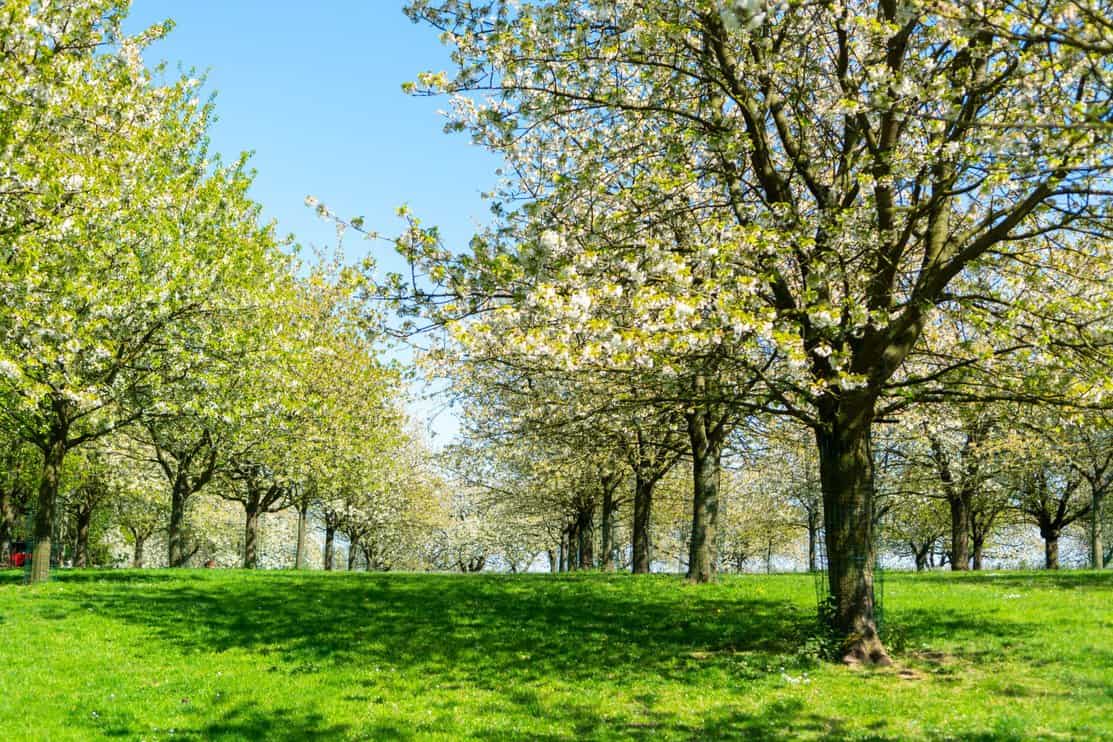
Everyone wants a beautiful cherry tree in the spring when their delicate blooms first emerge and then they turn into a delicious fruit you can harvest in your backyard. But with space at a premium, can you safely plant anything around your cherry tree?
There are lots of plants to grow under your cherry tree that are edible and useful, which will not only thrive around your cherry tree but will help your cherry tree flourish as well. Plants such as chives, rosemary, marigolds, and nasturtiums are all amazing options!
Before you can decide which of these plants to use in your plant guild around your fruit tree, you need to make sure you have the perfect place and type of cherry tree for your yard. Keep on reading!
How To Pick The Right Cherry Tree
There are two primary types of cherries grown in the United States: Sweet Cherries and Tart Cherries.
Each type of cherry has certain needs and quirks that need to be considered to produce fruit and thrive year after year.
Sweet cherries need a significant winter from late fall until late winter to successfully produce fruit. The Pacific coast is known for its sweet cherry growing with states like Oregon, Washington, and Northern California being known for over ¾ of the sweet cherry production in the United States.
During the summer, sweet cherries do not tolerate extreme heat well and need more moderate temperatures to not cause problems with the fruit.
Bing cherries are a popular variety that accounts for a huge portion of sweet cherry growth.
Make sure you have at least two sweet cherry trees because they will not self-pollinate. These trees can grow to 35’ and taller.
Cherries are a nutrient-dense food that contains fiber, vitamin C, and potassium according to The National Library of Medicine.
Tart cherries are grown mostly for pies, cooking, or preserving. These cherries are more cold-resistant than sweet cherries, making them perfect for more northern areas.
Michigan leads the production of tart cherries being responsible for more than ¾ of the country’s fruit.
Montmorency cherries are the most popular tart cherry variety and one of the first planted in North America. Montmorency is often used in cherry juice.
With a tart cherry, you only need one tree because they will self-pollinate, states Iowa State University. These trees will grow to 20’.
How To Grow Cherry Trees
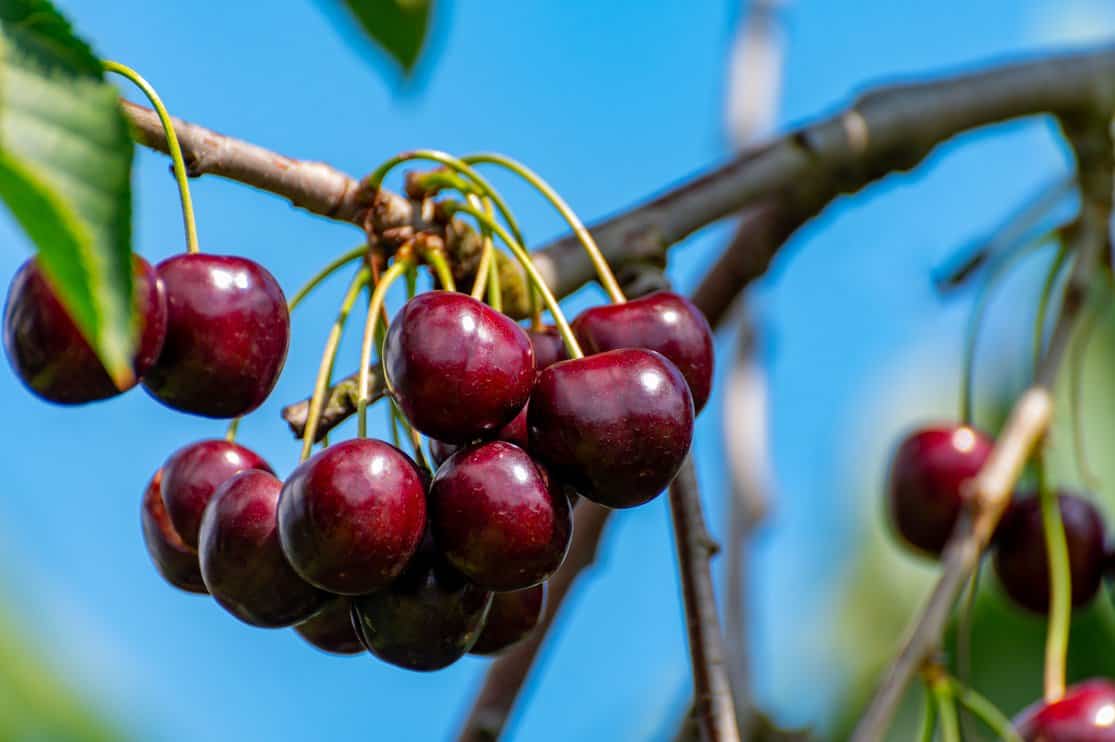
Sweet cherries will grow in zones 5 to 9 with temperatures down to about -15 degrees. They need over 700 hours of freeze to produce blooms and fruit.
Tart cherries grow in zone 4 to 8 in average weather, handling temperatures of about -25. You don’t have to worry much about frost damage for tart cherries since they bloom later in the season.
If you live in one of these zones, you should be able to grow a cherry tree.
The southwest doesn’t do well with cherries because of the mild winters, cherries need extreme cold and frost to produce fruit in the spring. Also, the southeast, with its extremely humid environment, is not the best location for cherries.
What Does Your Cherry Tree Need?
Cherries need well-drained soil, and it is the biggest requirement. They will not grow well in swampy or boggy areas. If the roots of your cherry tree stay wet it will not be a good fruit-bearing tree for you.
Stay away from sandy soils or heavy soils which can cause inhibited growth in cherry trees.
Look for areas with loamy soil, loam soil contains all the particles you find in soil: sand, silt, and clay. Purdue University says that each type of soil particle does a different job.
- Sand is the largest, holds the least water, and has the best aeration
- Silt is a medium particle and is somewhere between sand and clay.
- Clay is the smallest particle, allows the least drainage, and least aeration
Loam soil works the best for cherries vs the individual types of soil.
Sweet cherries need a soil pH of 6-7 and tart cherries do well at around 7. Collect a soil sample and take it to a local extension office. They’ll be able to test it for you and make recommendations.
You can also purchase a soil tester to keep track of the soil condition over time.
A bright, sunny spot that allows full sun helps your cherry tree have the best yield. Make sure that no other tree will block the sun from your cherry tree.
Early spring or late fall is the best time to plant your new cherry tree.
Do You Need To Plant Under Your Cherry Tree?
It’s becoming more and more popular to grow your foods with smaller tracts of land. Knowing what plants grow well around your cherry tree and how they can help each other is important.
It can allow you to use growing space more effectively and improve fruit production.
These interactive small areas that focus on a fruit-producing tree are called plant guilds.
Plant guilds are companion plants planted specifically to improve a fruit tree according to James Madison University.
They can affect the soil quality, the insect population on or around your tree, and the overall health and production of your fruit tree.
These naturally compatible groupings are also called food forests or forest gardening. Ideally, they not only work to create the best environment for your tree, but also contribute food, herbs, or other assets to your landscaped space.
One important thing to note is that if you are planting under your cherry, you should prune it so that light can pass through. For some tips on this, check out our article on 7 simple steps to prune your cherry tree!
Best Plants To Plant Under Your Cherry Tree
The plants under your cherry tree are referred to as the understory. They have 6 primary jobs. Attractors, repellers, suppressors, mulchers, nitrogen-fixers, and dynamic accumulators state James Madison University.
Attractors
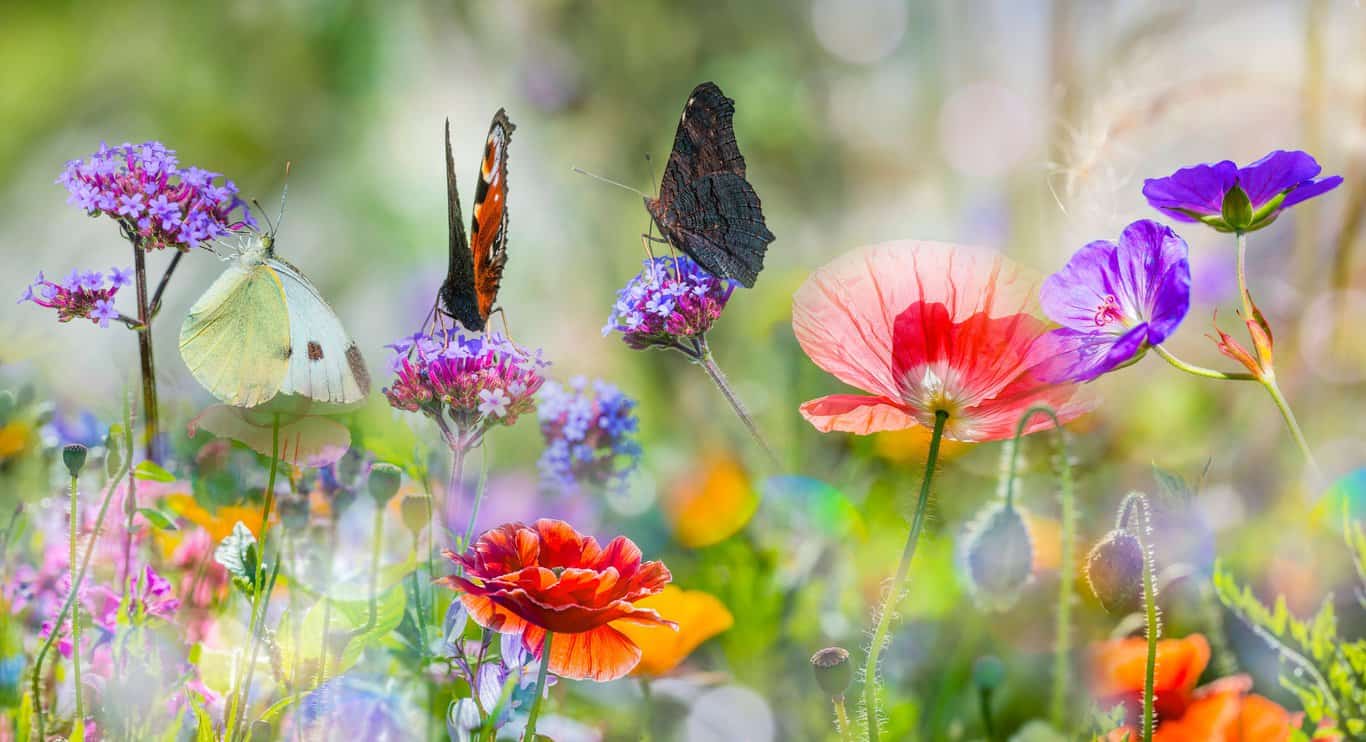
Attractors are the plants that will encourage pollinators and other good insects to your garden forest. They will bring butterflies, hummingbirds, and bees to help with pollination.
Cherry trees also try to attract pollinators with their own flowers, so they would love the help in attraction. Read more about this in our article on if cherry blossom trees smell.
The very best attractors will be flowering plants to bloom around the same time as your cherry trees.
Plants that attract predatory insects to your guild to deter the cherry tree pests will also be considered attractors.
Pollination is required in order for your fruit trees to produce any cherries.
Butterflies feed off the nectar from flowers and when eating they collect pollen on their wings and carry the pollen to the next flower.
Hummingbirds also feed off of the nectar from flowers and pick up the pollen on their long bills to be deposited at the next flower.
Bees are known as the ultimate pollinators, unfortunately, their numbers have been in steady decline for years. Honey bee hives have decreased from 6 million in the 1940s to about 2.5 million today according to the USDA.
A combination of reasons like reduced habitat increased pesticides, and the introduction of nonnative predators have all played a part.
Since ⅓ of the crops produced in The United States require pollination from these hard-working insects or another pollinator is important to encourage bee presence.
Try placing an attractive and effective bee house such as the SunVara Wild Pollinator Habitat to encourage an increase in your bee population.
Repellers
Repellers are plants that discourage pests insects or animals. Most repellers have a strong scent that will repel potentially harmful insects.
Some common pests you might run into are cherry tree flies, spider mites, or black cherry aphids, according to Utah State University.
Cherry Tree Flies are a huge problem for cherry trees. They can infect and destroy every cherry on a tree, destroying the crop. Strong-smelling herbs can help limit or deter cherry tree flies.
You’ll notice rotten fruit and small white worms if you have cherry tree flies.
Spider Mites can create issues with your cherry tree. They’ll remove the chlorophyll from the leaves.
If you see stippled leaves from where the spider mites are eating the chlorophyll. Stippled leaves look spotted with white dots.
Black Cherry Aphids will attack cherry trees and stunt young tree growth. You should be able to spot the aphids on the leaves if they are present. They grow larger than most aphids and are solid back.
If you start seeing a black, sticky mold on your cherry tree leaves, then your tree has a black cherry aphid infestation.
Suppressors
Suppressors are plants that keep grass or weeds from growing around the root system of your tree. They work by covering the ground and preventing unwanted plant growth.
This restriction of weeds is a good thing because too many weeds can take the nutrients your intentional plants need to thrive. While there might not be “bad” plants, there can be plants in the wrong place at the wrong time.
Covering the ground also keeps the sun from blaring on the soil leading to accelerated water evaporation.
If you decide that planting suppressors are not in your guild’s best interest or you don’t have enough room, using a material like mulch can accomplish some of the same tasks.
A cocoa bean mulch like Hull Farm Cocoa Bean Shell Mulch will not only smell like chocolate but also keep weeds down and help prevent water evaporation.
Suppressors might also serve the purpose of growing around the outer edge of your plant guild to keep grass from growing in. This outer edge is known as the drip edge, this is the farthest point that water drips off your plant’s leaves.
Some common “weeds” that you might find growing around your cherry tree that can cause problems according to the State Management Program at UC are Bermuda grass which is highly competitive for water and nutrients.
Mulchers
Mulchers are the plants that drop material that decomposes creating fertilizer for the soil and surrounding plants.
Herbaceous plants mainly have flexible stems, and greenery, and lack the woody part that makes good mulchers.
Mulchers naturally drop or can be cut to leave behind organic matter which can lead to more nutrients in the soil.
These plants must decompose quickly and easily.
The chop-and-drop method is used often with these green, leafy plants. When you cut the leaves off, just let them cover the ground.
Keeping your soil rejuvenated is crucial to a long-term production goal. The mulchers helping improve your soil are a big part of that.
Nitrogen-Fixers
Nitrogen-fixers are plants that work to absorb nitrogen from the ground or air and then release nitrogen in a usable form into the soil during decomposition.
Nitrogen is a critical part of producing fruit according to The National Library of Medicine. The nitrogen is absorbed through the roots and then directed to the different areas of the plant where it’s needed.
Some nitrogen fixers work with bacteria in healthy soil to absorb nitrogen out of the area and distribute it through the soil.
Legumes are one of the more popular nitrogen fixes and are often used in crop rotations by farmers to improve soil quality.
They form a symbiotic relationship with species of bacteria. These bacteria multiply in the roots of the legumes where nodules have formed. Once the bacteria is in the nodules, they form nitrogen into a usable form, says the USDA.
Once the nitrogen leaves or roots fall off they break down in the soil leaving a high quantity of nitrogen.
Signs to look for if your soil is suffering from nitrogen deficiencies would be:
- Leaves that are not the bright vibrant green they should be but are more pale or yellow indicate that you might need more nitrogen fixers in your guild. Nitrogen affects chlorophyll which is responsible for light absorption in plants.
- If your plants are smaller than they should be it’s another good indicator that your plants are not getting the nitrogen they need from the soil. One of the important jobs that nitrogen assists with is the growth of plant cells. Without the ability to grow their cells, plants do not reach their full size.
- One of the most obvious signs of nitrogen deficiency is the lack of fruit production. If your cherry tree isn’t producing cherries look at the rest of the plants in your guild to see if a lack of nitrogen might be the culprit.
Dynamic Accumulators
Dynamic Accumulators are the last type of plants to complete your plant guild. They also work to improve the quality of the soil.
Dynamic accumulators work to draw nutrients from deep in the soil using what are normally longer than average root systems. They draw these nutrients up into their leaves and when their leaves fall off they decompose and release the nutrients into the soil.
Another benefit of deep roots is the ability to break up the soil for better aeration and water flow.
These deep extractors that bring up otherwise unavailable nutrients can add the final touch to your plant guild, creating the perfect permaculture.
According to Utah State University, permaculture is the deliberate replication of natural ecosystems with all of the diversity, stability, and resilience that comes with it.
So What Plants Do What Jobs?
Another important thing to understand is what plants perform specific jobs in relation to your cherry tree. For instance, some plants may act as a ground-cover, whereas others may act as nitrogen-fixers.
Chamomile
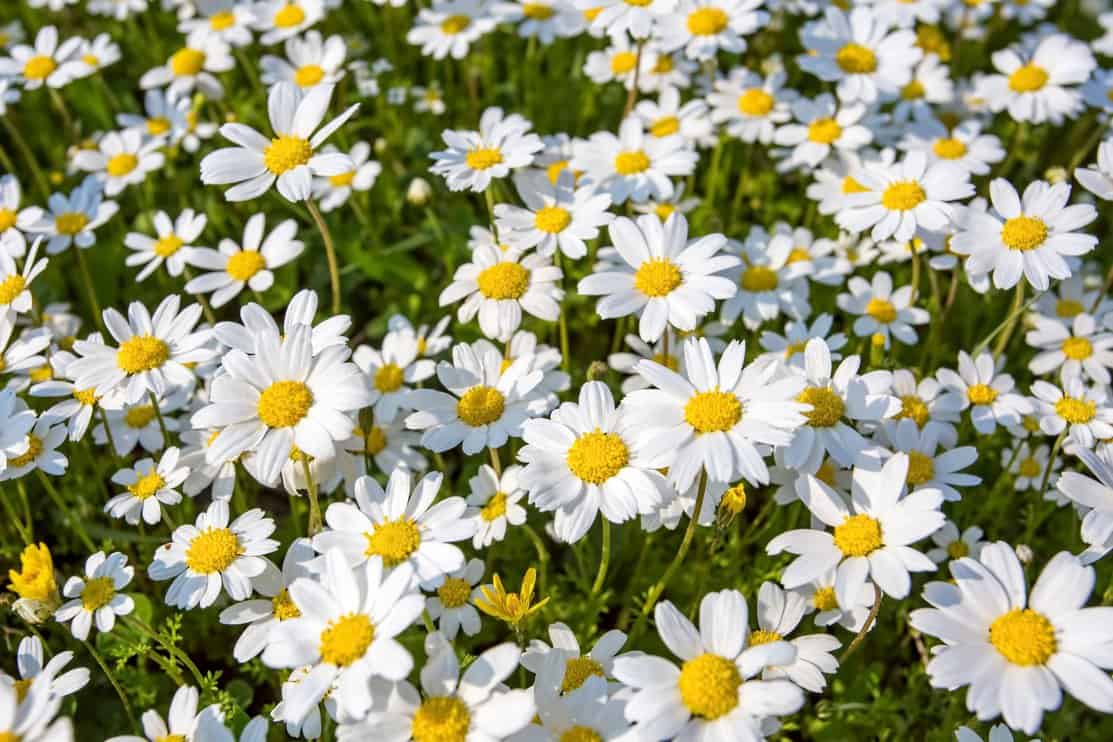
Chamomile can be used to repel certain insects such as the cucumber beetle according to Heritage Garden. They also don’t attract deer but do attract pollinators to their aromatic blooms.
Chamomile is a beneficial plant that has been used as an anti-inflammatory, anti-bacterial, anti-allergenic, and sedative properties. Heritage garden also tells us chamomile can be used as a tea, vapor, or salve.
Chives
Chives are well known for their distinctive smell which is a wonderful deterrent to pests such as Japanese beetles, slugs, aphids, and cabbage worms.
They work well as an edible edition to your guild with every part of the plant being consumable and a great flavor to add to cooking.
Heritage Garden points out chives are a staple in many Asian cuisines going back to ancient China where they were used for medical purposes as well as seasoning.
Clover
Clover is a beautiful ground cover that is one of the most effective nitrogen fixers out there. UGA studies show that white clover can convert 100-150 pounds of nitrogen per year and red clover can convert 150-200 pounds per year.
This converted nitrogen is released when the roots and leaves of the clover die and decompose. Clover does attract bunnies, ground birds, and groundhogs to eat, having a good repeller will help with that.
Comfrey
Comfrey is a top-notch mulcher according to the University of Oregon with its leaves containing high content of nitrogen, phosphorus, and potassium. When the leaves fall or are cut and dropped they decompose leaving these necessary nutrients in the soil.
They also have bright purple flowers that will attract pollinators and roots that go deep into the ground to bring up nutrients. Because it is a fast-growing plant, you can regularly cut the leaves for mulching and they’ll grow back.
Dandelions
Dandelions are a naturally occurring weed that many people fight to get rid of. But having them in your plant guides can be highly valuable.
They are deep roots and able to break up the soil and drag nutrients up from far below your other plants’ root systems. Because of their high nutrient content, they provide nutrients when they decompose making the mulchers according to the University of Nevada.
They also release ethylene gas which leads to faster ripening of the fruits on your trees. Commercially ethylene gas is used to force plants to become ripe at the same time and the dandelions can help naturally with that.
Lupine
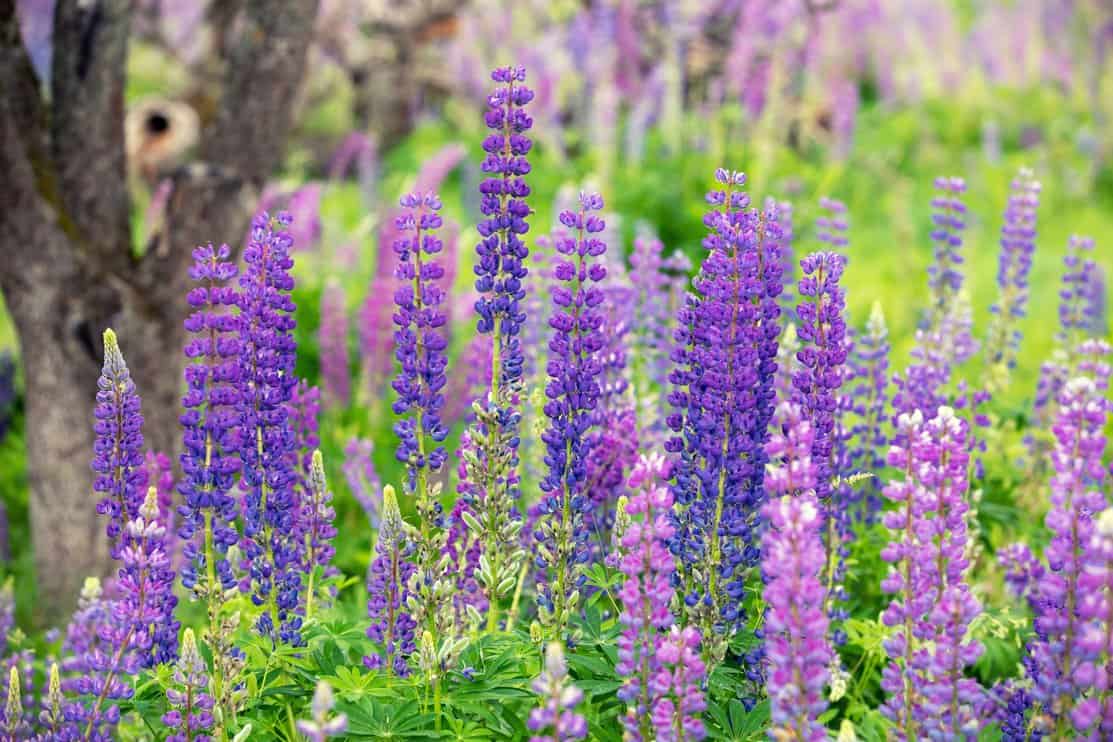
Wild lupine is a beautiful purple flower that will attract bees, butterflies, and all pollinators to your plants. Because they are native legumes they also work well as nitrogen-fixers, says the USDA. Having Lupine in your garden is a great way to make sure your other plants are removing all the nitrogen from the soil.
Marigolds
Marigolds are a common garden flower but can work to help protect your cherry tree. The smell they produce discourages animals that will prey on your guild’s plants, especially deer and bunnies.
They also secrete a substance off of their root system that will keep pests such as aphids, cabbage maggots, corn earworms, squash bugs, nematodes, and numerous types of harmful beetles away according to the University of Florida.
Nasturtium
Nasturtium produces an orange, red bloom that will provide food for your pollinators even though it works as a natural repellent to certain insects bees are not affected.
The nasturtium releases a smell that protects itself and all surrounding plants from harmful insects. Nasturtium has been used throughout history in many beneficial roles including fighting scurvy with its high vitamin C, as a primary food source for starving people in the 1600s, and as inspiration in many of Monet’s paintings states the University of Wisconsin.
Rosemary
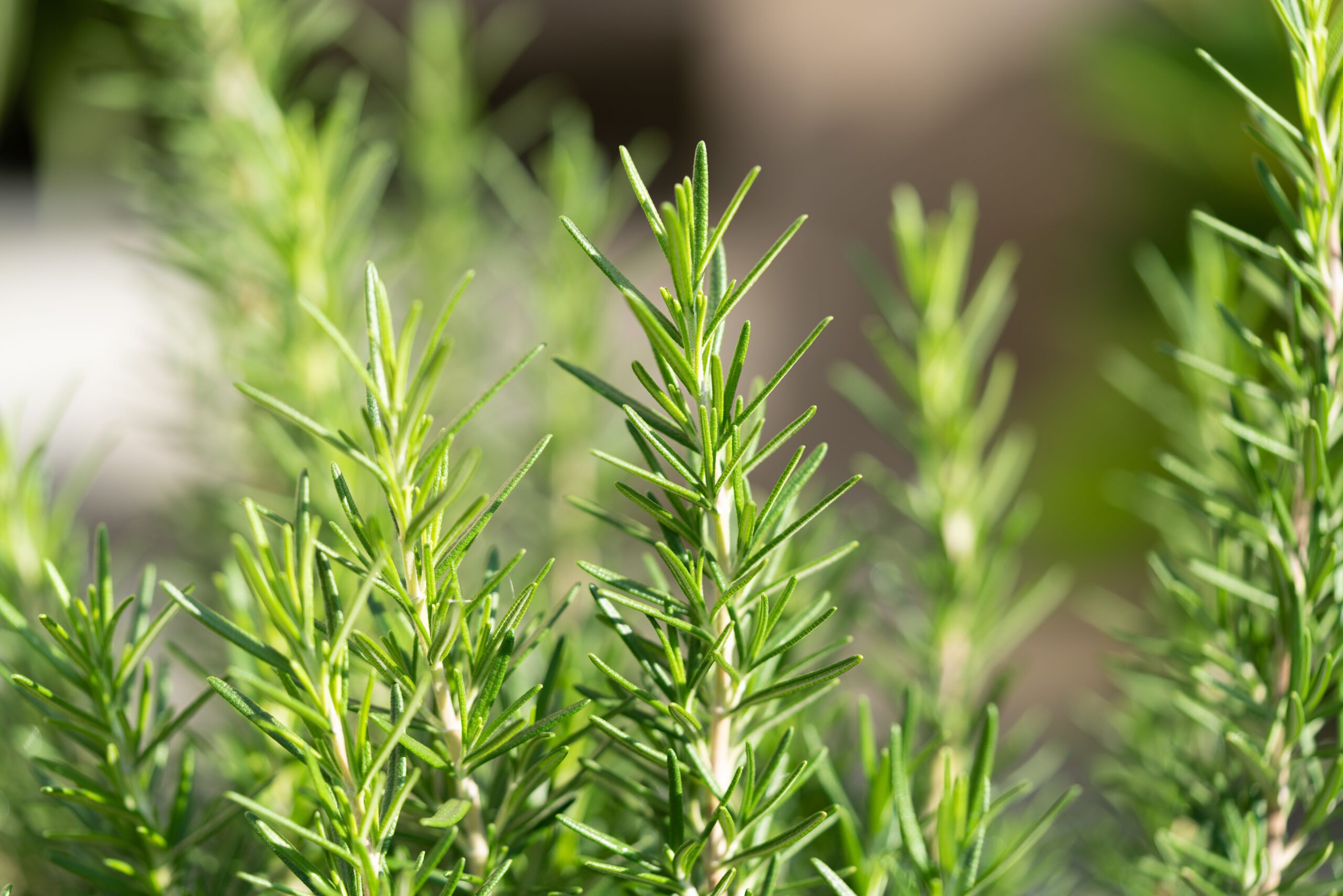
Rosemary is in the mint family, and most plants in that family produce a potent-smelling aroma that works well to keep cherry tree flies and other harmful insects such as cabbage moths, bean beetles, and carrot flies away from your guild.
According to Heritage Garden, rosemary has long been used not only in gardens but in hair care products as a dandruff treatment and to prevent baldness. It is also used as a seasoning in many Mediterranean recipes and other meat recipes in Italy and England.
Best Edible Plants For A Cherry Tree Guild
| Attractors | Repellers | Suppressors | Mulchers | Nitrogen -Fixers | Dynamic Accumulators | |
| Chamomile | Yes | Yes | Yes | |||
| Chives | Yes | Yes | Yes | |||
| Clover | Yes | Yes | Yes | |||
| Comfrey | Yes | Yes | Yes | Yes | ||
| Dandelions | Yes | Yes | Yes | |||
| Lupine | Yes | Yes | ||||
| Marigold | Yes | Yes | ||||
| Nasturtium | Yes | Yes | ||||
| Rosemary | Yes |
Wrapping Up!
Choosing which of these plants appeal to you and suit your landscaping will allow you to receive the best harvest from your cherry tree.
Plant guilds are an effective management system that allows you to use less fertilizer and pesticides while still keeping your plants healthy.
References
Hemenway, Toby. Gaia’s garden: a guide to home-scale permaculture. Chelsea Green Publishing, 2009.
Weiseman, Wayne, Daniel Halsey, and Bryce Ruddock. Integrated forest gardening: The complete guide to polycultures and plant guilds in permaculture systems. Chelsea Green Publishing, 2014.
Lauri, Pierre-Eric, and Jacques Claverie. “Sweet cherry tree architecture, physiology and management: Towards an integrated view.” V International Cherry Symposium 795. 2005.