Grow Your Business with Tree Journey

Our TradeWorks Revenue System™ builds a detailed advertising funnel that attracts, nurtures, and converts the right clients – so you can finally stop chasing leads and start scaling your business.

Red oak, white oak, which oak? Oak trees may all seem the same, but there are differences between them that are worth knowing of. Their growth rate, maximum size, bark and leaf color, and adaptability are some things to consider when planting an oak. 

In truth, white oak trees have grey bark that tends to be divided into small, vertical blocks on the tree, while red oak trees have dark red/grey/brown bark with a scaly texture. White oaks live up to 600 years and grow 18in annually, while red oaks live up to 500 years and grow 24in annually.

Truthfully, oak trees are quite durable, they are beautiful, and they can grow to last incredibly long. When it comes down to it, personal preference is a big player in choosing a tree, and we want to give you the right keys to do so.

What is the Lifespan of a Red Oak vs. White Oak?

There’s no question that red and white oaks have significant differences, but what exactly does that mean? Why does it matter?

For one, the lifespan of these two species can say a lot about longevity, their prime, and what to expect from each species.

White oaks as individual plants live for around five hundred to six hundred years. 

Lake Forest College research shows that red oaks, while similar in lifespan, do have a timeline that is cut a bit shorter than that of their white oak counterparts. Red oaks live about three hundred to five hundred years. 

So, we can see that the lower end of the typical lifespan of a white oak corresponds to the higher end of that of the red oak species. 

While let’s face it, that many hundreds of years are still almost longer than we may be able to comprehend, there is a good deal of variety within what that looks like between red and white oaks.

If you’re interested in learning how long oak trees live, you can view our guide and data of the full lifespan for each common oak tree here.

How Quickly Does An Oak Tree Grow?

Okay, now let’s talk about annual growth. White oaks grow incredibly slow at a rate of about 12 to 24 inches per year, which is relatively slow in relation to other trees of a similar caliber. 

Red oaks are pretty similar in this regard. Thanks to research from the Nebraska Forest Service, we see that red oak trees grow at a rate of about 18 to 24 inches per year. On average, this happens just a little more quickly than the typical white oak.

Physical Characteristics of Red & White Oak Trees

Oak tree silhuette with ladder on trunk, evening light landscape

One of the most identifiable traits of difference between white oak trees and red oak trees is, naturally, their physical traits. Most commonly, this includes their various bark, leaf, and color differences.

If you’re interested, you can read our guide with the pros and cons of the best oak trees to plant here.

Bark Color

Bark color provides the most noticeable difference between red and white oak trees and is KEY to identifying the difference between each.

Red Oak Tree Bark Color

When trees are still young and trunks are thin, the bark is a smooth light grey. The winter sun causes this light color to be quite reflective, and the bark is surprisingly smooth before age has a chance to change its design. This can sometimes be seen on large branches of a mature tree. 

The bark of a red oak tree has a dark color that can only be described as red/grey/brown and has a scaly texture with thin, rounded ridges. Twigs end in a cluster of buds, and the red oak ends in reddish-brown twigs that display light-colored buds. 

As the bark ages, ridges develop and leave the trunk a mix of shiny grey with dark fissures coming through. On old trees, the bark deepens further to be a dark brown shade. In very aged trees, the very bottom portion of the trunk sports fissures that are deeper and ridges that are no longer the flat, even texture of a middle-aged tree. In old trees, there is a more pronounced texture and darker colors that range from dark grey to black. 

White Oak Tree Bark Color

The bark of a white oak tree is grey and tends to be divided into small, vertical blocks thanks to shallow fissures that run the length of the trunk. These thin, irregular flakes vary from light to a deeper, more ashen grey color.

Twigs are grey to purple in color, with buds that have blunt points. This is a bit unlike those of the red oak, which are a bit softer with more muted edges and coloring. 

Leaf Shape and Color

Below, we’re going to break down the leaf shape and color for red oak trees and the major differences for each. If you’re interested in learning the difference between oak and maple trees overall, you can read our piece on the major leaf and bark differences of oak and maple trees here.

Red Oak Tree Leaf Characteristics

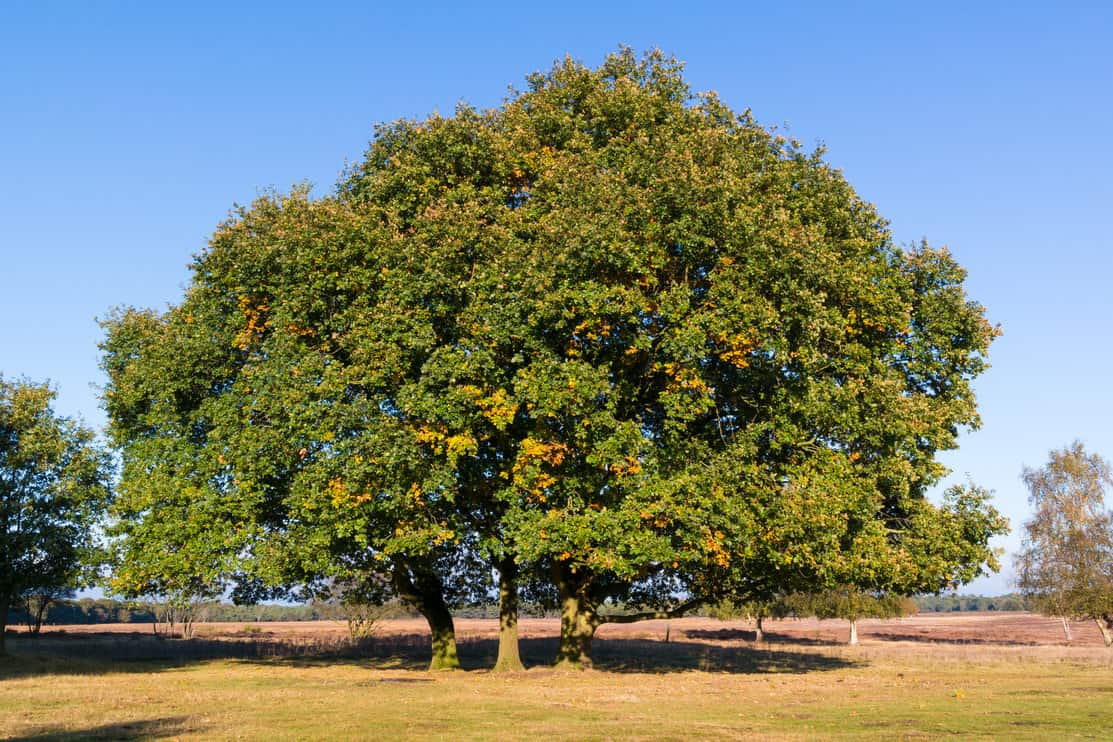
These moderately shiny leaves have a wide variety of colors throughout the seasons; in the summer, they range from light to deep, dark green, and then shift to gold or crimson as the summer creeps on.

The leaf of a red oak tree is smooth, almost shiny. As deciduous trees, they have some irregular bristle-tipped teeth. They, on average, are about 4 to 10 inches long and 3 to 6 inches wide.

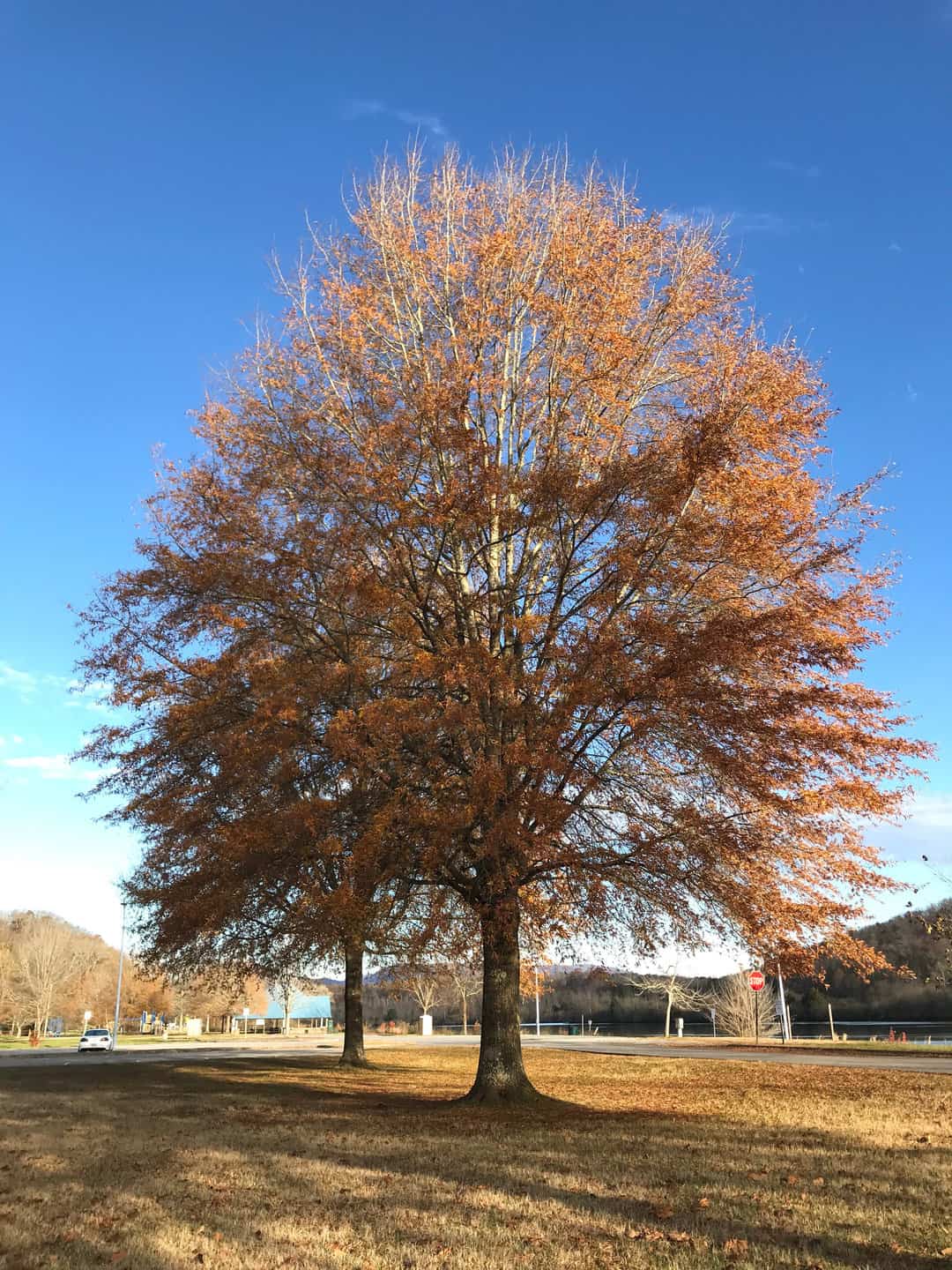
In the fall months, the leaves of a red oak continue to deepen to either a vibrant orange or an even deeper crimson. In the fall, these leaves can be bright red, maroon, crimson, golden-yellow, yellow-brown, or a mix of color even darker but just as stunning.

White Oak Tree Leaf Characteristics

White oaks have leaves that range from 5 to 9 inches long, while their width is smaller at 2 to 4 inches. Instead of more jagged, bristled points, they have blunt-ended ones that vary in size and shape based on the location and other trees around. 

The leaves are pretty thick and may not fall from the tree throughout the winter months, unlike those of the red oak. They will fall off eventually but do tend to last longer and provide a very picturesque contrast of bright white against a deep reddish-brown color.

Best Oak Tree Hardiness Zone
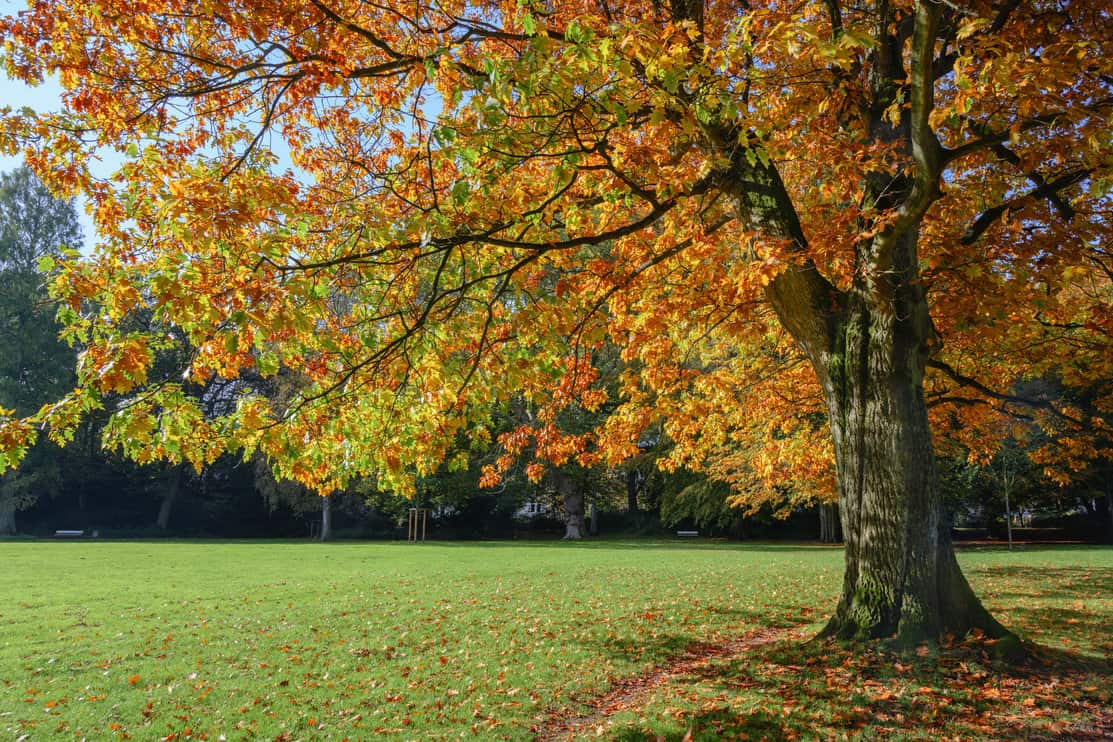
Old northern red oak tree (Quercus rubra) with colorful autumn leaves in a park.

Do you ever find yourself wondering what exactly the best growing zone for an oak tree is? Have you wondered if that differs between red and white oaks? Well, we are certainly glad that you’ve kept reading this far because this one’s for you!

First, what on earth is a hardiness zone? 

The USDA defines different hardiness zones across the country, which can be found on a map here. Oak trees fall into the lower number range, which means that they are hardier trees. Okay… and?

Well, this means that these trees can do well in lower temperatures. 

The way that the USDA hardiness zones work is that each zone represents a range of 10 degrees Fahrenheit. The zones are then divided into letters A and B. They break down the 10-degree temperature range in half, the lower 5 degrees of the range and the higher. 

For example, zone 5 represents minimum temperatures in the range of -10 to -20 F. SO, subzone 5a would be referring to temperatures of -10 to -15 F, and subzone 5b refers to -15 to -20 F.

Does that make sense? If you aren’t quite there, we get it. This is a lot of letters and numbers to think about. So, we are going to explain a little more. 

A hardiness zone deals with the information on what types of plants can survive certain climate conditions, including the ability to survive in a given minimum temperature range. Queue our hardiness, or growing, zones! 

Hardiness is a measure of how well a plant will survive cold temperatures; the USDA zones cover the basics of these temperatures and predictions but, like most systems, cannot account for every factor. 

Precipitation, elevation, and freeze dates are some things that get overlooked in this system. It is, however, the standard, and so, therefore, we are explaining in those terms.

Now, does that make more sense? Let’s talk about what hardiness zones our oak trees fall into. Spoiler alert, this is one of the biggest similarities between these two species.

Also, if you’re thinking about planting an oak tree in your backyard, refer to the hardiness guide and check out our piece on planting oak trees in your backyard

Best Red Oak Tree Hardiness Zone

The Ohio Department of Natural Resources tells us that red oak trees thrive in partial to full sun and can be found in USDA hardiness zones 3 to 7. Generally, temperatures from 10 to -30 Fahrenheit are going to be survivable when it comes to red oak.

Red oak trees generally can survive up to USDA hardiness zone 8. Red oak trees can live anywhere from 300-500 years and can reach a full height of up to 140ft. Annually, red oak trees can grow up to 24in per year.

White Oak Tree Hardiness Zone

Now, here’s some interesting info for white oak trees.

White oaks range from zone 3b to zone 9b. Generally, varieties of white oak trees can survive in temperatures as low as 30 to -40 Fahrenheit. White oak trees can live anywhere from 500-600 years, grow up to 18in annually, and reach a full height of 80ft.

The reason for this range that we see for both types of oak is that some varieties of white oak may be a bit less hardy than others. Additionally, there are many factors to consider when looking at these zones. Temperature is not the only extenuating circumstance that could cause issues with a tree. 

Oak Tree Adaptability

Red and white oak trees are quite adaptable, but what kind of soil do they like, and where do they grow best? Well, let’s get to it!

Red Oak Tree Soil Preference

Red oaks can thrive in any soil. It doesn’t get much more adaptable than that, does it? 

Red oak trees prefer moist, deep soil that is rich and slightly acidic, but it can easily adapt to dry soils with neutral or even slightly alkaline pH.

White Oak Tree Soil Preference

One type of soil that white oaks do not thrive in is that which is shallow, too compact, or overused. 

White oak trees grow their very best in areas that have moist yet well-drained soils. However, like red oaks, they are adaptable to more adverse conditions thanks to their deep root system that allows them to tolerate drought as they mature. 

This species thrives in areas with slightly acidic, deep, rich soil where the sunlight beams and the water is not too abundant. 

How Tall Do Red and White Oak Trees Grow? 

mighty oak tree wrapped in sunshine

Red and white oak trees can get pretty dang tall! Below, we’ve outlined a bit of a scenario for you regarding the natural growth of these oak trees.

Red Oak Tree 10 Year Height

At 10 years, the red oak tree is starting to get taller, so much so that it has now outgrown the people who planted it.

After 10 years, red oak trees are still quite young, but the trunk is getting a bit wider, and the height begins to make it look like a substantial tree. Red oak trees will be 15 to 20 feet tall at 10 years after first being planted.

White Oak Tree 10 Year Height

The white oak begins its first portion of life a bit more gently; following the red oak closely, a white oak tree will be 10 to 15 feet tall after 10 years of growth. Still taller than any person, it has not quite matured to the thickness or texture of a mature tree.

Red Oak Tree 25 Year Height

After 25 years, the red oak tree doubles and triples its size and will grow 35 to 40 feet tall. After 25 years, red oak trees will stand above a typical 2-story home and tower over people, younger trees, and most suburban architecture.

White Oak Tree 25 Year Height

At 25 years after being planted, a white oak tree will reach about 30 to 40 feet tall. At this point in its lifespan, the white oak tree is now a close competitor in the height category to the red oak.

Red Oak Tree 50 Year Height

50 years after the red oak tree was planted, it is about the height of a 4-story building, reaching 55 to 65 feet tall. 

White Oak Tree 50 Year Height

Did someone say a 4-story building after 50 years? Try a 5-story since the white oak is now generally taller for its age at 50 to 75 feet tall.

What is The Peak Height of an Oak Tree?

Overall, both red and oak trees have remarkable heights once fully grown. Here’s a peek at their full height below.

Red Oak Tree Peak Height

White oaks may have surpassed the red ones at the three 50 year mark, but let’s not forget that there are a ton of varieties of this species, and the northern red oak is one of them.

In many forests, red oak trees grow straight and tall, reaching a peak height of anywhere from 90 feet to an incredible 140 ft tall, while the trunk’s diameter reaches around 2 to 3 feet.

White Oak Tree Peak Height

The peak height of white oak can vary between the types of trees that fall under this title.

White oak trees often mature to something between 50 and 80 feet tall but are they are capable of growing upwards of 100 feet tall. 80 to 100 feet is a common range when we get to the ‘highest’ range of mature growth in this tree. In the individuals that grow to about 100 feet, the diameter of the trunk is going to be about 3 to 4 feet. 

These get HUGE.

That’s a Wrap!

Now that we know a little more about the major types of oak trees, how they grow, where they thrive, and what they can be expected to become in a few centuries, it’s clear that there is a lot to know about oaks.

Red and white oaks are similar trees but, at the end of the day, there are many differences that shape their identities as individual species. 

Keep in mind that white oaks tend to live a little longer, so if you’re worried about your descendants reaping the benefits of a specific tree you’ve planted, this might be the one for you. 

Red oaks, however, grow a little faster at 18-24 inches per year and can thrive in any type of soil. Now that is a combination of speed and adaptability that we can support.

Really, the choice is yours. What shade of bark or height do you want? What is a better option for your environment? The questions may be endless, but we hope this provides you with a good reference of what tree might just be the one for you.

Thanks for reading! Now, go plant a tree!!

References

Cook, E. R. (1985). A time series analysis approach to tree ring standardization (dendrochronology, forestry, dendroclimatology, autoregressive process). The University of Arizona.

LeBlanc, D. C., & Terrell, M. A. (2011). Comparison of growth–climate relationships between northern red oak and white oak across eastern North America. Canadian Journal of Forest Research41(10), 1936-1947.

Dougherty, P. M., Teskey, R. O., Phelps, J. E., & Hinckley, T. M. (1979). Net photosynthesis and early growth trends of a dominant white oak (Quercus alba L.). Plant Physiology64(6), 930-935.

Tardif, J. C., & Conciatori, F. (2006). Influence of climate on tree rings and vessel features in red oak and white oak growing near their northern distribution limit, southwestern Quebec, Canada. Canadian Journal of Forest Research36(9), 2317-2330.

Lightning striking your oak tree can be a rather interesting experience. When it happens and lightning actually does strike your oak tree, there are a few reasons why, and several things you can do in order to save your oak tree.

Oak trees are taller than most trees and are more likely to get struck by lightning due to their height. If your oak is struck by lightning, you will need to water, fertilize, and trim dead branches off the tree. Lightning damage on your oak tree will split the tree and cause burnt, black marks.

Stick around and we will answer all your pressing questions, including how to care for an oak tree that has been struck!

Can An Oak Tree Survive A Lightning Strike?

In short, yes, it is possible. An oak tree can survive a lightning strike, though it is going to take some time and care to get the tree back to healthy standing.

It is possible that your oak tree may not survive the level of damage caused by a direct lightning strike. It all depends on factors such as the intensity of the strike, the height of the tree, and how the lightning impacts the tree itself.

So, while oak trees can survive a lightning strike, it is not always a sure bet that they will. 

​​For that reason, we are also going to help you learn some best practices to follow as you work to maintain your oak tree’s vitality after a lightning strike. There are things you can do, from preparing and learning about lightning to understanding maintenance practices following a lightning strike. 

To understand an oak tree’s reaction to being struck by lightning, it is important to first understand what lightning is. 

Just Why Does Lightning Strike Oak Trees?

Lightning strikes at night during a severe thunderstorm over the city of Mendoza, Argentina

Essentially, lightning is a discharge of electricity. Such electricity also happens to be the cause of the thunder we also associate with thunderstorms. Oak trees are conductors of lightning because they offer a tall location close to the clouds and are full of moisture and sap that are better at conducting energy than the air and shorter plants nearby.

According to the UCAR Center for Science Education, just one stroke of lightning can heat the air nearby up to around 54,000 degrees Fahrenheit.

So, when this discharge of electricity, which is extremely hot, contacts a conductor such as an oak tree, it causes quite the commotion. Understandably so!

Not only does this lightning strike cause damage to the oak tree, but there is also a very audible reaction that occurs, which we are going to explain next.

What Does It Sound Like When Lightning Hits An Oak Tree?

The extreme temperatures generated by a bolt of lightning (let us not forget it is fifty-four thousand degrees Fahrenheit in the air), creates the sound that accompanies a lightning strike connecting with a oak tree, which is quite fierce.

The sound, explained by the Library of Congress to be a giant shock wave, sounds much like an extremely loud bolt.

The heat of the air causes the air itself to expand faster than the speed of sound, which results in hearing thunder very close to you, hence the loud noise that comes with lightning striking a nearby oak tree.

When lightning and thunder are close together, you know a storm is close. As the time increases between seeing a bolt of lightning and hearing a clap of thunder, the lightning is getting further away from you because the sound is taking longer to travel.

How Can You Tell If Lighting Struck A Oak Tree?

Sometimes, it is not even apparent your oak tree has been struck by lightning until it rapidly declines.

In this situation, the electric current of the lightning would have run through the inside of the oak tree, using the sap and internal moisture as a conductor. Internal damage caused by a lightning strike may not be noticeable on immediate inspection, but causes severe damage to the oak tree itself.

Lightning damage may also be seen in a range of forms, when visible from the outside. Lightning scars, which are black, singed-looking streaks down the oak tree, and loss of bark are two mild signs of this phenomenon.

Other external signs might be much more immediately noticeable, like the oak tree’s bark may be stripped off. Due to the way lightning strikes usually hit, this appears as spiral-shaped peels.

The North Carolina Cooperative Extension even details that a tree struck by lightning might burst into flames and explode. So, there is every level of damage possible- from internal and severe to external and less damaging to external and very severe.

Now that you know what to look for to see if your oak tree may have been (or was) struck by lightning, let’s talk about the odds of this happening.

What Are the Chances Of An Oak Tree Getting Struck by Lightning?

Old tree trunk struck by lightning, Nature background.

While trees, namely oaks, are common targets of lightning strikes, there is not much available research about how often exactly this occurs. 

With about 100 lightning strikes hitting earth each second, your oak tree could be a conductor of lightning one of these days.

A piece from the University of Georgia proves it is difficult to pin down an exact probability, but that a tree’s topographic location, height, and relative proximity to other structures all play a large role in assessing the risk of it getting struck.

It is not as common for oak trees to die from a lightning strike, so keep it in mind as you consider this. Your tree has a chance of getting struck, but there are many potential outcomes.

What To Do When Lightning Strikes Your Oak Tree

It’s all well and good to know about what is involved in preparing for a natural catastrophe like this, from checking your insurance to knowing what to look for when you suspect your oak tree has been struck, but the after is also crucial.

If your oak tree has been struck by lightning, there are many steps you can take to ensure that, when possible, the oak tree recovers and can thrive once again. Trees, especially oaks, are resilient and adaptable. It is important to learn how to help them as they learn to rely on themselves again.

Luckily, there are plenty of ways to help your tree as long as it is not damaged beyond repair. Helping with the upkeep that it would usually take care of by itself is going to be one of the biggest factors when working to support your tree’s life force regeneration.

Make Sure Your Oak Tree Gets Enough Water

One of the biggest detriments to an oak tree being able to begin its self-healing process is when the tree does not have enough water. Lightning striking the tree works to pull some of the moisture content from the tree itself, both in its roots and the sap that runs through the tree.

Some of the biggest damages to an oak tree comes in the form of losing liquid. This also happens to be one of the biggest reasons the tree is struck by lightning in the first place. 

As we have mentioned, oak trees are great conductors of lightning because of their height in relation to both the ground below them and to other structures such as buildings, cars, and people. 

The other reason is oak trees are such a great conductor of this electric current, and it all has to do with the same sap and water that are pulled from the oak tree during the strike. The moisture of these things draws lightning to the tree because it offers a path of least resistance. 

So, watch out for the water your oak tree is getting as it works to heal. Its biggest life force attracted the destruction in the first place, so your tree deserves all the rehydration it can get!

In addition to water, it’s very important that your oak tree gets proper sunlight as well.

Add Fertilizer To Your Oak Tree

Close up of oak tree wait for fertilizer in the park.

If you are not sure what else to do as you attempt to keep your oak tree alive, add fertilizer into the mix.

Using fertilizer, along with the water you should already give your oak extra of, will help give your oak tree the nutrients needed to see fresh growth and revitalization. 

While the sap and moisture were stripped from the oak tree, so were other important nutrients.

Along with this, lightning strikes zap the energy out of a oak tree, which makes healing and eventual new growth a challenging feat when the tree is left alone to undertake it. 

Fertilizer offers very important nutrients that help the oak tree rebuild energy to continue its journey back to being a solid, viable organism.

This Miracle-Gro Garden Soil for Trees and Shrubs will help you stimulate your tree as you work to get it to the next spring and hope to see new growth. Not only is this product highly affordable, so you don’t have to stress about a struggling tree and costs, but it is also fortified with important minerals like phosphorus and iron.

To learn more about using fertilizer for your oak tree, check out our article: 3 Best Oak Tree Fertilizers (and How to Use Them).

Trim Dead Branches Off Your Oak Tree

Help your oak tree, both literally and figuratively, lose the dead weight by trimming any dead or dying branches. This is best done in the winter months because it is going to help catalyze new, healthy growth the oak tree desperately needs to remain viable. 

Most oak trees struck by lightning just need to make it to the next spring. Though it is not 100% guaranteed, any trees able to survive a lightning strike and then survive well enough to bloom new buds will make it in the long run.

You can also regularly trim your oak tree to stimulate growth and take care of any dead branches at any time, whether or not your tree is healing. By practicing this healthy maintenance, you take some stress off of your oak tree and allow it to flourish!

You’ll want to trim your oak trees sooner than later after a lightning strike, but it’s always best to trim oak trees during the winter or early spring. You can learn more about best oak trimming practices in our article: Best Time To Trim Oak Trees + Trimming Calendar And Tips.

Monitor Your Oak Tree

Along with the common tactics you will follow to ensure your oak tree can get back on the right track, just checking in is an important aspect of the road to recovery. 

By regularly observing your oak tree, you will have an idea of its progress, whether it is improving (we hope!) or declining (an unfortunate possibility).

Keep in mind not every tree is salvageable after a lightning strike. Do not blame yourself if your oak tree looks healthier and then slips back into decline. Such is the nature of… well, nature.

Most oak trees live to be 100-150 years old, so adding these tips can help that process, especially when the tree is struck by lightning. To learn more about specific types of oak tree general lifespan, read our article: How Long Do Live Oak Trees Live? Lifespan for All Common Types.

Wrapping It Up!

Now that we’ve learned a little more about what lightning is, how it can affect an oak tree, signs lightning struck your tree, and how to save it, all that’s left is to hope this does not happen to your tree.

If lightning has struck your oak tree, remember to evaluate the status of your tree’s wellbeing, give it extra water and fertilizer, and trim any dead branches as it embarks on its process of recovery.

When an oak tree is struck by lightning, it might die. This is always a possibility, but not nearly as probable as one might expect. If you take care of your oak tree following the strike, there is a good chance it will return to at least a version of its healthy self. 

Caring for an oak tree after a lightning strike takes work, but it will be clear to see whether your tree appears to be improving. If you do not see any improvement, it may be time to consider removal. If improvement continues, there is an increased chance your tree will make a recovery.

We hope this has helped you understand why lightning is attracted to trees, why and how it can be so detrimental, and what to look for if you think your tree has been targeted by this event.

If your oak tree has or may have been struck by lightning, remember to take the steps:

  • Help the oak tree rehydrate as much as possible
  • Fertilize the soil around your oak tree to stimulate regrowth 
  • Trim any dead branches to allow the oak tree’s energy to be focused on growing new buds
  • Check your oak tree once in a while to see how its progress is going

For now, thank you for reading!

References

Defandorf, F. M. (1955). A tree from the viewpoint of lightning. Journal of the Washington Academy of Sciences, 45(11), 333-339.

Gora, E. M., Bitzer, P. M., Burchfield, J. C., Schnitzer, S. A., & Yanoviak, S. P. (2017). Effects of lightning on trees: A predictive model based on in situ electrical resistivity. Ecology and Evolution, 7(20), 8523-8534.

Taylor, A. R. (1965). Diameter of lightning as indicated by tree scars. Journal of Geophysical Research70(22), 5693-5694

Today we’re talking about the best time to trim oak trees. Did you know trimming oak trees at certain times can be detrimental to your tree?

Oak trees respond best to trimming in the winter and early spring. Dates between October 1st and April 1st will usually provide optimal oak tree trimming conditions. This is because the tree, and potentially damaging fungi, are dormant, making your oak tree less susceptible to damage and disease.

Read on to learn about the best time and season to trim your oak trees. Did you know that there’s an optimal time to trim your oak trees? We’ve got you covered with a trimming calendar and the best zones for growing oak trees.

Here are our tips on general oak tree tips and the best time to trim oak trees.

The Best Time To Trim Oak Trees

Oak trees are commonly found throughout the world in temperate regions and even some tropical regions. Oaks belong to the genus Quercus, which consists of 400 species and are both deciduous and evergreen.

Oaks contain tannic acid, which helps in protection from fungal diseases and insect infestations. Although oak trees contain tannic acid, they are susceptible to a variety of diseases caused by both fungus and insects.

Oak trees are extremely susceptible to a handful of diseases, including sudden oak death and oak wilt. Both of which kill oak trees quickly. To avoid this, trim oak trees when the trees are dormant. 

If you are looking for a new tree trimmer, the Greenworks 40V 8-inch Cordless Pole Saw is a fantastic option! It has a 20-inch steel blade and an automatic oiler for peak efficiency!

The best time to trim oak trees is in the winter and early spring, preferably after October 1st and before April 1st. When your oak tree is dormant, the tree is not actively growing. Pruning trees during this time will limit and prevent the spread of fungal and insect infestations. 

Similarly, during winter, fungi and insects are dormant, so it is significantly less likely to spread diseases during this time..

Common Oak Tree Diseases That Happen From Trimming

You would think tannic acid would prevent oak trees from getting most diseases, or at least protect them. However, this is not the case. 

Some of the most significant and fatal diseases to oak trees include sudden oak death, Phytophthora ramorum, and oak wilt, Bretziella fagacearum. Both sudden oak death and oak wilt are diseases caused by mold and fungus, despite tannic acid being present. 

Sudden oak death, Phytophthora ramorum, is a water mold, or an oomycete, meaning it produces a motile zoospore. Motile zoospores can move towards and away from certain chemicals, i.e. food source chemicals, specifically in plant material. 

According to the USDA’s Animal and Plant Health Inspection Service, reports of sudden oak death began in 1995, and it is considered an invasive exotic species. Sudden oak death was first detected in San Francisco, California, and in Oregon, both of which have the exact climate this pathogen thrives in. 

This oak tree ailment can also affect over 75 different plant species, contributing to its spread. P. ramorum spreads through rain, contaminated irrigation or plants, and even contaminated soil. It creates calluses, also known as cankers, on the bark seeping black and red. 

Oak wilt, Bretziella fagacearum, is a fungal disease that rapidly kills thousands of oak trees every year. Unfortunately, oak wilt spreads to newly pruned trees in spring and summer. Fungal spores spread by attaching themselves to insects such as beetles that bore into the wood, and through firewood transportation by humans. 

Oak wilt can also be spread long distances via airborne spores and shorter distances via root systems beneath the ground. Oak wilt is a vascular wilt disease that prevents water from getting to the rest of the tree. 

As if this wasn’t bad enough, the fungus can overwinter on dead tissues on trees appearing in spring and summer, killing the tree within two months. 

Symptoms of oak will consist of exactly what the name states, wilting. Leaves may wilt and become discolored, resulting in defoliation, i.e., sudden leaf drop. There is currently no treatment for this disease, but arborists are working to conserve oak trees and limit the spread of this disease.

To learn more about all the common oak tree ailments, read our guide: What’s Wrong With My Oak Tree? 10 Most Common Oak Diseases.

Oak Tree Trimming Calendar By Name And Hardiness Zone

Tree NameBest Time To TrimBest Growing Zone
White oak, Quercus albaWinter/Early Spring3-9
Willow oak, Quercus phellosWinter/Early Spring5-9
Swamp white oak, Quercus bicolorWinter/Early Spring3-8
Northern pin oak, Quercus ellipsoidalisWinter/Early Spring4-7
Scarlet oak, Quercus coccineaWinter/Early Spring4-9
Bur oak, Quercus macrocarpaWinter/Early Spring3-8
Swamp chestnut oak, Quercus michauxiiWinter/Early Spring5-9
Pin oak, Quercus palustrisWinter/Early Spring4-8
English oak, Quercus roburWinter/Early Spring5-8
Red oak, Quercus rubraWinter/Early Spring4-8

Species Of Trimmable Oak Trees And Where They Grow

White Oak Tree, Quercus alba

The white oak is a deciduous oak found in zones 3-9 and is native along the east coast of the United States, found as far north as Maine and south to Florida, and as far west as Minnesota and Texas.

We typically use white oak trees for timber and flooring. This oak species grows from 50 to 80 feet tall and even as tall as 100 feet!

You can learn more about white oak trees in our article: 32 Incredible Facts About White Oak Trees.

Willow Oak Tree, Quercus phellos

A fall foliage willow oak (Quercus phellos) tree at Oak Ridge Marina, Oak Ridge, Tennessee.

The willow oak is also a deciduous oak found in zones 5-9. This oak tolerates poorly draining acidic soils, and covers from East Coast to Midwestern United States. The willow oak typically grows anywhere from 40 to 75 feet, along the bank of swamps, streams, or canals.

Swamp White Oak Tree, Quercus bicolor

Swamp white oak trees are deciduous oak trees found throughout zones 3-8. It needs acidic wet soil but is also drought tolerant. 

Swamp white oak trees also grow at a slow to average rate and are native as far north as Southern Canada to the Midwestern United States. The swamp white oak gets as large as 50 to 60 feet and grows along the banks of swamps, lowlands, floodplains, lakes, and valleys.

Northern Pin Oak Tree, Quercus ellipsoidalis

Oak tree (Quercus ellipsoidalis) with reddened leaves against green trees. Sunny day in October.

The northern pin oak is a low-maintenance oak tree found in zones 4-7. This oak reaches a height of 50 to 70 feet and is drought tolerant, growing well in acidic and well-draining soils. 

This oak is a medium-sized deciduous oak with elliptical green leaves. This oak species lives from Canada to the Midwestern United States in sandy upland woods.

Scarlet Oak Tree, Quercus coccinea

The scarlet oak grows in zones 4-9 within the eastern part of the United States and is native to Missouri. It tolerates drought conditions and black walnuts and grows to 70 feet tall. 

Bur Oak Tree, Quercus macrocarpa

Bur oaks are native to Missouri and grow in zones 3-8. Although it prefers moist loamy soils, it can also withstand a variety of soil conditions. 

Bur oak trees grow in stream valleys like the Ozark in Missouri and bottomland soils.. This species of oak grows to a height of 60 to 80 feet tall and gets its name from the ring of mossy burrs found around the acorn.

Swamp Chestnut Tree, Quercus michauxii

Swamp chestnut oaks grow mainly in the southeast of the United States, and zones 5-9. This species is native to swampy areas, floodplains, and lowland wooded areas. 

Swamp chestnut oak trees reach heights of 40 to 60 feet and were traditionally used as a timber tree in the 1800s. The people of this time used it in flooring, wagons and tools, as well as baskets.

Pin Oak Tree, Quercus palustris

The pin oak is a medium-sized deciduous tree that grows in zones 4-8. It grows well in medium to wet acidic loamy soil, but can also tolerate poorly draining soils. 

However, pin oaks do not do well in alkaline soils. Pin oak trees grow anywhere from 50-70 feet and thrive in the lowlands of the Midwest. Some people commonly use pin oak trees as landscape trees and along streets.

English Oak Tree, Quercus robur

Common oak, Quercus robur, in autumn in the Netherlands

According to Nazareth College Plant Biology, English oaks are native to Western Asia and Europe, but were introduced to North America in the 1600s and came to use as timber in England. These trees grow anywhere from 40 to 70 feet and grow easily in a variety of soils, typically growing best in zones 5-8.

Red Oak Tree, Quercus rubra

The red oak, also called the northern red oak, is a deciduous oak tree found in zones 4-8 and is native to Missouri. This species of oak tolerates drought conditions, black walnuts, as well as air pollution. This is a fast-growing oak tree that reaches a height of 50 to 75 feet tall.

You can learn more about the red oak tree in our piece: 29 Incredible Facts About Red Oak Trees

Hardiness Zones Where Oak Trees Grow

You will find oak trees throughout North America and grow in almost every zone. They are most common in temperate regions like the United States, but also grow in Mexico, Asia, Europe, and even Africa.

According to the University of Idaho College of Natural Resources, various oak tree varieties grow throughout zones 2-9. With over 400 oak tree species, you can find oak trees in almost every environment. Oak trees thrive in a variety of soils from acidic to alkaline and from clayey to sandy.

In these hardiness zones, there are specific varieties that can grow in sub ranges of the parent range described above which we’ll discuss below! While trimming in these zones is best during the winter/early spring season, you can learn more about the best time to plant oak trees in our article: The Best Time to Plant an Oak Tree (And How to Do it)

Common Uses Of Full Grown Oak Trees

Oak trees are famous for their incredibly sturdy and long-lasting wood. For more commercial goods like fence posts, cabinets and floors, we use red oak. White oak is a durable wood that is used in furniture, to make barrels, canoes, and fence posts. Oak is great for construction and woodcarving because of its durability. 

Oak flooring comes from red and white oaks and is the most common wood flooring that allures people with its tight-knit grain you can stain in an array of colors. Oak flooring is probably the most wide-known use of oak that gives a timeless look to homes.

Some oak species have also been used in natural pharmaceuticals because of their anti-inflammatory and antibacterial properties from tannins found naturally in oak bark.

Historically, Native Americans used parts of the red oak and white oak to treat ailments and wounds. The oak tree is also sacred and used in ceremonies in certain Native American cultures. 

Acorns have been used to create flour, soups, and other types of foods. In traditional medicine, it has been used to treat hemorrhoids, diarrhea, ulcers, and wounds. Today, you can find oak bark sold over the counter as powders, teas, and liquid extracts.

Learn more about the uses of oak trees and what types are best for firewood here!

Best Time To Trim Oak Trees: In Conclusion

That’s all we have for today on the best time to trim oak trees, oak trimming calendar, and tips. If you have ever walked down a street with trees, gone for a hike, or hung out in a backyard, it’s a safe bet that you’ve seen an oak tree! Oak trees are widely beneficial to the ecosystem and provide us with a variety of things that are part of our everyday life.

To recap, here are the best times to trim oak trees, and a quick list of some tips: 

  • The best time to trim or prune oak trees is in the winter when insects, fungus, and trees are dormant
  • Oak trees are susceptible to devastating diseases like sudden oak death and oak wilt
  • Oak trees grow in zones 2-9 throughout the world
  • Oak trees can tolerate a variety of soils and environments
  • We covered only 10 species of oak trees, but there are over 400 species of oak trees.
  • We use oak trees for timber, construction, hardwood flooring, cabinets, and furniture. Traditional medicine and Native American cultures also find oak trees useful.

There you have it. Oak trees are incredibly durable yet simultaneously susceptible to rapidly spreading fungal diseases. They make up our deciduous forests and provide us with timber we use to build homes, furniture, and flooring. Next time you think about pruning your oak tree, refer to this article and keep in mind to only trim it in the winter!

If you’re finding that your oak tree has been affected by early trimming, read our guide: 10 Early Symptoms of a Dying Oak Tree: Prevention Guide

References:

Juice, S. M., Templer, P. H., Phillips, N. G., Ellison, A. M., & Pelini, S. L. (2016). Ecosystem warming increases sap flow rates of northern red oak trees. Ecosphere, 7(3), e01221.

Rose, Anita K., Cathryn H. Greenberg, and Todd M. Fearer. “Acorn production prediction models for five common oak species of the eastern United States.” The Journal of Wildlife Management 76.4 (2012): 750-758.

Taib, Mehdi et al. “Medicinal Uses, Phytochemistry, and Pharmacological Activities of Quercus Species.” Evidence-based complementary and alternative medicine : eCAM vol. 2020 1920683. 31 Jul. 2020, doi:10.1155/2020/1920683

Vettraino, A. M., et al. “Occurrence of Phytophthora species in oak stands in Italy and their association with declining oak trees.” Forest Pathology 32.1 (2002): 19-28.

Trees can be a wonderful addition to any yard. They provide shade, esthetics, and places for nice wildlife to live, such as birds. Some trees even provide food for us. 

The ugliest yard trees are black walnut trees, cottonwood trees, Chinese tallow tree, eucalyptus trees, Bradford pear trees, crepe myrtle trees, ash tree, the princess trees, poplar trees, and tree of heaven. These trees are either invasive, cause a mess due to seeds, or are generally unappealing.

Whether the tree is messy, bad for the environment, or just downright unattractive, this list is trees many deem to be the ugliest tree to plant in your yard. 

Black Walnut Trees

Black walnuts are expensive nuts. Many love them for their rich flavor, but these trees are a pain to have around because of their murderous tendencies. They emit a natural herbicide known as juglone, and this compound kills all plants sensitive to it in the area. 

This herbicide the tree produces will kill any plants around the drip line. You also need to be diligent when cleaning up after this tree, since it is in its bark and leaves. Unlike other plants, you cannot compost any debris from this tree. 

Black walnuts also dye everything and are a pain to harvest. Unlike regular walnut shells, these shells are rock hard and some take to running them over with the car. The flavor is more bold and nutty than regular walnuts, but it is up to you whether you believe they are worth it. 

Just because it is a sought-after tree does not mean it is the right tree for you and your landscape. There are plenty of other nut trees that are better than the black walnut tree. 

  • English Walnut 
  • Pecan Trees
  • Pistachio Trees

These trees all produce wonderful nuts and can make good yard trees. 

English walnut trees are similar to black walnuts, except they do not produce the herbicide. These nuts are not as flavorful in baking but will do to avoid sacrificing your other plants from the black walnut’s herbicide. 

Pecan trees are also a fantastic alternative and the nuts are wonderful. They make delicious baked goods! They grow very similar to the black walnut and you can use its wood for smoking meat to add a wonderful flavor.

Pistachio trees are an uncommon contender, but many do not consider growing them. These trees are relatively hardy, easy to grow, drought-resistant, and need heat to thrive. This tree is an amazing tree for states like Arizona.

The real question you should always ask before planting a tree like a black walnut is your long-term goal. If you want to grow a tree for nuts, consider the alternatives that allow you to grow other plants safely.

You can also learn more about the differences between a black walnut tree and a walnut tree in our article: 8 Differences Between Black Walnut Trees and Walnut Trees

Cottonwood Trees

This tree is a fast-growing tree and produces a cotton-like seed. They are a member of the poplar family and grow along bodies of water. Some claim the bark has medicinal benefits and may use it as fodder for horses. 

Cottonwood trees can wreak havoc around properties. Not only do the seeds make a mess, but their root systems destroy plumbing, as well as tear up driveways.

The roots are designed to find water, making your plumbing the ideal place for them to invade. Another issue is their roots are shallow, making them easily able to tear up sidewalks and driveways. 

These trees can make a massive mess, and their fast growth requires frequent pruning.

A nice alternative is the sugar maple tree. Maple trees are beautiful, especially in the fall, and can easily reach 80 feet. These trees produce a sap that, when harvested and processed, makes maple syrup.

Chinese Tallow Trees

Triadica sebifera, also known as Sapium sebiferum, Chinese tallowtree, Florida aspen, syn: Sapium sebiferum, deciduous tree with rhombic to ovate leaves and small greenish-yellow flowers

This tree is from China and Taiwan but was later introduced to Florida. In 1998, it got added to the noxious weed list. It is illegal in Florida to plant this tree due to it taking over natural areas. 

This tree is not appropriate for non-native landscapes because it is highly invasive. Birds eat the popcorn-like seeds and spread them in their droppings. These trees take away resources from native Floridian plants. 

Birds can transfer the seeds for miles, so remove them immediately to prevent spread.

A great alternative is the dogwood tree. Dogwoods are native to the southern area of the United States and make fantastic trees for landscaping.

Eucalyptus Tress

Eucalyptus trees are beloved for their ability to make wonderful essential oils! The scent is wonderful in the shower and can help clear airways. It can make a wonderful yard tree.

These trees have been introduced to warmer states. They make it beautiful to look at but they have many ugly issues. They shed leaves and bark, making massive amounts of mess. 

The mess makes eucalyptus trees a perfect conductor of fire. Their oils also are very flammable and the gases from the oil can engulf them in flames. This can make for a dangerous situation when you grow them in high fire risk zones. 

People often plant eucalyptus trees in areas they are not native to, and they can be highly invasive. They then cause issues competing for space with native trees. Rather than planting a eucalyptus tree, plant a tree native to your area.

California, where these trees are often planted, has many wonderful native trees, one being western sycamore. The Western sycamore is a beautiful, large deciduous tree. It grows well in California and can make a wonderful landscape tree. 

This tree is native and will not cause environmental harm. They are very easy to care for and grow fairly fast. This tree is important to the natural development of native wildlife.

If you want to learn more about eucalyptus trees, check out our article: 9 Amazing Differences Between Eucalyptus And Gum Trees

Bradford Pear Trees

Bradford pear trees in spring

These trees make almost every list of the worst trees possible. This is mainly because of the fishy odor it produces. 

The Bradford pear tree was introduced in the 1960s. It quickly became a These trees make almost every list of the worst trees possible. This is mainly because of the fishy odor it produces. 

This tree is hardy and can survive many soil types. It is highly invasive and creates problems for native populations. It reproduces like crazy and often suffocates native plants. 

Have I mentioned it smells like fish? Because honestly, that is a big negative when it comes to plants. Not to mention these trees easily break, so when you are not smelling repulsive fishy smells, you are picking up broken branches. 

So what tree should you plant instead? Well, honestly, just a good old pear tree that bears fruit. It will have the beautiful flowers of the Bradford pear without the negatives. The only potential issue is you need two for proper pollination.

Here some some great pear tree alternatives to Brandford pear trees:

  • D’Anjou
  • Kieffer
  • Summercrisp

Each variety is different in its own way and you should research the varieties before choosing. They have varied requirements, including zones, watering, fertilizer, and spacing. Consider the benefit of having your very own fruit tree!

If you are looking for ways to identify any of the trees we have discussed so far, or the ones we will mention further on, look for a tree identification guide. The National Wildlife Federation Field Guide to Trees of North America contains over 2,000 photos to help you identify over 700 different species of trees.

Crepe Myrtle Trees

Crepe Myrtle’s are not ugly in appearance but have ugly tendencies. These trees are a favorite among many but can cause genuine issues for landscaping. 

They are highly susceptible to various diseases such as powdery mildew. This disease can be passed along to other trees on your property. Having a sensitive tree like a crepe myrtle. Aphids are another issue with these trees. 

With disease issues running rampant with this tree, it is no wonder many would not want to plant it.

Instead of planting Crepe Myrtle trees, plant these instead:

  • Dogwoods
  • Chaste
  • Redbud

Dogwoods are a native classic to many of the south! It blooms beautiful fragrant flowers, but more importantly, it is sturdy!

Chaste trees are the underdog here! Many do not discuss how wonderful this tree is! It looks very similar to lilacs and can make a wonderful alternative to crepe myrtles.

Redbuds are another crowd favorite. This tree produces beautiful blooms and is very resistant. It is also the state tree of Oklahoma! 

Ash Trees

Ash trees are falling victim to a pest known as the emerald ash borer. These pesky bugs kill the tree and cause many issues around. They are also very messy and can be an overall pain for many busy gardeners!

Dead Ash trees are a major hazard. The emerald ash borer can kill a large tree in as little as a year. This dead tree will fall or catch fire and potentially destroy your property or hurt you!

It is important to inspect all trees to be sure of the health and safety of everyone. 

Fun Fact! Woodpeckers eat emerald ash borers! This makes them important to the health of your tree!

Woodpeckers can often be seen pecking trees. This is because they eat the bugs inside the tree trunk. Woodpeckers can eat up to 85% of an infestation! They are a vital part of the balance of the ecosystem.

Ash trees also drop leaves and seeds. This means every fall and when seeds drop, you will have to clean up. If the tree becomes infected by emerald ash borers, you may even need to clean up an entire tree!

Here are a good few alternatives to the Ash tree!

  • Oak trees
  • Magnolias
  • Elm
  • Redwood

Oak trees come in many varieties! They do drop leaves and acorns but can make a wonderful shade tree for your yard. Squirrels love these trees so it is perfect for wildlife lovers!

Magnolias are a favorite to all southerners, especially in zones 5 through 9 where they grow best. They produce beautiful white flowers that smell wonderful! Magnolias also grow very large, but they can be a little messy.

Elm trees are also a suitable replacement. They grow in zones 5-9 and come in a few varieties. These trees offer amazing shade and look uniquely beautiful.

Redwoods are conifer so they never lose their leaves! They do produce cones however. They can grow in many zones and make a lovely canopy tree!

The Princess Tree

Known by many names, including Paulownia, this tree is hardy and survives drought-like conditions, making it a very invasive plant. This tree will out-compete other trees in the area and cause native species to die off.

This tree is on the list by the National Invasive Species Center. Invasive species are a detriment to natural environments since they compete for resources, especially ones like the princess tree that thrives in all soil types and will quickly take over. 

While these trees may not be aesthetically ugly in the eyes of many, the chaos they cause is an ugly sight to see. Native species dying off is something to be taken seriously. These trees taking over have negative consequences for the ecosystem. 

As with many other species, the dogwood is a wonderful native species. Like the princess tree, this tree produces beautiful flowers and can make a fine tree for any yard!

Poplar Trees

Poplar trees are fast growers. Their roots and the fluff the tree produces around its seeds made an enormous mess.

The mess from the seed coating can make your yard look ugly and leave you constantly cleaning up. However, the biggest offender here is the roots because they will tear up everything.

No pipeline, driveway, or foundation is safe from the Poplars’ wrath. This tree’s coating can cause several issues, and many cities and states have major problems with them. Most have let the trees slowly go in favor of more complacent trees.

A good replacement tree for cottonwood is… you guessed it! The one and only dogwood. What can I say? Dogwoods are the best tree for most landscapes, and they will not destroy your yard.

The Tree Of Heaven

Lots of seeds in the leafage of Ailanthus altissima against blue sky in July

Despite its name, the tree of heaven is not heavenly. This tree is an aggressive invasive species. These trees are creating a massive issue with the native populations of plants. 

These trees excrete a toxin that kills other plants, effectively moving it up the local food chain. This tree aggressively overpowers other plants around it. 

The tree is also not as attractive as others on the list. This tree is mostly green with white flowers on the end. It makes a decent shade tree, but it can quickly take over. 

Elderberry is a similar-looking native tree with similar habits. The berries are fantastic and they can quickly grow around the yard. However, since they are native, they are a much better option.

Why Are Invasive Tree Species Bad?

Invasive species are a big problem among many ecosystems. Plants and animals can cause massive damage in environments they are not from. 

These non-native species take resources away from native species. This can cause issues by choking out the other species, especially if those are more sensitive than the invader. 

It is important that you choose plants that will cohabitate well with local environments. Check with your local extension office for help choosing plants. 

That’s All For Now!

Trees are inherently beautiful! The term ugly is used to describe the fact that some of these trees have ugly qualities. Many of which are invasive trees and cause awful damage to the environment. 

References

Miller, R. L., Bills, D. D., & Buttery, R. G. (1989). Volatile components from Bartlett and Bradford pear leaves. Journal of agricultural and food chemistry37(6), 1476-1479.

Clay, H. F., & Hubbard, J. C. (2021). Lythraceae (Crepe Myrtle Family). In The Hawai’i Garden (pp. 117-124). University of Hawaii Press.

Ding, J., Wu, Y., Zheng, H., Fu, W., Reardon, R., & Liu, M. (2006). Assessing potential biological control of the invasive plant, tree-of-heaven, Ailanthus altissima. Biocontrol Science and Technology16(6), 547-566.

Fig trees can be both ornamental decoration and a food source. Many love them for their excellent leaves and delicious fruit, making them a staple tree in plenty of gardens. However, some choose to keep their trees potted.

Potted fig trees provide a stable environment and compact space to plant your fig tree. In general, the best soils for potted fig trees contain well draining soil, slow release nutrients, and natural ingredients like peat moss and earthworm castings. With proper fertilizer, fig trees will grow 2-3 feet inside per year.

Understanding what you are purchasing for your plants is an important part of being a gardener. If you would like to learn the best soil, continue reading below!

Do Fig Trees Grow Well In Containers?

Fig trees can grow amazing in containers. Fiddle leaf figs are a common species used for this exact reason. However, fruit-producing figs such as Chicago Hardy Fig Tree can do well in containers

Any dwarf tree will do well in a container, because of their specific breeding for their size. Fig trees love having pots the right size for them. This means you will need to do frequent pot changes as your tree grows.

You can purchase pots of various sizes to help your fig tree transition throughout its growth. Whether you purchase from a nursery or propagate from cuttings of your own, knowing about growing a potted tree is important for your journey.

You may intend to plant your potted fig tree in the ground after it has reached the proper size for it. This could permanently solve your growing needs.

One benefit of growing figs in a pot is the option of bringing your tree inside if you are not in the right growing zone. Fig trees grow well in zone 5 and below. Once temperatures drop below freezing, cover your tree to protect it from the cold. 

Varieties Of Fig Trees For Containers

Tasty organic figs at local market

If you are looking to plant a potted fig, the variety of tree is important. Some of them will fare better than others in these conditions.

Black Mission Fig Tree

The Black Mission fig tree is a sought-after variety for potted planting. It produces fruit twice a year and is rather easy to maintain.

It produces a fruit with dark purple skin and beautiful pinkish flesh. The fruit is also very resistant to spoiling, which makes it great to eat fresh or process for the entire year.

LSU Purple Fig Tree

The Louisiana State University College of Agriculture produced this variety to be disease resistant. These trees also produce three crops a year, giving you a bountiful harvest.

The LSU Purple fig is very hardy and perfect for container growing. It is also self-pollinating, so this may be the tree for you if you only plan to plant one!

What Is The Best Soil Mix For Fig Trees?

There are a few ways to pick the right soil mixture. This mostly involves understanding the correct needs of a fig tree. Fig trees are very forgiving with soil requirements. 

Clemson Cooperative Extension suggests making sure the soil is free of root-knot nematodes.

Though typically figs love loamy well-draining soil, any excessive rocks or other debris can hinder root development. Adding various growing mediums, such as vermiculite or any other non-soil additive, can help lessen soil, which is important for drainage. 

It is important to research the different nutritional needs of the trees you plan on growing. Understanding components inside your soil is important. This knowledge will help you decide on what to add to mix the best quality soil for your needs.

Commercial potting mixes usually contain these additives. Here are some great commercial potting mixes to purchase online:

Miracle-Gro Indoor Potting Mix

Miracle-Gro is a fan-favorite brand. The Miracle-Grow Indoor Potting Mix contains coconut coir which is a fantastic additive. It retains moisture well, does not harbor fungus gnats as much as other mediums, and provides excellent nutrients.

Coconut coir is a more sustainable alternative to peat moss to bulk soil. Though lower in nutrients, this creates a better draining soil.

They claim it harbors fewer fungus gnats, which is a pro for anyone wanting to bring their plants indoors.

Fox Farm Happy Frog Organic Potting Soil Mix

Fox Farm Happy Frog Organic Potting Soil Mix is a superb organic option. This mix in particular is advertised specifically for ficus plants, which makes it the ultimate medium for growing an indoor fig tree.

The ingredients are luscious mediums for growing plants. It is an optimized soil with earthworm castings, bat guano, and aged forest products. These are wonderful plant foods. 

Earthworm castings help by providing excellent nutrients to plants. It is also good for the environment since earthworms take waste food projects and turn them into plant superfoods! 

Bat guano is the manure of bats, filled with slow-release nutrients. These nutrients feed your plants slowly and naturally release beneficial microbes into the soil. 

Aged forest products are bulk in this soil. It is like good compost and naturally helpful to plants. 

Black Gold All Purpose Potting Soil

The Black Gold All Purpose Potting Soil is an inexpensive alternative. It is nutrient-rich and contains compost, peat moss, perlite, and earthworm castings. This soil also has an added slow-release fertilizer to deliver the nutrients your fig tree requires to thrive.

Homemade Soil Mix

There are a few online recipes for a homemade potting soil mix. The University of Florida has one consisting of two parts soil, one part coarse sand, and one part perlite. However, you can substitute the perlite with pine bark. 

A benefit of making your soil mix is the control. You can mix in anything you feel works best for you. If you want it to be all organic and eco-friendly, you can.

Adding other things into this mix, like animal manure and things like mushroom compost, can allow you the opportunity to experiment with various ideas.

How Do You Prepare The Soil For A Fig Tree?

Woman holding fertile soil in hands, closeup. Gardening season

Preparing the soil is important for planting all plants. You should sterilize your medium by baking it in the oven at 250 degrees Fahrenheit for thirty minutes. This is important to kill any diseases and the dreaded fungus gnat. 

Fungus gnats come from potting soil and can wreak havoc around your home. Once they are buzzing around, they are the bane of everyone’s existence. They are a lot like fruit flies in their manor. 

Is Peat Moss Good For Fig Trees?

Peat moss is an amazing medium for most plants. It makes a fantastic addition to potting mixes, and you can use it as a seed starter. This is possible because it does not contain any weed seeds or any other harmful microbes. 

Sphagnum moss is what makes peat moss, which means it is an amazing water retention medium. However, you should always mix it with other mediums for efficient draining.

What Are Good Soil Amendments For Potted Fig Trees?

Soil amendments can be important to all plants. This helps retain nutrients inside of the potting mix. Potted plants struggle to maintain nutrients because of their smaller habitat and the lack of available nutrients.

In-ground plants have a continuous supply of fresh organic matter, which provides them with nutrients. Potted plants are limited, so you will need to supplement them with either specific amendments or a broad-spectrum fertilizer. 

Is Epsom Salt Good For Fig Trees?

Epsom salt is high in magnesium. Magnesium is important for fig trees because it is essential for photosynthesis, or how plants make their own food.

You will know if your fig tree is low on magnesium if the leaves begin to turn yellow by the veins. Sometimes a lower pH soil can be the cause as well.

Epsom salts are a natural and cheap solution to any deficiencies. They are readily available in almost every grocery store.

Are Grounds Beneficial To Fig Trees?

Coffee grounds, either used or fresh, can be a great fertilizer for most plants. They are high in nitrogen, magnesium, calcium, phosphorus, and many other nutrients. These nutrients are important for developing the tree. 

Coffee grounds are acidic, but luckily fig trees like slightly acidic soil. You can use the coffee grounds straight, or after making yourself a nice cup of coffee to reduce the acidity. Other applications include mixed into water, composted, or mixed in with other nutrients. 

Should I Put Perlite On My Potted Fig Tree?

Perlite makes a wonderful additive to provide drainage to the soil. The soil will not compact with this additive. Perlite adds no nutrition to the soil.

It is made of crushed volcanic rock and makes a wonderful additive to help drain the soil. This great additive will also aerate your soil. 

Do Potted Fig Trees Need A Lot Of Water?

Fig trees in pots require to be watered slightly more than if a tree was in the ground. While figs love well-draining soil, potting soil dries out quicker than usual. 

You should water your potted fig tree as the soil begins to dry out. This will help make sure your tree receives all the water it needs. 

Add things like perlite and other amendments to your soil to help increase the drainage. This is important for various reasons. Perlite does not interfere with roots but also adds the drainage quality needed inside the soil.

Pros Of Potted Fig Trees

Ripe fig fruits on the branches of a fig tree

Potted fig trees are a wonderful addition to any plant lover. Anything from fiddle leaf fig trees to fruit-producing figs. They are both parts of the ficus family.

Some pros of planting fig trees in pots are:

  • You can take the trees inside
  • If you move, you can take the tree with you.
  • You can figure out the best area for your tree.
  • Better control over the growing season.

You should consider these pros if you are contemplating growing a fig tree. These benefits may appeal to you. Especially if you live somewhere like an apartment complex or rent your home. 

If you live in the north, being able to bring your tree inside allows you to grow figs at home. If you do not own your home, being able to grow a fig tree inside a pot gives a non-permanent solution to you growing a fig tree. 

Some areas of your yard are not conclusive to certain plants. Being able to try areas out for your trees can help decide whether you want a plant permanently in that area.

Fiddle leaf figs are a common houseplant. They make a wonderful ornamental plant for your home. While they do not produce figs, they look fantastic.  

Cons Of Potted Fig Trees

Potted fig trees can be wonderful, but they aren’t for everyone. Some people cannot maintain potted trees in the way they need.

It’s not a good idea to plant fig trees inside because:

  • If you are forgetful, you may not care for the tree.
  • A constant need for water
  • Increased need for fertilizers
  • If bringing them inside, you may get fungus gnats

You need to weigh the needs and wants of yourself and determine if potting a fig tree is right for you. Figuring out what you want in a tree can help with this decision. 

Trees in pots need fertilizers since they do not have the constant nutrients available to pull in. In nature, decomposition helps add more nutrients to the soil. In a pot, this process does not happen, so you need to supplement it artificially.

Fungus gnats can live in the soil. When you bring the plants into your home to winterize them, they can invade your home. 

These plants have an increased need for water when inside a pot. If you are forgetful, this can harm your plants. Make sure you can care for the increased needs of a potted fig. 

How To Care For Fig Trees

Fig trees are a fun tree anyone can grow! Whether potted or in the ground, figs require the same amount of care just slightly tweaked.

Figs are in the ficus family along with mulberries and jackfruit. Figs are a beloved fruit in Mediterranean countries and have needs similar to these countries. 

Figs love a hot environment. They dislike winter and require protection from the cold. Combine this with great sun exposure and you need a minimum of seven hours a day. 

Mulch your trees to help maintain moisture and add nutrients. Nutrient requirements are minor. They do not need to be fertilized often when planted in the ground. 

A fig tree will do well with occasional pruning. Prune any dead branches or branches in excess to help prevent excessive water build-up that may cause fungal issues. This will also help maintain the size of the tree, making it easier for fruit to be harvested. 

That’s A Wrap!

Potted fig trees can be an excellent plant for some people. They do have increased needs for nutrients and can pose a risk of fungus gnats. Though can make a wonderful addition as a houseplant.

Knowing the correct way to care for these trees is important for any gardener interested in potting fig trees. 

I hope this helped you on your journey to growing trees!

References

Kim, K. M., Kim, M. Y., Yun, P. Y., Chandrasekhar, T., Lee, H. Y., & Song, P. S. (2007). Production of multiple shoots and plant regeneration from leaf segments of fig tree (Ficus carica L.). Journal of Plant Biology50(4), 440-446.

Oliveira, A. P., Valentão, P., Pereira, J. A., Silva, B. M., Tavares, F., & Andrade, P. B. (2009). Ficus carica L.: Metabolic and biological screening. Food and Chemical Toxicology47(11), 2841-2846.

Crisosto, H., Ferguson, L., Bremer, V., Stover, E., & Colelli, G. (2011). Fig (Ficus carica L.). In Postharvest biology and technology of tropical and subtropical fruits (pp. 134-160e). Woodhead Publishing.

Do you own a blue spruce? If you do, you know how beautiful it is and how excellent it is as an addition to your landscaping. Most people use it as a privacy shield, windbreaker, or border for their yards. You may also see them pop up as Christmas trees.

If your blue spruce tree isn’t blue, it may be the nature of your specific tree. Geographical location, low sunlight, too hot of temperatures, and over-watering can cause your tree to be less blue. The first step to making your blue spruce more blue is to fins out what’s causing it to be less blue.

If you want to find out more, continue on! We will dive deep into each cause, as well as give you suggestions to solve the issues.

A Bit About The Blue Spruce

The blue spruce, also known as the Colorado spruce, scientifically known as picea pungens engelm, is a native evergreen to the west and central Rocky Mountains. It is known for its rich blue-green or blue-gray color and aesthetically pleasing shape. 

Landscaping blue spruce trees can grow up to sixty feet tall and become very wide, but in the wild, they can grow up to 75’ tall and 20’ wide! 

They can survive in planting zones 2-7 and are very hardy. Landscaping spruces live anywhere from 40-60 years but can grow as old as 150-600 years. 

They are best planted during the winter, specifically between November and March, along with evergreens. They have to be planted in winter to establish a strong root system before producing new needles and shoots in the spring.  

It is crucial to plant these trees according to their soil, moisture, and temperature requirements. This gives the spruce the best chance of not only surviving but flourishing into a gorgeous addition to your yard. 

To learn more about how spruces survive during the winter, head over to our article: Ways That Trees Survive The Winter and How They Do It. 

Why Is My Spruce Losing Its Blue Color? 

Blue spruce, green spruce, blue spruce, with the scientific name Picea pungens, is a species of spruce tree. Selective focus.

Now we’ll jump in and talk about the change your spruce tree may undergo! 

One day, you are admiring your yard when you notice your blue spruce tree is not looking so blue anymore. Its needles have changed into a green or yellow color. Needles have fallen and the branches have become bare.   

What an annoyance! What happened to this gorgeous tree of yours? 

Unfortunately, blue spruces are prone to a variety of different ailments and environmental circumstances capable of changing the color of their leaves. These can be anything from pests to fungus and vary based on several factors.

Since you can plant these trees in different climates across the country, there is a host of different diseases and environmental factors that can affect the tree and make it lose its rich blue color. Next, we will talk about some of the most common reasons your tree is not blue. 

Keep in mind you can prevent and treat some of these ailments, but sometimes they can cause permanent damage and require removal. Luckily, this is not usually the case for blue spruces. Let’s look at the ways your tree might change colors and how to reverse it. 

Epicuticular Wax Naturally Affects Blue Spruce Color

Many people assume the Colorado spruce can only be blue when it is healthy, but this is simply not true! Blue spruces can be naturally blue, blue-green, blue-gray, or silver. 

This is simply because of the amount of wax coating the needles. This wax, epicuticular wax, coats the cuticle of the leaf.  

The wax is important because it determines which wavelength of light is reflected off of the spruce needles. The heavier the wax is on the needles, the bluer it is.  

One factor that affects the color of your spruce tree is the condition of the epicuticular wax. Environmental erosion caused by wind, rain, heat, and other types of exposure wears down the wax and causes a different light to be reflected. 

This is when you might see a blue spruce tree turn green. As long as there are no signs of pests, disease, or yellowing leaves, then you do not need to worry about the state of your tree. It is naturally occurring and does not affect the health of the tree. 

Luckily, epicuticular wax will regenerate, so it should return to its former glory once the growing season has begun! 

Geographical Location Affects Blue Spruce Color 

According to the University of Massachusetts, spruce trees do best when they are in northern and colder climates. They struggle with hardiness zone 7 because of its higher nighttime temperatures. 

Blue spruces struggle in hotter temperatures because any single or combination of heat, humidity, and soil content can affect their ability to grow and produce blue leaves.  

In its native climate of the Rocky Mountains, the soil dries quickly, and the temperatures are cooler. Spruces in warmer weather often live in clay-based soils. 

Geographical location and climate can also affect blue spruce height. You can learn more about that in our article: 6 Simple Steps To Keeping A Blue Spruce Tree Small.

Blue spruces can handle acidic, dry, rocky, clay, rich, loamy, or sandy soils. They can tolerate drought and flood as long as they are not too severe. 

To give your spruce the greatest chance of maintaining its beautiful blue color, plant it in moist soil that is well-drained and fertilized with a pH level of 6.0 to 7.5.

Although spruces are hardy and can handle soil with some clay in it, too much of it causes issues with drainage. Clay soil does not drain moisture very well and your spruce’s roots can become waterlogged. This can lead to root rot and a host of other diseases and pest invasions.

If you’re interested, you can learn more about the best spruce tree fertilizers here: 5 Best Spruce Tree Fertilizers (And How to Use Them)

Insects And Pests Can Cause Blue Spruce Trees To Lose Color

Blue spruces are unfortunately very susceptible to insects, especially if they are in a climate with high humidity. Below are the two of the most common types of insects that you may see invading your blue spruce. 

White Pine Weevils

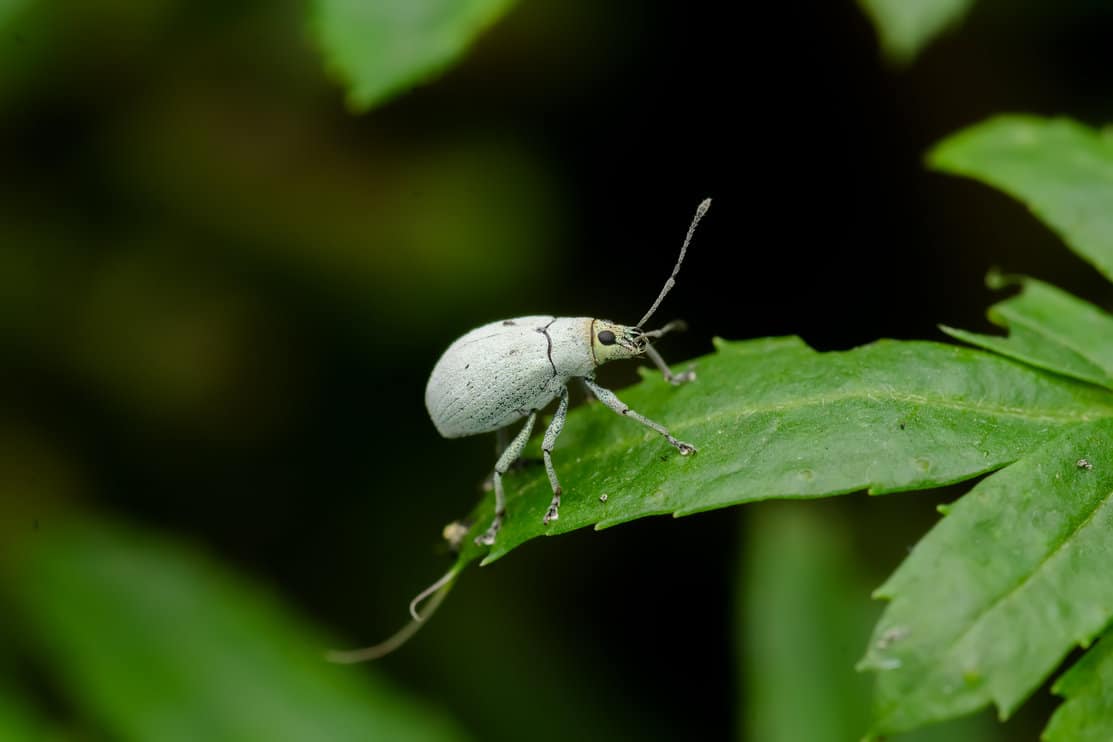
White pine weevil on the plant leaf cut it and damage the agriculture crop as well as ornamental plants.

White pine weevils will attack your blue spruce, which can lead to forked or deformed trees, and they can be highly destructive. They can change the beautiful blue color of your tree, but they rarely kill the entire tree.

These weevils attack the tree by feeding on the bark, creating small holes. They lay their eggs in these holes, and after seven days the weevil larvae hatch. The first sign of an infestation is when the holes have resin drops leaking out onto the trunk of the tree. 

Once the larvae hatch, they will burrow into the bark of the tree and continue feeding on it. They will destroy the stem, causing the growth from that stem to be halted. The needles on that stem will turn yellow and die.  

If you want to keep weevils from attacking your tree, you can use a special insecticide on the main branches of the tree. They are affected in springtime when the weather has been above fifty degrees for at least four weeks. 

We recommend contacting a professional because they are the only ones with commercial access to foliar spray. Using a professional is also important because they will know exactly where to spray the insecticide. You can decimate healthy insect populations if spraying on the entire tree and this can cause a host of problems, so leave it to the experts! 

Spider Mites

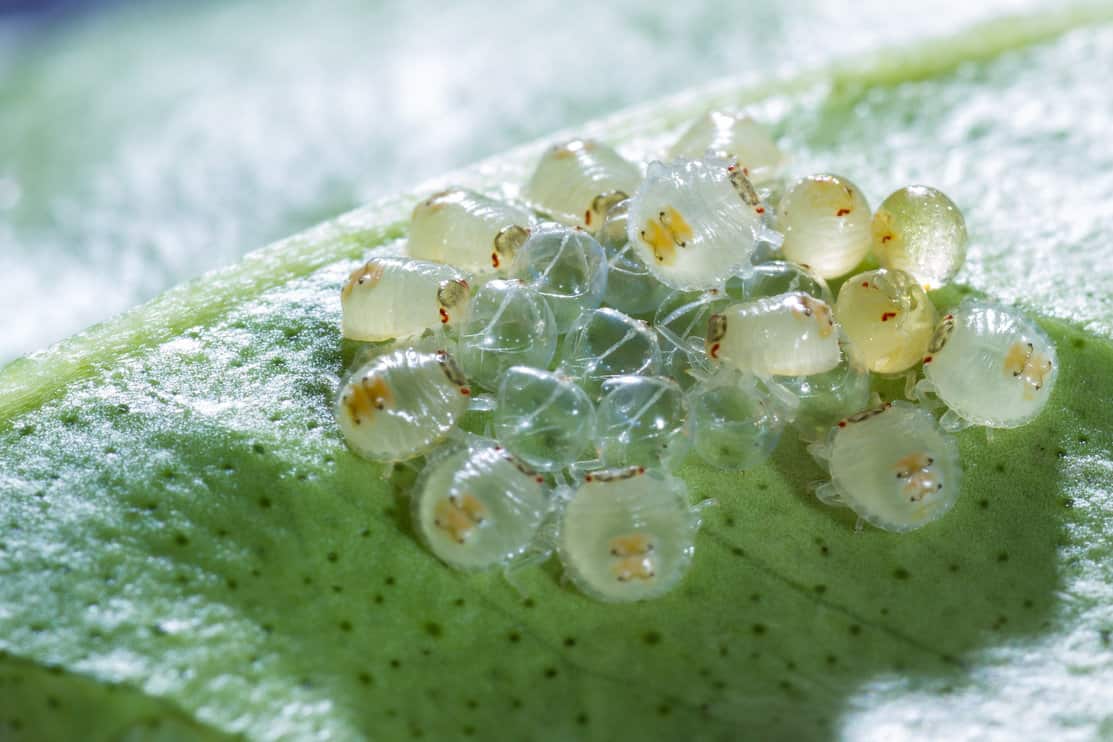
macro shot of a small grouping of recently hatched spider mites on the underside of a green leaf

Spider mites are another common invader of blue spruces. Spider mites are tiny bugs that thrive off of the chlorophyll in the needles and the fluid of the tree’s tissue. You can see them with the naked eye, but they are very, very small. You will be more likely to see the delicate web that they make over areas of the tree. 

One sign of a spider mite infestation is yellow dots on the needles caused by the mite sucking out the chlorophyll.  

Eventually, the needle will turn brown and die, but if you can catch the yellow dots before then, then you can confirm it is indeed a spider mite! 

Luckily, spider mite infestations are not fatal to your tree. They will cause several needles to dry up and fall off, but not enough to destroy the entire tree. 

To get rid of these mites and keep your blue spruce blue, you can do one of two things. 

First, you can release mite-eating insects into your tree canopy, like predatory mites, who do not feed on trees and will get rid of the infestation. This is a great natural option that keeps potentially harmful chemicals away from your tree. 

Another natural way to keep spider mites from creating too big of a nuisance is to water the tree by using the jet setting on your hose. As you spray into the branches, you will wash away enough spider mites to keep the infestation at a lower level. 

Unfortunately, using some insecticidal soaps or oils will cause your spruce to lose its gorgeous blue color, so try the options above before resorting to an insecticide. 

Blue Spruce Tree Diseases Affect Color 

Many diseases can infect your blue spruce tree, so let’s learn how to identify and treat the most common illnesses of spruces to keep your tree as blue as possible. 

Cytospora canker disease is a fungal infection and the most common disease found in blue spruces. Excessive drought, injury, pest-related injury, and a variety of other factors cause them. Spruces in climates with higher humidity are more susceptible to fungal diseases. 

The process begins with cankers forming on the tree, recognizable by the white resin that oozes out of it. Although it is a slow process, these cankers can eventually damage your tree by burrowing into it and cutting off nutrients to random branches.  

You can tell if your tree has this fungal disease by checking to see if the branches are dying from the bottom up, or if it is dying from the inside out. The needles will turn purplish-brown and begin to fall off.  

Although the chance of your spruce dying from this disease is very low, it can still deform your tree and make it an eyesore. The only way to prevent this disease is to apply a fungicide yearly, but it must be done by a certified applicator. 

If you notice your tree has been affected, prune away any dead branches, but only during dry seasons. You should also keep your tree properly irrigated and avoid any injuries to the tree, like from a lawnmower or trimmer used near it. As always, contact a professional arborist to ensure your tree gets proper treatment.  

Rhizosphaera needle cast is a disease that presents as brown blisters on the leaves of the spruce tree, which change to red and orange over time. Eventually, the leaves form a yellow tissue on the needle, causing an unpleasant color, not the beautiful blue you envision for your spruce. 

You can tell if your tree has this illness by inspecting individual needles. The disease is present when you can see small black dots along the shaft of the needle moving away from the blister. 

The blisters will eventually grow until the spores burst, infecting surrounding leaves. Wind and rain can also carry the spores to neighboring trees. This means if you have more than one blue spruce on your property, the disease can spread to another one. 

You may notice this disease because you are in a drought and have not properly watered your tree. Improper soil quality or sun exposure can also cause this disease. 

The best way to prevent this disease is to make sure you provide the most excellent care when planting, fertilizing, and watering. Needle cast loves to prey on trees when there is excessive moisture and humidity, so make sure to plant it somewhere with proper drainage. 

What happens when your tree is infected? Unfortunately, there is no cure once the needle has been infected and it will eventually die and fall off.

However, you can eliminate the disease from causing further damage by stopping the spread. Do this by pruning off any dead branches or any branches that you notice are infected. 

By doing this, you are removing any spores that would otherwise burst and cause other leaves and trees to be affected. Also, pruning the branches will allow more air into the canopy of the tree, reducing humidity and the chance of this disease attacking your spruce. 

Overwatering Dilutes Color From Blue Spruce Trees

Sometimes, your blue spruce is turning brown because it is getting too much water. Just like I said above, climates with higher humidity can cause problems for your blue spruce because it dislikes excessive water. 

Too much water will cause your tree to turn brown from the bottom up. You should not be watering your tree more than once a week during dry seasons. 

You can tell if your tree is overwatered by feeling the soil around the tree. If the soil is squishy and wet after a week, then it wasn’t absorbed into the tree, and it is being overwatered.  

Do your tree’s branches wilt? Do the needles fall off easily, despite their blue color? These are also signs of over-watering.

If you want to slowly water you tree, Greenscapes Tree Bags are perfect for the job. They hold up to 20 gallons of water and gradually release over 6 to 8 hours. Let your tree take in water at its own pace!

If you put too much water into the ground, the roots cannot move oxygen as well as they could, causing a lack of nutrients and ultimately browning leaves. 

How Do I Keep My Blue Spruce Tree Blue? 

Beautiful blue spruce against the sky and white clouds close-up.

By planting your spruce tree in the right soil and location, you give it the best chance of maintaining its beautiful blue color. 

Michigan State University tree experts recommend planting a blue spruce in a spot that receives a lot of sunlight and air movement, as well as soil that has good drainage. They also recommend using a variety of different plant species for your landscaping.  

When you use different plant species in your yard, you create a more balanced and healthier ecosystem. The US Forestry Department recommends it because it creates more diversity for your yard, leading to a more stable wildlife population. 

This wildlife, like spiders and various insects, is crucial to the health of your tree because they fight off pests that can damage it.  

A healthy, pest free tree means a gorgeous color. As a reminder, sometimes a blue spruce will turn green, but this is natural.

Sometimes the wax on individual needles gets rubbed off over time or by weather, causing a change in color. Not to worry, the blue will most likely come back once the next growing season has started! 

Most of the time, however, it will stay blue as long as you regularly check it for diseases and infestations. If you catch these early, you can treat the tree and give it the best chance of maintaining the beautiful blue hue. 

As always, it is highly recommended to contact a tree professional if you run into any problems with your tree. They will help you keep your spruce stay healthy and blue so you can enjoy its beautiful color for many years to come.

Additionally, you can read our full guide on keeping a blue spruce blue in our article: 6 Simple Steps To Make Your Blue Spruce Tree More Blue.

References 

Oak trees are one of the most popular trees in the world. Most commonly known for their height (often growing between 100 to 150 feet) and their adaptability, oaks are not immune to all threats. 

The most common oak tree diseases are oak leaf blister, armillaria root rot anthracnose, oak wilt, bacterial leaf scorch, powdery mildew, hypoxylon cankers, actinopelte leaf spot, mistletoe, and galls. In general, you can save your oak tree by nourishing your tree and removing affected branches.

So, what common issues should you look out for on your oak tree? We’re here to equip you with the best info to tackle the problem.  Keep on readin’ on!

What Kills Your Oak Trees?

In truth, oak trees, while some of the more disease resistant trees out there, can still be susceptible to a multitude of problems.

Oak tree saplings for instance, are more prone to problems than a full grown oak. However, full grown oaks can still develop problems during their lifespan.

Below is a chart of the most common oak tree diseases, how to fix them, and how severe the issue is.

COMMON OAK DISEASETREATMENTSEVERITY

If you’re interested, you can read our guide to the 10 early symptoms of a dying oak tree here.

Oak Leaf Blister

While most oak trees are susceptible to this fungus-based disease, it affects red and black oaks more severely. The level of severity is still low, regardless of the fact that some oaks are more susceptible than others. In cases of minor afflictions, little harm is caused to the oak tree and the symptoms may even be difficult to spot. 

Speaking of spots, this is what occurs when oak leaf blister is ranging toward the more severe end. The leaves begin to display patches that look like light green blisters, that turn brown and resemble a type of sap. These patches occur when fungus causes an overgrowth on affected leaves. 

Leaves with oak leaf blister grow faster than those without the tissue because the spores have more time to germinate during the winter freeze. The fungus typically lives in these spores before leaves have a chance to bud, and cause mayhem the moment that growth restarts in the spring.

Spores are spread, including those infected with fungus, in the fall months. This is a cyclical process that fungicides typically don’t have much control over. If you do try a fungicide, we suggest looking at this Natria’s Neem Oil Spray which works for both insects and fungi. You’ll want to apply this before the buds break in the spring. 

Armillaria Root Rot

Group of armillaria on on an old wooden stump

Armillaria root rot is high severity issue for an oak tree, where everything from affected roots to entire trees need to be removed. 

You can expect to see a slow decline in the tree and, especially in wet weather, mushroom structures will appear around the base and roots of the tree. These mushrooms are a honey color that doesn’t look nearly as harmful as they really are- but now you know. This is not a fungus to be messed with.

Armillaria root rot can be most easily identified by the clusters of the mushrooms, but there are also other signs. Trees with this affliction will fight poor growth, have needles that are browning and leaves that are yellowing at incorrect times of the year, along with the possible overproduction of seeds and pinecones. 

Flat white sheets of fungal growth may also pair with thin black fungal strands that meet near the base of the trunk. The extra resin may be seeping from the tree, or the wood itself may be soft and stringy. 

The symptoms are endless- what we listed is just scratching the surface. This highly severe affliction not only will kill your oak tree, but it will make the process a long, messy one.  

So… how can you save your oak tree?

Reducing stress on your oak tree can help stop armillaria root rot. Mulching the soil that sits around the base of the tree to add nutrients and water trees, especially during a drought when stress is running high can help save your oak tree. 

Also, avoid wounding your trees. Wounds make trees more susceptible to getting armillaria root rot- so avoid that at all costs. Keep lawnmowers, darts, weed whackers, power tools, and other sharp tools away from your tree. 

Anthracnose

Anthracnose is not the most severe oak tree affliction on this list, but it should be a cause for concern. You’ll notice that your oak leaves may be turning a brown, rusty color along the veins along the foliage of your leaf. Typically, anthracnose is most prevalent during the fall to oak seasons.

If you want to avoid excessive pruning of affected branches, the worry that it will spread, or closely monitor your trees, it is time to nip this in the bud. 

If you are just planting your oak trees, space them far apart so that they have adequate access to fresh air and plenty of sunlight.

Additionally, when planting your oak tree, make sure you’re doing it at the correct time of year. You can read our guide on the best time to plant an oak tree here.

Chemical control is an option, but there are other ways to treat this issue if it does happen to arise in your tree. Pruning, sanitation, and monitoring are going to become the trifecta for you in your journey to manage this oak tree affliction.

Oak Wilt

This fungal affliction finds prominence in the Southeastern United States and may cause different symptoms in red oaks versus white oaks. 

Transmitted via fungal spores, or possibly one of the many varieties of bark beetles, oak wilt can cause quite the distruption to your trees.

Getting in to it, oak wilt affects red oak trees and white oak trees in very different ways.

In order to understand the sections below about oak wilt in red oak trees and white oak trees, you may want to read our guide on the key differences of red and white oak trees.

Red Oak Wilt

In red oaks, oak wilt manifests as a more severe and rapidly escalating issue.

Oak wilt in red oak trees is prevalent a few weeks from infection until symptoms appear, and the tree can perish in as little as a few months after that. Oak wilt in red oak trees is a much more severe process than their white oak counterparts will face.

At first, the leaves of your red oak tree will begin to wilt as a bronze color appears. This typically works its way from the edges of the tree, like small limbs and the ends of branches, before making it to the rest of the tree, such as the trunk. The leaves will begin to drop gradually as they simultaneously discolor. 

The oak wilt fungus continues to grow and it produces a sort of sticky layer underneath the bark of an infected tree that ranges from light grey to a tan color. With a strong, unpleasant smell, this layer may begin to split the bark as it expands and the tree perishes.

Most often, red oak trees never survive from oak wilt.

White Oak Wilt

White oaks display their resistance when it comes to oak wilt because they can live for years after the initial infection occurs.

Oak wilt in white oak trees can be managed in a variety of ways, from regulatory prevention to direct control using fungicides.

Bacterial Leaf Scorch 

Bacterial leaf scorch is an oak tree affliction that causes a halt in water, reddening, or yellowing of a tree that is followed by the browning of leaves. This loss of hardiness sees leaves drop eventually, leading up to passing of the tree as a whole. Symptoms most often appear after a summer drought, when water movement is already low.

Usually, bacterial leaf scorch is spread by tree-hopping insects. 

The severity is at a medium level due to the fact that regression is a gradual decline. This means that an oak tree could survive an additional 5 to 10 years after bacterial leaf scorch has been present until it needs to be removed. 

Bacterial leaf scorch is a less selective disease, affecting red, white, pin, bur, and shingle oaks, along with sycamore trees, maples, and other varieties.

To treat this bacterial leaf scorch, you will want to not only remove affected trees but replant resistant tree species in the same area to avoid another outbreak in the near future.

Look into insect control such as Organic Deet-Free Bug Repellent. Spray treatments are not currently available for the affliction itself, but controlling insects that may spread bacterial leaf scorch is a great first step. 

Powdery Mildew

A close up of an Oak Leaf with Powdery Mildew

In essence, powdery mildew is going to look like someone spilled some baby powder on the leaves of your tree, more than likely.

Powdery mildew is characterized by the way that many fungi combine to appear as a white dusting on the leaves of an infected tree. The Clemson Cooperative Extension tells us that this disease is not fatal, but can cause plant damage when the infection becomes severe. The severity level of powder mildew is medium.

White spots are only the first sign of powdery mildew on your oak tree, however. Other symptoms include leaf curling and discoloration, among other abnormal growths.

The powdery fungal growth is not even always visible on your oak. Though when it is, it tends to begin on the lower sections of the leaves. In severe cases, abnormal growth of the oak tree’s leaves will shift into yellow or brown colored leaves that are dried and may soon fall off the tree. 

Powdery mildew management can first be solved if you notice white spots or discoloration on just a few leaves. Simply removing these leaves may keep the fungus under control. 

If applicable, prune the dead branches as you pull off any dead leaves at the end of the growing season. This will help prevent powdery mildew from spanning into the next season, and the one after that, and so on.

Hypoxylon Canker

Hypoxylon cankers are common inhabitants of many varieties of oak trees, but only begin causing symptoms when trees are under stress. Much like canker sores that humans get- the bacteria and pathogens react to the stress the host organism is under and begin to take effect.

Thanks to Texas A&M’s Agrilife Extension, we know that symptoms of this hypoxylon canker manifest in a way that reflects that of most other declining trees.

From yellowing or browning leaves to reduced growth rates, thinning canopy and branches, and white stringy sap around the base, hypoxylon cankers aren’t great news. They also aren’t as severe as anthracnose or oak wilt in a red oak tree.

This is more of a medium concern when related to the other common oak tree threats we are discussing here today.

To control hypoxylon canker on your oak tree, eliminating stress (or reducing it at the very least) is going to be the best plan of action. Vertical mulching is a technique that ensures nutrients are properly added to the soil around a tree, enriching the roots and fortifying the tree against stress-fueled disease. 

Remedial pruning may also be your saving grace in this situation because you can remove the parts of the tree most affected by stress before the hypoxylon cankers spread to the rest of your oak tree. 

If all else fails, tree removal may be the way to go for you. This white-rot symptom quickly kills trees once it has spread, and may become a hazard to the vitality of other trees or even a safety hazard to people and pets. 

Actinopelte Leaf Spot 

Another affliction of medium severity, actinopelte is caused by fungus spores that last over the winter and are agitated by rain and wind in the spring months. Leaf spots will appear and may join together to form larger and more irregular blotches on the leaves. A dark, reddish-brown color makes green leaves look particularly sickly, and the more severely affected specimens will fall to the ground prematurely.

The management of actinopelte revolves around ideas of transplanting, minimizing stress, and properly fertilizing the area- all of which go hand-in-hand to create a better environment for an oak tree to flourish.

Mistletoe

Green mistletoe hanging on the branches of a valley oak tree, Sunol Regional Wilderness, San Francisco bay area, California

Surely you’ve heard of mistletoe. I.E. ‘kiss me under…’, ‘ho ho the mistletoe’, you know, that sort of holiday tradition in the western world. Did you know that mistletoe is actually quite the parasitic pest? 

That’s right, mistletoe wraps itself around healthy oak trees and takes part of their water and minerals. The severity is low, however, because when it comes to food sources like chlorophyll, mistletoe handles that one on its own. Though mistletoe is not fully detrimental to trees, it still needs to be monitored.

To work on this problem, you’ll just need to cut off branches that are too tightly wound with this vine. Breaking off the tops of the mistletoe itself can also help.

Galls

Macro photo of tree pests eggs on oak leaves isolated on white background. Chemically induced leaf blister galls of a gall wasp Neuroterus numismalis

These spots created by insects may simply make an oak tree look less appealing. However, they could also do enough harm to cause the oak tree to perish. Their severity level ranges from low to high for this reason: it is difficult to know what to expect when these little pests (gallmakers) join the party.

Galls are growths or swellings that are abnormal and most often caused by small wasps. One of the issues with these is that there is no way to cure galls on your oak tree fully. Once galls are on trees, they cannot be removed. 

Typically, galls cause aesthetic issues more than anything truly severe but in extreme cases, they can lead to the death of a tree. Often, the symptoms lie somewhere in the middle with severe leaf deformities or premature leaf drops.

Manage galls on your oak tree by simply removing and destroying fallen leaves that have been impacted by gall-makers. Prune or remove twigs that are sporting galls before holes have a chance to form, ensuring that this issue does not quickly spread. 

That’s All For Now!

Now that we know a little more about some common diseases and other threats to oak trees, it’s clear that these durable giants do have their limitations.

Ultimately, it helps to pick the right oak trees to plant from the get go. You can read our guide on the best oak trees to plant here.

If you want to keep your oak trees healthy and clear of threats, try using fungicides to prevent and eliminate these sorts of issues. You may also find that removing infected roots (and/or branches) works better than spraying, depending on what type of affliction your oak has, and at what stage you catch it.

We hope this helps you know what to expect, and have a better idea of how to tackle the problem!

References

Everitt, J. H., Escobar, D. E., Appel, D. N., Riggs, W. G., & Davis, M. R. (1999). Using airborne digital imagery for detecting oak wilt disease. Plant disease, 83(6), 502-505.

Juzwik, J., Appel, D. N., MacDonald, W. L., & Burks, S. (2011). Challenges and successes in managing oak wilt in the United States. Plant disease, 95(8), 888-900.

In our gardens, we may work with a lot of constraints. Some constraints could be little sun, low nutrients, or even just working in small or urban spaces. With this, we may often look for specific plans to meet certain standards, such as being shade tolerant, yet not causing root problems. 

There are a few main trees able to both tolerate shade and have non-aggressive roots. Some prime examples include Florida maple trees, Pawpaws, English holly, miniature fruit trees, and Chinese pistache trees. These trees generally have shallow roots that don’t cause issues underground.

Read on to learn more about why you would need trees like these, the benefits of having shade-tolerant and non-aggressive trees, and how to plant them for yourself! 

Why Do You Need Shade Loving Trees?

There are a few main reasons to grow shade trees specifically. Some of these reasons include ease of growth, size management, and growing in specific locations. 

To begin, growing shade trees is often easier when compared to growing conventional trees. Shade trees require less sun and other living factors, meaning that they are a little more flexible with their environment and grow with less care. 

In addition, shade trees often grow slower and smaller since they rarely gather as much solar energy. With this, shade trees are splendid for growing in smaller areas, where you may want to grow a tree of smaller stature. 

Finally, shade-loving trees allow gardeners to have trees in areas with less sun. This allows you to landscape easily and creates beautiful arrangements in almost any setting. 

Why Do You Need Non-Aggressive Roots?

Similarly to the issue of liking shade, you may ask yourself, “Why do I need a tree with non-aggressive roots?” There are a few reasons you may want non-aggressive roots, including growing in packed areas and maintaining safety around your growing area. 

It’s important to note that first, according to Wyoming Ohio, the more loose soil is, the more likely roots are to penetrate deeper.

So, if you have loose soil near a structure, this is something important to keep in mind.

One reason you may need trees with non-aggressive roots is growing in a smaller area. In smaller areas, you often need to pack more plants in and need them to share the space nicely. In contrast, if you plant plants or trees with aggressive roots in these packed spaces, their roots can easily dominate the area and choke out other plants.

On the other hand, you can plant trees with non-aggressive roots with more ease in these packed areas, and they can often nicely share space, nutrients, and water with the roots from other plants. 

In addition, growing safety is another reason you may want trees with non-aggressive roots. Trees with more aggressive roots can damage nearby housing materials (such as siding and concrete basing), and create hazards such as large sprawling roots. With this, non-aggressive trees can grant you a little more peace of mind when planting trees near buildings.

If you’re finding that you need to get rid of old tree roots, read our piece: Will Vinegar Get Rid of Tree Roots? Here’s What To Know.

Different Types Of Tree Roots 

tree with roots

When looking into the aspects of “aggressive” and “non-aggressive” roots, we need to discuss what different types of roots there are, and if they are aggressive or not.

Thick Or Fibrous Roots

Many trees and plants create thick and fibrous root systems. These consist of often sprawling, large, thick, and hard-to-cut roots. Depending on the tree, these can be pretty tame, however, these are often more on the aggressive side.

Even if your tree has non-aggressive thick or fibrous roots, it could still cause problems in the future, as these types of roots are hard to cut and manage over time as they grow. 

Thin And Sprawling

Thin and sprawling roots are another type of root many trees can exhibit. These roots are usually thinner than most, more tender, and can often sprawl over extensive areas. 

Unless they severely overgrow and do not get proper care, these roots tend to be aggressive and even supporting to some areas. 

Taproots

Taproots are a fairly interesting type of root both plants and trees can exhibit. Taproots are roots that shoot down straight from the plant to very low depths. These can be aggressive, however, it depends on your location. 

These roots can also be fairly sensitive, meaning that if they grow against something large, or experience disruption from above the soil, it can easily damage or hurt the tree. 

As mentioned, it depends on your location if growing taproot trees is right for you. If you are in a location with great soil that penetrates deep down (with no lower concrete or building materials), taproot trees can be a great option for you, since they can use the small space.

In contrast, if you live in an area with lots of building material buried, and also lots of horizontal growing space, taproot trees may not be the most effective thing to grow for you. 

Where Is The Best Place To Plant My Shade Loving Tree?

Planting your shade-loving tree depends on your location, however, there are a few prime locations where shade-loving trees thrive. For example, some great locations for your shade-loving tree include:

  • On the west or east side of your property
  • Some northern locations that still supply adequate light
  • Locations shaded by larger trees 

As with their name, shade trees thrive when supplied with some sun and some shade. Although they usually can grow with more or less sun, they like the middle ground between the two. 

Many people suggest trying to grow your shade trees on the eastern or western side of your property. These two directions get adequate sun, but they also get some shade throughout the day. In addition, some suggest even trying to grow on the northern side of your property, as these can sometimes get the right amount of sun as well. 

You can also try growing your shade tree in areas that are shaded by larger trees. This is often a perfect location to grow them, as larger trees create dappled, medium-light beneath them. In addition, this allows you to create beautiful landscaping in places where there may be old-growth trees!

6 Shade Trees To Plant That Don’t Cause Root Problems

Keeping in mind why you may need shade-loving or non-aggressive trees, now we can look into specific trees that are both shade tolerant and non-aggressive.

If you’re interested, you can also read our piece: 12 Fastest Growing Shade Trees For Small Yards.

Florida Maple Trees

Florida maple trees are trees that are naturally native to the “panhandle” region in Florida state. In addition, while they are in the maple family, they have fairly recognizable leaves, being a bit more rounded in the lobes as compared to other maples. 

These populations are fairly localized and niche to the area, meaning that they may fail if you are in areas with different climatic conditions. 

Florida maple trees are great because they do not require full sun like other maples (although more sun should not hurt them). On top of this, they also have less aggressive root systems when compared to other trees, making them great to plant in smaller areas with less sun. 

On the level of aesthetics, Florida maples are also remarkable because they give the looks of conventional maples while being able to thrive in locations with less advantageous conditions. For these reasons, Florida maple trees make a great substitution for other maples in small-scale landscaping. 

Pawpaw Trees

Pawpaw tree with fruit

Pawpaw trees are another great addition to this list, also yielding fruit on top of their growing benefits. To begin, Pawpaws are trees that are native to the Southern and Central United States and Canada, often found to be growing in larger forests or along the sides of wild-growth areas. 

Pawpaws are a great addition to your landscaping because they do not require full sun all the time. This is fairly surprising, as they do produce large amounts of fruit, which usually requires a fair amount of sun. 

In addition, Pawpaws also have fairly sensitive and small root systems, making them great for companion and landscape planting. 

On top of these pros, Pawpaw trees also produce a large yellow-brown fruit that has a semi-tropical taste. According to most, this fruit has a lovely custardy texture and a brilliant sweet taste. 

Pawpaws are another great option for your unique planting needs, especially if you are looking for plants able to produce fruit for you

Pawpaw trees are also discussed more in-depth in our article: 6 Best Fruit Trees That Have Shallow Roots: Identification Guide.

English Holly

English holly is a fairly common plant that you can find in many landscaping projects. This is most likely because it can produce beautiful, dense foliage in lower-light environments. 

One thing to keep in mind with holly is its regional invasiveness. Most hollies are invasive in the U.S., easily spreading and taking over sizeable areas of land. While it is not illegal to plant, you should be cautious when planting and maintaining this tree. 

As you can probably guess, you can maintain holly trees in smaller sizes, and they do not require the same soil and sunlight conditions as most conventional trees. 

Going along with this, you should always be cautious when planting holly trees, and you should be sure to check your local authorities on if they are safe to be planted in your area. If you can plant a holly in your location, stay vigilant and always keep it under control through its growing process. 

Miniature Fruit Trees

Close up of the leaves of pistacia chinensis with a person walking in the background on the left.

Miniature fruit trees are another great option for low-light conditions, and can also yield you some homegrown, delicious fruit.

Depending on your area, you may only be able to grow a few types of miniature fruit trees, as they still require some sun. In addition, creating fruit requires a lot of energy, so sometimes, if you have too much shade, these trees may produce less (or no) fruit. 

Miniature fruit trees are a great option, as they in nature have smaller and less aggressive root systems. Many of them are also genetically selected to be suitable for growing in areas with less light, as their smaller stature usually means they are under larger trees.

These reasons make miniature fruit trees a great addition to smaller areas in your landscaping, where you may also want to produce fruit! 

Chinese Pistache Trees

The Chinese pistache tree is a tree in the pistache or cashew family. Native to China, it is commonly planted in local walking areas due to its gorgeous foliage and fruit production.

To describe the tree, the Chinese pistache creates long lancelets of simple leaves which start green and turn a slew of yellow, orange, and red colors during the winter and fall. They also create unique coral-like flowers that turn into clusters of red fruit. 

Pistache trees can handle temperate climates and small areas with less sun, making them adaptable to many locations. These are just some reasons they become so popular to plant in temperate walking areas. 

American Hornbeam

The American hornbeam tree is also known as the blue beech, ironwood, or musclewood tree. It attained most of these names because of the appearance, density, and strength of its wood. 

The American hornbeam grows very large above the ground, creating a beautiful round swathe of leaves. It is also a deciduous tree, meaning its leaves turn all shades of fall colors and drop yearly, only to return in the springtime. 

The classic silhouette and landscaping ability of this tree is the reason it is commonly used. The tree is semi-shade tolerant and has simple, non-aggressive roots, making it a great all-purpose tree for your landscaping needs. 

Maintaining Your Shade Trees

Now that we have discussed why you may need shade trees, and which shade trees you can plant, we can now discuss how to maintain them after planting.

Like with most trees, shade trees require periodical care to maintain proper health and wellbeing. 

Basic Needs

The first thing you need to keep in mind after planting is the basic needs of your shade trees. These needs refer to things such as sun, watering, and nutrients. Most trees prefer around 1 inch of water per week and around 6 hours of sun. 

week and around 6 hours of sun. 

The main thing most people claim is important is consistency. Most plants can adapt to many schedules and conditions, meaning if you are consistent with watering and sunlight, your tree should be fine.

In addition, your tree also may require nutrients. To help with this, you can supplement its soil with amendments such as compost or fertilizer. One great example of clean tree fertilizer is these Jobe’s Tree Fertilizer Spikes. 

Periodical Care

Along with regular care such as watering and fertilizing, your tree may need some special periodical care. In most cases, it is best to check your tree every once in a while for damages, pests, and infestation. After checking, you can then periodically treat your tree or trim off dead or diseased branches.

Conclusion:

In the end, there are many reasons you may want to grow trees tolerant of shade with non-aggressive roots. There are a few main trees that meet these guidelines, such as the Florida maple, Pawpaw, or many varieties of miniature fruit trees. 

After planting these trees, care for them with regular pruning, watering, and fertilizing. Overall, the main thing to remember is to have fun, so get out there, and start planting! 

References

Robert L. Cook. 1984. Shade trees. SIGGRAPH Comput. Graph. 18, 3 (July 1984), 223–231. DOI:https://doi.org/10.1145/964965.808602

Messier, C. (2009, May 1). Resource and non-resource root competition effects of grasses on early versus late-successional trees. Besjournals. https://besjournals.onlinelibrary.wiley.com/doi/full/10.1111/j.1365-2745.2009.01500.x

Hasselkus, E. R. (1977). Caring for Your Shade Trees. University of Wisconsin–Extension, Cooperative Extension.

Have you ever noticed those big ugly webs in tree forks or at the end of tree branches? These untimely natural Halloween decorations appear in spring and tent worms, often referred to as silkworms, are the cause. If these nuisance caterpillars affect your trees, you will be happy to know there are ways to get rid of them for good!

Silkworm is the term given to tent worms, which are actually caterpillars. You can remove these pesky caterpillars from your trees with several methods. You can handpick the caterpillars off with gloves if the numbers are small, destroy the egg mass, remove the tent, or prune the affected branches.

Below we will go over all the ways you can get rid of silkworms (tent worms) and keep them away for good. We will also talk about some background on tent caterpillars, so you know exactly what you are dealing with. Let’s get to it!

Are Silkworms And Tent Worms The Same Thing?

You have probably heard these web-making worms referred to as either tent worms or silkworms, or maybe both! 

However, silkworms and tent worms are two very different insects. And just to add to the confusion, neither of them are worms either. They are both caterpillars, which eventually cocoon and then turn into moths.

Both silkworms and tent worms belong to the same order, Lepidoptera, but their similarities end there in the eyes of geneticists. 

So how are these two creepy crawlers different from each other?

Silkworm Vs. Tent Worm Silk Use

Both caterpillars can produce silk, but they use it in different ways. The caterpillar releases silk from its head through a specialized organ known as a spinneret.

Silkworms use their silk to build a cocoon that protects them as they morph from caterpillar to moth. The domesticated silkworm is an incredibly important insect in the textile industry, as they are the major producers of silk for fabrics.

Tent worms use their silk to build webby tents that serve as their protective homes while in the caterpillar stage. Tent worms also spin their cocoons with silk before morphing into their adult moth stage.

Silkworm Vs. Tent Worm Harm To Trees

One of the biggest differences between silkworms and tent worms is their status with humans. One is a pest, the other is so important it has been domesticated and farmed, just like cattle or sheep.

We consider tent worms pests because of the unsightly webs they build in trees. The caterpillars also chow down on leaves while fattening up for their cocoon stage, causing defoliation. When gathered in large numbers, tent worms can cause some serious damage to trees, albeit typically not fatal to the tree.

Silkworms are our friends! There are both wild and domesticated silkworms. Domesticated silkworms are an enormous source of silk in the textile industry. Wild silkworms are sometimes used to produce silk, but not as much as the domestic silkworm.

Even if they did not produce silk and help the textile industry, these moths only eat white mulberry leaves (they don’t eat oak tree leaves), so they do minimal damage to the environment.

Silkworm Vs. Tent Worm Physical Appearance

Silkworms and tent worms differ in both color and size. 

The domesticated silkworm has been genetically modified to be larger than their wild cousins. They rapidly reach 3 inches in length while feeding constantly in the caterpillar stage. They are mostly white or cream-colored.

Tent worms are slightly smaller, reaching anywhere from 2 to 2½  inches in length, according to the University of Kentucky. They are black with a distinct white stripe down their back. Along their sides are brown and yellow racing stripes dotted with blue spots.

Silkworm Vs. Tent Worm Native Range

The domesticated silkworm is no longer found in the wild, but their cousins, the wild silkworm, can still be found outdoors.

Wild silkworms are found in India, China, Korea, Japan, and Russia. There are silk moths found in North America, but these are not from the same family as the domestic silk moth.

There are over 20 species of tent worms, but only 6 are native to North America. Among the six species, they cover most of the United States, with each caterpillar occupying a slightly different range.

Why Should You Get Rid Of Tent Worms?

Forest Tent Caterpillar in Wisconsin

Now that we have established silkworms = good and tent worms = bad, let’s go over why you want to get rid of tent worms.

In the long run, tent worms will most likely not kill your trees. They might defoliate your tree, even causing it to go bald in the middle of summer. But your tree will recover and put out a fresh crop of leaves before the year is over.

That does not mean tent worms are doing your trees any good, though…

Tent Worms Cause Defoliation

There is nothing better than coming home from a long day’s work, sitting on your porch, and enjoying your yard. The trees, the flowers, the little critters running around.

So, when you look out on your oasis and see your trees are bald in the middle of summer, it can be soul-crushing.

Tent worms are voracious eaters. And they are not picky, either! Because tent worms live across the whole U.S., they eat whatever is local to the area, according to a 2017 study.

In the west, this means quaking aspen, willows, and birch trees. Eastern tent worms like maples, oaks, and elms. In the south, tent worms will target gum trees, live oaks, and water tupelo.

Defoliation is worse in the spring. The eggs of tent worms will hatch around March, and they will feed and feed and feed for about 6 weeks until they are full-grown, hairy caterpillars.

Even though your tree will recover from defoliation, if the tent caterpillar population is too big and they eat too many leaves, it can stunt the growth of your trees.

Tent Worm Webs Take Over Trees

Tent worms eat the heck out of leaves, but your tree will recover and sprout new leaves either later that year or the following spring.

However, something that your trees cannot get rid of on their own is the tent webs these caterpillars get their name from. These tents pop up in the spring after the caterpillars hatch from their eggs.

The tents may start small, but tent worms are social caterpillars if you can believe it! They will invite in friends and family, long-distant cousins and aunts until there are hundreds of caterpillars in a single tent.

As the caterpillars grow, so does their tent. Trees have no way of getting rid of these tents naturally, and the strength of the silk means the webs can stay in the tree long after the caterpillars have moved out.

While these webs do not do any actual damage to the tree, they can be unsightly to see and will give your backyard oasis a sinister look.

How To Get Rid of Tent Worms For Good

Tent worms are more of a nuisance than a danger to your trees, but we still do not want them building unsightly webs in our trees, right?!

Let’s go over some ways you can get rid of these web-building caterpillars for good, and keep them away.

If you’re finding that you have another type of caterpillar on your tree, read our guide on removing caterpillars from your tree here.

Insects with white silk nests built on shrub.

Pick Tent Worms Off Trees

The first option on our list is not for everyone, and it is definitely situational. This option is best used in situations where the caterpillars have already hatched, eaten their fill, and are wandering around looking for a place to cocoon.

During this time, tent caterpillars will leave their tents and go searching for a place to cocoon. If webbing or defoliation did not affect your tree, it may still be in danger from these wandering caterpillars.

They will cocoon on your tree, grow into a moth, and lay eggs on the same tree for the next generation of caterpillars to hatch the following spring.

If you notice them on your tree, you can put on some gloves and pick them off individually before they decide to make your tree their home.

Prune Affected Branches To Remove Tent Worm Eggs

You can use pruning at both the egg stage and the tent stage. The easiest way to use pruning is during the egg stage. 

So, bust out your trusted pruning shears, or buy some like the Gonicc 8” Pruning Shears, made of high carbon steel, so they will cut right through small branches.

Winter is the best time to look for tent worm eggs, as all the leaves of their favorite deciduous trees will be off, giving you a clear view of the branches and twigs.

Look for twigs that are about as thick as pencils. Egg masses will be black and look a slightly shiny, enveloping part of the twig. Prune these twigs off your trees to keep the eggs from hatching and chowing down on your favorite backyard shade suppliers.

If you did not catch the egg masses in the winter, there is always spring! After these caterpillars hatch, they will almost immediately begin feeding and building their tent. If you see these tents in your trees, you can simply prune those branches off to get rid of the tents.

Physically Remove Tent Worm Webs

If you do not want to cut any branches off your tree, you can use other methods to remove those unsightly web tents.

You can take any sturdy stick-like tool (think broom handle, shovel handle, or a sturdy dropped branch) and poke it into the tent. Swirl the stick around to wrap the tent around the pole/stick. The sticky webbing material should grab onto your stick pretty easily.

This method is a good way to remove the tent quickly without having to put too much work into it. The tent-building stage only lasts for about 6 weeks, so if you take a tent down and do not see any more being built, you are probably safe for the season.

Use A Targeted Tent Worm Insecticide

Regular old insecticides are not recommended for getting rid of tent worms. They can affect non-target species such as natural predators of tent worms. Instead, you will want to use something that is more targeted toward these caterpillars.

Bacillus thuringiensis, also known as BT, is an insecticide that works specifically on caterpillars. Monterey BT Worm & Caterpillar Insecticide is a concentrated product you mix with water before using.

When used as directed, BT does not affect birds, bees, ladybugs, or other beneficial insects. And despite having the name ‘worm’ in the product name, it does not affect earthworms, either, which are very beneficial for your garden.

Encourage Tent Worm Predators To The Area

Tent caterpillars are pretty low on the food chain. There are plenty of things out there that view them as a tasty meal or snack. You can use this to your advantage to keep their population under control.

The dominant predators of tent worms are parasitic wasps, but it is difficult to attract these tiny parasites. However, birds and lizards also feed on tent worms, and these are much easier to attract.

If you want to encourage birds to come around, try hanging a bird feeder from trees where you see tents. Even better, hang bird feeders out before you notice tents to prevent these caterpillars from moving into your tree.

All of your average birds will eat tent caterpillars – blue jays, cardinals, robins. Pretty much any songbird. You can use a simple bird feeder like Funpeny Hanging Wild Bird Feeder and fill it with multiple types of seed to attract a variety of songbirds.

Change Your Outdoor Lighting To Repel Tent Worms

We have talked about stopping these web-building caterpillars at both the egg stage and the caterpillar stage. Now, let’s move on to the moth stage.

Usually, around June or July is when tent caterpillars will emerge from their chrysalis as adult moths. The moths are brownish to yellowish and have diagonal markings on each wing. All in all, these little moths are about one inch from wingtip to wingtip.

We all know light attracts moths. This universal fact can be used to our advantage by using different colored floodlights that are less attractive to moths.

Bluex Bulbs Amber Yellow LED Bug Light can easily replace your outdoor porch light or floodlight. These bulbs give off an amber-yellow light instead of the normal white light. Yellow and amber light is far less attractive to moths and other nighttime flyers.

This is more of a preventative measure that will help you the following year. The less attractive your yard is to moths, the less likely they are to lay eggs in nearby trees.

What Attracts Tent Caterpillars?

The forest tent caterpillar - the major pest in hardwood stands

Is there something you can do to stop tent caterpillars from coming to your yard? What exactly is the reason they are here?

Tent caterpillars are most attracted to suitable trees and cocoon weaving areas. Deciduous trees are attractive to tent caterpillars, who munch on the leaves for food and use the branches to build webs.

Besides this obvious attractant, tent caterpillars love fragmented forests. Forests with lots of edges and separation will be the most affected by these web-building caterpillars. So, suburban areas, agricultural areas, or small parks with fragmented trees will be where these caterpillars thrive the most.

A study found fragmented forests are the number one indicator of large outbreaks of tent worms. The reason? Parasitoid wasps and pathogens that affect tent worm populations the most are less present in these areas.

Agriculture, logging, and general deforestation are increasing the outbreaks of tent caterpillars by creating these forest edgings and fragmentations.

The weather seems to have little impact on tent caterpillars. However, a study done in Ontario observed that there was decreased defoliation when overwintering temperatures were super cold (below -40°F).

How Long Do Tent Caterpillars Last?

If you have seen tents popping up here and there, you might wonder how long you have to be on guard and ready with your broomstick?

Luckily, the lifecycle of a tent caterpillar is pretty short. You can expect tents to form around March to April after the eggs hatch. The caterpillars will stick around until they are ready to spin their cocoons, usually at the end of May or the beginning of June.

At this time, they will leave their webs behind and find a spot to spin their cocoon. Once cocooned, it takes around 3 weeks until the adult moth emerges from the chrysalis.

Unfortunately, the webs can remain in the trees long after the caterpillars have moved on to their moth stage. The only way these webs get destroyed naturally is by inclement weather like rain, snow, and wind. 

If you are not willing to wait, you may have to destroy the webs yourself. 

Wrapping Things Up

Now that you are thoroughly wrapped up in a cocoon of tent caterpillar knowledge, you will be able to combat these web-slingers in the springtime!

To recap, the 7 ways to get rid of tent caterpillars indefinitely include:

  • Picking off individually (Early Summer)
  • Destroy egg masses by pruning affected branches (Winter)
  • Destroy web tents by pruning affected branches (Spring)
  • Use tool to remove webs (Spring)
  • Use BT-based insecticides to target caterpillars specifically
  • Encourage predators (put out a bird feeder)
  • Use yellow or amber lighting outdoors to discourage tent worm moths

Although we often call silkworms and tent worms the same thing, they are two very different insects. Tent worms are the ones you want to look out for, while silkworms are harmless and only target mulberry leaves.

References

Daniel, C. J., & Myers, J. H. (1995, December). Climate and outbreaks of the forest tent caterpillar. Ecography, 18(4), 353-362. https://onlinelibrary.wiley.com/doi/abs/10.1111/j.1600-0587.1995.tb00138.x

Parry, D., Spence, J., & Volney, W. (2003, October 30). Responses of natural enemies to experimentally increased populations of the forest tent caterpillar. Ecological Entomology, 22(1), 97-108. https://onlinelibrary.wiley.com/doi/abs/10.1046/j.1365-2311.1997.00022.x

Roland, J. (1993). Large-scale forest fragmentation increases the duration of tent caterpillar outbreak. Oecologia, 93, 25-30. https://link.springer.com/article/10.1007/BF00321186

Schowalter, T. D. (2017, January). Biology and Management of the Forest Tent Caterpillar (Lepidoptera: Lasiocampidae). Journal of Integrated Pest Management, 8(1), 24. https://academic.oup.com/jipm/article/8/1/24/4157677?login=true
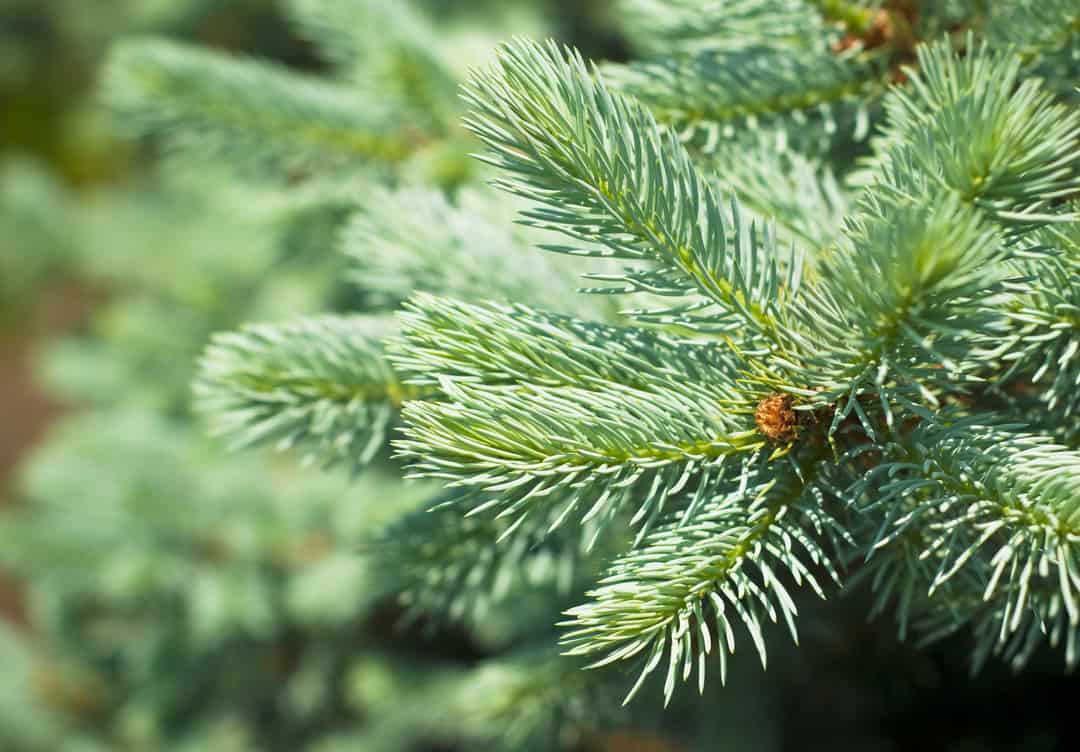
As winter rolls around and you see trees have lost their leaves, evergreens may seem better than ever. If you have a spruce tree, keeping it looking great and staying healthy might just be a priority for you. That is where fertilizer comes in.

The best spruce tree fertilizer is a high nitrogen fertilizer with a formula of 12-4-6. This formula is particularly good for spruce trees as it’s more acidic. Higher nitrogen levels in your spruce tree can aid in faster growth and a more vibrant color overall.

Below, we are going to give you some of the BEST spruce tree fertilizers, as well as tell you how and when to use them, so you ensure your spruce tree will have other trees green with envy. 

Well, what are you waiting for? Let’s dive in!

What Is Spruce Tree Fertilizer?

Clemson Cooperative Extension’s Home and Gardening Center gives us a great explanation. Fertilizer is not ‘plant food’, as it is commonly mistaken to be, but a medium to give your tree any desperately needed minerals and nutrients.

If this does not quite make sense, Utah State University’s Extension explains the definition of fertilizer as a material that supplies one or more of the chemical elements needed by a plant for its growth. 

In fact, most fertilizers that are commonly used, and which you will probably find in stores or online, contain three fundamental elements- nitrogen, phosphorus, and potassium. This understanding of what fertilizer contains may be confusing because that sounds like ‘plant food’, right?

Not quite. These three basic plant nutrients help the plants to grow as they may lack any one, two, or three of these things. The fertilizer is, like we said above, not a ‘food’ but a way to provide this extra nutrition that a plant needs to function and grow properly. 

The three nutrients (nitrogen, phosphorus, and potassium) are not the only ones found in fertilizers, however, as some contain metals like zinc along with the other key elements. These ‘micronutrients’ may also be crucial for a plant that needs help to grow and can often help replace nutrients you did not even realize had been depleted.

Picking The Right Spruce Fertilizer For Your Tree

Organic fertilizer pouring with farmer hand

There are many kinds of fertilizers out there, but how much do you know about any of them? 

While you could just go to the store and grab the first container you spot, you will find following this advice will give you better results in a shorter time.

Trees are all different, and so are their pH levels, water retention capabilities, and nutrient needs. Spruce trees, for example, are a species requiring much less phosphorus than some other trees. This affects the type of fertilizer that will get you the biggest bang for your buck.

It is important your tree’s specific needs and not over-saturate it with anything it already has plenty of or does not need much of, to begin with.

●  High Nitrogen Fertilizer with a formula of at LEAST 12-6-4 or 10-8-6. Any kind of high nitrogen fertilizer is great, but the more the better when using Urea, which is a 46-0-0 formula, meaning it has tons of nitrogen to help sustain your plant’s growth.

●  Acidic Fertilizer. Typically, a sulfur-heavy fertilizer, these fertilizers help trees to get nutrients that might not otherwise be available to them at a different pH level. 

●  Organic Fertilizer (Compost). If you are looking for something easy and accessible, use what you have. Well-rotted compost, meaning food scraps that have broken back down into a dirt-like substance, are great fertilizers for trees.

●  Organic Fertilizer (Shredded Bark). An all-natural fertilizer means that organic is the default with this shredded bark-turned-fertilizer option. As nature intended, for fallen trees to help sustain the growth of new trees, this is an option you will not regret. Your yard will look fantastic, too… while we are talking about the benefits.

●  Combinations. Use some organic and some processed fertilizer together to nourish your spruce. This can be good when you are working to combine high amounts of nitrogen but still want to add some extra other chemicals.

So, how do you use these different types of fertilizers? Let’s first get into the specifics about each of them. 

Keep on reading, it’ll be worth your while!

High Nitrogen Fertilizer For Spruce Trees

Any high nitrogen fertilizer is going to work very well for spruce trees. 

Urea, for example, is a great option for high nitrogen fertilizers, as it has the highest percentage of nitrogen per volume. 

Let’s back up, however, for a while and talk about the ‘formula’ briefly mentioned above. What does 10-8-6 or 12-6-4 have to do with anything?

What is an NPK?

That formula is an NPK value, which deals with nitrogen, phosphorus, and potassium. Remember how we talked about those before? We are circling back.

So, it’s simple. An NPK and its 3 digits correspond to the ratio of the elements in a fertilizer. 

For example, Urea’s NPK is 46-0-0, hence why it has the highest percentage of nitrogen per volume you can find. 

So, as long as your fertilizer has a high nitrogen content (even if it is not 46% nitrogen), you will confidently be able to say you are giving your spruce a great boost. The phosphorus needs of a spruce tree are not very high, so why waste fertilizer components when you could add more nitrogen?

Why Urea For Fertilizer?

This is Urea fertilizer or 46-0-0 formula

This brings us to the question, and answer, to this: why Urea?

There are 46 parts nitrogen to 0 parts phosphorus and 0 parts potassium, meaning that Urea is made of NH3 and CO2, ammonia and carbon dioxide, and makes an excellent fertilizer completely consumed by plants. Using this will help you be sure you do not leave any chemical residue in the soil around your plants.

You can find this product in local stores, chains, or even online. It is as easy as the push of a button to buy 5 pounds of Urea online for a very good rate. 

This CESCO Solutions Urea Plant Food Fertilizer can be used on both indoor and outdoor plants, ranging from vegetable gardens, trees, houseplants, and more. Funny enough, if you have some leftover and want another project, this 46% nitrogen is a great base to make handmade tie-dye products that hold color in a more vibrant way

Not only does Urea help plants grow, it lets the colors flow! What a product, this one.

Pros Of Urea Fertilizer

●  Clean fertilizer that does not leave a chemical residue in the soil

●  Cheap yet effective 

●  Safe to use

●  Good for more than just growing plants 

Cons Of Urea Fertilizer

●  Can be over-applied and cause some damage

●  Needs to be spread around by hand

●  Takes a while to take effect

How to Apply Of Urea Fertilizer To Your Spruce Tree

While you can make your own decisions regarding the placement of your high nitrogen fertilizer, there are some ways to reduce runoff and waste while increasing efficiency.

Using a sprinkler system to disperse small amounts of nitrogen fertilizer in consistent increments can help increase efficiency, as it ensures that nitrogen is not being wasted.

Another method of application is ‘surface application’, which means applying it above the soil. Similarly, combine this with the use of an irrigation system. This system does not distribute the fertilizer itself, but helps to reduce surface runoff and other issues by wetting the soil after fertilizer you apply it.

Acidic Fertilizer For Spruce Trees

Acidic fertilizer is used to help lower the pH of soil. But why, you may ask?

Well, certain nutrients are not always available to certain plants, i.e. trees, when the soil is at a higher pH level. 

So, following lots of soil testing, an acidic fertilizer may be right for your spruce. If you can take the time, let the pH level drop below 7.0 (the neutral level) and soak up all kinds of extra nutrients otherwise lost to your tree.

Pros Of Acidic Fertilizer

●  Can be great for accessing new nutrients in the soil

●  Allows your tree to not only rely on nutrients it always receives

●  Is a great way to refresh the soil around your tree and shift the growth process on a chemical level

Cons Of Acidic Fertilizer

●  Takes some time to work its magic

●  Requires pH level testing of soil and an understanding of acidity in the soil

How To Apply Acidic Fertilizer To Your Spruce Tree

You can add sulfur directly to your soil for slower results with a more enduring overall shift in your soil’s pH. However, combining sulfur with other chemicals will help you achieve a short-lived result, but also achieve it much quicker.

If you are looking for a quick, temporary fix until something else works out, we recommend combining sulfur with aluminum (aluminum sulfate.)

Otherwise, just search for some sulfurous fertilizer and be on your way!

Try this Greenway Biotech Sulfur Fertilizer, perhaps. It comes in a 5-pound bag and is ready for use.

Organic Fertilizer (Compost) For Spruce Trees

Ready made compost pile in wooden crate

Compost is a great fertilizer and can contain any organic matter. 

Most often, this is going to be seen as food scraps being put out in a compost bin or other device to collect compost. The compost then rots, or decomposes down, into a dirt-like substance all over again.

The nutrients that come directly from this other produce (plant matter all the same) will help to provide your plants with extra nutrition while you can feel good about where your food waste ended up. 

It is better for food scraps to help a spruce tree grow than end up in a landfill, right?

Pros Of Organic Fertilizer

●  Natural/organic materials

●  Cheap-free for you to use

●  Easy to put compost on older soil around your tree

Cons Of Organic Fertilizer

●  It may be less effective depending on what materials you compost

How To Apply Organic Fertilizer To Your Spruce Tree

Let your scraps decompose and turn into the compost we were discussing, and then spread it like you would any other dirt on top of the soil. Mix some of the compost down a layer or two into the older soil for better results.

Organic Fertilizer (Shredded Bark) For Spruce Trees

Shredded bark is a great fertilizer, and it is organic.

Bark decomposes more slowly because of its size, but this means that nutrients are more slowly released into the soil around your tree, which has significant effects over time.

Not only does it release nutrients at a good, slow pace, but shredded bark also helps retain rainwater and moisture (as well as any irrigated water) in the soil below, which keeps the tree more hydrated.

Another benefit of shredded bark is that it helps keep weeds away naturally, which helps maintain soil whose key role is to support the tree growing in it.

On top of it all, the shredded bark can add quite an aesthetically pleasing touch to your yard, flowerbed, the base of your tree, and anywhere else that needs a little extra TLC.

Speaking of what you can get out of using shredded bark as an organic fertilizer, the benefits outweigh any costs! 

We mean that literally; this Bonsai Jack Shredded Bark presents great value and will have your yard looking great as your tree gets a boost of its own.

Pros Of Organic Fertilizer (Shredded Bark)

●  Organic, safe to use, and easy to apply

●  Looks great in any yard or any space that your spruce tree lives

●  Help keep weeds away

●  Effects last for a long time, as bark decomposes slowly

Cons Of Organic Fertilizer (Shredded Bark)

●  Takes some time to work, as nutrients disperse slowly

How to Apply Organic Fertilizer To Your Spruce Tree

Now, this one is extra easy. Just take the bag, shake it out, spread it around, and you are done! 

Make sure your fertilizer covers the rest of the soil directly surrounding the tree and you will be just peachy. 

Does it seem too easy to be true? We promise it is not! You get a great outdoor space and your tree gets extra nutrients over a long period, which is a win-win!

Combinations Of Fertilizers

A combination is going to work best when you have some organic material at home that is good for your spruce but may not be enough for your intended purpose. 

Say, for example, you’ve got tea leaves, for which the formula is about 4-1-1. This is good in the sense that nitrogen is its main chemical, but there’s not much of anything when you look at the formula, totaling a whopping 6% NPK. 

If you don’t want this to go to waste, consider adding some other acidic or nitrogen-heavy fertilizer to the mix. Your tree will reap the benefits of both mixtures while you make use of your food waste and get to save some cash. 

Pros Of Combining Fertilizers

●  An environmentally friendly option

●  Sustainable and inexpensive for you

●  Includes multiple formulas of fertilizer to create an impressive combination of nutrients

Cons Of Combining Fertilizers

●  Might not have the same effect as a processed fertilizer which has specifically designed formulas

●  It may take a little longer to work, depending on what you combine

How to Apply Combined Fertilizers To Your Spruce Tree

This one depends on what products you are using, but on top of the soil with a little water sprayed on top is probably a safe bet!

Simple Ways To Help Your Spruce Tree Grow

Blue Spruce Tree Branches

There are plenty of fertilizers out there, as you now know, but what are the other ways you can work to help your spruce tree grow?

Monitor The Health of The Your Spruce Tree

Stunted growth, galls, and dead branches are all signs of a tree in decline. This can occur for many reasons, including but not limited to insects, disease, or low access to water or nutrients.

By monitoring the health of your tree, seeing how it progresses over time, you can nip an issue in the bud when it does arise. The alternative, not noticing your tree is declining until it is already too far gone, is one we want to help you avoid at all costs.

A tree will not grow taller, wider, or overall larger if it is fighting disease or infestation. So, keep watch and stay on top of your spruce tree’s health.

If you have a blue spruce tree, check out our guide on how to make your blue spruce more blue here.

Use An Insecticide For Your Spruce Tree

On that note, insect infestations are difficult to deal with and not at all a welcome surprise.

If you are struggling with insects infesting your spruce tree, causing your tree to be eaten, its foliage to be consumed, or galls and egg sacs to appear, take action to resolve the problem right away.

Try DEBUG- Organic Pest Control for Plants which uses neem oil, azadirachtin, and more to protect your tree and its lovely leaves from annoying little pests and all the rest. Soon you will rid yourself of all the insects trying to infest.

This insecticide is a concentrate, which means you get more for your money, with a container producing enough concentrate for 22 bottles of insecticide. Not only is it field-tested and farmer approved, but it is also a great organic alternative to other products and you can safely use it until the day of harvest. 

A product that works against 200+ pests, you will not even need to figure out the specifics of what bugs may breed in your tree. Just spray and watch them all go away!

Make Sure Your Spruce Tree Has Enough Water

So, fertilizer is not the only thing you can add to your tree to make sure it has enough of what it needs. 

Adding some supplemental water to your soil every once in a while, if you are not already doing so as part of your fertilizing routine, is a great way to keep your spruce healthy and hydrated.

Everything needs water. People, trees, animals, even plants that live in the desert have their reserves. Keeping up with those needs of your spruce will also help it flourish at the rate it should.

If you need to keep your blue spruce tree small, read our guide: 6 Simple Steps To Keeping A Blue Spruce Tree Small.

That’s It For Now!

Spruce trees are generally healthy, especially being evergreens, but everyone can use a little extra care every once in a while, including these green giants. Now you know what to look for in a spruce tree fertilizer, to ensure your tree gets the right nutrients sustainably for you to use and for the environment to receive. 

From high nitrogen fertilizers like Urea’s 46% nitrogen product to using shredded tree bark as purely organic material, there are a good number of solid ways to help maintain good growth in your tree. 

Remember, fertilizers are not plant food (even though some of them are branded as such), but they are a way to help your trees and other plants soak up the extra nutrients they need to not only survive but thrive. 

We hope this article helps you feel confident in how you help your plants as you embark on your tree journey. 

Until next time, thanks for reading!

References

Adeniyan, O. N., Ojo, A. O., & Adediran, J. A. (2011). Comparative study of different organic manures and NPK fertilizer for improvement of soil chemical properties and dry matter yield of maize in two different soils. Journal of Soil Science and Environmental Management, 2(1), 9-13.

Mahendrappa, M. K., & Salonius, P. O. (1982). Nutrient dynamics and growth response in a fertilized black spruce stand. Soil Science Society of America Journal, 46(1), 127-133.

The bald cypress is a tree in the Cupressaceae family. This tree is a deciduous conifer similar to a pine tree. They produce cones and grow in harsh swampy conditions. The name bald comes from it being one of five conifers that shed their needles in the fall. 

Bald cypress balls and cones are an incredibly useful resource produced by a beautiful tree. Known for their uses, including medicine, insect repellent, and many others. You can make bald cypress balls and cones into oil, resin, and even tea.

So, have you ever wondered just what the heck bald cypress balls/cones are? Keep reading on as we discuss in-depth the uses of the balls and cones of cypress trees!

Where Do Bald Cypress Trees Grow?

Cypress foliage and cones on white background

Deep in the swampland, this gorgeous tree grows. Alligators and turtles often make their homes near these trees. Jagged knees protrude out of the ground as this tree towers over, providing ample shade for the creatures below.  

In-fact, the Seminole Indians used the wood of this tree to carve out their canoes. Charlie Cypress, born in 1869, was famous for his canoes crafted of this cypress.

Now, however, you will see this tree as a wonderful landscape tree. Cypress trees grow in zones four through nine and along pond banks and other wet areas. Because of their love of the swamp, they are usually very adaptive trees, and enjoy most soil types but prefer sandy acidic soil. 

They dislike shade and will not thrive in areas without full sun. They will tolerate being a little drier, however, mites will quickly become an issue if it is overly dry. Other than mites, this tree has few pests. 

Pests of cypress trees include cypress moths, mites, fall webworm, and a few others. You can easily take care of these pests by applying insecticide, cleaning up leaves and other debris around the tree, and general maintenance. 

This tree can make a fantastic addition to yards that flood easily. Make sure you water well, if not, and fertilize in the spring. Frequently test your soil to be sure that it is acidic enough, if not amend your soil. 

Many love the look of this tree next to the water. Though at night they can be a little spooky. This tree provides excellent shade around your yard and can make a wonderful place to sit and relax. 

Correctly planning the planting of this tree is key to ensuring its proper growth and development. With careful planning, you should have outstanding success growing this tree!

If cared for correctly, this tree will bless you with the beloved Cypress Knees for all your crafts. These knees are great for carving, painting, or leaving blank as decorations! Some even use them in reptile enclosures to provide enrichment to their animals.

If you’re interested in the different types of cypress trees, check out our piece:  9 Differences Between Bald Cypress And Pond Cypress Trees.

Cypress Lumber Was Used For Canoes

Cypress lumber is used for many crafts. Its strength and look are beloved all over. The grain is fine and the wood color is a light yellow.

These woods’ natural oils help repel insects and keep decay at bay. The wood is strong and often used for various crafts that go outdoors. Over time, the wood will turn a gray color with age. 

The real star use is its use for boat making. Native Americans used bald cypress wood for crafting their canoes. Because of the environment in which the tree lives, this wood is an excellent boat material.

It can also be used to make boat docks as well. Overall, many choose to find wood native to their area. This is because most native lumber holds up better in its natural environment.

Is A Bald Cypress Tree An Evergreen?

The question of the day!

Unlike others in its family, the bald cypress is not an evergreen. It loses its needles in the fall, as an oak tree or others would. This is unique as it is in the conifer family but annually loses its needles.

What Are The Little Balls On A Bald Cypress?

Unlike pine trees, bald cypress trees’ cones are not exactly a cone shape, but round little balls. These balls contain the seeds that will grow future cypress trees and feed wildlife such as squirrels and birds. 

These balls contain a sticky sap, also known as a resin. The resin has many uses, including making healing balms. 

What Can I Do With Cypress Balls And Cones?

One dried cypress cone on a white painted wooden background close-up

Bald cypress cones really are not in the shape of a cone. They are round balls that contain seeds. 

Bald cypress cones produce resin, which have been used in healing balms. Some people claim it has beneficial properties for skin rashes and wounds. By adding resin to an oil and beeswax mixture

Wildlife animals can eat these cones (humans shouldn’t eat them.) Animals such as turkeys, rabbits, and squirrels will eat bald cypress cones when given the chance!

According to Stetson University, bald cypress trees may even have medicinal value!

Feed Cypress Balls To Squirrels

Squirrels love eating the seeds inside of the cypress balls! This makes a wonderful tree to feed squirrels. Not only do squirrels enjoy them, other animals such as turkeys and woodpeckers will also consume the seeds within the cypress balls.

Planting this tree could also discourage squirrels from feasting on your bird feeders, as it will provide them with a food source alternative other than your birdseed. 

Enjoy the view as animals eat the seeds from these. However, they can make a mess by tearing up the balls, so be wary of that.

Germinate Bald Cypress Trees To Plant More

Because of the nature of bald cypress and their love of water, for the seeds to germinate, they must be moist at all times. To aid in moisture retention, germinate seeds using a paper towel and freezer bag. This will help retain more water.

Remove the seeds from the cone. This allows for a better germination rate because you can pay special attention to each seed. 

The best seed starting mixture would be equal parts sand and peat moss. Keeping this mixture moist is key to having a good germination rate of the seeds. 

Throughout the growing time, until the tree reaches the optimal height to plant in the ground, be sure to take care of your seedling by keeping the soil moist. These trees need ample sunlight and warmth to grow properly. This is due to their native environment. 

Bald cypress can be maintained like a bonsai tree. This is a popular way to grow such attractive trees. Repot your bonsai often to help maintain healthy soil and root system. You also should fertilize these with regular fertilizer. 

Repel Bugs With Cypress Oil

Cypress oil can repel some bugs such as water bugs. The powerful smell is unappealing to insects and often they will avoid areas with the scent as it masks potential food sources for them and irritates their senses.

This is a less researched method for cypress oil and may not be totally effective.

Cypress Wood Is Used For Furniture

Cones of Bald Cypress

The best product produced by bald cypress is its wood! This wood is very durable, resistant to rot, and lovely to look at. 

Many woodworkers use this wood to build furniture and other projects, as it looks fantastic. It also is commonly used as wooden flooring. Wooden flooring is a very beautiful flooring for all homes. 

You should properly care for your wood floor by keeping it cleaned and waxed. Polish the flooring often to keep a lustrous shine and to keep it protected and only use wood safe cleaners on it like Murphy’s Oil Soap.

But the ultimate cypress wood product is their knees. Cypress knees make fantastic decorative pieces. They are renowned for cypress carvings, seen in this informative book Carving Cypress Knees, and their overall look. 

Can You Eat Bald Cypress Balls?

Although humans don’t consume bald cypress cones and balls, animals such as squirrels and birds do. This makes this tree a wonderful addition to your backyard oasis. If you love watching wildlife, this is the tree for you as it will attract a variety of animals. 

That’s A Wrap!

Bald cypress trees are wonderful trees that grow in the swamps and bayous in the southern states. They are sought after for their knees, which are wood growths that stick out of the ground. 

These trees do fantastic in wet soil with high acidity. They make a fantastic shade tree for your yards and do well in flooded areas!

The cones attract various wildlife, so for the enthusiast, this is a fantastic thing. Squirrels and rabbits will feast on the dropped cones and you can enjoy the sights of watching them.

Caring for these trees is relatively easy, as they are pretty hardy trees. This is because of their preferred swamp habitat. As long as they have full sun, they should thrive. 

The oil from this tree is great at repelling bugs like cockroaches. Use the oil in places pests may be present. 

Cypress lumber is loved for its versatility in building. Native Americans used cypress wood to build their canoes. However, the real star is cypress knees. These are beloved by crafters around.

References 

“Taxodium Distichum (Baldcypress, Bald Cypress, Cypress) | North Carolina Extension Gardener Plant Toolbox.” Ncsu.edu, 2019, plants.ces.ncsu.edu/plants/taxodium-distichum/. Accessed 16 Dec. 2019.

Stahle, D. W., & Cleaveland, M. K. (1996). Large-scale climatic influences on baldcypress tree growth across the southeastern United States. In Climatic Variations and Forcing Mechanisms of the Last 2000 Years (pp. 125-140). Springer, Berlin, Heidelberg.

Conner, W. H., & Toliver, J. R. (1990). Long-term trends in the bald-cypress (Taxodium distichum) resource in Louisiana (USA). Forest Ecology and Management33, 543-557.

If you’ve ever been to a swampy region of the southeastern United States, you’ve probably seen a bald cypress or pond cypress tree. They’re pretty unforgettable with their strange base of many root-like structures that appear to prop the rest of the tree above the water. The bald and pond cypress are closely related but differ in a few ways.

In truth, the best way to tell apart a bald cypress from a pond cypress is to look at the leaves. Bald cypress trees have needle leaves alternating on the twig, while pond cypress trees have longer needle leaves that point upward toward the sky instead of outward from the twig.

Read on to learn about all the differences between a bald cypress tree and a pond cypress tree. We’ll also cover some similarities between the two and go over what all this talk of ‘knees’ is about.

Bald Cypress And Pond Cypress: What’s The Difference?

There are a few people out there in the botany world that aren’t convinced that pond cypress and bald cypress are, in fact, different species. They argue that the difference between them is due to environmental influence, not necessarily a difference in genes.

With that being said, the general consensus is that the bald cypress and pond cypress are two different species. Although, it can be almost impossible to tell the difference when both trees are young.

The best time to try to differentiate between a bald cypress and a pond cypress is when the trees are mature. You’ll also want to check them out in the summer to early fall. This is when the leaves are developed enough to differentiate them, but they haven’t fallen off yet for the winter season.

If you haven’t already guessed, both trees are deciduous, meaning they lose their leaves in the fall. Considering cypress tree ‘leaves’ consist of needles, this can be a little surprising to those of us that are used to trees with needles being evergreen.

Not our cypress trees!

So, how can we tell these two closely-related trees apart? Is it as obvious as the difference between a maple and oak or something more elusive?

Bald Cyprus vs. Pond Cyprus Tree Leaves

Leaves are often a distinguishing feature of trees but can be problematic if you’re tree peeping in the winter. So, if you’re checking out cypress trees, be sure to look in the summer or early fall.

Bald cypress tree needles.

Bald cypress trees have needle leaves that are alternating on the twig. They are very similar to a yew tree, which is where they get their Latin name ‘Taxodium’ which means ‘yew like.’ 

Pond cypress leaves are also needlelike, but they are longer and tend to point upward toward the sky instead of outward away from the twig.

Both trees change color in the fall to a reddish-brown before the leaves drop off for the winter season.

Bald Cyprus vs. Pond Cyprus Tree Elevation

Since both bald cypress and pond cypress like to be in moist environments, it’s no surprise that both trees grow at lower elevations. 

Colorful winter bald cypress turning red in autumn at Garden.
Colorful winter bald cypress turning red in autumn at garden.

Bald cypress trees can grow at higher elevations than pond cypress, up to a maximum known elevation of 1,750 feet. Even then, the trees growing at this elevation are very isolated. Pond cypress trees are unlikely to grow at elevations even above 100 feet, according to the USDA Forest Service.

So, if you’re cruising around at 1,000-foot elevation and see one of these trees, you can bet it’s a bald cypress, not a pond cypress.

Bald Cyprus vs. Pond Cyprus Tree Native Range

This is another obvious way to tell if you’re looking at a bald cypress or pond cypress. The native range of the bald cypress is more extensive than that of the pond cypress. 

If you are inland and spot a cypress tree, you are more likely to be looking at a bald cypress than a pond cypress, as pond cypresses normally grow along coasts, not inland.

Bald cypress trees grow along the east and southeast coasts, reaching as far north as southeast New Jersey, as far south as the southern tip of Florida, and as far west as southeast Texas. 

The bald cypress also thrives inland in the southeastern states, including Mississippi, Missouri, Illinois, and Indiana. They mostly grow along rivers, streams, and sometimes in ponds, but the bald cypress prefers moving water to stagnant water.

Pond cypress trees are less widely distributed. They’re found from southeast Virginia, south along the coast to parts of Florida. Turning west, you can find them along the gulf coast over to southeast Louisiana, according to the USDA Forest Service’s Fire Effects Information System.

Bald Cyprus vs. Pond Cyprus Tree Temperature Needs

In general, bald cypress trees can withstand colder temperatures than the pond cypress tree. There seems to be a pattern here, huh?

It can get pretty chilly up in the New Jersey area. Bald cypresses have been known to survive temperatures all the way down to -29℉! The pond cypress can only withstand temps down to 10℉. 

Bald cypress trees can put up with a wider variety of climates than the pond cypress. This is why the bald cypress is more widely distributed, and the pond cypress is mainly secluded to warm coastal climates.

Bald Cyprus vs. Pond Cyprus Tree Growing Conditions

We mentioned the preferred elevation and temperature, a cut and dry statistic, but what about soil?

In this particular circumstance, the pond cypress is actually more tolerant than the bald cypress. The pond cypress is okay with acidic soil, whereas the bald cypress will either have stunted growth or will not grow at all in acidic soils.

Taxodium ascendens, also known as pond cypress.

Pond cypress trees like to grow in poorly drained areas, shallow ponds, or stagnant water. You’ll rarely see a pond cypress along a river or fast-moving stream. These areas are more likely the home of bald cypress trees, which prefer moving water.

One of the most interesting features of the bald cypress tree is that it actually prefers to grow in areas that flood regularly! This is how the tree gathers much of its nutrients, and one way, its seeds are carried off to possible grow sites.

Neither bald cypress nor pond cypress can withstand high levels of salinity in the soil or the water they are growing in, according to a 2009 study.

Bald Cyprus vs. Pond Cyprus Tree Full Height At Maturity

Obviously, this can be difficult to discern if the trees you are looking at are not mature. Not only that, but how can you tell when a tree is mature? It can’t exactly tell you…

Suffice to say; if you’re looking at a towering tree that seems to be over 70 feet, you’re likely looking at a bald cypress. These trees can reach heights up to 120 feet, according to the Texas Parks & Wildlife, whereas the pond cypress rarely exceeds 60 feet.

Growth rates also differ between the two trees. While both are slow-growing trees, the pond cypress grows at turtle speed compared to the bald cypress. This is most likely due to the less fertile growing conditions of the pond cypress.

Bald Cyprus vs. Pond Cyprus Tree Uses

Trees are super useful to the world. They make a lot of things we humans take for granted. Our furniture, cabinets, paper, books, coffee sleeves, wine corks, and even some of our medicine all come from trees.

Every tree has its own advantages. Some are better suited to make pulp, wood chips, or simply to provide shade, while others are stronger and can be used for houses, bridges, and other sturdy objects.

Both pond cypress and bald cypress fall in that latter category. The timber is TOUGH and used for things like bridges, rafters, boat planks, construction, and fences.

In addition to being tough, this lumber is in high demand because of its ability to resist decay. Cypressene is a special oil made by these trees that keeps the wood from decaying.

So, bald cypress and pond cypress are tough…what else are they good for?

Both trees provide a ton of benefits to all the swampy critters that hang around. Evening grosbeak, squirrels, wild turkeys, and ducks all benefit from bald cypress seeds, which they munch on. 

Bald eagles and osprey use the top of the tree for nesting sites. And when the long-lived bald cypress finally falls, the underwater logs provide a spawning ground for catfish.

Pond cypress trees provide similar benefits but in a different niche. The long-legged herons and egrets make nesting sites near them. They also provide one of the only breeding grounds for certain species of tree frogs, toads, salamanders, and other slimy critters.

Bald Cyprus vs. Pond Cyprus Tree Bark

If you’re looking for differences between pond cypress and bald cypress and the leaves have already fallen off, you can try to differentiate them from the bark instead.

In general, both cypress trees have thin bark, making them susceptible to fire. However, pond cypress bark is thicker than bald cypress, making it slightly more resistant to fire, according to the USDA Forest Service.

Bald cypress bark tends to have sharper ridges compared to the rounded ridges of the pond cypress. The color of the bark is anywhere from brown to grey for both trees.

This can be a difficult tool to use to tell the difference between bald cypress and pond cypress, but it can be helpful in the winter season when leaves aren’t available.

Bald Cyprus vs. Pond Cyprus Tree Shape

This one doesn’t always pan out, as not every tree grows the same way each time. Soil conditions, and in the case of a bald cypress tree, flooding conditions as well, affect the tree’s growth rate and direction of growth.

If you’re seeing a cypress tree that is more pointed like that of a Christmas tree, you’re most likely looking at a pond cypress. Bald cypress trees have a rounded appearance with more uniform branches.

You’ll also notice that the leaves of the pond cypress are likely pointing upward or pressed against the branches. This is where the tree gets its pointed shape. Bald cypress leaves typically point outward from the twig, giving it a rounded appearance.

Cypress Trees Have Knees?

Close up of bald cypress tree knees.

Bald cypress trees have a peculiar habit that botanists still haven’t figured out.

Yes, bald cypress trees grow protrusions from the ground called knees. Pond cypress trees are less likely to develop knees, but some do. They are typically more rounded, whereas the bald cypress knees are pointed, like a stalagmite. The purpose of the knees isn’t well understood.

When they are removed or cut down, the trees don’t seem to mind all that much. Knees are more likely to develop on trees that are at least partially submerged in water.

Fun fact: bald cypress trees even produce cones!

Cypress Trees Are Water Purifiers

As we mentioned before, bald cypress trees like to grow on floodplains. The nutrients that are carried in floods help the tree grow, and in turn, the tree helps purify the water.

Bald cypress trees can survive waters up to 10 feet deep, and sometimes more. Similar to how some trees can purify the air, bald cypress trees can purify the water by reducing the number of pollutants and harmful agents in the water. 

Cypress domes are a specific type of swamp characterized by smaller cypress trees growing on the outer rim of the area and taller trees growing toward the center. This gives the swamp a dome-like appearance, hence the name.

These domes are so good at purifying water that they can serve as sewage treatment facilities, helping to recharge the groundwater and improve the water quality.

Wrapping Up Our Cypress Tree Knowledge!

That’s all we have for now on the differences between a bald cypress and a pond cypress. These two trees are closely related, both being of the Taxodium genus. However, there are a few differences between them.

To recap, the major difference between a bald cypress and a pond cypress include:

  • Leaves
  • Elevation
  • Native Range
  • Temperature Needs
  • Growing Conditions
  • Height at Maturity
  • Uses
  • Bark
  • Tree Shape

Turning the page on the differences between the two trees, there are also many similaritiesBoth trees have the same active flowering periods, germination periods, and both have a partial tolerance to shade, making them a common dominant species in tree stands.

Both bald cypress and pond cypress are also monoecious, meaning they have both male and female parts on the trees. Seed dispersal is often carried about by swamp critters like squirrels and rabbits. 

Lastly, both trees like growing on relatively flat topography and do not do well in slopey areas. This isn’t really surprising, seeing as both trees prefer poorly drained soils and moist areas, which are rarely found on hillsides where water simply flows downhill.

Hopefully, this article has cleared up any confusion between a bald cypress and a pond cypress. Both trees have some amazing attributes and give us humans beautiful scenery to look at.

References

Bacchus, S. T., Hamazaki, T., Britton, K. O., & Haines, B. L. (2007, June 08). Soluble sugar composition of pond-cypress: a potential hydroecological indicator of ground water perturbations. Journal of the American Water Resources Association36(1), 55-65. https://onlinelibrary.wiley.com/doi/abs/10.1111/j.1752-1688.2000.tb04248.x

Krauss, K. W., Duberstein, J. A., Doyle, T. W., Conner, W. H., Day, R. H., Inabinette, L. W., & Whitbeck, J. L. (2009). Site condition, structure, and growth of baldcypress along tidal/non-tidal salinity gradients. Wetlands29, 505-519. https://link.springer.com/article/10.1672/08-77.1

Stahle, D. W., Burnette, D. J., Villanueva, J., Cerano, J., Fye, F. K., Griffin, R. D., Cleveland, M. K., Stahle, D. K., Edmondson, J. R., & Wolff, K. P. (2012, February 21). Tree-ring analysis of ancient bald cypress trees and subfossil wood. Quaternary Science Reviews34, 1-15. https://www.sciencedirect.com/science/article/abs/pii/S0277379111003489

Watts, A. C., Kobziar, L. N., & Snyder, J. R. (2012). Fire reinforces structure of pondcypress (Taxodium distichum var. imbricarium) Domes in a wetland landscape. Wetlands32, 439-448. https://link.springer.com/article/10.1007%2Fs13157-012-0277-9

Your Competitors Are Already Running Ads. Are You?

This is for service business owners who are ready to SCALE.