Grow Your Business with Tree Journey

Our TradeWorks Revenue System™ builds a detailed advertising funnel that attracts, nurtures, and converts the right clients – so you can finally stop chasing leads and start scaling your business.

Have you ever wondered about the brown inner parts of your cedar tree and what would happen if you trim them? We’ve got that and a lot more covered in this article! In reality, there’s a few simple reasons as to why cedar trees won’t grow back.

Cedar trees grow new growth from their old growth or dead zone. This means if you prune your cedar and cut into the dead zone, your tree may not come back. If you only prune the new growth, about a third of the way back, your cedar tree will keep growing.

Evergreens are prone to natural browning and seasonal needle drop, but sometimes this can be a hint at a bigger issue. Keep reading to learn more about what this means and why your cedar tree won’t grow back!

Will Your Damaged Cedar Tree Grow Back?

The first question to ask yourself is, what damaged your cedar tree? Is it because of the seasons, drought or water stress, pathogens, infestations, or something else?

If your cedar tree is damaged and turning brown in certain spots, it could be because of a variety of things. If it’s seasonal, it is natural for your cedar tree to be dropping needles.

When this happens, around summer to fall, your cedar tree will drop yellow and brown needles to make way for new ones. However, it may be difficult to tell the difference between this or other damage to your cedar tree.

Next up is drought or water stress. If you notice brown needles around the base of the tree, this can easily be attributed to dry conditions. It doesn’t always mean this is the issue, but if you don’t notice any bug damage or other signs of stress, try soaking it at least once a week and see if it helps.

On the other hand, if your tree is too water-logged, or in an area that stays too wet, it can be susceptible to root rot. This is often devastating to any tree.

If your tree turns brown on one side of the tree, this could be root rot. Armillaria root rot is a root disease specific to evergreens, including cedars. Unfortunately, there is no cure for this and your tree will not come back.

If you have a pest infestation, you might notice your cedar tree turning a dreaded brown. Pests like spider mites are common amongst cedar trees. Fortunately, you can use insecticidal soaps to rid your tree of infestations.

Most of the time, if your cedar is turning brown and has some slight damage, your tree will grow back. However, if it seems to affect your entire tree, there’s a good chance it could be on its way out.

The best thing to do in this situation if you are unsure is to contact tree professionals who can assess the situation properly!

Did you know many cedar trees have blue needles? They’re absolutely beautiful and super interesting to learn about.

Will My Cedar Tree Grow Back After Trimming?
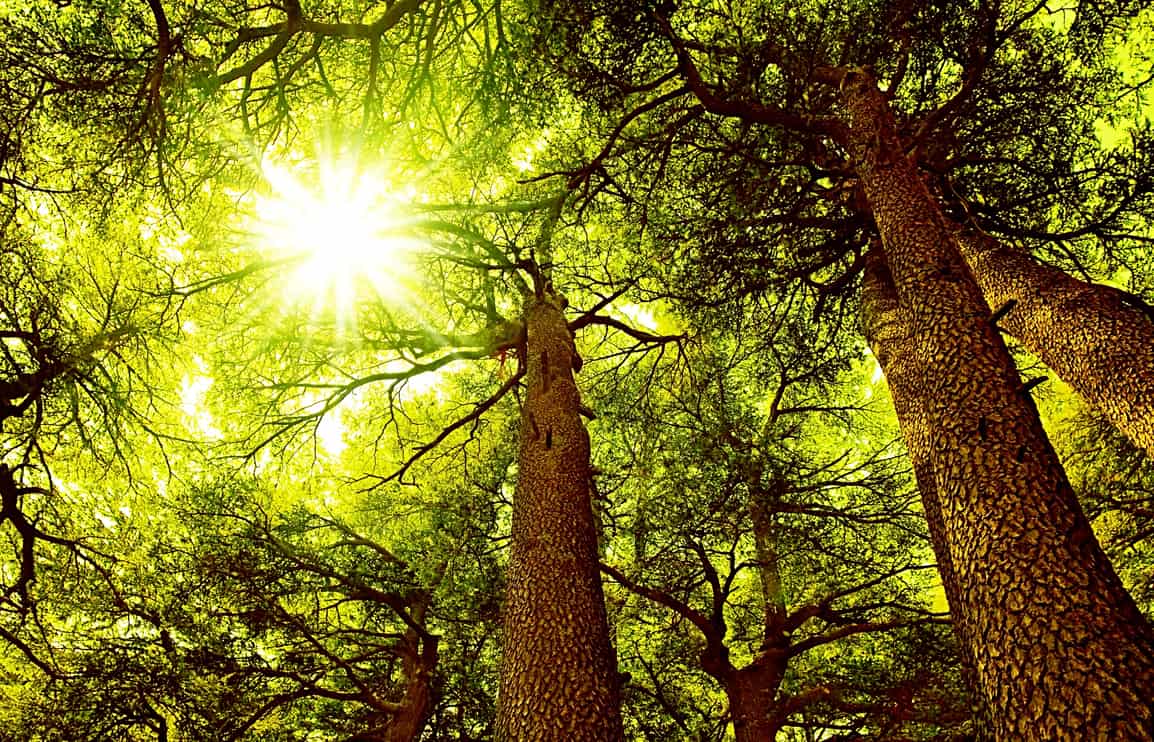
Sunny Cedar forest background, old rare trees, sunrise with rays of sun light coming through the branches

Since cedar trees grow from new growth, you have to be especially careful when trimming or pruning them. 

Cedar trees have an inner area of the tree made up of deadwood called the dead zone. Fresh growth grows from the ends of the branches in the dead zone. This means new buds formed the previous year on the ends of branches. 

When trimming and pruning cedar trees, stay within the green portion of the branches. Do not stray into the old/brown/dead area you’re trimming, otherwise, your branches will not come back.

Will Deer Eaten Cedars Come Back?

Fallow deer fawn eating a leaf

So, there is a conflicting argument about whether deer will eat cedar trees, and if cedar trees are so-called “deer-resistant”. But like everything else, if the deer are hungry enough, they will eat whatever they can.

So while deer may not always choose to eat cedar, if it’s there in the winter, when everything else is gone, there’s a good chance they’ll eat it.

If you notice chomping on your cedar trees, the short answer is yes, your cedar tree will come back. However, this depends on the age and health of your cedar tree. If it’s a newly planted sapling or small cedar, or if it’s more mature, taller, and the majority of it is out of the deer’s reach.

If it’s a relatively young plant, there’s a good chance your tree might not come back because of the additional stress put on a young tree that’s already trying to adjust.

If it’s an older plant and the deer chow down on the dead zone area, those branches will not come back, but your tree will most likely survive. Established and healthy plants have a leg up in this situation.

You can combat this by using a deer spray, and one that works! Liquid Fence HG-70109 Animal Repellent works to repel deer. It can be used year round, even! The caveat to this though, is you will most likely have to alternate between it and the Repels-All Animal Repellent Concentrate.

Alternating between the two is one of the best ways to keep the deer at bay using products. Both deer repellents have quite the rough smell, which is why it works!

Should I Prune My Cedar?

Close up of man hand with hedge trimmer cutting bushes of white cedar to ideal fence. Male gardener, wearing in overalls with protective glove working with professional garden equipment in backyard.

This is probably the most important question to ask. Should you prune your cedar tree? The short answer is yes!

Pruning is a great way to give your tree the boost it needs by removing the unnecessary branches, meaning anything that is dying, dead, and turning bad on the tree. This will not only prolong the life of your tree, but it will also increase airflow, stimulate growth, and help protect it from pests and internal issues.

If you decide to do any trimming other the above, it will probably be to enhance the cedar’s shape. While this is okay to do, follow the above and do not trim into the dead zone or the brown interior area of the tree.

If you get close to that point, stop! If you’re trimming your cedar so it doesn’t look wild, only trim back about a third of the green growth. This will ensure your cedar grows back.

The next most important thing is when to prune your tree. Like most trees, you want to prune your cedar tree during the late winter and early spring to help prevent any infestations or diseases. Pruning during cooling temperatures ensures the tree will heal before insects emerge.

If you decide to prune your cedar tree, you’re going to need the right tools.

This list includes hand pruners, loppers, and a handsaw or pole saw. Don’t worry though, we’ve got some recommendations for you that are sure to have you pruning with ease.

Hand pruners are something you’ll want to keep in your landscaping tool chest. They are excellent for cutting branches less than ½ inch in diameter. The FELCO F-2 068780 Classic Manual Hand Pruner is a great option for hand pruning your cedar tree, especially if you want to shape it.

Felcos are known for their durability and performance! They have steel blades and can cut branches like a champ. Although the price point is a bit steeper than some other hand pruners you may find, they are worth it!

Loppers are another great thing to have on hand. They help you reach those branches just a little higher up and the ones too thick for your hand pruners.

Loppers cut branches that are between ½ to 2 inches in diameter. The Fiskars 394801-1003 PowerGear2 Bypass Lopper is a wonderful set!

These cut branches like you’re cutting through butter! No, seriously! Loppers are the preferred method of pruning and trimming trees since they can help you get the job done quicker and more efficiently than regular hand pruners.

Pruning saws can be used for any larger diameter branches. The Fiskars 15 Inch Pruning Saw with Handle is another tool to have for any outdoor work. This pruning saw also cuts things with ease and makes outdoor work way easier.

Another tool we recommend having in your outdoor tool chest is a pole saw. You can’t beat the Fiskars Chain Drive 7–16 Foot Extendable Pole Saw & Pruner, which extends up to 16 feet high! Because of its steel pruner blade, it can cut branches up to 1 ¼ inch thick in diameter.

Because it’s extendable, you won’t have to always be dragging out the ladder when you want to reach those high-up branches. Because it is Fiskars, it also has a full lifetime warranty.

That’s A Wrap!

There you have it! Let’s recap why cedar trees won’t grow back and what you can expect!

Pruning is a great way to prolong the health and wellness of your cedar tree and give it the boost it needs. By removing the unnecessary branches, or anything that is dying, dead, and in poor shape.

This will not only prolong the life of your tree, but it will also increase airflow, stimulate growth, and help protect it from pests and pathogens.

Similar to most evergreens, when you prune a cedar tree, you have to be careful about how far back you’re pruning. Cedar trees grow new growth from their old growth, or what is referred to as the dead zone.

If you prune back into the dead zone, you’re cutting off the area where the new growth stemmed from, meaning your tree probably won’t come back. If you only prune the new growth, or the green part, before you get back into the brown, dead zone, roughly about a third of the way back, your tree will keep growing.

There are a variety of reasons your cedar tree could turn brown. Some of which are natural, from which your tree will come back. However, a handful of those reasons, like a pest infestation or Armillaria root rot, might mean your cedar tree is on its way out.

Additionally, if deer are chowing down on your cedar trees and start eating into that dead zone, anywhere they didn’t reach will continue to grow, but the parts in the dead zone are probably history.

That’s a wrap! Thanks for sticking around and learning why your cedar trees won’t grow back, and what to expect.

References

Alban, David H. “The influence of western hemlock and western redcedar on soil properties.” Soil Science Society of America Journal 33, no. 3 (1969): 453-457.

Engle, D. M., & Kulbeth, J. D. (1992). Growth dynamics of crowns of eastern red-cedar at 3 locations in Oklahoma. Rangeland Ecology & Management/Journal of Range Management Archives, 45(3), 301-305.

Prescott, C. E., & Preston, C. M. (1994). Nitrogen mineralization and decomposition in forest floors in adjacent plantations of western red cedar, western hemlock, and Douglas-fir. Canadian Journal of Forest Research, 24(12), 2424-2431.

Ribbons, Relena R., David J. Levy-Booth, Jacynthe Masse, Sue J. Grayston, Morag A. McDonald, Lars Vesterdal, and Cindy E. Prescott. “Linking microbial communities, functional genes and nitrogen-cycling processes in forest floors under four tree species.” Soil Biology and Biochemistry 103 (2016): 181-191.

Zou, Chris B., Dirac Twidwell, Christine H. Bielski, Dillon T. Fogarty, Aaron R. Mittelstet, Patrick J. Starks, Rodney E. Will, Yu Zhong, and Bharat Sharma Acharya. “Impact of eastern redcedar proliferation on water resources in the Great Plains USA—current state of knowledge.” Water 10, no. 12 (2018): 1768.

A strong, healthy tree is a beautiful sight to behold, especially when the leaves are swaying in a gentle breeze. We know the leaves typically fall off every autumn and regrow in the spring, but does tree bark grow back? Is there anything that can be done if your trees lose large patches of bark?

While trees can repair minor instances of bark damage, major bark loss won’t grow back and instead, the tree will develop thick encrusted ridges around the missing bark. When this happens, smooth out the missing bark edges as best as possible to allow for clean regrowth.

Many reasons cause trees to lose their bark. Let’s dive in and find out what these reasons are, what can be done about it, and how—if possible—tree bark can be repaired.

Why Tree Bark Is So Important

The tough outer layer of the tree, or tree bark, is the first line of defense. Much like our skin. The bark protects the tree from temperature extremes, keeps moisture from rain out, while keeping internal moisture in, and helps to guard against insects and animals.

Just like our skin, tree bark grows from the inside out and will shed from time to time as the new cells underneath are constantly replaced. When the growing layer of bark is damaged either by pests, environmental issues, disease, or other problems, it is unable to grow back.

The bark protects the growing layers of the tree that supply the limbs and leaves with water and nutrition. If these layers get damaged enough, it can spell certain doom for the tree. When large sections of bark get damaged or destroyed, especially if the damage goes completely around the tree, fatality increases.

According to The Department of Environmental ConservationWhen tree bark is missing or damaged it can weaken the entire tree. Think of damaged bark like a wound in your skin. It can allow bacteria and viruses to enter which can be a cause for concern.

If a tree is missing a lot of bark, or there are signs of decay, you should contact a professional to inspect your tree.

Why Tree Bark Doesn’t Grow Back

Trees can grow their leaves back, so why shouldn’t they be able to grow their bark back? Let’s look at the tree leaves like the hair on our heads. We can cut our hair down to the scalp, and it will grow back; a tree’s leaves are similar to human hair because they are constantly replaced.

The tree bark is made of different cells and so tree bark will act differently when damaged. If the outer layer of the bark is damaged, it can regrow from underneath. Trees even shed bark occasionally, especially trees like the river birch.

When the growing layer underneath the outer hard, rough, bark layer is removed or severely damaged, it can’t regenerate.

Of course, trees like the paper birch have bark that naturally falls off and grows back naturally.

What Causes Trees To Lose Their Bark? 

Trees don’t typically drop all their bark-like some people who shed their clothing as soon as they get home after a long day at work. There has to be an underlying condition or problem that makes trees lose their bark. It’s essential to their wellbeing.

Many causes such as insect infestations, animal damage, environmental factors, or human causes can damage tree bark. Let’s delve into these reasons and more to find out if there is anything that can be done to help the tree.

1. Insect Infestation

Close up termites or white ants

Many insects want to get the nutrients that trees create for themselves. Boring insects—the ones that drill holes into the trees, not the ones that drone on about uninteresting subjects—especially can cause a lot of damage to trees.

For instance, the emerald ash borer has been wreaking havoc among American ash trees; killing them by the millions. If you see peeling bark or large patches of bark that have fallen off, along with small holes in them, you might have a problem with borers. The biggest telltale sign will be D-shaped holes from where the larvae have burrowed out of the tree.

The larvae of boring insects cut tunnels through the growing layers of the tree and if the infestation is big enough, it can kill the tree by cutting off the nutrition to the leaves and rest of the tree.

Ants can also damage trees and tree bark, though they are usually attracted to trees because of other insects that produce a byproduct called honeydew. If you find ants in or around your trees, you probably have another issue with your trees such as rot or an aphid infestation.

To get rid of borers or ants in your trees, your options are pretty limited. You can either cut down and destroy the infested trees or use some kind of pesticide to get rid of the insects. We don’t recommend doing the latter yourself; it would be better to contact a professional arborist or pest control expert.

You can learn more about the trees that insects love In order to understand what trees are most at risk for insect damage.

2. Animal Damage

Many animals out there will damage the bark of trees in the food search. When food is scarce these animals will strip away the bark to reach the inner, tender areas of the tree for sustenance. Newer trees and saplings are particularly susceptible to this kind of damage.

Deer, squirrels, porcupines, voles, and rabbits can all make a meal of the tender cambium layer underneath the dry bark. This layer is the growth layer. It carries water and nutrition to the other parts of the tree and can be nutritious to animals when other sources of food are harder to find.

Bark Damage From Deer

They can strip off large sections of bark either by rubbing with their antlers or by stripping away the bark to get to the inner cambium layer. This damage looks like ragged strips and/or large chunks of bark missing from the tree a few feet off the ground.

To repair this damage, you need to trim off the ragged areas of the bark with a sharp knife. Try not to cut more healthy bark off. Then simply let the area heal on its own.

Don’t use any kind of paint or sealant as this can hinder the healing process. To help the tree heal itself better, make sure it gets plenty of water, and add some fertilizer if you haven’t done that lately.

If the tree doesn’t appear to be responding well 2 to 3 weeks, you should seek out a local arborist.

Bark Damage From Rabbits

In winter you might see evidence of rabbits chewing on your trees at the ground level. Rabbits can be especially damaging because they cannot get very high, instead, they can end up girdling the tree. Girdling happens when the bark is damaged completely around the tree and is often leads to the end of the tree.

If you see rabbit damage to your tree, the same steps as for the deer apply here. Be sure to pay special attention to the tree if it has been girdled as the tree will likely need to be removed.

Bark Damage From Squirrels

These fluffy “tree-rats” can cause damage to the tops of the trees and along branches. This usually happens in late winter when food storage becomes scarce. You shouldn’t have to worry about this damage too much because of what damage the squirrels do, the tree can usually deal with.

Bark Damage From Voles, Gophers And Mice

Except gophers, these rodents don’t usually pose too much risk to trees when they dig through the bark. Mice and voles will also nibble on the small roots of trees.

If you notice small holes and areas of freshly dug soil mounds near your trees you might have mice or voles living in the ground. Gophers dig the same types of holes, only larger. Gophers can cause serious problems to trees, especially if they are saplings.

You can use strong-smelling repellents to run these rodents off your property. Castor oil and cayenne pepper are two scents that help to run these guys off. Either pour them around their holes or mix with water and spray wherever you see the evidence.

If these methods don’t work, contact a professional pest control service to help you handle these animals. Often human methods are preferred. Most professional pest services have several ways to deal with repeat offenders.

Bark Damage From Porcupines

These walking pincushions can seriously damage trees. They can also climb very well and will often stay in a tree until it has had its fill. Porcupines will easily girdle a tree as it makes a meal of the inner layer behind the bark.

Damage by porcupines will look like shallow gnaw marks, usually around a tree and often several feet high. This kind of damage is almost always fatal for the tree. The best way to deal with porcupine damage to trees is prevention, but we will get to that just a little bit later.

3. Woodpeckers Cause The Most Bark Damage

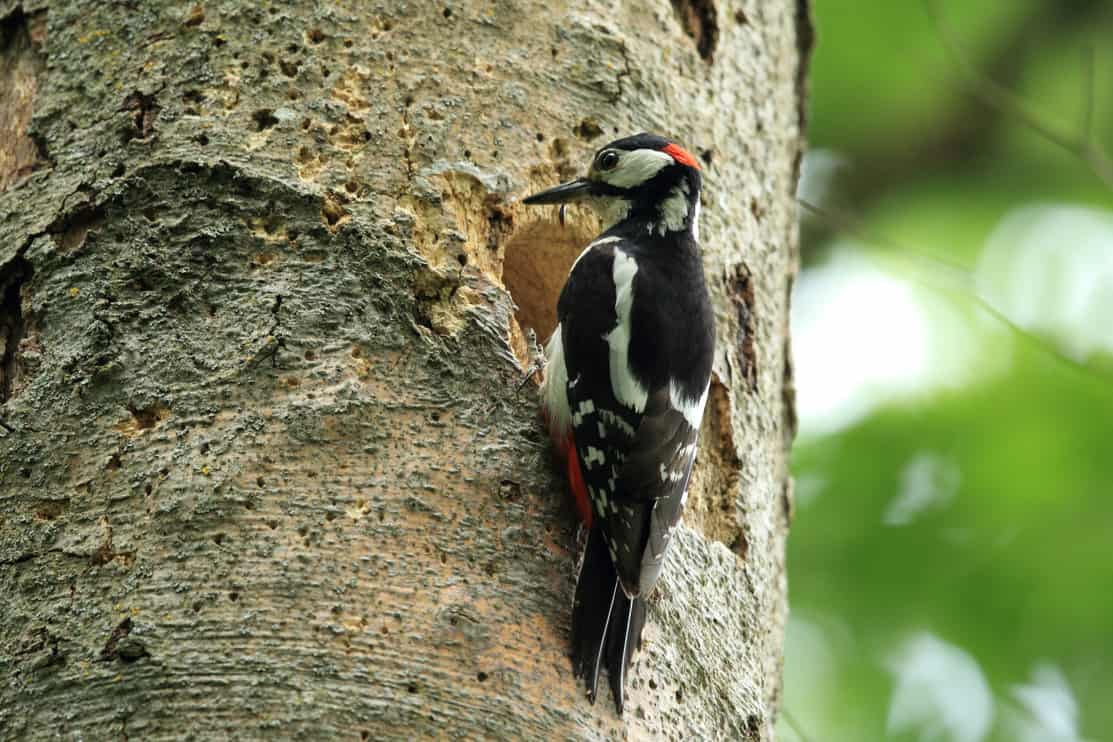
Great Spotted Woodpecker (Dendrocopos major)

Woodpeckers and sapsuckers can also damage the bark of a tree. While woodpeckers don’t normally damage healthy trees, the sapsuckers often do because they are looking for the sweet-tasting sap running just beneath the surface of the tree.

Woodpeckers tap at trees looking for grubs, beetles, and other insects under the bark. Unless there’s an infestation, woodpeckers will only chip away at small sections of the tree looking for food. The exception is the pileated woodpecker.

These large woodpeckers can strip away wide sections of bark looking for insects to eat. Fortunately, these birds often seek out dead or decaying trees as these attract the bugs they like to dine upon. They can occasionally attack healthy trees, but they are only looking for insects.

If you have a lot of woodpeckers on your property, you might want to have an arborist check your trees for insect infestation or you may have a lot of dead and decaying trees that need to be taken down before they cause damage.

Sapsuckers on the other hand will drill shallow holes into trees in search of the sap they feed on. They often tap holes in horizontal or vertical lines, then return a little while later to slurp up the tasty sap dripping out of the holes.

These birds don’t typically stick around for long as they are migratory and the damage they do is usually minimal. A healthy tree can quickly heal after a sapsucker comes in for a meal.

4. The Tree Has Reached The End Of Its Lifecycle

When large sections of bark fall off trees, it’s never a good sign. It could signal rot or a disease that is killing the tree. If you notice bark falling off in large sections you may be able to save it with the help of a professional if you act quickly.

Rot can set in quickly when a tree is not healthy. This often attracts insects and fungus that will help speed up the process. Depending on the type of tree it may be worth trying to keep it alive, but odds are you’ll be better off having someone cut it down for you and replace it with a new tree.

As I mentioned before, contacting a professional tree service will help you determine if saving your tree is a feasible option.

5. Sunscorch Or Sunburn

That’s right, even trees can get sunburn. This especially can happen during very hot, dry summers. Sunscorch is something that can peel the bark off a tree in the winter. Either of these events can severely damage a tree’s bark and shorten the life of the tree.

Sunscorch happens in winter, typically on the south to the southwest side of the tree trunk. When the bark is frozen because of extreme temperatures, then warmed because the sun thaws it out, sun scorch can happen.

The Utah State University Forestry Extensions explains that sunscald/sun scorch is caused by winter freezing temperatures that affect sun-warmed tissues of the tree called the cambium. The bark will start discoloring and if the injury is severe enough the bark will slough off.

Younger trees with thinner bark are more susceptible to this type of damage. The bark will peel off leaving the growing inner layers of the tree exposed to the elements. If this happens, it will shorten the life of the tree.

To prevent this on your trees, you can leave the lower branches on the trees so they help to provide shade, plant the trees somewhere they will get shade on the southern side, like near a building, or you can wrap your tree to protect from temperature extremes. This Walter E. Clark Tree Wrap is a highly recommended product to protect from sunscalds!

Sunburn on a tree is the same thing we get when we go on vacation and spend too much time in the sun. The extreme heat and constant glare of the sun on a tree’s trunk can make the bark peel just like your back after a long day at the beach. Sunburn is very similar to sun scorch except it happens in the summer months.

Drought Conditions Will Hasten Sunburn In Trees

For trees with sun scorch, keeping the trunk shaded or protected during hot, dry summer months will help to prevent sunburn. Keeping the tree watered and healthy will also help to prevent this from ruining the bark.

When planting new trees, the best time to plant them is spring and fall. Avoid planting during the summer if at all possible as the tree will not be established enough to withstand a hot, dry summer. Using a white or reflective wrap can help prevent sunburn as well.

The best way to heal your trees after either sunburn or sun scorch is to keep the tree watered and healthy as possible. Remove any dead, peeled bark so insects and fungus don’t have a place to hide and let the tree heal itself. Don’t put any sealants or covers on the injured areas as that has been proven to be detrimental.

Did You Hurt Your Tree Bark?

Close up view of old chopped off tree branch.

A tree’s bark can be damaged by trimmers and mowers as well, especially newer trees. Trees can be girdled this way. A powerful trimmer, even in professional, steady hands, can accidentally strip away bark and damage a tree in an instant.

To prevent this type of damage you can plant ground cover around the trunk of the tree or add a bed of mulch. Just leave an indention a few inches to a foot out from the base of the tree. You want your mulch to resemble a donut around the tree.

If you accidentally damaged your tree’s bark, take a look at our guide on how to save a tree with stripped bark here!

Fungi And Tree Bark

Bad jokes aside, hypoxylon canker is a fungus that can cause tree bark to fall away in large sections. If you see a fungus growing underneath the peeling bark, along with dying branches and yellowing leaves it’s probably hypoxylon canker.

If you are having trouble with disease and fungi targeting your trees, consider using something such as this BioAdvanced Concentrate product!

Unfortunately, there isn’t much that can be done if this fungus sets in your trees. The best thing to do is to remove the tree and destroy the wood to prevent it from spreading to nearby trees and shrubs.

Preventing Tree Bark Loss

A strong, healthy tree is the best prevention from factors that can damage or drop bark. Proper watering, fertilizing, and trimming of your trees will be able to handle most problems. When trees are healthy, they are much more capable of healing wounds, fighting off insects, and preventing issues.

Munching critters on the other hand might be a bit tougher to prevent. If you have problems with rodents like gophers, rabbits, and ravenous porcupines, the best way to keep these pests off your trees is to wrap the trunks with a wire mesh. Something like these Andwarmth Tree Protectors will help protect against most animals.

If you have issues with porcupines, you might have to go a little more extreme as these prickly characters are great climbers. You might have to employ some catch and release traps or attach some electric fence wire around your trees to keep porcupines away.

How To Save A Tree With Damaged Bark

As we’ve mentioned before, tree bark can’t grow back. The tree can heal itself if the damage isn’t too extensive though.

What you can do to help the tree after the bark has been damaged is to remove the jagged edges of the bark but be careful not to expose any more living tissue underneath. Use a sharp knife or chisel to round off the edges. Then just keep the tree healthy and let it heal on its own.

For one of the most common type of yard trees in the United States, check out our guide on the reasons why bark is falling off your oak tree and how it fix it!

Don’t Use Sealants

Just because they are out there doesn’t mean you should use them. Arborists and plenty of scientific studies say that sealants don’t help trees to heal. They can do the opposite and depend on what kind, they can offer hiding places for insects and fungus.

Girdled Trees

If the bark damage goes completely around the tree, all you can do is keep an eye on it and see if the tree can bounce back. A girdled tree has very little chance of healing itself as the layer of tissue that provides the rest of the tree nutrients and water is damaged.

If the tree seems stunted, leaves start dropping before autumn, or it doesn’t grow at all, you will have to remove the tree. There’s nothing else to be done.

That’s A Wrap!

Trees can regrow leaves and new branches every year, but when a tree loses its bark, it is incapable of growing back. There are a lot of things that can damage a tree’s bark such as animals, fungus, or environmental factors, and healthy trees typically can heal themselves if the bark damage isn’t too severe.

When tree bark is damaged, with a little knowledge and professional help, you can decide if the tree needs to be removed or if it will heal and continue to provide shade and beauty. 

References:

Baxter, R., and L. Hansson. “Bark consumption by small rodents in the northern and southern hemispheres.” Mammal Review 31.1 (2001): 47-59. https://doi.org/10.1046/j.1365-2907.2001.00078.x  

Villari, Caterina, et al. “Progress and gaps in understanding mechanisms of ash tree resistance to emerald ash borer, a model for wood‐boring insects that kill angiosperms.” New Phytologist 209.1 (2016): 63-79.  https://doi.org/10.1111/nph.13604 

Verheyden, Helene, et al. “Variations in bark‐stripping by red deer Cervus elaphus across Europe.” Mammal Review 36.3 (2006): 217-234.  https://doi.org/10.1111/j.1365-2907.2006.00085.x 

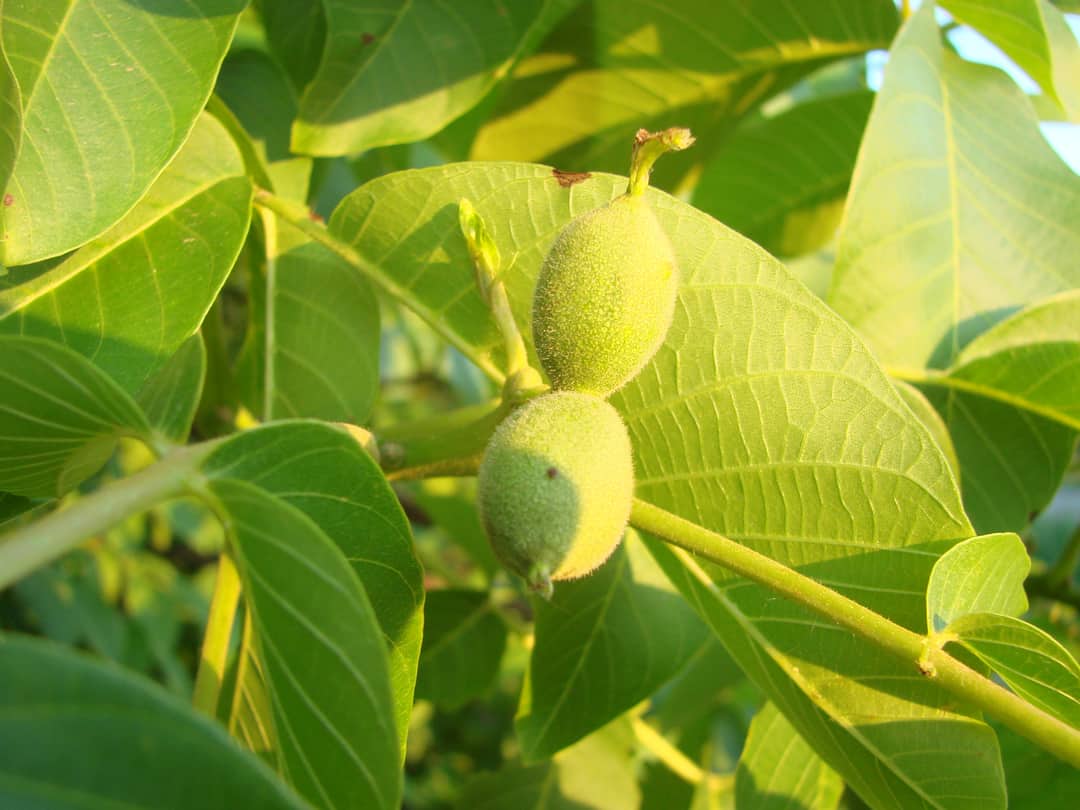
Walnut trees are well-known for their tasty fruit – the walnut! These trees are excellent ornamental trees that provide plenty of shade and will attract wildlife. If you’re thinking about planting one, you may be wondering where the best place to plant a walnut trees is?

The most common walnut trees include the black walnut and the English walnut. Black walnuts can grow in hardiness zones 4 through 9, while English walnuts prefer zones 3 through 7. The most popular states to grow walnut trees includes California, Illinois, Iowa, Indiana, Minnesota, and Missouri.

California is the United State’s largest producer of walnuts, but that doesn’t mean walnut trees can’t grow in other places, too! Below, we’ll check out the best places to plant a walnut tree and how to plant them.

Where Should I Plant A Walnut Tree?

Walnut splitting open on tree

English walnuts are the more popular walnut tree if you are looking to harvest the nuts. The shells are far easier to open than black walnut. But if you’re not concerned with the walnut fruit and just want a nice-looking shade tree, either walnut will do just fine!

Both walnuts prefer full sun and moist, well-drained soils where they can establish a deep taproot. Black and English walnuts prefer clay, sand, or loam soils with a neutral PH. 

Walnut trees are renowned for their production of a natural herbicide called juglone. When planting a walnut, don’t expect much else to grow around it. You can view a list of plants that you should specifically not plant around a walnut tree here.

English walnuts are a little more tolerant of the cold than black walnuts, but not by much. Both trees are susceptible to late spring frosts, which can put a serious damper on fruit production and growth.

When deciding where to plant a walnut tree in your yard, make sure you have plenty of room. According to North Carolina State University, English walnuts can grow up to 60 feet and black walnuts can reach heights of 75-100 feet. 

You’ll also want to be careful about juglone exposure – Don’t plant a walnut tree near your garden!

Can I Plant A Walnut Tree Anywhere?

Walnut trees can be planted almost anywhere in the United States. The few exceptions would be areas that are either too cold or too hot for walnuts to survive.

Walnuts don’t survive well in the cold areas of Alaska that dip below -40℉ in the winter. On the other end of that extreme would be areas like southern Florida, Texas, Arizona, and southwest California that are just too hot to grow walnut trees. Most of the Hawaiian Islands are also too hot to grow walnut trees.

Walnut trees cannot be planted in shade and they will not do well in wet soil. Otherwise, walnuts are pretty content to be planted anywhere. You can always check the USDA Hardiness Zone Map to make sure your area will support walnut trees.

5 Best Places To Plant An English Walnut Tree

English walnut trees, also called Persian walnuts, are more popular for planting than black walnuts. As mentioned before, English walnuts thrive in hardiness zones 3 through 7.

For optimal growth, you’ll want an area that has a combination of the right temperature, plenty of sunlight, and the right soil type.

So, let’s take a closer look at the states within these zones and discuss the best places to plant an English walnut tree.

If you’re still confused between the two primary walnut tree species, you can learn more about black and english walnut tree differences here.

Where To Plant English Walnuts In The West

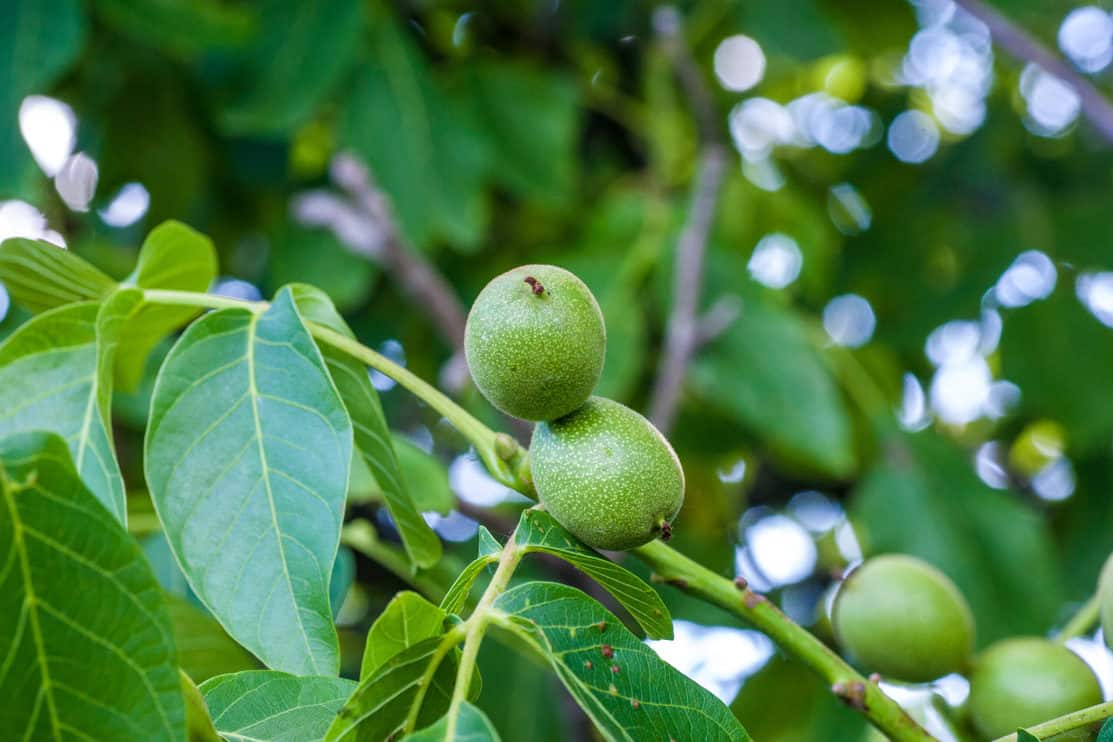
green walnuts from the side on a branch of a walnut tree. Copy space

The West is known for being drier and hotter than other regions in the U.S. There are some pockets of decent growing conditions for English Walnuts, but much of the west coast is too warm or sandy for English walnut trees.

Walnut trees can grow in any state in the west:

  • Washington
  • Oregon
  • California
  • Nevada
  • Idaho
  • Montana
  • Wyoming
  • Colorado
  • Utah

However, some areas are better than others for growing English walnut trees, and a few regions of these states cannot grow walnuts because it is simply too hot or the soil conditions are not favorable.

The West includes a range of hardiness zones from 3 to 11. Hardiness zones define what the minimum temperature in that region can reach and are helpful when determining if your chosen tree can survive the winter or not.

In the West, optimal growing areas will be along with eastern Washington and Oregon, central and eastern California, northwestern Utah, western Colorado, and north- and southwest Idaho.

Even within these regions, there will still be some areas that aren’t optimal for English Walnuts due to soil conditions or drought. 

Where To Plant English Walnuts In The Southwest

The southwest is a large area of the United States but it only encompasses four states:

  • Arizona
  • New Mexico
  • Texas
  • Oklahoma

Many areas of this region include hot climates with dry, desert conditions. These are not optimal growing conditions for an English Walnut tree. 

In the Southwest, English walnut trees can grow well in central Texas and the Texas panhandle, and all of Oklahoma except the extreme southeast corner.

Where To Plant English Walnuts In The Midwest

The midwest is known for the corn belt and is America’s heartland. The weather and soil profiles vary greatly in the midwest region, and not all areas are good for growing English Walnuts.

The midwest includes:

  • North & South Dakota
  • Nebraska
  • Kansas
  • Minnesota
  • Indiana
  • Missouri
  • Wisconsin
  • Illinois
  • Iowa
  • Ohio
  • Michigan

Although English Walnuts can grow in all of these states, optimal growing areas are going to be from southern South Dakota across to southern Wisconsin and northern Illinois. 

Kansas, Missouri, and Indiana have decent growing conditions across the state as long as the soil conditions are right. Much of Ohio and Michigan are suitable for English Walnuts as well. 

The northern regions of Minnesota and North Dakota can support English Walnuts, but the cold winters and late frosts can stunt growth and cause trees to produce less fruit.

Where To Plant English Walnuts In The Southeast

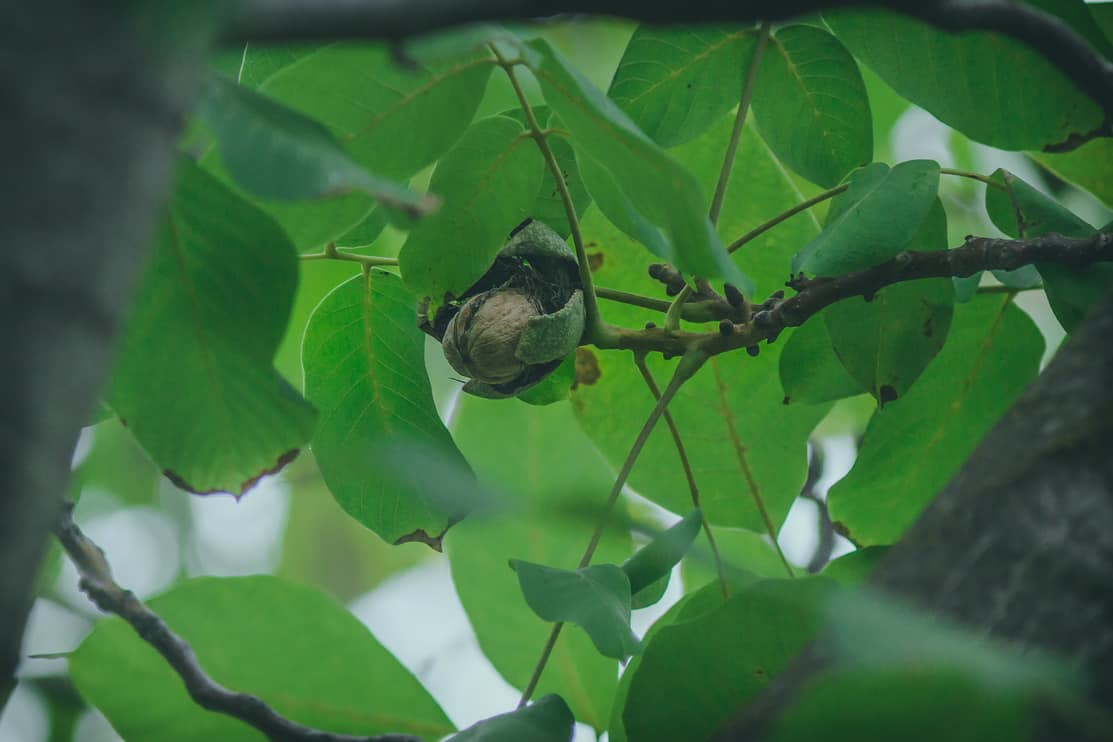
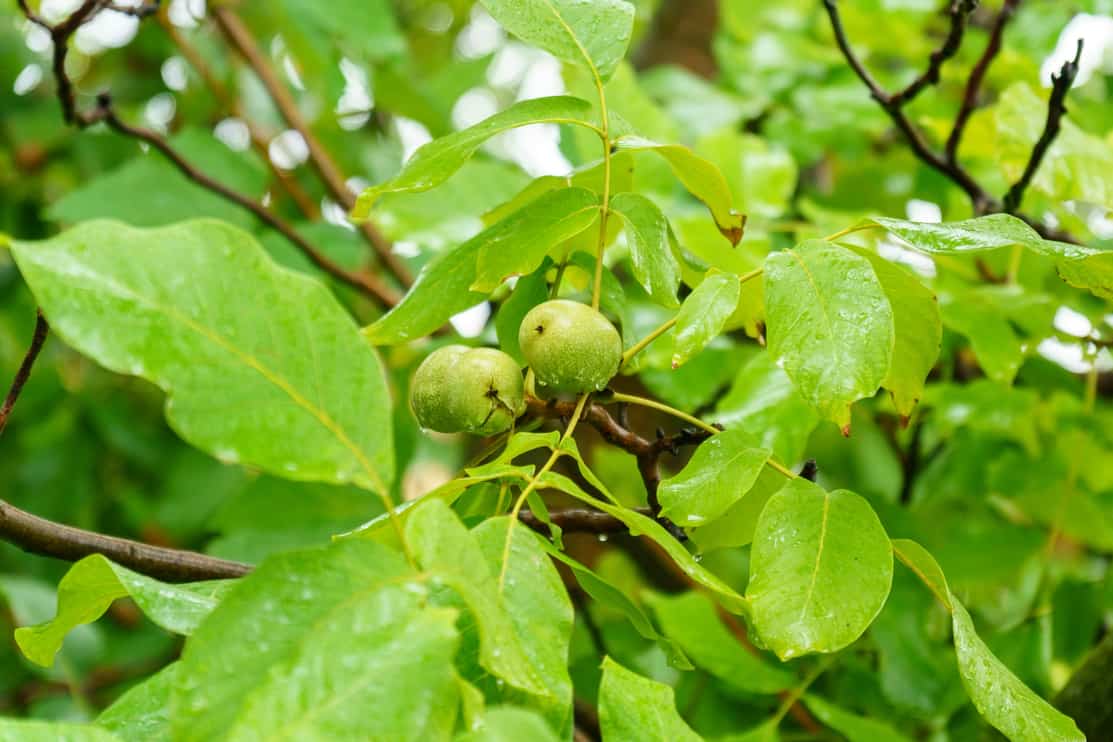
Green unripe walnuts hang on a branch. Green leaves and unripe walnut. After the rain

The southeastern United States is typically humid and can range from lowland swamps to the Appalachian Mountains.

The southeast includes:

  • Arkansas
  • Louisiana
  • Mississippi
  • Alabama
  • Georgia
  • Florida
  • North & South Carolina
  • Tennesse
  • Kentucky
  • Virginia
  • West Virginia
  • Maryland
  • Deleware
  • Washington D.C.

Many of these states are too warm to support healthy English Walnut growth. For example, Louisiana, most of Mississippi, and all of Florida are out of the English Walnut’s preferred hardiness zone.

Only the extreme northern regions of Mississippi, Alabama, Georgia, and South Carolina can support English walnuts.

Optimal growth is more likely to occur in Tennessee, Kentucky, West Virginia, and Virginia. Central and northern Maryland can also support good English Walnut tree growth.

Where To Plant English Walnuts In The Northeast

The northeast is known for displaying some of the most stunning fall foliage in the country. Both English walnut and Black walnut are deciduous trees that change color in the fall and drop their leaves in preparation for winter.

The English walnut boasts golden yellow leaves in the fall and feels right at home in many of the northeastern states.

Because of their proximity to the great lakes, some parts of the northeast tend to be gray most of the year, which can limit fruit production and growth for English walnuts who prefer lots of sun.

The northeast includes:

  • Pennsylvania
  • New York
  • New Jersey
  • Connecticut
  • Rhode Island
  • Massachusetts
  • New Hampshire
  • Vermont
  • Maine

In the northeast, optimal growing areas for English walnuts includes all of Pennsylvania and Massachusetts, southern, central, and western New York, central New Jersey, northern Connecticut and Rhode Island, and central and southern Vermont, New Hampshire, and Maine.

Like the midwest, the northeast is susceptible to late frost in the Spring and early frost in the Fall which can stunt growth and lower nut production.

Vermont, New York, and Connecticut are the cloudiest states in the northeast and may not be the most optimal place to grow an English walnut. Nonetheless, these stately trees will still grow there and provide shade for those rare sunny days.

In most environments, walnut trees can produce up to 80 pounds of unshelled walnuts each year!

5 Best Places To Plant Black Walnut Trees

Juglans Nigra (Eastern Black Walnut) at park in Istanbul

Black walnut trees are a little less popular than English walnut trees, but they are still beautiful trees that provide plenty of shade on those warm summer days.

Compared to English walnuts, black walnut trees typically thrive in warmer conditions. Their hardiness zone boundaries are between zones 4 and 9. 

Let’s check out the regions mentioned above and find out the best places to plant black walnut trees.

Where To Plant Black Walnut Trees In The West

Because black walnut trees overlap with much of the English walnut tree’s habitat, we’ll discuss the major differences between the two in this section.

Black walnut trees can thrive in almost all areas along the west coast except for a few hot spots near San Francisco and Los Angeles. All of Washington and Oregon are suitable for black walnuts as long as the soil conditions are favorable. 

Western Idaho, northern Nevada, and most of Utah will support black walnut trees, as will eastern and western Colorado. 

Much of Montana and Wyoming are too cold to support black walnut trees.

Where To Plant Black Walnut Trees In The Southwest

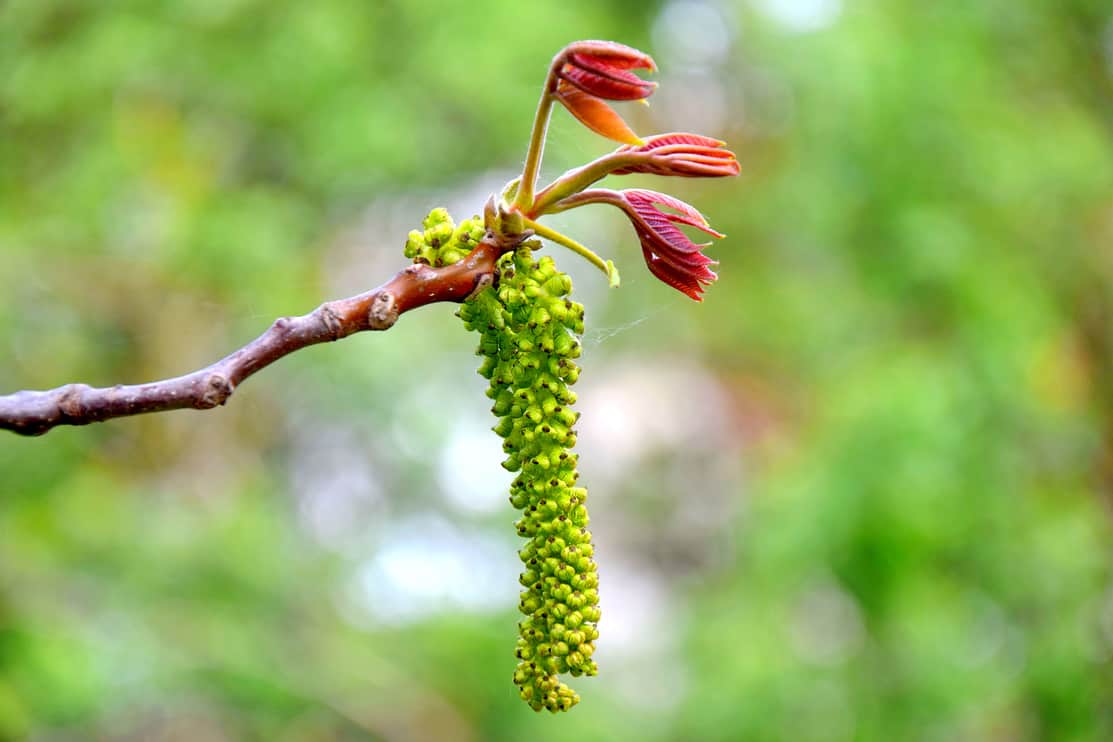
Walnut Juglans Blooming on Spring

The southwest is a difficult place for many plants to grow due to the hot, dry conditions as well as the high elevation areas.

Black walnut trees can survive further south into Texas but do not reach the actual southern tip of Texas. Northeastern Arizona and nearly all of New Mexico and Oklahoma will support black walnut growth.

Northern New Mexico, Oklahoma, and the Texas Panhandle are probably the most optimal areas to grow black walnut trees in the southwest.

Where To Plant Black Walnut Trees In The Midwest

Much of the northern midwest gets too cold in the winter for black walnuts to grow to their full potential. For example, Northern North Dakota, Minnesota, and Wisconsin are simply too cold.

Southern Nebraska, Iowa, and Michigan have optimal temperature needs for black walnut trees. Kansas, Missouri, Illinois, Indiana, and Ohio also have good growing conditions as long as the soils are deep and well-drained.

Where To Plant Black Walnut Trees In The Southeast

For English walnut trees, much of the southeast was simply too warm for the tree to thrive. Because black walnut can withstand warmer temperatures, they can dip a little further into the southeast than the English walnut.

But just because it can survive doesn’t mean it will thrive in these conditions. 

In the southeast, black walnuts grow optimally in Arkansas, Tennessee, Kentucky, West Virginia, Virginia, Maryland, and Deleware. They’ll also grow in northern Louisiana, central and northern Mississippi, Alabama, and Georgia.

In Florida, black walnuts can grow as far south as the Placid Lakes, but this is not their optimal growing zone as the temperatures are on the brink of being too warm for black walnuts.

Where To Plant Black Walnut Trees In The Northeast

The northeastern United States gets some of the strangest weather due to the Great Lakes. With so much varying weather conditions and patches of extremely cold temperatures, much of the northern northeast is off-limits to black walnuts.

Optimal growing areas in the northeast include all of Pennsylvania, New Jersey, Connecticut, and Rhode Island. Southern New York and Maine, and southeastern New Hampshire can also support optimal black walnut growing conditions.

How Do I Plant A Walnut Tree?

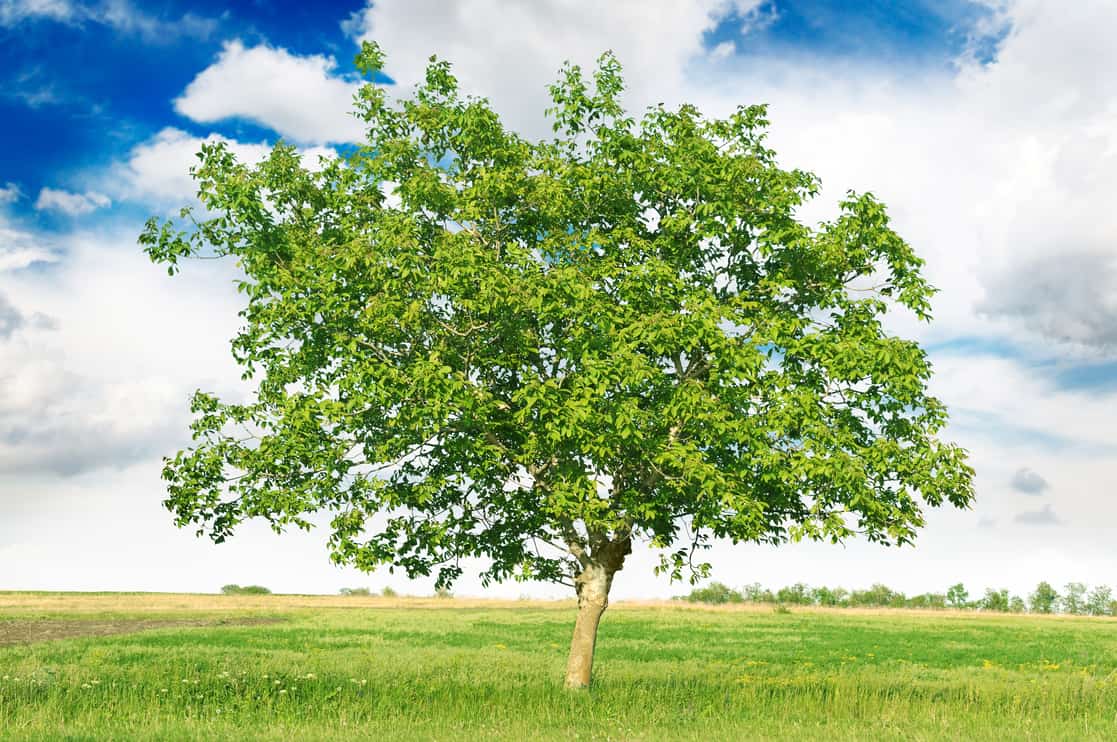
European walnut (Juglans regia)

If you have the time and patience, planting a walnut tree from seed is better than transplanting it from a nursery. 

The reason is that walnut trees have deep taproots that grow straight down into the soil. This makes them more difficult to successfully transplant than a tree with more horizontally-growing roots.

Using local seeds dropped by local walnuts is the BEST way to plant a walnut tree. These seeds will already be accustomed to the area’s soil conditions and climate, meaning they will have the best chance of surviving.

Purchasing online seeds or plants is not recommended as these can be from vastly different regions. The tree will grow, sure, but it won’t grow as fast or produce as much fruit as a local seed will.

Even if you find and use seeds from local walnut trees, using fertilizers can be helpful as nut trees need as much nitrogen as they can get. Using something like J R Peters Jacks Classic All Purpose Fertilizer can help your walnut tree thrive as it grows.

Make sure your seeds are viable by dropping them in water. The ones that float can be discarded. The best time to plant your seeds is in the fall. Push them 1-2 inches into the soil. By Summer you should notice some growth out of the soil.

It’s recommended to protect your vulnerable saplings from wildlife by using a tree protector. Andwarmth’s Tree Protectors come with six tree protectors that can be added together to create wider or taller protection so you can continue to guard your walnut tree as it grows.

This is helpful especially once your tree begins producing fruit. The nuts will attract wildlife and can encourage deer to rub against the trunk or nibble on twigs in the winter.

That’s All For Now!

Walnut trees are more than just nice ornamental landscaping trees. They provide tons of shade on hot summer days and encourage wildlife like deer and squirrels to stop by.

Walnut trees require plenty of sun, deep, well-drained soil, and plenty of space to grow. Black walnuts and English walnuts are the two most popular walnut trees. They can survive in a variety of conditions, but each has its preferences.

This article was mainly focused on temperature requirements, but the soil is also an important factor in choosing the right location to plant a walnut tree. Walnuts prefer deep, well-drained soil that can range from loamy, sandy or even silty clay.

Black walnut and English walnut can technically grow in every state of the United States, but within each state are certain areas where walnut trees will grow optimally.

Overall, the five regions of the U.S. where black walnut and English walnut can grow include:

  • West
  • Southeast
  • Midwest
  • Southwest
  • Northeast

In general, English walnuts can survive in colder conditions than black walnuts, while black walnuts can survive in warmer climates than English walnuts. Happy walnut planting!

References

Cambria, D., & Pierangeli, D. (2012, March). Application of a life cycle assessment to walnut tree (Juglans regia L.) high-quality wood production: a case study in southern Italy. Journal of Cleaner Production23(1), 37-46.

Fulton, A., & Buchner, R. (2006, February 23). The Effect of Water Stress on Walnut Tree Growth, Productivity, And Economics. UC Farm Advisors, 1-15.

Tang, H., Ren, Z., & Krczal, G. (2000). Improvement of English walnut somatic embryo germination and conversion by desiccation treatments and plantlet development by lower medium salts. In Vitro Cellular & Developmental Biology – Plant36, 47-50.

Von Kiparski, G. R., Lee, L. S., & Gillespie, A. R. (2007, May 01). Occurrence and Fate of the Phytotoxin Juglone in Alley Soils under Black Walnut Trees. Journal of Environmental Quality36(3), 709-717.

Cutting down trees for firewood can be both rewarding and challenging. But what about that dead tree in your path? Can you process it into firewood? It’s dead, most likely not viable for any other use, so why not cut it up and burn it?

You can use dead trees for firewood, but you should take into consideration the type of tree as some make better firewood than others. Specifically, hardwood trees are often better than softwood species as firewood. Also consider the condition of the wood, the size of the tree, and whether it houses animals or insects.

You can certainly use dead trees for firewood, but there are a few things you should be on the lookout for. We’ve compiled a handy list of 9 things to check before using dead trees as firewood. Let’s get to it!

What You Should Consider Before Using A Dead Tree For Firewood

Processing already fallen trees for firewood is a great practice. In-fact, i’m doing the same thing right now with three dead pine trees that were in my yard! Of course, we’re using them strictly for outdoor firewood, but it’s really a great practice of reducing the need for cutting down alive trees.

If you are cutting and processing your own firewood, you have probably come across dead trees before and wondered if they would make a viable firewood option. Some already dead trees certainly will make for good firewood, but there are things to consider.

The tree may be a pine or other softwood, which does not make great firewood (hence why I’m using ours just for campfire wood.) It could be infested with insects or rotted inside. Maybe the tree has been felled for so long it is already rotting, in which case it’s best to let it be.

If you are looking for long-lasting firewood, check out our top 10 article on the slowest burning firewoods and how long they last!

Now, onto the good stuff. The following list details 9 things to check before using dead trees as firewood.

1. Check The Wood’s Moisture Content

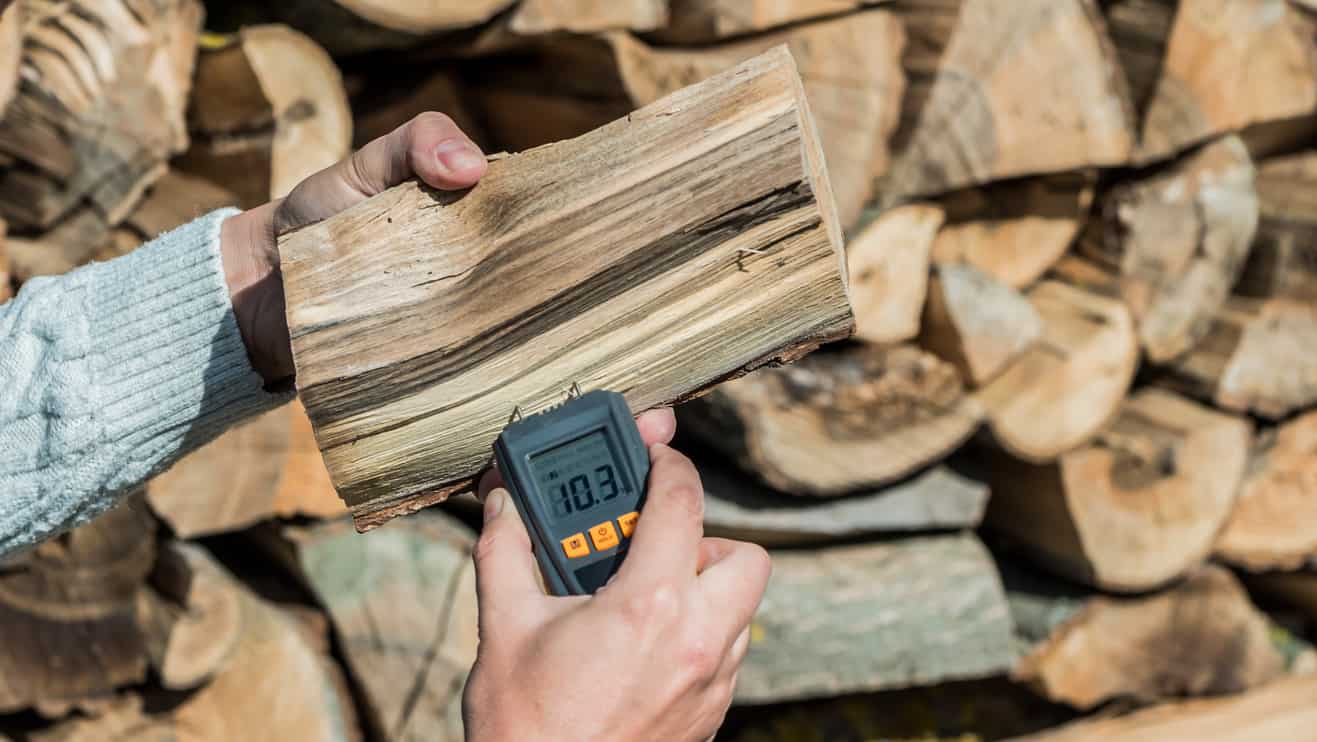
A man measures the humidity of firewood with a moisture meter, monitoring fuel quality.

Once a tree has died, it has already started drying out, so you may not have to season it as long. A dead tree will take about 2 to 3 years to dry out completely, but once it is dry, it starts to rot, which we will touch on momentarily. When a tree is cut and split, the wood dries out quicker because of the exposed surface area, compared to a whole uncut tree. 

Cutting a dead tree for firewood may save you time on seasoning, depending on how long the tree has been dead. The best way to check for the moisture content on potential firewood is with this Moisture Meter For Wood – Pin Type Digital Dampness Moisture Sensor. It has built-in calibration and can be used for more than just wood.

You want the moisture in your firewood to drop to around 20% at least before burning it. The lower it is, the better, and hotter your firewood will burn, but 20% moisture is a good all-around average to strive for. 

For trees that cure faster and have low moisture, take a look at our guide on the best firewoods to burn here.

2. Is The Tree A Hardwood Or Softwood?

Hardwood trees make for better firewood than softwood, with a few exceptions. Hardwood trees are trees that drop their leaves in the winter, also known as deciduous trees. They don’t have thick resinous pitch running through them and are denser, which makes for hotter, slower-burning, cleaner firewood. 

Softwood trees have channels that carry thick, sticky sap through the trees. When you cut pine trees and other softwoods, the thick sap can get on your chain saw or your hands, and have everything as sticky as gum at the bottom of your shoe.

Softwood trees are conifers, or evergreen trees. They include pine trees, spruce, and fir trees, among others. They have leaves similar to needles instead of broad, flat leaves, and though softwood trees will drop some of their needles, they don’t lose them all during the winter like hardwood trees. 

If the dead tree is an oak, hickory, maple, locust, or fruit tree like apple or cherry, then you potentially have a very good firewood laid out in front of you. Of the multitude of hardwoods, some to avoid because they do not burn well, or smoke and pop a lot are poplars, aspens, basswood, and willow trees. 

There’s a lot to consider, especially if you do not know all the different varieties of trees there are, but generally, hardwood trees are much better than softwoods.

You can view our full guide on the firewoods that produce the least amount of smoke here.

3. Is The Tree Still Standing Or Fallen?

Whether the tree is standing dead wood, or it has fallen over, there are a lot of things to think about here. A standing dead tree, depending on how long it’s been dead, may drop large branches when you cut it.

If the canopy shows signs of broken branches or there are a bunch of broken branches around the tree, for safety reasons, it’s best to leave the tree alone. Falling tree branches are nothing to play around with. 

Sometimes trees will uproot and fall. This happens when the canopy gets too heavy for the roots to support it, the ground gets exceptionally wet, or the tree gets blown over from terribly high winds. These trees are best left alone unless you are a professional at cutting trees. 

If you cut on an uprooted tree, it could suddenly shift and cause injury or the entire root ball could fall back into the hole. Either way, cutting on an uprooted tree is a practice best left to professional tree experts. 

Sometimes a tree will break and fall at the trunk. If the tree has fallen in this manner and has broken completely away, then this is a tree you could cut up for firewood. 

4. Is The Tree Rotten Or Moldy?

a pile of fallen old rotten logs

As we stated earlier, if the tree has been dead for some time, it will rot or become moldy. Either of these states of decay makes for poor firewood, and you should never burn moldy firewood.

Rotten wood loses its density and becomes soft and brittle. Soft, rotten wood will burn fast, but not produce much heat because most of the fuel is already gone. Rotten wood is also often pretty moist, which again makes for poor firewood.

If you try to burn wet firewood, the fire will often sputter and hiss as the flames work to remove the excess moisture. 

Wood covered with mold or mushrooms (fungus) should not be burned either. If moldy, fungus-covered wood is burned, you potentially release a lot of spores into the air, which is no good. Definitely don’t burn this wood indoors.

So, if you see a dead tree that appears to be rotten, moldy, or covered with fungus, leave it alone and let it rot as nature intends.

5. Is The Tree Hollow?

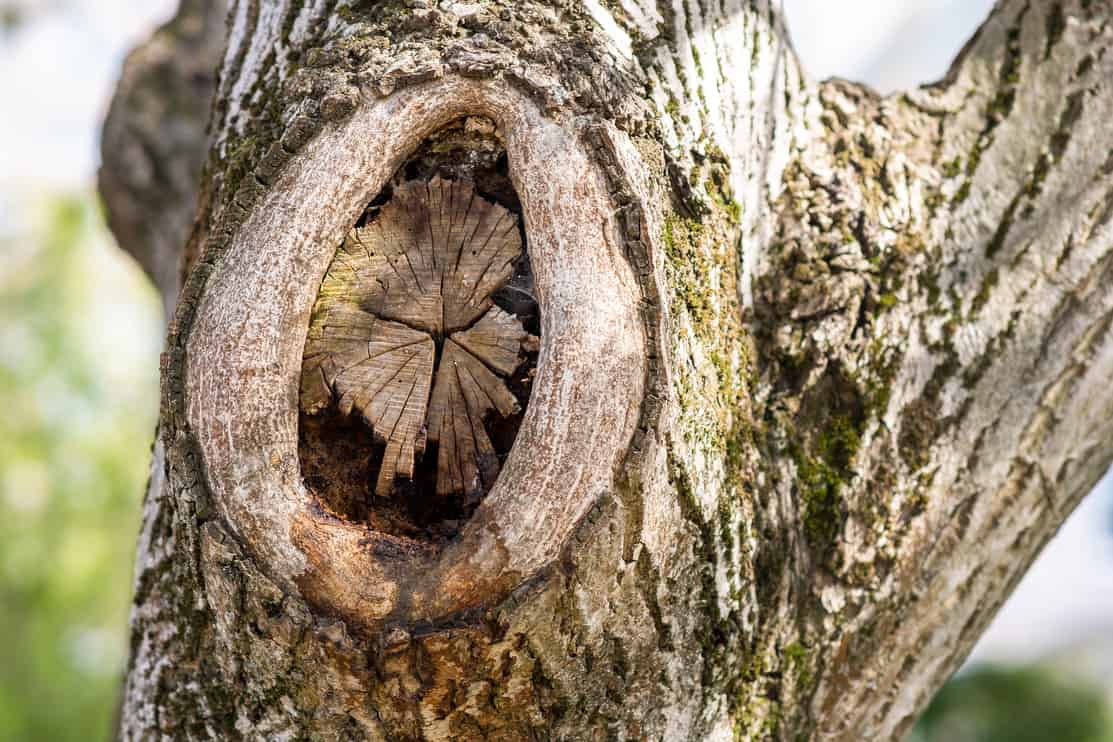
This may be difficult to detect if the tree is still standing, but if the tree is laying on the ground, you may be able to see if the tree has been hollowed out. A hollow tree could be caused by a insect infestation, some sort of trouble, or it may have happened because the tree was very old. 

A hollow tree means less wood you can bring home. Depending on how hollow the tree is, it may not even be worth cutting and splitting. Although, you may not even find out it is hollow if the tree is standing until after you cut it down. 

If the tree is hollow, you might try cutting some of the larger branches to find out if only the trunk was hollowed out. If this is the case, you may get a decent amount of firewood just from the branches. 

6. Is It Infested With Insects?

One of the worst scenarios, in this case, is being attacked by a swarm of bees when you cut on a tree. While this is highly unlikely to happen, some bees and insects will colonize dead trees, especially in hollowed-out cavities.

To find out for sure if the dead tree you want to use as firewood is hosting a hidden hive of stinging insects, pay attention to the tree. Look and listen for telltale signs. Can you hear the droning buzzing of thousands of little stingers?

Use your eyes as well. If you see insects flying in and out of a hole, quietly step away and find yourself another tree to use for firewood. 

7. Is The Dead Tree An Animal Habitat? 

In the woods, a hollowed-out tree cavity could be prime real estate for animals such as bats, certain birds, squirrels, raccoons, and porcupines to name just a few. Do not stick your hand, head, or any other body part into the hollow of a tree to find out. You might get a nasty surprise. 

You may not be able to see if an animal is living in a hollow cavity of a tree, but if you suspect something is making this tree home, do the right thing and let it continue to live there.

Birds and other animals use dead trees for nests, shelter, or perches. Many bird and animal species use the cavities in dead trees to roost, and shelter from the elements. 

8. Is The Size Of The Tree Worth Turning Into Firewood?

This one is pretty obvious, but it bears mentioning. A small dead tree may not be worth the time cutting it up for a small amount of firewood. If you are just looking for a lot of kindling, or you want some small logs for burning outside, then it might be worth your time. 

Only you can decide if the tree is big enough to spend the time cutting it up for firewood. A fully mature tree could net you a full cord of wood. A cord is considered 128 square feet of split firewood, or a section 4 feet wide, by 4 feet tall, by 8 feet long. 

9. Where Is The Dead Tree Located? 

Tree fallen on house

This is a minor consideration, but we always try to be thorough. If the dead tree is in the woods where you have permission to cut them down for firewood, then cut away. However, if the tree is on your property, you should inspect the area for any obstacles. 

Maybe the tree is way in the back of your property and you have several acres of wooded property. Then, you do not have to worry as much about where the tree lands when you cut it down. 

Is the dead tree sitting right in the front yard? It may look like a simple thing to cut down a dead tree, but even with professionals, cutting a tree can sometimes be tricky. If any objects nearby could be damaged by a falling tree, then leave it to a professional. 

There are many reasons you may want to chop down a tree in your front yard. If you are contemplating it, give our article on the reasons why you should cut down the tree in front of your house a gander.

Do a quick search on online and you will find plenty of videos of amateurs cutting trees in their yards with disastrous results. If there is anything around the tree that could be damaged, like yours or a neighbor’s house, a fence, vehicles, or power lines, then get a professional to cut the tree down for you.

If you want to cut the rest of the tree for firewood after it is safely dropped, they should let you do so. Always err on the side of safety when cutting trees down. 

That’s A Wrap!

Cutting and splitting your own firewood can be a rewarding activity, especially if you are trying to save money on your heating bill. It may take a lot of work, but it can save you money in the long run, especially if you find a few good, dead trees to use as firewood. 

Dead trees can be significant sources of firewood if you check out a few things first. Look for animals that might nest inside them, if there are swarms of insects, and if the tree is in a safe place to be cut down. Plan your actions out before you cut on that dead tree. It may or may not be worth it. 

References:

The Effect of Firewood Removal on … Populations In a Northern Oak … (n.d.). Studylib.net. Retrieved March 29, 2022.

Harmon, M. E., Woodall, C. W., Fasth, B., Sexton, J., & Yatkov, M. (2011). Differences between standing and downed dead tree wood density reduction factors: A comparison across decay classes and tree species. Res. Pap. NRS-15. Newtown Square, PA: U.S. Department of Agriculture, Forest Service, Northern Research Station. 40 P.15, 1–40.

Kahl, T., & Bauhus, J. (2014). An index of forest management intensity based on assessment of harvested tree volume, tree species composition and dead wood origin. Nature Conservation7, 15–27.

Hagerdon, Charles W., and Corey P. Wong. “Thinning in exchange for firewood.” Journal of Forestry 84.7 (1986): 44-46.

As you probably are aware, trees can provide food, nice views, and shelter. If you’re wondering how the shelter comes into play, you may want to know about the kinds of critters living your trees. 

Some of the most common animals and insects you will find living in trees are squirrels, geckos, raccoons, skunks, birds, ants, beetles, cicadas, caterpillars, and butterflies. These animals and insects typically use trees as a source of shelter to protect themselves from the elements.

Before we dive into learning about the animals and insects living in trees, it is important to first know why these creatures might opt to live in a tree in the first place. So, let’s get into it!

Why Do Animals And Insects Live In Trees?

Animals and insects often live in trees because they are multi-use beings, providing not only a home but also food, interaction with others of their species, opportunities for reproduction, and water. However, to be clear, each species will have its reasons for choosing a certain species of tree in any location. 

While it all comes down to access to the basics, animals and insects alike are complex organisms with reasoning to back their choices. Even if those reasons are more biological than they are intentional. 

Trees are great homes for a wide variety of life; between those who fly, climb, or stay closer to the ground, there is always something a tree can offer. 

Between safety, food security, and shelter from inopportune weather, animals, and insects, look for a reliable area to settle down and use what they have available to them.

Here are some of the common reasons animals and insects may opt to live in, or at least around, trees:

Protection From The Elements And Weather

When temperatures rise, or when rain becomes heavy, trees are a solid constant able to help animals stay safe from the elements.

Whether the leaves of branches help slow the impact of rainfall, or crevasses in the trunk allow little critters to escape the cold of winter, there are many ways trees can protect animals and insects alike.

Another benefit of the shelter of a tree is it allows critters to stay put while remaining near their food source, which brings us to our next reason.

Proximity To A Food Source

Animals and insects living in trees are constantly staying near their food sources. Whether it is squirrels eating acorns from their oak tree home, or birds flying down to the ground to find some worms, trees provide access to the food sources of their residents. 

The University of Vermont Extension uses the example of butterflies who feed on nectar as adults. They source the nectar from flowers on trees the butterfly is calling home. 

Now, not all animals or insects live in one tree for their whole lives. In fact, most do not. However, these plants can help to sustain and further other living beings’ lifespan. 

Speaking of a prolonged lifespan, predators cause quite a threat to the longevity of their prey. Trees can help with this as well. 

Hideout From Predators

Living tree branches and hollow trunks of dead trees both help their tenants in one very important area- protection from predators. 

The height of a tree’s canopy can often help small animals like squirrels and birds, and insects such as butterflies, to stay above their predators’ line of sight. Some predators may not be adept at climbing trees, which would make this an even more secure home base for all kinds of living critters. 

Fallen tree trunks, natural crevasses, and other tree-based homes closer to the ground still offer great predator protection. Animals like foxes, wolves, and coyotes are large enough they may not be able to stick their heads into some areas where smaller creatures like raccoons may live, let alone enter the space and attack their prey.

You Can Find These 9 Animals And Insects Living in Trees

Alright, let’s get to the good stuff now, shall we?

Here are a few, and just a few, of the animals and insects that call trees home. Of course, there are many more species you could include here. These are, however, 9 of the most common species recognized for living in trees.

Squirrels

Red squirrel sitting on the tree

To begin our list, we have squirrels- a rodent in the same family as marmots, chipmunks, prairie dogs, and more.

Squirrels are known best for munching on acorns while they are not terrorizing guests at college campuses throughout the United States. They love to build nests in the branches, in the space where single branches split into two or more, smaller branches.

Since these animals live among the branches, you can expect them to stay up there when a storm occurs.

Tufts University helps provide some reassurance that animals are safe in trees during a storm, as it notes that birds are much safer when utilizing their trees’ often thick connection of branches, twigs, and leaves. 

Hiding within the foliage of a tree is quite safe for the animals that live there!

Geckos

Talking about animals who live among the branches of a tree, geckos are fond of calling this type of environment home.

Geckos eat some insects, spiders, and other small rodents, but are not the common predator you might think of. Certainly not in the same way owls or foxes aggressively advance on their prey.

Among the branches, geckos may find another food source in small fruit. The size only matters because geckos choose meals they can fit into their mouths easily. Some larger fruit with certain exteriors is not going to be a simple meal for them.

Since this species also lives in the branches, they can stay safer from their predators, which include snakes and spiders. 

However, geckos living in the trees may have more to do with their particular species rather than the family of lizards they belong to. We have a feeling some lizards may not be so keen on living right next door to the birds, who may try to eat them instead.

Raccoons

Funny raccoon on a branch. Outdoor

Raccoons are excellent climbers, which leads to them finding housing in some pretty interesting locations. 

When it comes down to it, natural cavities in living trees or the open space under fallen trees are commonly the accommodation of choice for these critters. 

Between the safety from predators and the elements alike, raccoons and trees are like peanut butter and jelly, though the relationship here might just be a little more complex.

Raccoons are not picky eaters, clearly seen in how they dig through garbage, so the tree environment provides better resources than what they may seek on their own. 

These resourceful critters may have a reputation for getting in the way of people, but in nature and when left to their instincts, trees are pretty great real estate.

Skunks

Surprisingly, there is even a place for these smelly little critters among the trees. 

Much like raccoons, skunks favor the natural cavities that a tree might provide them. Any hollow tree trunks, space under fallen trees, or other natural nooks and crannies are very attractive places for skunks to settle into.

Skunks like to eat nuts, seeds, eggs, small insects, and birds, along with some other foods. While birds can stay safe up in branches above, skunks can find plenty of food in the tree they choose to live in. Whether they choose to munch on berries or worms, they will surely find something to snack on.

Birds

This one might be pretty darn obvious. Of course, birds live in trees!

The branches provide a great place for parents to nest and raise their young. The adult birds can leave for small periods to gather food for their young, while not being required to stray too far from the baby birds up above.

Since these creatures fly, the obvious choice for them is to live among the branches, giving birds a place to land easily while remaining suspended in the air they soar through all day.

Staying away from predators remains a concern, and the tall branches of trees help to keep these flying friends out of reach of the animals that may hurt or kill them.

You can make your tree more bird friendly by adding something like the Squirrel Buster Standard Squirrel-proof Bird Feeder. If you want the beautiful birds to stay around without being bullied by squirrels, this is perfect for you!

Ants

Out of all the insects out there, surely you have noticed ants crawling on the trunk of a tree. Perhaps you saw them as a child playing among the branches as you climbed toward the top of a tree.

Maybe you see them now as you climb trees, reconnecting with your inner child. We don’t know!

Ants are a common species, therefore it is not surprising these critters live in trees along with anthills. 

You could think of their setup as a ‘summer home’ sort of deal. Of course, ants love their hills, the structure of the community, and the challenge of producing food. However, that food has to be sourced from somewhere, and in nature, food may be sourced from trees. 

Ants rarely damage a tree. Instead, they make use of cavities and any rotten wood that may provide a suitable home. The only ant that may damage a tree are carpenter ants, but they can only dig tunnels in soft wood, meaning the tree may have already had wood rot.

They seek the sweet dew left behind by other insects but also can be protected from other predators by holing up above the ground.

Caterpillars And Butterflies

You know how butterflies have to go through a period of metamorphosis to become that final, beautiful form? Well, the caterpillars who turn into these flying works of art must build a chrysalis somewhere.

What place is better than a tree, which they can hang their chrysalis from while going through the most significant change of their life?

You see with these creatures how the distance from other bugs and animals can be helpful while a huge transformation occurs. 

This follows the same vein of not only safety but comfort and ease. Nature might center on things essential to life, but individual animals and insects can also certainly follow their desires for a more comfortable existence.

There are many types of caterpillars and not all are as likable as others, but if you are seeing your leaves are being eaten, or a tree seems to be taken advantage of, you can work with a trained professional in your area.

One type of nasty caterpillars are tent caterpillars, or silkworms. To learn more about what harm they can bring, and how to get rid of them, check out 7 Ways To Get Rid of Silkworms (Tent Caterpillars) For Good.

Beetles

Spruce bark beetle posing for the camera

Beetles are just another bug that lives in a tree, but why?

For these insects, it is all about the bark. Called bark beetles, quite creatively we might add, these insects are found in trees already declining or dead. Fallen trees or pieces of firewood may serve as a temporary home for these critters as well.

Iowa State University Extension tells us there are hundreds of species of bark beetles. 

If you are seeing these beetles in a mostly healthy tree, we recommend trimming or pruning any infested limbs. 

Otherwise, these beetles do not cause huge issues, since they seek trees that are already a viable host (meaning dead or declining). They may cause some annoyance, but are not a threat to humans.

Your house structure and furniture (processed wood) will also remain safe from bark beetles who opt to take advantage of resources already past their better phase of life. 

In a way, bark beetles are wonderful at repurposing space, and trees other species can no longer live in.

Cicadas

Have you ever heard the noise of cicadas in the summer? Just going on and on, for weeks at a time, if not longer. 

Not every place has cicadas, and they certainly do not always come with quite the same level of intensity every year. 

After living in the ground, which is a whole different story, cicadas will find a tree to attach to and lay eggs on.

This is a prime example of trees not only being used as a home but also as a site for reproduction and continuing the species.

Trees provide everything necessary for cicadas to continue out of the elements, away from predators, and near food sources, so that young can survive and thrive upon hatching. 

Eventually, it’s back to the ground, anyway. 

How Can Insects Or Animals Benefit Your Tree?

Green Day Gecko on Leaf Cute

Animals and insects can most definitely cause harm to plants, and sometimes they end up being quite the pests. However, this is not always the case.

Quite often, funny enough, these creatures and plants get along very well in a symbiotic relationship.

Removing Harmful Insects

One benefit of the regular critters who call trees home is they often work to remove insects causing a negative disruption to the balance of the tree’s ecosystem. Treecosystem, if you will.

They often want to protect their home, which means protecting the tree. Invasive pests and harmful critters will not stand a chance when faced with the typical tenants of a tree.

This may mean animals eat insects who could harm the tree, or they may simply scare other creatures off. Regardless of the situation, the tree gets some helpful protection and animals get to stake their claim.

Natural Fertilizer

Having animals can be especially helpful when you need a little extra natural fertilizer. 

Picking up what we are putting down?

If not, the animals will *cough, cough* use the restroom near the base of the tree. This will continue to break down and add some extra nutrients to your soil. 

So, let animals and insects make a home on a tree, and the tree will reap so many of the benefits. It’s all just one big natural cycle of repurposing and giving a little to get a little. 

Repurposing Trees That Are Otherwise Not Viable

Like we talked about with bark beetles, there is an entire sector of tree-wildlife relationships centering on fauna making use of rapidly declining or already dead flora.

For example, you may see an injured or dead tree from being in the path of a forest fire. You may also just assume this tree is pretty much out of commission, right? 

Not exactly. 

Trees that have fallen or been partially destroyed can offer great places for nests, dens, and other homes for animals and insects alike. They are usually searching for a space both protected from the elements and capable of housing multiple members of a group

That’s It For Now!

Well, that’s all we have for now. 

Stay tuned though, because there are always more trees, and insects and animals, to talk about. Nature is an especially incredible thing and we hope that you’ve enjoyed learning a little more about it in this piece. 

If you forget some critters we named in this article, never fear!

Here’s a final list of animals & insects who especially use trees as their home.

  • Squirrels
  • Geckos
  • Raccoons
  • Skunks
  • Birds
  • Ants
  • Caterpillars and Butterflies
  • Beetles
  • Cicadas

Just remember, these creatures make their home outdoors, using the materials and locations they have at their disposal. Please be mindful of this when looking to call an exterminator or pest control when a creature is not truly causing you any harm or extra stress.

If you have concerns about the safety or health of your tree, do some research and see what steps you can take to restore your peace of mind and maintain your tree’s health.

Thank you for reading!

I hope this article helps you along your ever-evolving tree journey.

References

Casipe, M. How These Animals Live in Trees Is Changing How People Live in Houses.

Ryan, K. C. (1994). Interactions Between Fire-injured Trees and Insects. In Plants and their environments: proceedings of the first biennial scientific conference on the Greater Yellowstone ecosystem (Vol. 93, p. 259). US National Park Service, Natural Resources Publication Office.

Floren, A., Biun, A., & Linsenmair, E. K. (2002). Arboreal ants as key predators in tropical lowland rainforest trees. Oecologia131(1), 137-144.

Wherever there are trees, there are bound to be insects. When you’re out in the summertime or walking through the woods, it is evident that bugs are present, but there are some trees that insects love even more than they like bothering you!

While trees in general attract variety of bugs and insects, these are the 6 most common types of trees insects adore:

  • Cottonwood Trees
  • Pine Trees (Conifers)
  • Mulberry Trees
  • Pear Trees
  • Apple Trees
  • Rotting Trees

Insects are attracted to these trees because they either have sweet sap, fruit, or shelter.

If you have any of these trees in your yard, there is a good chance you’ve seen quite a few insects roaming around as well. Let’s dive into more on why insects love being around these trees so much!

Most Common Insects To Find In Trees

There are quite a few insects that love to hang around trees because of the natural structure, safety and sheltering aspects they provide. Not to mention, they are also great sources of food or water and moisture for a lot of insects.

Specifically, moths, beetles, caterpillars, borers, and aphids are usually the most common types of bugs you will see in trees because they are burrowing insects at some point in their life cycle. The most common types of insects on trees specifically are the clearing and flathead boring beetles.

You can also take a look at our list on the most common animals and insects that live in trees if you’d like to learn more about the actual creatures, rather than the specific trees themselves!

Issues That Insects Cause To Trees

Wood-boring insects are usually pretty destructive and can cause quite a bit of harm if you aren’t aware of their presence, and sometimes it is hard to notice because these insects like to live under the bark. Usually, they weasel their way under the bark when a limb falls or the tree takes some sort of injury, this creates an open door under the bark’s surface.

When insects get underneath the tree’s bark like this, they can cause damage in a couple of different ways. First off, they will burrow even deeper into the conductive tissue under the bark which is responsible for transferring both water and sap throughout the tree.

After this, the tree’s tissue will essentially turn into decomposing matter. Because the tissue is underneath the bark, it creates a wound inside the tree that is now in the tree’s main nervous system. It is very hard to spot and it cannot be healed, once a tree starts to decompose you cannot reverse what has been done, you can only stop it from spreading further.

Because of this, insects can cause things like girdling, structural weakness and branch dieback in trees. This can also cause deformities in trees as they grow around wounds and try to repair themselves, almost like scars.

Insects Love Cottonwood Trees

Close up shot of eastern cottonwood at Las Vegas, Nevada

Cottonwood trees are one of the most common types of trees that insects are attracted to. Cottonwood trees are very old trees and they’ve been around for a long, long time. According to Lake Forest College, they are actually the oldest hardwood trees. 

Cottonwood trees produce a sweet-smelling resin-like sap, which makes bugs flock to them just because of the sweet scent they produce. Cottonwoods also have trembling leaves. Trembling leaves are ideal for bugs because they can easily stay on the leaves to munch, but it makes it difficult for predators to see and catch them when they’re moving around.

The bark on a cottonwood tree is incredibly thick, so it provides great shelter to bugs that want to burrow their way under and make a home. These cottonwood trees are also very susceptible to limbs falling, so it’s very easy for bugs to find access to the sweet-smelling home that lays under the bark’s hard exterior.

We will discuss later how insects love trees that are rotting, but cottonwoods are susceptible to rotting so they have another vote from insects on the best place to live. Cottonwoods are susceptible to rot because they need so much water, and if they don’t get enough the portion of the tree that doesn’t get enough water will start to rot away.

The most common insects to find on cottonwood trees are:

  • Wood leopard moths
  • Leaf feeders
  • Cottonwood borers
  • Poplar tentmakers
  • Carpenter worms
  • Mealybug
  • Clearwing borer
  • Redhumped caterpillars
  • Twig borers
  • Fall webworms
  • Leaf Curl Mites
  • Aphids
  • Oakworm

If you need to defend against these insects, Monterey LG 6299 Horticultural Oil Concentrate is great to help keep them away because it can be used when the tree or plant is in the dormant season or when it’s growing. It’s easy to use, just mix with water and apply to trees!

Pine Trees (Conifers) Attract Bugs And Insects

Beautiful pine trees on background high mountains.

Pine trees (or conifers) are another great place for bugs to invade. They have a sticky sweet sap that bugs are attracted to, and they have thick bunches of pine needles that make protecting themselves from predators a breeze.

Pine trees are usually a pretty wet wood, so it’s a great source of moisture and water for insects. Mosquitoes actually love them in the summer because of the moisture they provide under their thick foliage.

They are softwood, making burrowing a dream. They are also trees that are incredibly hardy and grow in the winter months, so they are a great choice when insects are looking for a place to get out of the elements.

According to the Oregon Department of Forestry, pine trees go through abiotic damage, this is damage caused by the environment. Any limb damage from the elements or things of that nature is considered abiotic damage. Because they are softwood trees that leaves them open to having not only exposed opening in their bark but they are also susceptible to rot.

When this happens, you can start to see markings on the trees from the damage the bugs have made from making their homes after they found a susceptible pine tree. You might see things like brown frass, pitch pearls, and streaming pitch on the bark of the tree if this has happened.

A lot of bugs are attracted to pine trees, like pine beetles, wood borers, defoliators, and sapsuckers. The most prominent type of bug that likes to be around pine trees according to the United States Department of Agriculture is the pine beetle. A fitting name, right?

These beetles like to make their way under the bark of a pine tree and then lay their eggs, feed off of the softwood of the tree, and essentially make themselves right at home. They can destroy a tree in a matter of a few short weeks and then they will turn around and move to a different tree and start all over again.

You can notice if a pine beetle is invading your pine tree if you see it start to turn red and then turn brown, if this happens you will want to look at ways to reduce your pine beetle numbers because they will continue to decimate pine tree populations.

You can remove trees that have been affected and trees that are injured or rotting. Pine beetles can be dangerous, and they are a big cause for concern. They wreak havoc on multiple pine trees, which then will become dry and can result in forest fires.

Pine beetles can damage tens of thousands of trees if not taken care of and they have caused mass destruction in pine tree numbers since the beginning of the 2000s.

You can check out more about pine trees in our article 5 Reasons Why Your Pine Tree Isn’t Growing (& How To Fix)!

Insects Thrive Off Pear And Apple Trees

Low hanging and easy to pick Conference pears at a low tree.

If I were a bug, I think these are the trees I would probably pick to make into my home. Pear trees and apple trees are a hot spot for bugs to live because, well you probably guessed it, the fruit they provide.

All fruit trees are attractive to bugs, but because pear and apple trees usually have fruit that stays on the tree a little longer to mature, they continue to attract insects.

It is said that a lot of people who plant fruit trees regret it once they find out how many bugs (and even animals) might come into their yard looking for a snack. 

Insects burrow into the bark and the fruit rather than just eat it and walk off. Insects are a bit harder to detect than deer or other animals when it comes to fruit trees, but they do leave some tell-tale signs that they’ve been around.

Insects can leave scabs on the tree or the fruit once they’ve infested it. They can also cause rot or mildew, which you can see on the bark and from the outside of the tree.

Most tree affilictions like fire blight are more common if insects are involved. This also includes cankers, flyspecks, blotch, freckles, and wilt. All of these things are common signs of insects hanging around your fruit trees.

Common types of insects you might see around pear and apple trees are weevils, mites, fruit flies, moths, aphids, slugs, and beetles. 

Mighty Mint 32oz Plant Protection Peppermint Spray is a natural alternative to insecticides that many people use on fruit trees to help keep away insects! It does a great job of handling the pests without being a chemical insecticide.

Insects Love Mulberry Trees & Their Fruit

berries of mulberry in foliage ripe on the branches of a tree, closeup

There are red and white mulberry trees with fruits that are pink, white, and purple. They are really attractive trees and their fruit is very fragrant, so you know what that means-insects are close by.

These trees are pretty susceptible to root rot because they are so used to dry soil and dry conditions if they get too much water they cannot handle it. Their roots then begin to grow mildew and rot and again-you know what that means (cue the insects).

When these trees get too wet, they also can get bacterial infections causing more rot throughout the tree. If they get too wet they are ideal living situations for insects and they meet all of the requirements to be move-in ready.

Whiteflies and mulberry flies are big pests to the mulberry tree and they can cause quite a bit of damage. They can eat the fruit as well as the inner workings of the tree, just like all of the trees we have talked about so far, the mulberry tree is no exception.

Neem oil is a commonly used oil for fruit trees, a lot of people like to take a more natural route for insecticides on fruit trees especially if they intend to eat the fruit. Bonide BND022- Ready to Use Neem Oil has a great ready-to-use formula that you can spray right on the tree to help protect it and keep it good for the long run. 

Rotting Trees Provide Shelter For Insects

Old rotten tree trunks with moss

Finally, we come to rotting trees. It doesn’t matter what type of tree it is, if it is rotting it is susceptible to bugs. Insects will find their way into rotting trees and feed off of them, but once they have done all the damage they can do they will move on.

Sooner or later, when they have gotten to all of the rotting trees they will move on to flourishing trees. When this happens, we see mass amounts of devastation in our forests and large numbers of issues within our trees.

If you have a rotting tree, we suggest that you call a professional arborist to assist you in cutting it down and to get rid of the tree to help avoid insects from inhabiting it. Not only will it save you time, but it will also save you in the long run money because you won’t have to cut down mass amounts of trees since you got rid of the one that was creating problems.

Also, if bugs are attracted to already rotting trees, they tend to wear them down even more, which then starts to weaken the structure, making those trees dangerous to be near due to a fall hazard.

We wouldn’t say if a tree has some rot that you definitely need to get rid of it. Like we said earlier, a tree might have rot that forms a callus around it and can still be in good shape. However, if you a mostly rotten tree, then it is an issue.

If you have a tree with some rot that you are not wanting to get rid of, you can try bug repellents on it to help keep the bugs away. Organic Laboratories 100-021 Lab QT Organocide is a great option to get rid of the insects you want, and not the ones you don’t. 

That’s A Wrap!

mountain river on a misty sunrise. amazing nature scenery with fog rolling above the trees in fresh green foliage on the shore in the distance. wonderful countryside landscape in morning light

Trees everywhere have been bothered by bugs since the beginning of time, and while there isn’t a whole lot we can do about it there are steps we can take to help keep our trees happy and lively while they provide a home for bugs and insects alike.

If you have any of these trees in your yard, try out one of the insecticides listed and see how it goes for you, just make sure to carefully read the label before trying it out and if you want to don’t hesitate to call a licensed professional for help! 

References

Durben, Rachel M., et al. “Beavers, bugs and chemistry: A mammalian herbivore changes chemistry composition and arthropod communities in foundation tree species.” Forests 12.7 (2021): 877.

Kiritani, K. “The impact of global warming and land‐use change on the pest status of rice and fruit bugs (Heteroptera) in Japan.” Global Change Biology 13.8 (2007): 1586-1595.

Ohira, Y. “Outbreak of the stink bugs attacking fruit trees in 2001.” Plant Prot. 57 (2003): 164-168.

Wermelinger, B. E. A. T., Denise Wyniger, and B. E. A. T. Forster. “First records of an invasive bug in Europe: Halyomorpha halys Stal (Heteroptera: Pentatomidae), a new pest on woody ornamentals and fruit trees?.” Mitteilungen-Schweizerische Entomologische Gesellschaft 81.1/2 (2008): 1.

You won’t be the only one weeping if you prune your large trees at the wrong time of year. Large trees are known to ‘weep’ sap out of large cuts if their branches are cut during their active growing season. When actually is the best time to prune large trees?

Always prune large branches from trees during their dormant season from mid-winter to early spring. This discourages resin, or sap from flowing from the tree cuts. Large coniferous trees may be pruned any time of the year, but it’s best to prune during their dormant season as well.

A well-pruned tree has a big impact on its longevity, appearance, and structure. Read on to learn how to tell if your trees are dormant and for more pruning tips!

How To Know When To Prune Your Large Tree

In North America, the late fall and winter months are considered the dormancy period for most trees. The temperatures are cooler, there is less sunshine, and trees are not actively growing new leaves and needles.

It is preferred to make all large cuts to big trees during this dormancy period, no matter what species.

You’re in luck if the trees around you are deciduous, meaning their leaves fall off seasonally because that’s the most obvious clue your tree is dormant! Your trees are in dormancy during this period when the leaves have dropped off for the season.

During the dormant season, the transportation of groundwater from the roots to the canopy has mostly ceased, and the leaves are no longer converting sunlight to energy to grow. It’s like the factory has shut down for the season, giving us time to prune!

Coniferous trees, or trees with needles and cones, are also likely dormant at the same time as their deciduous counterparts.

According to the United States Forest Service, you can prune conifers at any time of year. However, it’s important to note that pruning during the spring and summer growing seasons will likely cause the dripping of sap from branches.

Dripping sap from your trees is not desirable for a few reasons.

First, it’s messy; sticky sap is difficult to remove from cars, sidewalks, tools, etc. Secondly, the open wound is more likely to attract insects and pathogens to your tree.

There are times when pruning during the growing season can’t be avoided. In these instances, there are things to do to help protect your tree from making a sappy mess. Try using Bonide Bonide (BND225) – Tree Pruning Sealer for a fast, easy, and effective dressing designed to aid in the healing of any kind of tree wound.

You Can Trim Old Tree Branches Any Time Of Year

Trees in winter landscape

Pruning old and deadwood is a must-do, especially when removing it from large trees. The large dead branches often will split and hang vicariously above one’s head. These are often called “widow-makers”, for good reason.

Dead branches are easy to notice during the active growing season because there are no leaves growing on them or they have turned brown. This wood is no longer actively using the tree’s resources, therefore will not release flowing sap when cut.

During the dormant season, deciduous trees’ branches and stems are all visible, so it is easy to see the shape of the tree. It is also easy to see where there may be branches rubbing on one another and needing pruning. However, it can be more difficult to tell right away if the branch is dead. A couple of quick observations will give you the answer.

First, if it is dead, the wood will often crack and break off from the tree easily. Second, the bark will look discolored or dried out. Thirdly, there will be no buds or active growing tips on the stems from where the leaves will grow from.

Another common way to tell if the wood is alive or dead is to do the “scratch test”. Simply use your fingernail or blade and scrape away the outer bark from a small branch. If it’s green underneath, it’s alive. If it’s brown and dry, the wood is dead.

Prune Certain Early Flowering Trees In The Early Spring

Single blossoming tree in spring on rural meadow

Common spring-blooming understory tree species, such as Redbud and Dogwood trees, should be pruned just after flowering to preserve spring blossoms. By pruning immediately after their bloom period, new growth will be encouraged that will form new flower buds for the next year.

If there are large branches that need to be pruned off, however, it is a good rule of thumb to still prune those branches off in the tree’s dormant period.

Redbud and Dogwood species are commonly planted too close to homes and often need heavy pruning when they start getting too large. By following these tips, your trees will remain beautiful and full of blossoms each year.

If you’d like to learn more, take a look at our guide for pruning flowering cherry trees, which are ornamental trees!

Late Blooming Trees Should Be Pruned In The Dormant Season

Trees without leaves on a background of blue sky and clouds. Late autumn, Sunny day.

Have you noticed trees blooming in the summer or fall? Examples of this could be Golden Raintree, Tulip tree, Sourwood, Crepe myrtle, and Fig trees. It is very common for later blooming species to grow their blossoms on new spring growth.

Pruning your later flowering trees in the dormant season will encourage more light penetration throughout the canopy. This could result in more light reaching fruit-bearing parts of the tree, and more blossoms.

If pruning involves too many cuts on shoots and small branches, it could instead cause excessive sprouting of new shoots, also called ‘suckers’ or ‘water sprouts’. These suckers will instead hinder light penetration and use up valuable nutrients that could have been powering flowers and fruits.

Prune Large Fruit Trees In The Late Winter

winter evening in the forest - fairytale landscape

Pruning fruit trees is an activity many growers anticipate with joy or dread. Caring for fruit trees can be a lot of work since they need annual pruning to keep them vigorous, healthy, and productive.

While care should be given to pruning fruit trees during their dormant season, additional care should be given if you live in a very cold region. Freeze damage can occur to freshly pruned fruit trees if pruned too early in the winter.

Studies have shown that late-autumn and early winter pruning decreases fruit trees’ cold-hardiness. Since some trees are more fragile than others to cold temperatures, this is an important detail to keep in mind!

Additionally, frost injury on pruned trees appears mainly in bark and wood around the pruning wounds. This suggests that the frost damage was a result of reduced cold hardiness due to wounding.

Many plants can resist freezing due to a plant phenomenon called supercooling, but when the tissues are wounded, ice formation can penetrate the exposed plant cells causing damage and death. 

Pruning your fruit trees in the late winter will protect them from getting damaged from heavy winter freezes. A late winter pruning is best because they will soon be out of the dormant season and will be able to quickly recover from the open cuts during the upcoming growing season.

Orchard workers have reported that dormant-pruned fruit trees increase the percentage of blossoms that set fruit. That is another great reason to prune during the dormant season!

Some orchards do light pruning during the summer, but spray pesticides on the fruit trees that protect it.

It should be added however that cutting back the “water shoots” or “suckers” can be done during the growing season without negative effects. In fact, by removing these shoots, even in the summer, plant energy and nutrients will be redirected to active growth and fruit production of the rest of the tree.

Can I Prune Large Trees During The Growing Months?

Yes, but it is better to remove a small amount of live foliage often, rather than a lot all at once. Read that twice.

Consider the scenario of a large tree with a lot of new growth weighing down a branch that you keep walking into, for example. Simply snip off the ends of the branches. This will remove some weight from the branch and hopefully lift it so it’s not hanging in a walking path.

Light pruning during the summer months shouldn’t cause much harm to your tree if done with a clean blade and so long as you’re not taking off large branches.

Hedging is another example of pruning that can be done in the growing months. However, this is not often a practice done on large trees.

To learn more about tree branches and how they actually grow, take a look at our info guide on why branches don’t grow on the bottom of trees here!

4 Tips For Pruning Large Trees

Large fruit tree pruning

Getting started with pruning projects can feel overwhelming, especially if the trees haven’t been maintained for several years. Understanding when the best time is to approach the job at hand will help you plan for your success! Read on to learn tips as you begin to plan.

1. Call A Professional To Prune Your Trees

For large, dangerous cuts or trees, call a professional. In these cases, special equipment may be needed, like climbing gear, heavy chainsaws, ropes, and pullies to keep people and structures safe.

2. Understand Pruning Techniques And Methods

There are a variety of pruning cuts, each that will produce different growth responses in plants.

If you’re a visual learner and have a global appreciation for trees, the book Tree Pruning: A Worldwide Photo Guide is filled with instructional photos of trees around the world. The book covers branch anatomy, wildlife, safety, trees, and people, and displays over 150 photographs, with a variety of diagrams.

3. Use The Right Tools

For trees that can be pruned safely by the home gardener, the importance of having the right tools cannot be emphasized enough. The most common tools used are hand shears, lopping shears, pole pruners, and saws.

Hand Shears Or Hand Pruners

There are a few different types of pruners to choose from, bypass, anvil, or ratchet pruners. Bypass pruners are generally preferred, but all types can cut branches up to around ½ inch in diameter.

For the serious gardener needing a pair of quality bypass pruners, we’d recommend the Felco 2 Bypass Pruner and Leather Holster. When taken care of, this quality pruner will serve all your hand pruning needs.

A more economical “look-alike” is the Gonicc 8” Professional Sharp Bypass Pruning Shears. This item can cut up to ¾ inch in diameter tree branches and has a sap groove design to keep the shears from sticking.

While bypass pruners are a great choice for hand pruning, they are more difficult to use on dead wood. For this job, the Felco Felco Pruning Shears are a better choice. This high-performance anvil pruner has a narrow-pointed anvil blade that allows for closer cuts to the trunk than other anvil pruner models.

Ratcheting anvil pruners are a good choice for a gardener who doesn’t have a strong grip strength. Instead of cutting all at once, you will ‘pump’ the handle to ratchet down the blade and eventually make the cut.

Lopping Shears

There are so many choices when it comes to lopping shears. You will want to consider the length of the handle you need, along with how much weight you can handle in a tool and how often you’ll use them, so you know how much to put into it.

Loppers are used for medium-large branches 2 ½ inches or less. We’ll point you to the two types of lopping shears so you can be confident you’re getting a quality product that will support the health of your trees with clean cuts that will heal quickly.

The Felco Pruning Loppers would be considered the “Cadillac” of lopper shears. Notice there are a few different sizes of handles to choose from, all ergonomically designed.

Pole Pruners

Pole pruners are fun to use because with the long pole you’re able to cut 1 ¼ inch branches high above you in the canopy standing from ground level.

It makes a big difference having a quality tool with a sharp blade to do the job well because even though you’re on the ground, it still feels like a balancing act! In those moments, every movement and decision point to cut matters and you will want to get it right!

The Jameson PH-34-PKG Tree Pruner Kit is made in the USA and has the largest cutting capacity on the market with a true 1 ¾ inch hook opening.

Saws

For larger tree branches, you might be considering a power tool. For jobs too big for a pole pruner, but not quite worthy of a powerful chainsaw, consider getting a power pole electric chainsaw.

Scotts Outdoor Power Tools Electric Pole Saw is a good choice for beginners who may be shy around gas-powered tools. This corded, electric pole chainsaw features an automatic oiling system with an oil level window and a tool-free tensioner chain adjustment.

To choose the best gas-powered chainsaw for you to make those bigger cuts with, be sure to measure how big the diameter of the largest branches is. This will help you determine what size bar you will need on your saw.

It is recommended to shop for chainsaws in person because you will want to find a well-balanced machine that is comfortable for you. It needs to be powerful enough to do the job, but light enough for you to handle it safely.

4. Clean Your Blades

Blossoming trees in spring

Your pruning tools could be carrying something nasty on the blade, even though you can’t see it! It is recommended to always clean your blades between trees to prevent the spread of anything harmful to your other trees.

It is a simple, but effective practice that you should get into the habit of doing. An easy DIY method is to put some ethanol or 70% isopropyl alcohol in a spray bottle and squirt some on the blade before moving on to the next tree.

The Integrated Pest Management Department of the University of Missouri states that bleach could also work but will need to be diluted to a 10% solution before applying it to blades. It can be corrosive to blades, so be sure to give a good rinse with water after application.

That’s A Wrap!

Trees add so much health to our lives, we need to be stewards of their health as well. I hope you found some helpful information that will help you determine when you should be pruning your trees and other useful tips.

References

Bedker, Peter J. How to prune trees. Vol. 95, no. 1. Government Printing Office, 2016.

Li, K. T., Lakso, A. N., Piccioni, R., & Robinson, T. (2003). Summer pruning effects on fruit size, fruit quality, return bloom and fine root survival in apple trees. The Journal of Horticultural Science and Biotechnology78(6), 755-761.

Norainiratna Badrulhisham, Noriah Othman, Knowledge in Tree Pruning for Sustainable Practices in Urban Setting: Improving Our Quality of Life, Procedia – Social and Behavioral Sciences, Volume 234, 2016, Pages 210-217

Have you ever wondered whether a tree could still thrive without all of the branches that make it appear the way it does? Branches are a significant portion of any tree, and they may just be more crucial than you think. Perhaps the real question is, is there a scenario where a tree could even survive without branches?

The importance of tree branches is widely underestimated. Trees can’t survive without branches as they are essential for a tree to grow and thrive. No branches mean no leaves, which limits the movement of nutrients and the amount of structural support that a tree needs to be healthy.

The reason branches are so foundational in the life and growth of a tree is actually pretty simple so we won’t keep you waiting any longer. Let’s get into it!

Why Can’t Trees Survive Without Branches?

In short, branches hold the key to tree growth. 

The ends of branches have something called a meristem, which we’ll dive into a bit later, and this meristem allows cells to divide and grow to be particularly intense in these regions. 

Without branches, trees could rely on the meristems located toward the lower portion of the tree, near the roots, but this would not provide nearly enough growth for a tree to continue.

Wait a minute, so can trees grow without branches then?

Can Trees Grow Without Branches?

branchless tree in a forest

When the majority of a tree’s major limbs, their branches, die or are removed there is quite a small chance the tree will successfully continue growing. 

Texas A&M reminds us that the larger a broken limb is, the less likely a tree is to be able to survive. Additionally, the more branches that are broken or lost, the more unstable the situation for a tree to grow.

At this point, the tree is no longer able to thrive and surviving is barely on the table. 

Why is this? Well, branches are a crucial part of the tree. 

But what if the tree itself grows without branches? 

This would be quite an abnormal situation, but the branches of a tree are so central to a positive development that a tree would not likely live for long without branches to support its internal systems.

A tree without branches is probably a tree that didn’t survive the previous winter.

How Trees Actually Grow Branches

Trees, as individual organisms, can grow in height because of their branches, but how does that really work out?

Branches hold the meristems of a tree, which are essentially the very endpoints of said branches. What are meristems, though? How on earth do they work? A meristem, simply put, is the center of intense activity which catalyzes growth.

How does it do that, you ask?

At the end of the branches is where all new cells of the tree are generated and able to expand. This means that trees essentially grow inward as they grow upward.

It’s important to note that most trees do not grow in the way that humans and animals do, where growth can occur in most parts of ourselves. When it comes to trees, the cells are produced in a limited number of locations.

Cue the meristems, and why branches matter so much!

Why Branches Are Important To Trees

Sprout growing from tree branch

If it wasn’t clear when we talked about branches being a vital component of a tree’s growing process, we’ll say it again:

Branches are a driving factor in whether or not a tree can grow taller and, therefore, at all. Branches are not only structural support for a tree. They don’t only hold leaves or act as a filter for wind and other elements. 

When it comes to the life cycle of a tree, it wouldn’t be possible without the way branches hold the meristems which create all-new cells of the tree. 

Branches are the catalyst for life, quite literally, in the case of a tree.

It’s important to note that some trees actually don’t grow branches near the base of the tree – it just isn’t efficient for them. You can learn more about why branches aren’t growing at the bottom of your tree here.

How To Care For Your Trees To Promote Branch Growth

Gardener watering a young tree in spring

Now that you know a little more about the extreme importance of branches, let’s talk about how you (note: not a meristem) can still help your tree to grow and stay healthy!

Maintain General Observance Of Your Trees

Keeping an eye on your tree is a very easy habit to get into, and can make such a huge difference. 

By taking the time to check in with your tree (this goes for any plant) you’ll be able to catch anything that may be wrong early on. This can lead to earlier prevention of disease, decay, infestation, and so many other things that could inhibit the health of your tree.

Keep Your Trees Hydrated

Speaking of the things you can do to keep your tree healthy in a preventative way, ensuring there is adequate water is a huge factor that many people seem to overlook. Water is key!

If your tree is not properly hydrated, it will need to focus more of its energy on maintaining its stability and less energy on flourishing and doing the best it can!

If you are someone who is gone a lot, are forgetful, or are just busy, using an irrigation system like this Blumat Drip System could be a lifesaver (and a timesaver, too!).

Fertilize Your Trees

If you are a regular reader or know some things about trees already you’ll know that fertilizer is a key component that is quite often overlooked.

Since we are talking about alllll the trees today, and not just one specific species, we can’t tell you exactly which kind of fertilizer you should be using. We can arm you with the tools to figure it out, though!

By the end of this article, you won’t only understand why branches are so important but you’ll also be able to navigate the world of fertilizer as a confident customer.

Let’s start by explaining the numbers you’ll be looking for on a fertilizer bag:

You’ll see 3 numbers, 10-10-10 for example, which are referred to as an NPK value. This value stands for nitrogen, phosphorus, and potassium, and indicates how different elements are balanced within the fertilizer. 

So, if you see 8-8-8 or 10-10-10 or 20-20-20, you’ll know that this is a fertilizer that is well-balanced and can work on most, if not all, trees.

For your specific species of tree, we suggest looking up the NPK value that is recommended by experts and going from there. 

A great, balanced fertilizer, if you’re looking for something that is a safe bet, for now, is the Miracle-Gro Tree & Shrub Plant Food Spikes that come in a 12-pack and give you a great bang for your buck!

Prune Your Trees

We’ve been talking about how trees can’t do well once they lose their branches, so why on earth is there a section in this article about cutting off those very same branches?

It’s simple, really. General maintenance-based pruning is a whole different story from the loss of branches that takes place and causes a tree to lose its energy, lifeforce, and appearance. 

Pruning in a consistent, but educated manner can actually promote the regrowth of branches when there are too many crowded in one spot, when branches are beginning to decay and/or die, and when the tree itself just needs a little TLC.

If your tree is in trouble, check out our article on saving a tree with stripped bark here!

That’s A Wrap!

Get it? Soon, you’ll be able to take the next step in caring for your tree- whatever that means for you!

Thanks for sticking around to learn about the reasons branches are so important to the success of a tree, how to keep your tree healthy and maintained, and more!

We wish you the best of luck as you continue along your tree journey. May you (and your trees) be successful and see constant growth along the way. 

References

Bertram, J. E. (1989). Size-dependent differential scaling in branches: the mechanical design of trees revisited. Trees, 3(4), 241-253.

Henriksson, J. (2001). Differential shading of branches or whole trees: survival, growth, and reproduction. Oecologia, 126(4), 482-486.

Air plants are definitely gaining popularity, especially among those born without a green thumb! These interesting plants do not need a pot or soil to grow, getting all their nutrients from the air. So, where exactly do you plant an air plant that doesn’t need soil?

Indoors, air plants love to be planted near a south, west, or east facing window in terrariums, or simply set it on a surface. Outdoors, air plants love to be planted in bright areas that don’t get direct sun, such as on a covered patio, in the crooks of tree branches, or beneath a tree.

You can really get creative when it comes to planting air plants. Below, we’ll go over all the details about where to plant them and how to take care of them!

What Are Air Plants?

Hanging tiny Tillandsia in garden

Before we get into where to plant air plants, you may be wondering what these alien plants are? After all, what kind of plant doesn’t need soil!

Air plants are grouped under the genus Tillandsia and are found naturally in North and South America. These plants have become very popular in the home due to their exotic appearance and their minimal care needs.

According to the University of New Hampshire, air plants fall into two broad categories:

  • Desert region air plants
  • Rainforest region air plants

Air plants that are from desert regions will typically have light- to silver-green fuzzy leaves that can sometimes be scaly. Those from rainforest regions will be darker green and have curved leaves instead of the flat, fuzzy leaves of desert air plants.

When it comes to choosing an air plant for your home, most people will go for the air plants from desert regions. These will be far more forgiving if you forget to water them for a few days.

In the wild, air plants will use their roots to latch onto surfaces such as rocks, telephone poles, other plants, and trees. Unlike parasitic plants, air plants will not harm their host. They just use them as an anchor to stay in place.

Plants that use hosts in this manner are known as epiphytes. One of the most well-known epiphytes out there is Spanish moss, which often dangles from live oaks and bald cypress trees.

Although epiphytes like air plants do not normally harm their host, a few studies took a closer look and found that epiphytes can harm hosts in terms of leaf production and premature branch decay.

Overall, air plants do minimal, if any, damage to their host trees.

Why Don’t Air Plants Need Soil?

Soil is the typical medium that plants use to absorb nutrients and water, but air plants operate a little differently. Air plants use things called epidermal trichomes to absorb water and nutrients from the atmosphere. 

Trichomes are located on the plant’s leaves and can absorb water in the form of rain, fog, and dew droplets. They absorb nutrients through decaying leaves and other organic matter in the air.

An article in the Journal of Nature Communications looked into the microscopic world of these trichomes and found that they are not only highly efficient at absorbing water, but they’re also great at keeping that water from evaporating too quickly.

This is especially important for air plants that live in desert regions. The air is readily absorbed into the plant, but the process of evaporation is slowed by a thick shield located in the trichome.

6 Places Air Plants Love To Be Planted Indoors

Tillandsia air plants on a wooden background

Having plants in your home or apartment is an excellent way to bring some life to the indoors. Air plants are particularly useful in small apartments or spaces where large houseplants just won’t cut it.

Having air plants inside is a necessity in some regions that are just too cold to have them outside. In general, anything below freezing is too cold for an outdoor air plant.

Even though air plants need minimal effort to keep alive compared to other plants, they still require three necessities:

  • Sunlight
  • Water
  • Air circulation

When choosing a place to plant your new air plant, be sure to keep these three things in mind. Sunlight, in particular, will be a deciding factor when choosing a place for your new air plant.

Air plants love sunlight, but they should never be placed in direct sunlight. According to the University of Florida, you should place your air plants near south, west, or east facing windows. Air plants will not do well in rooms without windows.

With all that in mind, let’s check out all the places air plants love to be planted indoors!

Terrariums, Seashells & Driftwood

Hanging glass sphere terrarium with plants growing inside

Terrariums come in many shapes and sizes and are a great way to display your unique air plant. Terrariums are typically glass or plastic and have an opening somewhere to allow air to circulate inside.

The nice thing about terrariums is that they can be displayed in so many different places depending on your decorative preferences. Some can be the centerpiece of your coffee table while others can hang from the ceiling.

Mkono’s Plant Terrarium Display Glass Tabletop Succulent Air Plant Planter Globe is a popular terrarium that is meant to sit as a centerpiece on a table or displayed on a shelf. All you need to do is fill it with some kind of material inside (small pebbles work great!) and set your air plant inside.

If you’re looking for a more unique design that can be hung up, Mkono also sells a 2 Pack Glass Hanging Planter. It comes in two shapes – a globe and a teardrop.

For any crafty folks out there, you can make a terrarium yourself from old glass containers. All you need is something to put inside such as pebbles, a small log, some cool rocks…get as creative as you like! Place your air plant inside and you’re done!

Air plants need air circulation to thrive, so just be sure to leave an opening somewhere.

Small Containers And Bowls

Nice composition of Tillandsia, species of evergreen, perennial flowering plants in the family Bromeliaceae, native to the forests, mountains and deserts of Central and South America, the southern United States and the West Indies.

Not only do air plants require minimal care, but you can also put them in just about anything and they’ll do just fine. Bowls, baskets, dishes, and even seashells can all be excellent containers for an air plant.

If you have an ocean vibe going on in your home, using a conch shell as a container for your air plant is a great choice.

Nautical Beach Decor sells a Large Bahama Queen Conch Seashell that is sold in the USA with a ‘harvest hole,’ meaning the conch was removed legally only after the shell was inspected to make sure it was mature enough to harvest.

Driftwood is another great ocean-themed decoration you can use as an air plant container. If you’re not into an ocean-themed container, there are plenty of other small bowls, cute decorations, and themed containers that you can use to match your unique theme!

If you don’t really have any particular theme in your home or apartment, you can always opt for something neutral like Naturally Med’s Olive Wood Rustic Bowl. This will go well in most settings and can be placed just about anywhere.

As always, be sure to place your container in a brightly-lit room out of direct sunlight. Other than that, the placement of your container is entirely up to you and your creative imagination!

Walls

Tillandsia in the market flower

We weren’t kidding when we said air plants can thrive just about anywhere! If you’re not thrilled about terrariums, containers, or bowls, you can plant your air plants on the wall instead.

Use something like AOAOPQ’s Air Plant Holder Wood Frame to mount a lattice-like frame on the wall. Use wire to attach the air plant to the frame. This is certainly one of the more unique and interesting ways to display these amazing plants!

You can also use hot glue to attach air plants to any surface you like such as a windowsill, wall, shelf, or counter. However, this isn’t recommended as many air plants require thorough misting or even occasional submergences in water that will require you to remove them from their position.

And re-gluing your air plant each time you water it can get old fast…

3 Places Air Plants Love To Be Planted Outdoors

Tillandsia

Air plants can thrive indoors and outdoors if the conditions are right. To display your air plants outside, you’ll want to make sure you live in an area suitable for air plants to survive.

Because air plants are typically from tropical and subtropical areas, asking an air plant to survive outside in, say, Alaska might be a little too much…

But if you live in a warmer climate like the southern United States you are probably safe placing an air plant outdoors. Even if you live in an area that has cold winters, you can always transition your air plant indoors once the temperatures begin approaching freezing level.

You can also check the hardiness zone of your air plant if you know the species. This can help you determine if it will survive outdoors.

Similar to indoor air plants, outdoor air plants should be placed somewhere that gets sun but is protected from too much direct sunlight. 

Patios And Decks

Tillandsia air plant in the nature.

There’s nothing better than settling down on your patio after a long day of work, enjoying the sunshine and breeze as it plays across your face.

Air plants love it too! 

Covered patios and porches are the perfect places to display your air plants. Because it is protected from direct sunlight, air plants will thrive being out in the open air on your covered porch, but won’t shrivel up from too much sun.

You can use terrariums to hang your air plants up, or use containers and bowls to display them on a covered table on your porch as well. You can also use a mounted lattice board to display your air plants on the wall of your covered porch. 

On Trees

Tillandsia varieties growing wild in tropical Argentina

In the wild, air plants often grow on trees using their little roots to grab hold of branches and trunks where they can.

Air plants don’t do any damage to the tree they are growing on, they just use it as an anchor to stay in place. They also benefit from being shaded by the tree so as not to receive too much direct sunlight.

You can use these same tactics to find a home for your air plant on your outdoor trees. Landscape trees are a great place to display your air plant. It can spruce up your landscape tree and bring some new color into your yard.

Air plants love being attached to tree branches or placed in the crooks of trees where the branches meet the trunk. You can help your air plant stay in place by using wire to keep the air plant attached.

Another option is to hang your air plants from a low tree branch. You can use terrariums or something like Shappy’s 4-piece Hanging Air Plant Holder Tassel. This comes with 4 plant hangers complete with a loop and S-hook for easy hanging.

If you decide to go this route, just remember that you still may need to water your air plant from time to time, especially if it is a rainforest air plant that is used to humid, wet conditions.

Terrariums can also be used to hang your air plant from a low-hanging tree branch. Just make sure the terrarium is out of the direct sun as much as possible.

Covered Landscaping Like Flowerbeds With Shade

Beautiful Green Tillandsia Usneoides Plants or Spanish Moss Plants Hanging On The Air.

You may have noticed a theme going on here…air plants do not do well in direct sunlight. For this reason, planting them out in an open landscape or flowerbed is not a good idea.

However, if you have a flowerbed or landscape with taller plants and shrubs, air plants can thrive under light shade conditions. 

You can get creative with where you place your air plants within a flowerbed or landscape. Use interesting containers, terrariums, or even driftwood to give your flowerbed an exotic and unique look.

Caring For Your Air Plant

Tillandsia in a glass florarium. Decor in the office, hotel or home. Beautiful tropical plants in the florarium. Cut down a tree and dry textured twig. Vertical image.

With any house plant, certain requirements must be met for the plant to survive and thrive. Air plants are no different. 

To keep your air plant happy, you’ll want to pay close attention to:

  • Sunlight: As we mentioned before, air plants do not like direct sunlight. But depending where the air plant is native to will affect how much sunlight it needs. Desert air plants typically prefer more sun than air plants from rainforest regions.
  • Temperature: Air plants are used to tropical and subtropical climates. According to the University of New Hampshire, they prefer temperatures between 65℉ and 85℉.
  • Water: Just like sunlight requirements, water requirements will differ between desert air plants and rainforest air plants. Overwatering can be just as damaging as underwatering since air plants are susceptible to rot if they are overwatered. 

For desert air plants, misting them every other day with a spray bottle may be sufficient to keep the plant happy and healthy. If you start to notice brown leaf tips or curling leaves, it means your air plant is not getting enough water.

For rainforest air plants, you can soak them in room-temperature water for fifteen minutes twice a week to get them the proper amount of water that they need. Allow the plants to dry before placing them back in their container.

  • Fertilizer: Because domesticated air plants do not have access to rotting leaves or other organic material, you should provide fertilizer to ensure they are getting the necessary nutrients. 

Cute Farm’s Tillandsia Air Plant Fertilizer is an excellent product that can be sprayed directly on your air plant once per week. This product has the bonus of coming with an air plant care guide too!

That’s A Wrap!

Tillandsia with Spanish moss or Tillandsia usneoides in the ornamental farm.

Air plants are fun to have around the house or apartment. They’re exotic, strange-looking, and fairly easy to take care of.

Air plants can be planted indoors or outdoors depending on if the conditions are favorable. In both indoor and outdoor settings you’ll want to find a place that has plenty of light, but not too much direct sunlight.

To recap, here are the 9 places that air plants love to be planted:

  • Indoors:
    • Terrarium
    • Seashell
    • Driftwood
    • Small bowl or container
    • Hung on the wall
  • Outdoors:
    • Covered patio or deck
    • Attached to tree
    • Hanging from a tree branch
    • In protected landscape

That’s all we’ve got for you today! Happy air planting!

References

Flores-Palacios, A. (2015, October 12). Does structural parasitism by epiphytes exist? A case study between Tillandsia recurvata and Parkinsonia praecox. Plant Biology, 18(3), 463-470.

Papini, A., Tani, G., Di Falcon, P., & Brighigna, L. (2010). The ultrastructure of the development of Tillandsia (Bromeliaceae) trichome. Flora – Morphology, Distribution, Functional Ecology of Plants, 205(2), 94-100.

Raux, P. S., Gravelle, S., & Dumais, J. (2020, January 20). Design of a unidirectional water valve in Tillandsia. Nature Communications, 11(396).

Soria, N. F., Torres, C., & Galetto, L. (2014, October). Experimental evidence of an increased leaf production in Prosopis after removal of epiphytes (Tillandsia). Flora – Morphology, Distribution, Functional Ecology of Plants, 209(10), 580-586.

Valencia-Diaz, S., Flores-Palacios, A., Rodriguez-Lopez, V., Ventura-Zapata, E., & Jimenez-Aparicio, A. R. (2010). Effect of host-bark extracts on seed germination in Tillandsia recurvata, an epiphytic bromeliad. Journal of Tropical Ecology, 26(6), 571-581. 

If you have experience with bonfires, campfires, fire pits, or fireplaces, you know some firewood puts off a lot of smoke while others seem to burn with no or very little smoke. Have you ever wanted to know which firewoods burn the cleanest? If so, you’re in luck because we have a list of 9 types of firewood that produce the least amount of smoke!

All firewood is going to produce smoke, but with proper seasoning and an informed wood choice, you can have a relatively smoke-free fire. Oak, ash, beech, and hickory are examples of low-smoke firewood. However, some hardwoods, like eucalyptus, poplar, and elm, produce a lot of smoke when burned. 

No one wants to play musical chairs because a thick stream of choking smoke keeps chasing everyone around the fire. So if you are looking to burn firewood for heat in your fireplace or wood-burning stove, or you want to have visitors over for a campfire in the backyard, make sure you have a stack of good, clean-burning firewood. 

Green Firewood Produces The Most Smoke

For this list, we are assuming all these firewoods have been properly seasoned. It does not matter what kind of wood you burn—with ash being the sole exception to this rule—if your firewood is not seasoned properly, it will probably smoke a lot. 

Heavy smoke is a sign the wood is still wet or still has a lot of sap or pitch in the pores. Seasoning your firewood properly reduces the moisture to about 20%, which is an optimal moisture level for proper burning. 

When firewood is not seasoned properly, it does not burn efficiently.

When you use firewood, it’s imperative to season it especially in a wood furnance. Seasoned firewood is easier to start, burns brighter and hotter, and produces little smoke.

Green firewood will hiss as the water burns out and produces more smoke. Fires with a lot of smoke are inefficient and wasteful.   

Firewoods That Produce The Least Amount of Smoke

Whether you are cutting and splitting your own firewood or buying it from someone, the more knowledge you have about different firewood, the better. Informed decisions will help your fires reach their maximum potential.

If you’d like to learn more about firewood, take a look at our article on the top 10 firewoods (ranked) and how long they last before you make a firewood decision!

If you are looking specifically for the least amount of smoke from your firewood, here is the list. You and your guests will not be playing smoking, musical chairs around the firepit. 

Before we get started, I have to say all firewood is going to produce some smoke when burned. We have compiled a list of firewood, which, when properly seasoned and burned correctly, will produce the least amount of smoke. 

1. Ash

large ash tree growing in park

Ash firewood is a great all-around firewood, produces almost no smoke, puts off a moderate amount of heat, and is a quick seasoning wood. You can process this firewood in the spring, and it will be seasoned and ready to burn when the weather gets cool again. 

Some people say ash can also be burned green, but if you do, you will not get an efficient fire and it may smoke more. This is because the flames are using a lot of energy to burn off the excess moisture. With an inefficient burn, you will get more smoke.

The Department of Consumer Products tells us ash burns easily with medium-high heat. Very little smoke or sparks comes from this firewood. Overall, ash is excellent firewood.

One of the major problems with ash firewood is it can be hard to find because of a pest called the Emerald Ash Borer Beetle, which has severely threatened ash trees. This invasive pest, in the larval stage, kills ash trees by eating the tender bark around the tree, thus starving the tree of nutrients.

2. Oak

There are over 600 different varieties of oak trees from around the world! We are focusing on the most prevalent varieties from the US and grouping them into one category. 

If you are looking for a specific variety of oak wood to burn, read our guide on the 10 best oak firewoods here!

Oak may be the king of firewood (in my humble opinion). It is readily available nearly everywhere trees grow, is a dense, compact wood, burns hot, for a long time, and produces very little smoke. Oak can be a bit of a chore to split, especially the larger logs.

But hey, firewood is the only heat source that warms you twice; once when cutting it, another time when you burn it. 

Oak firewood will take a little longer to season than ash, but give it a year, and you should be ready. You will have a hot burning fire that lasts you all night and produces very little smoke. There may be a thin line of white smoke rising into the air, but there will be no black clouds of choking discomfort coming your way.  

To make sure your firewood is properly seasoned, check out this Moisture Meter For Wood. It has built-in calibration and can be used for more than just wood!

You want your firewood to be 20% moisture content or lower before you burn it. Any higher and you will have an inefficient fire that spends a lot of energy trying to burn off the excess moisture.

Specifically talking about oak variaties of firewood, if you didn’t check out our linked list above, you should know that white oak is better than red oak for firewood.

3. Maple

We usually know maple trees for the syrup produced from the sap of the sugar maple. There are several varieties of maple trees, but they are all hardwoods that burn well. Maple trees on the whole are not as dense as oak trees, but they burn similarly. 

The major difference between maple firewood compared to oak is maple burns a little faster, but maple wood smells great when burned. This firewood still burns hot and clean, making it a great choice for all of your wood burning needs. 

4. Applewood

Another great-smelling firewood with little smoke production is applewood. It burns hot and clean, but it can be difficult to find. Once an apple tree is no longer used for apples, the wood is often scooped up for smoking meats. 

Have you ever had applewood smoked bacon or an applewood smoked pork loin? But wait, you may ask, “if applewood doesn’t smoke much, why is it used for smoking meats?” Applewood is soaked in water first before it’s used to smoke meats, so it creates more smoke to impart the unique flavor. 

When seasoned and burned as firewood, applewood is a very clean burning firewood and produces very little smoke.

5. Beech

Beech firewood is a very hot burning firewood sought by those with wood-burning stoves because of the intense heat. Beech wood burns clean with little smoke, and it is said to have a nutty, pleasant smell when burned. 

Beech firewood dries out to a much lower moisture content than most other firewood varieties. On average, when seasoned, beech firewood will dry out to around 10 to 12% moisture. It’s this low water content that makes beech such clean and hot burning firewood.

The only problem is it takes longer for beech to season well. It needs at least a year to season enough to burn but to get the most benefit out of your beech firewood, season it for two years. 

6. Black Locust

Robinia pseudoacacia, Black Locust Tree

The black locust tree is not a well-known tree unless you are well versed in wood varieties or do a lot of woodwork. This fast-growing tree makes for excellent firewood though. It burns very hot and produces very little smoke.

Among the contenders on this list, the black locust is one of the best when it comes to the least amount of smoke. 

This firewood needs at least a year to season, but to reap the benefits, a year and a half to two years is optimal. When black locust is seasoned longer, the moisture content will go below 20%. You will get a very lean smoking, hot fire, which will burn all night long. 

Black locust firewood also has little to no smell when burned. So if you don’t particularly like the smell of burning wood, this is an excellent firewood choice for you.

7. Hickory

Hickory firewood often outperforms oak when compared side by side, especially if you are looking for fragrant-smelling firewood. The only reason I would choose oak firewood over hickory is oak is easier to find and typically will season slightly faster than hickory. 

Hickory burns hotter than oak, not as high as black locust, but very similar. As for smoke output, hickory is pretty on par with black locust because both produce very little smoke. Hickory, when burned, smells like a backyard barbeque and brings back all those wonderful memories. 

It’s a very popular wood for smoking meats and cooking on because people want the smoky flavor. However, when used as firewood, the smoke content is quite low. You’ll get a great fragrance from it, but it won’t choke you out of the campsite.

Winner winner, smoked chicken dinner! 

8. Black Walnut

In North America, there are three popular varieties of walnut trees, but the best overall for low smoke when burned is the black walnut. This wood is a little difficult to find for firewood because it is sought after as furniture building wood. Black walnut trees also hate shade and typically grow in bright sunny patches by themselves, so you will not find a large grove of black walnut trees. 

If you find a mature black walnut tree, you can most likely get a full cord of wood or more from it. As a firewood, black walnut is an excellent choice. It burns pretty hot, for a long time, and produces very little smoke. It smokes similarly to oak. 

Black walnut may smoke more than hickory or black locust. Even so, this firewood still produces so little smoke, you’ll hardly notice it.

The walnut is one of the slowest burning woods to burn in your fire. You can view our full top 10 list of the slowest burning firewoods here!

9. Osage Orange

Osage orange trees are easy to identify from the large, green, wrinkled fruit they bear in the summer months. They were planted in residential areas many years ago and are found now in 39 states. Osage orange wood is used for bows and furniture, but when the lumber cannot be used for these products, it makes for great firewood.

Osage orange is a heavy, very dense wood that burns exceptionally hot, and creates very little smoke. It is an excellent choice for wood-burning stoves when it can be found. There is one problem with Osage orange as firewood though, it sparks… a Lot!

Since it creates an Independence Day level show of sparks, it’s not recommended to burn Osage orange in the fireplace. In a wood-burning stove, you do not have to worry about sparks as much until you open the door to put more wood in. Outside, make sure you have a large fire ring to handle the sparks.

As far as smoking, this wood burns so hot and efficiently, there is little smoke to speak of. You will get a show because of the constant sparking, crackling this wood creates, but you won’t have to worry about smoke at all. 

Other Reasons You Have Smokey Firewood

Summer camping fire pit with blue smoke

Let’s say you are using wood from this list in your fire, but you are still getting heavy clouds of smoke. What could be the problem? There could be a few reasons your hardwood firewood is smoking everyone out, such as wet wood or a suffocating fire. 

The Fire Is Not Getting Enough Air

If your logs are piled together tightly, you could have a hard time lighting them. Once it is burning, you might end up still getting thick clouds of smoke rolling off your fire. When a fire is not properly “breathing”, it can smoke because the wood is not burning cleanly.

When you start a fire or when you add logs to an existing fire, make sure there is plenty of space around the logs so that it burns efficiently. 

By stacking your wood either in a teepee shape or alternating logs like a log cabin, you let enough air flow between the logs so your fire burns hot and efficiently, reducing smoke.

When you start your fire, there is often a good amount of smoke at the start because the fire has not got hot and efficient. This also depends on what you use for fire starter or kindling. These materials may be softwoods like pine, which usually put off a lot of smoke. 

If you are using yard debris like pine cones, pine needles, or leaves to start your fire, they could still be wet. This will cause heavy smoke before you get a solid bed of hot coals built up. 

Firewood is Wet Because of Weather

We already went over green, unseasoned firewood, but did it rain a night or two ago? Was your firewood covered with a tarp or plastic sheeting keeping moisture in? If either of these happened, you may be trying to burn wet wood. It’s just the same as trying to burn green wood. 

Wet wood from bad weather will smoke and smolder as the fire fights to remove moisture from the wood. Before burning your wood, use your trusty moisture meter to make sure you don’t have wet wood. 

That’s A Wrap!

That does it for this article. Now you have a long list of firewood that produces very little smoke. Hardwoods are the best for fires, but not all hardwood varieties are equal.

If you are looking for firewood that produces the least amount of smoke, you can’t go wrong with oak, hickory, maple, applewood, ash, and the others on this list. 

We hope this article has helped you find the right firewood for your needs!

References:

Todd, John Jeffrey, and J. Good. Wood-smoke handbook: Woodheaters, firewood and operator practice. Environment Australia, 2002.

Olsson, Maria, Jennica Kjällstrand, and Göran Petersson. “Specific chimney emissions and biofuel characteristics of softwood pellets for residential heating in Sweden.” Biomass and Bioenergy 24.1 (2003): 51-57.

Schueftan, Alejandra, and Alejandro D. González. “Reduction of firewood consumption by households in south-central Chile associated with energy efficiency programs.” Energy Policy 63 (2013): 823-832.

Njenga, M. A. R. Y., et al. “Trees on farms could satisfy household firewood needs.” Tree Farmers Mag. Afr 33 (2017): 20-23.

While it’s nice to soak up the sun on a warm summer day, we can probably all agree that it’s a wonderful feeling to sit underneath a tree and soak in that shade. We all know of the popular trees like oak and maple, but did you know that other trees like ash trees are good shade trees?

Ash trees are ideal shade trees! They are large, fast-growing trees that provide lots of shade. Ash trees are also low-maintenance trees that have huge canopies, making them perfect for your backyard or along streets. Ash trees do attract emerald ash borers pests in certain states.

If you’re debating on what tree to plant in your sunny backyard, look no further, we’ve got that covered. Read on to learn why ash trees make wonderful shade trees.

Are Ash Trees Good Shade Trees?

Let’s talk about shade trees. 

Shade trees are usually large trees with large, sprawling canopies that provide shade to their environment.

Ash trees adapt to just about all soil types and are even drought tolerant. They also grow anywhere from 30-120 feet tall and have a canopy that reaches 40-50 feet! Talk about a huge tree! Additionally, ash trees grow at a medium to fast rate, with 12-24 inches of growth each year.

As we mentioned, ash trees adapt to and grow in all soil types, so if your soil is acidic, alkaline, sandy, moist, well-draining, clayey, or wet, you can bet an ash tree can grow there. 

Ash trees do well in Zones 2-9, which are almost all USDA Hardiness Zones. 

So, back to the question at hand, are ash trees good shade trees?

Absolutely! Because of their wide, sprawling canopy that reaches anywhere between 40-50 feet, you can bet they’ll provide you with lots of shade on a hot summer day. 

You can learn more about ash trees in our article about ash tree daily water requirements.

In addition to this, you can also learn a plethora about what makes a good shade tree from a book such as The Sibley Guide To Trees.

1. Ash Trees Have A Huge Canopy That Provides Shade

Fraxinus tree solhouette (ash)

According to Vanderbilt University, among ash trees, there are three of the most common ashes that you’ll see. This includes the white ash, Fraxinus Americana, and the green ash, Fraxinus pennsylvanica. 

White Ash 

The white ash, Fraxinus Americana, is found throughout northeastern and central North America, except for the southern coast of the United States. White ashes get their name from the pale grey undersides of their leaves. 

The white ash tree reaches anywhere between 60-90 feet tall and can even reach up to 120 feet tall in certain cases. It has a moderately dense, pyramidal crown that reaches 40-50 feet, which creates sizable shaded areas. 

It is classified as Critically Endangered by the International Union for Conservation of Nature (IUCN). The IUCN Red List measures the status of biological diversity and evaluates how close species are to extinction.

However, the white ash is susceptible to a variety of pests and diseases. The main pest that affects the white ash is the lilac borer, but this is not limited to the banded and emerald ash borers, leaf spot, and canker diseases.

The white ash grows well in USDA Hardiness Zones 4-9 and grows well in almost all soils. Additionally, it grows at a medium rate with a growth rate of 13-24” every year!

Green Ash 

Fraxinus pennsylvanica yellow foliage (ash)

The green ash, Fraxinus pennsylvanica, is an extremely adaptable tree. It is native to Iowa but is found throughout the United States. It is generally found near wetland areas but is also found in many other habitats.

It has a pyramidal crown shape that is slightly rounded. Like other ash trees, the green ash will grow best in full sun and well-draining soils, but will grow in just about every soil it’s put in! The green ash grows best in almost all zones, but more specifically, USDA Hardiness Zones 2-9.

According to Iowa State University, green ash is the fastest-growing ash tree, growing more than 2 feet per year! It also reaches a height of anywhere between 50-80 feet tall and wide! Because of its fast growth rate and large size, it is widely used as a shade tree! 

To start your own green ash tree, get off on the right food with these Green Ash Seeds!

Unfortunately, like all ash trees, green ash is susceptible to lots of pests and diseases. It is listed as Critically Endangered by the IUCN Red List. Some of the most notable pests are the emerald ash borer, and the lilac borer. It is also susceptible to diseases like ash rust, ash dieback, anthracnose, and verticillium wilt. 

2. Ash Trees Can Grow Across Most Of The United States

Ash trees grow well in USDA Hardiness Zones 2-9, which is just about every zone. But, just like most plants, which zone they will grow in will depend on the variety.

We mentioned green ash trees and white ash trees, let’s recap what zones those do well in.;

  • The green ash tree grows best in Hardiness Zones 3-9. 
  • The white ash tree grows best in Hardiness Zones 4-9. 

If you live in Zones 4-9 you can bet these will take well to your climate. 

3. Ash Trees Do Well In All Soil Types

Fraxinus excelsior branch close up (ash)

As we mentioned, ash trees grow in just about all soil types, but let’s get into that a little bit more. 

The green ash tree adapts well to all different soil types. It does best in wet soils, but can also grow in moist, and well-draining soils, and is slightly drought tolerant. Additionally, it does well in acidic and alkaline soils, loamy, sandy, and clayey soils!

The green ash tree also tolerates soil compaction, which is when the compression of soil creates a reduction in space between the soil pores. This can be a result of a lack of water within the soil, making the soil more compact, denser, and harder for roots to penetrate. 

The white ash tree grows best in moist, and well-draining soils. But it can grow in acidic and alkaline soils, as well as loamy, sandy, moist, well-draining, and even wet soils. 

To keep your ash trees looking happy and healthy, try out a fertilizer such as Humboldts Secret Base A & B Bundle.

White ash trees are fairly shock-tolerant and have a good soil salt tolerance, which is why they can handle a variety of soils. 

4. Ash Trees Are Drought Tolerant Shade Trees

We mentioned the green ash tree being slightly drought tolerant. On the other hand, the white ash tree is moderately drought tolerant. 

Now, if you live in the desert, we’re not saying this is necessarily a good tree choice. All we’re saying is that because ash trees are fairly tolerant of most conditions if you live in an area that gets a somewhat low to a fair amount of precipitation. This would be a good choice for a shade tree!

The green ash tree can tolerate being planted on highways, in urban areas with pollution, in reclamation areas, and even around parking lots.

Fertilizer can be a great addition to the care of your trees. Fertilizer not only strengthens the tree but can also strengthen the tree’s immune system. If you already have one, a 10-10-10 fertilizer is perfect for your ash tree. 

A 10-10-10 fertilizer has an equal ratio of nitrogen, phosphorus, and potassium. The GreenView 2129872 Multi-Purpose Fertilizer is a 10-10-10 NPK fertilizer, which is ideal for your ash tree. As with all chemical applications, before you apply it make sure to read the label for directions!

5. Ash Trees Are Extremely Fast Growing

Ash trees are mostly moderate to fast-growing trees, which makes this a great choice as a shade tree. 

The green ash tree has a fast growth rate, growing more than two feet every year. 

The white ash tree has a medium to the fast growth rate of 1 to 2 feet every year, meaning in just 10 years they can reach 12 to 24 feet tall!

We recommend checking in your area to see if ash trees are recommended for planting. Currently, because of the emerald ash borer, planting ash trees is not recommended in some places. 

Ash trees are kind of the powerhouse of shade-providing trees, aside from their susceptibility to pests and diseases. 

Should I Plant An Ash Tree?

Fraxinus ornus bud (ash)

Alright time for the bad news, while ash trees make great shade trees, tolerate almost everything, and are fast-growing, they are not recommended to plant in certain areas due to the emerald ash borer. 

The USDA Animal and Plant Health Inspection Service lists the states where the emerald ash borer is found, which include:

  • Alabama
  • Arkansas
  • Colorado
  • Connecticut
  • Delaware
  • Georgia
  • Illinois
  • Indiana
  • Iowa
  • Kansas
  • Louisiana
  • Maryland
  • Massachusetts
  • Michigan
  • Minnesota
  • Missouri
  • Nebraska
  • New Hampshire
  • New Jersey
  • New York
  • North Carolina
  • Ohio
  • Oklahoma
  • Pennsylvania
  • Tennessee
  • Texas
  • Virginia
  • West Virginia
  • Wisconsin

The good news is that research done by scientists suggests that green ash trees that survived, and were considered lingering from emerald ash borer infestations, were less preferred by the emerald ash borers, resulting in a higher tolerance or resistance to them. 

Research also suggests that the emerald ash borer preferred blue and black ash trees. Conservation efforts are currently focused on long-term control of the infestation, and will likely result in selective breeding in ash trees for emerald ash borer resistance.

What’s Good About Ash Trees?

Fraxinus ornus tree in bloom (ash)

Ash trees are part of the flowering plant genus called Fraxinus. Included in this genus are also lilac trees and olive trees. The ash tree name goes back to the Latin and Indo-European language to mean spear because ash tree wood was good for spear shafts. 

One amazing thing about ash trees is that they are a vital food source for frogs in North America. As their leaves fall into ponds and other water bodies, they provide a food source for tadpoles. Additionally, ash trees provide food and shelter for insects, birds, and mammals.

Ash trees are known for their hard, dense, elastic-like wood and are used for things like bows, and baseball bats. Additionally, ashes are used for electric and acoustic guitar bodies. And these are only a few of the many uses of ash wood. Ash trees even make outstanding firewood!

If you want to plant an ash tree of your very own, despite the emerald ash borer, consider starting off with something like these American White Ash Seeds, or these European Ash Seeds!

Ash trees have a few key features, including opposite leaves, which only a few trees have, and their well-known seed pods! Can you guess what those are? They are helicopter seeds! You know those cool-looking things you throw up in the air and they come twirling down? Yep, those are ash tree seeds!

Unfortunately, ash trees have been declining at a steady and incredibly fast rate due to the emerald ash borer, a wood-boring beetle. The emerald ash borer larvae feed on the vascular system of the tree, which is responsible for nutrient and water flow. Feeding on the vascular system prevents all nutrients and water from flowing to the rest of the tree. 

That’s A Wrap!

That’s all we’ve got today! So the answer to the question: are ash trees good shade trees? Yes! Ash trees are great shade trees. But let’s recap everything we covered!

Ash trees are ideal shade trees! They are large, fast-growing trees that have huge, sprawling, dense canopies. Ash trees are also low-maintenance trees that tolerate a variety of soil and weather conditions, making them perfect for your yard. 

Because they provide so much shade they are commonly planted in parks, along parking lots, on residential streets, and even along highways. 

Ash trees have a medium to fast growth rate, growing anywhere between 1-2 feet per year! Additionally, they do well in Zones 2-9. 

Unfortunately, ash trees are susceptible to a variety of pests and diseases that have caused the ash tree population to decline rapidly. Conservation efforts are being taken to combat the spread of pests and disease, but currently, the USDA says the best way to combat the spread is to not move firewood. 

Although planting ash trees is not recommended in some areas, it’s best to check with your local and state government to see if there are any regulations and if it is recommended to plant ash trees in your region.

References

Duan, Jian J., Leah S. Bauer, Roy G. Van Driesche, and Juli R. Gould. “Progress and challenges of protecting North American ash trees from the emerald ash borer using biological control.” Forests 9, no. 3 (2018): 142.

Knight, Kathleen S., John P. Brown, and Robert P. Long. “Factors affecting the survival of ash (Fraxinus spp.) trees infested by emerald ash borer (Agrilus planipennis).” Biological Invasions 15, no. 2 (2013): 371-383.

McCullough, Deborah G., Therese M. Poland, and David Cappaert. “Attraction of the emerald ash borer to ash trees stressed by girdling, herbicide treatment, or wounding.” Canadian Journal of Forest Research 39, no. 7 (2009): 1331-1345.

Mota-Sanchez, David, Bert M. Cregg, Deborah G. McCullough, Therese M. Poland, and Robert M. Hollingworth. “Distribution of trunk-injected 14C-imidacloprid in ash trees and effects on emerald ash borer (Coleoptera: Buprestidae) adults.” Crop Protection 28, no. 8 (2009): 655-661.

Smitley, D. R., Doccola, J. J., & Cox, D. L. (2010). Multiple-year protection of ash trees from emerald ash borer with a single trunk injection of emamectin benzoate, and single-year protection with an imidacloprid basal drench. Journal of Arboriculture, 36(5), 206.

When you go camping, one of the most important and iconic features of camping is the campfire. It provides warmth, comfort, light, helps to keep the biting bugs away, and you can cook on it. When you are getting a campfire going, you want a big, bright, and hot flame, so here we have compiled a list of the 9 best woods that burn the brightest for your fire.

For the brightest flames, hottest fires, and longest-lasting burns, hardwoods are best. They burn bright, create less smoke and creosote, and produce hotter, brighter fires. Firewood from hickory, beech, pine, hawthorn, oak, birch, dogwood, maple, and fruit trees burn the brightest.

With so many options now for firewood, how can you tell which ones will bring on the brightest flames? Continue reading on as we have compiled a list of which wood will burn the brightest in your campfire or fireplace. 

Why Are Bright Flames Beneficial?

Since the dawn of time, people have had a fascination with fire. It keeps us warm, cooks our food, and in the early days, fire-protected our ancestors from predators, so it’s only natural that we feel comfortable around a fire. When we start a fire in the fireplace or at the campsite, we want bright flames, and here’s why.

Bright Flames Typically Mean Hotter Fires

A good bed of coals is great for cooking and toasting marshmallows, though tall flames can set your marshmallows on fire, turning them into knobs of flaming napalm. The bright flame is what we want when we are all gathered around the fire. They light up the campsite and provide warmth for everyone while keeping wild animals away. 

I’m sure we have all heard the term “white-hot,” while technically the blue-violet flame is the hottest, a white flame is still over a thousand degrees. When it comes to wood-burning fires in your fireplace or at the campsite, a brighter flame is hotter than the glowing bed or orange coals. 

You do not want a small, smoldering fire in your house or at the campsite. It does not provide the benefits of a clean, bright, efficient fire. 

The USDA addresses this in their article; Fuel Efficiency & Conservation–Firewood, that you should not allow your fire to smolder. A low, smoldering fire creates a lot of pollution because the low temperature doesn’t allow for proper combustion. You get more smoke and unburned wood being swept up the chimney and into the air. 

Brighter Firewood Is Cleaner

Brighter flames signify a cleaner fire. When the wood burns hot and clean and you can see the flames, it signifies a healthy fire. You have probably noticed when the firewood is too wet, or you do not have a good bed of coals for your fire, it usually smokes more. Thick smoke will chase away the bugs, but it will chase away people gathered around the fire as well. 

When burning in a fireplace, the last thing you want is a smoky fire. Smoke carries larger particulates, which can stick to the sides of your chimney. This means you have to service your chimney more often by having the deposits cleaned off. You also do not want smoke wafting through your house smelling the place up and leaving everything looking dingy.

Now, some of the firewoods below while they do burn clean, should not be burnt inside and should be used for outdoor firewood. We’ll cover that in the list below!  

9 Brightest Burning Firewoods

Without further ado, let’s get to the best and brightest burning firewoods!

1. Hickory Is The Brightest Burning Firewood

Topping the list of bright burning firewood is hickory. This firewood is among the best firewood you can find for all your wood burning needs. Hickory provides a lot of heat, slow burn, and a bright flame. 

Hickory is a very dense wood and may take some time to get burning, but once this hardwood has caught flame, the bright flames dancing around this wood cannot be beaten. You will get a long burn and a pleasant smoky aroma that might have you thinking about smoking some meats around this campfire instead of s’mores.

To add some more heat to the fire, hickory is also #1 on our list of the best overall firewoods to burn!

2. Beech Wood Burns Hot And Clean

Beech is another excellent choice for bright burning fires. This hardwood throws off bright yellow flames when it’s burned. It may not be as dense or long-lasting as hickory, but you probably will not notice the slight difference.

Beech firewood burns clean and also has a pleasant odor when burned. It rarely sparks and leaves a good bed of embers, so you might still have warm enough coals in the morning to start breakfast rather quickly. 

3. Fruit Woods Smell Fantastic When Burned

Fruit woods include favorites such as cherry, apple, or plum trees. When you cut these trees for firewood, they make great, bright flames you can watch burn for extended periods. Of the fruit woods used for firewood, apple wood is the king here. 

Apple wood smells great, burns hotter than most other fruit woods, and burns brightest among them all. Cherry wood is also a great smelling—probably the best smelling in my opinion—long-burning firewood, but it does not quite compare to apple wood’s heat and brightness. 

4. Pine: The Bright Burning Softwood

Pine Logs Background

Pine is a softwood and comes with some cautions when you choose to burn this wood. First off, you should only use pine as kindling when burning it inside. Pine contains a lot of resinous sap, which can make it smoke quite a bit, and will cause creosote to build up quickly in a fireplace or wood-burning stove.

As a firewood, you should only burn pine outside. 

However, pine burns with a bright flame. The downsides are heavier smoke than most hardwoods, burning hot and fast, and plenty of sap pockets, which pop and send sparks everywhere. 

Pine is good in a pinch, and you can find pines almost everywhere. You will frequently find broken limbs lying around when you are out gathering wood and kindling for your campsite. 

5. Hawthorn Is An All-Around Great Choice

Hawthorn is great firewood for all-around purposes. The downside to hawthorn is it is not very prevalent, and it has menacing, 3” thorns. Although, it is a very bright burning, hot firewood! Maybe because it seems to be a tree from hell with all those thorns. 

Jokes aside, hawthorn firewood is a dense, hot burning, long-lasting, bright burning firewood, and it would make a great addition to any fireplace or campfire. If you have any of these trees on your property and are thinking of chopping them down, consider making them firewood. It would be a superb choice. 

6. Oak: The Middle Of The Road Firewood

Oak firewood is an amazing firewood for all the right reasons. Therefore, you will see oak time and again on nearly any firewood list. Oak firewood is dense, burns hot and clean, does not pop, has a neutral odor, and burns bright in any setting. Oak is also very prevalent nearly anywhere you live. 

You can find out where the specific species of oak trees in your area fall on our tiered list of the 10 best oak firewoods here.

If you weigh oak firewood solely for how bright it burns, it’s still in the middle of the pack. When burned, it produces solid, bright flames. You will not have to wear your sunglasses at night when you burn it, but it will still produce nice, pleasing, bright flames. 

7. Birch Bark Is A Great Fire Starter

Birch firewood is a decent choice for how bright it burns. Overall, as a firewood birch is a pretty good choice as it burns clean, burns pretty hot, and does not spit sparks often. It also has a pleasant smell when burned. 

The bark, if collected, is a natural tinder and firestarter because of the peeling, papery effect. Birch firewood is a good choice if used in a fireplace or wood-burning stove and certainly has a nice, bright flame when burned outdoors in your firepit or campfire. 

8. Dogwood Trees Make An Excellent Bright Fire

Yep, you read that right, dogwood makes a great, bright burning firewood. There are people out there who use it as firewood, but since dogwoods are mostly ornamental trees, most people, myself included, have never burned this tree as firewood. 

If you have dogwood trees and they have been destroyed by a terrible storm, or have reached the end of their life cycle, then it’s a brilliant choice to save for firewood. The wood is dense, and it burns hot, leaving you with a bright flame. The only reason it is not higher on the list is that dogwood firewood can be difficult to find. 

9. Maple Firewood Burns Bright

Maple comes in last because of all the previous firewoods on the list, its flame is still bright, but just not as great as the others. This does not mean maple firewood is subpar in any way; it is a wonderful firewood.  

Maple firewood is a fantastic choice for firewood. It is a dense, good-smelling firewood and works great in your fireplace, wood-burning stove, and outdoor fire. Some people, depending on the variety, say they smell maple syrup when they burn this wood.

This checks out since the sugar maple is where the mouth-watering syrup originates from. 

As far as bright flames jumping off your firewood, maple is not a great choice, but it is not an awful choice. If you have maple around your house or can find it for sale, go ahead and pick some up. It will not disappoint you.

To add some more heat to maple trees here, it comes in as the #2 slowest burning firewood on our top 10 list.

2 Tricks For A Brighter Fire

Large burning bonfire with soft glowing flame and sparkles flying all around

Even if you have firewood that isn’t blazing with eye-piercing, bright flames, you can still make the flames just a tad bit brighter with the way you burn them. If you throw your logs in the fire without caring how they land, you will get them to burn, but below, we have two ways to capitalize on fire dynamics to get brighter flames.

1. The Teepee

The shape of the teepee works best for outdoor fires, but the conical shape helps to increase the number of flames, thus giving you a brighter fire. The way to get it started is to ball up your fire starter in the middle, then stack small pieces of tinder around the tinder in a cone shape. Once the fire has taken off, continue to stack your firewood in this fashion when the flame gets low, to keep a bright fire burning. 

This shape increases the surface area of the wood, so there is more space for flames to take hold. More flames means a brighter fire, so even if you have firewood that does not burn as intensely, you can manipulate the fire to make it brighter. 

The only problem with the teepee method is you have to put a few logs in at a time to keep them standing on end, and it can fall over after the wood burns for a while. As long as you have a good fire ring, there is little danger of sparks and flying embers. 

2. The Log Cabin

The log cabin stacking method works for fireplaces as well as outdoors and is a little more stable than the teepee stack method. It starts with your fire starter or tinder inside, but you lay two logs flat on either side, then stack two more logs on the ends of the first pieces.

Those of you who used to play with Lincoln Logs as a kid know this method intimately. 

Keep alternating stacks until you have three or four stacks high. Laying the logs this way forces more airflow through the gaps in the firewood and helps to create a bright burning stack of firewood. When the flames die down, add two more logs and they will light up and quickly knock the darkness back again. 

3. Don’t Smother Your Fire

Bonfire in the forest

For a fire to keep burning, it needs three things; heat, fuel (firewood), and oxygen. If you stack your firewood too closely or too densely, then you restrict airflow and that can smother your fire, or even prevent it from really taking off. A smoldering fire you cannot get to catch on is no fun, as the smoke will have everyone choking and running off to do other things. 

When you start your fire, and when adding logs to an existing fire, keep airflow in mind. Leave plenty of space between the fresh pieces of wood you throw on there and the existing flames, and you will continue to have a bright burning, pleasing fire.

Here’s a Little Something For Added Campfire Fun

A fireplace or outdoor fire can be a great place for friends and family to gather, hang out, and have fun. Whether you have beverages in hand, are roasting weenies, or toasting marshmallows for s’mores, the warm ambiance of a fire cannot be beaten.

Unless, of course, you add in a little fun to your fire. Put one of these packets into your fire and watch the colors change before your eyes with these Magical Flames. Just toss the unopened packs into the fire and watch the colorful show they have in store for you!

This Fire Has Burned Out!

There we have it. The 9 best woods that burn the brightest for your fire burning needs. You cannot go wrong with oak, hickory is one of the hottest, and brightest burning hardwoods out there, and beech and fruit woods work wonderfully to burn off the encroaching darkness. 

Go out there, have fun outdoors or inside with a bright burning, warmth-giving fire. Just be responsible whenever you burn firewood.

References:

Ramos, M. A., de Medeiros, P. M., de Almeida, A. L. S., Feliciano, A. L. P., & de Albuquerque, U. P. (2008). Can wood quality justify local preferences for firewood in an area of caatinga (dryland) vegetation?. Biomass and Bioenergy, 32(6), 503-509.

Abbot, P., et al. “Defining firewood quality: A comparison of quantitative and rapid appraisal techniques to evaluate firewood species from a southern African savanna.” Biomass and Bioenergy 12.6 (1997): 429-437.

Collier, Kathy, and Larry W. Turner. “Obtaining, Seasoning & Burning Wood: Part One in a Series on Wood as a Fuel Source.” (1979).

Chen, Y., and T. C. Bond. “Light absorption by organic carbon from wood combustion.” Atmospheric Chemistry and Physics 10.4 (2010): 1773-1787.

Your Competitors Are Already Running Ads. Are You?

This is for service business owners who are ready to SCALE.