Grow Your Business with Tree Journey

Our TradeWorks Revenue System™ builds a detailed advertising funnel that attracts, nurtures, and converts the right clients – so you can finally stop chasing leads and start scaling your business.

As you’ve probably realized at this point in your search, oak trees are a wide variety of organisms, and each species contains its own unique considerations. If you’re looking to learn how to grow your species of oak or where to buy it, this is for you.

Oak trees grow from a few inches to multiple feet a year. You can take advantage of this by finding out which species of oak grows best in your area’s soil and deciding to purchase a sapling from that species. Finding out where to buy the sapling from is the next step in this process.

But, before we get into the ‘who’s,’ the ‘what’s,’ and the ‘where’s,’ it’s best to know the ‘how.’ Learning about how oak saplings are grown is an important piece of information, so let’s dive in!

How Do You Grow Oak Saplings?

Thinking about the ‘how’ in this equation means figuring out what best practices you should be using while planting and sustaining your oak tree from a sapling to a mature tree. 

Oak saplings are simple to grow because they are adaptable and resilient plants. 

Growing an oak tree does not require too much effort, but you will want to think about some other factors as they grow, like protection and how far from your home you’ll want them to sit once they have matured into a huge entity. 

For now, let’s just talk about the first steps that matter when you are just starting out. Here are some of the common considerations that you should be aware of while growing an oak tree:

When Should Oak Saplings Be Planted?

The best time of year to plant an oak sapling is going to be during the spring months. Once we get past the point where the ground is frozen, whatever that looks like in your area is going to be the prime time to plant your oak sapling.

young oak sapling isolated on white background

The best time to plant an oak tree sapling is in spring when the ground is no longer frozen, and there is plenty of moisture in the soil. The weather is not too hot yet, and there is plenty of time until the next winter season comes around and freezes the ground all over again. The fallen leaves in autumn will help to fertilize your sapling, and the nutrients in the soil will provide a great location for your oak to thrive.

Can you plant your tree in summer if you make the decision to start growing an oak, or is that too late in the year? 

Of course, you can!

In fact, oak trees can be planted as far along as the late summer or very early autumn months. Essentially, you would just want to be sure that you have enough time before the winter months really close in. If you plant a tree too late in the year, you run the risk of it freezing before it even has the chance to really settle in its soil.

You can read more about the best time to plant an oak tree here.

How Do You Plant An Oak Tree Sapling?

As is true for seedlings of other species, oak trees should begin their lives in a pot. Whether this is indoors or outdoors is ultimately up to the grower. 

You’ll want to transplant your sapling from the pot and into the ground, however. 

If you’ve planted your tree from a seedling (whether it is balled up or bare-root), you won’t want to keep it in a pot forever.

New oak tree growing in clay pot indoor. Reforestation concept. Hand holding fresh new leaves on stem of oak tree, growing from acorn seed in pot. Care of earth, woods, environment

Once your tree is officially a sapling, at about 1-5 inches in diameter and 4-5 feet tall, a pot will no longer provide the right environment to sustain the oak tree. 

When you purchase a sapling, this should be one of your first steps upon bringing it home. You take the plant out of the pot and transplant it into the soil outdoors. 

This step should be done while the tree is dormant, but the ground is not frozen. This is best done in the mid-autumn months as the tree slips into dormancy, but the ground remains soft and malleable.

How do you know where you should be transplanting your sapling, though, you may be asking. Well, don’t sweat it. Just keep reading this next section!

How Far Should You Plant An Oak Tree From Your House?

Not only can trees extract water from the soil and cause foundation damage when too close to a house, but they can also cause other types of damage to buildings if they are planted too close to these structures. 

A general rule of thumb for any tree is that you plant between 15 and 20 feet away from structures like a house or office building. 

It won’t matter for quite some time, but in 20 years, when a root is cracking your foundation, or a branch breaks your window in a wind storm, you’ll wish you would have planted a bit further away.

You can read more about the potential damage oak trees can cause here.

So, take the time when you plant your oak tree to think about the placement. Not only should your tree be at least 15 feet from your house, but make sure this does not push it too close to your neighbors if your area is small. 

Also, you’ll want to double-check where any pipes are before planting because an accidental leak a few years down the road due to forgetting this small factor could end up being a huge pain.

Really just take some time to plan out what you want out of your tree and how you can best position it for both now and the future.

Oh, and make sure that you actually should plant an oak tree in your backyard.

How Long Do Oak Saplings Take To Grow?

So, this question is an important one because it brings up the fact that not all oak trees grow at the same rate. Frankly, some oaks grow rather quickly and appear mature much earlier than their counterparts, while others take their time and may look younger for longer. 

Oak sapling five leaves in the summer forest

It is most typical for an oak tree to grow at a rate of about 2 feet per year in its first 10 years of growth. After that, as the tree has matured to a larger size, the rate of growth slows down. If it didn’t, we’d have trees touching the clouds!

Oaktree seedlings grow more slowly, in a similar way that mature trees do. Seedlings, the category that falls upon trees just younger and smaller than those deemed ‘saplings,’ typically reach 4-6 inches in their first year. 

Now, in relation to some species of oak like the bur oak that grows less than a foot per year, this is pretty similar. However, compared to the valley oak, whose growth rate gets up to 5 feet per year in its prime growing years, this is absolutely nothing.

Tree growth is relative to species, environment, and other external factors, but the average does come out to be about 2 feet per year.

If you’re interested, take a look at our data on how long it takes to grow common types of oak trees.

Oak Tree Annual Growth and Hardiness Zones

We know that it can be tricky to get started. How are you supposed to know what to research? So, we have compiled 16 of our favorite oak trees, their annual growing rates, and the USDA growing zone that they are best suited for. 

We know that it can be tricky to get started. How are you supposed to know what to research? So, we have compiled our favorite oak trees, their annual growth rates, and the USDA growing zone that they are best suited for. 

TREEANNUAL GROWTHBEST HARDINESS ZONE

Where Can I Get An Oak Sapling?

Some local governments have guides for exactly this situation.

For a quick example, The North Carolina Tree Seedling Guide is the kind of place that you’ll be able to browse species lists and information if you happen to be a North Carolina local. 

I really like looking for state directory guides before making a purchase as the information they publish is consistent with what type of tree will thrive for the soil conditions of that state.

If not, there are plenty of other places you can find a list of local flora to purchase and grow. 

There are lots of oak tree saplings available for purchase at your local greenhouse or nursery, where you can browse the aisles while seeing the real plants in person and getting advice from trained professionals. 

If you are unable to visit a local spot, never fear! That’s why online options are available, too. 

Take this Valley Oak Live Tree Seedling (Medium), for example. Complete with instructions, a guarantee that they’ll send you a new seedling if something happens to your first one, and the assurance that this plant is pesticide-free, you’ve got it all. 

So, whether you decide to opt for an in-person experience or a one-stop shop, purchasing an oak tree sapling has never been easier. 

It all depends on what you are looking for. Do you want to inspect the sapling (or less-mature seedling) itself, or would you like to have someone else do the work of picking it out while you do the honors of planting and sustaining your new tree? 

Either option is a good one, and some people may buy a certain sapling in a nursery while opting to buy another online. There’s no ‘right’ way to do this!

How Much Does An Oak Sapling Cost?

So, the bread and butter question!

Typically, an oak tree is going to cost something between $10 and $200 when bought as a single sapling. Factors that affect the price include the size of the tree, whether it is 3-4 feet or a bit taller, the quantity that you are buying in, and where you decide to purchase from.

This is also something that may influence your decision about whether you’ll be buying your oak tree sapling from a private vendor, a chain nursery store, or a different online entity. 

The Forestry Commission has Price Guides for Tree Seedlings, among other things, and this can help to show just how different prices can be when saplings are bought in bulk.

All of that is to say; external factors play a large role in the cost of any trees of any species. This is something you should keep in mind while purchasing your oak, however, to keep it from being taken too off guard.

What Do I Do Once I Have My Oak Sapling?

Oak sapling in hands. The leaves of rays of sunlight.

Once you have done your research on which species is going to fare best in your yard, lot, or field, you’ll purchase your sapling (or a bunch of saplings) from the vendor of your choice. 

When you get your tree, we’ll want to turn back to those initial oak tree planting tips from the first part of this piece.

Planting and growing an oak tree are relatively simple processes. You just need to be prepared to plant before the ground is frozen and transplant in that time period, as well.

Other than remembering not to try to plant while the ground is frozen, you’ll want to protect your sapling as it works to mature in the best way that it knows how. 

Here are a few ways to do just that.

You can also read our guide on the best places to plant an oak tree here.

Let Leaves Fall

You may not have realized that raking your leaves actually does your tree and others around it a disservice. 

Part of the natural process that deciduous trees follow is this cycle of losing leaves for the winter. This cycle is not all about the loss of something, however, because fallen leaves act as the best natural fertilizer around! 

Even if you have to rake part of your leaves, let some of them go back to the soil that they came from. 

This is an easy way for you to save on fertilizers, not to mention the time and energy you’ll save raking those leaves- all for the benefit of the trees!

Protect The Trunk

Animals, lawnmowers, and other external forces can be quite dangerous to a young tree. 

Thankfully, there is a simple solution to this!

Try looking into something like this Smart Spring Plant and Tree Guard Protector that will give you peace of mind while giving your tree protection with the room to breathe (figuratively, of course.)

Products like this help ward off bugs, animals, and even vines. Oh, and when your neighbor accidentally gets a little too close for comfort to your sapling, you won’t have to worry quite as much!

Go On, Grow Your Own!

Well, that’s all we’ve got for now.

Remember that oak trees contain a wide range of species that all do well in different conditions.

It might be frustrating to feel like you don’t know which tree is best to plant from a sapling or where the perfect location is, but knowing how these trees work is the first step of success!

Just keep in mind that you’ll want to ask about the species name, grow time, and growing zones before you commit to a tree for… well, the rest of your life. If that sounds bold, at least consider it for the next few years as your tree begins to mature and helps your house feel like a home. 

Thank you for taking the time to learn more about oak tree saplings!

I hope this article helps you as you embark on your oak tree journey.

References

Andersson, M., Milberg, P., & Bergman, K. O. (2011). Low pre-death growth rates of oak (Quercus robur L.)—Is oak death a long-term process induced by dry years?. Annals of Forest Science68(1), 159-168.

Lawson, M., & O’Callaghan, D. (1995). A critical analysis of the role of trees in damage to low rise buildings. Journal of Arboriculture21, 90-90.

Identifying plants by their characteristics is a complex and highly technical task. It takes lots of plant knowledge and the ability to do research and readings on different plant characteristics. Oak trees, however, can be primarily identified by their leaves.

Most oak trees have large lobed leaves with pointed tips or bristles near the ends. On average, most oak tree leaves range from 4-8 inches in length. This, however, is not a universal rule. The biggest oak tree leaf on record was found in Livingston, Alabama, and reported to be 15.63 inches wide.

Read on to learn more about what affects oak leaves, how an average oak leaf should look, and some unique characteristics of specific oak leaf species. 

Average Leaves

As mentioned, the average oak leaf ranges from 4 to 8 inches in length. In addition to this, they all have a unique characteristic similar among their leaves: round scalloped edges.

Oak trees are also considered deciduous, meaning that they will drop their leaves during a certain time of year (usually fall/winter).

During the growing parts of the year (spring/summer), oak leaves are usually green in color while being tightly packed on their tree. During fall and winter, however, oak leaves tend to degrade, becoming a range of fall colors (orange, yellow, red, etc.). Soon after they change color, they usually fall off to the ground, leaving a bare tree to stand through winter. 

World Record Oak Tree Leaf

According to the Guinness Book of World Records, the largest oak leaf ever found was 15.63 inches (roughly 39.7 centimeters) wide. Compared to the average oak leaf’s size, this is massive! It was supposedly found in Livingston, Alabama, USA.

With exception to any possible discoveries in early history (or before wide documentation starting in the 1800s-1900s), the largest leaf was found in 2020.

What Impacts Oak Leaf Size? 

There are many factors that can directly impact leaf size. Most of these factors work by limiting the physical ability of leaves/trees to grow, meaning they are defined truly as limiting factors. Some of these factors include light, water, nutrients, area, climate, etc. 

It is important to know these factors and how they can affect tree/leaf growth, as sometimes leaves from the same oak species can appear very different depending on how these factors are affecting them. 

Light 

Light is one of the most important factors for any plant’s growth. It is so important that scientists have even found that plants will orient their leaves/new growth towards the sunlight in order to maximize the amount of photosynthesis possible. 

In general, light affects tree leaf growth by limiting the amount of energy the plant has. With this, low light conditions can result in weaker, smaller, and yellower-looking leaves, especially on larger organisms such as oak trees. 

To assess the light in an area, simply look above the canopy. If the tree you are looking at is in a shady area, is being choked by vines, or is below larger canopy trees, light may be extremely limiting the size of leaves it creates (meaning your tree’s leaves will look smaller than the average for its species.) 

Water

Water plays an important role in transporting nutrients in the plant and keeping leaves and vascular tissue plump and happy. You can assess water by simply looking in the area, seeing if it rains consistently, or seeing if there is vegetation that holds in water, such as moss. 

Without enough water, leaves evaporate their fluids more than they are taking in, causing a multitude of problems. First off, this can cause leaves to get dry and crack/fall off the tree. This means if your tree has falling leaves in spring/summer, water may be affecting its growth. 

In addition, hot climates can also pose a risk, as dehydrated leaves can be easily burnt, leaving dry, block/brown edges on your leaves. 

Nutrients

Nutrients are fairly important; however, in nature, it is not often a problem. Plants need many nutrients such as nitrogen, phosphorus, potassium, etc. Not enough nutrients can cause deficiencies, which lead to a swath of problems such as yellowing leaves, browning leaves, drooping leaves, etc.

Your tree may actually be lacking nutrients; if it is, you should genuinely look into getting the proper oak tree fertilizer.

Climate

Climate plays a lesser role in oak leaf size; however, it is still good to mention. Climate refers to the common weather patterns in an area (usually over time).

To start, if an area has frequent heavy storms, that can limit a tree’s leaf growth by causing it to stress or even snapping off branches with new leaves.

In addition to this, if an area is abnormally cold/hot for a long period of time, it can also cause leaf stress and stunting, heavily impacting the growth of the tree in the long run. 

If you’re interested, you can read more about the ways that trees survive the winter here.

Sunlight & Environment

As touched upon earlier, the area can play a large part in the health and growth of your oak leaves. Factors such as sunlight, other plants, air, etc., all play a large role in oak leaf size.

Leaf Identification Guide 

Dried acorns with leaf

Listed below is a brief (not comprehensive) guide to common oak species in America. Each entry contains the common appearance of the leaves and some facts to help you identify them in the wild!

Maple Leaf Oak Tree Leaves

The Maple Leaf Oak Tree is a very common oak variety, creating leaves that follow the average person’s picturesque idea of fall.

To better describe the leaves, most Maple Leaf Oak Leaves are green (then eventually dark yellow/brown), 4-6 inches in length, and have 5-7 broad lobes with bristled tips. 

Arkansas Oak Tree Leaves

The Arkansas Oak Tree is another unique oak tree, having leaves that are not similar to most other kinds in its species.

The Arkansas Oak grows commonly in specific (U.S.) southern locations, such as Arkansas, Louisiana, Georgia, Florida, etc. 

As mentioned, Arkansas Oak leaves are not very similar to many other oaks. Their leaves are often 2-6 inches in length and are dark green in color. The uncommon part about these leaves is that they have a large rounded shape, with no distinct lobing as seen in other oaks.

This causes the leaves to have a smaller end (attached to the stem/petiole) and a larger end (sticking out from the tree itself). 

White Oak Tree Leaves

White oak tree leaf white background

The white oak has unique leaves, and it can often go by a few other common names, such as Eastern White Oak, Stave Oak, or Fork-Leaved White Oak. This tree is found all throughout the Eastern portions of the United States and Canada. 

As for the leaves of the white oak, they are usually light dusty green with soft scalloping/lobing along the edges. Due to the color and shape of these oak leaves, a great way to identify them is that they look extremely similar (yet are larger in size) to arugula leaves. 

The bark tends to be light gray/white in color, with plenty of striations.

If you’re interested in learning more, take a peak at our full list of white oak tree facts here.

Willow Oak Tree Leaves

Similar to the Arkansas Oak, the willow oak’s leaves are fairly unique to themselves. Willow Oaks has plenty of common names, such as the Pin Oak, Peach Oak, Black Oak, And Swamp Willow Oak (among others). 

Willow oak leaves are distinctly dark (yet sometimes slightly light) green in color. They have smooth features with no lobing like in other oaks. They grow 2-4 inches on average and have a very distinct lance (long/pointy) shape, almost like an outline of a longsword.

Generally, willow oaks are found in the coastal plains as well as Georgia.

Water Oak Tree Leaves

As seen in the name, the water oak prefers land that is commonly moist (often in wet lowlands so that water accumulates and stays.)

Water oak leaves have two main portions: a large portion that has slight (usually 3) lobings and a skinnier portion that connects to the stem/petiole. These leaves also tend to pack tightly together on the tree, making large masses of leaves as compared to other oaks. 

With this, the water oak can be commonly found in many Southeast states, such as Louisiana, Florida, Arkansas, and Georgia.

Chestnut Oak Tree Leaves

The Chestnut Oak (or Rock Chestnut Oak, Rock Oak, or Tanbar Oak) prefers dryer, sandier soils as compared to other oaks. This leads to it having the name “rock/mountain oak,” as that is where you can often find them.

Due to their simplicity and common characteristics, Chestnut Oak leaves can often be mistaken for many other tree species, such as alder leaves. The leaves have a basic shape (tapered bottom, wider middle, etc.), basic green color, and have large and wide serrations on the side.

In addition to this, there is even and symmetrical veining on both sides of the leaf, making it very easy to identify in the wild. 

Chestnut oaks can be commonly found in the Eastern (Northeastern) portions of the U.S., as well as some Southeastern portions of Canada such as Ontario. 

Mohr Oak Tree Leaves

The Mohr oak has a few other common names, such as the Shin Oak or the Scrub Oak. This oak actually prefers limestone heavy soils in areas such as Texas, Arkansas, New Mexico, etc. 

The Mohr oak produces clusters of fairly simple, broad-shaped leaves (similar to the design of a medieval shield). They often have a prominent central vein (often a light yellow in color) and are a smooth, dark green (sometimes dusty) along the whole surface of the leaf.

A common comparison to the Mohr Oak’s leaves is that of a Laurel Bay Leaf Tree. 

Dwarf Live Oak Tree Leaves

The dwarf’s oak is most likely easily identified due to its nature of growth (not through any specific leaf characteristics).

The Dwarf Live Oak’s leaves have a larger portion (farther from the stem) and a skinnier portion attached to the stem. With this, the larger end often has some scalloping (although depending on the tree/source you look at, this scalloping can be very prominent or hard to see at all). 

The Dwarf Live Oak tree grows in a short, shrub-like manner, forming large thickets of straight stems. They prefer sandy soils in pine and scrub forests, as seen in the lower Southeast America (Florida, Georgia, etc.). 

Swamp Chestnut Oak Tree Leaves

The Swamp Chestnut Oak (also known as the Cow Oak or Basket Oak) thrives in many conditions, from moist soils to well-draining soils. This means that it can be commonly found in most of Southern/Eastern America, in states such as Florida, Georgia, Louisiana, Arkansas, etc. 

The leaves of the Swamp Chestnut Oak Tree have a very basic leaf shape (somewhat larger in the middle, heavily tapering towards the stem). The whole of the leaf is usually dark green in color, with a slight yellow tinge along the central vein.

In addition to this, the leaf usually has wide/sharply serrated edges along the whole length. 

Blackjack Oak Tree Leaves

The Blackjack Oak is often found in poor, sandy/clay-heavy soils. This means that it can be commonly found in many U.S. states such as Louisianna, Texas, Florida, Oklahoma, etc. 

The leaves of Blackjack Oak trees are fairly unique in nature, having a smaller portion attached to the stem and a very wide portion distal to the stem. The wider portion usually has distinct lobing/scalloping along the top, making the leaf easy to identify. 

The leaves are usually very dark green in color and are thick, leathery, and waxy nature. 

Southern Red Oak Tree Leaves

The Southern Red Oak (also known as the Spanish Oak, Swamp Red Oak, Water Oak, and Turkey-Foot Oak) prefers dry sites that are sandy, clay-heavy, or loamy. This means it can commonly be found in locations such as northern Florida, New Jersey, Oklahoma, Texas, Georgia, Etc.

Similar to its common name, “Turkey-Foot Oak,” The Southern Red Oak has unique leaves, making it fairly simple to identity in the wild. The leaves are usually very thin and delicate in nature and are often light green in color. 

Most Southern Red Oak leaves have 3 main forks, creating the general shape of a turkey’s foot. In addition to this, the end of each fork often has its own sharp loving/scalloping, making the leaf easy to identify for the beginner outdoorsman.

If you’d like to learn more about Red Oak Trees, take a look at our full list of Red Oak Tree facts here.

Northern Pin Oak Tree Leaves

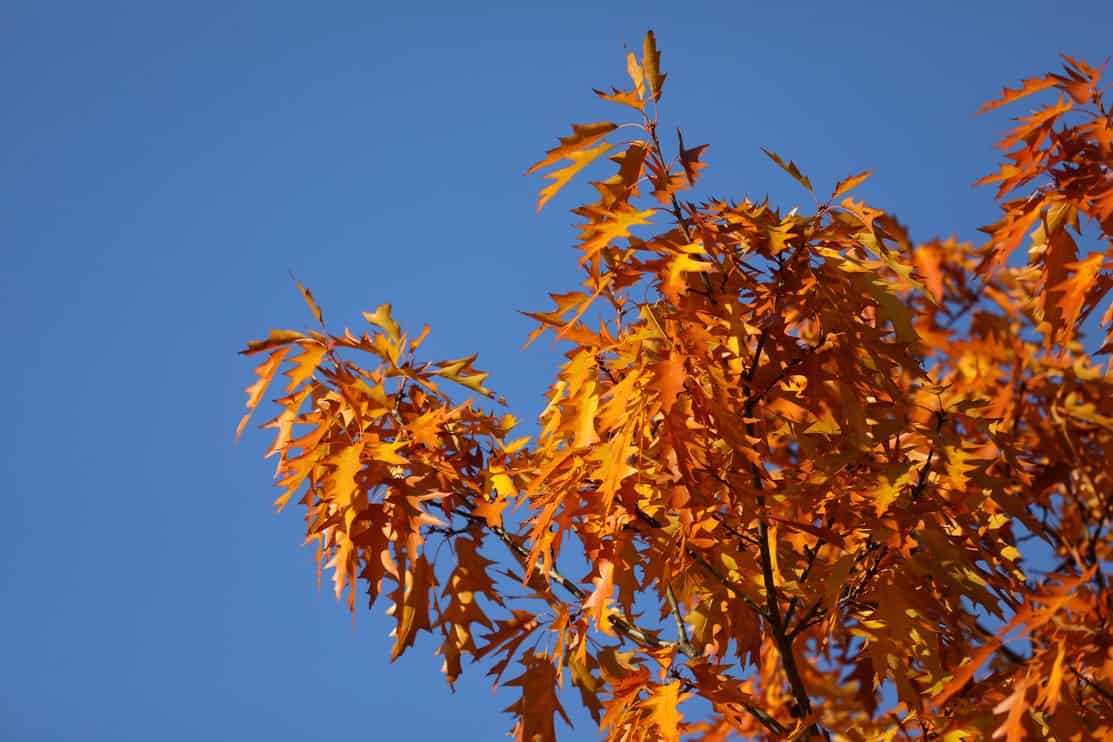
Pin oak tree in autumn

Unlike most of the oak trees on this list, this oak tends to grow in more northern locations, such as Minnesota, Wisconsin, Illinois, Ohio, etc. It usually prefers dry, sandy soils in the boreal region, often being associated with other trees such as oaks, hickories, aspens, etc. 

The Northern Pin Oak’s leaves look almost similar to that of a holly tree. They are slightly waxy, dark green, and have signature large serrations/lobing along the edges. 

Chapman Oak Tree Leaves

The Chapman Oak is sometimes described as a semi-evergreen shrub, as it has the ability to keep its leaves in certain locations. It prefers pine/oak forests and scrublands in locations such as Florida, Georgia, South Carolina, Etc. 

The leaves of the Chapman Oak are fairly simple, having a wider portion on the distal end and a skinner portion near the stem. In addition to this, they have little-to-no lobing/scalloping and are dark green in color. 

That’s A Wrap!

In the end, most leaves tend to be 4-8 inches in length on most oak tree species. This, however, can heavily differ depending on the species of tree or even the individual within the species.

There are many outliers to this, however, such as the world record leaf, which had a whopping width of over 15 inches!

There are a few main factors that impact leaf size, such as nutrients, water, light, location, climate, etc. These factors work by limiting the physical ability of a tree to grow. Understanding these factors is important in influencing the growth of your oak tree or simply in identifying a tree in a given area (while it is being affected by these conditions.) 

There are countless oak tree species, each with its own individual tree size/shape and leaf size/characteristics. Using some of the tips and descriptions are given here can help in your identification process; however, it is always good to use multiple sources when identifying trees in the wild!  

References:

And, C. D., & Rambal, S. (1995). Field study of leaf photosynthetic performance by a Mediterranean deciduous oak tree (Quercus pubescens) during a severe summer drought. New Phytologist131(2), 159-167.

Alexander, H. D., & Arthur, M. A. (2014). Increasing red maple leaf litter alters decomposition rates and nitrogen cycling in historically oak-dominated forests of the eastern U.S. Ecosystems17(8), 1371-1383.

Jorge, I., Navarro, R.M., Lenz, C., Ariza, D. and Jorrín, J. (2006), Variation in the holm oak leaf proteome at different plant developmental stages, between provenances and in response to drought stress. Proteomics, 6: S207-S214.

If you are looking to grow your own nuts at home, you may be wondering – which are the hardest nuts to grow? In this article we will dive into the hardest nuts to grow in your yard and how you can successfully have your own almonds, walnuts, macadamia nuts, brazil nuts, etc. It’s easier than you think!

In general, the hardest nut trees to grow are almond trees, macadamia trees, Brazil nut trees, and walnut trees. Specifically, they all require typically warmer climates and well irrigated soils, with the exception of walnut trees which can generally grow anywhere throughout the United States.

So, if you want to learn more about just why these trees are the hardest nut trees to grow, keep on reading! We’re going to go over a step-by-step process for growing each tree as well.

What’s The Difference Between Nuts vs. Seeds?

A seed is the embryonic stage of any plant. When the plant drops its seeds, the seeds can usually germinate and grow on their own. 

Like nuts, seeds have a protective casing, but this outer layer rarely prevents the seed from germinating when dropped. 

Nuts, in essence, are any seed encased in a hard shell that needs to be physically opened. This definition means it takes a bit more effort to get to the seed of a nut. 

The nut’s protective casing is its shell, but unlike most seeds, this casing prevents germination. This distinction is one of the major differences between nuts and seeds. 

To further compare them, nearly all nuts are seeds, but not all seeds are nuts.

Kinda nuts, right?

Most Common Seeds Defined As Nuts

  • Almonds
  • Brazil Nuts
  • Cashews
  • Macadamias
  • Pecans
  • Pistachios
  • Pine Nuts
  • Walnuts 

We call these nuts “tree nuts” as the name suggests, they grow on trees!

What Are The Toughest Nuts To Crack?

If you are a nut enthusiast, you might get a kick out of crashing, cracking, and crushing nutshells. Take it from us, some of the best nuts are hardest to access.

Let’s find out what nuts are the toughest to crack and how to crack them to begin the germination process.

Almond Shells Are Tough To Remove

Ripe almond nuts on the branches of almond tree in early autumn. Ripe almonds on the tree branches. Horizontal. Daylight.

Almonds can be especially tricky to shell. Not only are the shells thick and durable, but with high impact, tiny sharp shell bits can go flying!

If you choose to take the smashing route, be sure to wear protective goggles or glasses. 

Almonds can be unshelled using an easier method as well! 

You can soak whole almonds with the shell in water overnight. The next day, the shell will be easy to rub away with your hands. 

Macadamia Shells Are Hard To Crack

There are nutcrackers built specifically for tougher nuts to crack. If you can’t get your hands on a macadamia nut cracker, using a rock or hammer is the next best option. Just like when cracking any shelled nut, you will want to wear eye protection. 

Look for a white spot on the shell. This spot, called the micropyle, is the weak point. When striking, aim for this spot and you should be successful in cracking the macadamia nut.

Walnut Husks Are Hard To Remove

Walnuts stay in their shell while germinating. But when getting non-processed raw walnuts, you will most likely have to get past the husk of the nut.

A walnut husk is a tough fleshy casing that surrounds the nut. Be sure to wear gloves during removal. The husk produces a liquid substance that can heavily stain when touched.  

To soften husk, stir walnuts in a mixture of water for five to ten minutes. Then, dry walnuts with a towel before proceeding. 

Place dry walnuts on a level surface and take a hammer or rock to the husk at a sharp angle. Once the husk begins to tear open, you can peel it from the walnut using your gloved hands.

Another popular method for de-husking walnuts is to place the walnuts on your driveway and actually run over them with your car. The result will crack the husk of the walnut and leave you with the nut!

The 4 Hardest Nuts To Grow (With Growing Tips)

Now, we’re getting to the nut of it.

Kind of a bad pun right? Good.

Anyways, next, we’re going to talk about the hardest nut trees to actually grow by terms of difficulty. They require specific conditions and attentive care in most cases to make your nut growing journey, worthwhile.

Let’s get to it!

Why Almond Trees Are Hard To Grow (Growing Tips)

Close-up of a branch of an almond tree with green almonds against a blue sky

Almond trees grow best in a Mediterranean environment. So, if you aren’t in a mediterranean environment, you’d be better off skipping to the next one on this list. Keep their needs in mind if you plan on growing one!

You can grow almond trees in America if you live in central or southern California, parts of Arizona, parts of Texas, and inland Florida.

A quick fact, according to the University of California’s “The California Backyard Orchard”, almonds made for consumption in the United States actually come from California!

The items you will need for this project include raw almonds (no shell), paper towels, three to four 12 inch-deep growing pots, potting soil, and plenty of water. 

After using our preferred method of unshelling almonds, you should be ready to start the germination process.

Why Germinating Almonds Is Hard

To start this project using three to four almonds. Since there are so many variables of the germination process, starting with more almonds will better the chances of at least one succeeding. That’s only one part of the reason for difficulty.

Once you have the raw almonds out of their shells, you are going to soak the nuts in room-temperature water overnight.

After soaking the almonds, wrap them in several layers of paper towels. Spray the paper-wrapped nuts until the paper is very moist. Put the wrapped nuts into a sealed container and place the container in a refrigerator for thirty to sixty days. 

Yes, thirty to sixty days. It’s going to take a bit.

Check the moisture of the paper every week and add moisture if needed. It’s important to watch for mold at this stage as well. Once the almonds have split and grown a taproot, it will be time to transfer them into the soil!

How To Plant Almonds Into Pots (Medium)

After germination, seeds are placed in small growing pots with soil that helps the roots grow and the plant sprout. This soil is called the medium. The medium used for almond trees is plain potting soil. 

To start, you will fill your three to four growing pots with the moistened soil. Plant germinated nuts 1 inch deep with the split side up. Plant one nut per pot.

Place growing pots in a warm sunny area. Keep the medium moist by watering it weekly. You should see the plant sprout within two to three weeks. 

Transferring And Planting Almonds Into Ground Soil

Once the almond tree has sprouted and grown 18 inches in height, you will transfer the tree from the soil to the ground. Try to transfer during late winter or early spring.

You will want to choose a spot with full access to direct sunlight and plant the tree at the same depth you planted it in the medium. 

After initially planting the almond tree in the ground, you will water the area heavily. This first heavy watering is crucial to the success of your tree. 

You will then water the area normally once a week. You can also use a slow release watering system like the Greenscapes Tree Watering Bags. These slowly drain up to 20 gallons of water over 6 to 8 hours, allowing your tree to soak up as much water as it needs.

It can take a new almond tree five to twelve years to grow its own almonds. Full production takes ten to twelve years. An almond tree will produce almonds for up to twenty-five years!

Why Macadamia Trees Are Hard To Grow (Growing Tips)

macadamia tree close up

If you want to grow a macadamia tree, you must live in a climate that hosts the proper growing conditions for them. These trees thrive in subtropical climates. 

In America, they can be grown in southern California, Florida and Hawaii. I wouldn’t recommend growing them indoors but – to each his own.

According to the University of California Agriculture and Natural Resources, Macadamias should be positioned in areas with full sun with rich, deep, slightly acidic, and well drained soil. Macadamia trees require constant irrigation until they’re well established.

The items you will need for this project are raw macadamia nuts (no shell), three to four 12 inch-deep growing pots, peat moss, vermiculite, a heating mat, and plenty of water.

After removing the tough shell of this nut (using our favorite method above), you are ready to start the germination process!

How To Germinate Macadamia Nuts

Start by using three to four macadamia nuts. With the many variables of the germination process in mind, starting with more nuts will better the chances of at least one succeeding. 

Start by soaking your unshelled nuts in room temperature water for forty-eight hours. Drain old water and soak for another eight hours if taproot has yet to form. After taproot has formed, you can transfer the macadamia nuts to the medium.

How Plant Macadamia Nuts Into Pots (Medium)

Take your growing pots and fill them with a mixture of moist peat moss and moist vermiculite. This mixture will be your medium. 

After your nuts have been soaking for two days, you will plant them ¼ inch deep in your medium.

The nut should be on its side with its seam facing you when planted in the medium. Keeping your medium warm and moist is very important. 

Find a brightly lit spot for your heating mat and set the temperature to seventy-five degrees Fahrenheit. After setting up your heated space, place your growing pots on top of the mat. 

You will need to spray water on the medium daily to keep it moist. After three to six weeks, your nuts should grow a small sprout. 

Once your macadamia sprouts have grown to be 6 inches, you will then be able to transfer them from the medium to the ground!

Transferring And Planting Macadamias Into Ground Soil

The best spot to plant a macadamia tree is somewhere that has full sunlight exposure for most of the day and again, has well irrigated soil as well.

When you choose a planting location, dig up soil 3-4 feet deep and 3-4 feet across, but do not remove the soil. This method will loosen the soil for the macadamia sprout to grow its roots freely. 

Once the ground is ready, you will take your sprouts and plant them at the same depth you planted them in the medium. 

Keep the soil here moist at all times by watering the area daily until you see new growth from the sprout. After the macadamia tree has been in the ground for a year, you can begin fertilizing it however you see fit. 

If you are planting more than one macadamia tree, plant them approximately 20-25 feet apart. This allows enough space for the roots to grow towards each other without causing any damage.

New macadamia trees take four to five years to produce their own macadamia nuts. Full production takes twelve to thirteen years. Macadamia trees will produce macadamia nuts for up to forty years.

Why Brazil Nut Trees Are Hard To Grow (Growing Tips)

Raw Organic Brown Baru Nuts in a Bowl

Brazil nut trees thrive in a tropical climate. If you are looking to grow one of these beautiful trees, be sure to take their growing conditions into consideration.

You can grow Brazil nut trees in America if you live in Florida or areas with a similar climate.

According to the University of Missouri’s Integrated Pest Management, each mature Brazil nut tree can produce up to 300 fruits each year, with each fruit itself weighing up to 5lbs.

Now, keep in mind that the nuts are INSIDE the fruit. Brazil nuts aren’t THAT huge. The nuts are encased in another shell inside the fruit as well.

The items you will need for this project include raw Brazil nuts (with shell), a large container, three to four large jars, potting soil, rubber bands, and a cheesecloth for each jar.

How To Germinate Brazil Nuts

Start this project using three to four Brazil nuts. Starting with more nuts will better the chances of at least one succeeding. This counteracts the many variables in the germination process.

Start by soaking the nuts in room temperature water for twenty-four hours in a large container. 

After the first soak, pour the old water out and rinse Brazil nuts before soaking them again for eight to ten hours more. Repeat this process until you see a taproot growing from the shell. 

Once you spot the taproot, you can separate and remove the shell. After all germinated nuts are out of their shell, you will plant them in the medium.

How Plant Brazil Nuts Into Pots (Medium)

You will take the three to four large jars and fill them three quarters full with moist potting soil. This will be your medium.

Plant your nuts 2-3 inches deep in the medium or just enough to cover the entire nut with soil. Water the medium moderately without making it soggy.

Once you plant your germinated nuts, cover the top of the jars with a cheesecloth and a rubber band to hold the cloth in place.

Place the jars in a room with low or indirect sunlight.

After your germinated seeds sprout, place the jars in a much sunnier location and remove the cheesecloth for three hours every day to ensure plenty of fresh air. Water the jars daily.

Once your sprouts have grown to be 8-12 inches tall, you can transplant them into the ground.

Transferring Brazil Nuts Into Ground Soil

Find a spot with full access to direct sunlight, and make sure the area has well-draining soil.

Plant your seedlings in the ground at the same depth you planted them in the medium. Water daily until you notice fresh growth. 

You may want to fertilize the area surrounding the seedling with food and garden compost. This will help recreate a Brazil nut tree’s natural environment.

New Brazil nut trees take four to five years to produce their own nuts. Full production can take up to thirty years. Brazil nut trees will produce nuts for over one hundred years. So… they’re worth the wait!

Why Walnut Trees Are Hard To Grow (Growing Tips)

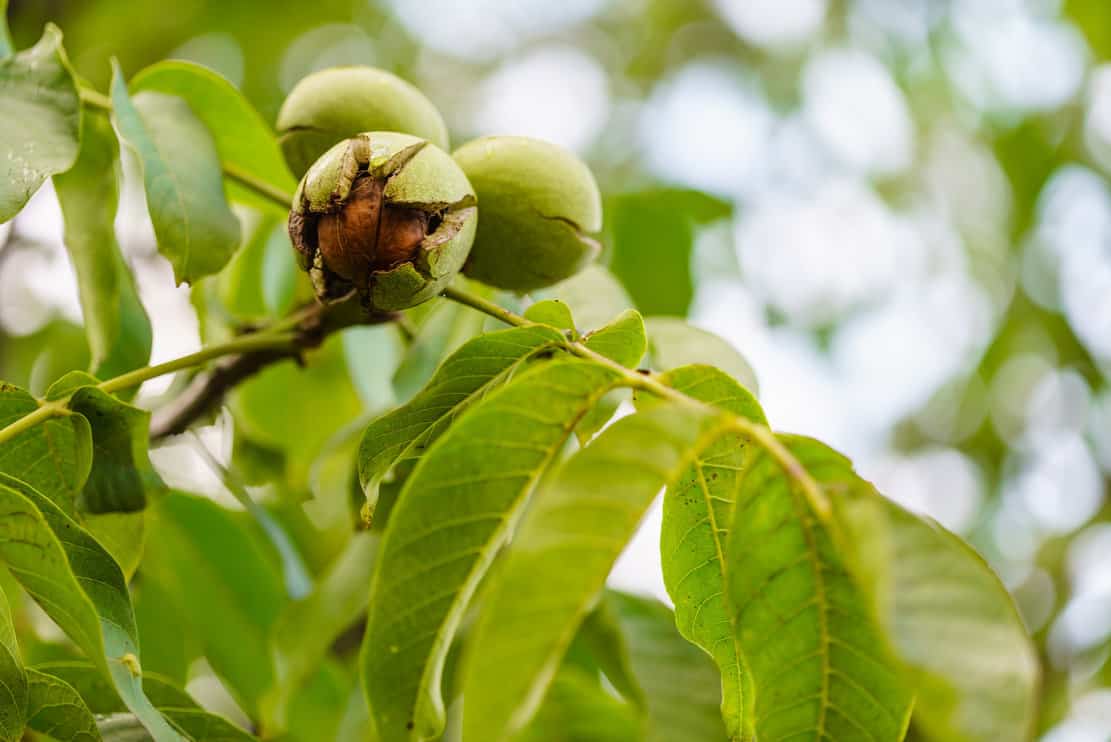
ripe walnut on tree

Depending on the species of walnut tree you plan to grow, they thrive in different climates. Be sure to find a species suited for your area before you plant. 

You can grow walnut trees nearly anywhere in America.

After using our method of removing the husk, you can begin the germination process.

The items you will need for this project include raw walnuts (with shell), a large container with a lid, three to four 12 inch growing pots, peat moss, river sand, potting soil, and plenty of water.

Learn the difference between black walnut trees and walnut trees in our post: 8 Differences Between Black Walnut Trees And Walnut Trees.

How To Germinate Walnuts

According to Iowa State University Extension and Outreach, walnuts need to be exposed to cold temperatures and moist conditions in order to germinate.

So, if they don’t germinate by following the steps below, you’ll know these walnuts won’t haven’t been properly exposed to the right conditions.

Start by soaking the whole nuts in water for forty-eight hours. Fill a container with moist river sand and peat moss. 

After the nuts have finished soaking, plant them 2-3 inches into the sand and moss mixture and close the container. Place this in the refrigerator for 2-3 months.

Add moisture around every week until the shell separates, and the nut sprouts a taproot. After growing a taproot, you can plant the nut in the medium.  

How Plant Walnuts Into Pots (Medium)

Fill the growing pots with moist river sand and potting soil. This will be your medium.

Plant germinated nuts 1-2 inches in soil or deep enough for the entire nut to be covered in soil. 

Keep growing pots at room temperature and place them in a window or a room with plenty of sunlight. Water daily to keep the soil moist but not soggy.

When the seedling sprouts and grows to be 6 inches tall, you can begin planting them in the ground!

Transferring Walnuts Into Ground Soil

When finding a spot to plant your walnut tree, look for locations near a stream, river, or pond. These trees prefer full sun and moist soil.

When planting your saplings in the ground, the depth should be the same as when you planted them in the medium. Just a few inches deep!

Note the plants in your growing area. Walnut tree roots produce juglone, which can negatively affect other plants growing nearby. 

Water the soil daily until your new growth sprouts.

If you’d like, you can read our full guide for how many walnuts grow on walnut trees here!

Enjoy Your Harvest!

Now that you know about the hardest nuts to grow and how to grow them, you are ready to grow your own nut tree. Enjoy your harvest and share with friends and family.

If you put in a little work now, these trees will reward you and your loved ones for years to come. Grab some nuts and get started.

Thank you for reading!

References

Hamilton, R. A., & Fukunaga, E. T. (1959). Growing macadamia nuts in Hawaii.

McGranahan, G., & Leslie, C. (1991). Walnuts (Juglans). Genetic Resources of Temperate Fruit and Nut Crops 290, 907-974.

Fulton, J., Norton, M., & Shilling, F. (2019). Water-indexed benefits and impacts of California almonds. Ecological indicators96, 711-717.

Snakes are a normal part of our ecosystem. If you have trees on your property, you are more than likely to see them now and then. Not everyone wants snakes slipping and sliding through their yard though.

Willow trees are an ideal shelter for snakes due to the cover they offer and proximity to a water source. You can prevent snakes near your willow tree denying their food source, removing areas of cover near the tree, and by housing guinea hens near your willow tree, which are predators of snakes.

Luckily, keeping snakes away from willow trees can be an easy process. Keep reading on below to learn about why keeping snakes away from your willow tree is a good idea and how to do it!

Why You Should Keep Snakes Away From Your Willow

Most snakes are harmless and scared of humans, but that does not mean you want them on your land. Many can coexist with snakes, but there are reasons you just can’t!

In general, you should keep snakes away from your willow tree if you:

  • Are afraid of snakes
  • Have venomous snakes
  • Have livestock such as chickens
  • Aren’t able to utilize your willow tree

For the first one, if you’re just plain ol’ afraid of snakes, then keep them away from your willow tree! Simple as that.

Venomous snakes are important to the ecosystem, but you should be wary of keeping them close to your home. If you find a snake near you, ALWAYS do some preliminary research based off the look of the snake to reasonably deduct what species it may be. Overall of course, this is a good reason to deter snakes. 

If you notice a venomous or suspicious snake, contact a professional for identification and removal.

If you keep livestock, having snakes around can be detrimental to your animals. Snakes eat eggs, chicks, and even full-grown birds.

Lastly, having snakes around your willow tree can make it difficult to enjoy your tree. Many love sitting under the tree and enjoying the shade and beauty it provides. Naturally, being afraid of snakes in the area can make it impossible to enjoy your landscape.

Signs That Snakes Are In Your Yard & Near Your Willow

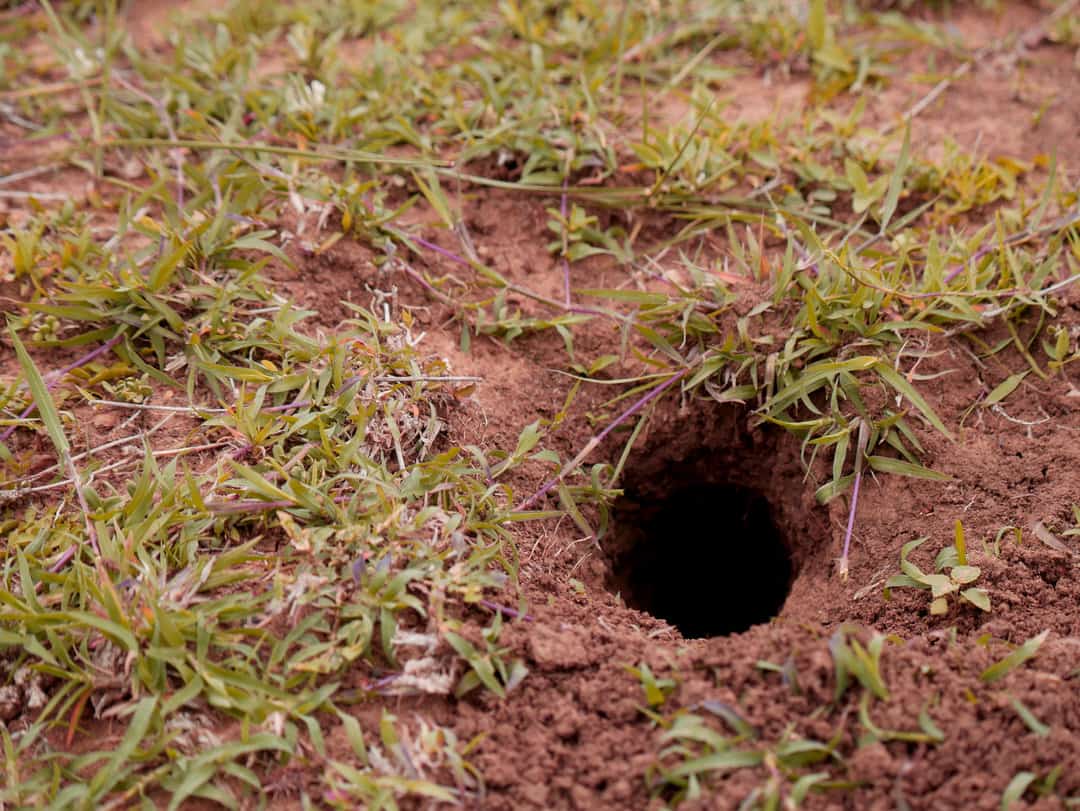
Snake hole at soil field around green forest area, wildlife nature presentation.

There are a few easy ways to tell if you have snakes. One obvious way to know is if you find snake sheds. According to the Iowa Department of Natural Resources, snakes shed their skins between 4 and 12 times a year.

You can tell the size of a snake by the length of the shed. This can help you determine the type of snake you may have. 

Additionally, you may see snake droppings or even tracks in the sand or dirt. 

The droppings look a lot like bird droppings and can vary in size. The tracks in sand are lines. Snakes use their scales and muscles to help move. 

Holes can also be a sign of snakes as well as a sign of mice or rats. These are food for snakes, so you may have a rodent problem as well. 

If you’re suspecting you may have a venomous snake in your yard, check out this article by the CDC which lists the common types of venomous snakes in the US.

How To Keep Snakes Away From Your Willow Tree

The first step to figuring out why snakes are near your willow tree is to find out what they are eating. This could be rats, toads, or even insects, depending on the species of snake. It is important to figure out their food source to eliminate them.

Most snakes will not come to your home without a reason. If you find that you have a rodent problem, immediately deal with the infestation to help deter snakes from staying.

You can do this with humane traps, or by eliminating the food sources which the rodents are after. So do not leave pet food or any other types of food in areas they can get to. 

Remove any potential hiding spots for the snakes. This includes clutter, excessive branches, and piles of leaves. If snakes have a place to hide, they are more likely to stay around your willow tree.

Snake-proof your home and yard by patching up any holes and adding snake-proof fencing. If you have animals such as chickens, snake-proof their pens so the snakes cannot get in for an easy meal.

Snakes will often eat chicken eggs or chicks if given the opportunity and some larger snakes can eat adult chickens.

If you have these livestock near your willow tree, moving them to another area of your property will help to keep snakes away.

If you believe you have a problem snake, contact a local pest control specialist in your area to help remove the snake. Alternatively, you could also buy a snake trap with the help of a professional.

Avoid using glue boards as you can accidentally harm other animals instead of the ones you are targeting.

Using Scents To Repel Snakes From Willow Trees

Willow tree by the Pond with the mirroring on the surface

Some strong scents can keep snakes away. Scents such as clove, cinnamon, and eugenol work wonders at deterring snakes from making your willow tree their home. 

Clove oil is a potent smell and can be useful in many pest applications. APHIS has noted that the use of these oils can help deter snakes. You can use these scents directly on the snakes and their environment as well. 

APHIS suggests two ways to use these oils: as an aerosol spray or as a fumigant. They make note of the Environmental Protection Agency determining that it is under an exemption from the EPA, meaning it is not regulated for use as a repellent. 

APHIS gives an aerosol spray recipe. They say to use one percent of the oil, one percent sodium lauryl sulfate, and ninety-eight percent water. This spray is to be used directly on the snakes and will not work on surfaces to prevent snakes.

While you may not be fond of spraying these directly on a snake near your willow tree, you can look into a repellent like Bonide’s Stopper 8751 Snake Repellent, which contains both cinnamon and clove oil, to spray near your willow tree.

While there isn’t scientific evidence backing the product, there are countless anecdotal reviews stating it’s effectiveness.

Using Plants To Keep Snakes Away From Your Willow Tree

While many of the plants that make claims to repel snakes are ineffective, other plants, such as roses, cacti, and other thorny plants, may work. Snakes cannot crawl through these plants, so growing them in landscaped areas around where snakes might live would work. 

Plants such as mint help deter mice and rats. Deterring mice or rats can help eliminate the snakes around your yard. As we have discussed before, rats and mice can attract snakes to your property. 

Planting plants that will deter the food sources of snakes is important to help keep away the snakes that prey upon them.

Guinea Hens: The Ultimate Snake Control For Your Willow Tree

A group of guinea fowl and chicken feeding outdoor

Consider purchasing Guineas to help with your snake problem. Guineas are a type of fowl known for their ruthless behavior. They will hunt a snake down and quickly dispose of it!

Guineas are an excellent resource for repelling snakes. These birds are fast and loud and often chase snakes. They are often known as watchdogs since they alert to any trespassers. Be careful, as they can be aggressive, roam miles, and can be very annoying. 

The downside of guineas is how loud they are. So if you have neighbors, this might not be the solution for you. 

They are easy to care for and often take care of themselves. Provide water, shelter, and some food and you should have a wonderful edition to your property and willow tree.

Even better, guinea hens eat ticks as well and can keep your property tick and snake-free!

Natural Methods To Deter Snakes From Your Willow

Japanese Rat Snake in the Garden

Some natural remedies to get rid of snakes are smells that would deter them, natural predators, and making the area unpleasant for the snake. 

Using powerful scents like cedar can help deter snakes from living around you. Another way is by making the area unpleasant. Change up your landscape, throw smoke bombs in their holes, and be active in your yard.

Cedar is also bad for their respiratory system and the respiratory system of most animals, so be mindful of your own animals. However, it could potentially keep snakes away from your willow (along with other animals in the process.)

Will Mothballs Repel Snakes?

A common myth is that mothballs will keep snakes away. This is untrue and bad for the environment. Mothballs can be harmful to living creatures as well. If an animal consumes them, they may die. 

The smell does not deter snakes, and it is also illegal to use mothballs in this way, as it’s intended purpose is for moths. So, use mothballs for their intended use only to prevent any damage.

Properly use mothballs in airtight containers inside places moths go like closets. 

Reasons Snakes Are Good For Your Willow Tree

Snakes are an important part of the ecosystem and without them, there is an imbalance in the food chain. Snakes eat pests such as mice and rats, and without them, these pests will overpopulate. 

Mice and rats can carry and transmit diseases to humans. Snakes eating them helps prevent the transfer of zoonotic diseases to people. This is essential to help maintain public health. 

If a snake is making the area under your willow tree its home, ask yourself why. If you have a willow tree planted along the water, the snake could be looking for fish to eat or water to drink.

Non-venomous snakes are important to keep around since they eat many pests like mice and rats and become food for other animals like large birds of prey. Snakes help with biodiversity and are sadly in decline with many endangered species. This is due to their habitat decline and other critical environmental issues.

Biodiversity is important for a healthy ecosystem. When the balance gets thrown off, it can cause major issues. Burmese Pythons in the Everglades in Florida, for example, always have to be removed from non-native environments.

These snakes took over and eat almost everything in their wake. This has caused an imbalance in the Everglades. If snakes are permanently removed from their native environments, this can cause a similar issue to the Everglades. 

Some harmless species of snakes include:

  • Rat Snake
  • Garter Snake
  • Hognose Snakes

As the name suggests, rat snakes eat rats. They get to be around four to six feet long and are not venomous. Additionally, they are native to North America and make their homes in forests and grass.

Garter snakes eat a vast diet of anything they can get their jaws on. This includes pests like leeches, rats, and spiders. They are not venomous and get to be around three feet long. 

Hognose snakes love to eat toads. They are not venomous and play dead when threatened. They live in sandy areas and stay fairly small. 

Overall, most garden snakes are harmless to just let live. There are, however, reasons to deter them.

That’s All For Now!

Snakes can be a scary visitor to your yard, and naturally, unpleasant to see.

Many claims are floating around on various natural remedies and easy remedies to repel snakes. Mothballs are a commonly mentioned remedy, however, this is not only wrong but usually illegal to use.

Preventing snakes is the best way to repel them. Snake proof your yard and keep organized and picked up. If the snakes have nowhere to live, they are less likely to stay. Clean up anywhere snakes can hide.

Consider learning to live with non-venomous snakes. These are important members of the ecosystem, and allowing them a place to live can benefit you.

Overall, snakes are pretty easy to keep away from your willow tree if you follow these simple tips!

References 

“APHIS Wildlife Services Snake Repellent.” USDA, 2003, www.aphis.usda.gov/wildlife_damage/nwrc/publications/Tech_Notes/TN_SnakeRepellents.pdf.

“Snakes in and around the House.” Npic.orst.edu, 2020, npic.orst.edu/pest/snake.html. Accessed 15 Nov. 2021.

“USDA APHIS | Vertebrate Control Products.” Usda.gov, 2013, www.aphis.usda.gov/aphis/ourfocus/wildlifedamage/programs/nwrc/product-registration-unit/CT_Control_products#:~:text=%20Vertebrate%20Control%20Products%20%201%20REPRODUCTIVE%20CONTROL.. Accessed 15 Nov. 2021.

If you are planning your landscape and are looking for a beautiful talking piece, you may be considering an oak tree. Good choice. These trees are stately and provide plenty of shade, but how fast do they grow and when can you expect shade?

In truth, some of the quickest growing oak trees include the Japanese Evergreen Oak, Nuttall Oak, Southern Live Oak, and Valley Oak, all of which can grow up to 36 inches per year. Healthy oak trees can live anywhere from 100-600 years and reach heights of over 100ft, depending on the species.

We’ll walk you through 12 of the fastest-growing oak trees and give you some insight into what the best conditions are to grow each tree. Let’s get to it!

Are Oak Trees Fast Growers?

Before we get ahead of ourselves, let’s answer the obvious question: are oak trees fast growers? We know that there are different types of oak trees, and some grow faster than others, but what about compared to a maple or aspen tree?

Compared to other species of trees, oak trees are considered slow-growers. Some species of Poplar, for example, can grow up to 8 feet in a single year. Willows, Aspen, and Maple trees are all faster-growing trees than the mighty oak.

But that doesn’t mean you shouldn’t plant them! Oak trees, though slow-growing, will provide you (and most likely your children and grandchildren) with years of shade, beauty, and wildlife habitat.

The 12 Fastest-Growing Oak Trees

So, you’ve decided to plant an oak tree and you’re wondering how long it’ll take to grow? When will you have shade? How big will it get?

We got you covered!

Here’s a chart of the 12 fastest growing oak trees, and how tall you can expect them to grow. Be sure to check out which zones each oak tree will perform the best in so you can plant a tree that will last for many years, if not centuries.

TreeAnnual GrowthLifespanFull HeightBest Hardiness Zone

*growth may vary based on conditions

Let’s take a closer look at each of these fast-growing oaks and see which one might be best suited for your yard, park, or space.

Quick side note, if you’re interested, you can view our piece on how long oak trees live here.

Japanese Evergreen Oak

Our first fast-growing oak tree is not native to North America, as the name suggests. It has an impressive lifespan that can stretch through millennia.

The Japanese Everygreen Oak can grow up to 36 inches per year but only reaches about 30 feet at its full height. So, although it is a fast grower, it will only grow for about 10-20 years before reaching its full height.

This particular oak is great for smaller yards. It still provides plenty of shade, branching out with a spread of up to 20 feet. Don’t expect too many compliments on your Japanese Evergreen Oak. It’s not the showiest of the oaks, and will not change colors in the fall.

Southern Live Oak

The southern live oak is an iconic tree in many of the southern states of the U.S. It grows just as wide, and in some cases wider, than it grows tall. If you’ve ever seen those iconic droopy-branched trees with beautiful Spanish moss hanging from them, you’ve probably spotted a Southern Live Oak.

Southern Live Oaks typically grow between 24 and 36 inches per year, making them one of the faster-growing oak trees. They grow to a height of about 50 feet, sometimes reaching 80 feet, but the most impressive thing about the Southern Live Oak is its spread! This tree can reach up to 120 feet wide!

Talk about a shade tree, right?

Southern Live Oaks need lots of space to grow. As they grow older, roots can grow close to the surface and impact sidewalks and roads. They are pretty tolerant of most conditions, including drought. They are also resistant to tree disease and pests.

Valley Oak

Valley oak (Quercus lobata) on a hill with new green leaves growing in springtime, Santa Clara county, south San Francisco bay area, California
Valley oak (Quercus lobata) on a hill.

The Valley Oak, also called the California White Oak, is native to California. It is a large oak tree considered one of the faster growing oaks. Like many oaks, it measures its lifespan in centuries.

This impressive tree grows between 24 and 36 inches per year and can reach a height of up to 130 feet. Its impressive height is paired with a canopy spread of about 50 feet, making it an excellent shade tree. With time, its branches can even spread far enough to touch the ground.

Valley Oaks prefer full sun conditions and need an area greater than 10’ to grow properly. According to the University of North Carolina, Valley Oaks can have a trunk up to 10 feet in diameter!

Nuttall Oak

Unlike the Southern Live Oak and Valley Oak, the Nuttall Oak grows more upright and provides a little less shade due to a smaller spread.

The Nuttall Oak grows between 24 and 36 inches per year and reaches heights of about 40-60 feet. It’s a favorite of tree nurseries because it is easy to transplant and one of the fastest-growing oaks while young.

Another great characteristic of the Nuttall oak is its tolerance for a variety of soil conditions. Poorly drained soils and varying PH conditions are no hindrance to this tough oak.

Southern Red Oak

Not to be confused with the Southern Live Oak, the Southern Red Oak is an impressive, fast-growing oak tree that is sometimes referred to as Spanish Oak.

The Southern Red Oak grows anywhere from 12 to 36 inches per year, reaching heights of 60 to 80 feet. It has an impressive lifespan of about 150 years and is an excellent shade tree with a spread of up to 70 feet.

Besides providing plenty of shade, the Southern Red Oak is pretty resistant to diseases and pests that plague other oak types. It grows best in full sun and well-drained soil, so long as it is not clay. You don’t have to worry too much about branches breaking off, but the acorns will litter your yard and attract critters (but maybe you’re okay with that!).

Water Oak

Despite its name, the water oak does not require wet conditions to thrive, though it does love growing alongside streams and near water sources. It is native to the southeast but is found throughout much of the United States from Washington to New Jersey.

The water oak typically grows about two feet per year, reaching a full height of 100 feet. It is a shorter-lived tree with a lifespan of 60 to 80 years. This majestic tree can have a spread of up to 70 feet, providing plenty of shade.

If you’ve ever thought about what a typical acorn looks like, you’re probably picturing the acorns from a water oak: Dark brown in color with a ridged brown cap. Water Oaks are great to have around in the fall as they will change to a bright yellow once the seasons start changing.

Pin Oak

Pin oak with beautiful autumn colored leaves.

Pin oaks are one of the most commonly seen trees around human populations. They’re often used in parks and along streets, as parking lot islands, and planted in yards. Why are these trees so popular?

With a pyramid shape, little upkeep requirements, and beautiful fall colors, the Pin Oak is a very popular tree! The roots have little potential for problems and even in the wintertime, this tree is pretty to look at.

The Pin Oak grows about 24 inches per year and reaches a full height of 60 to 70 feet. It provides decent shade, having a spread of up to 40 feet, but has the potential for branches to break off.

Pin Oaks provide food for squirrels, deer, and other mammals in the form of their acorns. This is one of the reasons why they make such good trees for parks.

Coast Live Oak

Coast Live Oak, California Live Oak, and Encina are all the same tree here. This tree is similar in shape and appearance to the southern live oak as it has a massive trunk and the branches spread out enough to touch the ground in some instances.

The Coast Live Oak grows about two feet per year and reaches a full height of around 70 feet. It’s a long-lived oak, its lifespan numbering two centuries on average. It has an impressive spread of up to 70 feet.

This admirable tree provides food and shelter for birds, squirrels, and other tree-using animals. It is an important tree in California, its native home, but is susceptible to some of the more serious tree diseases such as sudden oak death.

Canyon Live Oak

As the name suggests, canyon live oaks are found in high-elevation, mountainous regions. Its home range includes the west coast from Oregon down to Arizona. This little tree can survive at altitudes of up to 9,000 feet!

Canyon Live Oaks grow about two feet per year and reach a full height of up to 100 feet. More often than not these trees only reach heights of 20 to 60 feet. They’re typically as wide as they are tall and can appear more shrub than tree in some cases.

These hardy trees thrive in several different soil conditions, making them attractive to many homeowners in drought-ridden areas such as California. They’re quaint little trees that can provide food and shelter for wildlife as well.

Laurel Oak

Native to the southeast and eastern Texas, the Laurel Oak is a tall, proud, and fast-growing oak. It’s not quite as showy as the Pin Oak in the fall, but its leaves do change color.

Laurel Oaks grow up to two feet per year and reach a full height of up to 100 feet. For its height, it has a smaller spread than expected of up to 45 feet. It is another short-lived oak with a lifespan of 50-70 years.

These trees have more of the picturesque acorns that attract squirrels, deer, and other wildlife. Unfortunately, the branches are susceptible to breaking, so be careful if you decide to plant these next to your house or outbuildings.

Red Oak

Red Oaks are one of the prettiest oak trees to see in the fall, with vibrant reds, oranges, and browns. But trees aren’t all about looks, right? Red oaks also thrive in a variety of conditions but tend to prefer moist and well-drained soil.

These mighty trees grow up to two feet per year and reach a full height of up to 140 feet. They can live up to 500 years, providing generations with shade and wildlife viewing. Red Oaks are one of the easier trees to transplant, making them a favorite in tree nurseries.

Willow Oak

The final fast-growing oak on our list is the Willow Oak. It’s one of the most stately of the oaks and is a prized landscape piece for its ornamental value.

Willow Oaks grow between 13 and 24 inches per year. It’s one of the shorter oaks, reaching a full height of up to 60 feet. It can live for up to a century and has beautiful fall colors of yellow and red.

Willow Oaks make great shade trees and are very attractive to birds and small animals. They’re also easy to transplant and require little upkeep. So sit back, relax, and enjoy this majestic tree!

What Is The Best Oak Tree To Plant?

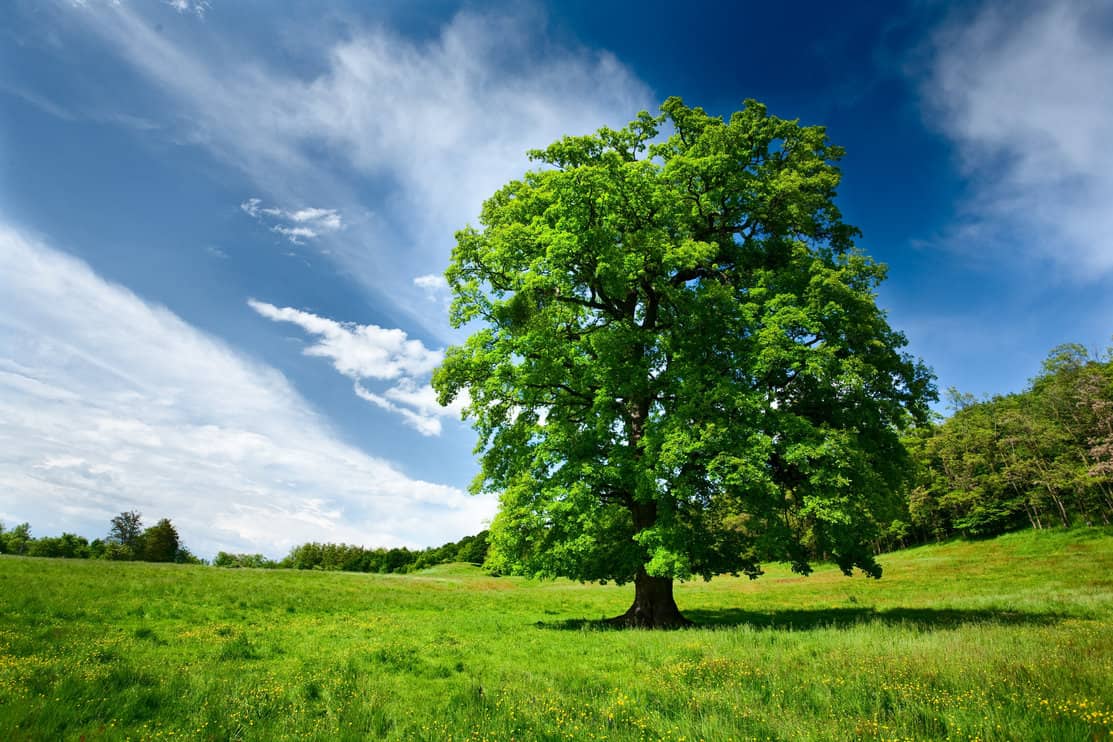
Single big oak tree in a meadow near the forest

If you’re set on planting an oak tree, you’re making a great choice. Oak trees are strong, stately trees that grow to last. They provide plenty of shade on a hot summer day to both you and the wildlife that depend on them for food and shelter.

Although oak trees are slow growers, they are typically easy to care for and can be a family project that will stay a part of the property for generations to come.

So, which oak tree is the best? Which one should you plant?

This question is a little difficult to answer because there are so many different types of oak trees, each with its own unique qualities. To get right down to it, you’ll need to ask yourself a few questions:

If you’re interested in this topic a bit more in-depth, you can check out our guide for the best oak trees to plant here.

What Are You Looking For In An Oak Tree?

When you think of planting an oak tree, are you picturing a tree you can sit under in the summertime and enjoy the shade? Or are you looking for an ornamental tree that can be a talking piece for visiting guests? Maybe you want one that will be bursting with colors in the fall?

If you’re in the market for a shade tree, Live Oaks are a good choice. These massive trees boast wide trunks, drooping branches that sometimes touch the ground, and impressive shading with a spread of over 100 feet for some types.

Looking to get shade quickly? If you want a faster growing oak tree, consider the Nuttall Oak or Japanese Evergreen Oak. These are going to be the fastest growing oak trees, growing about 3 feet per year. 

Want an oak with the prettiest fall foliage? White, Red, and Black Oak trees as well as Pin, Sawtooth, and Chinkapin Oak trees are all great choices for oak trees with beautiful fall leaves. As the seasons change, these trees will begin to change from green to all our favorite reds, oranges, and yellows of fall.

If you’re thinking about planting a White, Red or Black Oak Trees, check out our guide to planting oak trees in your backyard.

What about small yards? If you don’t have very much space, don’t let the reputation of the ‘mighty’ oak scare you away. There are plenty of options for smaller yards. The Nuttall, Pin, and Japanese Evergreen Oak are all great choices. These trees don’t get too tall or wide, so they can thrive in even the smallest of yards.

I just want an awesome-looking oak tree. If you’re not too concerned with space, don’t have a lot of time for upkeep, and just want a cool-looking tree, try the Willow Oak. This tree is considered one of the best-looking oak trees and will definitely grab the attention of your guests in the fall. 

What about cold climates? If you live in the northern regions of the U.S. it can be tough to find a tree that will survive in such harsh conditions. The best oak trees for cold weather include the Scarlet Oak, White Oak, Swamp White Oak, Bur Oak, and Black Oak. These can all survive in hardiness zone 3, which can see temperatures as low as -40° F.

Hot climates? Texas, Florida and Louisiana are three of the hottest states in the country. Which oaks survive the best in scorching temperatures of over 100°F? Myrtle Oak, Cork Oak, Live Oak, Holm Oak, and Japanese Evergreen Oak Trees can all survive up to zone 10.

That’s About It!

That’s all we have for now on the fastest growing oak trees. To recap, here are the 12 fastest growing oak trees:

  • Japanese Evergreen Oak
  • Southern Live Oak
  • Valley Oak
  • Nuttall Oak
  • Southern Red Oak
  • Water Oak
  • Pin Oak
  • Coast Live Oak
  • Canyon Live Oak
  • Laurel Oak
  • Red Oak
  • Willow Oak

Depending on what kind of oak tree you are looking for, you may want to consider what hardiness zone it thrives in, what PH conditions it needs, it’s maintenance requirements and how much space you need.

This way, you can choose the oak tree that will thrive in your unique situation. With a few years’ work you’ll be able to kick back and relax under a beautiful, stoic shade tree that will be around for years to come.

References

Gilman, E. F., Watson, D. G., Klein, R. W., Koeser, A. K., Hilbert, D. R., & McLean, D. C. (2019, April 11). Quercus Laurifolia: Laurel Oak. IFAS Extension University of Florida. https://edis.ifas.ufl.edu/publication/ST549

Hinckley, T. M., Dougherty, P. M., Lassoie, J. P., Roberts, J. E., & Teskey, R. O. (1979, October). A Severe Drought: Impact on Tree Growth, Phenology, Net Photosynthetic Rate and Water Relations. The American Midland Naturalist, 102(2), 307-316. https://www.jstor.org/stable/2424658

Phipps, R. L., & Whiton, J. C. (1988, January). Decline in long-term growth trends of white oak. Canadian Journal of Forest Research, 18(1), 24-32. https://cdnsciencepub.com/doi/abs/10.1139/x88-005

Wallace, Z. P., Lovett, G. M., Hart, J. E., & Machona, B. (2007, May 31). Effects of nitrogen saturation on tree growth and death in a mixed-oak forest. Forest Ecology and Management, 243(2-3), 210-218. https://www.sciencedirect.com/science/article/abs/pii/S0378112707001624

There’s nothing better than a stack of warm fluffy pancakes drizzled with delicious maple syrup. But as you’re savoring the flavor you may be wondering where maple syrup comes from? Maple trees, sure, but does maple syrup just flow out of it and get collected?

Maple syrup comes from the sap of maple trees. What comes directly from the tree is not syrup, but rather the sap of the tree. It’s always best to boil sap, but you can eat sap straight from the tree including directly from the tap, in carbonated sap, in your hot chocolate, and in fruit drinks.

Read on to find out how you can utilize your maple trees to produce sap, and what you can do with it once it starts flowing. We’ll also talk about the best times to collect sap!

Is Pure Maple Syrup Straight From The Tree?

So, what the heck is maple syrup? Where does it come from and why is it so delicious? 

Pure maple syrup does not come straight from the tree. It goes through a process of boiling before it becomes syrup. The syrup you see on the shelves of your grocery store goes through further processing and preserving to keep it from spoiling.

What comes straight from the maple tree is called sap. This sap is collected from maple trees via taps that are installed directly on the tree trunk. Tapping season only happens in the spring when temperatures are below freezing at night and above freezing during the day.

This temperature variation creates a vacuum inside the tree, sucking in and releasing out the sap as it cools and warms. When temperatures cool down, the sap is sucked back into the tree to be used as nutrients. 

As the roots suck in water, a process happens to replenish the supply of sap. According to a 2015 study, even when stressed from drought or pests, trees have a backlog of carbon that they use to keep producing sap.

Once the temperature warms back up the next day, the sap flows through the taps again. This process can happen for up to six weeks, as long as the temperatures continue to fluctuate. 

In fact, the bigger the fluctuation in temperature, the more sap produced according to Indiana Dunes National Park Service.

How Is Maple Syrup Made?

Pail used to collect sap of maple trees to produce maple syrup.

With all that being said, how in the world do you make maple syrup from tree sap? It’s actually pretty simple, which is why a lot of people make it a hobby to collect sap and make homemade syrup.

But, to make syrup it takes A LOT of sap. According to the University of Vermont, to make a single gallon of maple syrup you need over 40 gallons of maple sap! 

Once you collect the sap, it needs to be boiled to reduce the amount of water and concentrate the sugar content. Because there is so much evaporation, many people do this outside over a campfire or outdoor stove.

The boiling process should continue until the sugar content is around 66%, which can be measured with a hydrometer like Homebrew Guys Triple Scale Hydrometer. That’s when you know you have your syrup! The color should be light to medium for optimal flavor.

Can You Eat Raw Maple Syrup (Sap)?

When we say ‘raw maple syrup’ what we really mean is the sap that’s used to make maple syrup. So, can you eat raw sap straight from the tree?

Absolutely! But, take caution. It’s always best to boil sap and make syrup first.

You can eat raw maple syrup (sap) as it is sterile inside the tree and does not come in contact with any bacteria or harmful substances. The only time it has a chance to come in contact with harmful agents is when it exits the tree via a tap.

There are tons of different types of taps, each with its own unique design, and you can sterilize them all you want before putting them in the tree. But the fact of the matter is, if you want enough sap to actually use, you’ll have to leave the tap in for at least a few days if not weeks.

While the tap is in, it has the potential to collect some unwanted bacteria. This is rare, but it does happen if a bird or insect lands on the tap or in the sap – hey, they like sweet foods too!

To prevent this, you can install a filter on your collection system. The Maple Tapper 3pc Maple Syrup Filter Set is an excellent choice. It comes with 3 filters – 2 for filtering the sap during collection and 1 for the boiling process if you plan to make your sap into syrup.

If you’re wondering how in the world the sap won’t just sit on the filter, you’re thinking of the heavy, sticky quality of syrup. When sap comes from the tree it’s very watery, so it can flow right through the filter.

Another option is to place a lid over your collection bucket or container that covers both the tap and the collection container. This is considered best practice in the maple tapping biz, and the taps you purchase will typically come with both a lid and a hanging system for your collection container.

Is Maple Syrup Sweet Right From The Tree?

Before we get into all the ways you can eat maple syrup (sap) straight from the tree, let’s discuss if it tastes good or not. We all know maple syrup is deliciously sweet, but what about maple sap?

Sap straight from a sugar maple tree typically contains about 2-2.5% sugar. This sugar comes from the process of photosynthesis, which converts water and CO2 into glucose: a sugar!

According to Michigan State University, the sugar is stored in the tree’s wood during wintertime. Once spring rolls around, the sugar is converted into sucrose (sound familiar? That’s table sugar!) which dissolves into sap.

Here’s what all that science jargon boils down to: The sugar content of maple syrup is around 66%, while the sugar content of sap is 2.5%. That’s the difference in sweetness between syrup and sap. In truth, sap isn’t all that sweet.

Is it sweet straight from the tree? Not really. Not in comparison to finished maple syrup. But fresh sap does contain a lot of nutritional benefits, is unrefined, and there is anecdotal evidence that certain local saps can even help with allergies, similar to local honey.

Different Ways To Eat Maple Syrup Straight From The Tree

Maple Sap Dripping into a Bucket

Now that you’ve devoured a couple of knowledge nuggets about syrup, sap, and the sap production process, let’s get to the meat of this post: how can you eat maple sap straight from the tree?

Get Maple Sap Fresh From The Tap

If it works for beer, why not sap? You can drink sap straight from the tap of your maple tree. If you’ve ever been to a maple festival, you may have already experienced this!

Place your cup right below the tap and fill it up. The contents will look like regular water, which it mostly is. Sugar content is not uniform and will vary from tree to tree. Trees that are more active use more energy (sugar) and therefore produce less sugar in the sap.

Your cup of sap will not be as sweet as syrup, but it does contain a little bit of sugar. It’s a nice change from plain water and enjoyable on a crisp spring day.

The best time to drink sap straight from the tap is on the first day. This will minimize the chance of it containing any bacteria. If the sap looks cloudy, it’s not a good idea to drink it as this indicates contamination.

Drink Maple Sap In A Carbonated Drink

If you’re a fan of things like seltzer water, club soda, or sparkling water, then you’ll enjoy this unique way to eat sap straight from the tree.

If you don’t have your own carbonator machine, you won’t be able to enjoy this option. But if you love sparkling water, it might be time to get one!

The AirSoda Carbonator is a great choice, modestly priced, and will definitely work to make carbonated sap.

To make carbonated sap, simply substitute your maple sap for water. Carbonate it up and drink it just like sparkling water. It’ll be a little sweeter than plain water, which isn’t a bad thing especially when the sweetness comes from good old mother nature!

Boil Sap To Enhance The Sweetness

This isn’t necessarily straight from the tree, but it’s close enough! Boiling your sap is what makes it into syrup, but you don’t have to go through that entire process of collecting 40-some-gallons before you enjoy maple sap!

Use your collection bucket or a cup to gather some sap, however much you want, and boil it for about 20-30 minutes. This will reduce the water content and concentrate the sugar content to give you a slightly sweeter taste than what comes straight from the tap.

This method is far simpler and takes less time to do than completing the entire maple syrup process. It won’t be as sweet as syrup, but it will be a much tastier drink than straight from the tap. 

Boiling also has the benefit of purifying the sap, just in case there’s something in there that isn’t supposed to be.

Make A Fruity Sap Drink

There are plenty of things out there that are used to flavor water – lemon juice, flavor drops, flavor packets, energy boosts, vitamin packets. Pretty much everything!

You can do the same to your sap right from the tap. Consider adding pure fruit juice to the sap to give it a delicious fruity flavor. You can use your favorite flavors – blueberry, pineapple, cranberry, strawberry. Whatever you’d like!

Another option is to make lemonade. Use the same recipe on your lemonade packets as you would for plain water.

Make Maple Sap Hot Chocolate

Forest of Maple Sap buckets on trees in spring

Move over, fall! Spring is taking over the hot chocolate season. There’s nothing wrong with a delicious cup of hot chocolate on those cold spring mornings and nights.

And you can use your maple sap to make it!

If you’re using hot chocolate packets like Swiss Miss Hot Cocoa Mix, simply substitute your sap for water. 

If you’re noticing a trend here it’s because there is one: You can pretty much substitute maple sap for anything that would otherwise be water. Use it in your morning cup of joe, in your recipes, for baking, and, well, you get the point. The possibilities are pretty endless!

What Trees Can You Tap For Sap?

The industry standard for maple sap is to tap a sugar maple or black maple. They both have about the same sugar content in the sap.

Other trees that can be tapped for sap include red maple, silver maple, and boxelder. Birch, walnut, and hickory trees can also be tapped to make syrup, but the sugar content will not be as high as maple trees, and the process to make syrup is different.

Each tree can produce about ten gallons of sap, which might sound like a lot, but when it boils down to it (pun intended) it only makes about a quart of maple syrup.

If you were wondering if an oak tree can be tapped, it can’t. You can read more about the major differences between oak and maple trees here.

When Is The Best Time To Tap A Tree?

If you’re looking to tap your own maple trees for sap, knowing the best time can be essential to gathering enough sap for your delicious syrup.

The time to tap into a maple tree will vary depending on region and elevation. The biggest indicator is the temperature. You’ll want to start tapping your tree when temperatures consistently get above freezing during the day and below freezing at night.

The temperature fluctuations typically start mid- to late-February and last until April. You’ll know when the tapping season is over if the trees begin to bud. This process of budding takes up a lot of energy, so the tree will not produce excess sap. Instead, they’ll use the nutrients to create new shoots and leaves.

That’s All For Now!

That’s all we have for now on how to eat maple syrup (sap) straight from the tree! To recap, here are all the ways you can eat sap straight from the tree:

  • From the tap
  • In a carbonated drink
  • Boiled
  • Add fruit juice or flavoring
  • Make hot chocolate
  • Use it in your coffee
  • Baking
  • Cooking

When in doubt, you can always boil your sap for a little bit to make sure it’s completely safe to drink, but for the most part sap straight from the tree is perfectly fine to eat.

References

Ball, D. W. (2007). The Chemical Composition of Maple Syrup. Journal of Chemical Education, 84(10), 1647. https://pubs.acs.org/doi/abs/10.1021/ed084p1647#

Muhr, J., Messier, C., Delagrange, S., Trumbore, S., Xu, X., & Hartmann, H. (2015, December 07). How fresh is maple syrup? Sugar maple trees mobilize carbon stored several years previously during early springtime sap-ascent. New Phytologist, 209(4), 1410-1416. https://nph.onlinelibrary.wiley.com/doi/full/10.1111/nph.13782

Perkins, T. D., & Van Den Berg, A. K. (2009, April 21). Chapter 4 Maple Syrup – Production, Composition, Chemistry, and Sensory Characteristics. Advances in Food and Nutrition Research, 56, 101-143. https://www.sciencedirect.com/science/article/abs/pii/S1043452608006049

Today we’re talking about the differences between black walnut trees and walnut trees! Keep reading, we’ve got a list of differences between these two trees that you’ll want to know.

The walnut that we usually enjoy eating today is called the English walnut from the English walnut tree. However, there is a walnut tree found throughout North America that is the only wild nut tree in the United States, the black walnut tree. Black walnut trees are largely used for their wood.

Black walnuts are incredibly nutritious but are traditionally hard to harvest. Read on to learn about the wild black walnut tree as well as the protein-packed and valuable wood from the walnut tree!

Black Walnuts Are Wild, English Walnuts Come From Orchards

Eastern black walnut fruits
Eastern black walnut (Juglans nigra)

The black walnut, Juglans nigra, is a commonly found tree in the United States. They have huge husks similar to the size of tennis balls and are also of similar color.

The black walnut tree reaches a height of 75 feet and even is found to be heights of 150 feet. Historically, Native Americans and European settlers used black walnut trees due to their variety of uses. 

The black walnut can be consumed and the husks can be used for dyes because black walnuts have a slightly more bitter taste than English walnuts; they are used for flooring, gun stocks, and even furniture! The black walnut tree is the only wild nut tree in the United States. 

Black walnuts, similar to black cherry trees, are considered pioneer species since they easily grow in barren environments. Also contributing to their success as a wild nut tree, is the fact that they are allelopathic, meaning that they release chemicals into the ground from their roots, making the surrounding area uninhabitable for other trees.

The English walnut, Juglans regia, originated from Persia, modern-day Iran. The English walnut is harvested exclusively from orchards for a few reasons. Due to its highly palatable flavor, the English walnut is extensively used in desserts, baking, oils, and other food products.

The English walnut is significantly easier to open as compared to its counterpart, the black walnut, and is what we commonly find in stores when we go to buy walnuts. The English walnut, although commonly used for foodstuff, is also used in furniture, cabinetry, guitars, millwork, and construction.

Talk about a Jack of All Trades! Walnut wood is resistant to decay and warping, shrinks mildly, and is a hardwood that is easy to work with.

Black Walnut Hulls Stain

black walnut, Juglans nigra fruit
Black walnut (Juglans nigra) fruit

Black walnut trees are incredibly versatile, which is no wonder the black walnut has numerous historical uses.

Black walnuts contain juglone, which acts as a mordant for dyeing fibers. This allows permanent dyeing of materials without the use of other substances that would normally allow the dye to stick. 

Other walnut trees produce juglone but at a substantially lower amount than black walnut trees. The dye from black walnuts comes from the hulls, which encases the fruit or the nut. The dye is released by soaking and simmering black walnut hulls in water. 

The neon green tennis ball-sized black walnut hulls produce a tan to black colored dye on both plant and animal fibers, depending on how long the material is soaked in the dye. The dye is so potent that hulls can be saved and frozen to use for dyeing throughout the year, additionally, hulls stain skin, countertops, and sinks.

Black Walnuts Have The Highest Protein Content Of All Nuts

The black walnut contains the highest amount of protein found in any tree nut! Additionally, they have high levels of vitamin A, iron, fiber, and antioxidants. Walnuts are a great way to get protein, healthy fats, and essential vitamins.

Both English walnuts and black walnuts are powerhouses, packed full of antioxidants and polyunsaturated fats, which help to lower blood sugar, balance gut bacteria, reduce cholesterol, and help improve cardiovascular health.

Black walnuts have the highest level of protein of any nut and one cup of black walnuts has 32 grams of protein and 8 grams of fiber, although high in fat and calories. 

Black walnuts are full of vitamins and minerals such as vitamin E, folates, melatonin, iron, potassium, and magnesium. In comparison, English walnuts have 16 grams of protein, higher fat content, and 8 grams of fiber. In addition, walnuts are a great source of vitamin B6, manganese, copper, and folic acid. 

While walnuts may be high in fats, they contain high levels of healthy fats. All walnuts contain high levels of omega-6 fatty acids and omega-3 fatty acids. 

Black Walnuts Are The Only Wild Nut Tree

Juglans Nigra (Eastern Black Walnut.)

The black walnut tree grows throughout North America, from Canada to Florida. It grows exceptionally well in sandy loam soil or clay soil. Black walnut trees are widely used in construction, hardwood flooring, and even in desserts and for baking. 

Roughly 65% of wild harvests come from Missouri annually. Black walnuts are considered to be a pioneer species because they grow easily along roads, like a weed, and pop up in barren forest regions as a result of forest fires. Black walnut trees also grow easily in full sun and spread aggressively. 

Furthermore, the hulls and nuts provide food for surrounding animals. Animals then spread the walnut seeds through excretion, enabling them to spread fast. 

Black walnuts grow quickly and are allelopathic, meaning that they produce a biochemical called juglone that influences other plants. It inhibits the growth of plants competing with the black walnut by releasing the juglone into the environment. 

This biological phenomenon directly contributes to their spread across the Northeast of the United States as the only wild nut tree.

Kinda cool, but we have a black walnut tree on our property 🙂

You can check out our black walnut tree here.

English Walnuts Are Generally Grown For Food, Black Walnuts Are Generally Grown For Their Wood

Whole and cracked English walnuts.

Although black walnuts are highly nutritious and easy to find, they are not the main provider of walnuts that we consume. Generally, the walnuts we find in the grocery store are from English walnut trees. 

English walnuts have a much thinner and easily breakable shell or hull compared to the black walnut, allowing the fruit to be harvested more easily and as a whole.

Black walnut trees are typically grown more so for their wood, due to the nature of their hard-to-harvest fruit from hulls. Black walnut wood is used in furniture, gunstocks, oars, coffins, and flooring. The wood has a remarkably straight grain and is a beautiful dark color. 

Black walnut is extremely valuable due to its hardness and ease to work with, as well as resistance to insects and decay, and is on par with cedar and black locust. Black walnut trees also grow comparatively quicker than English walnut trees attributed to their use for timber.

Walnut trees, although generally known to chemically ward off other plants, can be companion planted with certain vegetables. Juglone is a toxin that excretes from walnut trees and can inhibit other plants from growing nearby. However, some plants are resistant to this. If you were about to give up on your black walnut tree, here are some vegetables that are resistant to juglone:

  • Beans
  • Beets
  • Carrots
  • Corn
  • Melons
  • Onions
  • Parsnips
  • Squashes 

Walnut trees are also traditionally known to have medicinal properties. The leaves have been used to treat conditions such as swelling, ulcers, and diarrhea.

English Walnuts Originated From Persia, Black Walnuts Are Native To North America

The black walnut is native to eastern North America. Black walnuts adapt easily to a variety of environments and are the first to grow in barren environments after fires, and alongside roads; making them what is known as a “pioneer species”. 

The English walnut tree, however, is said to have originated from Persia, modern-day Iran, and brought to Greece and the Roman empire. These were traditionally revered as royal gifts and known as foods of the Gods. 

They were said to have been sent to the King of Greece from the King of Persia, contributing to their spread throughout the world. It wasn’t until the mid-1700s that the English walnut was cultivated in the United States in California and was commercially planted in the mid-1800s.

Black Walnuts Have An Incredibly Tough Shell, English Walnuts Have A Thin, Soft Shell

Eastern black walnut fruits
Black walnut (Juglans nigra.)

If you have ever seen a black walnut up close and personal, you have probably almost broken your ankle on one of the tennis ball-sized husks. I have done that more than once even though they are lime green! 

The shells of black walnuts are incredibly hard and would probably injure you if you got hit with one. Their shell is so hard that some sources say to drive over the hull with your car.

Although, if you’re not up for that, the best way to harvest the nuts is on a hard surface with a hammer. Yeah, they are that hard! I know it is a common practice to step on the walnuts with shoes, but personally, that has never worked for me. 

Black walnut shells are commonly used in sandblasting, that’s how hard they are! They can be used to sandblast ships, smokestacks, and even jet engines!

English walnuts, on the other hand, have a much softer and thinner husk, which comes off much more easily than that of black walnuts. English walnuts occasionally have hard-to-remove hulls that stick tight against the seed, but compared to black walnut husk removal, the English walnut seems like a breeze! 

Once the shell has been removed from the English walnut, removing the nut inside is easy. The English walnut meat can also be harvested more easily as a whole. For black walnuts, harvesting them whole is almost impossible. This in part, is probably why the English walnut has been grown in orchards, harvested, and sold in grocery stores. 

Black Walnut Trees Grow 75-100 Feet Tall, English Walnut Trees Grow 40-60 Feet Tall

English walnut trees take significantly longer to mature and produce a large crop of nuts, than their counterpart, the black walnut. Nuts can begin to be produced around 4-6 years but generally take 20 years before a crop can be harvested. 

The black walnut is significantly larger than the English walnut tree. It grows to a height of 75-100 feet tall and can have a spread of 75-100 feet wide. Currently, the Black Walnut of Virginia tree made the National Register of Champion Trees in 2019 at a whopping circumference of 246 inches, 104 feet tall, and a crown spread of 56 feet!

Although the English walnut tree typically ranges from 40-60 feet tall, Giant Ogden in Utah ranks as the largest English walnut tree in the state. It was planted more than 100 years ago and is 85 feet tall and has a trunk circumference of 223 inches!

That’s A Wrap!

Fruit of a black walnut tree.

That’s all we have on the differences between black walnut trees and walnut trees. Walnuts are chock full of essential vitamins, protein, and minerals, moreover, they have a diverse range of uses.

To recap, here are the 8 differences between black walnut and walnut trees:

  • Black walnuts are wild, English walnuts are from orchards
  • Walnut wood is resistant to decay, warping, shrinking, and is incredibly hard
  • Black walnut hulls stain
  • Black walnuts have numerous health benefits and the highest protein content of all nuts
  • Walnuts are jam-packed with vitamins, minerals, and an abundance of healthy fats
  • Black walnuts are the only wild nut tree
  • English walnuts are generally grown for food, black walnuts are generally grown for their wood
  • You can grow juglone resistant vegetables near walnut trees including beans, beets, carrots, corn, melons, onions, parsnips, and squashes
  • English walnuts originated from Persia, Black walnuts are native to North America
  • Black walnuts have an incredibly tough shell, English walnuts have a thin, soft shell
  • Black walnut trees grow 75-100 ft tall, English walnut trees grow 40-60 ft tall

Walnuts are serious nutritional powerhouses with loads of vitamins and minerals. The black walnut and English walnut, although similar, have vastly different tree sizes and uses. 

Additionally, all types of walnuts are used for their fruit as well as for their wood. Contrary to popular belief, there are juglone-resistant plants, including a handful of vegetables. Walnut trees are incredibly versatile. 

Although the black walnut tree has commonly been thought of as a nightmare, these health-packed nut trees might have just become my new favorite! Maybe yours too?

References:

Browne, Greg T., et al. “Resistance to Phytophthora and graft compatibility with Persian walnut among selections of Chinese wingnut.” HortScience 46.3 (2011): 371-376.

Querné, Aurélie, et al. “Effects of walnut trees on biological nitrogen fixation and yield of intercropped alfalfa in a Mediterranean agroforestry system.” European Journal of Agronomy 84 (2017): 35-46.

Rugman-Jones, Paul F., et al. “Phylogeography of the walnut twig beetle, Pityophthorus juglandis, the vector of thousand cankers disease in North American walnut trees.” PLoS One 10.2 (2015): e0118264.

Schlesinger, Richard C., and Robert D. Williams. “Growth response of black walnut to interplanted trees.” Forest Ecology and Management 9.3 (1984): 235-243.

Tooley, Paul W., and Kerrie L. Kyde. “Susceptibility of some eastern forest species to Phytophthora ramorum.” Plant Disease 91.4 (2007): 435-438.

When you think of an aspen tree, you are most likely thinking of a tall, white-barked, slender tree that has golden-yellow leaves in the fall. This is a Quaking Aspen. But did you know there is another, less-well-known aspen tree growing in North America?

The quaking aspen and bigtooth aspen are the two types of aspen trees found in North America. There are a few ways to tell these trees apart, including the shape of their leaves, the bark color and texture, the height of the trees, and where they are found in North America.

Aspen trees are beautiful to see and are quite unique because they can clone themselves. Read on to discover the 9 differences between bigtooth aspens and quaking aspens.

Are Aspens And Quaking Aspens The Same?

There are six species of aspen trees, but only two are found in North America. The quaking aspen and the bigtooth aspen. These trees are very closely related to poplar trees, both of which are part of the genus Populus.

Aspen trees are only differentiated from poplar trees by their scientific classification. Even then, the lines become a little blurred. Although grey poplar and white poplar are different species, they are still part of the Populus genus and are even classified in the same section as aspen trees.

So, are aspens and quaking aspens the same thing? Yes! It is similar to asking if a grey wolf is a wolf… yes, of course! But a grey wolf is a species of wolf, just like  quaking aspen is a species of aspen. 

Zooming out further, aspen trees are part of the willow tree family. These include willows, poplars, aspens, and cottonwoods.

Aspens are deciduous trees, meaning they lose their leaves in the fall. According to Bryce Canyon National Park Service, the aspen flowering season is in May and June, but aspen tree seeds rarely successfully establish themselves. Instead, they reproduce by cloning themselves. 

Wait, what? Don’t worry, more on that later…

First, let’s check out the major differences between bigtooth aspens and quaking aspens. We’ll also go over how these trees are similar.

9 Differences Between Aspen And Quaking Aspen

The differences between trees may not be as obvious as the differences in animals. But if you look closely, you can see subtle differences that will clue you into what type of aspen tree you are looking at!

Along with the descriptions below, you can use something like Mark Mikolas’s Beginner’s Guide to Recognizing Trees of the Northeast. This can further aid you in your quest to differentiate one aspen from another.

With location maps for each species and over 400 pictures, you are sure to recognize more of the trees around you!

CHARACTERISTICQUAKING ASPENBIGTOOTH ASPEN

Aspen & Quaking Aspen Leaf Difference

The first difference we’ll look at is the leaves of the tree. You’ll have to look close in the spring, summer, and early fall to use this to differentiate. Both quaking and bigtooth aspen are deciduous trees, so they will not have leaves in the winter.

Bigtooth aspen leaf.

According to NCR Forest Management, both trembling aspen and bigtooth aspen have heart-shaped leaves that are green in the spring and yellow, golden, or (more rarely) red, in the fall.

The biggest difference will be in the outer edges of the leaves. Quaking aspens will appear smooth but have small jagged edges. Bigtooth aspen will have much more pronounced edges, hence the name ‘bigtooth’ aspen.

Another difference in the leaves is the size. Bigtooth aspen leaves are bigger than quaking aspens, reaching up to five inches in diameter while quaking aspens are only two to three.

Aspen & Quaking Aspen Bark Difference

Using bark to tell the difference between trees is a great tool to have in the winter when it’s impossible to see the leaves because, well, they’re all on the ground!

The bark of quaking aspen is typically white with black scars running along the width of it. These scars are where lower branches were naturally self-pruned while growing.

quaking aspen trees.
Quaking aspen trees.

The bark of bigtooth aspen is more of a greenish color, according to the Maine Forest Service, but smooth in appearance except in older trees. Older trees may have furrows in the bark, especially at the base of the tree.

The bark of both the bigtooth and the quaking aspen has a remarkable property – they can photosynthesize in the winter! While most other trees are being lazy and dormant during the winter, aspen trees are still hard at work, growing and producing sugars and carbohydrates!

This is possible because the bark is so thin on aspen trees. Beneath this thin layer is a green layer that is filled with chloroplasts needed for photosynthesis.

Aspen & Quaking Aspen Height Difference

Aspens are medium-sized trees. They’re certainly not grouped with giant sequoias, but neither are they secluded to small, shrub-sized trees.

That being said, quaking and bigtooth aspens differ in the final height they will reach at maturity. In general, both trees are considered fast growers, especially because of their ability to continue growing in winter.

Quaking aspens can reach a height of up to 80 feet but typically range somewhere between 20 and 80 feet. Bigtooth aspens also max out around 80 feet, but they are often taller, averaging around 60 to 80 feet.

Aspen & Quaking Aspen Width Difference

As with height, the diameter of quaking and bigtooth aspens differ slightly, giving you a good indication if you are unable to identify the leaves.

Quaking aspens are usually 3-18 inches in diameter according to the U.S. Forest Service. Bigtooth aspens average 8-10 inches. 

So, while bigtooth aspens are generally taller than quaking aspens, they are usually thinner around the middle.

Aspen & Quaking Aspen Common Range

Quaking aspens are widely distributed in the United States. In fact, they are the most predominant deciduous tree in North America!

In terms of range, quaking aspens are found throughout Canada and into Alaska. They can be found as far south as Mexico, but the largest continuous stands are found in the northeast and the north-central regions of the U.S. 

Patchy areas in the west can be found, especially in Utah and Colorado.

The bigtooth aspen is less widely distributed than the quaking aspen. They are found primarily in the northeast and north-central United States. You can find them in southeast Canada as well.

In areas where quaking aspen and bigtooth aspen coexist, they often grow near each other or in the same stand.

Aspen & Quaking Aspen Preferred Environmental Conditions

Some things that affect a tree’s ability to grow include PH, precipitation, and soil type. For aspens, they’re like coyotes and will thrive almost anywhere!

Bigtooth aspens prefer gently rolling hills, floodplains, sandy areas, and the bottom of upland slopes. But really, they’ve been found in almost every soil type and condition. They have a soil PH limit of 4.0, which is pretty acidic!

These aspens are found at lower elevations than quaking aspens, typically thriving at elevations lower than 3,000 feet, according to the USDA Fire Effects Information System.

Quaking aspens are more at home in the mountains. They prefer mountainsides, mesas, plateaus, and can be found at the bottom of valleys and canyons. You might spot one up to 11,500 feet, which is why a lot of leaf peepers love to go to the Colorado mountains to see the aspens change!

In terms of soil, quaking aspens also like sandy conditions, but will thrive in shallow and rocky terrain as well.

Both quaking and bigtooth aspens need moist, well-drained soil to thrive and expand their root systems. Both trees are shade-intolerant, although bigtooth aspens can tolerate shade better than quaking aspens.

Aspen & Quaking Aspen Seed Dispersal

Flowering branches of the aspen tree with aspen tree catkins.
Aspen tree catkins.

Both quaking and bigtooth aspens are dioecious. Soooo what does that mean? All dioecious means is that there are distinct male and female trees, similar to how boxelder trees are.

Flowering for quaking and bigtooth aspens begins around March-April. The bigtooth aspen has a shorter duration of active flowering than the quaking aspen, and seed dispersal happens up to 3 weeks after the quaking aspen disperses its seeds.

The fruits of both trees are called catkins. These catkins contain pear-shaped seeds with white tufts. Each tree can produce up to 1.5 million seeds per season!

Believe it or not, almost none of these seeds will turn into full-grown aspens. Conditions have to be perfect for an aspen seedling to grow, and these conditions are rarely met. This is mainly because of the tree’s extreme intolerance to shade. It often gets overshadowed by larger trees or saplings.

Aspen & Quaking Aspen Average Longevity

Aspens are not long-lived trees. Unlike the mighty oak, which some species can live for centuries, aspens rarely live beyond 100 years.

According to the National Wildlife Federation, quaking aspens typically live for about 50 years. Bigtooth aspens average 60-70 years before they begin deteriorating.

Most tree deterioration is caused by fungus rot or pests such as gypsy moths. Quaking aspens are more susceptible to disease and pests than bigtooth aspens.

Aspen & Quaking Aspen Name Differences

This difference is a bit of a cheap shot, but names are important!

Populus tremuloides, the quaking aspen, is so named because of the way its leaves flutter with the slightest breeze. 

This is because the leaves are attached to branches by a thing called a petiole that is long and flat. This petiole allows the leaves to swivel even with the lightest touch of wind. Hence the name quaking or trembling aspen.

The bigtooth aspen is named after the large tooth-like serrations that are found on the leaves. The bigtooth aspen also has petioles that allow the leaves to swivel in the wind, but it’s not as impressive as on the quaking aspen.

What’s So Special About Quaking Aspens?

Everyone seems to make a fuss over these trees. Is it their leaves? Their stark white bark? What’s so special about quaking aspens?

Probably the most unique feature of quaking aspens is Pando. Pando means “I spread” in Latin and refers to the largest organism on earth – a stand of quaking aspen trees!

I’m sure you have a lot of questions bursting at this point: how can an aspen tree be bigger than a whale, for starters.

A single aspen tree is not bigger than a whale, but aspen trees have a unique way of reproducing called suckering. When a stump or root system dies, new stems can grow from them through a unique process done only by aspen and some poplar trees.

The most interesting part? These new stems that eventually grow into new trees are a clone of the original tree. This means these clones are identical to the parent trees in terms of genetic makeup.

Meaning…it’s all one organism! Pando is still being argued over in the scientific community, as a few people aren’t willing to call the cloned trees part of the same organism, but still. It’s pretty amazing, right?

Pando weighs in at about 13 million pounds and covers 106 acres. It came from a single male aspen tree, but now contains over 40,000 individual trees! Pando is located in Fishlake National Forest in central Utah.

Because of this amazing ability to clone itself, quaking aspens are often the first trees to reestablish after disasters like flooding and forest fires. Once the fires or floods have raged through, fresh shoots will develop quickly from the dead stumps or dying root systems.

This is true for areas that have been affected by mining as well. As long as the parent tree is still present, aspens will flourish in the area! Although, after 30-40 years, they will begin being out-competed by taller trees that cast shade on the aspens, killing them off.

Wrapping Things Up!

That’s all we have for now on aspen trees! To recap, there are two types of aspen trees in North America: Quaking aspens and bigtooth aspens.

Quaking aspens are the most widespread and well-known aspens, distinguished by their white bark and small, heart-shaped leaves. Bigtooth aspens have greenish bark with bigger, jagged-edged leaves.

Both trees can clone themselves through suckering, but if not, they can produce millions of seeds each year to establish new trees.

All in all, aspens are pretty unique and are beautiful to see in the fall when their leaves turn golden yellow. They are a keystone species, and many plants and animals would be out of home and shelter if not for the mighty aspen stands!

References

Campbell, R. B., & Bartos, D. L. (2001). Aspen Ecosystems: Objectives for Sustaining Biodiversity [USDA Forest Service Proceedings] [P299-305]. https://www.fs.fed.us/rm/pubs/rmrs_p018/rmrs_p018_299_310.pdf

Davis, D. D., & Frontz, T. M. (2003). Growth and mortality of bigtooth aspen trees stressed by defoliation [General Technical Report]. North Central Research Station. https://www.fs.usda.gov/treesearch/pubs/15850

Painter, L. E., Beschta, R. L., Larsen, E. J., & Ripple, W. J. (2015, January 01). Recovering aspen follow changing elk dynamics in Yellowstone: evidence of a trophic cascade? Ecology, 96(1), 252-263.

Shepperd, Wayne D.; Binkley, Dan; Bartos, Dale L.; Stohlgren, Thomas J.; and Eskew, Lane G., compilers. 2001. Sustaining Aspen in Western Landscapes: Symposium Proceedings; 13–15 June 2000; Grand Junction, CO. Proceedings RMRS-P-18. Fort Collins, CO: U.S. Department of Agriculture, Forest Service, Rocky Mountain Research Station. 460 p

In recent times, the idea of smaller trees has gotten more and more popular. With this, most trees prefer to grow very large if they are allowed to, so how can you keep a blue spruce tree small? 

Typical Blue spruce trees grow 12 inches or less per year. To keep your blue spruce tree small, you’ll want to prune the tree each year during the late winter/early spring. You can also choose a small blue spruce variety, like the baby blue eyes spruce, which grows 2-3 inches per year.

While their are dwarf blue spruce varieties, read on to learn more about what a blue spruce needs, how it grows, and steps you can take to keep it small and manageable!

Blue Spruce Tree Basics

As mentioned, to know how to keep your blue spruce small, you first need to know the wants and needs of your tree, so that you can provide and alter them to affect the tree. 

Requirements Of Blue Spruce Trees

To start, blue spruce trees need full sun. This means that you need to find a location that provides adequate (full) sun exposure. You can, however, use this to your advantage if you want to keep your blue spruce small. If you slightly decrease the amount of sun, but not by too much, it can slow the growth of your tree without hurting it. 

In addition to sun requirements, blue spruce trees require semi-moist, well-draining soil. This means you need to water regularly. However, you have to find or make soil with particulates such as sand or large organic matter so that the water can drain off. 

Blue spruce trees can also adapt to drier winds and soils, meaning they are not too picky in those regards. However, you will need to work with your tree to find what it specifically needs in your area. 

Similar to other plants, spruces also may like slightly acidic soil and extra nutrients. Although, they do not require them to grow successfully. 

Growth Of Blue Spruce Trees

On average, blue spruce varieties are categorized as medium to slow growers. According to information from the Utah State University Cooperative Extension, established blue spruce trees generally grow up to 12 inches per year.

With vertical growth also comes horizontal growth, which needs to be considered if you want to keep your blue spruce small.

Going along with this, if some factors for your spruce are limited to a safe extent, such as sunlight and water, your spruce may grow slower without sustaining any damage. 

Blue Spruce Tree Roots

It is also good to mention that most spruce trees often have shallow and wide root systems. This is important to know, for watering and fertilizing reasons.

During their first year of growth, blue spruce tree roots only penetrate the soil about 2.5 inches.

Thus, you don’t have to absolutely soak the soil underneath the blue spruce tree to water it.

This means that while pruning and keeping your blue spruce small, you should be careful, as you don’t want to impact or stress out the root system too much. 

Picking The Right Blue Spruce Variety To Keep It Small

Decorative blue spruce or Picea pungens branches natural pattern close-up. Lush evergreen Christmas tree texture background

Another thing to keep in mind when wanting small blue spruce is picking out a specific variety. As with most things, each blue spruce variety has its own characteristics, including size and shape, meaning you can pick one for your very specific needs.

They are breeding specific blue spruces that are easier to take care of and better adapted to their environments. Now you can almost grow them anywhere. 

If you are looking to have smaller spruce, you can now pick one of their dwarf or miniature varieties. These varieties are predisposed to be smaller and grow slower. 

The smaller dwarf blue spruce varieties can even grow as small as 5-6 feet on average, making them great for small spaces or manicured gardens. 

6 Steps To Keep Your Blue Spruce Tree Small 

Now that we know the tendencies of blue spruce trees and what they need, we can learn some simple steps and tips on how to keep them small.

As a warning, blue spruce trees do not take well to excessive pruning. If you accidentally prune them too much or too often, they can slow in growth. They may also catch diseases or infections through their open wounds. 

Most people recommend making a plan for pruning ahead of time. Then slowly prune off excess or dead branches over a long period to avoid these potential damages. 

1. Get Your Tools And Plan 

The first step to keeping your blue spruce small is to make sure that you have the correct tools and a solid plan for pruning. 

To start, there are a few tools you will need to prune your tree.

One great tool is a hand pruner or a long pruner, such as the TABOR TOOLS Tree Trimmer. The carbon steel blades and comfortable handles make them perfect for trimming your tree with precision.

Spruce needles and sharp branches mean you may also want to get a nice pair of gloves. For example, these Dowelife working gloves. They are cut-resistant and have coated palms to increase grip.

If the tree you’re starting with is very tall, you also may need a larger pole pruner, such as this Sun Joe Pole Chain Saw. The multi-angle head and extendable pole allow for up to 14 feet of reach.

Along with these tools, you should have an adequate plan for the pruning of your tree. This is important so that you know what you are going to do so you do not trim too little or too much.

To do this, take a photo of your tree or draw a few examples of what you might do. After deliberating, you should have a clear idea of what you want to do. Then you are ready to prune your blue spruce. 

2. Prune Dead And Large Blue Spruce Tree Branches

To start your pruning process, begin by pruning off the dying and large branches from your blue spruce tree. 

As for dying branches, you can easily prune them off, allowing your blue spruce tree to have more airflow, and giving it the ability to move more of its energy to healthy branches.

You can prune these pretty closely, since pruning dead branches does not affect the tree, and simply maintains aesthetics. 

In addition, trim off excessively large branches, especially if they are in odd places such as near the top of the tree. Prune these sparingly and allow the tree to recover fully afterward. 

It is also good to mention trees that are one-third to half the diameter of the tree are usually posing some competition to the trunk. This may inhibit the growth of the trunk, which could aid in keeping the tree smaller. 

3. Eliminate Undesirable Branches Off Your Blue Spruce Tree

Another step to take in pruning your blue spruce is to eliminate any undesirable branches. This means that you should take off any branches that are growing in unwanted directions, or that are unsightly. 

Similar to the other pruning rules, prune sparingly, and should also look into other forms of maintenance, such as staking or altering the branches before cutting. 

Remember to not do this too often, but periodically.

4. Prune Your Blue Spruce To Create A Small Shape 

Picea pungens. Branch of a blue spruce close up

If this is your first time pruning your blue spruce tree, you will most likely need to prune slightly all over to create a standard shape. 

Going back to the first few steps, you should already have the correct tools and a plan in mind to help you along the way. 

If your tree is weak, or you are nervous that you could damage it, look into pruning a new shape over a longer period. This allows you to change the shape of the tree safely, which includes fewer risks compared to pruning the tree all at once.  

With this idea of pruning for the first time, follow the natural shape of your tree. As mentioned, most blue spruces have taped shapes, having a smaller rounded crown, and a wider base, creating a Christmas tree-like shape. 

In the end, if you follow this pattern of pruning slightly (no more than a fourth the diameter of the crown) in the natural shape of the tree, you should not encounter any issues along your way.

5. Prune Your Blue Spruce To Keep It Small

After you prune your tree for the first time, it most likely will continue to grow. Many trees and plants can even grow bushier when pruned, especially if it is near growth nodes.

You should either already have a plan or at least a general idea of what shape you are looking to maintain. 

If you have not pruned your spruce in a while, it may have grown in odd ways, or completely lost its original shape. If this is the case, you may have to restart and create another general shape through gradual pruning. 

In most cases, however, your spruce should only have a bit of top growth, and possibly a few loose branches extending from the sides. You can simply trim these over the seasons to maintain the original shape. 

If you choose to prune your blue spruce, do so seasonally over a long period if you want to keep your tree’s shape without harming it. It’s best to prune your blue spruce during the late winter/early spring when it will have a long period of optimal growth ahead of it.

6. Maintain Your Blue Spruce Tree’s Health Over Time

Alongside these pruning steps, it is important to maintain overall tree health. To do this, make sure that most of its water, sunlight, soil and other needs are being met consistently. 

If you fail to meet your blue spruce tree’s health needs over a long period, your tree will usually show signs of stress, such as falling or yellowing needles. 

You can improve your tree’s health by also supplying it with compost every once in a while, and by mulching underneath. Not only will this increase soil health and nutrition, but it also helps to retain moisture near the roots.

To keep your blue spruce tree healthy, read our guide on how to make your blue spruce tree more blue here.

How To Take Care Of Baby Blue Spruces

Blue spruce against a wall terracotta

One of the most challenging things of raising and maintaining a small blue spruce is raising it from the seedling to the adult stage. 

Watering and sunlight errors, nutrient deficiencies, weather damage, or pest damage are just a few of the many issues you might encounter during this time.

As for watering and sunlight, to take care of your baby blue spruce, water it whenever the soil looks dry. Be sure you initially plant it in a location that has adequate sun for its needs. 

Make sure you start your spruce off right by including rich soil, which could be new garden soil, fertilizer, or compost. 

Weather damage can also be a big obstacle for baby blue spruces. Especially when they are very young, many weather events can damage your spruce. You should be wary of windstorms, lightning storms, snowstorms, or even harsh rain. 

These weather events can cause a multitude of problems, for instance, snapping branches, lost needles, or even changing the orientation of your tree. Problems of this magnitude are more prevalent in places with frequent storms.

To help with these issues, it’s a good idea staking or protecting your blue spruces before and during these events. A stable and semi-covered tree is safer from any harsh rain and debris. 

Pest damage can be another issue with blue spruces. This refers to small animals such as squirrels eating/damaging branches/foliage, or even large animals such as deer breaking branches or eating foliage. 

While using artificial pesticides is not recommended, there are a few options you can try to help address these problems. Repellents are a great option to deter things like squirrels and deer without actually harming them, yourself, or your tree. 

Maintain Your Blue Spruce Tree’s Shape

In most cases, to keep a blue spruce tree small, you will need to trim and prune off the branches and foliage. This can cause issues, as most times gardeners can have trouble with keeping a consistent tree shape while pruning.  

Artistic Pruning Blue Spruce Trees

You might prefer to prune your blue spruce into a specific shape. If this shape is not its natural growing pattern, you will most likely have to prune the tree regularly. 

Experiment with things such as binding, bending, or staking branches. Doing so in a particular direction will allow them to grow in the direction you want. 

Trim Blue Spruce Trees After They Take Shape

For most gardeners, the natural shape of the blue spruce works well. However, they want their tree to be smaller in stature as compared to its natural form.

To maintain a natural tree shape, you first have to see how your tree grows on its own. After this, you can begin by picking a height you want, and by trimming the rest of the tree from there down. 

On average, most blue spruce trees have a (rounded) tapered top, with a wide base, almost going up in a perfectly conical shape. 

That’s A Wrap!

In the end, blue spruces are pretty classic trees that can offer a nice touch to any garden. They come in many varieties with different shapes and sizes, making them capable of adapting to a plethora of growing areas and conditions. 

There are also a few important things to know about blue spruce growth, such as its speed, vigor, and large root system. Knowing these factors is important to understand what your spruce needs and how to prune it safely. 

There are a few crucial steps to take to keep your blue spruce small, which include making a plan, getting the right tools, pruning with the natural shape, maintaining a general pruning shape/schedule, and much more! 

Each spruce will have its own needs, wants, and pruning guidelines, so go out and have fun trimming! 

References

Silvics of North America. (1990). United States: U.S. Government Printing Office..

Erhart, E., & Hartl, W. (2003). Mulching with compost improves growth of blue spruce in Christmas tree plantations. European Journal of Soil Biology, 39(3), 149–156.

Hanover, J. W. (1975). Genetics of Blue Spruce. In Google Books. Forest Service, U.S. Department of Agriculture.

Some gum trees are eucalyptus trees, and some eucalyptus trees are gum trees, but not all gum trees are eucalyptus trees. Hah! Confused yet? Both eucalyptus and most gum trees are native to Australia, but nowadays they are also grown in the U.S. because of their valuable properties for fuel, pulp, paper, and oils. So, what’s the difference between the two?

Eucalyptus gum trees and non-eucalyptus gum trees can be distinguished apart based on their leaf shape, bark, growth cycle, native habitat, and height. The main difference between eucalyptus and gum trees is that eucalyptus is a genus while gum trees are species.

Read on to explore all the differences between eucalyptus trees and gum trees. We’ll go over differences, similarities, and also go over why they’re called gum trees (hint: it has to do with chewing gum!)

Are Eucalyptus And Gum Trees The Same?

Before we get started, we should probably establish if eucalyptus and gum trees are, in fact, different.

Eucalyptus is a broad umbrella that encompasses most of the gum trees out there. blue gum, manna gum, rainbow gum, red cap gum, and silver dollar gum are all part of the Eucalyptus group (genus). 

However, some trees fall outside that umbrella. black gum, sweetgum, and water gum are not eucalyptus trees. Instead, they are each in their category. 

Eucalyptus trees are a part of the myrtle family, which are evergreen trees. Water gum is also part of the myrtle family, but black gum and sweetgum are not. Black gum and sweetgum are both deciduous trees, meaning they lose their leaves in the winter.

So, what exactly does all this mean? It means that most gum trees are eucalyptus trees, but a few gum trees are not eucalyptus trees. 

For example, when talking about blue gum trees, yes, they are eucalyptus trees. But when talking about sweetgum trees, no, they are not eucalyptus trees.

9 Differences Between Eucalyptus And Gum Trees

For our purposes here, when we talk about eucalyptus trees, we’re referring to the most common ones like blue gum, rose gum, and red gum. When we refer to gum trees, we’re going to be talking about the non-eucalyptus gum trees like sweetgum and black gum.

How can you tell the difference between a eucalyptus tree and a gum tree? There are a few obvious differences, while some are more subtle. Let’s check it out!

If you’re interested learning more, take a look our piece on the different things gum trees are used for here.

Differences In Eucalyptus And Gum Tree Leaves

The leaves of an evergreen tree are easy to identify all year round. However, if you’re looking for sweetgum leaves, be sure to check before winter hits as this tree is deciduous and will lose them in the fall!

Sweetgum leaves have five deeply-lobed points that form a star shape, according to the Missouri Department of Conservation. The tips are pointed, with small serrations around the outside.

Eucalyptus trees like the blue gum do not have lobes. The leaves are rather oblong-shaped like a canoe and are tinged slightly blue. Redgum trees have leaves that are shaped more like a spear tip, are longer than a blue gum tree, and the leaves are simple green instead of tinged with blue.

Both water gum and black gum (non-eucalyptus) have oblong-shaped leaves as well. While a water gum’s leaves will remain green all year, the black gum is deciduous and will change to a brilliant red in the fall.

Bark Differences Between Gum And Eucalyptus Trees

According to the University of Tasmania, Eucalyptus tree forests show a great tendency to start fires.

All in all, eucalyptus trees tend to be a pretty significant forest fire hazard as they’re quite dry. Their bark often peels off and litters the forest floors, or else hangs in strips. When caught, these strips readily transfer the fire to the crown of the trees where the highly volatile oil on the leaves, then catches fire.

The sweetgum tree has light gray bark with vertical and rounded ridges along the trunk. This is very distinctive from a eucalyptus tree, which has a smoother appearance and a light brown/tan color. Additionally, the bark of the eucalyptus tree often appears as if it’s peeling away from the trunk.

Differences In Height At Maturity Between Gum And Eucalyptus

Both eucalyptus trees and gum trees are fast growers. It is one of the main reasons why they are grown in North America despite being native to Australia. The fast growth rate and hardwood nature of the trees are great for manufacturing furniture, cabinets, and other timber products in a somewhat sustainable way.

When left to grow to their heart’s content, sweetgum and water gum trees will reach a height of up to 130 feet. Black gum trees are a little smaller, reaching a full height of only 30-50 feet, according to the University of Kentucky.

Eucalyptus gum trees are, in general, taller than non-eucalyptus gum trees. The blue gum, for example, can reach heights of up to 260 feet! That’s a big tree! Interestingly, up to 70% of a blue gum’s growth occurs in the first 10 years, according to the USDA Fire Effects Information System.

Native Range Of Eucalyptus And Gum Trees

We mentioned earlier that most eucalyptus and gum trees are native to Australia, but let’s dive down into the specifics.

Eucalyptus blue gum trees feel at home in Tasmania and southeast portions of Australia. Since the mid-1800’s they’ve also graced the U.S. in California and Hawaii, where they’ve since been able to thrive naturally. You can also find them in Arizona, but only as ornamental trees or windbreaks.

Sweetgum trees are native to the United States. They’re found mainly in the southeast from east Texas over to central Florida. They’re also found as far north as Connecticut and the southern regions of Illinois and Arkansas. Black gums are also native to the U.S.

The major difference here is that eucalyptus gum trees are native to Australia and its surrounding islands. Non-eucalyptus gum trees like sweetgums and black gums are native to the United States. 

Growth Cycle Of Eucalyptus And Gum Trees

Trees spend a whole lot of their time growing, gathering resources, and growing some more. They also spend quite a bit of time trying to conserve as much energy as possible so they can continue to grow and succeed.

Leaves help trees grow by doing their whole photosynthesis thing, but when fall and winter approach, the days grow shorter, and the photosynthesis party slows down.

It’s for this reason that deciduous trees like the sweetgum and black gum tree drop their leaves in the fall. It prevents moisture loss while the tree goes into a semi-dormant state.

Evergreen trees like eucalyptus trees lose their leaves a few at a time over the entire year, replacing them slowly. The leaves also have a glossy/waxy coating on them that helps prevent moisture loss, so there is no need for the tree to spend energy dropping the leaves.

Fruits Produced By Gum And Eucalyptus Trees

Keeping with our eucalyptus blue gum and non-eucalyptus sweetgum comparisons, these two trees also produce very different fruits.

Bluegum trees produce fruit that resembles a spinning topIt is narrower at the bottom, wider at the top, and capped on top. Each fruit contains several seeds, but the chances of the seeds becoming trees are pretty low.

Sweetgum trees produce strange, alien-looking fruits that are round and spiky. When on the tree, these spiky fruits are typically green. They quickly turn brown once they fall off. Each fruit carries an average of two seeds.

The timing of the fruits is another variable between these two trees. Eucalyptus trees like blue gums will usually ripen their fruit between October and March. Sounds like a weird time to be growing fruit, right? That’s because, in Australia, October is around springtime and March is the end of summer and the beginning of fall.

Sweetgums typically ripen their fruit around the same season, but in North America that is from April through September. Early fall is when you can find these spiky fruits on the ground, so be sure to wear shoes around them!

Differences In Environmental Needs Between Eucalyptus And Gum Trees

Both sweetgums and eucalyptus trees love the sun. They prefer to be in full sun but can tolerate partial shade, especially sweetgums.

Eucalyptus trees prefer soils that are well-drained with low salt content, but they can thrive in a wide range of soils and climates. For example, in Hawaii, blue gums grow in soil that is highly acidic and formed from volcanic ash. In Portugal, they grow in sandstone- and limestone-derived soils.

Sweetgums are even more adaptable than eucalyptus trees when it comes to soil conditions. They’ll thrive in swampy areas, plateaus, clay soils, and near river bottoms. Sweetgums can withstand the heat and the cold, thriving through 100°F and -5°F, respectively.

Eucalyptus blue gums are a little less tolerant of cold temperatures. They start to shiver at 30°F and cannot survive anything lower than 20°F.

Hardwood Use Of Eucalyptus And Gum Trees

Trees are used for a lot of things that many of us take for granted: furniture, cabinets, paper, wine corks, chewing gum, and medicine like aspirin.

The fast growth rate of both eucalyptus and sweetgum trees makes them an ideal candidate for a semi-sustainable resource. In tree plantations, they can be harvested in as little as 7 years. The plan was to use these trees for furniture, railroad ties, and firewood, among other things.

Things didn’t go according to plan in California…

Millions of blue gum trees were planted in the hopes that they could be harvested for their wood and made into useful stuff. 

What was quickly discovered was that the lumber would easily split, twist, and crack. In addition to this, the wood couldn’t be properly treated, so using it for lumber or furniture was out of the question.

Despite this, blue gums are still used for windbreaks, shade, and as ornamental trees in yards. They also provide medicinal benefits and can be used as firewood.

Sweetgums are more useful in the lumber industry than eucalyptus trees. The wood does not crack or twist, so it can be used for a variety of purposes such as railroad ties, pulpwood, plywood, trim, crates, boxes, general lumber, and veneer. 

Root Differences Between Eucalyptus And Gum Trees

Roots are an important aspect of a tree. In some cases, the tree is just the tip of the iceberg, while the majority of the organism lies beneath the soils.

Eucalyptus trees like blue gum typically do not have a taproot. This is the root that grows straight down from the trunk of the tree and is used to anchor it in place. Instead, blue gums will grow a wide network of more shallow roots spreading out beneath the trunk.

Despite the lack of a taproot, blue gums can affect water resources as deep as 45 feet below the surface and as far as 100 feet away from the tree. This can often create soil erosion and lower water levels around streambeds within the tree’s vicinity.

Sweetgums are highly adaptable and can survive both with and without a taproot. They change depending on the site conditions. If sweetgums grow on windy slopes, they’ll develop a deep, strong taproot that keeps them from being uprooted by the wind.

On the other hand, if sweetgums are growing in swampy, poorly drained soils, they rarely develop taproots. Instead, they’ll grow shallow root systems that spread out rather than down.

Why Are They Called Gum Trees?

Does it have to do with chewing gum? Yep! Gum trees produce a sticky sap when the tree is injured. The sap covers the wound similar to how our skin scabs over. This allows the bark to heal without having any nasty bugs or birds trying to move inside the wound.

When the sticky sap hardens, it forms a substance that can be used as chewing gum. Back in the day, it’s said that this sap helped the settlers and soldiers at Fort Smith, Arkansas, who used the sap as a kind of candy and a way to pass the time.

Are Eucalypt And Eucalyptus The Same Thing?

While perusing the internet to quench your thirst for eucalyptus knowledge, you may come across a familiar yet strange word: eucalypt. So, what the heck is it? Is it the same as eucalyptus?

Eucalypt is a word often used to describe a group of eucalyptus trees. For example, you might hear the phrase “a eucalypt forest” which refers to a forest of eucalyptus trees. It’s also used as the plural form of eucalyptus, similar to how ‘cacti’ is the plural of cactus.

That’s All For Now

Hopefully, this article has cleared up the confusion between eucalyptus and gum trees. While most gum trees are eucalyptus trees, some are in their categories like sweetgums, black gums, and water gums.

If you are interested to learn more about the uses of gum trees, click here!

Both eucalyptus gums and non-eucalyptus gums grow quickly, making them useful for manufacturing wood products and medicines. But there are several differences between the trees. 

To recap, the major differences between the two include:

  • Leaves
  • Bark
  • Height at maturity
  • Native range
  • Growth cycle
  • Fruits
  • Environmental needs
  • Uses
  • Roots

Both trees have their pros and cons, but all in all, they are both impressively tall and fast-growing trees that give the world a little more nature to enjoy.

References

Dickinson, K., & Kirkpatrick, J. (1985). The flammability and energy content of some important plant species and fuel components in the forests of southeastern Tasmania. Journal of Biogeography12(2), 121-134. https://eprints.utas.edu.au/2698/

Lindbeck, J. M., O’Bryan, C. A., Martin, E. M., Adams, J. P., & Crandall, P. G. (2015, Jan-Jun). Sweetgum: An ancient source of beneficial compounds with modern benefits. Pharmacognosy Review9(17), 1-11. https://www.ncbi.nlm.nih.gov/pmc/articles/PMC4441155/

Luu, T. C., Binkley, D., & Stape, J. L. (2013, February 01). Neighborhood uniformity increases the growth of individual Eucalyptus Trees. Forest Ecology and Management289, 90-97. https://www.sciencedirect.com/science/article/abs/pii/S0378112712005841

Myburg, A. A., Grattapaglia, D., & Schmutz, J. (2014). The genome of Eucalyptus grandis. Nature510, 356-362. https://www.nature.com/articles/nature13308

In recent times, more and more people have been interested in being more self-sufficient and healthy with their food. In most cases, this means looking into types of fruit trees that are easy to grow and will produce lots of delicious food. In addition, most people also want to look for fruit trees that are easy growing and won’t be invasive/damaging with their roots. 

The most common fruit trees that have shallow, non-invasive roots include but aren’t limited to: 

  • Pawpaw trees
  • Dwarf plum trees
  • Dwarf citrus trees
  • Apple Trees
  • Lemon trees
  • Dwarf cherry trees

Typically, these trees can be grown indoors, in pots as well.

Read on to learn more about why you should have fruit trees, why it is important/beneficial to have shallow-rooted trees, and what specific trees have shallow/non-invasion roots!

Why Are Fruit Trees So Popular? 

As mentioned, in recent times, fruit trees have been becoming increasingly popular for multiple reasoning, including production, appearance, and environmental impact. 

To start, more people are deciding to grow fruit trees for the simple fact that they make fruit. Not only is fruit delicious, but when you grow it yourself, you know exactly what is going into it.

Another reason why people choose fruit trees is that they look nice. In many settings, fruit trees are a great addition to front yards/gardens, being able to look tidy and clean while still producing food.

In addition to this, fruit trees add a little bit of height to your yard, but you don’t have to worry about them overgrowing an area (especially if you regularly prune them). 

Lastly, people are choosing to grow fruit trees due to their positive environmental impact. For instance, planting trees in general sequesters carbon in the wood/soil, however, fruit trees also have the added benefit of feeding local pollinators with their flowers.

In addition, eating fruit from personal trees (as compared to store-bought) saves carbon/energy used in industrial farming/fruit shipping. 

Basics of Fruit Trees

To understand and how your fruit tree grows well, you need to know the basics: how they grow, what they want, etc. 

How Fast Do Fruit Trees Grow 

On average, the typical fruit tree grows around 13-24 inches per year, although there are some exceptions among different species and varieties.

According to information from Iowa State University Extension and Outreach, standard size fruit trees generally reach heights of 25-30ft tall, while trees with dwarf rootstock typically only grow 10-15ft tall.

In addition to this above-ground growth, trees also exhibit root growth below the ground. With fruit trees, this can also be important to know, as you may want to monitor all of their growth so that you can keep them in check. 

What Kind Of Soil Do Fruit Trees Need?

Fruit trees usually want well-draining conditions, with sunnier days and cooler nights. 

With this, most people advise to, first of all, find a spot that is sunny during the day. On average, sunny spots are usually warmer, which most fruit trees also like. 

If the area is also cooler at night, this is a benefit, as fruit trees like to have cooler nights as compared to their days. In addition, fruit trees like well-draining soils, so planting on slopes or in the loose substrate can also help them to thrive. 

People advise against planting fruit trees in areas with valleys or compact soil. This is for a few reasons, the first of which is because those areas tend to accumulate and retain more water, which fruit trees don’t like. 

Another reason why people don’t plant fruit trees in those areas is that in the colder months, valleys can become a cooling sink, harshly dropping in temperature and causing risk for frost/cold damage. 

Picking The Best Fruit Tree Variety

Variety is another thing to keep in mind with fruit trees. Not only are there hundreds of types of fruit trees, but there are also countless varieties for each type of fruit tree, making them very versatile and adaptable to many areas. 

With this, you can use these facts to your advantage to pick a tree that will work best for you and your environment. 

To start, you should pick a tree that bears a fruit that you like. It is also slightly important to pick a fruit that is suited for your area (although this isn’t entirely necessary as varieties can be suited for different areas). 

After you find a specific type of fruit tree you would like to grow, you can then look into different varieties of that tree. 

Different varieties of the same tree will yield different results, from different sized trees to different tasting fruit, so have fun and pick what sounds interesting/fun to grow!

Benefits Of Having Shallow Rooted Fruit Trees

While it may be clear that shallow roots are a “good thing”, people rarely discuss why shallow roots can be beneficial to your garden/yard.

According to Colorado State University Extension, fruit tree roots typically grow and stay within the top 6-24in of soil underneath the tree. On rare occasions, the roots can deeper (3-7ft) if the soil allows.

To start, having shallow roots allows for each plant to have a larger area of absorption. When plants don’t grow very deep roots, they tend to grow more shallow, yet wider-spread roots. With this, having shallow roots can make it easier to water/feed your trees, and can even make them more stable in the ground. 

Another reason to have shallower roots in trees is for companion planting. With shallow roots, more plants can be grown in one area being interconnected, actually forming underground connections with each other and supporting each other.

It depends on what kind of companion plants you use next to your tree, but it needs to a light nutrient required plant or flower that won’t take too many nutrients from the tree.

Next, a big benefit to having shallow roots has to do with damage.

On average, trees that form larger, deeper roots can tend to pose a risk for things like buildings and waterlines. With this, having trees with shallower roots mitigates this risk, while still giving you the benefits of having a tree in the first place. 

Lastly, another benefit to having shallow roots is that you can easily grow them in pots.

For most trees with larger tap roots, they can be difficult in pots as they can either damage the pot or become stunted. In comparison, growing shallow-rooted trees in pots can be easy, and in some cases even more effective than growing them in the ground.

6 Fruit Trees That Have Shallow Roots: Identification Guide 

Now that we have discussed what shallow roots are, why they are beneficial, and how they relate to fruit trees, we can now look at specific examples of fruit trees that have non-invasion roots!

One last quick note, another benefit of having shallow roots is that you can grow a few of these trees below inside due to less soil requirements! Growing many of the trees below inside should work quite well if they’re given the proper care and attention.

If you’re interested, you can also read our piece on the best fruit trees for rocky soil here.

Pawpaw Trees

While this may not be the most apparent option, pawpaw trees are a great example of fruit trees with shallow roots. Pawpaw trees tend to grow rapidly and strongly, also making them great for home gardeners. 

Pawpaws have a large area where they can grow, however in the US, they are fairly hardy to zones 5-8, which covers most of the pacific northwest and pacific southwest. Additionally, pawpaws grow well in the midwestern, southwestern, and south eastern United States.

So, basically, pawpaws grow well anywhere except for the northern hemisphere of the United States.

In addition to this, pawpaw trees are also fairly unique and bear a delicious fruit that allows people in the northern hemisphere to grow something “semi-tropical” in appearance and flavor. 

Dwarf Orange & Dwarf Citrus Trees

Clementine mandarin orange tree indoors

On this list, there are a lot of dwarf species because they tend to grow slower/smaller. With this, dwarf oranges (or another citrus), are another great option for shallow-rooted trees to add to your garden. 

To explain the “dwarf-tree” phenomena, in most cases, it is simply a regular tree (such as an orange) that is grated onto the rootstock of a smaller/shallower growing tree. This allows the tree to look and bear fruit like a large tree, with the size and ease of smaller trees. 

To identify, dwarf orange trees look very simple, with large, regular-shaped, deep green leaves. Like most citrus, dwarf oranges create simple yet elegant white flowers that come with a strong scent. 

Due to the nature of dwarf trees, growing they do allow you to use pots, as they are small and the root system should have no trouble growing in a medium-large container indoors.

One downside to growing dwarf citrus trees is that they do have specific requirements for things like soil/heat, so you may not be able to grow them in your area (or may have to take special care with them).

Again, I really like these. Outside, dwarf orange trees typically grow best in warmer, humid climates, but they can be grown almost anywhere indoors!

Lemon Trees

Unlike some other citrus trees, lemon trees tend to be fairly non-invasive root systems on their own. This means that you should be able to find almost any lemon tree and not have to worry about it growing large invasive roots. 

Just like other citrus, lemon trees have simple dark green (and leathery) leaves and create strong-smelling white flowers that turn into fruit. 

Due to these characteristics, many people opt to grow lemon trees in containers on their patio. This is an especially great option if you live somewhere colder, as lemon trees tend to prefer warmer environments like the pacific northwest.

It’s also common to see lemon trees grown indoors. In-fact, my mom likes to grow one of these inside each year!

Lemons are also a great option as they create a fruit that is widely appreciated, yet versatile. By this, I mean having a lemon tree could save you money from buying at the store, while supplying you with enough to make things like lemonade, lemon tarts, lemon muffins, etc. 

Dwarf Cherry Trees

Red Ripe Cherry Berries Prunus subg. Cerasus on tree In Summer Vegetable Garden.

Similar to the dwarf option of citrus trees, cherries can also come in dwarf varieties, which give you the benefit of fruit without the hassle of large-tree upkeep. 

Dwarf cherry trees tend to grow only 12-15 feet high and wide (although some can come smaller/larger), making them great for smaller areas (especially if you are interested in pruning them back regularly). In addition, cherry trees create thin, simple green leaves, along with beautiful small flowers that have a sweet scent. 

Another benefit to growing dwarf cherry trees is that they can withstand a lot of weather conditions. With dwarf varieties, most people cite that they can withstand temperatures as low as 40 degrees Fahrenheit, making them more widely plantable in the U.S as compared to citrus.

Many people also site that dwarf cherry trees produce a load of fruit in a fraction of the space, making them a great option for people who want to produce a lot in small areas. 

Apple Trees

Red apples on apple tree branch

Being one of the most popular fruit trees, some specific varieties of apple trees can grow shallow roots. In most cases, these are heirloom varieties, like golden delicious, granny smith, and mcintosh apple trees. This meaning they have developed long ago and have been passed down from generation to generation. 

Even better, apple trees can grow in any non-tropical climate!

Most apple trees produce simple (thin) green leaves that fill the tree. They also tend to lose their leaves in fall, regrowing them (along with beautiful flowers) back in the spring, later producing fruit that bears in fall. 

One benefit to apple trees is that most varieties (heirloom, rootstock, regular, etc.) tend to not grow invasive roots in the first place. This is a great feature, as it makes them fairly accessible, as you can find one in almost any garden store in the spring/summer months. 

With this, apple trees normally do like to spread out though, so unless you regularly prune, they may not be the best option for smaller growing areas. This however can be combatted by buying and maintaining columnar varieties, that grow along a fence or straight upward. 

Similar to cherry trees, apple tree varieties are used to colder growing areas, making them more versatile and perfect for growing locations in the northern hemisphere. 

Plum Trees 

Plum trees are another great and common option that tends to not grow invasive/deep roots. In addition, you can normally find them in many varieties, including dwarf selections.

While they can’t withstand freezing temperatures, plum trees can withstand pretty cold ones. Plum trees grow best in zones 3-10, which you can view where those are on the USDA Hardiness Zone Map here.

Plum trees also grow simple green leaves and fragrant flowers, bearing very fleshy fruit. 

According to some people, plum trees can be problematic in the way they grow above ground, commonly/frequently needing trimmings to keep them from overgrowing an area.

However, properly pruning a tree is an important step in maintaining any fruit tree you have.

Great Tools For Maintaining Fruit Trees

With all of this information, it is important that you successfully maintain your shallow-rooted fruit tree, as they can come with some more care guidelines as compared to other trees. 

Watering/Caring For Fruit Trees

After you pick out what tree you specifically want, it is important to fully care for and meet all of its needs. This usually means finding out what it likes, such as its preferred temperatures, soil moisture, soil nutrients, etc. 

After finding out this information, you should be adequately suited to care for your tree in all of the specific ways it needs. With this, most trees tend to need occasional watering, trimming, fertilizing, etc. 

Fertilizing Your Trees

While fertilizing isn’t required, it can help with the growth and health of your tree (especially if it is potted). There are many options such as compost, organic, etc, however, some great options (depending on your specific tree), include the Miracle-Gro Citrus, Mango, Avocado fertilizer, and the Miracle-Gro Water Soluble Plant Food.

Remember to always read the packaging (or home guidelines) for your fertilizer so you don’t overfertilize/burn the roots of your tree! 

Trimming Your Fruit Trees

Trimming can be another important factor with your trees, and you should look into what your specific fruit tree wants/needs in terms of trimming. 

With this, most trees do benefit from occasional trimming and pruning, especially with dead or diseased branches. In most cases, pruning trees (and plants for that matter) can increase growth, increase health, and even increase fruit production! 

One great example of a tool suited for trimming smaller fruit trees is the TABOR TOOLS Bypass Lobber.

For instance, you should always trim apple trees and thin out their branches. Additionally, there’s a process of thinning apple trees called, well, “thinning” where you remove excess apples that grow in bunches and weigh down on the tree.

When this happens, the result actually allows the apple fruit to grow better and get all the nutrients that the branch has to offer, leading to a better and more nutritious fruit overall.

That’s A Wrap!

In the end, there are many reasons why shallow-rooted fruit trees are beneficial to your yard, which include creating beneficial plant relationships and maintaining safety around your home. 

With this, there are many great options for shallow-rooted fruit trees such as pawpaws, dwarf citrus, or apple trees. Each of these come with their specs, benefits, and drawbacks, so you should find what would work best for you! 

After you pick your tree, make sure to maintain it with proper care such as fertilizing, watering, trimming, etc. And remember, in the end, the most important thing is to connect and have fun with your tree! 

References

Atkinson, C., & Else, M. (2001). Understanding how rootstocks dwarf fruit trees. Compact Fruit Tree34(2), 46-49.

Faust, M., & Zagaja, S. W. (1983, July). Prospects for developing low vigor fruit tree cultivars. In International Workshop on Controlling Vigor in Fruit Trees 146 (pp. 21-30).

Waugh, F. A. (2018). Dwarf fruit trees. BoD–Books on Demand.

Rogers, W. S., & Booth, G. A. (1959). The roots of fruit trees. Scientific Horticulture14, 27-34.

Birch trees are deciduous trees. This means they lose their leaves in the winter. They require full sun, which is up to six hours, and prefer cool soil.

Birch trees are very adaptive and hardy. They can thrive in many types of soil, as well as in various climates. However, most birch trees cannot grow in the shade because they need full sun to stay healthy. While they can grow in partial shade, balance is important for your tree to thrive.

Whether you hope to grow a birch tree in your shadier yard or you have one already and have some concerns about its health, I hope this article helps you! Keep reading to find out more about how to care for your birch trees.

Where Do Birch Trees Grow Best?

Birch trees are in the family of Betulaceae, which includes hazelnuts, alder, and hornbeams. Their light-colored bark, thin leaves, and shading properties are their most recognizable traits. Their bark peels off in sheets as well.

This tree makes a wonderful landscaping tree because of its unique look! Striking colors stand out in any yard and provide a special interest. Adding other plants in the backdrop can help make this tree even better. 

Birch trees’ size varies based on their species. They flower beautiful flora. 

These trees do best on the north or east sides of buildings. This guarantees they receive full sun in the mornings and shade in the evenings. 

Birch trees are very forgiving. The only things they will not enjoy are overly wet or dry soils. They grow well in zones two through nine; however, this varies by species.

How To Care For Birch Trees

These trees can grow upwards of thirty feet. They have a shallow root system and need to be watered well. However, they dislike too much water. Mulch will help retain a decent moisture quality for the roots without being excessive.  

Each variety has different requirements, though. Water Birch does very well in flooding zones, unlike others of its kind. Consider soil quality before you plant

Prune your tree in late fall or winter. Birch trees lose sap if cut during spring and summer because of the growth patterns of the tree. Bores can also be a big issue on trees, but you can treat them by applying an insecticide. Bonide Annual Tree and Shrub Insect Control is a fantastic purchase if you are looking for one!

Can Birch Trees Grow In The Shade?

Birch trees need full sun to grow, or around six hours a day. However, they will tolerate partial shade. The shade helps them by providing a cooler environment which they enjoy. 

Finding the right balance between shade and sun is important for the proper growth of the tree. It is important to remember that while they will grow in partial shade; they are not shade trees. Allowing them to have enough sun is important for the trees’ overall health. 

Most species, however, do not appreciate shade and must have full sun to grow properly. You should consider this before planting.

Some varieties can grow in the shade, but that does not mean all will. Research the individual trees you are interested in for the best results while growing. 

Can White Birch Grow In The Shade?

Closeup of a birch leafminer caterpillar next to damaged edges.

Like most birch trees, plant white birch trees in the sun. These are medium-sized trees and can reach heights of 50 to 70 feet tall. They do, however, make excellent shade trees. 

You may also see white birch trees referred to as paper birch or canoe trees. This is because their bark peels in sheets, which look like paper, and their lumber makes fantastic canoes.

Catkins are the flowers of these trees, and the male and female catkins grow on the same tree. The only difference is the female catkins drop seeds. 

White birches will often grow in areas after a fire when much of the plant matter has died. Water this tree well and add mulch around the base to help the soil retain moisture.

Do Silver Birch Trees Grow In The Shade?

Silver birch trees are shade intolerant. They grow in Asian and European countries and favor colder climates. This tree is beautiful to look at, as it has stark white bark with black coloring placed on it. 

This tree is a marvel to see. It grows where others will not and among other conifer types. It can tolerate many soil types as well. 

When the leaves turn yellow in the fall, it provides a beautiful landscape. This tree can grow between 30-50 feet tall and it makes quite a mess when the catkins and leaves fall to the ground. 

Partial shade may be beneficial, especially in warmer climates; however, you should not plant them in full shade. 

What Climate Do Birch Trees Grow In?

Birch trees are native to regions of cooler climates. These include Europe, Northern states, Asia, and Canada. They grow best in zones 2-7 and thrive in wet sandy soil. 

This also depends on the species. There are over 40 species of Birch. These vary by size, color, and location.

Sweet birch trees, for example, are native to Eastern North America. The oils from Sweet Birch trees are often used to make birch beer. This is like root beer and has a nice wintergreen flavor. 

Another wonderful variety is the Himalayan Birch. This tree is unique because it grows high in the Nepal mountains. It looks similar to all the other varieties and grows catkins as well.

Sometimes, you will hear birch trees called paperbark. This makes sense, seeing as many used birch bark as paper before the invention of modern paper.

Are Birch Trees Fast-Growing?

The growth of birch trees depends on a variety of factors. They grow roughly 18 to 20 inches a year, which is a little higher than average. 

Factors to birch tree growth rate are:

  • Nutrition
  • Soil quality
  • Sunlight amount
  • Water amount

If given proper care, this tree will thrive. 

What Are The Benefits Of Birch Bark?

The Ojibwa Indians used Birch bark for many uses. They used birch to make canoes, dishes, and many other wood products. They used the bark for most of their crafting, as it is naturally waterproof. 

The bark can also make a brown dye and oil for leather. The Native Americans used these trees in so many ways!

Birch sap has a similar collection process to maple syrup. After collection, the sap gets turned into a sweet syrup and has its place in the culinary world. It is also a key ingredient in birch beer.

Why Should You Plant Birch Trees In Threes?

Growing Birch trees in threes can be a fantastic way to keep trees shorter. This is because the crowding restricts the growth of the tree. 

This method can also make for a wonderful look for your landscape. It also lessens the amount of maintenance needed because less pruning is not as necessary. Be sure to plant the groups at least 5 feet apart. 

Three is also a popular number in designing. Like comedy, most things come in threes. With landscaping, this is because of the eye-catching ability the threes have. 

How Sun Do Birch Trees Need?

Birch tree sunlight requirements vary by species. The average is around six hours of full sun a day. 

These trees will do better on the north or east side of any structure. This is due to the way the sun rises and falls. Doing this will ensure they receive the proper amount of light they need to function. 

You can help the tree get more sunlight by pruning it. Another option is pruning the branches on any surrounding trees. This helps open the canopy for more light to come through. 

The best course of action at ensuring proper sunlight is making sure you plant your tree properly. Research the variety you decide to plant and determine if it is right for your area. Once you determine that, choose the best area in your yard.

How Do Birch Trees Survive?

These trees survive by placing themselves where other plants die. After forest fires, these trees love to take over. Along with being able to handle most soil types and lots of water, this tree becomes the ultimate survivalist. 

These trees adapt well to their climate. Since they often live through the harsh winters, this tree has adapted for survival. Flexible branches and losing leaves help this tree live through the cold. The branches flex to hold up under the weight of snow and the loss of leaves helps prevent freezing. 

This tree also has thick bark, which insulated the inside of the tree, preventing the inside water from freezing. These adaptations are important to helping the tree survive. 

Tragically, many factors have led to some varieties of birch trees becoming endangered. Betula murrayana or the Murray birch is one of these. This tree is native to Canada and Michigan and is critically endangered.  

Can You Save A Dying Birch Tree?

The first step to saving any dying plant is to discover why it is dying.

There are many reasons that a birch tree may suffer and appear to be dying, which include:

  • Pests
  • Lack of water
  • Diseases
  • Not the right amount of sun

Once you decide on the issue leading to your issue, it is important to decide on proper treatment. 

If it is pests, you need to figure out what pest it is to determine the proper treatment. Birch leafminers and bronze birch borer are the main two pests that affect most Birch trees. However, it is the bronze birch borer that can kill the tree. 

These borers bore into the bark and feed on the trees. The only proper way to treat this problem is to catch it early and prune infected branches. 

Birch trees need plenty of water. The solution to this is simple: mulch around the tree and water it more often. Mulching will help retain more moisture and thus eliminate dryness. 

Diseases that affect the birch trees are not so easy to treat. The best way to treat these diseases is prevention because a healthy tree is less likely to succumb to diseases. Make sure your tree gets ample sunlight and care for your trees properly.

How Do You Grow A Birch Tree From A Branch?

Propagating can be a rewarding experience. Propagating is the act of taking a cutting from a plant and growing roots from it. This is an easy way to help produce new plants from existing stock. 

Propagating can be a great way to grow trees, as they take less time to mature. It is also quite simple with most trees.

All you need is clean pruning shears, rooting hormone, and rooting medium. Cut a 6-inch section of softwood from your tree, wrap it in a wet paper towel until you are ready to root it. Remove all but the top two leaves and then dip the end into the rooting hormone and then place the stem into the rooting medium.

Rooting medium is easy to make. Add one part perlite, one part peat moss, and one part sand. This is a well-draining mix but also will retain enough moisture to help root your cutting.

Over the next few weeks, keep the soil moist as your cutting roots. Once a good amount of roots grow, transfer your tree into a bigger pot. 

Propagating can be a fun project to do!

How Fast Do Birch Trees Grow?

Birch trees typically grow fairly fast, which can be good or bad depending on your goals. These trees can grow up to 36 inches a year, depending on species.  

Varieties such as dwarves typically grow slower than the larger varieties. These dwarf varieties make decent landscape trees. People looking for smaller trees often go for varieties like the dwarf river birch because they stay small and require less maintenance.

If you want a quick tree to grow for your landscape, this tree is for you! However, this tree may not be appropriate for those not wanting a large tree that grows as much as the birch every year. You may need to prune often to maintain an appropriate size. 

That’s All For Now!

Birch trees are unique and beautiful trees. They make fantastic landscape trees due to this uniqueness. Known for their striking coloration is the main feature of these trees. 

These trees are easy to maintain, they enjoy most soil types, thrive in excessive water, and thrive in the cold. They do not have many pests as well. 

Birch trees grow well in full sun and do not tolerate shade very well. They are fast-growing, easily adapting trees, and can grow up to 36 inches a year. They have thick bark, small compact leaves, and a love of the cold. 

The bark on these trees has so many uses! It makes syrup for many culinary uses, including birch beer. Birch bark can also become a brown dye, and some claim it has medicinal qualities.

No matter what reason you prefer these gorgeous trees, they are all fantastic! I hope you learned a bit more about how to care for your birch trees. Happy planting!

References 

Birch Trees Have Problems…Lack of Water and Borers. (n.d.). ANR Blogs. https://ucanr.edu/blogs/blogcore/postdetail.cfm?postnum=16261

Feb 15, F. | H. 1005 | U., & Print, 2021 |. (n.d.). River Birch. Home & Garden Information Center | Clemson University, South Carolina. https://hgic.clemson.edu/factsheet/river-birch/

Penn State Extension. (2019, September 22). Planting in Sun or Shade. Penn State Extension. https://extension.psu.edu/planting-in-sun-or-shade

Your Competitors Are Already Running Ads. Are You?

This is for service business owners who are ready to SCALE.