Grow Your Business with Tree Journey

Our TradeWorks Revenue System™ builds a detailed advertising funnel that attracts, nurtures, and converts the right clients – so you can finally stop chasing leads and start scaling your business.

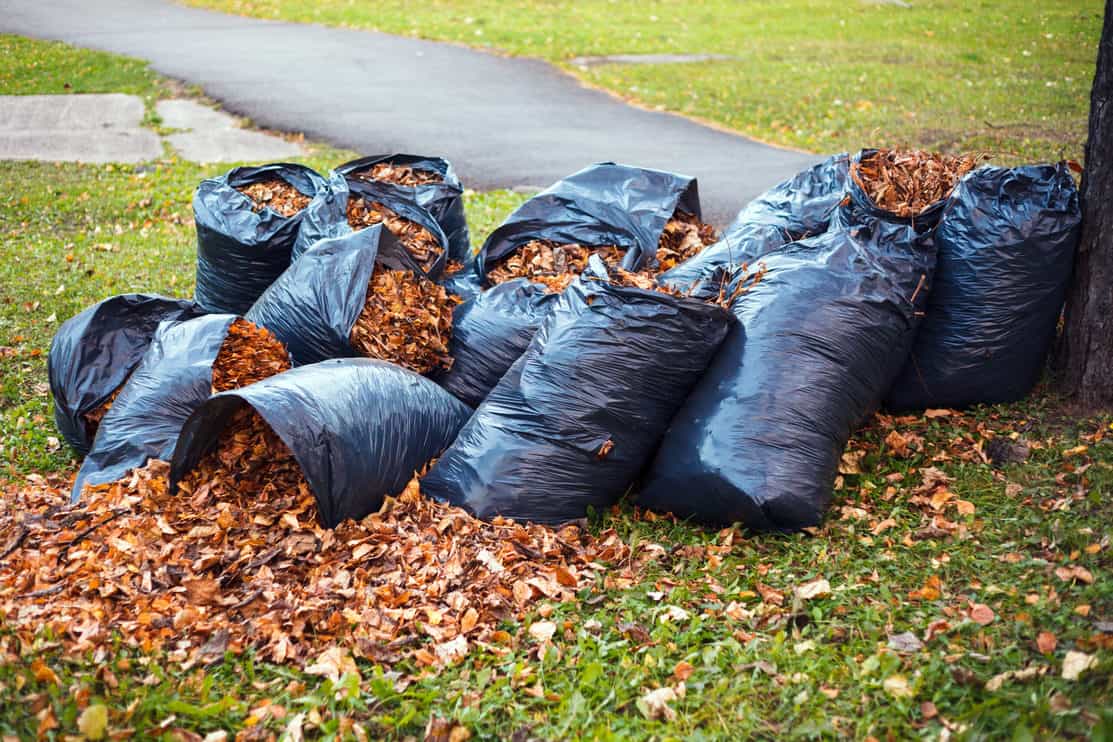
Chances are, you do not enjoy raking your yard (who does?) So when planning your landscaping, research trees that produce a lower mess. Trees that produce less mess are important for you as you will not be raking, cleaning pollen off your car, or cleaning your gutters often.

In truth, the dirtiest and messiest trees for your yard are sweet gum, ash, bradford pear, pecan, northern catalpa, cottonwood, hackberry, silver maple, weeping willow, southern magnolia, loquat, gingko and red oak trees. These trees either drop leaves, debris, pollen, and fruits in your yard.

Below is a list of trees that someone looking for a low-maintenance yard should not plant. These trees each have unique qualities and needs for care. While these trees aren’t bad to plant in your yard, they can be quite dirty and messy over time.

How Clean Are Sweet Gum Trees?
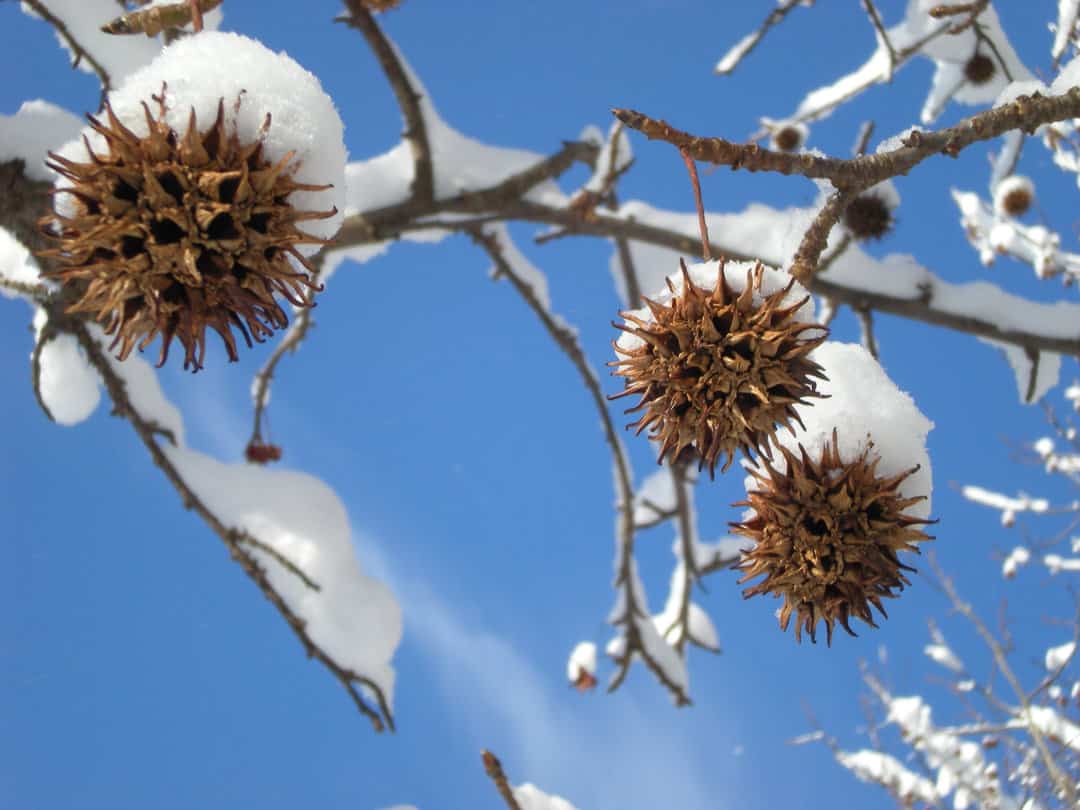
Sweetgum seeds on tree

Although this tree is exquisite to look at, it comes with a price. This tree produces a massive mess for you to clean up.

The seed pods of the Sweet Gum tree are tiny spiky balls. Native to Kentucky, this tree can grow to over 70 feet tall in full adulthood, meaning you will have a ton of tiny spiky balls haunting your yard.

These balls will not only cause you issues, but your neighbors may experience them as well. Sweet gum tree balls also hurt to step on if you walk outside barefoot.

The good news about this tree? There is a non-fruiting variety. This is great for you if you love the look but hate the clean-up!

Weeping Willow Trees Leave a Big Mess
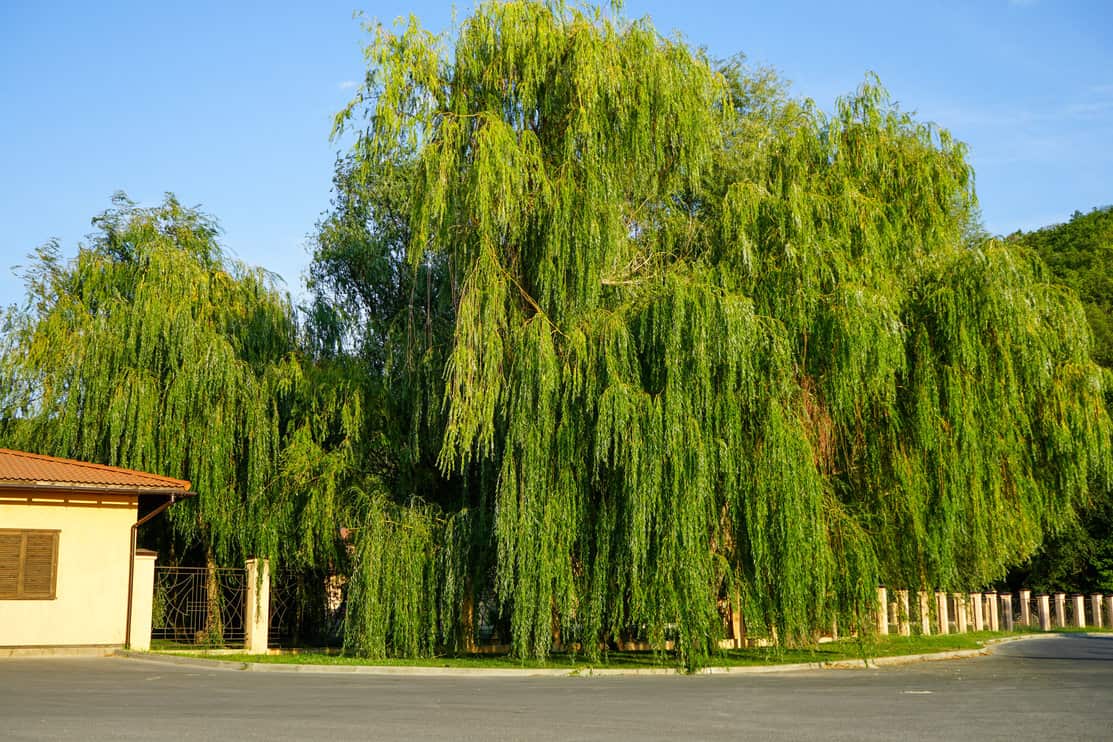
a large green crown of a weeping willow against a blue cloudless sky on a clear sunny summer day

This tree is single-handedly the worst possible tree to plant. Don’t get me wrong, the tree is beautiful, but it is a pain to maintain.

Willows are constantly shedding twigs, branches, and other debris. You will regularly have to clean up after a weeping willow. The main issue is the willow tree leaves. As they grow older, weeping willow trees shed more and more leaves, causing a bigger mess.

Another issue with the weeping willow is their love for the water. These trees will seek water out by any means possible and can compete with other trees nearby for resources.

They will rip up driveways, sidewalks, and anything in their path on their hunt for water. Their roots will tear up pipes and be overall destructive.

So overall yes, willows can be a dirty or messy tree if not maintained properly.

If you’ve ever wondered, you can learn more about the difference between willow and weeping willow trees here.

Are Ash Trees Dirty?
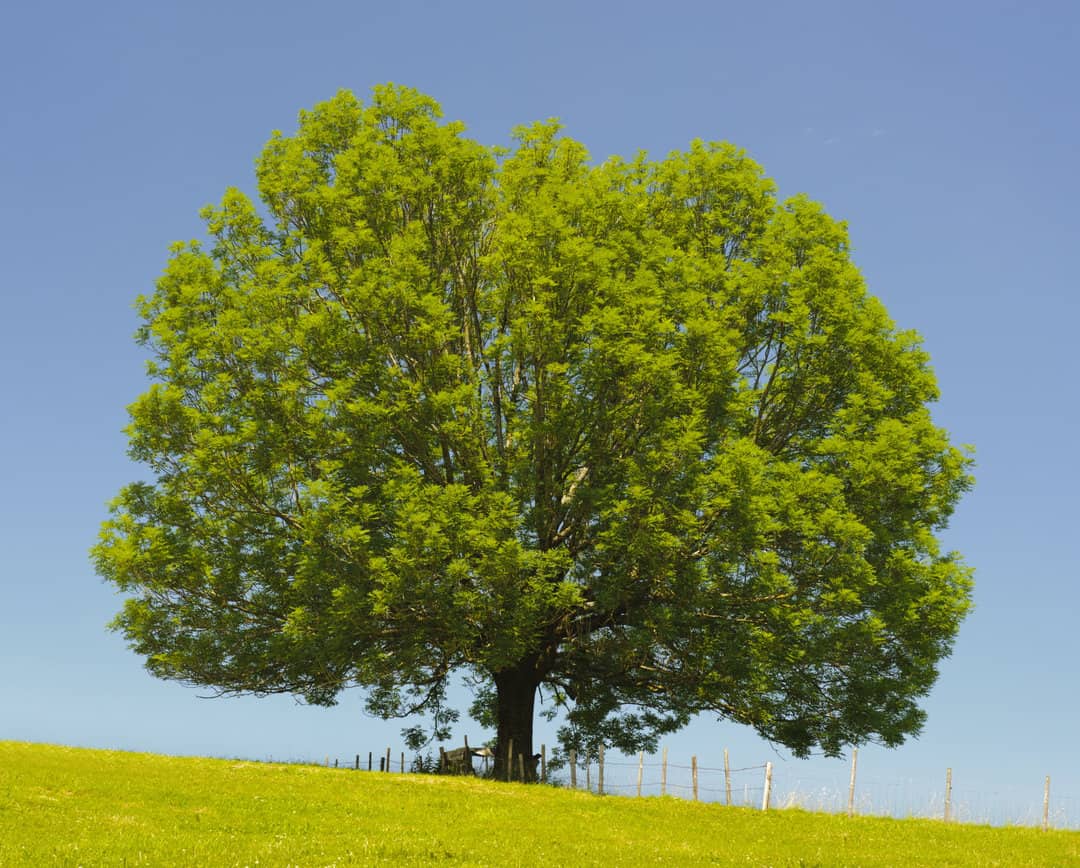
single ash tree

Ash trees are deciduous trees, meaning they shed their leaves in the fall. They grow to be well over 50 feet tall. That is a lot of leaves to fall! 

Not only do ash trees drop their leaves everywhere, but their seeds, often called samaras, are also a mess! Their winged seeds float in the air and land nearby the tree, causing a mess on your ground.

So, in all, ash trees are a somewhat dirty tree to just have out in the middle of your yard.

The good thing about Ash? You can make the wood into wonderful furniture. If you are an avid woodworker, definitely consider this tree!

Why Bradford Pear Trees Are Messy For Your Yard
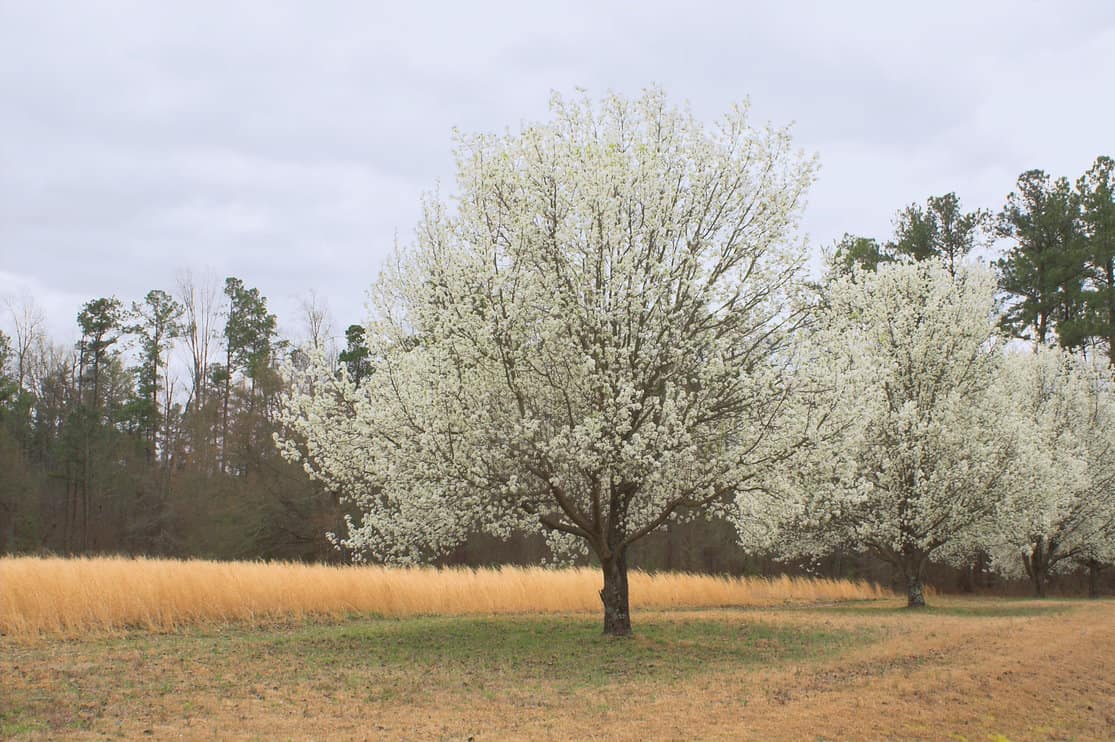
Bradford Pear Trees

Do you like pears? Do you want to grow pears? Well, this tree is not for you. The fruit it produces is inedible. 

These trees flower every year. Some say the flowers even stink. Those flowers turn into tiny fruit; however, you cannot eat them. Bradford pear trees also have extremely weak branches. So, you’ll have inedible fruit and a plethora of branches in your yard if you plant a bradford pear tree.

The bradford pear tree is an invasive tree and can wreak havoc with its roots in your pipelines. Your space is better taken up by a beneficial tree rather than this ornamental mess.

Their invasive nature makes them a real problem for landowners. These trees can cross-pollinate and when birds and other wildlife eat the fruit, they spread the seeds. Those trees invade land and cost money and time to remove.

Are Pecan Trees Messy/Dirty For Your Yard?
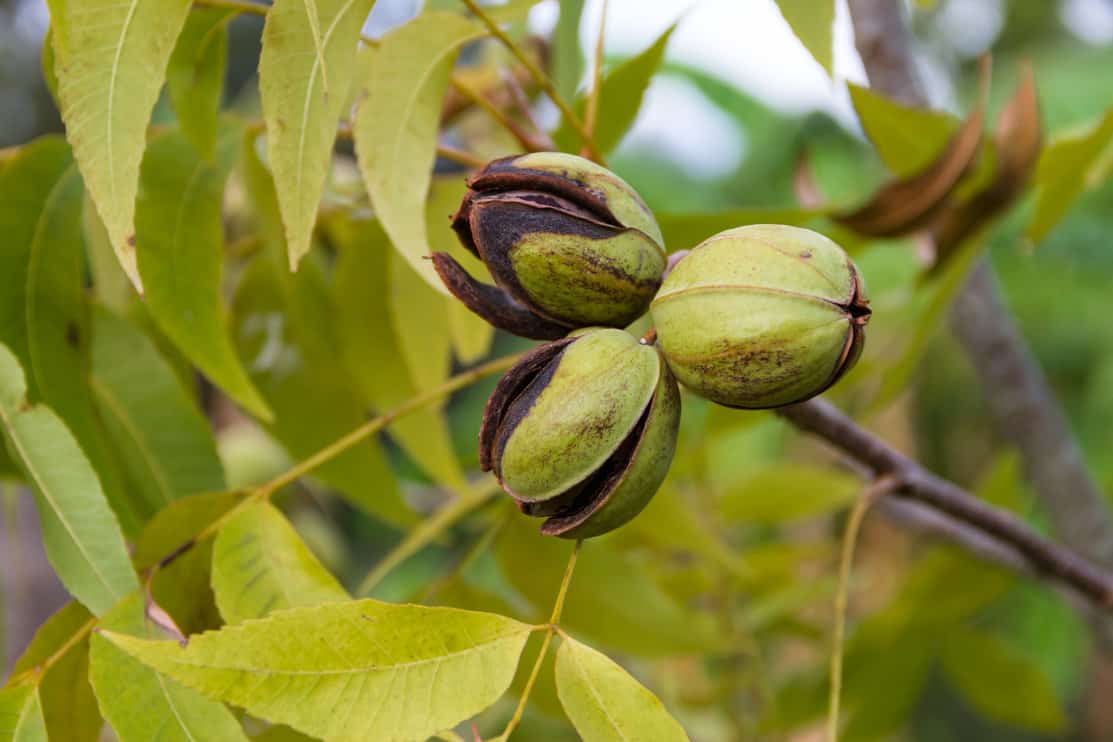
pecan nuts in the organic garden plant

Who doesn’t love a good pecan pie? Well, maybe some of those who grow pecans. 

Pecan trees can be messy trees to cultivate. This is because of the nuts that fall every year in the fall. When they drop these nuts, they can leave your yard in shambles.

When pecans fall off the tree, their casing comes off the nut first. If it is still green, it releases a brown dye and stains everything. Squirrels may also leave nutshells all over the yard. 

The wood is a top choice for smoking meat. Often the tree drops branches and leaves everywhere. For some, these branches are great. If you have no use for them, they can be a real pain. 

Northern Catalpas Are Messy Trees
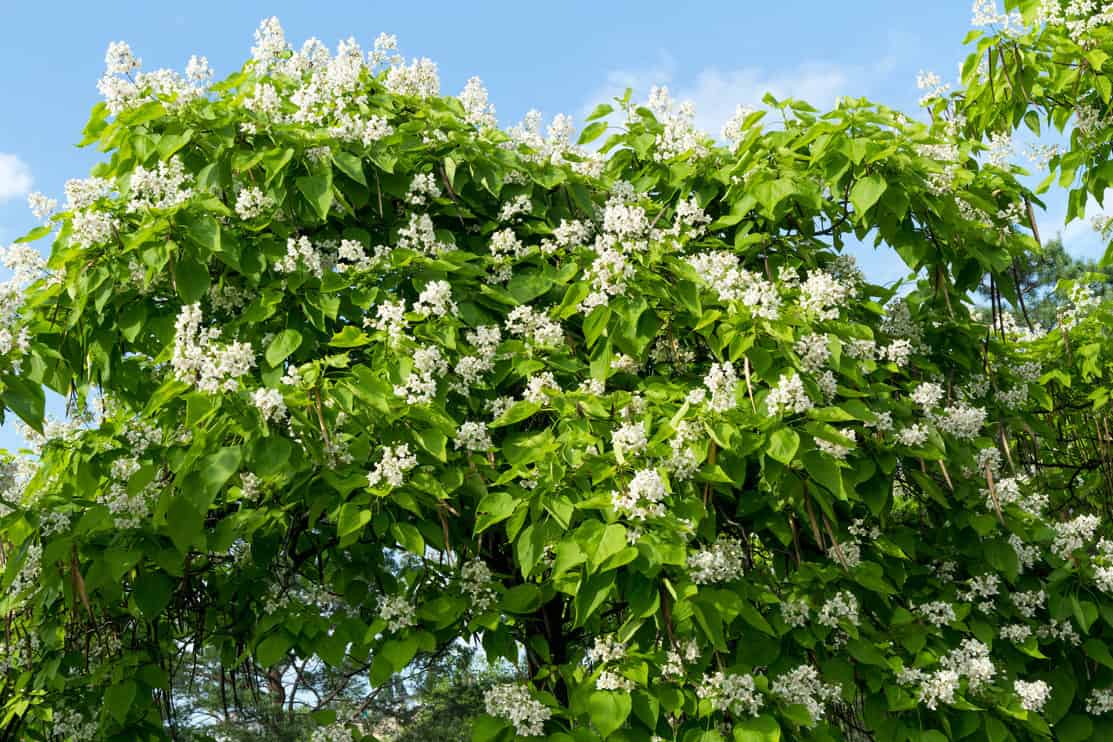
Catalpa speciosa white flowers and foliage.

This tree is a beautiful addition to any yard. It flowers yearly, giving your yard beautiful fragrant white flowers. It also grows to be 40 to 50 feet tall. 

This sounds like the best tree, right? Well, the catch is, northern catalpa trees are a mess. Those flowers and seed pods fall yearly, creating a lot of clutter you will have to clean up. These flower petals can be slippery when decaying as well. 

Another issue with this tree is its wood. The wood can be very brittle, meaning if you live anywhere with storms and most of us do, cleaning up fallen limbs will be necessary.

Why Are Cottonwood Trees Bad?
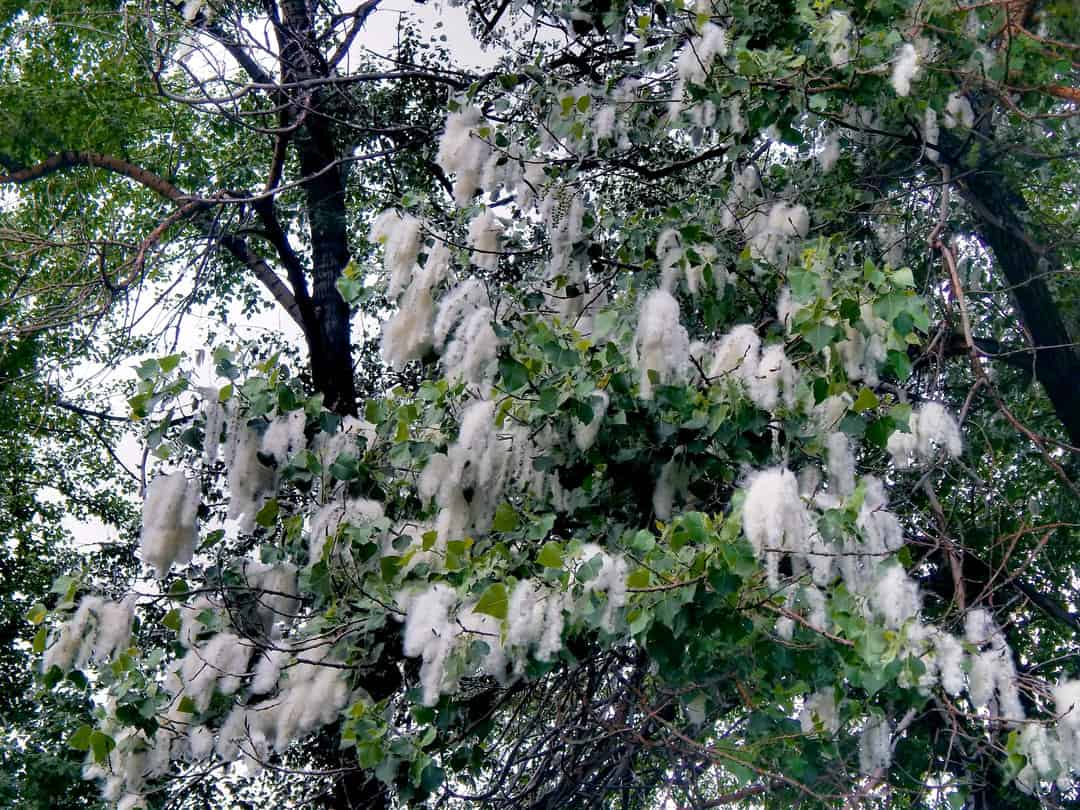
Season of flowering poplar fluff on a close-up branch

Cottonwood trees are a member of the deciduous family. They can grow between 50 to 80 feet tall.

The cottonwood tree’s fatal flaw: their cotton-like fibers. During late spring to early summer, these trees drop their cotton fibers. These are the seeds of the tree. These lead to an absolute mess in your yard.

Cottonwood tree seeds get everywhere, and I mean, everywhere! They go miles around the tree. Not only will it plague you with the white fluff, your neighbors will be too.

It is the glitter of the tree world!

Another major problem is these trees’ pollen. If you have hay fever: you will be miserable! 

Why Are Hackberry Trees Bad For Your Yard?
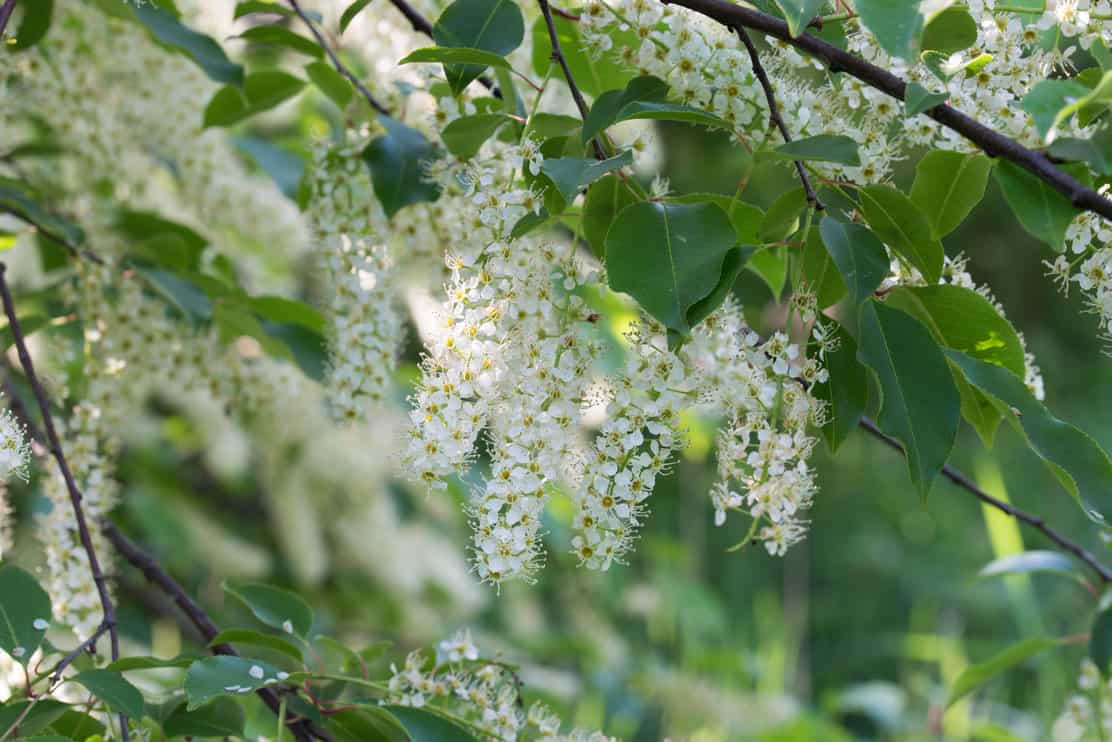
Prunus padus, bird cherry, hackberry, hagberry, Mayday tree white flowers

This tree produces fruits that are typically consumed by wildlife (bird cherry.)

The fruits of hackberry trees, when not consumed, will fall to the ground. They litter the area and rot, causing flies and other insects to appear. This leads to a very messy and dirty tree, which can attract unwanted wildlife to your property as well.

If wildlife is not your goal, this tree is not for you. Wild animals can cause problems for you and your family by making messes all over your yard.

Raccoons and bears would be the most prominent issue. Bears can knock over garbage cans, littering your yard with garbage. Not only will bears do this, but they also often break into cars. 

Silver Maple Trees Are Dirty/Messy For Your Yard
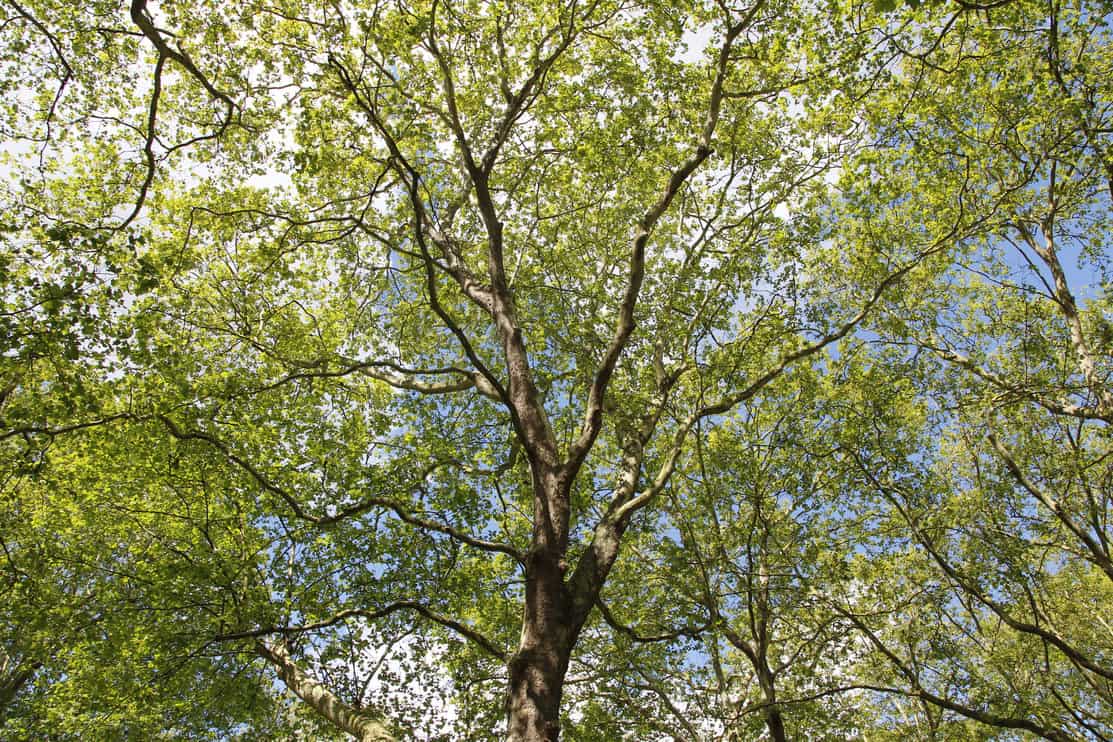
Spring view of Silver Maple Trees in a sunny day, Green Park, London

Silver Maple trees are known for their beauty. They make fantastic additions to landscapes. Their silver bark is a stark contrast to darker barked trees. 

However, Silver Maple trees have a fatal flaw. These trees are so resilient that their roots will tear up everything. They will rip up foundations of homes, sidewalks, and even sewer lines.

Fallen leaves are another concern, but this is common with any tree. You will need to rake often when leaves fall to the ground. These leaves can cause the grass to die and be a hiding spot for various species of wildlife.

On the bright side, silver maple trees can actually be tapped for maple syrup! You can learn more about tapping silver maple trees for maple syrup here.

Are Red Oak Trees Messy?
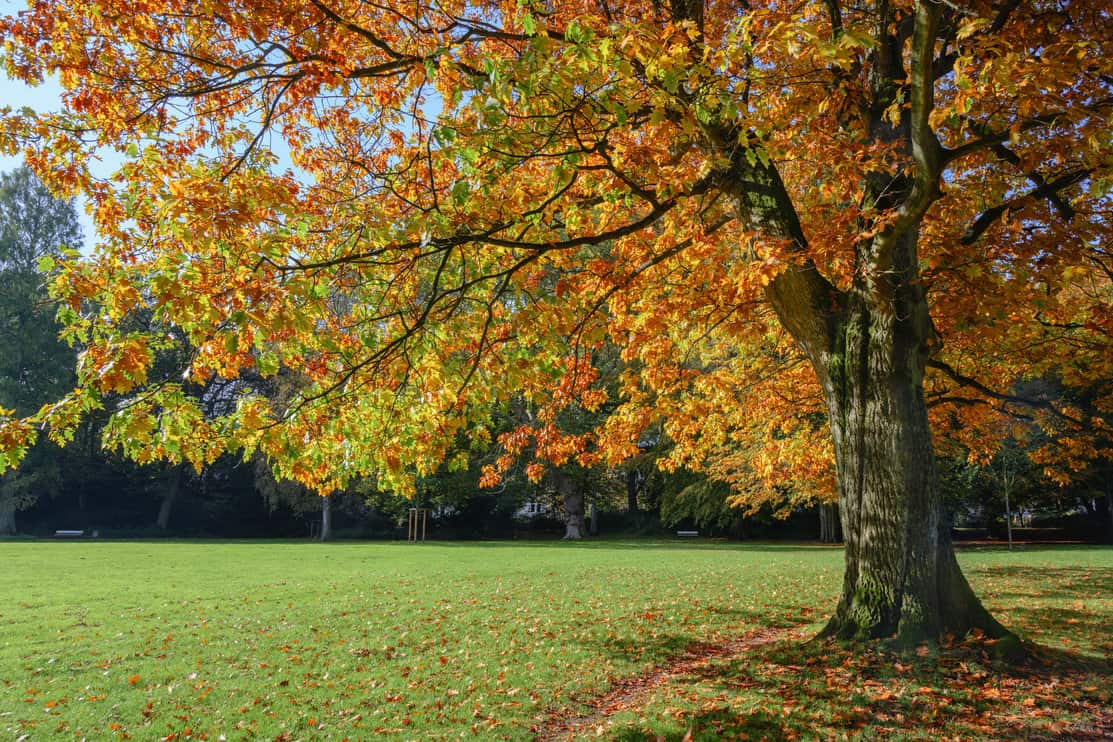
old northern red oak tree (Quercus rubra) with colorful autumn leaves in a park, seasonal landscape

These trees are in the oak family, and oak trees are, by nature, dirty trees. Everything they do makes a mess. 

First off, oak trees produce acorns. Acorns drop everywhere and squirrels eat them, leaving empty shells around. When squirrels bury the nuts, they sometimes sprout and cause trees to germinate in undesirable places. 

Oak trees produce pollen; this pollen coats everything in a yellow powder. Not only does the pollen get everywhere, the pollen often causes allergies. 

These trees lose their leaves every year. Which means, of course, the leaves fall and coat the ground. Leaves on the ground can kill your grass, so the only option is to rake them up. 

The leaves of a oak trees can actually get pretty big. Thus, you’ll have significantly more clean up to do once the red oak leaves fall.

Leaves, acorns, and pollen will clog your gutters. Not only that, but red oak trees are very large. If branches fall, they can cause major damage to vehicles and homes.

Again, this is the same with all trees. Are all trees dirty? to some extent, but red oak trees are pretty large on their own. You could similarly argue that every other oak tree is just as dirty, as well.

Red oak trees and white oak trees can cause some similar issues.

White Mulberry Tree Berries Can Leave Stains

mulberry berries

Mulberry trees are renowned for their delicious berries! These dark berries make tasty jams, pies, and other desserts. 

The downfall is these berries fall everywhere and stain everything. This becomes an issue if a mulberry tree is planted near your house or deck. Additionally, what doesn’t fall attracts wildlife. They also create a spreading forest of mulberries.

If you do not want a stained yard or a large population of wildlife, do not plant this tree.

Southern Magnolia Trees Can Be Messy
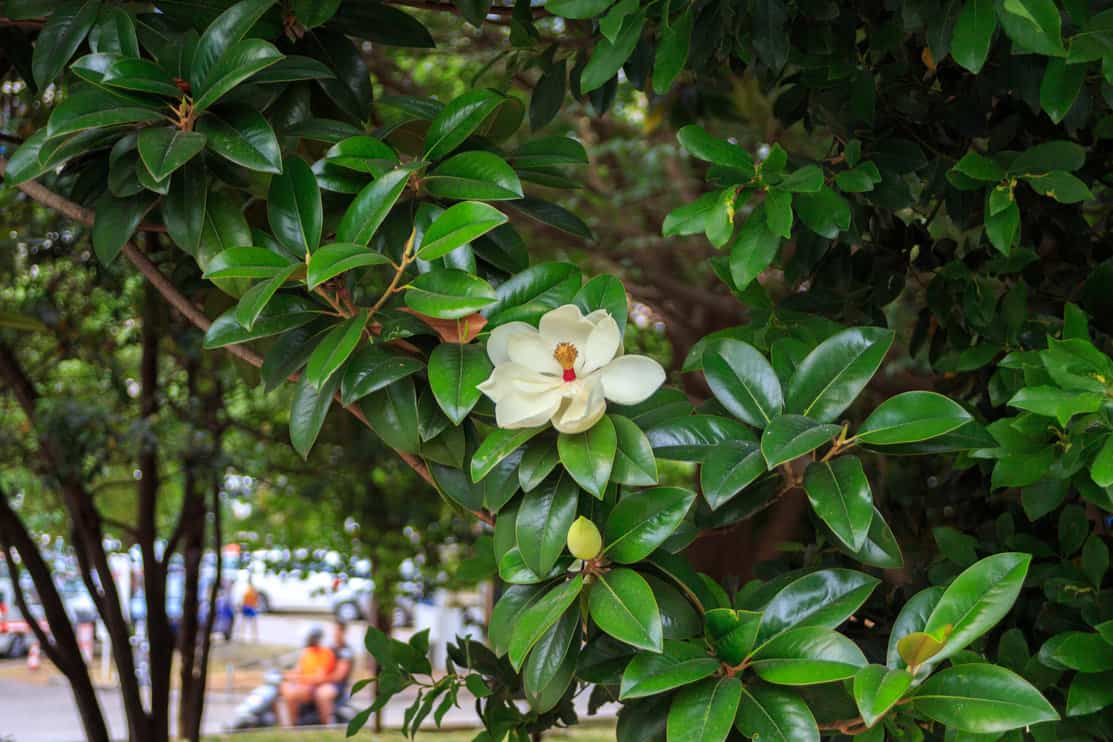
the Magnolia tree. Beautiful blooming white Magnolia flower on a tree with green leaves

Magnolias are a southern gem. When you speak to any southerner about these, they will rave about the flowers produced. The flowers smell divine. Southern magnolias are a favorite among tree enthusiasts and a Florida native.

Another thing a southerner will tell you, these trees are messy! Once the flowers die back, they leave these seed pods. These seed pods fall everywhere. Another issue is the leaves, like most trees, which will cover any plants or grass unless raked and removed.

Even though this tree is beautiful, it is a mess. Heed this warning before planting.

Loquat Trees Are A Mess
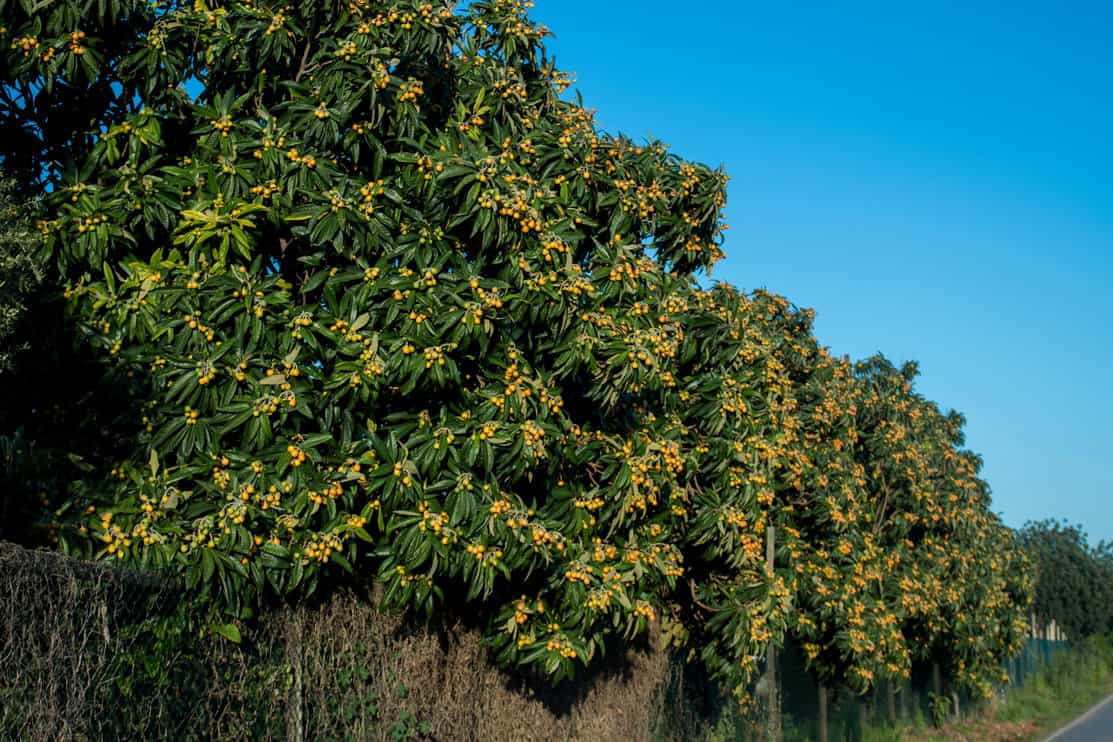
Vew of a loquat tree filled with fruits in spring season.

Loquat trees originate from China. These trees produce sweet fruit with seeds in the center. The loquat is a fruit loved by many.

Unfortunately, loquat trees are quite messy. The fruit has a thick skin that you must peel to enjoy it. The fruit that is not eaten drops to the ground. These fallen fruits will ferment. This creates a smell that attracts flies. It will make your entire yard smell unpleasant.

These fruits can also attract animals. Animals like raccoons love to make a mess of your yard over these delicious fruits.

Ginkgo Trees Are Very Messy For Your Yard
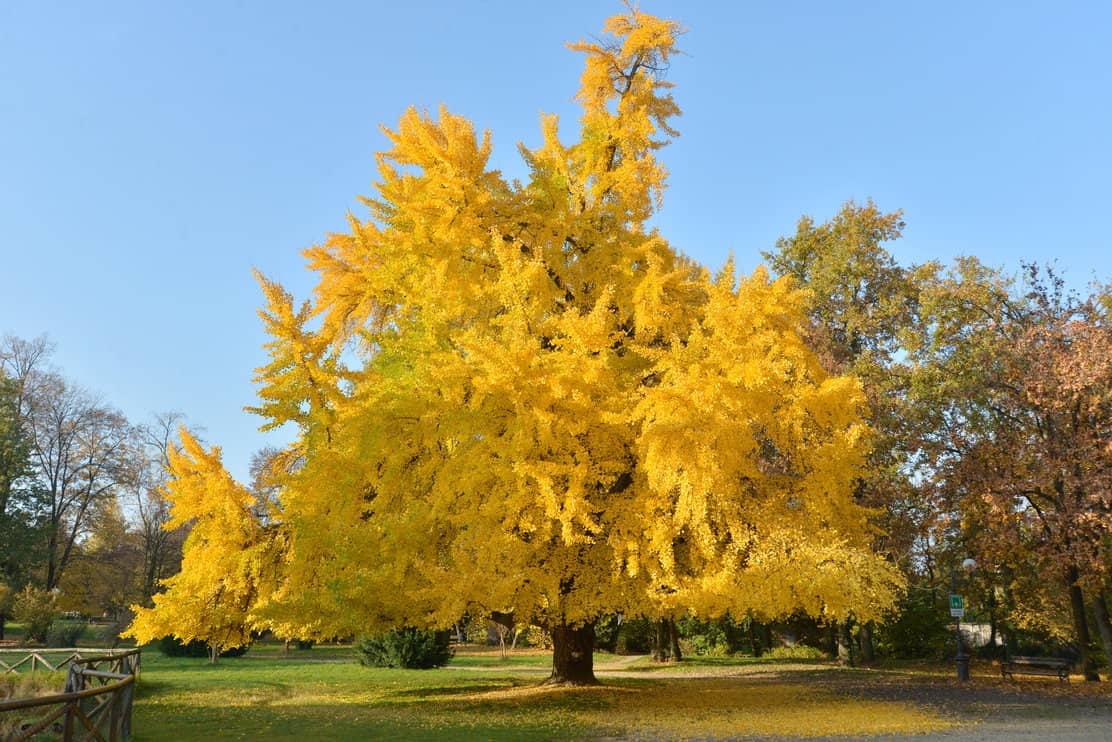
Large tree Ginkgo biloba in autumn

Ginkgo trees originate from Japan. These trees are dioecious, which means they have separate sexes. Most only plant male trees for their yards. 

If you end up with a female ginkgo tree, you are in for a real journey (pun intended.)

The female Ginkgo tree produces seeds. These seeds are covered in flesh and once they mature, they stink. Often this smell is described as having an odor similar to vomit. The cause of this is butanoic acid. Male ginkgo trees can actually turn into female trees on their own and produce seeds regardless!

If you do not want your yard to smell like vomit, avoid this tree at all costs. The ginkgo tree is in-fact one of the dirties/messiest trees for your yard.

How Do You Deal With Tree Droppings?

If you decide you want a tree that drops leaves, seeds, or any other debris, you may wonder how to clean it up. 

A good rake is necessary to pick up after your trees. For leaves, you can just use a leaf blower like the SnapFresh Leaf Blower. You cannot go wrong with the dual speeds, ergonomic design, and cordless capabilities!

However, when blowing leaves do not blow them into the street as it can create a hazard for motorcyclists. 

Another valid option is to hire a lawn care service. Typically, these services charge extra for leaf pickup. Most, however, will run over tree droppings with their mowers.

An option for nuts is a collector like the Large Nut Gatherer, which is easy to operate, ergonomic, and comes with a storage bag for the nuts you pick up. These work great for collecting up any nuts that drop. This tool will even work for pine cones and pine cone-like debris. 

Having animals like goats will help pick up debris off the ground. Goats love oak trees and will eat fallen leaves and acorns.

How Do You Stop A Tree From Dripping Sap?

The truth about trees dripping sap, often, it isn’t even sap. Most trees do not produce sap. If they are dripping something that looks like sap, it is probably honeydew.

Mostly, honeydew is caused by pests. Pests include:

  • Aphids
  • Lace bugs
  • Cicadas
  • Scale

Knowing pests is important in preventing an infestation. The best way to prevent infestations is to get ahead of the bugs.

Diatomaceous earth and Neem oil are fantastic ways to deter insects. Commercial sprays like the Bonide (BND204) – Fruit Tree Spray Concentrate are effective ways of treating infestations. This spray contains insecticides, fungicides, and many other pest repellants. 

What Can I Do With Tree Droppings?

So, what if you already have some of these trees that constantly drop things into your yard? Well, here’s a few simple tips.

Repurpose Fallen Tree Acorns

Sometimes, fallen leaves, nuts, and branches are a blessing in disguise. You can collect these items and use them for various things around the home. 

One use for nuts from your trees is cooking and eating. Some use acorns to produce flour. These flours can be a great alternative used for baking or arts & crafts!

Check out our guide for 9 amazing fallen acorn uses!

Use Fallen Leaves For Compost

Now, instead of blowing away the leaves, there’s another option.

You can use leaves in your compost. This will help provide the brown and green material you put in. Compost is important for everyone as it is useful in multiple ways for your various plants!

Repurpose Fallen Tree Limbs And Branches

Limbs and branches are species-dependent. Some, like oak and pecan trees, work great for smoking meat! You can use others inside garden beds under the soil to help feed your plants. 

Another cool use for branches and other debris is making your own decor. Many crafty people use natural items like pinecones to make crafts. This can be a fun way to upcycle your yard debris!

That’s All For Now!

Personal preference is the crucial deciding factor in all landscaping matters. No two trees are alike, just as no two people are alike. 

The way you think and work should drive the species you choose. It is not a tree’s fault your yard is dirty. Choosing the landscape that optimizes your lifestyle is the best method for you.

Choosing fruit trees based on taste helps eliminate fruit waste and mess. Thorough research is key to not making mistakes when deciding what trees to plant. While many trees are perfect for everyone, these just aren’t.

While a lot of these trees are beautiful, a fatal flaw of many of them is the amount of debris they drop. Understanding yourself is important to landscaping. Choose trees that fit your lifestyle overall. 

Trees are expensive, so planting ones you will ultimately hate is a mistake nobody wants to make. Some of these trees also have unique care properties not fit for those who hate maintenance. 

Landscape according to your time, taste, and goals for your yard. A well-landscaped yard with the proper trees can be your personal oasis. I would hate for you to regret any tree choices!

References 

Gabriel, W. J. (1990). Acer saccharinum L. Silver maple. Silvics of North America2, 70-77.

Martin, P. (1983). Factors influencing globe huckleberry fruit production in northwestern Montana. Bears: Their Biology and Management, 159-165.

Jul 21, Factsheet | HGIC 1032 | Published:, and 2014 | Print. “Ginkgo or Maidenhair Tree.” Home & Garden Information Center | Clemson University, South Carolina, 2014, hgic.clemson.edu/factsheet/ginkgo-or-maidenhair-tree/. Accessed 7 Nov. 2021.

“Magnolia Grandiflora (Bull Bay, Large Tree Magnolia, Southern Magnolia) | North Carolina Extension Gardener Plant Toolbox.” Plants.ces.ncsu.edu, plants.ces.ncsu.edu/plants/magnolia-grandiflora/.

“Salix Babylonica (Weeping Willow) | North Carolina Extension Gardener Plant Toolbox.” Plants.ces.ncsu.edu, plants.ces.ncsu.edu/plants/salix-babylonica/.

Tapping trees for maple syrup is a fun early spring activity. Many different kinds of trees can be tapped for maple syrup. In fact, any deciduous tree can be tapped for syrup. However, some trees produce better quality sap than others. Let’s go over the best trees to tap for delicious maple syrup!
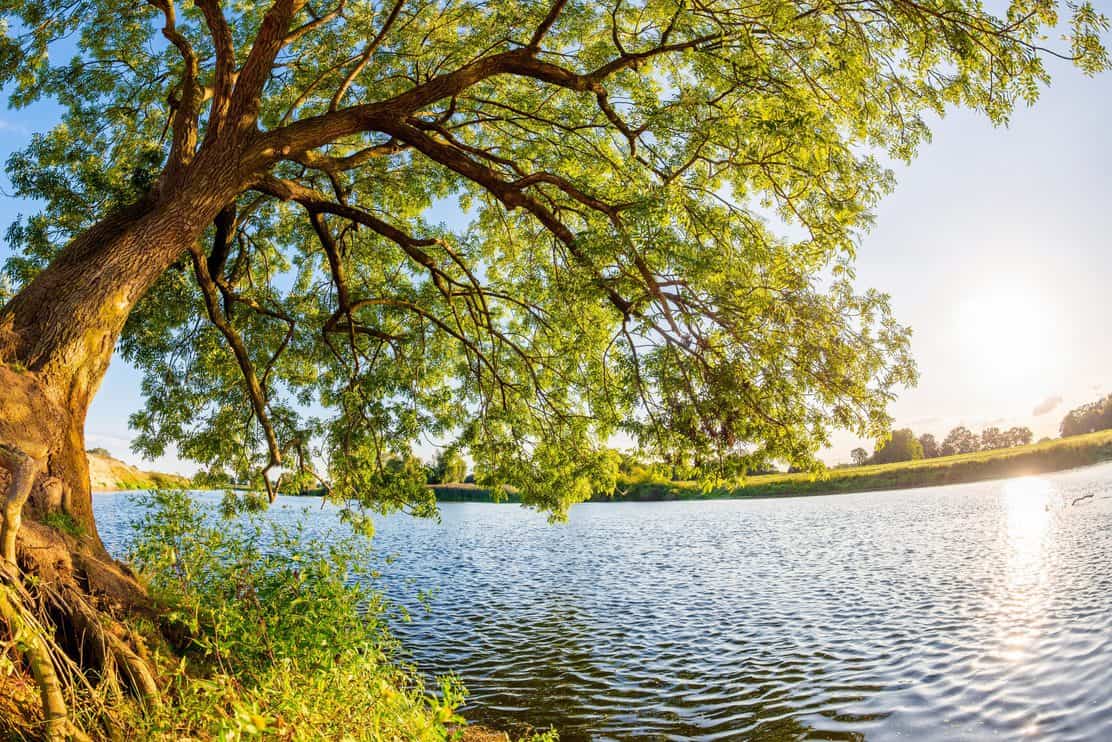
Some of the best trees that can be tapped for syrup are sugar maples, black maples, red maples, Norway maples and silver maples. Each of these trees has different sugar content in its sap resulting in a sweeter or more dry syrup. Sugar and red maples have the sweetest sap for syrup.

Read on for more information about what trees you can tap for maple syrup, how to find these trees, and how to tap them for sugaring that will yield the most sap and do the least amount of harm to the tree.

The Best Trees For Maple Syrup

Almost any leafy tree can be tapped for its sap, but certain trees have sap with higher sugar content, making them more ideal for tapping. Below are some of the BEST trees for making maple syrup. 

The sugar content of the sap affects how much sap you will need to produce a sweet syrup. Trees with higher sugar content can yield more maple syrup with less sap.

Sugar Maples Provide The Sweetest Syrup

Maple Sap Dripping into a Bucket

The sugar maple has the highest concentration of sugar in its sap, as its name implies. The sugar maple is native to North America and loves the sun and well-drained soils. The sugar maple will grow in partial sun but prefers areas where it can sunbathe just about all day!

This tree grows at a medium rate, tacking on about 12”-24” each year. The sugar maple can be identified by the color of its leaves, which are dark green on one side and a lighter green on the underside. In the Fall, their leaves will change to gorgeous yellows, oranges, and reds.

You can also look at the shape of the leaves along with the color to identify a sugar maple. The leaves contain three to five lobes and have smooth edges in between them.

Black Maple Trees Produce Less Sap Than Sugar Maples

The black maple tree is native to the Central and Eastern United States. This tree is fairly common and grows at a medium rate of 12”-24” per year. Black maples can grow to be between 60-80 feet tall at their full maturity.

Can you tell the difference between oak and maple trees? If not, here a great article to help.

The biggest difference between sugar maple and black maple can be identified by the leaves. The black maple has three lobes that seem to droop and sag, whereas a sugar maple more often has five firm-standing lobes on its leaves. 

The leaves of a black maple tend to have longer leaf stalks, a dark green color all around, and turn a bright yellow in the Fall. Black maples and sugar maples have similar sugar content in their sap, so consider yourself lucky if you have either one in your backyard!

Red Maple Trees Have Brilliant Red Leaves

The red maple tree grows in Eastern and Central North America, growing as far north as Quebec and as far south as Texas and Florida. The red maple is most famously known for its brilliant red leaves and is the most common tree in Eastern North America.

Here are a few tips for growing and fertilizing maple trees.

Identifying the red maple is fairly easy. You can pick this tree out from other maples by its reddish twigs and five-lobed leaves with segregated edges. The red maple is used for maple syrup production on a smaller scale than some other trees that can be tapped for syrup. 

The University of Maine, in a fact sheet from its Signs Of The Seasons: A New England Phenology Program, notes that the most obvious way to identify a red maple is that it has five lobes that reach out from the center, closely resembling how fingers extend from the palm of a hand.

One of the reasons the red maple is among the most common trees is because it’s not too picky about where it grows. The soil conditions can vary widely and it’s not too bothered by sun or shade. At its mature height, you can expect a red maple to be anywhere from 90’-120’.

Norway Maple Trees Have Five Wide Lobed Leaves

Autumnal foliage of Norway maple against blue sky

Norway maples are deciduous trees that are considered invasive. These trees can be seen as a problem because they can grow at a faster rate than some other native trees and take over areas. They’ll elbow out other maple trees with their shade tolerance, and in turn, block the sun from smaller trees.

Because they can grow in so many different conditions, these trees are often found in urban areas where their shallow root structures can still grow. You can identify a Norway maple by its wide, five-lobed leaves. However, if you look at the bark this will provide you with more clues to identification as the bark of a Norway Maple is a grayish-black color and has a furrowed texture. 

In the Fall, Norway maples are pretty lame. Unlike sugar, black, or red maples, a Norway maple does not change colors. Instead, their leaves tend to develop dark spots and fall to the forest floor before they get a chance to change colors.

Silver Maple Trees Have White Coloring Underneath Their Leaves

Silver maple trees can grow in many different types of soil and can survive through some periods of drought. These trees grow best in slightly warmer climates in the United States and Canada. 

A lot of maple leaves look the same, but our silver maple has a distinguishing feature that you can use to identify it! Although it is light green on top, just like other maples, the underside of the leaf is white. Additionally, you can look for five deep, sharp, and segregated lobes to confirm your observations. 

The bark of silver maple is grayish in color, but its leaves, with their white coloring underneath, are their biggest identifying factor. 

Silver maple trees can grow from 50’-80’ high and is one of the fastest-growing of all the maple trees. Some trees can reach 50’ in only 20 years of growth!

Where To Find Trees For Maple Syrup

Any species of maple tree can be tapped for syrup, along with some other non-maple trees, such as birch trees or black walnut trees. These trees, which have over 125 different species, can be found in different areas of the world, are commonly native to Asia, and can be found in different areas of Europe, as well as Northern Africa and North America. 

While maple trees can be found in many different places,  maple syrup production, as well as the trees that are tapped for their sap to make maple syrup, is located primarily in Southeast Canada and the Northeast United States. 

Trees should be tapped for maple syrup at the tail end of winter and the very beginning of spring for the best results. However, if you are planning on tapping trees for sap, you will want to start finding and identifying trees in the Fall. 

Fall is the best time of the year to find and identify trees for tapping. Why? Imagine trying to identify a maple tree by its leaves in the winter…there are no leaves! So, save yourself the hassle and plan ahead by scoping out trees in the fall.

How To Identify Trees For Maple Syrup

sampler of pure maple syrup (golden, amber and gold) - small glass bottles against rustic wood

Once the leaves of the deciduous trees start to change color in Fall, it’s time to head out to identify trees that can be tapped for maple syrup. 

Bring a tape measure, something to mark the trees with, and a notebook to make notes on where the trees are. Or if you’re into futuristic stuff, you can document the trees you identify and their location with your phone. 

Identify Maple Syrup Trees By Their Leaves

If you are identifying trees to tap for syrup in the fall you will have the advantage of using the different color leaves to help with identification. You can use a field guide like this Guide To Maple Tapping: A Tree To Table Handbook For The Maple Tapper to help you identify the trees, tap them, and even learn to process the sap into syrup. 

You can also use an app on your phone to help you identify trees by the shape and fall coloring of their leaves.

You will also be looking at the shape of the leaves to identify which trees you want to use for tapping. Some maples will have three lobes, while others will have five. The edges of maple leaves can also be jagged or smooth. A good guidebook will help you identify the different leaf shapes. 

Make Sure The Maple Syrup Tree is 10 Inches Wide

Once you identify a type of tree that can be tapped for maple syrup, you will want to measure it to make sure it is tall enough and wide enough.

Measure the tree to be sure it is at least 10 inches wide. Next, you will want to measure that the tree is at least 4 feet tall from the ground. 

While 10 inches is the most commonly recommended width for tapping a tree for sap, the University Of New Hampshire’s article, Maple Syruping Tips For Beginners And Backyard Maple Sugar Producers notes that a tree should be no smaller than 12” in diameter to be tapped. 

Measuring the trees to confirm that they meet these initial requirements will help you choose trees that are both mature enough to give sap and are mature enough to withstand the process of taping without taking too much damage. 

Does Tapping For Syrup Hurt The Tree?

Tapping trees for syrup can harm the tree, but if you follow a few rules, the damage is minimal and heals over time as the tree grows.

First, you only want to tap a tree for syrup that is over four feet high and 10 inches around. Attempting to tap anything smaller and you could kill the tree. You will also want to use only one tap per tree. This yields the most sap and causes the least damage to the tree.

Finally, the time of the year you tap the tree is important for both retrieving the most sap and for preventing damage to the tree. Tapping the tree for sap when it is still freezing temperatures or below at night and slightly warmer during the day will give you the best results.

The Best Time To Tap Trees For Maple Syrup

Three pails attached to a maple tree to collect sap. Maple syrup production, springtime in Quebec.

The ideal time of the year to tap trees for sap that you can turn into maple syrup is in the late winter, as soon as the season is about to turn to spring. More specifically, you will want to tap a tree when the nighttime temperatures are still freezing (at or under 32 degrees) and the day temperatures are a bit warmer.

The ideal temperature to get the sap flowing is when it is 20-32 degrees at night and no warmer than 40 degrees in the day.

When you tap the trees in warmer temperatures, the hole from your tap cold close up. When this happens you would have to re-tap the same tree, which is when you can start to cause damage. 

You can tap maple trees with simple equipment you may already have, or you can buy a Maple Syrup Tree Tapping Kit to get started.

Wrapping It Up!

Tapping trees for sap and making maple syrup is an old tradition that still remains popular today. When done correctly, you can tap maple trees for sap over a long period. The first step in sourcing trees for tapping is to learn what types of trees are best for making syrup.

Next, you will want to identify the trees that you want to tap. Following the steps above will help you get started with this much-loved early spring tradition of tapping maple trees for sap and making your own syrup.

References:

Copenheaver, Carolyn A., et al. “Decreased radial growth in sugar maple trees tapped for maple syrup.” The Forestry Chronicle 90.6 (2014): 771-777.

Ouimet, Rock, et al. “Effect of tapping for syrup production on sugar maple tree growth in the Quebec Appalachians.” Trees 35.1 (2021): 1-13.

Van den Berg, Abby K., et al. “Growth rates of sugar maple trees tapped for maple syrup production using high-yield sap collection practices.” Forest Science 62.1 (2016): 107-114.

One of the most incredible things about cherry trees is their blooms; you really don’t want to miss them! Cherry blossom trees bloom right at the beginning of spring with incredible shades of pink blooms. Did you know you can get arrested for picking cherry blossoms? 

Cherry blossom trees typically have an incredibly short blooming season, lasting only between early March and even into April for up to a ten-day period. During this time, cherry blossom trees do smell when in bloom. The blooms and their flowers give off a very faint scent of vanilla, lilac and rose.

Below, we’ll go into details about cherry blossoms and their scent. Stick around to learn some facts about cherry blossoms that we bet you didn’t know! Here are nine facts about cherry blossoms:

Cherry Blossom Trees Are Ornamental

Cherry blossoms are considered flowering cherries or ornamental cherries, meaning they usually do not produce fruit and are grown for their incredible, luscious blooms. They are typically found in northern temperate regions, such as in the mountains of the Andes in South America, as well as Southeast Asia. 

They belong to the genus Prunus, which in Latin means plum or cherry tree; this genus includes more than 600 species of stone fruit trees and shrubs, including cherries, plums, apricots, nectarines, almonds, and peaches. 

Most cherry trees have a short lifespan between 15-25 years, occasionally 25-50 years. Additionally, cherry blossoms only bloom for several days up to 10 days, right at the beginning of spring, so the window to see them is very small!

Cherry Blossom Trees Have A Faint Smell

Cherry blossoms (sakura)

Cherry blossoms are known to have a very faint smell. Most of the time, if you walk past them, you won’t really smell much of anything, except maybe the slightest sweet smell. It is said to be comparable to an exceptionally faint smell of lilac. 

Another fruit tree, the pear tree, emits an awful smell. If you have ever seen these trees with white blooms, you have probably gotten an accompanied whiff of dead fish. But as for the cherry tree, it is probably more likely that you won’t smell anything.

Washington DC Has Its Own Cherry Blossom Festival

Did you know that you can get arrested for breaking off a branch or flower on cherry blossoms? Yep! That’s right! In Washington DC, it is considered vandalism of federal property, resulting in a citation or even being arrested!

But besides that, every year, in March through April, Washington DC has its National Cherry Blossom Festival. It celebrates and honors the relationship and cultures between America and Japan and the gift of 3,000 cherry trees given to Washington DC by Mayor Yukio Ozaki of Tokyo in 1912.

What a wonderful celebration!

Cherry Blossoms Only Bloom For Up To 10 Days

Cherry blossom bloom periods vary from year to year and are dependent upon the weather. The peak bloom lasts only for a few days, so if you want to see cherry blossom trees blooming, don’t put it off. 

Typically, cherry trees bloom in early spring, around March and April. However, in Japan, they can bloom as early as February, which is also the official beginning of spring in the Japanese calendar.

Cherry blossoms, once at full bloom, only last for about a week and occasionally up to two weeks. Generally, they bloom for ten days. After this period, the petals begin to drop, and green leaves begin to appear. Cherry trees need approximately a month of weather below 41 degrees to bloom properly. 

As temperatures continue to increase and get warmer earlier in the year, the cherry tree blooms periods vary, making it increasingly more difficult to predict. As of this year, April 2021, Kyoto, Japan, had the earliest cherry tree bloom in 1,200 years!

Macon, Georgia Is The Cherry Blossom Capital Of The World

Macon, Georgia, is considered the Cherry Blossom Capital of the World, with over 350,000 Yoshino cherry trees. Although Washington DC is home to an array of cherry trees, Macon has 90 times more cherry blossom trees than DC! 

Every year Macon, Georgia, hosts the International Cherry Blossom Festival in late March. The festival would not have been possible without William Fickling Sr., who discovered the exact same tree in his Georgia backyard, that he saw in Washington DC during a business trip in 1952.

The Cherry Blossom Festival did not begin in Macon until 1982, which was created by Carolyn Cayton to honor William Fickling.

However, cherry blossom trees can still be enjoyed around the world! This includes Washington DC, New York, Japan, Paris, Hamburg, Vancouver, London, and more!

Cherry Blossoms Are An Integral Part Of Japanese Culture

The annual March Wuling Farm s cherry blossom season, Wuling cherry varieties based on color pink flowers form large cherry Pretty in Pink P hybrid cv - Pink Lady for Lord

Cherry blossom trees, known as sakura, in Japan have a unique place in Japanese culture.

Spring officially starts in February, according to the traditional Japanese calendar. This also happens to be the beginning of plum blossom blooms. Soon after, cherry blossoms begin to bloom. 

In Japanese culture, cherry blossoms represent renewal, being in the moment, and the beautiful fleeting impermanence of nature. Hanami, known as flower watching, has traditionally been set aside during ancient periods for observing the cherry blossoms.

Cherry Blossoms Are Susceptible To A Variety Of Diseases

Unfortunately, flowering cherries are susceptible to a host of diseases and pests.

Some concerns for flowering cherries:

  • Cherry brown rot causes defoliation, branch dieback, and blossom blight.
  • Cherry bark tortrix is actually a moth, but the damaging stage is the larvae, which bore into the trunk of the tree, causing branch dieback.
  • Shot hole disease is a disease caused by a beetle called the shothole borer. It lives in between the bark and the outer layer of wood of the trunk. It is the cause of this fungal disease that causes leaf drops and cankers. The Kwanzan cherry is resistant to this disease.
  • Cherry leaf spot is another fungal disease, causing leaf chlorosis, i.e., a lack of chlorophyll causing yellowing of leaf tissue and premature defoliation. The Kwanzan cherry is moderately resistant. However, the Yoshino and Okame cherry trees are susceptible to cherry leaf spot.

The best management of disease resistance and infection is to plant disease-tolerant cherries like the Kwanzan, Prunus serrulata, or the Autumnalis, Prunus subhirtella, Akebono cherry, Prunus x yedoensis, Pink Flair® cherry, Prunus sargentii’ JFS-KW58′.

Cherry Blossoms Have A Short Lifespan

Beautiful yoshino cherry blossoms sakura (Prunus × yedoensis) tree bloom in spring in the castle park, copy space, close up, macro.

Cherry blossom trees, Prunus spp., are arguably some of the most beautiful flowering trees. Cherry blossom trees are considered ornamental flowering fruit trees, meaning they do not bear fruit like regular cherry trees. 

As such, they have a shorter lifespan, too.

They bloom in early spring with a range of white to pink shades of flowers. Although the size, growth rate, and age range for individual cherry blossoms, we’ve got some of the most common cherry blossom trees you may have heard of or seen and their lifespan too!

If you’re interested, you can check out our piece on the lifespan for common oak trees here.

Yoshino Cherry Blossom Tree, Prunus x yedoensis

Although native to Japan, the Yoshino cherry is a common specimen tree in landscaping. It is prominent in New York City and Washington DC. Unfortunately, this tree has a short lifespan of only 15-20 years. 

The Yoshino cherry grows 40-50 feet tall and wide, growing 1-2 feet per year. It has a beautiful round shape and spectacular white and pink blooms that are said to be quite fragrant. This tree does well in fast-draining acidic soil and needs full sun or partial shade. It is not drought, heat, or humidity tolerant but can easily grow in zones 5-8.

Okame Cherry Blossom Tree, Prunus x incamp ‘Okame’

The Okame cherry is a fast-growing hybrid cherry. This tree was created to be significantly cold tolerant than its one parent tree, Prunus incisa while maintaining the hot pink and red flowers of the other parent tree, Prunus campanulata.

Okame cherries need full sun but can tolerate light shade. Although it prefers moist, well-draining loamy soil, they are able to grow in all soil types. This gorgeous cherry grows in zones 6-8 and 15-25 feet tall; unfortunately, this cherry blossom also only has a lifespan of 15-25 years.

Akebono Cherry Tree, Prunus x yedoensis ‘Akebono’

The Akebono cherry has a very similar growth habit to the Yoshino, with gorgeous and slightly more double pink blooms. It grows to about 25 feet tall and wide and does exceptionally well in the Pacific Northwest. It grows well in zones 4-8 and is extremely cold hardy.

The Akebono cherry blossom tree typically lives around 15-20 years.

Weeping Higan Cherry Tree, Prunus x subhirtella ‘Pendula’

The weeping cherry is probably my favorite of all cherry trees. Once you see one in all its glory, you might feel the same! It has the beauty of a cherry and the delicacy of a weeping tree.

The Higan cherry grows 20-40 feet tall and wide, with showstopping cascading branches full of white, pink, or even dark pink flowers. It does best in well-draining soils but can adapt to all soil types and grows well in zones 4-9, preferably zones 5-8. It has a short lifespan compared to other species of trees, but with a lifespan of 25-50 years

The weeping cherry is much longer than most cherries! It can even continue to live significantly longer, even up to 100 years or more. Higan cherries are considered to have good disease resistance.

Autumnalis Cherry Tree, Prunus subhirtella ‘Autumnalis’

The Autumnalis Cherry is a fast-growing tree, growing more than 2 feet per year! Its blooms begin in a dark pink when the bud first appears and open as light pink, and then to almost white. It is cold, hardy, heat, and stress-tolerant. It will have a sporadic bloom in warm fall weather and grows well in zones 4-8. 

Pink Flair® Cherry Tree, Prunus sargentii ‘JFS-KW58’

The Pink Flair® cherry has exceptional cold hardiness, drought tolerance, and heat tolerant. It is a more compact, upright growth habit and is incredibly disease-resistant. It grows to a height of 25 feet and a width of 15.

The Pink Flair® cherry tree has one of the longest cherry tree lifespans, lasting up to 50 years!

Kwanzan Cherry Blossom Tree, Prunus serrulata’ Kwanzan’

This cherry is commonly planted with Yoshino cherry blooms and grows up to 30-40 feet tall and wide. The Kwanzan cherry is also short-lived, with an average lifespan of 15-20 years. It does not do well in coastal areas and requires full sun. 

The Kwanzan cherry tree has gorgeous double dark pink flowers and does well in all types of soil. Although it prefers moist soil, it is partly drought tolerant but is also sensitive to pollution and stress.

Cherry Blossoms Are Used In Japanese Cuisine

In Japan, during early spring, you’ll see cherry blossom-flavored everything. Although the scent of cherry blossoms is so faint, you almost can’t smell it. 

When pickling the leaves and petals, the coumarin, a chemical found in cherries as well as many other plants, is brought to the surface, giving it a vanilla, floral, earthy, and slightly bitter scent.

Here are some of the most common uses of cherry blossoms in Japanese cuisine:

  • Sakura Onigiri – Cherry blossom rice balls, leaves, and blossoms are pickled, mixed with rice, and formed into rice balls.
  • Sakuramochi – There are a few varieties of this sweet sakura dessert, depending on which region of Japan it is from. There are Kansai and Kanto types, which are both wrapped with salted, pickled cherry blossom leaves. The Kansai sakura mochi is called Dōmyōji Mochi, in which the red bean center is wrapped with mochi made with Dōmyōji flour. On the other hand, Kanto sakura mochi, called chomeiji, is wrapped in something similar to a crepe.
  • Sakurayu – This is a cherry blossom tea, where hot water is poured over pickled cherry blossom flowers. It is commonly reserved for celebratory occasions.
  • Sakura anpan – The sakura anpan is similar to the bean paste sweet roll, and it is a sweet snack of bean paste surrounded by fluffy bread and topped with a pickled, salted cherry blossom.

That’s A Wrap!

There you have it! That’s all we have on the incredibly versatile cherry blossom trees. If you haven’t seen a cherry blossom bloom, check out if there are any in your area at local parks or try to make it to a cherry blossom festival; when they bloom, they will blow you away.

To recap, here are cherry blossom facts:

  • Cherry blossoms don’t really have a strong smell, and it is fairly faint.
  • Cherry blossom trees grow best in temperate regions and are part of the Prunus genus, which encompasses 600 species of stone fruit trees and shrubs.
  • Washington DC has a famous cherry blossom festival, the National Cherry Blossom Festival.
  • Cherry blossom blooms last for about a week.
  • Macon, Georgia, is the cherry blossom capital of the world.
  • Cherry blossoms are an integral part of Japanese culture.
  • Cherry blossoms are susceptible to a variety of diseases.
  • There are disease-resistant cherry blossom trees.
  • Cherry blossoms have a short life span, typically 15-25 years.
  • Cherry blossoms are used in Japanese cuisine.

If you’re looking to enjoy cherry blossom blooms in your own yard, just be sure you get a variety that is cold or heat tolerant depending on your zone and have a spot with mostly full sun to plant it in, and opt for a more disease-resistant variety!

References:

Chung, Uran, et al. “Predicting the timing of cherry blossoms in Washington, DC and mid-Atlantic states in response to climate change.” PloS one 6.11 (2011): e27439.

Holb, I. J. “Brown rot blossom blight of pome and stone fruits: symptom, disease cycle, host resistance, and biological control.” International journal of horticultural science 14.3 (2008): 15-21.

Lim, JinHee, et al. “A new spray chrysanthemum cultivar,” Cherry Blossom” with resistant to white rust, single flower type and bright pink petals for cut flower.” Korean Journal of Breeding Science 40.4 (2008): 439-442.

Sakurai, Ryo, et al. “Culture and climate change: Japanese cherry blossom festivals and stakeholders’ knowledge and attitudes about global climate change.” Biological Conservation 144.1 (2011): 654-658.

Wittig, H. P. P., K. B. Johnson, and J. W. Pscheidt. “Effect of epiphytic fungi on brown rot blossom blight and latent infections in sweet cherry.” Plant Disease 81.4 (1997): 383-387.

Today we’re talking about the fastest growing shade trees for your small yard; whether you’re familiar with landscaping or not, we’ve got a list to transform your small, shady yard!

In truth, there are several shade tree varieties that grow the fastest. The saucer magnolia, sweetbay magnolia, flowering dogwood, American redbud, emerald green arborvitae, paper birch, river birch, red maple, sargent cherry, and hakuro nishiki are the fastest growing shade trees for small yards.

Read on to learn about shade trees for your yard that will grow fast, with our list of trees to make your shady backyard even more beautiful! Here are 12 fast-growing shade trees for small yards.

Japanese Maple Tree, Acer palmatum

Japanese Maple - Acer palmatum

Japanese maples, Acer palmatum, are gorgeous trees that come in a variety of shapes, sizes, and colors. What’s great about these trees is that depending on the size of your yard, you can probably find one that will work for it!

Japanese maples thrive in a range of sunlight conditions. They prefer partial shade but can do well in full sun and partial sun! They also range anywhere from 2-30 feet tall and come in a variety of shapes. Whether you want a gorgeous large canopy tree, a smaller delicate tree, or something that has a classic look, Japanese maples seriously do it all. 

You will be in lust over their foliage, which ranges through dark red, deep burgundy, shades of green, burnt orange, white and pink!

Something to keep in mind when choosing a Japanese maple is that they do best in zones 5-8. They will suffer in zones less than 5 and higher than 8 due to more extreme temperatures.

Here are a few species of Japanese maple that would be good for small spaces:

  1. Emperor I: The name of this tree says it all. The deep burgundy and purple foliage will stun you in the fall; this grows up to 15 feet wide and tall and does well in partial to full sun.
  2. Autumn Moon Fullmoon: This species will captivate you in the fall with its burnt orange foliage. This tree grows up to 10 ft tall and wide and does well in partial shade to partial sun.
  3. Shaina: This is a dwarf species that has red and maroon foliage; this species grows up to 8 ft tall and wide and does well in partial shade to full sun.
  4. Crimson Queen: With their gorgeous dark crimson leaves, this dwarf, weeping species grows up to 10 feet tall and wide and does best in partial sun to full sun.

If you’re interested, you can purchase a live Japanese Red Maple Tree (already 1-2 feet tall) here.

Crape Myrtle Tree, Lagerstroemia

Golf cart in front of Crepe Myrtle tree

The crape myrtle, Lagerstroemia, is an incredibly beautiful tree that offers year-round interest. In the summer, the crape myrtle has elegant showy flowers ranging from shades of pink to purple. This tree does well in full sun, partial sun, and partial shade.

In the winter, it loses its foliage, which reveals its delicate and intricate velvet bark. Although these trees grow 20-40 feet tall, they have a decently small footprint. Once crape myrtles are established, they are pretty low maintenance and resilient. They are fairly drought and heat-tolerant and require pruning every so often for shaping. 

You’ll see these trees in the south and out west in the United States. If you live in zones 6-10, these are a great option to plant in your small shady space!

Better yet, these trees are quite cost effective and pack a lot for the punch! You can get a bundle of 4 Muskogee Crepe Myrtle Tree’s here.

Saucer Magnolia Tree, Magnolia x soulangeana

Spring background, blossoming Magnolia x soulangeana tree.

If you’ve ever seen a magnolia tree in person, you’ll understand why I am obsessed with these trees! They are truly magnificent specimens. 

This magnolia is a smaller tree with saucer-shaped flowers that range from pink and white to dark pink and purple. Typically, certain magnolias grow anywhere between 60-70 feet tall. 

However, the saucer magnolia, magnolia x soulangeana, grows up to 25 feet tall and blooms mid-spring. This is a perfect addition to add to your small space since it is a fast grower and grows well in the sun or partial shade. 

The saucer magnolia does best in acidic and well-draining soil but can tolerate most soils. It also grows best in zones 5-9. It can also be shaped to be around, large shrub, or kept as a tree.

If you’d like to plant it, you can have a young saucer magnolia tree shipped in right to your house!

Sweetbay Magnolia Tree, Magnolia virginiana

magnolia (Magnolia virginiana) aka Magnolia Sweetbay tree

Another magnolia to add to your small, shady yard is the sweetbay magnolia, Magnolia virginiana.

This fast-growing magnolia will grow between 1-2 feet per year. This magnolia species grows between 10-35 feet tall and wide, making it perfect for small spaces.

The sweetbay magnolia is an easy tree to grow, requiring minimal maintenance. It grows well in full sun or part shade; however, more sun will result in more blooms.

This tree might be a great overall tree for your space! It can also tolerate wet, acidic soil but easily grows in loamy, moist, rich, sandy, clayey, and silty soils.

Take a look at this 3 pack of sweet bay magnolia trees – which can be shipped right to your yard!

Flowering Dogwood Tree, Cornus florida

Flowering dogwood (Cornus florida) is a species of flowering plant in the family Cornaceae native to eastern North America and northern Mexico.

The flowering dogwood, Cornus florida, is a gorgeous, small shade tree with reddish flowers. This dogwood species grows to 20-25 feet tall and 12-15 feet wide, making it a perfect addition to your yard. 

Once you see a dogwood tree flower, you may become obsessed!

The dogwood flowers are unlike most flower shapes that we’re familiar with. Dogwood bracts are beautiful, showy leaves that look like flowers! These are actually called bracts, and they surround tiny little yellow flowers that make up the center of the bract, or what we know as the ‘flower.’

The bract leaves look like flower petals and are usually pink; red, or white, and in this case red!

They have a gorgeous canopy and shape with delicate, lattice-like branches. This dogwood species can tolerate moist and well-draining soils but would prefer acidic soil.

If you’d like to plant a flowering dogwood tree in your yard, take a peak at Brighter Blooms White Dogwood Tree (same as flowering dogwood.)

American Redbud Tree, Cercis canadensis

Redbud tree in bloom

The American redbud or eastern redbud, Cercis canadensis, is a tree that you soon won’t forget. The redbud is known for its heart-shaped leaves with dark pink and flowers that bloom in early spring.

This tree grows at a medium to fast rate, with 1-2 feet of growth per year. When mature, the American redbud is 20-30 feet tall and 25-35 feet wide. The redbud does well in all types of soil, from sandy to clay soils, ranging from alkaline to acidic. It also prefers partial shade to full sun, which is perfect for almost any space in your yard!

The gorgeous blooms on this tree draw butterflies and songbirds and provide nesting sites for a variety of birds.

The American redbud will provide you with beautiful heart-shaped foliage that changes in color from dark purple to yellow, stunning pink-purple flowers, and a beautiful and elegant shape, making this tree a stunning choice for year-round interest in your yard or outdoor space.

Emerald Green Arborvitae Tree, Thuja occidentalis (Smaragd)

Green hedge of thuja trees. Green hedge of the tui tree. Nature, background

The emerald green arborvitae, Thuja occidentalis ‘Smaragd,’ is an evergreen that offers year-round color and interest. They are low-maintenance plants and grow up to 10-15 feet tall and 3-4 feet wide. This fast-growing tree grows 1-2 feet in the first few years and 6-9 inches per year after that. 

This arborvitae is great for all types of landscapes. It offers privacy with its dense foliage and grows well in full sun to partial shade. The emerald green arborvitae will easily adapt to a variety of soil conditions, temperatures, and lighting. 

This tree grows in a pyramid-like narrow shape and can be trimmed to your liking for shaping. The size and tolerance of this tree make it perfect for any space. This is not to be confused with the green giant arborvitae, which grows up to 50-60 feet tall and 12-20 feet wide!

You can grab ready to plant Thuja occidentalis Smaragd trees here.

Paper Birch Tree, Betula papyrifera

Birch tree trunk in the sun outdoors in summer closeup. Birch bark in natural environment in sunlight in the morning.

The paper birch, Betula papyrifera, also known as the American white birch and the canoe birch. It is similar to that of the river birch with its peeling bark. 

The delicate bark of the paper birch is beautiful and thin with elegant white color. It is found mostly in New England and grows between one to two feet per year. This spectacular tree grows in full sun and partial shade and stuns with its beautiful yellow foliage. This tree also grows in a range of soils from sandy to clayey and does best in zones 2-7.

River Birch Tree, Betula nigra

The river birch, Betula nigra, commonly known as a water birch, or black birch, is one of my favorite trees. It is a gorgeous birch with so much personality and interest year-round.

Unlike other birch trees, the river birch is the only birch tree found in the southern United States. The black birch is known for its gorgeous white-gray to brown-black, reddish peeling bark. 

The river birch is a fast-growing tree that spans a range of the eastern United States to the south to Florida and west over to Oklahoma and Texas. It is commonly found growing on the edges of rivers, hence its name. Ideally, the river birch would prefer wet, acidic soil, but it is also fairly drought tolerant.

They are known to grow anywhere between 30-60 feet tall and 20-50 feet wide, so even in a small space, they will still take a while to reach their mature height. 

This birch tree will add so much character to your yard and offer you year-round interest. It is not only gorgeous in the summertime, but it is also almost more gorgeous in winter and spring, without foliage, when the bark is showcased!

Red Maple Tree, Acer rubrum

A Red Maple Tree in Fall Colors in Backbone State Park in Iowa

The red maple Acer rubrum has a variety of names. It is also known as scarlet maple, Carolina red maple, and water maple. The red maple is commonly found throughout eastern North America and other cold climates found in Canada.

Although the red maple can reach a height of 60-90 feet, they have a lifespan of more than 150 years and don’t reach maturity for 70-80 years. So even if you have a small yard, you don’t have to worry about it reaching that height in 10 or even 20 years. 

The red maple is a shade-tolerant species with an extensive climatic tolerance, as well as a variety of soil conditions. It grows well on wet, swamp-like soils, as well as dry, mountainous soils. This species is not only found as north as Nova Scotia but also as far south as Florida. 

Sargent Cherry Tree, Prunus sargentii

pink blossoms of Sargent's cherry

The sargent cherry, Prunus sargentii, is a deciduous tree native to Russia to Japan, and Korea. This cherry tree has incredible, light pink flowers that grow in clusters in spring, in April.

This tree is wonderful for small shady yards due to its smaller size. It grows between 20-30 feet tall and wide. This tree is beautiful year-round, offering beautiful flowers in the spring, dark purple and green foliage in summer, bronze leaves in the fall, and fascinating bark throughout winter. 

These gorgeous trees grow well in zones 4-7, especially in acidic and well-draining soil. They are low maintenance and drought tolerant.

Hakuro Nishiki Tree, Salix integra (Dappled Willow)

Beautiful Hakuro Nishiki willow with pink flowers in garden

The Hakuro nishiki, Salix integra, is a beautiful, fast-growing willow bush and tree. This dappled willow is gorgeous throughout all seasons, with beautiful variegated leaves. 

It ranges from a lovely shade of pink, green, and white, with its color-changing throughout the year. When spring hits, leaves begin to turn a pink color, green in summer, and a white-cream color in the winter.

Depending on which zone you are in, the entire bark of the plant turns a fiery red. This generally occurs in areas that have warmer winters. The stems of new growth turn the beautiful red regardless of what climate you are in.

The Hakuro nishiki grows rapidly, anywhere from 15-20 feet tall and wide. It can grow in full sun to part shade and tolerates acidic, poor, and wet soils. It is also extremely cold tolerant.

If you’re interested, here’s a link to purchase a Hakuro nishiki for your yard.

That’s A Wrap!

That’s all we have on the fastest-growing shade trees for small spaces. In general, there are tons of species of trees that may or may not work for your yard, but these are just a few recommendations to turn your small space into a backyard oasis.

To recap, here are the 12 fast-growing shade trees for small spaces:

  • Japanese maple
  • Crape myrtle
  • Saucer magnolia
  • Sweetbay magnolia
  • Flowering dogwood
  • American redbud
  • Emerald green arborvitae
  • Paper birch
  • River birch
  • Red maple
  • Sargent cherry
  • Hakuro Nishiki

There you have it; these are just some of the fast-growing shade tree species that you can plant in your yard.

Whether it be an evergreen or a deciduous tree, whatever you choose, you can keep this list handy when you go to your local garden store.

References:

Hepting, George H. 1971. Diseases of forest and shade trees of the United States. U.S. Department of Agriculture, Agriculture Handbook 386. Washington, DC. 658 p.

Hutnick, Russell J., and Harry W. Yawney. 1961. Silvical characteristics of red maple (Acer rubrum). USDA Forest Service, Station Paper 142. Northeastern Forest Experiment Station, Upper Darby, PA. 18 p.

Walters, Russell S, and Harry W Yawney. “Acer Rubrum L. Red Maple.” USDA Forest Service.

Wilson, Brayton F. 1966. Development of the shoot system of Acer rubrum L. Harvard Forest Paper 14. Harvard University, Petersham, MA. 21 p.

Today we’re talking about the differences and uses of pine straw and pine needles. Maybe you’ve seen pine straw used down south and wondered why they would be using pine needles? Well, we’ve got some interesting facts on pine needles and pine straw differences and uses that you may not have been aware of!

In truth, pine needles are the raw version of pine straw. Pine trees don’t start being harvested for pine straw until 6-10 years old. When pine trees turn 15 years old, they begin to yield maximum amounts of pine straw which are then used for mulch, commercial landscaping, gardening and more.

If you want to learn more about this method of mulching for your yard or landscape, keep reading! Here are ten pine needle and pine straw differences and uses.

Pine Needles Are The Raw Version of Pine Straw

Pine needles, in fact, are the raw version of pine straw. Funnily enough, the pine needles that you see on the ground in forests are exactly what is used for pine straw mulch! Pine straw is cheaper than regular wood mulch, is light and fluffy, and does not compact. 

Pine needle harvesting does not occur before a tree is eight years of age due to the lesser amount of needles available before the tree reaches this age. Additionally, harvest is done during mid-fall when needles are likely to be driest; trees generally keep their needles for two years before shedding.

So harvesting needles too early in life, during the wrong season, and too late in the year can all result in lost income.

Did you know that pine mulch is becoming the preferred mulch to use in yards and landscapes?

If you’ve gone anywhere down south, I could bet you’ve seen landscapes with pine needles in place of regular wood mulch. Pine straw mulch has a variety of uses and numerous benefits. The pine straw business is becoming a lucrative industry for people who have historically been pine farmers.

Dried pine straws fallen on the ground as background texture, winter in GA USA.

Not All Trees With Needles Are Pine Trees

When you think of pine trees and pine needles, you may be thinking of a common Christmas tree, but did you know that pine trees are actually different from what we might usually think of? 

You may be wondering if the pine trees in your yard are, in fact, pine trees or not? I know I always thought all needle-bearing trees were pines, but it turns out, just because they have needles does not mean they are pines! 

Pine needles from pine trees grow in clusters, typically in groups of 2, 3, 4, or 5. A few trees that are easy to get confused with pine trees are spruce, fir, hemlock, larch, juniper, and cedar. If you look closely, all of these trees have needles, but they grow as singular needles on each branch, rather than clumped together in a group.

This is a key difference when trying to determine what that tree is in your yard. If you look at a fir or spruce, compared to a pine tree, you’ll notice that a chunk of pine needles extrudes from the branch on a pine tree. Whereas, in fir and spruce, it’s as if the entire branch has individual spikes coming off of it.

Pine Straw Is Cheaper Than Wood Mulch

Pine straw is typically much cheaper than wood mulch. It is more cost-effective, especially since they are sold in bales and not bags. Pine straw is also easier to harvest yourself if you happen to have a plethora of pine trees in your yard or on your property. 

Due to the abundance of pine needles that fall naturally, pine straw is generally more cost-effective because of this. Pine straw is typically harvested after pine needles have fallen to the ground. They are then raked up, hand baled, and sold to retailers.

Interestingly, in North Carolina, pine straw mulch has become an increasingly profitable industry. Longleaf pines are coveted for their fantastic timber for telephone poles as well as their needles.

For pine tree farmers, this is a lucrative business, despite the low price that pine straw bales are sold for. Furthermore, pine needle harvesting is typically started when the pine trees are 6-10 years old; however, it isn’t until the trees turn 15 years old that they yield maximum amounts of pine straw.

Background of Christmas tree branches in winter time.

Pine Straw And Pine Needles Are Lightweight

Spreading the well-known wood mulch is definitely not an easy task. It tends to be heavy and expensive, especially if you’re covering large areas. 

I’ve definitely hurt my back when trying to spread mulch in my own yard due to the sheer volume that is needed to cover a small bed. Between picking up or carrying bags of mulch and then spreading it with a shovel or rake, it can be an intensive process.

One of the great things about pine straw is how light it is to work with. Unlike regular mulch or leaf mulch, pine straw mulch is lightweight and easy to spread while still maintaining functionality.

Pine Needles And Straw Sustainable

Pine needles are abundantly and naturally found, which makes pine straw a sustainable alternative to regular wood mulch. It doesn’t require cutting down trees or staining/coloring the mulch. 

There are mitigation techniques used for harvesting pine straw to ensure the negative effects that can occur when harvesting. Certain techniques such as leaving organic matter undisturbed while raking, only raking every one to two years, and only harvesting during dry seasons, all of which allow pine needles to accumulate for the next harvest.

Additionally, unlike wood mulch, there is less waste from the logging industry and less damage to the environment when harvesting pine straw mulch. Despite being a profitable business, illegal and unregulated poaching/harvesting still occurs. 

Pine Needles And Straw Are Good For Gardening

Pine needle mulch is great for gardening and other landscaping. The needles interlock and create a thick rug-like layer when spread and over time. 

How amazing is that?

When pine straw needles interlock, the water that usually hits the soil, hits the pine straw, thus preventing soil compaction. This interlocking, woven web of pine needles allows water to penetrate through the woven system to the soil, moreover keeping moisture in.

Pine needles also insulate the ground, thus insulating plant roots in your garden. This can help protect your plants from extreme heat or cold.

background nature with green twigs of pine

Pine Needles And Pine Straw Enrich The Soil

According to Oregon State University, pine needles do not actually make the soil more acidic.

If you were to till the pine needles into the ground before they began to decompose, the pH of the soil might change, but it would not damage plants. Some people use pine straw to help with soil enrichment to help shrubs, trees, and plants grow. Pine straw has nutrients like calcium, nitrogen, and phosphorus, which enrich the soil when they decompose.

Contrary to popular belief, a layer of 2-3 inches of pine mulch will not change the pH of the soil, so using pine straw mulch in your landscape will not affect your plants.

Improper soil can be one of the reasons why your pine tree isn’t growing.

Pine Straw Is Low Maintenance

Pine straw is super low maintenance, which makes this a great choice for people who want to set it and forget it. They maintain their color and keep a more natural brown, red, gray color. Pine straw also takes longer to degrade and can do so at slower rates than other types of mulch.

Pine straw can also be tucked under itself when installing, giving it a clean and soft look. It also tends to have a more natural look than wood mulch. If you have ever seen forests with lots of organic matter on the ground, you may or may not know that organic matter is really flammable.

Think of forests where there are fire warnings, usually out west, most of the time; these consist of forests with pine trees! So, it is strongly advised not to use pine straw mulch in wildfire areas.

Pine Straw Helps Prevent Erosion And Doesn’t Wash Away

Pine straw creates an interlocking woven mat of pine needles. When placed on a hill, the interlocking woven mat helps to keep soil from eroding

Another way pine straw mulch helps with erosion is by absorbing rainwater. Pine needles keep soil in place by absorbing the water. By doing so, less water is able to evaporate, and the soil stays in place. Pine straw mulch typically stays in place, even during heavy rains, unlike regular wood mulch.

So instead of having to adjust your mulch after every heavy rainstorm or constantly replace it, pine straw will generally stay as is, making it an easy, low-maintenance choice for your yard and garden.

Dry pine leaves on the ground

Different Types of Pine Needles Used For Pine Straw

There are two types of pine straw, short pine needle pine straw and long pine needle pine straw, which come from longleaf pines, slash pines, and a variety of other pines.

Longleaf Pine Straw

These pine needles are obtained from southern longleaf trees, which have needles that range from 7-16 inches in length. This is a more desirable pine straw due to its coarse and thick texture.

This type of pine straw also generally only needs to be replaced once a year. This is a premium-grade pine straw that is used in landscaping and commercial projects.

Slash Pine Straw

Slash pines are found in the southeast of the United States, with needles that are roughly 7-9 inches; slash pine straw also has thick needles, but they are not as thick as the needles of longleaf pines, this pine straw has to be replaced more frequently, about 2-3 times a year.

This pine straw is used in commercial and home landscaping.

Crushed Pine Straw

This is a pine straw mainly used for gardens and flower beds. This pine mulch is crushed longleaf pine needles and provides a soft layer of mulch over beds. 

The species of pine tree that the pine needles come from makes all the difference when selling bales of pine straw. Depending on the variety of pine trees that you harvest pine needles from will determine how much income you’ll make.

Certain pines like the longleaf and slash pine are the most profitable due to their length, longevity, and thickness, whereas loblolly pine is not as valuable due to the commonality, lesser length, and thickness.

That’s All For Now!

Pine straw is such a cool alternative to the regular wood mulch we usually see every spring. It not only has a beautiful, soft, and natural look, but it has numerous benefits as well. I am curious to see if pine straw mulch will be the future of mulching in most areas due to the variety of uses that pine tree farms have.

We hope that this was helpful when deciding whether or not to use pine straw mulch in your yard! Even though pine straw is not recommended for all areas or climates, it is a good alternative to regular mulch. 

To recap, here are the differences and uses of pine needles and pine straw:

  • Pine needles are the raw, loose version
  • Not all trees with needles are pines
  • Cheaper than mulch
  • Lightweight
  • Sustainable
  • Good for gardening
  • Enriches the soil
  • Low maintenance
  • Helps with erosion and doesn’t wash away
  • Different types of pine needles are used for different types of pine straw

Some final tips for recapping! If you live in wildfire areas, pine straw is not your friend and is not recommended. If you’re looking for a cheaper and more lightweight alternative to wood mulch, pine straw might be the solution for you! 

Additionally, if you live in an area where erosion is an issue, pine straw can help mitigate that, unlike regular wood mulch that will probably just slide down the hill and have to be replaced or raked back into its area, especially after it rains. 

References

Casanova, V. 2007. “Three Essays on the Pine Straw Industry in a Georgia Community.” Ph.D. dissertation, Auburn University.

Dickens, E.D., D.J. Moorhead, L.A. Morris, and B.C. McElvany. 2005. “Straw Raking in Southern Pine Stands and Fertilization Recommendations.”

Duryea, M.L. 2000. “Pine Straw Management in Florida’s Forests.” University of Florida Institute of Food and Agricultural Sciences (IFAS). CIR 831.

Lichter, John, et al. “Soil Carbon Sequestration in a Pine Forest After 9 Years of Atmospheric CO2 Enrichment.” Global Change Biology, vol. 14, no. 12, 2008, pp. 2910–2922., https://doi.org/10.1111/j.1365-2486.2008.01701.x.

“Pine Straw: A Profitable Agroforestry Enterprise – USDA.” Agroforestry Notes-Forest Farming.

Waldman, Jed M, and Michael R Hoffmann. “Nutrient Leaching from Pine Needles Impacted by Acidic Cloudwater.” Water, Air, and Soil Pollution, vol. 37, no. 1-2, 1988, https://doi.org/10.1007/bf00226491.

Growing trees (especially maple trees) can be a difficult task, especially since many of them can encounter problems with things such as nutrients. As nutrient problems arise, you can often begin to see your tree slow down or grow weaker. With this arises the question, “What fertilizer is best for my maple tree?” 

The best fertilizers for maple trees contain nitrogen. Nitrogen is one of the essential nutrients for growing and sustaining maples, so high nitrogen fertilizers are critical for fast and healthy growth. In truth, nitrogen, phosphorus, and potassium are ideal for a maple tree fertilizer.

Read on to learn more about what classifies maple trees, how they grow, and how their growth relates to their fertilizer needs!

What Is A Maple Tree? How To Identify

In order to identify and understand what your tree wants, it is first important to be able to recognize that your tree is maple in the first place (or to recognize what specific type of maple it is.) 

Red yellow and green colorfull leaves.

In general, most common maples have large, palmate leaves that have 3-5 lobes and fairly prominent serrations. When flowering, maples usually produce small red flowers that form clusters.

Their fruits are yellow/reddish and form into little winged shapes, forming what people commonly call ‘helicopters.’ In addition to this, maple leaves are deciduous, meaning in the fall/winter, their leaves begin to turn red/orange/yellow and begin to fall off.

What Should Be In Maple Tree Fertilizers?

Aside from specialty fertilizers that are formulated for specific plants/trees, most fertilizers have very similar (or in some cases the same) compounds. 

To generalize, except for special additives in fertilizers, most quality maple tree fertilizers should contain mostly large portions of nitrogen, phosphorus, and potassium, which are all crucial to helping and maintaining a plant’s healthy and fast growth. 

What Do Maple Trees Use Fertilizers For?

When people talk about fertilizing and helping plants, they often simply say that it will just help the plant grow.

However, this often leaves questions surrounding how plants and maple trees actually use these compounds and how to tailor the compounds to promote growth.

Nitrogen For Maple Trees

Nitrogen is one of the most vital compounds that all plants need. In fact, some plants even have evolved with bacteria to be able to take nitrogen for themselves from the air (often called nitrogen fixers). 

In plants and maple trees, nitrogen is one of the main components of chlorophyll, which is the pigment associated with the capture of light energy and the creation of chemical energy. In addition, nitrogen is associated with the building of new, healthy, dark green leaves. 

This means that if your maple tree is showing yellowing leaves, it could have a nitrogen deficiency.

Phosphorus For Maple Trees

Phosphorus is another very common and important molecule that is found in almost every plant cell. It is involved with the main maple tree functions such as energy creation/transfer and photosynthesis.

In addition, due to the nature of phosphorus in biology, phosphorus is also used to make things like special sugars, energy components, and genetic material used to make new cells and reproductive aspects (such as seeds and fruits). 

Potassium For Maple Trees

Potassium (also known as “K” on common fertilizers) may seem like an odd addition to fertilizers; however, it is very vital to the maintenance and growth of healthy plants. 

In maple trees, potassium has many uses. To start, potassium is connected to the movement of water, solutes, and nutrients in plant tissue, meaning it is vital for proper functioning and survival. In addition, scientists are currently making connections to potassium and the activation of things like enzymes. 

To apply the idea of potassium fertilizers to plants, potassium will cause your plant to have better drought resistance and faster root growth! 

Identifying Maple Tree Nutrient Deficiencies

red maple acer (Acer Rubrum) aka swamp maple, water maple or soft maple tree

Now that we know what maple trees are, what common fertilizers are (and how they work), we can discuss the specifics of maple trees, what they need, and what they thrive on with fertilizers. 

To begin, it is important to assess if your tree even needs fertilizer. As home gardeners, we can often misdiagnose our trees/plants, which can lead to other unforeseen consequences.

For example, if your tree is perfectly healthy nutrient-wise and you decide to heavily fertilize it in the name of ‘saving it,’ this can do many things such as burn the roots, cause tree damage, or even slow growth for a large period of time. 

Identifying Maple Tree Phosphorus Deficiency

Going along with this, most deficiencies are easy to see in the leaves of trees and plants (especially broadleaf trees such as maples.)

To start, if your maple tree has a phosphorus deficiency, it can cause extremely slow growth and the darkening (in a green/purple color) of the leaves and stems. 

Identifying Maple Tree Nitrogen Deficiency

For a nitrogen deficiency, it’s easy to get this confused with leaves yellowing due to the Fall season.

If your maple tree has a nitrogen deficiency, this can cause the leaves to start yellowing. Nitrogen is known as a “mobile nutrient” because it can be shuttled from cell to cell. This means that leaving yellowing leaves on could be beneficial, as it allows all of the nitrogen to e moved elsewhere in the plant.

So, if you see leaves yellowing during the warmer parts of the year, you may need fertilizer.

Identifying Maple Tree Potassium Deficiency 

Potassium deficiencies in maple trees can often be indicators of other problems, as well.

In total, potassium deficiencies will cause maple leaves to scorch/burn at the ends and possibly cause the leaves to yellow on and in between the veins. Especially during warmer months, look out for sudden changes in leaf color and a brown, potentially spotted mark around the edge of leaves.

In general, maple trees can be pretty hardy with what they want and what they need. The most common deficiency/need of maples is nitrogen. This means that finding a fertilizer that is relatively high in nitrogen with the supporting nutrients of phosphorus and potassium is key to healthy and fast growth. 

5 Best Types Of Maple Tree Fertilizers

Now that we have discussed what is in fertilizers and what maple trees need specific, now we can get to what specific fertilizers are best for maple trees (keeping in mind that nitrogen-heavy is their preference.)

Another good thing to mention is slow-release and fast-release fertilizers. Most people opt for slow-release, as it gives a more natural, longer-lasting effect on your trees. 

Maple Tree Fertilizer Spikes

The first form of fertilizer that many people use for their maple trees is spikes.

Maple tree fertilizer spikes work to slowly release nutrients into the soil over time. To do so, you have to pin them into the ground near your tree. In addition, most people also cite that for spikes to work, you have to have semi-consistent rain.

Spikes can be fairly useful and are commonly bought and used due to their ease of function. In fact, to use them, you normally just have to put them in the ground, and you are good. 

Some downsides to spikes are that they usually aren’t organic (or in worse cases, they can be toxic to other life forms), they can be tampered with by pets, and some people claim that they only affect a small area of the root system, especially when compared to other forms of fertilizer. 

A quality fertilizer spike, Jobe’s Tree Fertilizer Spikes 16-4-4 contain 16% nitrogen, 4% phosphorus, and 4% potash, which is a blend of potassium carbonate and potassium salt.

As is important with any fertilizer, DON’T overuse it, or else you could risk damaging the tree. Make sure to follow all proper product instructions and start with fewer spikes if needed, assess the tree health after a few weeks, and apply more if needed.

Maple Tree Liquid Fertilizer

Liquid fertilizer is another common form of fertilizer used. It is either sold in full liquid form or in special crystals that you can dissolve in water. 

In the event that your fertilizer is already in full liquid form, you should follow the instructions on the bottle (which usually recommend heavily diluting with water.) On the other hand, if yours are dissolvable crystals, it is always important to fully dissolve them in lots of water before use. 

Liquid fertilizers are often used nowadays for their fairly easy function (and for the fact that they often feel more effective when compared to other fertilizers). 

Liquid fertilizers have many benefits, such as an increased amount of control. For instance, you can choose to only water one side of a large tree, or you can water an entire field if your tree is large and requires nutrients. This ease of use and control can often allow you to monitor the number of nutrients that your plants get. 

As for negatives, liquid fertilizer is normally non-organic, which is a turn-off for most home growers. In addition, if you don’t read the label or mess up measuring, it can be fairly easy to under-fertilize or even burn the roots of your prized plants.

Great tree fertilizer is BioAdvanced 701810A Systemic Plant Fertilizer and Insecticide. It protects against several kinds of tree-harming insects, along with being a slow-release fertilizer. It contains a mix of 2% nitrogen, 1% phosphorus, and 1% soluble potash, along with two active insect repelling ingredients.

Granular Fertilizer For Maple Trees

Granular fertilizer is characterized by being in the form of small pellets/grains that you can spread. This fertilizer is usually a more natural brown/black/grey color; however, in non-organic brands, it may be colored. 

Granular fertilizer works by spreading over an area and slowly releasing over time (usually as it interacts with water from rain or sprinklers.)

Thus, your maple tree will get a nice release of nutrients whenever it’s properly watered.

To use granular fertilizer, you should use gloves. Go over to the area you want to fertilize and spread the grains around the root zones of the plants. In the case of maple trees, most people recommend fertilizing 1 ft of radius around the tree for every 5ft the tree is in height.

This is because as trees grow above the ground, they also need to grow below the ground, requiring more of their roots to absorb water and nutrients. 

In some cases, depending on manufacturer instructions, you may actually place the granules in the ground near the tree roots.

Granular fertilizer has many benefits, the first of which is ease of use and cleanliness. When compared to liquid fertilizers, granular fertilizers are nice because you can store them in their bag when not in use and simply open and use them when needed, whereas liquid fertilizers require large jugs or water mixing jugs. 

Another pro of granular fertilizers is that they can be slower acting than liquid fertilizers, which is more beneficial to plants and the environment. In addition, you can normally get more control with granules, spreading them over specific areas as compared to liquid fertilizers. 

With this, granular fertilizer has some cons; first of all, it is that common brands are usually non-organic. In addition to this, you most definitely need gloves to use them and follow all product instructions and warnings fully.

If you’re looking for a quality maple tree fertilizer, take a look at TreeHelp Premium Fertilizer for Maple, which contains 8% nitrogen and is designed to be slow-released for maple trees.

All-Natural Maple Tree Fertilizer

Japanese Maple (Acer palmatum) in Autumn Colours

All-natural fertilizer is another common thing to use. It usually comes in any of the previously mentioned forms. However, it is organic and natural in nature. This means that instead of using artificial and inorganic compounds, it uses natural ingredients like compost or bone meal. 

As natural fertilizer comes in many forms, it is hard to say the specific way to apply it, so it’s recommended to simply read the specific label thoroughly and follow the instructions closely. 

All-natural fertilizer has many pros, especially to the common gardener. The most apparent pro is that it is, of course, all-natural and organic; this means that you generally don’t have to worry about ruining the environment or introducing toxins to your area.

Another benefit is that most natural fertilizers as also slow acting. This is normally due to the natural compounds that require more time to be broken down and used. This is beneficial to all of your plants (not just maple trees) and can increase the overall health of your garden with time. 

One main con with all-natural fertilizer is that it can be much more expensive than conventional fertilizers. This, however, shouldn’t be a turn-off, as most people agree that the benefits far outweigh the cost.

If you’re looking for an organic maple tree fertilizer, check out Happy Frog Japanese Maple Organic Plant Fertilizer, which contains both phosphorus and potassium, specifically to promote Japanese maple growth.

Home Additives/Compost For Maple Trees

Home additives and compost are great options for people working on a budget.

Compost is simply the broken down bits of food that turn into the rich new substrate. Home additives refer to a large swath of things like coffee grounds or Epsom salt that are natural and contain compounds that trees love. 

While you can find things like Epsom salt and coffee grounds in your home, you will have to make or find compost if you want to use it.

To make compost, you have to create a “compost pile” that consists of lots of food/organic waste mixed with “carbon” waste such as paper, hair trimmings, leaves, etc. This needs to wait for a few months (with you turning it every few days), after which you will have rich and beneficial compost. 

In addition to creating compost, you can also source it. Many outdoor stores sell compost; however, this can be expensive (yet still effective). You can also try looking online or at local forums to see if anyone is selling or giving away homemade budget compost. 

The main benefits to these options are cost and environmental impact. To start, they are normally very cheap or free, with you often being able to find or make them in your house/backyard. In addition, these options are also natural (similar to natural fertilizers) and are slow-acting in nature, meaning you don’t have to worry about hurting your local wildlife. 

One main con is time. Especially with compost, creating it yourself can take time, and compost/additives actually having an effect actually takes time. This also shouldn’t be a turn-off, as using these options can natural/cheaply increase the growth of your maple tree while also possibly benefiting the environment over time! 

That’s A Wrap!

In the end, maple trees have lots of requirements that they need for proper and healthy growth.

Some of these main requirements include nitrogen, phosphorus, potassium, etc. These can often be found in many fertilizers such as spikes, granular fertilizers, or even home additives such as compost or Epsom salt. 

Each of these aspects has different functions and effects that you should take into account with your specific tree. Either way, though, it is hard to over fertilizer strong and healthy trees, so go outside and have fun connecting with your tree! 

References

Jean-DavidMooreJ.-D. Moore and RockOuimetR. Ouimet. Effects of two Ca fertilizer types on sugar maple vitality. Canadian Journal of Forest Research. 40(10): 1985-1992.

Moore, J. D., & Ouimet, R. (2014). Effects of two types of Ca fertilizer on sugar maple nutrition, vigor and growth after 7 years. Forest Ecology and Management320, 1-5.

Growing a tree to full maturity is one of the hardest things to do. They are sensitive, they have lots of care requirements, and most of all, so many things that are out of your control can impact them, such as diseases or storms. 

In truth, pine trees generally thrive in acidic, dry, and well-drained soil. When they receive plenty of sunlight, pine trees often grow 12-24in per year. If your pine tree isn’t growing, it’s most likely due to insufficient sunlight, water, nutrients. Additionally, low acidic soil can cause pine trees to grow slowly.

Read on to learn more about what trees need to grow, reasons why your pine tree may not be growing, and ways to help your tree grow better/faster than it currently is. 

Basics of Pine Trees

To understand problems surrounding your pine tree’s growth, it is crucial to know what pine trees are and what environments they prefer to grow in. 

Basics of All Plants/Trees

In general, all plants need a few simple things to survive: water, sunlight, nutrients, and carbon dioxide. While there are a few stipulations to this, the majority of trees and plants require these. 

In the event that your tree is lacking in one of these necessities, it can easily die or start to weaken/slow in growth. Each need is different and thus will show differently in your trees and plants. 

Growth Requirements of Pine Trees

Top of the pine trees against blue sky. Sunny day

First off, pine trees normally prefer dry soils. This is often exhibited by dry, sandy, and well-draining soils. There are a few species of pine trees that can (or prefer) to grow in more moist soils; however, for the most part, it is rare.

While pine trees are pretty tolerant of soil pH, most sources agree that they prefer more acidic soils. This makes sense, as in natural pine forests, the heavy abundance of fallen needles is acidic and maintains the perfect soil environment for pine growth. 

Pine trees also normally prefer lots and lots of sun. For this reason, they are often the first trees to grow in an empty site and rarely start growing in already cultivated areas. 

As for other environmental factors such as wind, fires, etc., pines are usually actually very well suited to deal with these, so you shouldn’t have to worry. For example, most pine species technically depend on some fire/damage to thrive.

In fact, some pines start off new growth with extra thick and sturdy bark in preparation for fires/storms. 

Assessing Your Pine Tree To Find Why It Isn’t Growing

In the process of helping your tree grow and get through natural problems, it is important that you can assess its health and find specific problems that may be affecting it. 

While we will get onto specific causes for slow pine growth, there are a few main things that can hint at your tree having real problems.

In short, if your tree has brown/yellowing needles, has falling needles, or has any dropping/dying tissue, it heavily shows that your pine tree is sick or dying. 

In most cases, all of these symptoms point to that your tree could be sick could be lacking nutrients, could be in a not stable environment, or could simply be dying due to other underlying factors. 

5 Reasons Why Your Pine Tree Isn’t Growing 

Moving on to real reasons, there are clear and definite factors that can affect the health and growth of your pine tree. Below are listed a few main examples, how they impact your tree, and what factors lead to healthy growth. 

Insufficient Sunlight Limits Pine Tree Growth

As previously mentioned, light is a very important factor for plant growth in general, not to mention large pine growth. Light is needed by plants to simply survive in general, being one of the most important factors of life.

For the most part, when pine trees experience too much shade (or conversely too little sun), the needles can begin to lighten, turn yellow, grow soft, or even start to fall off (especially from the bottom of the tree). 

To simplify, plants take light energy in and convert it into sugars and chemical energy that they can use to maintain life and complete cellular activities. With inadequate light conditions, plants will not have enough energy to complete these activities, and in the worst cases, they can eventually begin to slow down growth or die. 

Improper Watering Stunts Pine Tree Growth

Green fir tree branch with drops of water in the forest with sun rays.

As with all plants, pine trees also require water, and it may seem obvious, but most pines require a decent amount of water when compared to plants (especially when they are big).

As mentioned, pines normally need a steady (and often heavy) amount of water, especially during the dry months. After infancy (in which they require more water), most pines simply want an 18-20 inch soaking area that gets about 1-2 inches of water per week (although this is not standard for all pines). 

Without enough water, most plants will tend to droop, go flaccid, or die. With pines (as the trunk is sturdy and solid), the needles will most likely droop/go flaccid, start to yellow, or in even worse cases, they could fall off altogether. 

Soil Conditions Can Accelerate or Stunt Pine Tree Growth

In general, pines don’t have specific and absolute requirements for the soil they live in. However, it is clear with research that in certain soils, their growth and health can be greatly improved. 

With plants, the soil has many purposes that help them survive and thrive. To start, the soil is simply an anchor to which plants hold onto the earth, meaning with the incorrect soil, trees and plants could easily fall over or be unsteady. In addition, the soil determines the properties of water retention and nutrient retention, meaning it could either very much help or hinder your pines. 

In general, while pines like water, they normally like their soil to be fairly well draining and loose. This means that for soil characteristics, you want yours to be more sandy, loose, and free-draining as compared to the average soil. 

Failing to have the right soil affects other aspects of need like nutrients and water, meaning the effects on your tree can vary. In most cases, nutrient or water issues can cause yellowing, drooping, or falling off needles. 

Pine Trees Need Low pH (High Acidic) Soil to Grow

Having to do more with soil, pine trees normally prefer lower pH soils. In common terms, this means they like acidic soil. 

In the wild (in their natural pine forest habitats). The pH of the soil is naturally kept low by the presence of falling needles, and however, in common home gardens where we like to prune and keep the ground clean, they can often lack this presence of acidic mulch. 

Lack of Nutrients (Nitrogen, Phosphorous, and Potassium) Limit Pine Growth

All plants require some form of nutrients. Most (if not all) require the presence of nitrogen, phosphorus, and potassium, which are commonly found in all-purpose fertilizers. 

Through the natural processes of forests and decomposition, these are usually constantly added and taken from the soil; however, in-home gardens, their levels often become stagnate or depleted, leading to deficiencies.

Common deficiencies lead to yellowing, browning, or falling of needles. In most cases, it is very hard to over-fertilize an area (although it is possible), so it never hurts to try to address this problem first. 

How To Fix Your Pine Tree’s Growth (By Cause)

Black Austrian pine (Pinus nigra J.F. Arnold), young plant
Black Austrian Pine (Pinus nigra J.F. Arnold.)

As shown, there are many different factors and problems that can feed into your pine tree being sick or not growing properly. While there are some general solutions, most people find it best to assess each case individually to get the best results.

With this, each problem does, in fact, have specific solutions that could help it (among other related problems).

Continue to see how to fix each problem specifically and how each problem can relate and impact one another.

Fixing Light Conditions to Improve Pine Tree Growth

To begin, it is fairly easy to assess the conditions of light that your pine tree is receiving. To easily assess, you can simply monitor your tree over the course of a normal day and check how long it is receiving full sunlight. 

In the event that your pine receives 6-8+ hours of sunlight, it should be meeting all of its needs. On the other hand, in the event that it is receiving less light than that, it could be having sunlight deficiency issues. 

If your tree is not getting enough sunlight, there aren’t too many things that you can do to help. Unless there are physical movable objects or larger trimmable trees, you most likely can’t uproot and move your tree to a better area. 

Luckily, unless your tree is absolutely not receiving light, low light conditions should only slow growth at worst. 

Fixing Water Conditions to Improve Pine Tree Growth

Water is a fairly easy factor to assess as well. In the case that you are watering, you should know how much water your tree is getting. However, if you aren’t watering your pine tree, you should monitor it for a few days to see how much average rain it gets per week. 

If your pine tree receives 1-2 inches per week, it should be fine. However, if it is receiving more or less, it could be having water issues. If your pine tree is receiving too much water and you can control it, you should reduce the amount of water that you give it. 

If your pine tree is not receiving enough water, there are a few things that you can do. To start, you can simply manually water your tree (or increase the amount of water that you are giving it). Another thing you can do is to mulch/compost the tree to retain water in the area. 

Fixing and Improving Pine Tree Soil Conditions

Soil conditions are a little harder to assess. Luckily, there are a few ways you can naturally find the composition of your soil. The darker, more dense/rich soil is more nutrient-dense/better. 

If you truly think that soil could be your issue, you can also get someone to perform a soil test on your property, which can measure nutrient levels, toxin levels, among other things. This will let you know if your pine tree is growing on the proper soil.

To put it simply, to improve your soil (in the case that it is dying/nutrient-poor), you can add fertilizer of your choice, or even better, homemade compost. 

If you’re interested in how pine trees survive soil conditions during the cold, you can read more about how most trees survive the winter here.

Fixing pH Conditions In Pine Trees

pH is another factor that can be fairly hard to test, as it is unseeable and more scientific in nature than the other factors. For this, you will most likely have to buy a home pH testing kit or enlist someone else to test for you. 

On average, pine trees prefer more acidic soils, so if your tree is neutral or basic, its issues could be pH-related. In order to lower the pH to optimal levels, you can either spread the fallen pine needles over the area or purchase specific soil buffers/pH-loving composts.

I know, leaving the pine tree needles on the ground? Not the ideal look for your lawn. However, it’s a natural process for the growth of your pine tree.

Fixing Nutrient Conditions In Pine Trees (Promoting Acidic Soil)

Similar to soil and pH conditions, nutrient conditions must be tested. 

In the event that your tree is deficient in any nutrient (which is fairly common in home gardens), you can simply spread homemade compost over it or purchase a quality fertilizer to lay over the area.

One high-quality pine tree fertilizer is Scotts Evergreen Flowering Tree & Shrub Continuous Release Plant Food. It contains nitrogen, phosphate, and sulfur and promotes evergreen growth in acidic soils. Perfect for your pine tree.

To add, it can also be used for other acidic loving plants as well – not just your pine tree!

Applying Fixes to Your Pine Tree

For the most part, with plant/tree issues, the causes and solutions can be pretty vague. In addition to this, they often bleed into each other and can even impact each other as well.

As with most things, you should take assessing and applying solutions to your problem slowly, as if you alter one factor, it can (and will most likely) impact another, which could hinder your pine tree.

In addition to this, most of these solutions can also simply speed up the growth of your pine tree. This means that even in the case that your tree is healthy, applying these fixes could simply speed up its growth.

Additional Factors Affecting Pine Tree Growth

In addition to the main factors, there are a few other things that could be affecting your tree (in the event that all other factors are in healthy conditions).

To start, diseases and pests can often affect pine trees. To assess these, you can simply do an outside scan of the tree, looking for any marks, pests, bugs, etc. If there are some, you can look into pesticides or fungicides that will help your tree.

Another factor that can impact your tree is the weather, such as storms and wind. This is a lesser aspect, but it can cause things like branch damage or swaying limbs. 

Temperature and climate can also affect your pine trees. Although they do not drop leaves like other deciduous trees, they do have season changes over winter and summer.

This means that if your climate begins to change, or they experience harsh weather conditions, they could alter too early, causing other problems like bark changes or slow growth.

Did you know that pine trees are one of the only trees that keep their leaves all year round?

That’s A Wrap!

In the end, pine trees can be pretty fickle to raise, especially when they are young. There are many factors that can affect their growth, like light, nutrients, water, soil, etc. 

There are a few ways that you can (and should) monitor these that can point you to specific solutions, such as changes in the environment or watering. In the end, each tree is different and will have unique needs, so always have fun and connect with your specific tree! 

References:

Andreu, L., Gutierrez, E., Macias, M., Ribas, M., Bosch, O., & Camarero, J. J. (2007). Climate increases regional tree‐growth variability in Iberian pine forests. Global Change Biology13(4), 804-815.

Wright, R. D., Jackson, B. E., Browder, J. F., & Latimer, J. G. (2008). Growth of chrysanthemum in a pine tree substrate requires additional fertilizer. HortTechnology18(1), 111-115.

Jackson, B. E., Wright, R. D., & Barnes, M. C. (2008). Pine tree substrate, nitrogen rate, particle size, and peat amendment affect poinsettia growth and substrate physical properties. HortScience43(7), 2155-2161.

Spanish moss, an epiphyte, a flowering air plant; whatever you know, this plant is a common plant to see growing on oak trees. The signature wispy tendrils and hanging vines make this plant easy to recognize. 

Spanish moss is an epiphyte which means that it is an air plant and does not rely on its host for nutrients. Instead, Spanish moss gets its nutrients from the water and other particles in the air around it. Spanish moss is generally fine to leave on your oak tree unless it’s weighing down branches.

Is Spanish moss a good thing or a bad one? Should it be removed or left alone to flourish? Truthfully, it depends on your tree and your own situation. Spanish moss is not intrinsically harmful to oak trees, but there are some factors to be aware of. 

Should You Remove Spanish Moss From Oak Trees?

To keep it short and sweet: no. It is not necessary for you to remove Spanish moss from any oak trees. Unless you simply prefer the look of a tree without it, you do not have to worry about Spanish moss negatively impacting your oak tree.

Spanish moss uses its long stems to wrap around an oak tree and, to the naked eye, could look menacing. You might fear that this plant is taking nutrients from your beloved tree, and that is not something most people view fondly. 

However, this is not the goal of Spanish moss. In fact, the University of Florida IFAS Extension tells us that Spanish moss is not moss at all. Instead, Spanish moss is a bromeliad which is a plant more akin to popular houseplants and is even related to pineapple!

You may be reading because you were concerned that this plant was going to destroy your oak, but you also may just be curious to learn more about how Spanish moss works and what you can expect from it. 

So, without further adieu, let’s talk Spanish moss.

Closeup Tillandsia usneoides Spanish moss hanging from tree branches

What Are Some Benefits Of Spanish Moss?

Spanish moss is really the opposite of a parasite in the sense that it helps the organisms near it. 

The only occasion where Spanish moss might not be great for a tree is if the tree is already dying or declining, in which case the harmless flowering plant may weigh down the brittle branches a bit too much.

However, the pros actually do outweigh the cons, in a funny change of pace from what we usually expect when we hear about a foreign entity growing on our oak trees. 

Animals Use Spanish Moss For Protection

Animals tend to take cover in the thick growth of Spanish moss because it helps protect them from elements such as rain, wind, and cold temperatures. 

Birds like to use Spanish moss to build up their nests due to the soft yet clumpy material that pairs quite well with other nest-making resources. 

Spanish Moss Can Withstand Droughts

The way that this plant works is that it can hold on to the water for long periods of time, thanks to the lack of roots or connection to the soil.

The tissues of the Spanish moss can hold more water than the plant needs at a given time, which allows it to store up some extra resources in the same way that squirrels hoard acorns or deciduous trees lose their leaves in order to retain water. 

Spanish Moss Adds Color To A Tree

When all else fails, you can count on Spanish moss to add a pop of deep green to your space. Unless there has been an extremely dry period and the water is used up, which turns the plant to a grayish hue, you can expect Spanish moss to be a beautiful shade of green.

Does Spanish Moss Hurt Oak Trees?

There is really not much that Spanish moss can do to hurt an oak tree. The only potential difficulty Spanish moss may pose is to a tree whose limbs are fragile for whatever reason. Since this plant uses an oak tree for support, too much of it may work to weigh down weak branches. 

In fact, trees that are already dying or declining usually see the weakening of branches and the thinning of leaves. Once the canopy is more sparse, the environment for Spanish moss to grow is even better as more light is let in through the remaining leaves.

So, the older a tree gets, the more of a potential issue Spanish moss may become.

If you know if your oak tree is weakened, take a look at our guide on what may be wrong with your oak tree.

If you think about it, Spanish moss could hypothetically grow at a rapid rate and create shade that would inhibit leaves and new branches from growing on an oak tree. That’s the hypothetical viewpoint.

Realistically, and based on what usually happens, healthy oak trees grow much faster than this air plant and are much too large to feel an extremely negative impact of Spanish moss.

If you want to have Spanish moss removed, we recommend that you find a trained arborist near you to ensure that you do not damage your tree in the process.

Spanish Moss on the trees in the city park of New Orleans Louisiana USA

Why Does Spanish Moss Grow On Live Oaks?

It’s plain and simple, really.

Spanish moss grows on live oak trees because they provide a stable environment for the air plant to survive and flourish. Oaks are tall, sturdy, and adaptable trees – the perfect conditions for Spanish moss to hang and grow.

We mean that both figuratively and literally, by the way. Don’t forget that Spanish moss hangs from the branches of oak trees. 

The way that Spanish moss hangs allows it to pick up moisture and nutrients from the air around it. This plant prefers a moist environment; though, as we’ve discussed, they can also keep up with the best of ‘em in a drought.

Even though Spanish moss is pretty adaptable itself, it prefers a host that is also going to be a safe bet. The longevity of an oak tree means that it survives natural disasters frequently, and most live lives that span from hundreds to a thousand (or more, in some cases) years. Talk about resilience!

If you’re not sure about what type of moss is on your oak tree, take a peak at our oak oak tree moss identification guide here.

How Quickly Does Spanish Moss Grow?

Spanish moss grows at a rather acceptable rate.

Spanish moss, like most other air plants, can grow about 4 to 8 inches per year. That may sound like nothing at all, but keep in mind that this is a relatively small, wispy plant that hangs from the branches of trees.

On the other hand, in comparison to a tree, that is nothing. So, when we say that an oak tree is going to grow much more quickly than Spanish moss and that an infestation is highly unlikely to slow down the growth of the oak, that is what we mean.

Does Spanish Moss Act As A Parasite?

You may be thinking this because of mistletoe and how it can take away nutrients from a tree over time.

In truth, Spanish moss is actually considered an air plant which means that it gets its nutrients from the air and not the organism it is living on, like your oak tree, for example. Spanish moss is not parasitic to trees.

Spanish moss tends to live on trees because they are tall and can eventually offer a good boost to get water, fog, debris, dust, pollen, and other airborne sustenance. 

If there is no water in the atmosphere and not enough rain, Spanish moss will fail to sustain itself. Even in cases like this, it would be unable to take on parasitic qualities if it tried (which it doesn’t.)

Light and moisture themselves seem to be much less important than what nutrients the Spanish moss can accumulate from the air around it.

It’s all well and good that Spanish moss isn’t going to damage my oak tree, but what is it actually used for? Are there any ways I can utilize this plant?

Glad you asked, yes! There are some pretty cool ways that Spanish moss is utilized once it is removed from an oak tree.

What Can You Do With Spanish Moss?

Spanish Moss Hanging From Oak Tree

Spanish moss can be used for a wide array of things, from industrial materials to decorative placements.

If you have Spanish moss growing on your tree, it can be utilized for many things. If this becomes a factor in an area where you have many trees, the moss could be harvested for use on a larger scale. 

Luckily, we won’t leave you hanging around like Spanish moss. We’re going to give you some examples of the way that this moss can be used in everyday life.

Spanish Moss Can Be Used As Stuffing And Packing Material

Some years ago, Spanish moss used to be a big name in the stuffing materials field.

Thanks to the University of Florida’s IFAS Extension, we know that Spanish moss was commonly chosen to produce the stuffing for the seats in cars, cushions on couches and other furniture, and even mattresses. 

Imagine you get home from a long day at work; you’re driving in your car and looking forward to sitting on the sofa to watch some TV before bed. At one point in time, all of those seats and places of rest alike could have been stuffed with the same thing: good ol’ Spanish moss. 

Now, in a more modern era, Spanish moss is more commonly used as stuffing or packing material that does not necessarily relate to furniture and or other places you’re likely to sit or lie down on.

Surely that’s not all that Spanish moss has been used for, right? 

Right!

Spanish Moss For Insulation And Bousillage

Before the age of using Spanish moss as a packing material more than furniture stuffing, there was another household use.

The National Center for Preservation Technology and Training can teach us a thing or two about the way that Spanish moss was used as insulation. Bousillage is the name of a type of construction method local to Lousiana, one of the hot spots for Spanish moss to reside. 

Blending multiple cultural traditions, both French and Native American, much like the culture of the state, resulted in a technique that combines Spanish moss and clay to create a mixture that fills in cracks and crevices of buildings. 

This is quite an old technique and one that takes time, patience, and some skill, but it is a wonderfully historical process to learn about. 

Spanish Moss As Decorations

Nowadays, if we’re honest, Spanish moss really only has two popular uses. One of which, decoration, might be less practical, but it has its merits. 

Products like this Super Moss Spanish Moss, which is both dried and has enough practical uses of its own, can be found online and in local craft stores.

It can be simply added to floral arrangements for an extra bit of ‘oomph,’ or you can style an event or another piece of decor with this plant. Really, it’s whatever your heart desires.

Spanish moss is good for special events decor, like when you are sticking a name card into a vase and needing some extra ‘filler’ to hold the card up. Perhaps you’d use this to dress up some of your indoor succulents or to provide a backdrop for some other windowsill decor.

Let your crafty side fly free and know that whatever you opt for is going to be a good use for Spanish moss!

Spanish Moss Can Be Used As Mulch

Spanish moss has been known to be used in mulch, which is the other popular current-day use of the product.

Spanish moss helps hold moisture and retain soil, so what better addition to this year’s pile of mulch? 

Not only is it a pretty addition to all kinds of decor, or a relatively harmless hanging plant, it also can help support new plants as they begin to grow and flourish.

Mulch is used similar to fertilizer as nutrients for an oak tree. If you’d like, you can read more about the best fertilizers for oak trees here.

That’s Moss-tly It For Now!

Okay, ignore the bad pun but we’re trying over here!

Now that we have learned a little more about Spanish moss, its pros and cons, and even how to remove it if you still prefer that path of action, it’s clear that this air plant is versatile, pliant, and pretty darn cool.

Remember that Spanish moss is not a parasite. It just likes to hang out and take some water and nutrients from the air.

We hope that this article helped you understand the ways in which Spanish moss operates. 

Until next time… thanks for reading!

References

Garth, R. E. (1964). The ecology of Spanish moss (Tillandsia usneoides): its growth and distribution. Ecology45(3), 470-481.

Van Stan, J. T., Stubbins, A., Bittar, T., Reichard, J. S., Wright, K. A., & Jenkins, R. B. (2015). Tillandsia usneoides (L.) L.(Spanish moss) water storage and leachate characteristics from two maritime oak forest settings. Ecohydrology8(6), 988-1004.

Schlesinger, W. H., & Marks, P. L. (1977). Mineral cycling and the niche of Spanish moss, Tillandsia usneoides L. American Journal of Botany64(10), 1254-1262.

We all love our beautiful oak trees, and we want to always make sure they are in good health. With an ample amount of sun, water, and nutrients – oak trees flourish. The truth is – sometimes we don’t even have to intervene, as an oak tree is self-sufficient and can take care of itself.

Young oak trees under five years old should be watered. Your oak tree may need water if its branches are brittle, easy to break, and leaves prematurely falling. When watering your oak tree, deeply soak the surrounding soil to about 1-2 feet downwards to ensure the water reaches the roots.

But not all oak trees need water, and today, we have some simple tips that you should know before you go and water your oak trees – and to be honest, these tips can even save your oak tree’s life! I know there is a lot of pressure here.

Does My Oak Tree Need To Be Watered?

Before you pick up the hose and water your oak tree – this is the question you need answered. Does your oak tree actually need to be watered? Right off the bat – the answer is – most likely not. But there are three questions you need to consider before you start to water:

● How old is your oak tree?

 Is your oak tree in good health?

● Are you in a drought?

These three questions are all you need in determining if your healthy oak tree needs water – and they all require different solutions. But let’s talk about the tips, and we will get back to this later on.

10 Simple Tips for Watering Your Oak Tree

So – let’s get to it! If you think your oak tree is in need of water, it’s essential to water it the right way. Under-watering or overwatering can do harm to your oak tree, so it’s best to keep balance – and we’re going to tell you how.

Add 1-2 Feet Of Water Around the Base Of The Oak Tree

First things first, if you have determined your oak tree is in need of water, a good rule of thumb is to add water in a 1-2 feet diameter around the tree.

Creating a bit of distance rather than just hitting the trunk with the hose and adding a little water is going to be way more beneficial to the oak tree and will allow it to actually get the water it needs.

We often think we are watering our oak trees and other plants enough by simply just spraying some water on them.

You have to imagine how big the oak tree’s roots are, and then with that mindset, try to visualize the amount of water it needs.

Lonely oak tree by the lake

Deeply Water The Oak Tree And Fully Soak The Soil

As simple as it sounds, really saturated the water in the soil here.

We use the term deep here because you have to add water that will be deep enough for the oak tree’s roots. Again, with the same 1-2 feet in mind, although it may be hard to tell from the surface, the goal is to fully soak the soil so that it remains wet from the surface to 2 feet below.

Just wetting the surface of the oak tree isn’t going to do anything because all that does is wet the soil. An oak tree’s roots are underground, which means you have to add enough water so that the water can surpass layers of soil.

To do this, it’s best to leave a hose or sprinkler system or, if you are using drip irrigation, on anywhere from a half-hour to an hour to soak up the soil around the tree. But there is a tip with sprinklers that you have to consider as well.

Don’t Put The Sprinkler Right On The Trunk Of An Oak Tree

The whole goal of using a sprinkler system is to wet the soil around and under the tree – not by soaking up the trunk!

Having the water from a sprinkler constantly hitting the trunk for a delayed period of time can cause harm to the trunk, especially if the sprinkler has high water pressure. The oak tree’s trunk can start to peel, or the water itself at high pressures can harm the bark and will wound the tree.

A wounded tree means it needs extra care because it can obtain diseases and insects will be attracted to the wounded spots, and the oak tree can become infected.

Don’t Overwater The Oak Tree

What we just spoke about definitely consists of a lot of water, but it all leads back to if your oak tree even needs water in the first place – which we will talk more about later. However, if you have come to the determination that it does – do not overwater your oak tree.

Some signs of overwatering of an oak tree are yellow leaves on the lower branches of the oak tree or within the canopy or brittle leaves. Another way to check is to simply dig into the soil. If you dig about 8 inches down, the soil should be cool and damp – not wet or not puddling.

Plants and trees can only suck in so much water at a given time. If the oak tree is overwatered, the roots won’t be able to take in air because they will be drowning from the water.

Overwatering can actually kill an oak tree or lead it on a downward spiral of health.

Don’t Water Oak Trees In The Winter

In the winter, oak trees are dormant, and oak trees do not need water because they do not need as much as they would in the warmer months.

In the winter, leave your oak tree alone and let it take in any natural precipitation that occurs. With colder temperatures, there is less evaporation and more water on the ground, and sometimes, it’s even frozen water.

If you’re wondering just how the heck oak trees make it in the cold, check out our piece on how oak trees survive winter here.

Mature Oak Trees Shouldn’t Be Watered

The biggest takeaway here is that if you have matured oak trees – they don’t need to be watered unless there are significant signs that it isn’t getting water.

Mature oak trees have been doing their thing, so to speak, for a long time, and they know how to get nutrients, and they know how to be self-sufficient. At around five years old, your oak tree will be in a great spot to take care of itself.

Oak trees aren’t mature until about 20-40 years, so you may still water your young oak once or twice a month until then.

Mature oak trees get their water from the soil and are considered such easy-to-grow plants because when they become mature, they really don’t need any intervention from us.

Fun Fact: Oak trees produce acorns around 20 years old!

colorful autumn forest landscape at sunset, trees near river and sky, bright sunlight and shadows oak tree

If Your Oak Tree Is Young, It Needs Water

On the contrary, if your oak tree is young – it is going to need a lot of water!

There is a whole watering plan for young oak trees that we will talk about later in this article!

The rule of thumb is to start off watering your young, newly planted oak tree at least 3 times a week, to 1 time a week, to every other week, to every month, to every few months – and beyond. Young oak trees are going through a lot of initial shock since they are being ripped from their environments and planted into new ones.

During that process, they learn how to function and maintain a steady routine.

The biggest factor here is that a young oak tree or newly planted oak tree hasn’t developed deep roots yet, and the roots may not be able to reach the water that is in the ground.

Because of this, your young oak trees may not be getting any water at first, so it’s essential to provide ample amounts of water at a time.

While oak trees need a good deal of water, they also need sunlight. You can read more about how much sunlight your oak tree needs here.

If There’s A Drought, You Can Water During Winter

Even more on the contrary – if there is a drought, you can water during the winter months – but only if the temperature is right.

If the temperature is above 40 degrees and there hasn’t been much precipitation, then depending on the age of the tree, your oak tree may need some watering. If there are warm winter days, it can actually awaken the roots, and the problem that occurs then is that there is no water during a drought available for the roots to drink.

If the ground is frozen, you should not be watering your oak tree. Water will not be able to seep through the ground, and it will do nothing for your oak trees. Plus, if the ground is frozen, the roots remain dormant.

Beautiful outdoor landscape with lonely oak tree in snow winter season

Adding water can actually cause harm to your oak tree if the ground is frozen because it can warm up the frozen ground, the water will not seep through enough for the roots to take a drink and can actually evoke the roots to come out of dormancy, and if they do, there won’t be any water supply for them.

Keep Fallen Leaves Under Oak Tree

A nice little tip to helping your oak trees get enough water, especially in the Autumn months when they are going to start to go dormant, is to keep the fallen leaves on the ground where they fell!

These oak trees’ leaves will act as a natural mulch and will create a layer that locks in moisture and will eventually decompose and provide a ton of nutrients to your trees.

All parts of the tree are beneficial – so letting it do its own thing, and keeping its leaves on the ground, will only benefit it in the long run.

Refrain From Planting Under An Oak Tree

One last tip – although it doesn’t directly apply to watering, it is something you should know is that you should never plant under your oak tree.

Your oak tree will be in a constant war with any plants near the base of the oak tree for water and air, and because the plant’s roots will be closer to the surface, the plants will be seeping up the water more quickly leaving the oak tree without water.

So, while those flowers might look beautiful, plant them somewhere else!

Does Your Oak Tree Need Water?

Now that you know some tips for watering – before you do, it’s important to consider these things below. So, let’s revisit those three questions from early on.

Young Oak Trees Need Water

If your oak tree is brand new to this world, and you just planted the oak tree – you should water the tree three times a week for the first three weeks it’s planted. Aiming for a total of about 15-20 gallons in the weeks’ time – will help keep your tree hydrated.

After about three weeks, you can water your oak tree again. But it will only need to be watered once a week. Aim for about 10 gallons of water per week until the oak tree has been planted for two months.

Once your oak tree has been planted for two months, for the next four months, water your oak tree every other week – anywhere from 10-15 gallons of water.

Continue like this, watering the oak tree every other week for about a year, but if it rains a lot one week – the oak tree does not need to be watered, as the rain took the watering spot.

Young oak leaves in the morning sun

After the first year – your oak tree can be watered once a month; however, if it rains, it will not need to be watered.

Going up to five years of age, continue to water your oak tree once a month, only if needed.

Mature, Healthy Oak Trees Don’t Need water

Checking to make sure your oak tree is in good health is key in determining if it needs water or not.

First, inspect the soil around your tree – if it is really dry, there is a good chance it needs water. If the soil is moist, it doesn’t need water!

After the soil test, give your tree an overall scan from the top of the canopy to the base of the trunk. If the trunk looks in good condition, and the leaves are green and full of life – you won’t need to water it.

If you think that your oak tree may not be healthy, check out our guide on what may be wrong with your oak tree.

All Oak Trees Benefit From Water During A Drought

Being in a drought changes things. It’s like your plants, and oak trees are in a state of emergency, and the normal water supply that they have from the ground is just not cutting it!

If you are in a drought, definitely water your oak tree. You can do this by putting a hose at the base of your tree and allowing it to stay there for 1-2 days, but at a very low pressure – almost dripping.

If you are in a drought and it’s during the winter months, you can water your oak tree once a month, depending on the climate. But – do this with caution because the ground cannot be frozen if you decide to water your trees.

How To Tell If Your Oak Tree Needs Water

Besides these three questions, there are visual signs to tell if your oak tree needs water because although those questions help to decide when a healthy oak tree needs water, there sometimes are expectations.

Below is a list of something to look out for to see if your oak tree needs water:

● Dry soil underground.

● If your oak tree has wilted leaves.

● If the leaves of the oak tree are turning brown at the tips.

● Undersized leaves.

● Spotty canopies, where leaves are missing in chunks.

● Scorched leaves.

● Yellow Leaves.

If you come across any of these signs, the first thing you should do is water your oak tree. If things do not get better, your oak tree may be unhealthy.

If you start to notice a quick decline in your oak tree’s health and appearance, it may be lacking in nutrients, and water may not be the issue.

Fertilizing Your Oak Tree

Sometimes, if your oak tree isn’t looking too good – it may have nothing to do with water at all. It may be lacking in some nutrients, and if that’s the case, you may need to fertilize it.

Fertilizing oak trees is relatively easy, but fertilizing needs to be done correctly to ensure the health of your tree. Fertilizing oak trees usually consists of a 12-4-8 ratio of Nitrogen, Phosphorus, and Potassium.

To fertilize your oak tree, always make sure to lay the fertilizer at least a foot away from the trunk so that the tree can get the nutrients.

If the fertilizer is close to the trunk, just like if water is too close to the trunk, it will not do much for the tree and can actually damage the trunk and bark itself.

Whether it’s by laying the fertilizer around the oak tree trunk or by taking a more proactive approach and digging quarter size holes that go about 18 inches down around the tree, and then filling those holes with fertilizer, if your oak tree is lacking in nutrients and is looking unhealthy, the fertilizer will help it.

You can read our full guide on how to fertilize your oak tree here.

That’s A Wrap!

Oak trees don’t always need as much care as you may think. They are relatively easy-to-grow trees, and once mature, they are self-sufficient and can flourish on their own accord.

However, sometimes our oak trees need water, and especially at a young age, they need a lot of care and water.

If you sense your oak tree needs water, definitely lookout for some signs and take these tips to help your oak tree. If you realize water isn’t the issue, then we advise calling a professional to see if your tree has a disease or is unhealthy.

References:

Cubera, E., Moreno, G., Solla, A., & Madeira, M. (2012). Root system of Quercus suber L. seedlings in response to herbaceous competition and different watering and fertilisation regimes. Agroforestry systems85(2), 205-214

Vander Mijnsbrugge, K., Turcsán, A., Maes, J., Duchêne, N., Meeus, S., Steppe, K., & Steenackers, M. (2016). Repeated summer drought and re-watering during the first growing year of oak (Quercus petraea) delay autumn senescence and bud burst in the following spring. Frontiers in plant science, 7, 419.

Frezghi, H., Abay, N., & Yohannes, T. (2021). Effect of Mulching and/or Watering on Soil Moisture for Growth and Survival of the Transplanted Tree Seedlings in Dry Period. American Journal of Plant Sciences12(02), 221.

Oak trees are one of the most common species of deciduous tree, not to mention that they top the list of most well-known trees. Their signature fruit, the acorn, provides food for wildlife while their leaves spread to offer cover from the weather of any sort. 

Oak trees grow more efficiently in direct sunlight. Oak trees are intermediately tolerant to shade, meaning that they can still grow effectively in the shade and don’t always need direct sunlight. However, oak trees will grow best with 4-6 hours of direct sunlight per day.

So, do oak trees need a certain amount of sunlight to survive? Do they adapt to areas that are not very sunny on a day-to-day basis? Truthfully, like many other organisms, oak trees just need a healthy balance. A mixture of sunlight and shade will go a long way to this tree’s long life. 

Do Oak Trees Need Direct Sunlight?

There’s no question about how oak trees do with lots of sunlight. With a canopy that can both protect from too much sun while also bouncing around the light into patterns at different times of day, oaks are a wonder.

Their signature lobed leaves, varying in shape and texture but always fanning out in a spectacular array, are just a single factor of many that characterize this marvel of nature. 

While most varieties of oak prefer as much sunlight as they can get, this is not a necessary condition to promote growth. 

You may be imagining a space with no other trees, just access to direct sunlight, good soil, and a healthy amount of water… and that’s great. However, most oak trees can thrive in locations that allow them to get only a little sun each day, even if the majority of the time, they don’t receive much direct access to the light. The forecast can still be cloudy with a chance of oak trees!

You are, most likely, reading this because you are worried that your oak tree will not thrive without constant sunlight.

Well, we have some answers to your questions, so keep on reading and let’s get into it!

Can Oak Trees Grow in Shade?

Can oak trees grow in shade is one of the most frequently asked questions that prospective owners of these trees ask, and for good reason. 

It is important to be knowledgeable about the plants that you are opting to take care of, especially when it’s new to you. Whether the species is a different one than you’ve looked after, or you’ve never planted a tree yourself, or even if you’ve just found some new curiosity about that which has been in your yard for years, seeking information is always a great step.

Thanks to the University of Tennessee Extension, we know that oaks tend to fall on the scale of intermediately tolerant to shade through intolerant to shade. 

What does this mean, exactly? 

Trees that have a high tolerance to shade can grow in areas where little light is available. Relatively, there is not a huge impact that occurs when light levels are lower. 

Shade intolerant trees, however, are a different story. These types of trees don’t grow well in low-light-level areas, but they thrive indirect and more consistent sunlight. 

Somewhere in the middle of this spectrum is a tolerance known simply as ‘intermediate.’ 

If trees that are very shade tolerant are planted in full sunlight, this can cause stress on them as they are receiving much more light than they need. Inversely, those that are very intolerant to shade face a similar struggle when planted too close to other trees or areas that are shaded for whatever reason. 

This is why it is important to have a good understanding of the basic needs of your species of tree. 

Oak trees, falling on the range of shade-intolerant to intermediately tolerant, do well at the edge of forests, near peaks that provide a brief respite from the sun, or in any other area that allows for a combination of sun and shade. 

Since oak trees flower, they fall into the category of trees that simply needs enough sunlight to foster the bloom and eventual fruit-bearing of the tree itself. 

Flowering trees, like oaks, need anywhere from 4-6 hours of sunlight a day. 

Of course, if there is a little more or a little less shade in your area, it will not be the end of the world or your tree. 

Early Morning Autumnal Landscape - yellow old tree against the sun, mountains range - beautiful fall season

What Else Do Oak Trees Need Besides Sunlight?

On the same page, there are other factors that go into growing an oak tree to maturity. Sunlight is great, and it is important to keep this major factor in mind, but things such as soil, water levels, and average temperatures also play a large part in successful oak tree development. 

Oak trees are adaptable in the sense that they can thrive in differing soil conditions. Almost opposite from the way that they thrive best in certain light levels, they are more readily flexible when it comes to their soil. 

Similarly, some species do very well with excess water, like the kind that occurs during a flood, while some are more able to adapt when there is an impending drought. Of course, a happy medium is always the goal, but these trees do not easily give up when conditions are less than perfect. 

These statements are also all dependent on which species of oak is in question when it comes down to it. 

For example, a Water Oak is well-adapted to a swampy, wet area but can tolerate a climate that is a bit more well-drained. The Blue Japanese oak, on the other hand, prefers a space that is well-drained and has better access to direct sunlight. 

Both of these oaks could do well enough to swap environments, but they just might not thrive in the same way they could in their favorable conditions.

How Long Does an Oak Tree Take to Grow?

If we are talking about from seed all the way through to maturity, it takes an oak tree an average of 30-40 years to grow.

Of course, this is not the end of an oak’s life span. Once the tree is mature, it depends on biology, external forces, and even a little luck to determine how old the tree can actually get.

Remember, plant your oak tree in a spot where it can get proper sunlight.

If you’re interested in learning more about the lifespan of oak trees, check out our oak tree lifespan guide here.

What is The Best Fertilizer for Oak Trees?

If an oak tree is located in an optimal environment, healthy, and faces other good external conditions, it should not need any supplemental fertilization. 

The best fertilizer for an oak tree is natural matter containing nitrogen. This can come in the form of fallen leaves, animal excrement, or other composted materials.

However, this is the ideal situation- not the most common one. A little extra nutrition never hurt anyone, right? 

In areas where organic matter is not present (like when leaves are raked away from a tree in the fall), an oak might require extra fertilization.

While there’s a little more to it, you can read more about using the best oak tree fertilizers here.

What we’ll describe below works well; you should check out the article above for the best fertilizer ratio.

Using Natural Compost for Oak Trees

This can still be done naturally, using composted materials from your daily life. 

If you have the space on your property, create a compost pile that you designate for your leftover produce. This is a quick way to up-cycle food scraps, save money, and avoid quickly overfilling your trash bins.

In areas that are a bit more urban, invest in a compost bin. This helps you to avoid the necessity of space, where you can pile lots of scraps in the back corner of your yard. 

Compost bins also keep bugs out, the smell in, and as a bonus, they look neat and tidy!

The VIVOSUN Tumbling Composter Dual Rotating Batch Compost Bin offers everything you need to start composting safely, correctly, and beneficially. 

You can add this composted matter, which turns into soil, around the base of your tree for a natural, easy method.

Autumn park with yellow oaks and maples around the hiking trail

When Should You Plant An Oak Tree?

Oak trees should be planted any time that the ground is not frozen. The latest they should be planted is in the late summer or early fall period. This allows the ground to still be rich from the summer months without being frozen by the winter temperatures. 

Spring is a prime time for planting because the ground has just thawed, and the roots will have a couple of seasons to fully establish themselves before the ground freezes again.

You can read our guide on the best times to plant an oak tree here.

4 Tips for Planting an Oak Tree (& Getting Proper Sunlight)

Oak trees are wonderful, with so many beautiful species to choose from. If you want to continue to see oaks all around and benefit from their air cleaning and wildlife supporting qualities, you can plant an oak of your own!

If you already have oak trees on your property and don’t necessarily want more, that’s okay! However, planting an oak from a seed or a sapling is easier than you might think. 

Lucky for you, we have 4 simple tips that you can refer back to when it comes time to plant your very own oak tree. There are a few considerations that will might your life easier, allow your tree to flourish, and help maintain the balance of your particular regional ecosystem. 

Curious yet? Keep reading!

1. Choose a Location Filled With Sunlight

Location, location, location. 

It always comes back to location. Whether we are considering the balance of direct sunlight to partial and total shade, the soil quality and type, the average temperature of a region, or even the wildlife around, where you decide to plant your tree is a big decision.

Take the time to do your research about the best growing conditions for anything you are deciding to plant, but especially for a tree that will grow so large and last so long.

MAKE SURE your oak will get adequate sunlight where you put it.

To learn more, check out our guide that will help you decide on the best places to plant an oak tree.

Of course, it’s VERY important to plant your oak tree in the right location. Take a look at our guide on the best places to plant an oak tree here.

Autumn landscape oak tree park

2. Protect Your Young Oak From Wildlife

If you are concerned that wildlife may cause a detrimental impact to your sapling or even a tree that has been growing for some time but is nowhere near mature, this section is for you.

Using fencing around your trees, at least around the base, is a good way to protect them not only from animals but also from things like overzealous lawn mowing. 

Something like this Voglund Nursery Mesh Tree Bark Protector offers a good amount of protection while managing to not do too much in the way of obscuring your tree itself. 

The mesh tree bark protector is also great for trees of different sizes with different needs, thanks to the offering of mesh from 12 inches tall up to 48 inches tall. 

3. Select The Right Soil

Remember how we talked a little bit about different oak species thriving in different types of soil? 

Well, this is where some personal research comes in. You’ll want to check which species of oak it is that you are planting and then decide if you are in an area with the right soil. 

Hold on a minute… does that seem backward?

Unless you have a very specific preference for oak trees for whatever reason, learning more about your natural environment should be your ultimate first step. 

If you have soil that is moist but well-drained, you might opt for white oak. You want to give this species a little extra space to really develop, but it is most commonly used in lawns or as a shade tree. 

Additionally, the white oak is particularly versatile, meaning that it can also manage to hang with the best of ’em during a drought or an unusually rainy season. 

A pin oak, on the other hand, does best in soil that is acidic yet rich and moist but well-drained. This would be an important thing to know before buying and planting this species and then going on down the road to wonder why it isn’t thriving in a semi-arid climate. 

4. Properly Size The Oak Tree Planting Hole

Roots are meant to grow, expand, and provide an increasing amount of nutrients to a maturing tree. So, digging a hole that seems a bit small off the bat is not going to be a good way to start your relationship with your oak tree.

Instead, try to create enough space that you can easily sit your sapling in and then fill it back in with soil from there.

Breaking up the soil and then filling it back in is going to be a much more sustainable and fruitful method than trying to squeeze the base of your tree into a space that is too small. 

Think about house plants, for example. As a plant grows (whether it be morning lily, basil, tomato, other herbs, or any other sort of domestically-based potted plant), it often requires repotting at regular intervals. 

Have you ever considered why this is? Well, the roots grow in a way that each little piece gets larger, but the root system as a whole also expands outward, downward, even upward. If the plant was left in a pot far too small to facilitate this growth, it would be stifled and stop having opportunities to thrive. 

It is for the same reason that a sapling, or even a seed itself, needs some space to breathe as it grows and develops. If the soil is not maintained or a hole is not quite large enough, or any other number of factors combine in the right way, your oak tree will begin to struggle and likely miss important benchmarks for growth.

If you’re interested, you can read more about the best oak trees to plant here.

That’s a Wrap!

To tell you about how much light oak trees need, some best practices for growing and planting, and getting into some of the details about oaks that aren’t always as commonly known. 

Now that we have learned more about growing an oak tree from the planting stage in the soil to the growing stage in the sun, it’s clear that these trees are a good kind to keep around.

Oaks tend to be adaptable, strong, steadfast, and beautiful trees that can thrive in so many different environments. 

Keep those few tips in mind, and you’ll be able to watch your oak mature before your eyes!

References

Ke, G., & Werger, M. J. (1999). Different responses to shade of evergreen and deciduous oak seedlings and the effect of acorn size. Acta Oecologica20(6), 579-586.

McGee, C. E. (1968). Northern red oak seedling growth varies by light intensity and seed source (Vol. 90). Southeastern Forest Experiment Station, US Department of Agriculture, Forest Service.

As you’ve probably seen at some point in your life, trees do not disappear in the same way that flowers or flora might in the winter. They may lose their leaves, but there is a chance that does not even happen if the tree is an evergreen. So, how do deciduous trees survive the winter?

Trees can generally survive temperatures as low as 30°f – 40°f during the winter. Tree’s shed their leaves in the Fall to reduce winter water loss while excess snow is available. Trees also slowly dehydrate themselves in the summer to expunge excess water, which would cause the tree to burst.

Before we go deeper into the methods that trees may utilize, we should take some time to first discuss the question in a general sense: how is it that trees can avoid freezing? Follow along, and we’ll get straight to the good part!

How Do Trees Not Freeze?

Trees are some of the most prevalent, sturdy plants that span the planet. So how is it that they can manage to not only survive the winter months in places with temperatures dropping well below freezing but thrive in those environments?

Trees are adaptable but will only grow to maturity in places that can sustain their species.

Here is a most-asked question about trees and their ability to survive the winter:

What Do Trees Need To Get Ready For Winter?

Whether adjusting cold tolerance on a cellular level, dropping leaves, or keeping needles, and allowing the bark to become the protector it was meant to be; trees go through many processes to prepare for the winter.

All trees are different, but the basic biology that drives them is what allows them to be both resilient and flexible organisms, especially during extremely cold temperatures. 

4 Ways That Trees Can Survive In The Cold

OK – now we are really getting into the good part here!

Here are a few ways that trees are able to survive in the cold and winter. Of course, these methods may not be the exact practices that every single tree uses, nor do they ensure 100% that a tree will survive. However, when it comes to resilience, these are huge players.

big old linden tree in winter with snow

Mulch Protects Tree Roots in The Winter

Topping our list is the least natural of methods because it is one that involves human assistance. That’s right; you can play a pretty sizeable role in protecting your plants during those cold winter months!

Root injury is one of the winter effects that begin at the base of a tree and work their way through the body of the entire individual, leading to severe damage or even the death of the tree. 

You can help your tree to avoid root injury by using a few methods to cover the roots.

For instance, winter mulch can help to reduce winter tree root injury. You’ll want to start by covering the roots of your not-quite-mature tree, especially any newly planted trees or shrubs, with a few inches of shredded mulch. About the width of your hand should do the trick.

You’ll then want to place the mulch in a circular pattern around the tree and then pull the mulch about 1/2ft away from the base of the tree. This will ensure that any stray roots will not be subject to freezing temperatures.

If there are any cracks in the soil around your tree as you are completing this first step, you’ll want to make sure that they are filled in with new soil before you move on.

Next, you will want to consider what the fall weather has been like in your area.

Has it been dry? Make sure to water the soil (and mulch) around your tree before the first frost, so there is not any possibility of frost that would result from dry soil soaking up moisture that hardens into an icy layer once underground.

If the Fall had a decent level of rainfall, that last step is NOT something you will have to take into consideration. 

Tree Bark Insulates The Inside of The Tree

Tree bark does more than just indicate what type of a tree you may be looking at or dealing with; its benefits go far beyond the qualitative, descriptive uses that it can serve.

The bark of a tree is a great insulator and acts as more than just an outer layer. The bark of a tree is essentially like a jacket, a natural fence to deter animals from getting too close to the trunk itself, and helps the tree to regulate its internal temperature.

In the hot months of summer, the insulation works well to reflect light and disperse heat in a way that acts to cool the majority of the tree down. From roots to limbs, and the entire truck in between, the temperature of the tree is able to be well-regulated.

This effect is reversed in the cold winter months, and the tree is able to regulate itself in a new way. Instead of cooling down, the insulating properties of the bark help the tree to warm itself up.

The ‘body heat,’ so to speak, remains trapped below the bark, and the tree is protected against cracking and freezing that would otherwise be caused by the cold.

Different species of trees will have different types of bark. For example, a tree that typically thrives in a more temperate environment might have bark that is thinner or less ridged because it needs fewer barriers of protection against the elements. Even something as seemingly simple as the color might be changed in the shade, depending on how much light a tree needs to be reflecting based on its specific environment.

The thicker, darker, and more ridged the bark, the better its host tree will be at heating quickly in the dead of winter. Because darker colors absorb the heat from sunlight, dark bark is often an indicator that a tree will do particularly well in snowy, windy, or just plain frigid weather.

Reversely, white bark is an adaptation of a tree that helps protect individuals against sun damage. So, during the darker, the more adaptable to frosty temperatures, the lighter, the better in warm, open, sunny spaces.

Bark plays so many complex roles in the ability of a tree to not only survive but thrive. Is it truly the first and main line of defense against the elements no matter what type of environment a tree is located in.

Losing Leaves Reduces Tree Water Loss During Winter

The next natural factor in a tree’s ability to do well in frigid temperatures focuses on a different section of the organism altogether. We move up beyond the roots, past the trunk, and up to the canopy itself.

Early morning in forest glade with traces of skis. Red deer antlered went for walk. Christmas forest in the snow

Whether a tree has leaves that fall off to prepare for the cold, a deciduous tree, or it has needles that brave the winter, an evergreen, depends on the species itself. Not only that, but it also has to do with many external factors that species have had to adapt to overtime.

Have you ever wondered why deciduous trees lose their leaves in preparation for winter? This is an annual process that most are likely familiar with, regardless of region, if you live somewhere in North America. However, the reasoning behind this process is less commonly known.

Deciduous trees lose their leaves during the autumn season in order to reduce water loss. In the same way that animals store up extra fat to prepare for the cold of winter and reduction of food sources, trees prepare to retain water while there is an increase in snow and ice but a lack of the rainwater that trees absorb best.

Evergreen trees, however, are a different story. Most conifers, which are the evergreen trees with needles and the kind of evergreen tree that would exist in a place that faces freezing temperatures, retain their needles throughout the entire year.

Moody winter landscape with tall spruce forest cowered with white snow in frozen mountains.

Conifers overall are vastly stronger than hardwoods, which helps them to survive the winter. According to Michigan State Extension, conifers can withstand up to 900 psi, which allows them to absorb ice expansion. This is more than the psi than what gets released from a CO2 tank.

While there are some exceptions, conifers don’t lose their needles because they are better equipped to retain water. Thanks to their smaller surface than broad leaves and the waxy coating that protects each needle, water loss due to transpiration and evaporation is able to be extremely limited.

Even the exceptions to this rule of not losing needles only extend to trees that will shed some old or damaged needles. Overall, conifers keep their needles all year round.

In the same way that bark is a protector of the main body of a tree, leaves have a lot to do with water retention and protecting the life force of the tree.

If you’re interested in learning more about conifers (an evergreen tree), take a look at our piece on the trees that keep their leaves all year.

Trees Dehydrate Themselves To Avoid Water Freezing During Winter

For a tree, the process of adjusting for cold tolerance takes place at the cellular level. This ultimately means that trees actually start preparing in the late summer period in order to be fully ready by the time winter hits. As daylight dwindles and resources begin to lessen, a tree will enter a dormant state.

In the same way that it works for many animals that hibernate, the dormant state really just allows a tree to reach a higher level of adaptability and tolerance for weather and other environmental factors that are not exactly begetting of natural flourishing.

Essentially, the tree will begin to slowly dehydrate itself to avoid having too much water inside when the temperature drops. The same theory here applies to when you are winterizing a boat. If the lines aren’t being used and water is in them, the pipes (cells of the tree) will freeze and crack.

Freezing of cells ultimately results in damage to living cells, so it is a huge priority for trees to avoid this sort of detrimental winter outcome. In the winter, these cells become extremely brittle, as the tree has far less water in it than at peak form during the summer.

Remember, the tree is in a survival hibernation state and not undergoing maximum photosynthesis.

What Happens When It Is Just Too Cold For A Tree?

All plants have limitations, and defoliation or the loss of leaves due to either chemicals or natural causes is one factor that limits the overall growth of a tree from that point forward.

This chain reaction goes to show that trees are complex organisms that work in a harmonious system which, when disturbed, can have disastrous consequences. A weak tree is less able to protect itself by fighting disease, braving a cold winter, or adapting to other unforeseen circumstances that may challenge its vitality.

What exactly happens in these sorts of situations when it is just too cold for a tree to thrive?

Well, all species on earth, including trees and other plant life, have a minimum temperature at which they can thrive. Once this range of low temperatures is met, when the limit itself is passed, the thermal requirements of the organism are no longer being met, and it is not able to survive any longer, much less thrive.

How does this manifest, though? What are the results of a tree that cannot survive the winter, and how do they indicate that this may be the end of its lifespan?

A quick note, if you’re interested in the lifespan of trees, you can check out our piece on the lifespan of common oak trees here.

single tree in winter

Tree Limbs May Bend Or Break in Winter

The results don’t always necessarily have to be detrimental; sometimes, the impact of a winter that is too cold for a tree to handle can have a relatively benign outcome.

Limbs may bend as a result of a combination of wind, sub-zero temperatures, and subsequent re-thawing. Often, bending of limbs doesn’t cause too great an impairment, but in cases where limbs thaw too quickly, or the wind does not let up, they may break off entirely.

It is much more likely and common for a branch or two to bend or snap than it is for a tree to bend at the base. However, it depends on the maturity of the tree- how thick the trunk really is, how stable of a root system it has, and other combinations of factors both internally and externally.

Tree Sap Can Cause a Tree to Explode in Winter

Tree sap is the ultimate life force of a tree, more so than the water or the nutrients that sustain this internal liquid gold.

So, when a tree does not have enough time to acclimate or some of these other defenses against the elements fail, it’s the sap that is at risk and can cause quite the commotion as it is impacted.

If the sap begins to freeze, the water in it begins to expand and, when this occurs in a large enough scale of a situation, it could quite literally cause the tree itself to break apart and explode.

Remember the scenario we talked about where trees expunge water and dehydrate themselves in preparation for the winter? Well, this is a similar phenomenon.

Essentially, like pipes bursting, if the sap of the tree freezes and expands, and will cause the tree to quite literally explode and shred the overhydrated portion of the tree. Most commonly, this happens on a large branch or limb.

While partial freezing of a tree is not all that uncommon, it can happen.

That’s All For Now!

Well, that’s pretty much all for now.

Remember these four ways that trees can survive the winter, along with some outcomes to expect in less-forgiving climates and scenarios.

It might be confusing to know that some plants cannot survive the cold, while others brave it like champs, but trees are strong steady, resilient organisms. If all else fails, keep in mind these four ways that trees can survive the winter months:

  • Mulch and Soil Protect Tree Roots in The Winter
  • Tree Bark Insulates The Inside of The Tree
  • Losing Leaves Reduces Tree Water Loss During Winter
  • Trees Dehydrate Themselves To Avoid Water Freezing During Winter

But again, there are always outliers. Sometimes the cold is just too cold, or the wind gets too strong, or any other combination of elements ends in a premature ending of a tree’s life.

Nature follows rules, but it also likes to break those rules. So, we learn what we can and help when needed, but ultimately it is up to Mother Nature herself to determine when a tree can survive a winter and when it just isn’t quite up to the challenge. 

Thank you for reading!

I hope this article helps you understand the way that trees work and brings you just a piece of awe for these incredible plants as you continue along your tree journey!

References

Essiamah, S., & Eschrich, W. (1985). Changes of starch content in the storage tissues of deciduous trees during winter and spring. IAWA Journal6(2), 97-106.

Körner, C., Basler, D., Hoch, G., Kollas, C., Lenz, A., Randin, C. F., … & Zimmermann, N. E. (2016). Where, why and how? Explaining the low‐temperature range limits of temperate tree species. Journal of Ecology104(4), 1076-1088.

Piper, F. I., Gundale, M. J., & Fajardo, A. (2015). Extreme defoliation reduces tree growth but not C and N storage in a winter-deciduous species. Annals of botany115(7), 1093-1103.

We all love those tall, mighty oak trees. They truly are a sight to see, and they are not only beautiful but bountiful and do so much for our environment. But the truth is – we’re not the only living thing that loves them. Caterpillars absolutely adore oak trees, along with wildlife and insects – but our oak trees don’t adore them back.

Caterpillars eat the foliage of oak trees and their webs inhibit tree growth. To get rid caterpillars on your oak, you should have the oak tree cared for by a professional to remove the caterpillars. You should also attract natural caterpillar predators, such as birds, to flock near your oak tree.

Today, we’re going to discuss why caterpillars are on your oak tree and what you can do to get rid of them! Keep on reading to find out more.

Why Are Caterpillars on My Oak Tree?

During the spring and summer, you may see thousands of caterpillars on your oak trees. Yup, thousands. An oak tree is a host plant to many species of caterpillar, and when the weather starts to heat up – it is caterpillar season.

Caterpillars tend to migrate towards oak because of all the benefits oaks have to offer. Oak trees offer shade, they offer shelter, and they offer an endless amount of food that will regenerate as long as it doesn’t get destroyed by a caterpillar infestation.

Caterpillars typically appear from the spring to the fall to feed on leaves. Once they literally stuff themselves with leaves and grow plumper, they then hang from the tree, spin their cocoons, and will be dormant from late fall to early spring – where they then emerge as butterflies. 

I mean, the truth of the matter is – oak tree leaves are part of a caterpillar’s life cycle, and they will find safety in your oak trees so that they can cocoon.

So – why would we need to get rid of caterpillars?

Caterpillars Are Bad for The Health of Your Oak Tree

I know; I feel bad for the caterpillars too. They are small, vulnerable little creatures that only are looking to feed and feel safe. I mean, technically, that’s what every animal wants, right? Okay, sorry to get all philosophical here, but it’s the truth!

And the other thing is – we’ve all grown up with the “caterpillars turning into butterfly metaphors” as part of our life – but the truth of the matter is – as beautiful as they become, caterpillars can do a lot of ugly to our oak trees.

Since both caterpillars emerge and oak trees come out of their dormant stage in the spring, the caterpillars can be detrimental to the health of the tree, especially if they are eating all the leaves and buds right when it’s waking up.

Tent Caterpillars making web.

The problem with caterpillars is that it can lead to tree-wide destruction and make the oak tree lose all its leaves. The webs of caterpillars can be wound so tightly around branches that the oak tree loses the necessary air and sun needed to survive.

At face value, caterpillars are not so bad, and the tree can generally recover – however, the problems start to occur when there is an infestation, and the best way to avoid that is by prevention.

If your not sure if it’s caterpillars in your oak tree, you can view our checklist for what may be wrong with your oak tree here.

Simple Tips to Get Rid of Caterpillars in Your Oak Tree

There are a lot of things that you can do right now to protect your oak trees from caterpillar damage and pests in general. There are also ways to get rid of them – if they already became a problem. Either way, you should act quickly to avoid any unnecessary damage to your tree.

9. Remove Caterpillar Webs Off The Oak Tree

If you start to notice a lot of webbing around your oak tree – there is a good chance it’s caterpillars and not spiders! This is one that you can call a professional removal service for (to reach those high up branches), but removing the caterpillar webs from your oak trees may be something that needs to be done.

If you see a few caterpillar webs, there is a good chance your oak tree will be okay; however, if you start seeing more webs, and more websand more webs – it’s time to take some action because you will have an infestation on your hands soon.

Removing the caterpillar webs should be done in the winter when the caterpillars are dormant. Removing the webs can be done by pruning the branches of the oak tree that the webs are on. Further, if you see any larvae on trees, it may be a good idea to prune those branches as well.

Cutting off any leaves that have webbing on them is also a good way to prevent an infestation and get rid of your caterpillar problem.

8. Spray Your Oak Tree With Neem Oil

If you rather go an even more natural route – you can spray the oak tree with neem oil to get rid of the caterpillars. Neem oil needs to be diluted and should be mixed with water and something like dish soap – as an emulsifier and then can be sprayed onto the infected areas of the oak tree.

Neem oil is a natural product that can be found organic. Depending on the type of neem oil used, it can also be utilized as an indoor pesticide.

If you are looking for a high quality neem oil, check out Organic Neem Bliss 100% Pure Cold Pressed Neem Seed Oil.

7. Use a Non-Toxic Pesticide On The Oak Tree

Using a pesticide such as Bacillus thuringiensis can help with your caterpillar problem but will not be harmful to the tree and will not be harmful to any other insects unless specifically listed on the bottle.

Bacillus thuringiensis is a naturally occurring bacteria in many soils. So it is typically natural and will not harm your tree.

Using a trigger spray bottle or pressure tank sprayer, mixing Bacillus thuringiensis with water and applying it to the affected areas of the oak tree will help control, prevent, and get rid of any caterpillars.

If you are looking for Bacillus thuringiensis, you can try out this product, Monterey LG6332 Bacillus Thuringiensis Worm & Caterpillar Insecticide.

6. Remove The Caterpillars Off Your Oak Tree

One of the first things you can try to get rid of caterpillars is to pick them off. I know, chills. But, If you are noticing more than usual, it may be time to take some action, and if you’re really not sure what to do first – this may be just the thing.

Now, before we get into it, we reccomend contacting a professional to inspect (and remove) the oak tree for the specific type of caterpillar on your tree. At the end of this article we review some of the common types that you may have on your oak tree.

Either with a pair of gloves and your hand, or even if you need to use a stick or branch to lift the caterpillars, move the caterpillars off the branch and tree and place them far away from your oak tree.

You may need a ladder to reach high up spots as well. However, this will ultimately help your issue, plus it will protect the caterpillars if done carefully.

Another way to do this would be to cut the branches you see the caterpillar is on and then place the branch away from the tree. There is a good chance the caterpillars will stay on the branch and will not need the tree.

5. Spray The Oak Tree With Dish Soap and Water

Another alternative method that you can try rather than using the two sprays above is by mixing just dish soap and water into a bottle and spraying it onto the affected area.

Dish soap will not kill the caterpillars, but it will make the leaves and tree too slippery for the caterpillar to stay attached and feed on. Dish soap and water are a great preventative to deter caterpillars away from your oak trees.

Whether you already have a caterpillar problem, or you are trying to prevent one from happening – spraying dish soap along the bottom trunks of your trees and on the branches can help solve the caterpillar problem before it even starts.

4. Make a Garlic and Hot Pepper Caterpillar Insecticide

Another natural way to deter caterpillars is by making your own garlic and hot pepper insecticide and spraying it around your oak trees.

A mixture of garlic and hot pepper (cayenne pepper or hot sauce), oil, dish soap, and water can be mixed together and sprayed onto your oak trees. This mix will deter caterpillars and other insects because it is strong smelling and will overwhelm the senses of the insects, making it an unsafe spot for them to feed and cocoon.

This mix will not kill any caterpillars but make your oak trees a no trespassing zone for caterpillars and other pests.

3. Plant Caterpillar Repellent Plants Near Your Oak Tree

A way to prevent caterpillars altogether is to get ahead of the problem – and plant caterpillar repellent plants nearby your oak trees.

Especially if you have newly planted or young trees, a great way to prevent a caterpillar infestation is to protect your trees from caterpillars altogether. Planting plants like Mugwort, Sage, Lavender, Mint, and Wormwood around your trees – can really help stop caterpillars in their tracks!

All of these plants are natural insect repellents and pest repellents and will not only help your caterpillar problem but other pest problems in general.

When planting these plants, just make sure to create a wide barrier around your trees, but far enough away so that your oak tree isn’t competing with these plants for nutrients. If the oak tree is young, it is important to maintain good health for the tree by allowing it to have the ample amount of water, air, and nutrients it needs to survive.

2. Add Duct Tape to The Trunk of Your Oak Tree

Another great way to prevent caterpillars from even getting up into your oak tree business is by wrapping portions of your oak trees with duct tape and the branches.

Duct tape will make the branches and trunks of the oak trees slippery – which will be a complete no, no for caterpillars and for butterflies and moths to lay their eggs on.

Although this may not be full-proof, duct tape can definitely help slow down any caterpillar infestation and will definitely help with prevention.

Just make sure not to duct tape where leaves are forming – as that will cut the air supply and can do more harm to your tree than good. 

1. Attract Natural Predators Like Birds to Your Oak Tree

Okay, this may seem out of sorts – but it actually can be a very effective way to get rid of your caterpillar problem.

Birds love to eat caterpillars, and as sad as it may be to see the caterpillars go, you will be feeding the wildlife and will be saving your tree so that it can stay strong and tall for wildlife to live in.

Attracting birds to your oak trees can be as easy as hanging a bird feeder from one or two of the branches. If there is anything a bird loves more than seeds – it’s caterpillars. So attracting them to the affected trees can be a way to get rid of the caterpillars altogether.

This is actually my favorite method because genuinely, you can install a birdhouse on or near your oak tree and boom. Over time it will work and you get to attract beautiful bird to your home.

What Types of Caterpillars Live on Oak Trees?

There are four common types of caterpillars that may be living on your oak trees, and all of the methods above, or a combination of a few, may be used to get rid of these types of caterpillars.

Pink-Striped Oakworm Caterpillars

Pin-Striped Oakworm Caterpillars are hairless, with a bigger head and smaller yellow to green body. When this caterpillar matures – it starts to turn black.

Pink-Striped Oakworm Caterpillars love to feed on oak tree leaves, especially the newly sprouted ones. They will eat the leaves until the veins and will eventually consume the entirety of the foliage.

Oakworm Caterpillars can damage entire oak tree canopies – so if you notice these bugs, it’s good to get rid of them as soon as possible.

Pink-striped Oakworm Moth Anisota virginiensis perching on a window.
Pin-Striped Oakworm Moth (Anisota virginiensis.)

Above is an image of what the Pink-Striped Oakworm Moth will turn into. Unfortunately, the females will continue to lay more offspring in the moth stage, most likely in your oak tree.

Yellow-Necked Caterpillar

The most easily recognizable caterpillar to its name, the Yellow-Necked Caterpillar, is yellow with black stripes.

Yellow-necked Caterpillar (Datan ministra.)

This late summer and early fall, emerging Yellow-Necked Caterpillars will eat the leaves down to its veins. They will eat until they are nice and plump, and ready to cocoon. The caterpillars will chomp at each section of an oak tree’s leaves and will continue with this eating pattern until they eat the entire canopy!

If you start to notice branches’ leaves disappear – there’s a good possibility that you have a Yellow-Necked Caterpillar infestation – and it’s time to act fast.

Tent Caterpillar

A hairy caterpillar with a reddish-brown body, and smaller head, Tent Caterpillars are known for making tent-like webs.

A forest tent caterpillar crawls on a branch.
A forest Tent Caterpillar crawls on a branch.

Tent Caterpillars show up early in the spring and will create spooky, silky, spider-like webs that almost mimic a tent or large cocoon. Their webs are made to protect the caterpillars and to keep them from falling off high branches in your oak trees.

If you happen to see a web and want it removed, make sure to call a professional – as the webs can house hundreds of caterpillars.

Leafroller Caterpillar

Leafroller caterpillar on a green leaf.

The Leafroller is a smaller caterpillar with a darker-colored head and a green or brown body. These caterpillars also make silky webs like Tent Caterpillars, but the difference is – they roll leaves into their webs!

Leafroller Caterpillars will form large webs around large sections of oak tree leaves so that they can feed on them safely within their web. If these webs get out of hand, they can defoliate the entirety of the oak tree canopy.

That’s a Wrap!

Although cute from a distance, caterpillars can be one of the most harmful pests to your oak trees. They love to eat the oak tree’s foliage and can eat the entirety of the canopy if given a chance to.

When the leaves of the tree are eaten, the lack of leaves can actually stunt the growth of the oak tree and can, in turn, make your oak tree unhealthy or eventually kill it.

Oak trees need leaves, as well as all trees because it is their main source of making food. Without their leaves, oak trees may not survive.

To get rid of the caterpillars, there are many simple things that you can try that will not harm you or the trees, and the best way to avoid a caterpillar infestation – is to prevent it from happening in the first place.

References:

“Tent Caterpillars – How Do I Get Rid of Tent Caterpillars?” Texas A&M AgriLife Extension Service, 4 Mar. 2019.

Roland, J. (1993). Large-scale forest fragmentation increases the duration of tent caterpillar outbreak. Oecologia93(1), 25-30.

Miliczky, E. R., & Calkins, C. O. (2002). Spiders (Araneae) as potential predators of leafroller larvae and egg masses (Lepidoptera: Tortricidae) in central Washington apple and pear orchards. Pan-Pacific Entomologist78(2), 140-150.

Wagner, D. L. (1997). Caterpillars of eastern forests (Vol. 96, No. 34). US Department of Agriculture, Forest Service, Forest Health Technology Enterprise Team.

Your Competitors Are Already Running Ads. Are You?

This is for service business owners who are ready to SCALE.