Grow Your Business with Tree Journey

Our TradeWorks Revenue System™ builds a detailed advertising funnel that attracts, nurtures, and converts the right clients – so you can finally stop chasing leads and start scaling your business.

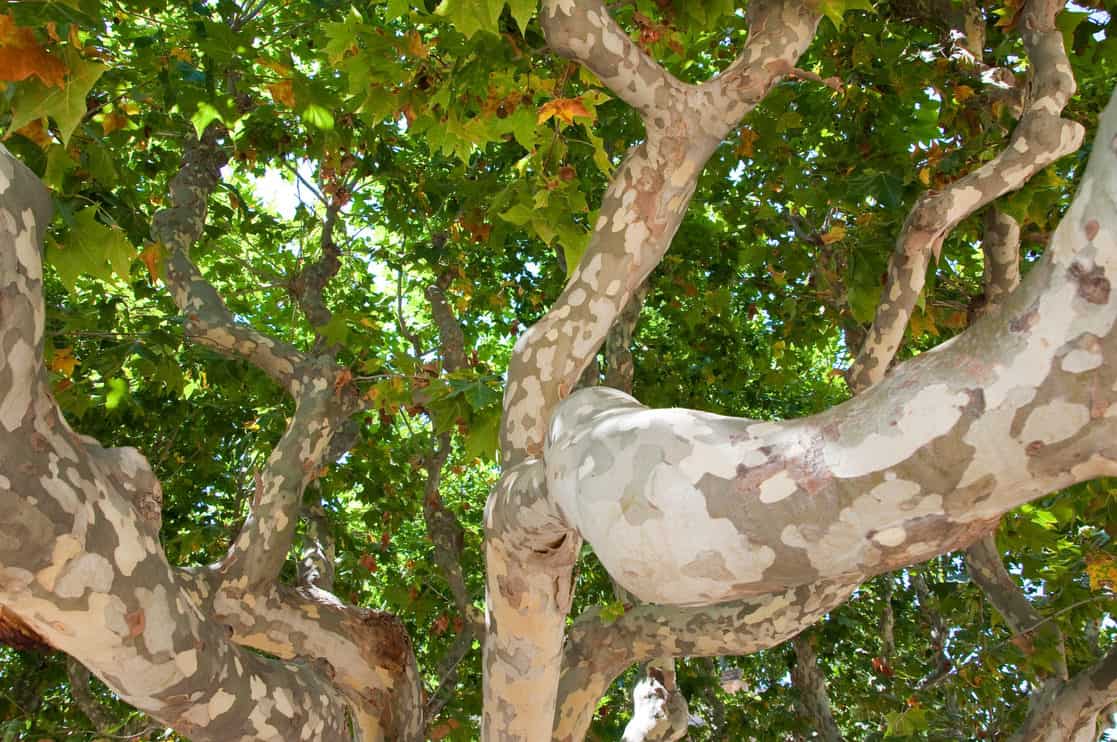
Sycamore trees are the statement piece of any yard. Their massive height paired with mottled bark makes them an attractive tree. If you have one in your yard or are thinking of planting one, you may be wondering what you can and can’t grow under a sycamore tree.

Sycamore trees have a wide canopy, so any plants underneath will need to be shade tolerant and not compete with the tree. You should not grow impatiens, English ivy, coneflower, peonies, geraniums, delphinium, spider flower, astilbe, periwinkle, mums, and lupines underneath a sycamore tree.

Creating a landscape under a sycamore tree can be tricky. We’ll cover all the plants you can and can’t grow under a sycamore tree – so, without further ado!

Why Is It Hard To Grow Plants Under A Sycamore Tree?

Sycamore trees are fast-growing, and they GROW. Mature sycamore trees typically reach a height of around 70 to 100 feet with a spread just as wide.

According to Clemson University, the American sycamore and London planetree (sycamore hybrid) are the two most widely used species in the landscape. They are often used to line streets since the London planetree is quite tolerant of pollution.

If you have one of these giant sentinels in your yard, you may find it a bit difficult to plant anything beneath. There are a few reasons why planting under a sycamore tree will test your patience.

Sycamore Trees Require A Lot Of Shade

Often times sycamore trees are grown in the yard to provide shade. With a huge spread, sycamores produce a lot of shade.

Any plant grown under a sycamore tree must be tolerant of shade. Even plants that are partial shade may struggle if not planted in the right space under a sycamore tree.

Sycamore Trees Leaves Are Massive

Sycamore leaves and seed pods in the sunlight

Sycamore trees are deciduous, meaning they lose their leaves in the fall. This can be a serious problem for anything planted under a sycamore tree for three reasons:

  • Leaf size
  • Effect of leaves on the soil
  • Leaf chemicals

The leaves of a sycamore tree are enormous, reaching up to 9 inches or more depending on the tree. As the leaves drop, they can blanket the area underneath, preventing the little amount of sun that will reach the plants beneath.

In addition to possibly shading out the plants under your sycamore tree, the leaves also decompose slowly due to their large size.

As the leaves decompose, they add nutrients to the soil, which can be beneficial to some plants but harmful to others.

Lastly, sycamore leaves are slightly allelopathic, meaning they exude chemicals that are meant as a defense mechanism against herbivores. As the leaves decompose in the soil, these chemicals are released and may affect sensitive plants.

When compared to other toxic chemicals such as juglone from walnut trees, the chemicals released in sycamore leaves are not as detrimental.

Sycamore Trees Have Shallow Roots (And Competition)

Sycamore trees grow fast, using their spreading roots to take up as much water and nutrients as they can while becoming established.

Their shallow roots mean there is going to be competition between the sycamore tree and whatever plants you decide to put beneath them.

Plants that require high nutrient content and lots of water will not do well under a sycamore tree. They may also steal vital water and nutrients that otherwise would go to the sycamore.

Sometimes too much competition can cause a sycamore tree to atrophy or rot. In these cases, you may need to cut down your sycamore!

Sycamore Tree Soil Conditions Don’t Favor Many Plant Types

Sycamore trees are very adaptable to different conditions. They aren’t picky about soil texture, PH, or moisture level.

An article in the Journal of Forests found that sycamore trees are often used to reclaim disturbed sites such as surface coal mines where soil conditions are poor and even toxic to other trees.

Because of this wide variety of adaptable conditions, sycamores may be growing in soil that isn’t conducive to certain landscape plants. The PH may be off, the soil texture may be wrong, or the soil may hold too much moisture.

A soil test will help narrow down exactly what conditions your sycamore tree is growing in. It can tell you the type of soil as well as the PH and nutrient levels.

Plants You Shouldn’t Grow Beneath A Sycamore Tree

In general, plants that require full sun, are heavy feeders, or require lots of water will not do well under a sycamore tree.

Let’s check out all the plants you shouldn’t grow under these massive trees.

Impatiens

We’re starting off with a flower that may surprise you. Impatiens do well in shade, so why can’t you plant them beneath a sycamore tree?

Impatiens can tolerate deep shade and will struggle if placed in full sun unless they are a full-sun variety. These annuals bloom in the spring and will produce flowers in a variety of colors.

The problem with impatiens is that they wilt quickly if drought-stressed. Being planted under a sycamore tree means the impatiens must compete for water sources.

If you are willing to consistently water your impatiens and provide them with plant food fertilizer, they might be able to survive under a sycamore tree. However, they will thrive better in a container on the porch or in a shady flower bed.

English Ivy

A European native, English ivy is an evergreen groundcover plant. If left unhindered, English ivy can creep up to 90 feet long, covering a substantial amount of ground.

English ivy is another plant that can tolerate the deep shade that would be found under a sycamore tree. The problem is that English ivy is invasive and will grow and grow and grow!

According to the University of Tennessee, English ivy will climb up the trunk of trees and eventually weigh down smaller branches and block sunlight.

Unless you are willing to put some serious work into pruning and trimming back English ivy, it should not be planted under a sycamore tree. 

Coneflower

Close up of beautiful purple cone flowers (echinacea) with phloxes in the background

Coneflowers thrive in hardiness zones 3 through 9, right alongside sycamore trees. These herbaceous perennials bloom in summer and fall, producing pink or white flowers that resemble daisies.

Growing between 2 and 5 feet, coneflowers fit the right size to be planted under a sycamore tree. Unfortunately, they will not thrive.

Coneflowers prefer to be in full sun and will struggle in the shade cast by large sycamore trees. If the flowers are left on the plant throughout winter, they can become somewhat invasive and spread rapidly as well.

Peonies

It’s hard to beat peonies when it comes to flower size. They are so large that they can sometimes fall over under their own weight!

According to the University of Wisconsin-Madison, peonies will grow to about 3 feet tall and typically bloom in late spring.

Despite their beautiful flowers and easy maintenance, peonies will not thrive under a sycamore tree. Peonies do best in full sun and will struggle if they have to compete for water and nutrients.

Peonies are best planted on their own or with low-maintenance neighbors that will not outcompete them for resources.

Geraniums

Geraniums are popular flowers grown in hanging baskets and flower beds. Many different cultivars will produce flowers ranging from reds and pinks to blues and purples.

These spectacular flowers usually bloom in early summer and will last until the first hard frost. You can expect them to thrive in a flower bed or pot, but they will struggle under a sycamore tree.

Geraniums prefer full sun, making them a poor companion to a sycamore tree. Geraniums that can sneak 3 or 4 hours of sunlight under a sycamore may survive, but they will not bloom as well as they would if placed in full sun.

Delphiniums

The striking color and shape of delphinium flowers make them a favorite of many gardeners. These tall stalks produce brilliant blues, whites, and purples in the summer. If you cut the flowers immediately, delphinium may bloom again in the fall.

Delphiniums are perennials but they are short-lived, often needing to be replaced after just 2 or 3 years. They will grow between 2 and 6 feet, depending on growing conditions and the hybrid variety.

We wish delphinium would thrive under a sycamore tree, but it just won’t. They prefer full sun conditions and are heavy feeders, making planting under a sycamore tree difficult. 

Delphiniums may not do well under a sycamore tree, but they will thrive when planted in a perennial flower bed if placed near the back so as not to block other flowers from view.

Spider Flowers

dark pink spider flower, closeup of a Cleome blossom, blurry background

Spider flowers got their name from the long, thin stamens that resemble the legs of spiders. But don’t worry, this flower isn’t spooky or scary like spiders. The flowers are colorful, ranging from white, purple, and pink.

Also known as spider legs or grandfather’s whiskers, spider flowers bloom in early summer and will stick around until the first frost. 

Spider flowers do best in full sun conditions if you want the most bloom for your buck. In addition to their sun requirements, spider flowers are annuals, making them a high-maintenance plant that you would have to replant each year.

According to the University of Wisconsin-Madison, Spider flowers are also prickly and sticky, making it a bit of a hassle to take care of during the growing season as you will want to wear gloves.

The nice thing about spider flowers is that they attract so much wildlife. Bees, butterflies, beetles, hummingbirds, hummingbird moths, and even bats will pollinate the flowers!

Astilbe

A China native, Astilbe has an exotic appearance with whispy pink, white, or violet flowers and dark green foliage. Astilbes are perennials that will come back year after year.

There are plenty of positive attributes of astilbe. They can tolerate partial shade, they are non-invasive, and their flowers remain attractive all winter long.

Astilbes are also easy to take care of, requiring little water or care. Depending on the variety, they may be as small as 1 foot tall or as large as 6 feet tall.

So, what makes them a bad candidate for planting under a sycamore tree?

The only downside to astilbe is that it is a heavy feeder. This means it will compete against your sycamore tree for nutrients. 

Vinca

Also known as periwinkle, vinca has attractive foliage and flowers. The flowers vary in color depending on the cultivar but can be red, pink, purple, blue, or yellow.

Vinca does best when planted in full sun, preferring at least 8 hours a day. The shade thrown by a sycamore tree is going to be too much for vincas to survive beneath.

Another downside to vinca is that they can be invasive. They are a creeping vine and can creep their way all over your flower bed, choking out other plants if you don’t keep a watchful eye out and prune when necessary.

Other than their sun requirements and invasiveness, vincas are low-maintenance plants that are used to surviving in dry conditions. These resilient plants do not require fertilizer and can get a bit leggy if given too much water.

Chrysanthemum

Chrysanthemums, also known as just mums, can be grown as perennials but they are more commonly grown as annuals in the regions where sycamore trees grow.

The BEST thing about mums is that they bring a burst of color in the fall when they bloom. Compared to the other plants around them that are slowing down, mums bring life and color back to the yard.

Mums come in a variety of colors and the flowers will attract butterflies. When grown as a perennial in warmer climates, mums will bloom from fall to spring.

Mums will not do well planted under a sycamore tree. These colorful flowers prefer full sun conditions and are considered heavy feeders that will compete with your sycamore for nutrients.

If you simply want a beautiful splash of color for a few weeks in the fall, annual mums can survive under a sycamore tree. However, they will not bloom as well and will not come back the following year.

Lupines

Lupines are wildflowers that produce interesting spires of colorful flowers and attractive foliage. They make a beautiful addition to the flower garden.

These astounding plants can be grown as annuals or perennials, depending on the cultivar and the climate where they are growing.

While lupines can grow in shade, they prefer full sun and you’ll get a better display of flowers if they’re placed in full sun. Lupines also prefer acidic soil and will struggle in alkaline soil. 

The soil PH can be a problem since sycamores can grow in both acidic and alkaline soils. If it is growing on alkaline soils, lupines will have a hard time adapting.

What Plants Can Live Under A Sycamore Tree?

Growing plants under trees is a tricky business. With sycamores, you add on a broader area of shade and throw a curveball with their huge leaves that can change the nutrient content of the soil.

What kind of plants can live under a sycamore tree? Anything planted under a sycamore tree should be shade tolerant, low maintenance, and adaptable to different soil conditions.

Despite these obstacles, you have a lot of options when it comes to planting under a sycamore tree. Some of the BEST plants that can live under a sycamore tree include the following:

  • Jasmine
  • Barrenwort
  • Azalea
  • Ferns
  • Brunnera
  • Solomon’s seal
  • Hellebores
  • Meadow rue

All of these plants are low-maintenance, shade tolerant, and adaptable. 

Just because these plants grow in shade doesn’t mean their flowers are dull! Most of these plants produce colorful flowers at different times of the year, making the space under your sycamore tree pop with eye-catching color.

You can read more about the best plants to grow under a sycamore tree here if you’d like!

How To Help Plants Thrive Under A Sycamore Tree

If you’ve chosen a plant to grow under your sycamore tree, it’s time to take a few steps to ensure it stays happy and healthy.

This fertilizer comes in a 5lb bag and is in granule form that can be spread around the dripline of your sycamore tree. This will help alleviate any competition between your landscape plant and sycamore tree.

  • Give plants enough water: Sycamore tree roots are shallow and will compete with landscape plants for water. Make sure you give your plants enough water, especially if they start showing signs of drought stress such as yellowing leaves or wilting.
  • Pick the right spot for your plant: Take a good look at the growing conditions of your chosen plant. If it requires deep shade, plant it in a spot that gets little sun. if it requires partial shade, try to find a spot that gets morning or afternoon sun.

Alternatives For Under A Sycamore Tree

Knowing which plants can and can’t grow under a sycamore is great if you’re willing to dedicate some time and effort to selecting the right plants.

If you’d rather not deal with it, there are other options for the space under your sycamore tree.

  • Plant grass: shade tolerant grass like Scotts Turf Builder Grass Seed Dense Shade Mix will sprout with as little as 3 hours of sunlight. It comes in a 3lb bag with the option of upgrading to a 7lb bag if necessary.
  • Mulch: Mulch looks just as good on its own when placed around a sycamore tree. It makes the area look landscaped without the trouble of taking care of flowers. Be sure to keep the mulch at least 6 inches away from the trunk.

That’s A Wrap!

Sycamore trees will catch the eye of any passerby and is sure to be the statement piece of your yard. They are fast-growing and capable of adapting to different conditions.

The space under a sycamore tree will be shady, making planting difficult. Any plant that requires full sun, is a heavy feeder or needs a lot of water will struggle under a sycamore tree.

Now, for a quick recap:

The 11 plants that shouldn’t be planted under a sycamore tree include:

  • Impatiens
  • English Ivy
  • Coneflower
  • Peonies
  • Geraniums
  • Delphinium
  • Spider flower
  • Astilbe
  • Vinca (periwinkle)
  • Mums
  • Lupines

Instead of these plants, opt for low-maintenance plants that are shade tolerant and adaptable to dry conditions. You certainly don’t want your landscape plants competing with your sycamore tree for resources!

References

Jiang, Z.-D., Owens, P. R., Ashworth, A. J., Fuentes, B. A., Thomas, A. L., Sauer, T. J., & Wang, Q.-B. (2021, October 27). Evaluating tree growth factors into species-specific functional soil maps for improved agroforestry system efficiency. Agroforestry Systems96, 479-490. https://link.springer.com/article/10.1007/s10457-021-00693-9

Lee, E. H., Andersen, C. P., Beedlow, P. A., Tingey, D. T., Koike, S., Dubois, J.-J., Kaylor, D., Novak, K., Rice, R. B., Neufeld, H. S., & Herrick, J. D. (2022). Ozone exposure-response relationships parametrized for sixteen tree species with varying sensitivity in the United States. Atmospheric Environment284. https://www.sciencedirect.com/science/article/abs/pii/S1352231022002564

Mackie-Dawson, L. A., Millard, P., & Proe, M. F. (1995, June 01). The effect of nitrogen supply on root growth and development in sycamore and Sitka spruce trees. Forestry: An International Journal of Forest Research68(2), 107-114. https://academic.oup.com/forestry/article-abstract/68/2/107/522278

Sena, K., Agouridis, C., Miller, J., & Barton, C. (2018, December 18). Spoil Type Influences Soil Genesis and Forest Development on an Appalachian Surface Coal Mine Ten Years after Placement. Forests9(12), 780. https://www.mdpi.com/1999-4907/9/12/780/htm

If you’re lucky enough to have a big maple on your property, you know the joy it can bring – hearing the wind blow through the leaves, enjoying the cool shade in summer, watching the leaves turn vibrant autumn colors. Maybe you are also struggling with a bare patch beneath it where nothing seems to survive. What plants can you grow under a maple tree… and what plants aren’t even worth a try?

Maple trees have a shallow root system where plants underneath will compete for nutrients and water. Avoid planting goldenrod, aster, English ivy, oriental bittersweet, wisteria, field bindweed, bishops weed, honeysuckle, clover, and hostas directly below your maple tree.

With proper landscaping, a mature maple can be a gorgeous centerpiece to your yard. So whether you’re fixing patchy areas beneath your big trees, or whether you’re planting young maples and want to give them a good start in life, read on to learn how to keep your marvelous maples healthy and looking good!

What Are Maple Trees – And Where Do They Grow?

Maples are attractive, easy-to-grow trees found in cultivated gardens and wild forests across the Northern Hemisphere. Some have colorful leaves, others interesting bark, and a few, like the valuable sugar maple (Acer saccharum), provide sap that can be boiled down into tasty maple syrup! There’s over triple digit species of maples in the world, so there’s plenty of trees to go around.

According to Oregon State University, thirteen species of maple tree are native to North America.

In the West, expect to see bigleaf (A. macrophyllum) and vine maple (A. circinatum). Midwestern forests are home to the boxelder (A. negundo), which has the largest range of any North American maple. The red maple (A. rubrum) dominates the East, although the fast-growing silver maple (A. saccharinum) is nearly as common.

In yards and urban areas, you are more likely to encounter one of the many varieties of Japanese maple (A. palmatum), a smaller species that can sometimes be no larger than a shrub, or the Norway maple (A. platanoides), a non-native that spreads so aggressively it has been classified as an invasive species by the USDA

Learning about the growth stages and patterns of your maple tree is important as well. For more information, check out our full timeline of maple tree growth!

The Challenge To Growing Plants Under Maple Trees

The needs of maple trees vary widely between seasons – however, all seasons typically lead to something not allowing plants to grow well under your maple tree.

Maple Leaves Can Block Sunlight To Plants

In the summer, their dense foliage creates a wall of leaves that completely blocks the sunlight from any plants directly beneath them. 

When their lower branches no longer get sunlight, either from their own shade or from a neighboring plant, they will shed those branches and redirect energy into overtopping the surrounding plants. (You can read more about the reasons trees lose their branches here.)

In the fall, the blanket of leaves dropped by maples can smother anything growing beneath them, creating an environment that invites fungus, slugs, and other pests if left to rot in place.

Decomposing leaf litter can also make the pH of soil more acidic over time, further inhibiting competition from other nearby plants.

So, won’t grow well when this happens, but typically that’s in fall. More acidic soil will limit the types of plants that can potentially thrive under your maple.

Maple Tree Roots Stay Close To The Surface

The root system of maples is dense and shallow, with larger roots often breaking the surface while smaller, hairlike ones form a dense mat just underneath the soil. In most species, root growth is not aggressive enough to harm other plants and buildings.

The exceptions are Norway and silver maples, as noted by the USDA, both of which can cause damage to pavement and plumbing.

Since maple trees have dense roots, they tend to suck up all the moisture in the surrounding area during their growing season.

This makes it so that these roots more actively compete with plants, regardless of how deep those plants roots go. In small numbers, it’s OK. However when you get a high maintenance plant, it can become an issue.

Maples Require A Lot Of Water

At the height of summer, a maple tree requires about 10 gallons of water, weekly, for every inch of caliper (the diameter of the trunk measured above ground).

However, in the winter, dormant maples take up little water, leading to muddy, soggy soil in areas with heavy rainfall and poor drainage.

Maple trees also require a large quantity of sunlight, with their canopy blocking the sun from anything under them. Learn more about your maple tree’s need for sun here!

Now, since they need all that water AND have shallow roots, that means that your maple tree really need any water that comes down naturally. So, the only way to make sure that plants can actually grow under your tree are to choose low maintenance ones that you actively water, along with your maple tree.

Plants That You Shouldn’t Grow Under Maple Trees

Some plants that might thrive close to your maple come with other complications. Now, this list isn’t to say you CAN’T plant these plants under your maple tree, but just know that it really could impact your maple tree’s longevity in a negative way.

Think of the area around the maple tree like a nice, big ol’ blackberry pie. If you have the pie all to yourself, you get ALL THE PIE. If you bring it to a multi-family gathering, then you have to share the pie and thus, have some competition on getting a slice.

So, let your maple tree have it’s pie and DON’T grow these plants under your maple tree in order to avoid competition.

Also – I think that’s my favorite maple tree to pie analogy ever 🙂

Beech Trees

Beech are beautiful, long-lived trees beloved for their wide canopies and useful wood products, nuts, and syrup. Since beech and maple trees often grow together in the wild, you might suppose a beech would make a good companion plant for your tree. 

However, beech trees naturally replace maple trees in forest succession, as shown by this USDA study. Beech trees will eventually crowd your maples out, although that might be a problem you pass down to your grandkids!

Now, when we say “under” your tree, you obviously won’t plant a tree under another tree, but I’m speaking a bit more about planting beech trees (and black walnut which I’ll discuss in a second) relatively close to each other.

Black Walnut Trees

Black walnut trees are allelopathic plants, meaning that they secrete chemicals that inhibit the growth of other nearby plants.

Many maples are tolerant of black walnut’s chemical secretion, also called juglone, making them one of the few trees that can grow nearby, but if your maples are facing other stressors like drought or insufficient sunlight, you’ll want to separate them as much as you can from walnuts. Silver maples are especially susceptible to damage from black walnut trees.

Read more about walnut allelopathy in our guide: 20 Plants Not To Grow Under A Black Walnut Tree.

Goldenrod And Aster


The beautiful perennials are both part of the aster family and grow well together, creating a rich environment for honeybees and other pollinators.

However, research published in Canadian Journal of Forest Research has shown that these flowers, like walnut trees, release allelopathic chemicals in the soil that can inhibit the growth of maples, especially if you are trying to introduce young trees.

Unless your maple is already well-established, you should keep your goldenrods and asters well away from its root system.

Grapes

During their growing season, grape vines will reach across gaps and begin growing in the branches of your maple tree. The dead wood that accumulates on a grapevine can weigh down and weaken your maple, causing more of its branches to break off during winter storms.

Over time, a grapevine can even cover a maple tree enough to block it from getting sufficient sunlight.

Virginia Creeper

According to the University of Wisconsin, Virginia creeper, native to much of North America, can grow up to 20 feet in a single year. Like grape, it can grow into the branches of your maple, shading the tree and eventually leading to it’s end.

Unlike grape, the berries of Virginia creeper are not for human consumption and the vine itself contains a sap that causes more issues to boot. Don’t plant it.

English Ivy, Oriental Bittersweet, And Chinese/Japanese Wisteria

Attractive and hardy, these invasive ornamentals have become a plague across many forests in North America, covering and eliminating native plants that wildlife rely on for food and shelter.

You might be tempted to green up the bare patch beneath your maple tree with English ivy, bittersweet, or wisteria. Don’t. All three of these aggressive plants will grow up into the branches of your tree, cutting off sunlight and ending your maple section by section.

Field Bindweed

Close up of convolvulus arvensis or field bindweed flower blooming on meadow

Sometimes confused with morning glory, field bindweed (Convolvulus arvensis) is one of the more difficult invasive weeds to control once established.

Field bindweed can get into the branches of your maple and strangle it just like other aggressive vines.

In addition, the roots of bindweed can go as deep as 20 feet, according to the University of California, intertwining with the roots of your maple tree. Once this happens, your options for using herbicide are limited, and you’ll have to pull it by hand wherever it comes up to keep it from spreading.

Bishop’s Weed

Also called goutweed, this groundcover is sometimes advertised as “Snow on the Mountain” or “ground elder.” Sounds innocent, but Bishop’s weed is a noxious invasive that spreads so aggressively it’s illegal to sell in several states.

Your maples will struggle to get the water and nutrients they need in the summer when their root zone is covered by dense patches of Bishop’s weed, and to make matters worse, bishop’s weed irritates the skin if you try to pull it by hand. Look for the scientific name–Aegopodium podagraria–and avoid it.

Japanese/Amur Honeysuckle

Japanese Honeysuckle

Although many species of honeysuckle native to North America are great sources of food to pollinators like honeybees and hummingbirds, two invasive varieties, the Japanese and Amur, are aggressive enough to slow down the growth of your maples.

Both have extensive root systems that can reduce the availability of nutrients in the soil for other plants, and once established, both are difficult to eradicate. In addition, Japanese honeysuckle can send vines into your maple that can gird its trunk and branches, strangling it.

Hosts Of The Ambrosia Beetle

If you have Japanese maples, you’ll need to be on the watch for tiny “toothpicks” of sawdust sticking out of the trunk, a sign that your tree has been infested by granulated ambrosia beetles. First introduced in North America in the 1970s, these pests are a serious problem, difficult to treat, and fatal to young Japanese maples.

One way you can protect your maples is by steering clear of other species frequented by the ambrosia beetle: pecans, plums, peaches, apples, persimmons, figs, ornamental cherries, dogwoods, magnolias, azaleas, rhododendrons, Shumard oaks, Chinese elms, sweetgums, golden rain trees, redbud, crapemyrtle, and plants from the genus Syrax.

If you bring any of these plants back from the nursery, including any new Japanese maples, be aware that the ambrosia beetle might hitch a ride into your yard. Since the beetles can travel several miles a year, planting away from your maple won’t stop the spread. 

Fortunately, ambrosia beetles are less likely to attack a healthy tree, another reason you should avoid planting beneath your maple in a way that weakens its health.

Plants That Don’t Stand A Chance Under Maple Trees

Don’t waste money buying plants that will parish beneath your maples. Anything that requires full sunlight won’t stand a chance, and plants that have specific moisture needs, especially ones with shallow root systems, will be in constant competition with the dense surface roots of your maples

(Hint… the maples usually win!)

You should remove the leaves that accumulate around the base of your maples each autumn to prevent pests and rot in your trees. This means you’ll also want to avoid plants that can’t take a little rough handling from rakes and leaf blowers.

Here are some types to avoid:

Grass

Most types of lawn grasses won’t be able to tolerate the shade beneath your maple to grow properly. If the area around your tree is clear enough to let morning and evening sun reach beneath it, you may be able to grow some of the more shade-resistant varieties like creeping red fescue and supine bluegrass.

Even if you can find a variety that tolerates what little sun reaches under your maple, your grass will be constantly deprived of water and nutrients in the summer when your maple is at its greediest.

Grasses that continue to grow throughout the winter face a different problem, as the area beneath a dormant maple tree can easily become over-saturated with rainwater without the maple roots to absorb it.

Be aware that grasses growing in the shade, even shade-resistant varieties, develop shallow root systems. If you are successful in establishing a lawn beneath your maple tree, consider using a leaf blower in the fall instead of a rake to keep from accidentally pulling up the more-fragile grass.

Clover

Clover is not only great for pollinators like bees, but with its ability to capture and return nitrogen to the soil, it plays an important role for other plants in your yard. Clover that grows near your maple will help it.

However, almost all varieties of clover have high water demands. Unless you can provide extra irrigation during the driest months, clover will have a hard time getting established.

Hostas

Although hostas can survive the harsh growing conditions underneath maple trees for a while, after a few years, maple roots will invade the root ball of the hosta and slowly choke it out.

A hosta beneath a maple tree will decline in health gradually, even if the first year or two looks like a success!

So What Can I Plant Under My Maple Tree?

Maples are successful at inhibiting growth beneath them, but don’t give up! There are several plants that will survive in the shade of a maple tree:

Spring-Flowering Bulbs

Plants from bulbs that emerge in the spring can get enough light to bloom before a maple leafs out for the summer.

These types of plants, called spring ephemerals, include: bluebells, daffodils, snowdrops, crocuses, anemones, and hyacinth.

Ferns

Green growing fern leaves in nature. Sun light

Ferns unfurl new growth in the spring while maple trees are still dormant, and many can survive both heavy summer shade and damp winter soil. Try varieties like maidenhair fern, lady fern, wood fern, or cinnamon fern.

Sword ferns can also thrive beneath a maple, although competition from the tree often dwarfs their height to only a few feet tall.

Mondo Grass

If you are determined to grow something similar to a lawn beneath your maple, mondo grass might be your solution. Certain varieties, like dwarf mondo and black mondo, can tolerate the varying conditions beneath a maple tree.

Mondo grass spreads slowly over time to fill in gaps, and because it stops growing after it reaches a certain height, you don’t have to mow it. Mondo isn’t a true grass but is more closely related to lilies.

Shade-Loving Plants

There are a wide variety of other groundcovers and low-growing plants that may succeed in the shade of your maple depending on your climate and the specific conditions beneath your tree.

Plants that do well with maple trees include creeping phlox, rose champion, epimedium, lily of the valley, periwinkle, and Solomon’s seal.

Drought-tolerant moss can flourish over an undisturbed area beneath your tree, although because moss clings to soil with fragile rhizoids instead of roots, it can be difficult to establish.

Whatever you plant, you’ll have better luck if you enrich the soil under your maple with a few inches of compost and plan to provide extra water to the area in the summer months, especially as your new plants are getting started. You can also prune up some of the lower branches of your maple tree, or some of the upper ones to introduce more light to the ground below.

If you want an even more detailed look at what you can plant under your maple tree, check out our list!

Alternative Solutions To Plants Under Your Maple Tree

Maple tree in autumn colors on Mount-Royal in Montreal, Canada.

Let’s face it, your maple wants to dominate the soil beneath it. You’ll have to cut through its roots to plant anything, and anything you plant will be in direct competition with your tree for moisture and nutrients.

Don’t want to fight that battle? Here are some other solutions you might consider:

Mulch

Encircling the base of your maple with wood chips or another type of mulch can be an attractive alternative to a groundcover. When you mulch around your maple, be careful not to put down too much.

Maple roots need to be close to the surface to exchange oxygen, so you should never apply more than a few inches over the root zone to at least the dripline (the edge of the tree’s canopy). Don’t pile up mulch against the tree, which can encourage disease and rot, but leave a mulch-free area about 12 to 18 inches around the trunk.

Maple roots need to have good airflow with the surface, so avoid using large rocks or pavers to cover the area beneath a tree.

Smaller stones like pea gravel can work as a mulch alternative, but this can cause problems when you need to clean the seeds, blooms, and leaves your tree will drop throughout the year. It can be difficult to rake or blow maple leaves without mixing in whatever you have laid around the base of the tree.

You may also need a good fertilizer, which you can take a look at our list of best maple tree fertilizers here.

Create A Charming Place to Rest

If you’re dealing with a big, mature maple, why not enjoy its cool summer shade for yourself? 

Beneath a tree is a brilliant spot for a standalone hammock or reading chair. Incorporate your maple into the space by using something like this circular tree garden bench by Design Toscano.

You can brighten your seating area even more with container plants. Hang containers from sturdy branches or elevate them with plant stands.

Just make sure you don’t affect the roots of your maple too much—no heavy pots that rest directly on the ground—and choose plants that can tolerate the shade.

Feed The Birds

Not all wild birds appreciate a hanging bird feeder.

Some, like juncos and towhees, prefer to feed on the ground, while others, like blackbirds, will purposely knock seed down from feeders for the rest of the flock below. Some, like flickers and doves, struggle to find a perch on small feeders.

Ground-feeding birds do a good job tearing up any plants trying to grow where birdseed falls. If you have a large maple, use this to your advantage!

If nothing seems to grow beneath your maple, designate the area as a feeding spot. Hang feeders in the branches and scatter seed for ground feeders.

The activity of birds will weed out almost everything that tries to grow while also providing bonus nutrients for your tree. 

That’s A Wrap!

Maple trees are wonderful for their summer shade and vibrant fall colors. No matter what kind you have, you’ll want to take care of it so it can continue to color your yard for many years to come.

But to care for your maple, you need to think about what’s happening beneath the surface of the soil. Your maple wants to create a dense, shallow root system to absorb every last bit of water and nutrients, and so anything you try planting beneath it will be in direct competition with your tree.

Now, for a quick recap.

You should avoid planting the following under your maple tree:

  • Other trees that will outcompete your maple, like beech and black walnut
  • Plants with allelopathic chemicals, like goldenrod and aster
  • Vines that can choke your tree, like grape, Virginia creeper, English ivy, oriental bittersweet, Chinese/Japanese wisteria, and field bindweed
  • Aggressive invasive plants, like bishop’s weed, Japanese honeysuckle, and Amur honeysuckle
  • Plants that introduce ambrosia beetles
  • Plants that your maple will outcompete, like grass, clover, and hostas

Hopefully this article will help you avoid choosing something you’ll regret down the road while giving you some excellent alternatives. If you’re interested in planting a maple tree, check out our guide on the best maple trees to plant!

Just remember, respect the root zone of your tree, use good companion plants or non-plant alternatives, and you’ll have a happy maple!

Thanks for reading!

References

Carl H. Tubbs, Allelopathic Relationship between Yellow Birch and Sugar Maple Seedlings, Forest Science, Volume 19, Issue 2, June 1973, Pages 139–145.

Elizabeth Anne France, Dan Binkley, and David Valentine. Soil chemistry changes after 27 years under four tree species in southern Ontario. Canadian Journal of Forest Research. 19(12): 1648-1650.

Galbraith-Kent, S.L. and S.N. Handel. 2008. Invasive Acer platanoides inhibits native sapling growth in forest understorey communities. Journal of Ecology 96:293-302 R. F. Fisher, R. A. Woods, and M. R. Glavicic. Allelopathic effects of goldenrod and aster on young sugar maple. Canadian Journal of Forest Research. 8(1): 1-9.

Veselkin, D.V., Rafikova, O.S. Effects of Water Extracts from the Leaves of Boxelder Maple Acer negundo and Native Tree Species on the Early Development of Plants. Russ J Ecol 53, 59–67 (2022).

Chestnut trees are quickly disappearing in the US because of chestnut blight, but there are still a few wild stands around and you can also plant chestnut trees in your yard. If you have a chestnut tree or are planning on planting one, you may wonder how much water they need.

Chestnut seedlings need around a gallon of water per week. Make sure to deeply and slowly water your chestnut tree in a circle (not directly on the tree bark or base) so that all of the roots get watered. Older chestnut trees can be watered weekly during dry spells.

Below we’ll go over how much water both young and mature chestnut trees need so you can have a happy, healthy tree in your backyard!

What Conditions Do Chestnut Trees Need In Addition To Water?

Let’s talk about what conditions chestnut trees prefer first. If you plan on planting a chestnut tree, you’ll want to pick the right location OUTSIDE of watering them properly. If you already have a chestnut tree growing in your yard, you may be interested to know what conditions will help it thrive outside of watering~

Not all chestnut trees are the same. There are four main species of chestnut tree:

  • American Chestnut
  • Japanese Chestnut
  • Chinese Chestnut
  • European Chestnut

The American chestnut and Chinese chestnut are the two most popular chestnut trees when grown for their fruit. When we say fruit, we are referring to the chestnuts!

So, what conditions are best for chestnut trees that allow them to make the most use of the water they get?

Best Soil Condition For Chestnut Trees

Chestnut trees are drought tolerant, but they don’t prefer to be in super dry or wet soil. Their root system must be able to penetrate the soil, meaning it can’t be too thick either.

According to the State University of New York, chestnut trees prefer well-drained, slightly acidic, sandy soils. They can survive in clay soils, but their growth may be stunted, as the roots cannot penetrate the soil as well as sandy soil.

The ‘well-drained’ part of the description is important in relation to our watering schedule, which we’ll discuss more later. If the soils hold too much water, the chestnut tree can develop root rot, which is often devastating to the tree, especially if it’s young.

Best Light Conditions Chestnut Trees Thrive In

The light required for chestnut trees will depend on what you are planting the trees for. Do you want to harvest the chestnuts or are you just looking for a nice shade tree?

If you want to increase nut production, plant your chestnut tree in full sun. However, if you just want your tree to grow as fast as possible, it’s recommended to give it some shade throughout the day – about 1/4th of the day should be in shade.

One important thing to remember is if you start your chestnut tree in a pot indoors, be sure to harden the plant to the sun before placing it outside. Slowly introduce the seedling to the sun for about two weeks before letting it sit in full sun all day.

Best Fertilizer For Chestnut Trees

Using fertilizers will help improve growth and can give your chestnut tree an extra boost to keep it happy and healthy.

It’s not recommended to fertilize a newly planted tree. Instead, wait until at least its second season, which helps the tree put as much effort as possible into establishing a root system in its first year. Fertilizers can encourage the tree to make leaves instead of establishing roots.

According to the Connecticut Agricultural Experiment Station, use a fertilizer with a mixture of 5-10-5 or 10-10-10. These numbers are the N-P-K ratio, meaning nitrogen, potassium, and phosphorus.

A fertilizer like Southern Ag’s All Purpose Granular Fertilizer is a superb choice for chestnut trees. It comes in a 5-pound bag and can be spread over the planting area and then watered in.

It’s recommended to use 1 pound of fertilizer for every year of the tree’s age. So, if your chestnut tree is 3 years old, use 3 pounds of fertilizer.

If you don’t know your tree’s age, you can apply one pound of fertilizer for every inch in diameter of the tree’s trunk.

How Often Should I Water My Chestnut Tree?

Chestnut Tree in bloom

We’ve talked about the soil, light, and nutrient conditions that promote the best growth for chestnut trees. Now it’s time to buckle down and get into the details about how much you should water your chestnut trees.

The exact chestnut watering schedule will depend on a few different things:

  • Age of the tree
  • If planted from seed
  • If planted from a pot grown indoors
  • Soil conditions
  • Light conditions

Don’t worry, we’ll weave this all together when we talk about your watering schedule. No matter what your situation is, we’ll cover it!

The Older The Tree, The Less Water It Needs

It’s just like us if you think about it! When we’re young, we can eat and eat because we’re growing. As we age, we eat less.

Trees are the same. As young seedlings, trees need a lot more help with watering and nutrients to promote growth both above and below the soil. 

The roots need to establish quickly, with the taproot reaching directly down to keep the tree stable from high winds, and lateral roots reaching out to find water. Above the soil, shoots need to establish quickly to promote leaf growth, which will help with photosynthesis.

This is a fragile time for a chestnut tree. Having soggy soil or soil that is too dry will stunt growth and make it hard for the tree to establish itself.

Mature chestnut trees would benefit from .5 – 1 gallons of water per tree, per week. However, that is a general guideline and may change based on the soil or sun conditions where your chestnut tree is planted.

As the chestnut tree ages and establishes itself, you can just let mother nature take care of your tree! That being said, during droughts you may have to give your chestnut tree a drink here and there so it doesn’t dry out.

Most of the time, you can let mother nature take over after two years. But until then, it’s a good idea to water your newly planted trees. If you have an established chestnut tree, you shouldn’t need to water it unless there is a draught.

Chestnut Seeds Need Less Water Than Transplanted Seedlings

For homeowners who want to plant a chestnut tree, you have two broad options. You can either plant them from seed or transplant them from a pot as a seedling. 

Most of the time, you are going to transplant them from a sapling you buy at your local farmer’s market or arborist. However, some like to start from the beginning and plant chestnut trees from seed.

If you decide to go the seed route, you’ll want to avoid over-watering the seed. This can rot out the seed before it has time to sprout.

You can keep your seed refrigerated (above freezing) for a few weeks before planting if necessary to wait for proper weather conditions.

Some things to keep in mind if you decide to plant your chestnut tree from the seed:

  • When to plant: Plant your seeds in the spring as soon as you can work the soil.
  • Use good soil: According to Penn State University, a mixture of peat, perlite, and vermiculite in a 1:1:1 ratio is best for chestnuts.
  • Seed depth: Plant your seeds 1 inch into the soil, with 4 inches of your planting soil beneath the seed and 1 inch covering your seed.
  • Water lightly: Water the soil until it is wet without soaking it.

Chestnut Seedlings Need The Most Water

Young shoots of a sweet chestnut tree grow on a slope between pine needles

Growing your seeds indoors in the winter and transplanting your seedlings outdoors in the spring is a perfectly good way to establish a chestnut tree in your yard!

Chestnut seedlings, which are newly formed chestnut trees, need about 1 gallon of water per week. You should deeply water around the tree in order to make sure you cover all of the roots. Mulch goes a long way in keeping the water retained around the tree so it stays properly watered.

You can start growing your chestnut tree in January or February. This will give your seedling enough time to grow and be ready for re-planting in the spring.

If you decide to take this route, keep the following in mind:

  • When to transplant: Unlike seeds, which you can plant before the last frost, seedlings should only be transplanted outdoors once the danger of frost has passed.
  • Potting Soil: Our 1:1:1 ratio for seeds won’t work for a seedling. You’ll want the soil inside your pot to be more fibrous than nutrient-rich. Something like Miracle-Gro Orchid Potting Mix Coarse Blend will work great.
  • Outdoor water requirements: As we said, seedlings need a lot more water than seeds. Give your chestnut seedling at least one gallon a week, but you’ll probably need a bit more (maybe 2 or 3 gallons.) You may need to increase this if rains are infrequent.
  • Give your tree space: Remember, your seedling is a delicate little thing now, but it will eventually grow into a whole tree! Don’t plant your seedling near your house and make sure you give it enough space from other established trees. Chestnuts can tolerate some shade, but they thrive in the sun.

Soil Conditions Can Affect Your Chestnut Watering Schedule

The type of soil you plant your chestnut tree in will determine a lot about your watering schedule. 

According to the University of Maryland, there are three main types of soil:

  • Clay
  • Silt
  • Sand

Loam is another type of soil, which is a combination of these three soil types. Don’t worry, you don’t have to send your soil out for testing to determine what type of soil you have.

You can use a few methods to figure this out yourself. Just be prepared to get your hands a little dirty! The ‘feel’ method is one way to tell what type of soil you have. To do this, follow the steps below:

Step 1: Add soil to your palm and add water until moist but not soaking

Step 2: Knead soil until it feels like putty

Step 3: Can it form into a ball?

  • Yes – Clay, silt, or loam
  • No – sand

Step 4: If it’s not sand, form a ribbon by pushing the soil with your thumb so that the ribbon goes over your pointer finger. Note the length of the ribbon before it breaks under its own weight.

  • Less than an inch – silty loam
  • 1-2 inches – clay loam
  • Greater than 2 inches – clay

You can divide those categories further into ‘sandy loam’, ‘silty loam’, or ‘clay loam’ by feeling for the grit in the soil. The more gritty, the more sandy. The more smooth, the more clay-like.

Another option is to make use of the United States Department of Agriculture Web Soil Survey. You can search by using your address and as long as a survey has been done in the area, it will have a soil profile for you to download.

For chestnut trees, you’ll want sandy or sandy loam soils for the best growth and nut production. Sandy soils have the largest soil particles, meaning they will provide the BEST drainage because there is room for water to move through the particles.

Now, just because you have clay soils does not mean you can’t plant a chestnut tree. However, you will have to be careful about over-watering. Clay soils hold water far longer than sandy soils.

In general, the more sandy the soil, the more water your chestnut tree will need. The more clay-like soil, the less watering.

So, if clay soils mean less watering, wouldn’t that be better for chestnut trees? 

Not really. Clay soils have tightly packed particles, which make it difficult for roots to poke through. This can stunt the growth of your chestnut tree and limit nut production. It’s best to stick to sand or sandy loam soil.

Also – do some internet research and see if your local township has some information on your town or county’s main soil type. You’ll probably be quite surprised!

Light Conditions Affect Watering Schedule

Sunlight is an important factor in a tree’s health. A shade tree will not do well in full sun, and vice versa. The amount of sun your chestnut tree receives is yet another factor affecting your watering schedule.

An article in the Journal of Forest Ecology and Management found the greater the exposure to the sun, the more water chestnut trees need to develop new roots and shoots.

The idea behind this is that if the tree is in full sun, it’s more actively going through photosynthesis. For photosynthesis to happen, the tree needs three things: sunlight, carbon dioxide, and water.

The higher the photosynthesis rate, the more water the tree needs.

If your chestnut tree sits in full sun all day, increase your watering schedule to make sure your tree is getting enough water to promote healthy growth. 

Conversely, if your chestnut tree is in partial shade, consider cutting back on your watering schedule.

How To Maintain A Chestnut Tree Long-Term

Chestnut tree in the mount blooming in spring

We’ve gone over the core basics of planting a chestnut tree. We went over the soil, light, watering, and nutrient requirements.

So, what else can you do to take care of your chestnut tree?

Besides proper watering, soil conditions, and light conditions, you’ll want to keep a lookout for some of the following problems:

  • Pest control
  • Weed control
  • Critter control

Insect Pests Of Chestnut Trees

There are plenty of six-legged pests out there that love chestnuts just as much as we do! They mostly go after leaves, sap, and sometimes the nuts themselves. 

A few of the most common insects that affect chestnut trees include:

  • Asian Chestnut Gall Wasp
  • Japanese Beetle
  • Cicadas
  • Ambrosia Beetle
  • Weevil
  • Aphids (and other soft-bodied insects)
  • Gypsy Moth
  • Orange-striped Oakworm
  • Yellow-necked Caterpillar

To combat these problems, you can buy pest control sprays specific to these pests. However, these can be detrimental to pollinators and aren’t recommended unless you have a serious pest problem.

According to the Journal of the American Chestnut Foundation, allowing natural predators like wasps, birds, and spiders to flourish around your tree is a great way to keep pests under control naturally.

You can also hand-pick caterpillars and other obvious insects off your chestnut tree.

Control Weeds Around Your Chestnut Tree

Controlling weeds around your chestnut tree is especially important during the first few years of your tree’s life. 

When a seedling chestnut tree has to compete with grass and other weeds for nutrients and water, it can cause stunted growth and limit root growth.

While you can use a weed removal mixture, I recommend just pulling the weeds out near your tree by hand. It’ll be better for the tree and surrounding soil!

Once the weeds are cleared, you can apply mulch to prevent future weeds and grass from growing. This has the added benefit of helping to retain moisture.

Control Critter Damage Around Your Chestnut Tree

Deer and rodents will love you for planting a chestnut tree. Unfortunately, they will not be as careful around your tree as you are.

Deer can damage chestnut trees by rubbing up against the bark and eating the twigs during the winter when food is scarce. Rodents can damage chestnut trees by eating the bark towards the ground and by digging up chestnut seeds before they bloom.

To help protect your chestnut tree, you can purchase a tree protector. You’ll want to make sure your tree protector is breathable, such as Voglund Nursery’s Mesh Tree Bark Protector Guard.

Solid tree protectors trap warm air in them, which can cause your tree to stop hardening off for winter. Solid tree protectors also offer wasps and other pests a free hotel where they can tear into your chestnut tree’s bark.

Final Thoughts On How Much Water Chestnut Trees Need

As we wrap this article up, let’s recap some of the most important aspects of keeping your chestnut tree watered.

  • The older your chestnut tree, the less you need to water it: Once your chestnut tree reaches about two years of age, you can let mother nature take over unless you face a draught.
  • Chestnut seeds need less water than seedlings: Chestnut seedlings need about a gallon of water per week. Chestnut seeds shouldn’t be watered until they begin sprouting, as this can rot the seed.
  • The sandier the soil, the more water you need: Sandy soils have the largest particles and therefore allow the most space for water to drain. It has the least water retention. So, the sandier the soil, the more water you will need.
  • The sunnier the conditions, the more water you need: If your tree sits in a shady spot, you can expect to need less water. If your chestnut tree sits in the sun all day, you may need to increase your watering schedule.

You can have the perfect watering schedule and still run into problems with your chestnut tree. Watch out for pest insects, weeds, and browsing critters as well.

It’s also important to note that chestnut trees require cross-pollination to produce chestnuts, meaning you need at least two chestnut trees to produce any nuts.

Have questions about other trees in your yard? Head on over to Tree Journey to start your journey today!

References

Griffin, G. J. (2000, February). Blight Control and Restoration of the American Chestnut. Journal of Forestry, 98(2), 22-27.

Heavren, S. (2020, Fall). The Perfect Tree: The American Chestnut Tree in American Culture, Economics, and Science in the Nineteenth and Twentieth Centuries.

Mota, M., Marques, T., Pinto, T., Raimundo, F., Borges, A., Caco, J., & Gomes-Laranjo, J. (2018, April 30). Relating plant and soil water content to encourage smart watering in chestnut trees. Agricultural Water Management, 203, 30-36. https://www.sciencedirect.com/science/article/abs/pii/S037837741830088X

Wang, G. G., Bauerle, W. L., & Mudder, B. T. (2006, May 01). Effects of light acclimation on the photosynthesis, growth, and biomass allocation in American chestnut (Castanea dentata) seedlings. Forest Ecology and Management, 226(1-3), 173-180.

Somewhere on the small island of Crete lies a 2,000-year-old olive tree that survived the Pompeii volcanic eruption in AD79 and the fall of Rome AD64. Can you imagine the resilience required to survive a volcanic eruption!?

Young or recently planted outside olive trees should be watered consistently to ensure the tree gets established. As an outdoor tree matures, a drip irrigation system can encourage root growth. Indoor olive trees are much easier to manage since you can control their temperature and moisture.

Olive trees remind you of sitting in a Mediterranean restaurant. The well-dressed, seemingly ancient-looking, silver-leaved tree provides gorgeous drupes called olives. Their graceful, yet simple look may attract those to get Olive trees in their garden or in a pot inside their homes.

What Are Olive Trees Exactly?

Scientifically known as Olea europaea, Olive trees are also known as shrubs. They are native to the Mediterranean basin, Asia, and Africa.

Olive trees stand short but can sometimes grow up to 25-40 feet. They are super slow-growing trees that can flourish both indoors and outdoors if cared for properly.

They grow small, white, and feathery flowers, small drupes (Olives) that are thin-fleshed. Olives are harvested in their green up to their purple stage. Surprisingly, olives are not native to the Americas.

Imagine! The olives in our drinks and scrumptious food aren’t native to America. According to historical records, the Spanish brought olive trees to the Americas when they cultivated the tree in Peru, Chile, and Argentina.

Ask yourself a few questions.

  1. Is your Olive Tree planted inside or outside?
  2. Do you live in an area with limited water availability?
  3. Is your Olive Tree sapling young?

Their ability to survive in hardy conditions and grow in HOT, DRY summers makes them incredibly resilient in the Mediterranean climate. Unfortunately, the Mediterranean climate didn’t include frigid winter temperatures (below 20 F). The cold weather can damage or sometimes even kill a tree.

6 Most Commonly Found Indoor/Outdoor Olive Trees

Olive trees in a row. Olive tree plantation in Mallorca in Spain.

Mission Olives

Generally, much more tolerant of cold temperatures, these Spanish natives have been grown in California since the 1700s.

They are grown in USDA growing zones 7-10 and require full sun exposure.

Picholine

These French varieties are great for growing in a pot! Their olives are most common in France and are great for snacking and cooking. The olives have a spicy yet nutty flavor.

They can be found in USDA growing zones 8-10 and ALSO require full sunlight!

Arbequina

These varieties are often encouraged to be grown in containers as you can shape them to the size of the container, they fit in. Just like the Mission variety, these are also tolerant of cold weather.

These can be found in USDA growing zones 8-10 and *ding ding ding* require full sunlight! 

Manzanilla 

If you look closely enough, you will recognize these as what you find in your drinks and hummus. These are the most commonly consumed olives in the United States! This olive tree variety makes a good-looking addition to your landscape (but take note- these are very SLOW-growing).

Unlike the other varieties listed above, this one is not as cold-weather-tolerant. YIKES! Make sure you are careful when exposing this tree to cold weather. This variety loves USDA growing zones 8-10 and expects FULL sunlight!

Norcellara Del Belice

These olive trees produce mild-favored and butter-textured olives that are popular worldwide. The olives grow well in USDA growing zones 8-11 and require full sunlight. This cultivar is also fairly resistant to pests and diseases!

So, you wouldn’t have to worry too much about protecting them from damage. That being said, any tree should be monitored for pests and potential issues. Just because a tree is resistant doesn’t mean they are 100% protected.

Gordal Sevillano

Looking for a snack to make? Look no further! This olive tree can produce some good-tasting, firm yet chubby olives. These olives are fairly soft and can be added with cheese, fruit, and pimientos for a yummy snack!

These trees, when mature, look super graceful with their long, sweeping vines. They love growing in USDA growing zones 8-11 and require full sunlight!

How To Water Your Indoor Olive Tree

New olive tree potted plants are very sensitive and should be looked after very carefully.

  1. Check the soil! Use your finger to check the top layer (approximately 1 inch) of the soil before considering watering more. If the soil is wet to touch, DON’T water the plant. Olive tree plants don’t like wet soil! 
  1. Make sure the soil is well-drained. Olive tree plants prefer growing in rocky, well-drained soils. 

To imitate the dry, well-drained ground in the Mediterranean, you can add plenty of compost, some sand, gravel, or rocks at the bottom of the pot, and mix properly before planting the olive tree.

Make sure the rocks or pebbles are placed at the bottom of the pot in a pot with sufficient drainage holes. 

  1. Water the olive tree thoroughly. Too little or too much water can permanently damage olive trees and eventually lead to the end of the tree. If the plant is young or newly potted, olive trees should be watered thoroughly once every 5 days or when you find the topsoil layer (1 inch) dry. 

If you are not comfortable sticking your finger in the soil, you can also use a moisture meter. Try XLUX Soil Moisture Meter! It provides reliable and accurate readings of moisture content in soils! 

The dial is big enough that reading isn’t a problem, while the instructions are CLEAR! Just stick it in the soil and moisture reading is instantly provided.

  1. If the soil is wet, then you should avoid watering the olive tree as you can risk the plant rotting. 
  1. While watering your indoor olive tree, if you want to be extra nice to your olive tree, consider taking your plant outside every month and cleaning the bottom of the leaves. 

Sometimes pests (such as leaf-footed bugs or stink bugs) can be found on your leaves and feeding on your plant. If you don’t take care of those pesky pests, they can damage your plant. According to the University of Florida, olive trees are generally considered pest and disease-resistant trees, but it’s always good to keep an eye out. 

And just so you know, once you get olives, you aren’t supposed to eat the olives directly off an olive tree.

How To Make Your Indoor Olive Tree “Winter Resistant”

If you live in areas with milder winters (temperatures never drop below 20 F), there isn’t much you need to do for your indoor olive tree.

  • Try to give your olive tree a lot of SUNLIGHT. Remember, its roots are used to the Mediterranean sun. It loves the sun! Try placing it next to a window in your home with lots of sunlight throughout the day (try South-facing windows.)
  • Every time you get tempted to water the plant, check the soil first! Your plant can endure low water, but cannot tolerate too much water. Use your finger or the moisture meter to check the moisture in the soil before you decide to water.

If you live in an area where winters are harsher, here are some tips to maintain your olive tree:

  • Try to put your olive tree again in a South-facing window but not too close to your window if your winter includes extreme cold temperatures. Remember that cold and hot temperatures can radiate directly from windows.
  • Make sure not to over-water them during winter. Too much moisture in the winter is not good for olive trees!

Do Olive Plants Need A Humid Environment?

Olive plants do not necessarily need a humid environment. Many other indoor plants love a gentle mist of humidifier around it to keep the plant perky and happy. 

You will be happy to know that olive plants don’t need that. A good water down occasionally should be good enough.

So, this must make a lot more sense now, right? Olive trees need a lot of sunlight, and they mostly prefer proper sun. Do not make the mistake of trying to stick them in the shade!!

How To Water Your Outdoor Olive Tree

Landscape with gnarled old evergreen olive tree on Kalymnos island in Greece

Outdoor olive trees are exposed to many weather elements compared to indoor olive plants. There are a lot of factors that determine how and where you plant the olive tree. 

If the olive plant has been growing in a pot indoors, plant it at a similar depth outdoors in the ground. As a young olive tree, it should be watered frequently to ensure it becomes established.

  1. For the newly planted Olive trees, provide them frequently watering for the first few months. Especially in the dry months.
  2. If possible, consider installing a drip irrigation system for the newly planted olive tree. If you need help in terms of an irrigation system, consider buying a Flantor Garden Irrigation System.

An irrigation system is also good for when you are traveling and still need a fixed watering schedule. Imagine worrying about watering your plants while you are on vacation!

  1. You can cut back on the watering once every week after the olive tree is established. 
  1. To ensure that the water is still draining, make sure the soil around your olive tree is draining well.

Signs Your Olive Tree Has Had Too Much Water

So, as we discussed before, olive trees love dry, arid climates like in Mediterranean areas.

Thus, they don’t necessarily require too much water. If you notice any of these below, you may be over-watering your olive tree.

  • Weak or rotting stems
  • You don’t notice visible new growth
  • Lower leaves start to yellow

Signs Your Olive Tree Has Had Too Little Water

Even though Olive plants can live in an arid climate, like every other plant, they need water to survive and flourish. Although they don’t need a constant water source, they will enjoy good watering. 

  • Stunted growth
  • A noticeable gap between soil and the plant pot edge
  • Dry or crisp leaves

How To Make Your Outdoor Olive Tree “Winter Resistant”

You will be pleasantly surprised to know that olive trees are capable of surviving cold temperatures. If you live in an area with dry winters, the olive tree will resist the winter weather.

In an area where winters get precipitation, here are a few steps to protect your olive trees:

  • Create a slope around the bottom base of your olive tree to ensure that roots don’t get excess water and get damaged. 
  • A good thing to remember: Olive trees can survive dry times, but they struggle with excess water or moist environments. (i.e. keep the area fairly free of standing water.) 
  • Consider using mulch or pine straw or moss around the base of the olive tree to protect it from freezing. 
  • Once the winter months are over (springtime), you can continue irrigation or regular watering. 

How To Maintain Your Olive Tree For Long-Term Growth

Detail of black olives on branch of olive tree (Olea europaea) on greek countryside in Peloponnesos
  • If for any reason you feel like consulting the internet hasn’t answered your questions, go see a plant specialist or horticulturist!
  • Monitor your olive tree indoors and outdoors soil water content. Your soil shouldn’t be too dry or too wet, otherwise, the plant will be damaged.
  • Olive trees need diverse soil and cannot survive in heavy clay soil. Heavy clay soil will hold on to water the most and prevent proper drainage.

Remember how we discussed that proper drainage is crucial for an olive tree to flourish? 

When Is The Best Time To Fertilize Your Olive Tree?

If you have recently planted a young olive tree, fertilizing would be beneficial. However, once the olive tree is established, fertilizers will help the tree stay healthy! If you are wondering what proportions, a 16-16-16 (nitrogen, phosphorus, and potassium) ratio or something similar would work.

  • A good time to fertilize would be the start of spring and up to fall. So, the months between March and September are a good rule of thumb!
  • If creating a fertilizing mixture for your olive trees is a bit too much work, you can also consider TreeHelp Premium Fertilizer for Olive. The product is specially formulated for olive tree fertilizing use.

A single 1.5 kg bag can treat a single large tree or 2-3 smaller or newly planted trees. The package comes with additional how-to-use instructions.

Practice Proper Olive Tree Soil Management

Olive trees are fairly tolerant of different soil situations, but they are NOT tolerant of poor draining soil. You could be surprised to learn most of the olive trees don’t survive because of stagnated water around them!

Make sure the soil is drained and placed on a slope of a kind that can automatically drain soils of water. As mentioned, spring and summer are good times to irrigate soils around olive trees.

As young olive trees, they are ok with well-drained soil. But as the tree matures or if you choose to plant it in the soil, you can consider putting a drip irrigation system a little further from the olive tree’s base so you can encourage the roots to grow a bit more.

How Long Will Olive Trees Survive?

These drought-resistant trees can survive for a very long time if you provide them with proper water and care. Although they can survive suboptimal conditions, they can provide better fruits if they are cared for properly.

While the average lifespan of on olive tree is around 500 years give or take, some olive trees can live to be thousands of years old. The oldest living olive tree in the world is somewhere between an impress 4,000 to 5,000 years old, according to The Smithsonian.

Now of course, that’s the VERY rare exception.

Let’s keep in mind that olive trees need draining soil (no standing water), full sunlight, and water to keep the soil moist (not wet) for long term growth.

You will also have to remember that proper and regular irrigation during the spring and summer months helps prevent extra dryness.

It is also important to know the growing times and patterns of your olive tree. You can learn more in our complete timeline on olive growth to learn about when olives actually come on the tree!

That’s A Wrap!

Aside from their ability to produce beautiful fruits known as olives, Olive trees are also aesthetically pleasing to humans. In their young age, they do require some attention, but as they mature into healthy trees, they can do with scheduled maintenance. In fact, too much attention may be harmful to the tree.

If you still feel uncomfortable with taking care of an olive tree (indoors or outdoors), don’t hesitate to reach out to a local horticulturist.

They are experts in taking care of plants! Sometimes a few questions and pictures of your plant will go a long way!

References:

Marc Greven, Sue Neal, Steve Green, Bartolomeo Dichio, Brent Clothier, The effects of drought on the water use, fruit development and oil yield from young olive trees, Agricultural Water Management, Volume 96, Issue 11, 2009, Pages 1525-1531,ISSN 0378-3774.

Osman, S. M., Khamis, M. A., & Thorya, A. M. (2010). Effect of mineral and Bio-NPK soil application on vegetative growth, flowering, fruiting and leaf chemical composition of young olive trees. Res. J. Agric. & Biol. Sci, 6(1), 54-63.

R. Gucci, E. Lodolini & H. F. Rapoport (2007) Productivity of olive trees with different water status and crop load,The Journal of Horticultural Science and Biotechnology, 82:4, 648-656.

When winter rolls around, spruce trees become the centerpiece of our yards with their green needles that stand out bright against the white snow. These cold-climate natives will make a great addition to your yard and with so many varieties, you’re sure to find a spruce tree that fits your needs.

Some of the best spruce trees to plant in your yard include Black, Serbian, Weeping White, Norway, Black Hills, Colorado Blue, Dwarf Alberta, Sitka, and White Spruce. These spruce trees adapt to a variety of soil and weather conditions, providing plenty of interesting colors during the cold gray winter.

Below, we’ll go over the best spruce trees to plant, the pros and cons of each spruce, and a little bit about how to make sure your chosen spruce thrives. Let’s get to it!

What Are Spruce Trees?

Most people are familiar with spruce trees and know them as evergreen trees with needles. This is a pretty basic explanation but serves its purpose.

If you dig a little deeper into the details, you’ll find that spruce trees are conifers, meaning they produce cones instead of showy flowers. They are evergreens, which means they continue to perform photosynthesis all year and drop their leaves (needles) slowly.

Spruce trees, along with many other needled evergreens, have a waxy coating on their needles. This helps retain water and is especially helpful in the winter when the water in the ground is frozen and can’t be absorbed by the spruce tree.

According to the University of Missouri, spruce trees are native to cool climates. They do not perform as well in warm, humid weather compared to cool, dry weather. In general, spruce trees do well in hardiness zones 3 through 7, with some exceptions.

Most spruce trees are resistant to pests and diseases. Aphids, spider mites, and spruce budworms will occasionally plague spruce trees but rarely kill them. Deer, porcupines, and other woodland creatures will flock to spruce trees for cover and occasionally snack on the bark.

You can expect spruce trees to grow anywhere from 10 feet to over 100 feet, depending on the species. They typically require less maintenance than deciduous trees, but still require some care, especially when first planted.

Spruce trees will benefit from fertilizer a few seasons after they are established. Allow the spruce to grow a solid root system before supplying with a fertilizer high in nitrogen such as Cesco Solutions Urea Fertilizer.

You can read more about the best spruce tree fertilizers here.

There are 35 different species of spruce trees to choose from, but the ones we put on our list are going to be the easiest to grow, give the best color, and fit a variety of landscapes.

The Best Spruce Trees To Plant

Young blue spruce tree growing outdoors. Planting and gardening

If you’re considering planting a spruce tree, you’ve made a good choice! These trees can provide some much-needed aesthetic relief in the winter and will look beautiful in your yard.

But before you choose a specific spruce species, take into consideration the environment you will be planting it in:

  • Drainage: Some species of spruce do better in wet conditions, others need well-draining soil that won’t hold water.
  • Temperature: Check out the hardiness zone where you live to determine if your spruce will survive the cold (or hot) season.
  •  Landscape: Do you have a place in your yard picked out that will provide your spruce with enough space and sunlight to grow?
  • Weather: Take into consideration if the area where you live is prone to drought or flood and be sure to pick a spruce variety that can withstand these challenges.

We will cover all of these points below to make sure you’re choosing the right spruce tree for your yard!

Black Spruce

Black spruce, variety Aurea (Picea mariana (Mill.) Britton, Sterns & Poggenb.). General view
Black Spruce (Picea mariana)

Black spruce trees go by a few different names including bog spruce and swamp spruce. As these names suggest, it prefers moist environments.

With that being said, you don’t necessarily need wet soil to grow black spruce trees. According to the United States Department of Agriculture (USDA), black spruce prefers wet, organic soils but can withstand soils ranging from sandy to clay.

You can expect black spruce trees to grow between 40 and 65 feet tall if given the right conditions. They will thrive in hardiness zones 3 through 6.

Pros:

  • Does well in smaller yards
  • Does well in wet soil
  • Can be grown in a wide range of soils types

Cons:

  • Slow growth
  • Performs poorly in warm weather above zone 6
  • Not as readily available at nurseries

Serbian Spruce

Spring Foliage of an Evergreen Coniferous Serbian Spruce Tree (P
Serbian Spruce Tree (Picea omorika)

Of all the species of spruce trees, Serbian spruces are considered one of the best-looking in the landscape. They have dark green, flat needles with white bands on the underside that give them a gorgeous silvery cast when they blow in the wind.

According to Penn State University, Serbian spruce trees grow to around 50 feet in height and 20 to 25 feet wide. They are a good tree to plant in small- to medium-sized yards.

Serbian spruce will thrive in hardiness zones 4 through 7, so they are not as cold-tolerant as black spruce, but they are more readily available at nurseries than black spruce.

Pros:

  • Adaptable to a wide range of PH, drainage, and soil conditions
  • Stunning ornamental value
  • Resistant to most pests and diseases

Cons:

  • Cannot be planted near the road as it will not tolerate salt

Weeping White Spruce

Black Spruce (Picea mariana)
Picea (spruce) glauca pendula conifer with fresh buds in spring. Rare weeping conifer for garden collection

The weeping white spruce is smaller, reaching a height of just 40 feet with a spread of 8 feet. It is native to North America and does best in full to partial sun.

These evergreens thrive in zones 2 through 9, making them one of the most cold-hardy trees on our list and one of the most adaptable to warm weather as well.

Weeping whites are known for being tolerant of a wide range of conditions. They also have a moderate growth rate of 12 inches per year and you can expect them to reach 10’ by year 10.

One of the best aspects of weeping white spruce is its attractiveness in the yard. With accented needles of blue-green that grow in a drooping manner, weeping whites are sure to be a talking piece in your yard.

Pros:

  • Adaptable to a wide range of site conditions
  • Ornamental value
  • Low-maintenance care
  • Resistant to pests and disease

Cons:

  • Not drought-tolerant

Norway Spruce

3 Black Spruce (Picea mariana)
Black Spruce (Picea mariana)

As the name suggests, Norway spruce is native to Europe. These stately trees grow both tall and wide, and should only be planted in yards that have plenty of space.

Norway spruces will reach a height of up to 75 feet (possibly more) with a spread of up to 50 feet. Talk about a stately tree! According to the Nebraska Forest Service, they grow in a pyramid shape, giving them a nice shape in your landscape.

Another cold-hardy spruce, Norway spruces will thrive in hardiness zones 2 through 7. They prefer full sun and will do best when given plenty of space to grow.

Pros:

  • Does well in urban environments
  • Can withstand a wide range of environmental conditions and soil types
  • Fast growth rate – 13 to 24 inches per year

Cons:

  • Not drought tolerant
  • Requires a lot of space – not good for small yards
  • Loses its shape in old age

As a personal note, I have a few of these trees next to our house. They are SO beautiful when maintained properly.

Black Hills Spruce

Black Hills Spruce (Picea glauca ‘Densata’)

This South Dakota native is a favorite landscape tree for many homeowners. It’s quite cold-resistant, thriving in hardiness zones 2 through 6.

You can expect Black Hills spruce to reach a mature height of around 30 to 60 feet. This tree has a lot of wildlife value, providing birds with nesting areas and cover during winter. The bark is eaten by both porcupines and deer.

The dense, pyramidal shape of black hill spruce when young makes it a great choice for a Christmas tree. They prefer full sun and grow best in moist, loamy soils.

Pros:

  • Drought-tolerant
  • Wildlife value
  • Nice ornamental value – deep green to blue needles

Cons:

  • Slow growth rate
  • Does poorly in compact soil
  • Sensitive to flooding

Colorado Blue Spruce

Colorado Blue Spruce (Picea pungens Engelm)

The Colorado blue spruce is probably one of the most sought-after landscape trees. They are very attractive with bluish-green to bluish-silver needles on branches that spread out horizontally from the trunk.

This western native typically reaches a height of around 30 to 65 feet. According to the University of Nebraska, it prefers full sun and performs poorly in shade. 

Like the Norway Spruce, Colorado blues thrive in hardiness zones 2 through 7, making them one of the widest-tolerating spruce trees when it comes to temperature.

Colorado blue spruce does well in windy conditions. An article in the Journal of Geophysical Research found that these evergreens will streamline themselves to withstand high winds, similar to how a sportscar is streamlined to reduce drag.

Pros:

  • Ornamental value
  • Drought-tolerant
  • Wind-tolerant

Cons:

  • Intolerant of shade
  • More susceptible to pests and diseases than some other spruce species

If you want to go this route take a look at our guides on keep your blue spruce small or making your blue spruce more blue!

Dwarf Alberta Spruce

Black Spruce (Picea mariana)
Dwarf Alberta Spruce (Picea glauca ‘Conica’)

Dwarf Alberta Spruce is a very popular spruce tree for landscapes because of its tiny nature. It will take around 30 years for it to reach a height of just 10 feet.

According to Virginia State University, these evergreens can survive in hardiness zones 2 through 6, but they do best in cooler climates. You can plant dwarf Alberta in full sun or partial shade, and they prefer well-drained soil that doesn’t hold moisture for very long.

One thing to note about the dwarf Alberta is that it is a dwarf variety of white spruce. While growing, the gene that tells the tree to be a dwarf may get turned off and it will revert to being full-grown.

You can avoid this unfortunate situation by pruning the non-dwarf branches back as soon as you notice them. An article from the University of Toronto speculates that the more sun a dwarf Alberta gets, the more likely it is to revert to being a full-grown spruce.

Another problem with Dwarf Alberta spruce is the possibility of spider mite infestations. This will happen more often in areas with poor air circulation. You can use a Miticide like AgroMagen to help mitigate the problem.

Pros:

  • Excellent for small yards
  • Slow growth – Will stay small for many decades
  • Fragrant needles

Cons:

  • It will sometimes revert to its full-grown form and requires pruning
  • Does poorly in warm climates
  • Vulnerable to mite infestations

Oriental Spruce

Picea orientalis, commonly known as the Oriental spruce or Caucasian spruce, is a species of spruce native to the Caucasus and adjacent northeast Turkey.
Oreintal Spruce (Picea orientalis)

Oriental spruce trees may be difficult to find in nurseries, but they are worth it if you can snag one! These trees will grow to around 50 feet in the landscape, but grow much taller in their native habitat.

It is hardy from zones 4 through 7, making it a bit picky with temperature. The oriental spruce has a nice pyramidal shape to give your landscape an eye-catching tree.

The nice thing about Oriental spruce trees is that they will thrive in just about any soil from sand to clay as long as there is decent drainage. These evergreens require little maintenance and barely any pruning.

Pros:

  • Remains dark green year-round while other spruces lose some of their green color in the winter
  • Attracts wildlife
  • Grows in a wide range of soil and sun conditions

Cons:

  • Slow growth rate
  • Not as readily available at nurseries
  • Not suited for urban areas as it cannot tolerate pollution

White Spruce

White spruce trees are the grown-up version of dwarf Alberta spruce. It is a North American native that’s considered a large tree, growing to around 40 to 60 feet at maturity.

According to the University of Minnesota, the white spruce gets its name from the needle’s wax coating, which has a white tinge to it. This evergreen will thrive in hardiness zones 2 through 6, making it one of the hardier spruces on our list.

Pros:

  • Adapts to different soil types and conditions
  • Does well as a transplant
  • Tolerant of wind and drought
  • Attracts wildlife

Cons:

  • Not a good choice for small yards
  • Susceptible to cankers and root rot

Sitka Spruce

A glowing sunrise outlines a pair of Sitka Spruces.

We put the Sitka spruce last on our list because it is not a typical landscape tree. It is not readily available at nurseries unless you live near the coast.

But just because Sitka spruce isn’t as pretty as the other spruces on our list doesn’t mean it doesn’t have value! The Sitka spruce is known for being extremely tolerant of poor conditions.

This evergreen is native to the Pacific coast from California to Alaska. It’s one of the only spruce trees that are tolerant of salt and it grows wild along coastlines without a problem. It can grow in hardiness zones 7 through 8, making it the most tolerant spruce for warm, humid conditions.

According to the Pacific University of Oregon, Sitka spruce is the largest of all spruce trees and can reach extreme heights of over 200 feet, but typically around 125 to 150 feet. 

Pros:

  • Extremely tolerant of poor soil conditions and salt
  • Once established, it is fast-growing (up to 3 feet per year)

Cons:

  • Grows slow if not given the right conditions
  • Not suitable for small yards
  • Littel ornamental value

What Spruce Tree Grows The Fastest?

When choosing a tree for our yards, it can be hard to wrap our heads around how long it will take for that little tree to reach its height at maturity.

After all, many trees that we plant today will still be alive long after we’re gone!

One of the things that can alleviate our impatience is planting a tree that has a fast growth rate. Growth rates indicate how many inches a tree will grow per year.

The Norway spruce is the fastest-growing spruce tree. It can grow over 24 inches per year if given the right conditions. Even at its slowest rate of 13 inches per year, it still outstrips many other spruces on our list.

Most spruce trees grow at a moderate rate, around 6 to 12 inches per year. This is about the average for trees. But, if you’re looking for a fast-growing spruce, pick the Norway spruce!

What Spruce Does The Best In Cold Climates?

Evergreen trees are usually associated with colder climates. They stand out so much in winter when all of their deciduous neighbors have lost their leaves.

But not all evergreens are tolerant of extremely cold weather. Some, like Serbian spruce and oriental spruce, do not do so well in the cold. However, there are plenty of spruces that are just fine with freezing temperatures.

The six hardiest spruce trees on our list include:

  • Weeping White
  • Norway
  • Black Hills
  • Colorado Blue
  • Dwarf Alberta
  • White Spruce

These six spruce trees can grow in zone 2, which means they will survive temperatures that reach as low as -50℉! Talk about chilly weather!

But this shouldn’t come as a surprise since many spruce trees occupy some of the coldest regions in North America including Alaska and the cold regions of Canada.

If you’d ever like to put flowers under your spruce, take a peak at our guide on the best plants for underneath your spruce tree here!

What Spruce Tree Does The Best In Warm Climates?

For those who don’t have to put on five layers of clothes and a jacket to go outside in winter, there are still spruce trees for you! 

Spruce trees that do well in warmer zones include:

  • Serbian spruce
  • Sitka spruce
  • Oriental spruce

These will survive in zones approaching 7, 8, and even 9 in some cases. If you live by the coast, definitely consider a Sitka spruce as these trees can tolerate salt spray.

That’s All For Now!

Spruce trees are a type of conifer that remains green, or in some cases blue, all year round. They lose their needles slowly enough that it goes unnoticed by most, unlike deciduous trees that lose all their leaves at once in the fall.

If you’re thinking about planting a spruce tree in your yard, you have quite the variety to choose from! Whether you have a small yard, acidic soil, moist soil, or dry soil, there’s a spruce tree for you.

Now, for a quick recap.

The 10 best spruce trees to plant include:

  • Black Spruce
  • Serbian Spruce
  • Weeping White Spruce
  • Norway Spruce
  • Black Hills Spruce
  • Colorado Blue Spruce
  • Dwarf Alberta Spruce
  • Oriental Spruce
  • White Spruce
  • Sitka Spruce

We chose these 10 spruce trees because they are the most readily available in nurseries and they have the widest adaptability to soil conditions, temperature, and sun conditions.

Many of the spruce trees on our list are also low maintenance. They rarely need to be pruned or watered.

Thanks for reading and best of luck on your spruce Tree Journey!

References

Ammann, M., Siegwolf, R., Pichlmayer, F., Suter, M., Saurer, M., & Brunold, C. (1999, February). Estimating the uptake of traffic-derived NO2 from 15N abundance in Norway spruce needles. Oecologia118, 124-131.

Chang, W.-Y., Lantz, V. A., Hennigar, C. R., & MacLean, D. A. (2012, February 21). Economic impacts of forest pests: a case study of spruce budworm outbreaks and control in New Brunswick, Canada. Canadian Journal of Forest Research42(3), 490-505. https://cdnsciencepub.com/doi/abs/10.1139/x11-190

Gillies, J. A., Nickling, W. G., & King, J. (2002, December 19). Drag coefficient and plant form response to wind speed in three plant species: Burning Bush (Euonymus alatus), Colorado Blue Spruce (Picea pungens glauca.), and Fountain Grass (Pennisetum setaceum). Journal of Geophysical Research: Atmospheres107(D24), ACL 10-1 – ACL 10-15.

Jia, H. (2017, December). The Performance of Dwarf Alberta Spruce Picea Glauca ‘Conica’ in Urban Landscape. TSpace Repository.

If you have any variety of spruce trees in your yard, you may have thought of cutting it down at one point or another. That’s okay, like many other trees, sometimes the maintenance gets to be too much or you have concerns. You aren’t alone in this consideration. Unsure of whether this is the right move? We’ve got you!

Some reasons you may cut down your spruce tree have to do with safety, like if branches or roots are creating hazards. Others have to do with the well-being of your tree, such as the tree being infested with pests. If your spruce tree is going to fall soon, you should remove it as soon as possible.

Spruce trees are beautiful and can be great plants to have, but we’ll dive into the reasons that you might need to cut your tree down. Stick with us to learn about why, and even when, you should cut down your spruce tree.

Your Spruce Tree Is Too Messy

You may expect an evergreen, like spruce, to keep its needles year-round. After all, isn’t that the point of the tree being called evergreen?

Your thought process would be off to the right start, but the term just means that needles or leaves will continue to grow even as others fall.

Spruce trees are evergreen but still shed their needles each year. In fact, they lose quite a large quantity of needles. So, if a messy yard is a concern of yours, you might realize the spruce tree isn’t for you.

Losing needles is not the only concern with your tree creating a mess in your space- there is also sap.

Although the sap of a spruce tree might have many purposes, it can also be quite messy when it comes to maintaining your tree.

There are multiple products to clean up tree sap, among other things, off of your car, house, or other belongings. This Goo Gone Automotive Cleaner is just one product that could help you clean up some sap if it is creating a mess. 

However, if you have to park under your spruce tree daily, or have other property or even plants under your tree, the mess may be more than cleaning up can handle.

As far as plants go, read up on the best plants and worst plants to grow under your spruce tree here!

Your Spruce Tree Is Already On Its Way Out

branches of blue spruce which changed the color of needles to brown, Picea pungens in the park on the background of houses, selective focus

There are quite a few reasons you may need to cut down your spruce tree, and affliction can be a big one.

If you can catch the whats wrong with your spruce tree in the early stages, you may first consider pruning your tree. This can help to remove any affected branches or areas without requiring you to cut down your entire tree. 

For trimming, you can use Fiskars Bypass Pruning Shears to prune any areas that have started to decline. 

If this isn’t possible, the affected areas are too large, or the issue was not caught until the later stages, you may need to take down the entire tree.

What might some common examples of spruce tree issues be? We’ll go over four of the most common things that affect spruce trees so that you know what to look for.

The first three we’re going to mention are the primary ones to watch out for. They are all caused by fungal pathogens and have distinctive signs that can help you figure out what the issue is.

Needle Cast In Spruce Trees

Needle cast may not have immediate effects on spruce trees. The fungus will probably infect fresh shoots that are growing, and may not cause them to fall off until the following year.

For this reason, it’s tricky to diagnose this one in time.

The appearance of the tree will soon after become varied depending on where the living and affected areas are. You can expect large sections of the tree to have completely brown, dead areas as there are many small branches but no needles to blanket them.

If enough needles are falling, you can’t get it under control, and the mess in your yard is growing, it may be time to cut down your spruce.

Tip Blights In Spruce Trees

This spruce fungus is similar to needle cast because it causes the dieback of needles. 

Less similar to needle cast, tip blights might immediately cause dieback to the new shoots that are emerging. You’ll expect to see this much more immediately on your spruce’s branches.

Canker In Spruce Trees

Canker afflictions are not only common but also widespread and can be quite destructive to trees of many types. The spruce tree is no exception to this.

These cankers result from fungi infecting branches or trunks of trees, most often where a wound was formed. This newly opened part of the tree is more susceptible to being affected. 

Cankers appear as sunken spaces on a stem, branch, or trunk that will likely ooze resin. So, not only is this type of infection harmful to your spruce tree, but it can create quite a mess in your space.

As the infection develops, the tree may create ridges to halt the spread of the fungus. These growths, and developing cankers in general, can cause a tree to stop the transportation of nutrients and water.

To give a bit more of a background here, we have a few Norway Spruce’s to the side of our new home that are affected by Cytospora Canker. Here’s an image below of what I’m talking about.

Norway Spruce With Cytospora

Notice the drip coming out of where the branches were trimmed – not pretty. Luckily, cytospora isn’t really a game ender for this type of spruce and many trees require trimming and treatment but are worth it to keep around if you value your foliage. We like the trees as they keep our house cooler due to the shade!

However, many people opt to remove the trees. We’d rather keep them as they’re quite expensive to remove rather than trim and treat 🙂

Spruce Needle Rust

While this one won’t cause your needles to fall off how needle cast or tip blight might, it will cause them to turn a pinkish-tan color. Hence the name needle ‘rust’, as the appearance of the needles becomes discolored.

Similar to needle cast, the needles will drop off the year after the needles become discolored from needle rust.

Depending on the severity of spruce needle rust your tree might perish as well. 

If the needle rust is bad enough that pruning won’t do the trick, cutting your tree down before it fully falls may be in your best interest.

Remember – contact your local arborist to get their thoughts and tips. It helps everyone to get a quote!

Your Spruce Tree Has Surface Roots

Summer in the coniferous spruce forest, Large anthill stands behind a large tree trunk.

These can cause foundation damage. Not only are surface roots a pain to deal with, but they can also cause some genuine issues.

Surface roots could indicate that your spruce is not getting the nutrients it needs, which could also relate to an underlying issue.

If you’ve already tried a balanced fertilizer like Miracle-Gro Shake ‘N Feed All Purpose Plant Food, your spruce may have something else going on. It may also just not be making the progress it should, and is overcorrecting by stemming surface roots.

You can learn more about what the best spruce tree fertilizers are in our list!

Regardless, these types of roots aren’t just a tripping hazard, they can cause some serious accessibility issues within your yard.

What’s more concerning is that they can cause foundation damage to nearby buildings, which likely means your home.

These surface roots also make your tree more susceptible to issues like weather damage and animal interference. Since roots should be below the ground, those that are exposed can cause problems on multiple levels.

You may not be able to remove surface roots if they aren’t caught at an early stage, and removing them could harm your tree more severely if they are already established.

If your surface roots are causing an issue for you and your space, or are allowing harm to come to your tree, it might be best to take the tree down.

This is an unfortunate solution, especially when a tree is otherwise healthy, but it could be necessary to keep your house, yourself, or the surrounding area safe and uninterrupted.

In this case, I would also recommend reaching out to a professional arborist to first determine that it is your best plan of action.

Your Spruce Tree Requires Too Much Upkeep

Between making a mess, creating potential foundation problems, and the potential of disease, it is understandable why you may think about cutting your tree down. 

One of these issues on its own is enough, but if you have a combination of these things, you may be at your wit’s end by now.

Once problems begin with plants, it sometimes seems like they might never stop. While you could try to get the tree’s issues under control, sometimes the upkeep is more than you can handle. That’s okay – we all have our limits!

If cleaning up sap or needles is too much to deal with consistently, it may be time for removal.

If your tree has a disease or is infested, it may be time to say goodbye and move on with your life. Depending on the severity, of course.

There are many reasons in this article that you may resonate with, but if your tree is simply too much to handle, that is enough of a reason to eliminate some work from your life.

Who knows, you could even get some good firewood out of the deal if the tree is still stable enough.

Your Spruce Tree Keeps Getting Insect Infestations

When it comes to spruce trees, insect infections alone don’t tend to be the biggest concern. 

However, when combined with an already weakened tree, they can push things to the next stage of damage. 

For example, say your tree has had needle cast, and then gets an insect infestation that further affects the weakened branches and needle area. This could be a game ender and create the last bit of damage that keeps your tree from the possibility of bouncing back. 

We will go over two of the types of insect infestations that are most common. You should watch for these along with other issues. 

Gall Adelgids 

These types of infestations from gall adelgids are mostly aesthetic but could cause damage to your tree if it is already weakened.

Adelgids feed on tree shoots by sucking on the sap from plants, so the shoots end up becoming deformed. The shoots will develop galls which, again, are mostly aesthetic but could also weaken branches that are already susceptible to fungus, storm damage, or other animal activity.

Spruce Spider Mites

These mites are not insects, technically, but are related to spiders (hence the name.)

An important distinction, an insecticide may not be a viable solution to rid your spruce of these spider mites. 

What exactly do they do? 

The damage caused by spruce spider mites is akin to that of the fungus that causes needle casts. In fact, it is easy to mistake one situation for another.

This could be a problem, especially if you mistakenly assume a fungus is a controlling factor when it is a spider mite or vice versa.

Knowing your situation and how to handle it is crucial, and your tree may have some genuine issues if infestation or infection is not properly treated.

You Want To Minimize Potential Storm Damage From Branches

If your spruce tree is growing close to your house, odds are there is a fine line between close and too close.

Especially if you live in an area prone to storms, you may need to consider removing your tree before it causes damage.

You could live in an area with tornadoes, hurricanes, or even earthquakes. No matter the type of potential natural disaster, if your tree is too close for comfort, it could cause more damage than it is worth.

If you are concerned about strong winds or minor events, you might want to check with a professional to assess the risk in your area. Often, less severe weather types will not be strong enough to take your tree down. 

However, even in the right conditions of a thunderstorm, a tree has the potential to fall. If you feel unsafe or have concerns about the proximity of your spruce to your home, fence, or any other part of your space, tree removal might be the right step.

Especially if your tree has been… say it with me: weakened by other situations like pests, fungus, rot, or prior storm damage, it may not withstand other conditions as well.

It is better to be sure than sorry, so you should check with an arborist to determine whether your spruce is helping to block winds or if it is going to be a cause of destruction if a storm occurs.

Your Spruce Tree Is Not Growing Properly

Say that your spruce tree isn’t necessarily diseased or infested, it isn’t too close to any structures, and things are generally alright.

What other reason might there be to remove a tree?

If your spruce tree is not growing properly, this is reason enough to remove it. You may end up putting time, money, and lots of maintenance in just for it to stay at a stagnant place of growth.

Unfortunately, sometimes trees just don’t grow properly. Whether the seed was compromised or if there is an underlying issue that you cannot pinpoint, it’s okay to remove a tree that is not properly making progress.

The Cost Of Saving Your Spruce Tree Outweighs The Benefits

On a very similar note, sometimes the cost of maintaining a tree is just more than it’s worth to keep the tree.

This cost could be financial, of course, but it could also be a labor cost, the loss of time, or overall stress about keeping up a tree that is not worth it.

Your spruce may have one or more of the above concerns to deal with, and it’s alright if that is just too much to handle.

To take care of yourself, your space, and other plants, you may need to eliminate the thing that is draining your time, energy, and wallet. If that is your spruce, it could be time to take it down.

When To Cut Down Your Spruce Tree

Deforestation in central europe. cut down spruce tree in the forest area. summer season.

No matter if your tree is on its way out, or you simply cannot handle the upkeep of your spruce any longer, it might be time to say goodbye to your tree.

Now, part of the timing of cutting your tree down will have to do with the motivation, and how much your tree is affecting other plants, your property, or your belongings. 

If you are cutting your tree down because of preference, or a problem that only has an internal impact, the dormant season is by far your best time to remove the tree.

According to Iowa State University, the branches will be easier to handle in the late winter and early spring, during the dormant period. Therefore, this is also the right time to prune your tree if that might be the first solution to handle infestation or any other issues.

If your tree is creating a hazard, or you fear it could damage your space, you can always have an arborist help you determine your next steps based on your situation.

That’s A Wrap!

Even if you love your spruce tree, you might have to let go. 

Let’s go over some of the most common reasons that people cut their spruce trees down:

  • Your spruce tree is too messy
  • Your spruce tree is diseased
  • Surface roots are causing foundational problems for buildings or accessibility issues
  • Too much upkeep means not enough time for you to focus on your tree 
  • Your spruce tree keeps getting infested with insects
  • To minimize potential storm damage that branches (or the entire tree) may cause
  • Your spruce tree is not growing properly
  • The cost of saving the tree outweighs any benefits of keeping it and trying to keep it stable

Remember, it may depend on the situation, but the best time to cut your tree down is going to generally be winter and early spring. The dormant season will give you the most success in getting the tree down more easily and safely.

Call a professional arborist if you have concerns or if your tree is causing safety issues and needs to come down ASAP.

If this article applied to you, it may mean that you are about ready to cut down your spruce tree. Thanks for letting us be a part of your Tree Journey. Until next time, friends!

References

Pettersson, M., Frampton, J., Rönnberg, J., & Talgø, V. (2016). Neonectria canker found on spruce and fir in Swedish Christmas tree plantations. Plant Health Progress, 17(3), 202-205.

Tjoelker, M. G., Boratynski, A., & Bugala, W. (Eds.). (2007). Biology and ecology of Norway spruce (Vol. 78). Springer Science & Business Media.

Sycamore trees provide shade on bright summer days, but these trees may cause more problems than they solve. However, sycamore trees might not be as harmless as you once thought. You may even need to cut down your sycamore tree.

You should cut down your sycamore tree if it is too large, attracting pests, growing fungi, or the tree is dying. Additionally, sycamore tree roots can span over 30 feet at full growth, potentially causing issues with your foundation, sewage system, and electrical writing.

Read on to learn more about sycamore trees and the reasons why you might want to cut yours down!

What Are Sycamore Trees?

There are eight known species of sycamore trees, all belonging to the plane-tree family. Three of these species are U.S. natives. Sycamore trees commonly grow in the Eastern and Central United States.

According to the C. Frank Brockman book, Trees of North America, sycamore trees are common along streams and thrive in moist soils.

Sycamore trees grow to be large very quickly. They can grow to be 120 feet tall with a trunk that is 10 feet in diameter.

The Department of Horticulture at Kentucky University tells us sycamore trees have a rounded, wide-spreading canopy of massive branches. Some sycamore canopies can branch as wide as 80 feet

These trees produce multiple fruits, commonly called button balls. These button balls consist of many elongated seeds packed into a small sphere that grows from the tree. Each seed has hairs at its base. 

Because of the size of their canopy, sycamore trees often get used for shade in yards and parks. However, recently many sycamores get used in intensively cultured biomass farms in the Southeastern United States. 

Why You May Need To Cut Down Your Sycamore Tree

They might be shady and handsome trees, but there are many risks to growing sycamores on your land. Since they grow so quickly, their fast-reaching limbs and roots can cause damage to buildings, pavement, and underground pipes. 

These trees are also highly susceptible to bug infestation and fungal diseases like anthracnose. Symptoms of anthracnose are often lethal in aged sycamores. Sycamore trees shed leaves, twigs, branches, and bark, causing mess and damage or even preventing the growth of plants nearby

These trees are difficult to care for and clean after. 

Let’s further review why getting rid of your sycamore might be the best idea!

Sycamore Trees Grow Fast And Large

large sycamore tree

Sycamores are known to grow quicker than other trees. According to a USDA synopsis on sycamore trees, they grow fast and have long lives in the lowlands.

Sycamores can grow up to 2 feet per year. Ten years after planting a sapling, the tree can grow 15-30 feet tall. This growth rate often generates several issues to the land, soil, and plant life in the area. 

These trees grow to be very large as well. Some sycamores can attain a height of 70-100 feet, and their trunks can grow up to 10 feet in diameter. 

Sycamore tree crowns can spread up to 80 feet across. 

Their size and growth rate means sycamores can often get planted too close to one another. Once saplings mature, they increase their intake of resources. If two or more sycamore trees get planted too close to each other, they will compete for sunlight, water, and the nutrients in the soil. 

Without access to enough resources to grow, the competing sycamores will weaken and become more susceptible to disease and infestation. 

Another downside to the extraordinary size of this tree is branch dieback can cause property damage. When infected or infested, these limbs can weaken and break away from the tree and onto a building, vehicle, car, or home. If you have a large sycamore near your property, consider cutting it down or having a professional assess its health.

Pests And Parasitic Fungi Love Sycamore Trees

Many insects feed on sycamores, severely damaging them or even causing death in aged trees or trees with reduced vigor. The lace bug, the sycamore-heartwood borer, and the tussock moth are the primary pests of sycamore trees.

Sycamores are also prone to ant attacks, which cause ingrown bark pockets and reduce the quality of the wood. If you grow your sycamore trees for the use of their lumber, ant attacks will render a portion of the wood unusable. 

Botryodiplodia theobromae are fungi that cause infections in sycamore trees. It produces cankers on the trees it infects.

This species of fungi and many others including, Ceratocystis fimbriata and Apiognomonia veneta, cause catastrophic damage to sycamore trees. 

Some of the damage caused by these fungi include leaf scorch, leaf shed, branch and twig dieback, and the formation of lethal cankers.

Sycamore Trees Shed And Leave Debris

Sycamore trees shed leaves, twigs, branches, seeds, and bark because of several damaging causes and growth cycles. Prepare for sycamore debris year-round when growing these trees on your property. 

A common sycamore problem, called Anthracnose, defoliates the tree and causes a mass leaf shed. The number of leaves that sycamore trees drop during this issue can likely cause blockage in draining systems.

Other reasons for unnatural leaf shed in sycamores are lack of water, insect infestation, herbicides added to the soil, over-fertilization, light damage, root damage, and flooding.

Cold temperatures in winter may injure the cork cambium and cause the tree to shed its outer bark. Temperatures in Late spring may freeze and kill the buds on a sycamore.

This damage often leads to dead twigs and a bushy heap of leaves piled around the trunk. Chemicals released in fallen leaves can prevent plant growth for the underlying turf

Sycamore trees shed hair too! The seeds of these trees have hairs that act like a parachute when carried by the wind. In the early stages of seed dispersal, they pack together to form a ball and hang from the tree until late winter or early spring.

From February to May, the seed balls break apart into individual seeds. The seeds then drop from the tree and get carried further away by the wind. 

The hairs on sycamore seeds, often called fuzz, often cause allergy flares and itchy eyes. 

Sycamore Tree Roots Can Cause Problems

Sycamores have a widespread, strongly branched root system. The roots can grow to have a radius of 30 feet and about 2 feet under the soil. These shallow and fast-growing root systems can cause damage to buildings, underground pipes, septic systems, and pavement.

These trees are not the only ones capable of causing similar issues. Check out 9 Trees That Can Damage Your Foundation (& How To Fix) to avoid planting a tree with the same tendencies.

The rapid growth of these large roots causes the soil to expand and shrink, shifting the foundation under pavement or even under your home.

These roots can grow through or around septic systems underground and potentially break or burst the pipes. Burst pipes often lead to issues with plumbing and leaks that may further affect the foundation. 

If pipe problems are the reason you want to get rid of your sycamore tree, consider replacing it with a less problematic species. This article, 6 Best Shade Trees To Plant That Don’t Cause Root Problems, is a great place to start learning!

What You Need To Cut Down A Sycamore Tree

Sycamore tree in full leaf in a field summer with a blue sky and clouds to the rear.

So, we’ve reviewed the main reasons to consider cutting down your sycamore tree. 

Now let’s learn how to get the job done! There are many safety precautions put in place to prevent damage and injury. You also need to review the regulations and protocols surrounding tree removal and clearing.

Aside from that, you shouldn’t cut down an adult sycamore tree without the help of an experienced professional – generally if you search online for a local arborist or tree removal company, they specialize in the removal and pruning of large trees and will give you advice on the best steps for your sycamore.

Cutting down a sycamore can be a daunting task for those unfamiliar with removing trees. They can get up to 100ft tall! There is much to know about cutting down sycamores between laws, regulations, techniques, and safety precautions.

So, with all that being said, it’s best to leave it to the pros.

Permit For Cutting Down Your Sycamore Tree

Before cutting down a tree on your property, you must verify whether regulations or laws set by your city or county limit the removal of the tree. You can find these regulations listed in the Tree Protection Ordinance belonging to your city or county. 

Dead trees, dangerous trees, non-protected trees, and local pest species are usually okay to cut down (by the property owner) without a permit. However, review the Tree Protection Ordinance in your area to avoid any fines or legal troubles. Cutting a protected tree down may even cost thousands of dollars, depending on the location and regulations. 

If you are struggling to find the Tree Protection Ordinance for your area, call a local arborist and give them the location of the trees in question. They can tell you if the city protects the tree or not.

The Best Time To Cut Down A Sycamore Tree

Now, when is the actual BEST time to cut down your sycamore tree?

Point blank, if the tree is actually causing an immediate issue such as pests, overhanging branches near your home or the roots are spreading too far and wide – you should try and get your sycamore tree taken down immediately.

Since sycamore trees can get up to 100ft tall, you may have a large branch that needs to be taken down ASAP as it could be too close to your home or driveway. Again, this presents an immediate issue and should be dealt with! This is especially true if the tree is browning or dying.

If your sycamore tree is simply just shedding a lot of leaves and leaving debris, you can most likely hold off a bit as its not usually an urgent issue.

For instance, we have several 100ft+ Northern Spruce trees directly next to our house. They shed like CRAZY and often clog our gutters. Routinely, I need to go up and clean them out, especially during a rainstorm!

However, we simply love the trees and wouldn’t dream of cutting them down (although we did consider it at one point!) So, we’d rather take the extra shedding and just prune the tree.

This could be the same case with your sycamore tree in that if it’s shedding, you may just rather prune the tree so you can keep the cover and beauty it may provide.

Whatever the situation, contact a professional arborist near you who can advise on your specific sycamore tree and give you next steps!

Uses For Cut Sycamore Wood

After the tree and stump are gone, an excess amount of sycamore wood will remain. This wood makes fantastic kindling and fuel for fires. To make firewood, take an axe to the manageable logs, and split it into small wedges. 

However, sycamore wood has had many uses throughout history!

These trees have a shiny silk-like appearance that makes sycamore wood the perfect material for carving. Sycamore wood is also relatively bendy. With its elastic qualities, sycamore branches and twigs work well for projects that require bentwood, like baskets or dome shelters and coverings.

Back to the firewood aspect, it’s a great idea to at least use the wood for an outdoor campfire. Sycamore wood is one of our recommended best firewoods to burn overall!

Just make sure the wood isn’t rotted or has any major issues and you’ll be in great shape! If you get the tree professionally cut down, you can ask them to leave the cut pieces and you can chop the firewood yourself.

Furthermore, you’ll probably be able to ask for a nice discount to boot!

That’s All We’ve Got!

Whether you are making space in your yard for a new project or the sycamores on your land are causing issues, we hope you feel more confident in your abilities. Take back control and bring down those problem-causing sycamore trees. 

No more sycamore fluff, twig and leaf litter, or pavement damage. 

With a bit of hard work and a goal in mind, you can solve your sycamore dilemmas today. 

Be safe and ask for a professional’s help if unable to carry out the tree cutting process by yourself.

Thank you for reading!

References

Brockman, C. F., Merrilees, R. A., Latimer, J. P., & Nolting, K. S. (2002). Trees of North America: A field guide to the major native and introduced species north of Mexico. Amazon.

Filer, T. H. (1969). An experimental test of interspecific competition … – USDA. usda.gov.

Wells, O. O., & Schmidtling, R. C. (n.d.). Sycamore. Platanus occidentalis L.

University of Kentucky. (2021). American sycamore. American Sycamore | Department of Horticulture.

Avocado trees are long-lived trees capable of providing more benefits than just their fruit- the avocado. If you are thinking about planting a tree, an avocado tree might be at the top of your list, but how long will it take to grow an avocado tree?

It takes avocado trees planted as saplings approximately 3 to 4 years to produce fruit. An avocado tree grown from seed may take up to 13 years to grow. On average, healthy avocado trees can grow about 3 feet per year until they reach their maximum height of around 40 feet tall. 

We’ll walk you through the full timeline of an avocado tree’s life, so you’ll know exactly how long it takes to grow, along with what you can expect during this timeline. We will also cover some tips to help your tree grow and keep avocado tree pests away – let’s get to it!

How Quickly Does An Avocado Tree Grow?

It takes an avocado tree a while to get to full maturity, but there are many milestones to be considered when we discuss ‘how long’ it takes these trees to grow. 

Full maturity does not mean an avocado tree is going to produce fruit. It only takes 3-5 years for these trees to produce avocados when planted from a sapling while avocado trees planted from seed take upward of 13 years to grow. 

Based on this timeline, you might wonder why the difference is so large. Certainly planting a sapling cannot be that different from taking a chance on planting an avocado pit, right?

As it turns out, wrong.

Avocado trees grown from saplings mature much quicker. These trees are grafted from already-mature trees, which means they have a lot less work to do to be ready to produce fruit.

Now, if we are talking about the fruit of an avocado tree itself, that takes about 9 months to get from a blossom to a ripe, edible, and delicious superfood.

How Long Does It Take To Grow An Avocado Tree? Full Timeline

many fresh avocado fruits on the tree in an orchard

So, you decided you love avocados enough to want to grow your own tree. What can you expect? Where do you need to live to make this dream a reality?

How long will it take before your tree produces your beloved avocados?

Avocado trees are not necessarily difficult to grow. They are adaptable when they need to be, so if you have a little time, attention, and research to give- you should be safe to plant these wonderful trees!

Day 1: Finding The Right Avocado Seed (Or Sapling)

The first day of our avocado tree timeline includes finding a seed to plant! Or, you could go a different direction and choose a sapling to start from. 

If you want to go the seed route, this can be as easy as saving the pit of a fantastic avocado you have eaten recently. 

Here are the steps you will want to be prepared to take to grow an avocado tree from a pit:

  • Clean the pit: Once you have finished eating your avocado, wash and dry the pit so it does not have any of the leftover avocado fruit clinging to it.
  • Prepare your pit and a jar of water: This can be two steps, technically, but we want to make it easy for you. So, fill up a large jar of water (any glass jar should work) and locate the broad end of your avocado pit. This is the part of the pit that should face down once placed in the water jar.
  • Place toothpicks around the pit: Now, before you place the pit in the jar of water, you will press a few toothpicks into different sides of it. These will allow the pit to sit suspended, and not fully immersed, in the water. Place the toothpicks in a way that allows about an inch of the avocado to rest in the water below.
  • Find good lighting: Place your water jar, now holding a semi-suspended avocado, in a warm and sunny place. However, it should not have direct sunlight 100% of the time. It’s all about balance!
  • Replenish water as needed: This one is pretty self-explanatory, but refill the water in the jar so it does not get too low.

After 2 weeks to about a month and a half, your avocado seed should begin sprouting roots and a stem. If you do not see these appearing by 8 weeks, the seed you have been putting all this energy into is not viable. 

This is why we recommend following the above process with a few avocado seeds to ensure at least one of them sprouts and can be planted. 

A kit like the AvoSeedo Avocado Tree Growing Kit is a great way to start if you do not have the resources to carry out the above process. It includes a pot, the seed, and instructions. The company also offers support if you are having trouble getting your seed to sprout.

Day 1 – Day 90: Planting An Avocado Seed In March-June

Avocado pit with sprout in pot on blurred background

Eventually, when the roots have grown thicker, and the stem has some leaves, your seed is ready to be planted!

Plant your seed in a pot of soil so it can acclimate to this new growing environment, placing it in the soil so half of the seed is still exposed. Pots with a diameter of about 10 inches are best at this stage.

After a while, once you have a viable root ball, the avocado seed with some roots, you can let the planting begin! If it is anytime from March through June, that is. 

It is important to plant seeds of any tree during the right time of year. If planted in the late summer or fall months, the seed may not have enough time to establish itself before being hit by drops in temperature and other conditions in the colder months of the year.

Yes, this even applies to mild regions with less fluctuation.

Dig a hole just a bit deeper and wider than the root ball itself so you have space to situate it beneath the surface of the soil. 

Avocado trees have shallow roots, with most of the major roots laying within half a foot of the surface of the soil. So, place the root ball (or a tree, if you are transplanting one) gently into its new soil, but do not dig too deep, either. 

If you are looking for other shallow root trees, check out the piece 6 Best Fruit Trees That Have Shallow Roots: Identification Guide. You can grow plenty of produce with less fear of destructive roots.

Where To Plant Your Avocado Seed

Avocado trees need moderately humid environments because moisture is key to helping them grow and maintain a healthy stature.

The USDA hardiness zone they do best in ranges from zones 8-11. 

If you are based in the United States and searching for the best region to plant avocado trees, or want to check whether your region is suitable for doing so, you can reference the USDA Plant Hardiness Zone Map.

First of all, what is the USDA plant hardiness (or growing) zone? 

The USDA has defined different hardiness zones across the country, which can be found on the map above. 

Avocado trees fall into the higher number range, so they are less-hardy trees. 

Okay… and that means?

Well, these trees are not as well-equipped as some other evergreen trees that are not tropical.

Each zone of the USDA hardiness zones represents a range of 10 degrees Fahrenheit. These zones are divided into letters- just A and B though, so do not get too worried. They break down the 10-degree temperature range in half, the lower 5 degrees of the range and the higher.

For example, zone 8 represents minimum temperatures between 10 to 20 F. So, subzone 8a would refer to temperatures of 10 to 15 F and subzone 8b refers to 15 to 20 F.

While avocado trees, once established, are alright at handling temperatures as low as 10 degrees Fahrenheit, it is important to avoid freezing temperatures as much as possible.

Just because a tree can handle certain conditions does not mean it can handle them consistently or should be planted in an area not be able to support its growth in the long term.

Month 3 – Year 1: Watching your Avocado Tree Grow

This first year will be a pretty vulnerable time for your avocado tree if it is a seedling, so watching for any potential wilt or lull in growth is going to be important. 

If you have opted to plant as a sapling, you will bypass the vulnerability of the first year and just watch your tree continue to grow larger. Though there is always a risk with any young tree, regardless of which stage of seedling or sapling it may be at, this is another factor to consider.

How much time and attention do you have to give to your tree? This may help you determine which starting point is best for you to grow an avocado tree. 

Either way, at either of these stages, your little avocado tree should remain planted in its pot unless you have deemed it large enough to be transplanted. Whether it be in the great outdoors of your backyard or any other space you decide to plant in.

Year 1 – Year 3: Focusing On Sustaining A Healthy Tree

During those first few years, when you have decided your tree is at the stage of being planted into the ground, you can call upon the section above that details where you should plant your tree. 

At this point, we are going to refer to avocado trees starting from both stages as saplings, as they should both be in this stage. Your seed will have matured from seedling to sapling, while your sapling would be larger and more mature, but still young enough to be in its last years of being one.

A sapling may do well indoors and grow at a great rate. Then, when moved outside, there might be a shift in how you see your tree growing. 

This could depend on many factors, the biggest of which has to do with the environment.

Indoors, you may have been able to provide a climate-controlled experience for your sapling where the air was warm and slightly humid, and it got warm sunlight without being directly placed into it. 

Outdoors, the air may be drier (or too humid), the sun may feel too bright for your tree. There also might not be as much sun as there had been in front of a certain window in your home. 

Essentially, a change in these factors may present a challenge for your tree, as it works to continue growing in the same way. You want to be sure your tree is ready for the elemental changes before placing it outdoors. 

If you live in a region that commonly produces avocado trees, like California or Mexico, this will not be as large of a concern. However, if you are in a region with a similar (but not quite the same) climate, this may be something to take into consideration.

This period is going to be all about adjustment regardless, but there are some things you can do to help your tree acclimate quickly and successfully.

How To Transplant Your Avocado Tree Sapling

One very important factor in helping your tree adjust to a transplant is, well, making sure you do the transplant correctly, to begin with.

So, you can follow these steps in order to make this process go along smoothly and easily:

  • Pick the right location. If you are hoping to get avocados from your tree, you will want to ensure the tree gets lots of sun. So, avoid planting too close to other trees and any structures. (This also should be considered with any tree, so the roots do not get too close and foundations of buildings are not affected.)
  • Dig an appropriate-sized hole to fit your roots, remembering that the roots of an avocado tree do best when mainly positioned about 6 inches below the surface of the soil. This hole should be about 4 times the size of the root ball.
  • Return the dirt to this hole, broken up and looser. 
  • Dig another, smaller hole, larger than the root ball within this newly loosened soil.
  • Transport your avocado tree to its new location (easier when done with 2 people) and place it into the space you have created in the soil.
  • Pack the native soil around the newly planted avocado tree, and then water heavily.

Year 3 – Year 13: Avocado Production Begins On Your Tree

Group of avocado hang on tree close-up. Avocado green plant

Once your tree hits a certain mark, it is generally going to be ready. 

Now, it is worth reiterating this point in time can be quite different depending on how the tree started. 

While an avocado tree may not be fully mature by the time it bears fruit, it will certainly need to have matured enough to put its energy into avocado production, as opposed to growing taller and wider. 

If you opt to get an avocado tree straight from the seed, this is something to keep in mind. You’ll need to expect a much longer timeframe in between starting your plant’s growth and getting your first new avocado production. 

It takes anywhere from 13 to 15 years for an avocado tree grown from the seed to produce avocados. This method could be fun if you have young kids and want a science project that they get to watch as they grow into teenagers who will almost certainly like avocados. 

Or, if you are simply a patient person and willing to wait as you watch your avocado turn into a new tree that produces new avocados. It is quite a cool full-circle moment if you have the time and energy for it.

However, there are other ways to go about growing an avocado tree that produces fruit much more quickly. If you remember from above, a tree that begins as a sapling already (bought online, from your local nursery, or any other store you find) will begin producing fruit anywhere between the three to five-year marks.

Where Do Avocados Trees Grow?

Avocados can be found growing in warmer regions of the United States like Florida and California, as well as much of Mexico and South America.

Ultimately, avocado fruit is native to Mexico and Central America, so we import many of the avocados we eat from these regions incredibly well-suited for sustaining their growth

You may be familiar with one very popular variety of avocado, called the Hass avocado, which has dark green skin and a ridgy exterior. This variety is grown year-round in the valleys of California. 

You can find other varieties growing in Arizona, New Mexico, and other states bordering Mexico. These places have a warm climate with a bit of humidity. Of course, many countries outside of the states also produce these increasingly popular green bundles of nutrition.

Keeping Your Avocado Tree Healthy 

Remember, avocado plants do best in the climates they originate from. So, keep your avocado tree in a warm, sunny, and partially humid area when possible. This especially applies to the period when your tree is growing big enough in the pot to replant in the earth. 

If you do not live in an area with the right climate, it may not be worth it to transplant your avocado tree until you find a place able to sustain it. 

Make sure the soil drains well because you will want to water this tree frequently. Occasionally, it could use a deep soak. However, well-drained soil is important because you don’t want standing water either. 

If you are hoping to foster a bushier, fuller appearance in your avocado tree, you can pinch the stem back every time it grows about 6 inches. This is just a good way to maintain any aesthetic appearances you may hope to create.

Summary

We hope this timeline helps you to understand the early life of an avocado tree. 

It can be such a fun and exciting process, regardless of whether you begin with a seed or a sapling, and we know you will be happy to have those avocados when they grow.

Happy planting and remember, we are here for you as you continue to grow and change on your tree journey!

References

Kaneko, T. (2020). ‘Hass’ avocado tree water use and the effects of water stress on fruit development (Doctoral dissertation, The University of Waikato). 

Thorp, T. G., Anderson, P., & Camilleri, M. (1995). Avocado tree growth cycles-a quantitative model. In Proceedings of The World Avocado Congress III (Vol. 76, p. 79).

Palm trees are a common tree in tropical and subtropical climates, but what do you know about them as a resource? If you want to learn what palm trees are good for and why those things are important, let’s start with the basics.

Palm trees can produce oil, lumber, woven materials, multiple food sources, drinks, insulation, and so much more. In many regions, palm trees are a vital resource used in everyday life, often for a plethora of these purposes. Along with being extremely useful, they are a beautiful sight.

Before we dive deeper into the properties of a palm tree, let’s quickly talk about the types of palm trees and what you may expect from them. Let’s get a move on!

What Are Palm Trees?

While there are over 2600 species of palm trees, the gist is the same when it comes to this type of tree. 

Most commonly, palm trees produce dates or coconuts, but peaches and acai could even grow on some species of palms. 

These woody perennials have a single stem and often get quite tall, being classified as a tree once they reach 20 feet tall or more.

These basic facts are great, but we know the real reason you are here… what are they good for?

Follow along, and we’ll tell you all about it!

9 Of The Things Palm Trees Are Good For

Tropical beach with palms, Kood island, Thailand

Okay, so you may know palm trees produce fruit, but what type? You may think of these trees as a provider of shade on a tropical island or have seen them as they line the streets of Los Angeles in every movie, well, ever.

We want to tell you about some of the lesser-known benefits and uses of palm trees as they are utilized by people all around the world!

These trees are pretty darn cool and we’re excited to share with you what makes them so great.

They Produce Fruits Like Coconuts And Dates

You may automatically think of coconuts when you think of palm trees, right? Of course, this tropical tree will have a coconut or two hanging from its canopy. You will also notice coconut trees are planted slightly away from each other so they can thrive.

In cartoons, a coconut falls from a palm tree and hits someone and in TV shows about deserted islands, the main characters always find coconuts to sustain them. 

Coconuts and palm trees must go hand in hand!

While this is true, it’s specific to coconut palms, a specific subset of palm trees. Other types of palm trees can produce other types of fruit.

Isn’t A Coconut Not A Fruit?

As a quick note before we dive further into the other fruits that a palm tree may produce, we want to remind you about the fact that coconuts are a fruit, but they are also technically a seed, and also can be categorized as a nut. 

Officially, this food falls under the designation of ‘drupe’, so there is a hard fruit enclosed in a hard and stony covering.

Palm Trees Produce Many Edible Fruits Besides Coconuts

According to Palomar College, there are many edible palm fruits you may find, depending on the type of palm tree you are most often around.

While the coconut palm, cocos nucifera, produces coconuts, there are also pejibaye palm, date palm, African oil palm, jelly palm, and more types of palm trees. 

Pejibaye Palm Fruit

When it comes to food, the pejibaye palm, bactris gasipaes, can be found in its native Costa Rica. It is often referred to as the peach palm because of the peach-like clusters of fruit that can be derived from this species. 

Date Palm Fruit

Native to desert regions of Northern Africa, the date palm, Phoenix dactylifera, receives water from springs or underground sources and produces the dates that are becoming so popular as an alternative to sugars and sweeteners. 

Date syrup, date sugar, and dates themselves are a wonderful way to fulfill your sweet tooth without making candy or using lots of corn-syrup products.

Dates are nutritious and delicious, creating a great snack that you can buy almost anywhere. Try these Natural Delights Pitted Medjool Dates and try them for yourself!

Jelly Palm Fruit

The jelly palm, butia capitata, is native to Brazil and produces yellow-orange drupes (yep, there’s that word again!) not dissimilar to a coconut but whose flavor and texture are most comparable to that of an apricot. 

Jelly palm drupes are most often used to make jellies or jams, along with desserts like cakes, pies, cobblers, and other sweet treats.

Of course, this can always be eaten fresh and enjoyed as its own treat, as well!

Palm Oil

You may have heard of this one, and wonder about the controversy surrounding it. We’ll let you do your own research, but deforestation is the biggest concern with this one. 

Palm oil itself is a great product that is used in many other food products, detergents, cosmetics, and ever so slightly in the biofuel industry.

According to Wellesley College, the issue lies in the increasing demand for this efficient and widely used vegetable oil.

Still, palm oil is one of the primary products consumed around the world that comes from palm trees, so it would be remiss of us to not acknowledge its incredible uses. 

It has been noted as one of the most common vegetable oils and, though it is used in food consumption in the United States, its most noteworthy contribution is to the cosmetics industry where it is used to create the texture of makeup products loved and used by so many. 

Palm oil is something that we all use, whether or not we always realize it.

Palm Leaves Have A Variety Of Uses

sunlit palm tree fronds

Falling palm tree leaves causing you an issue? Not to worry, we have a solution for that!

Fallen palm leaves are the perfect natural product to turn into mulch that is not only durable and long-lasting but will save you from loads of extra cleanup or transferring fallen leaves to a compost area.

Palm fronds (leaves) decompose slowly, so they are a great option for creating palm thatch roofs. These can be used for sheds and other outdoor spaces, but when properly created, can even work for homes.

In fact, there are regions of certain countries that primarily use palm thatch roofing as a standard practice. We’ll talk more about construction soon, though.

Palm fronds can grow to be quite large, and are used in many places as a method of shading crops, shading outdoor gathering spaces, or creating a canopy over a porch. This is done in the same way you may often see canvas cloth used on the back deck of homes.

Garden fencing is another thing that can be created by using sticks, palm fronds, and bits of wire or even strips of other palm fronds to tie the fencing structure into place.

In places like Belize, it is very common to make woven baskets and other products from the leaves of a palm tree, which leads us to how crafts and other goods can come from these trees.

If you’re wondering, tropical palm trees can only grow in certain places.

Crafts And Goods Using Palm Tree Products

Detail of an Asian house coconut leaf basketry wall.

Basket weaving is a common practice around the world, where many materials and natural resources are used. 

Palm fronds make a great, durable, and easy-to-use material for basket weaving. If we can use them for roofs, we can use them for baskets and other household goods. 

Feeling crafty? You can always use palm fronds to create floral arrangements for events. Place the fronds as the centerpieces on a table or attach them to doorways to add a beautiful green color and an appealing texture to your event. 

There are also many tutorials and classes on how to braid palm fronds to create ornaments, placeholders, fun children’s crafts, and more. 

As useful as palm fronds are in daily settings and, for more functional purposes, they can also offer a fun way to make some crafts that will last or to create containers for the home. 

You can even buy utensils like these palm wood spoons for a cheap, sustainable product that’ll last.

Palm Trees Aid In Wax Production

Remember how palm trees can produce beverages and oils? Well, that oil can turn into wax with the proper processing. 

Palm wax is most typically gathered from Brazil and countries in Southeast Asia, where many palm trees are native to the regions. 

According to NC State University, palm wax is made from the oil that is extracted from palm leaves or fruit.

Essentially, the oil is extracted first from the tree before it undergoes processes of sterilization and clarification. Then it is purified and ready to be sold or distributed as a wax.

Palm Trees Are Used To Heat Homes

In some parts of the world, the oil from palm trees is used as fuel to heat homes. 

This is a good practice because there is less smoke and, also, less carbon residue. 

While fuel production from palm oil is not something that likely affects you on an individual level, this is a big part of the use of palm trees on a global scale at the moment.

Now, palm wood heat efficiency is a whole other story and it’s not one of the best firewoods.

Palm Wood Is Used In Construction

So, like we mentioned a few sections up, palm fronds decompose slowly, which makes them a prime option for roofing of any type. Needing a roof over your chicken coop? Here’s a cheap, natural option.

However, if you are interested in how you can use palm trees while constructing your home, don’t overlook palm thatch roofing.

These can last quite a few years and you’ll either want to call an expert or watch at least 5 hours of online videos before attempting this for a home. It can be the right environmentally sound option for anyone looking to be as sustainable as possible.

Palm tree timber is often used in homes and boats in Southeast Asia, and especially its surrounding islands.

Palm Trees Can Be Used As Insulation

Panels created from palm trees are not only great construction materials but they are also used for many types of insulation.

Whether you are hoping to create a sound barrier for a room or studio or keep your space regulated temperature-wise, this could be a splendid choice.

Palm panels are eco-friendly, lightweight, and can add a cool look to a space if you’re thinking about the visuals. 

Create a lightweight door that keeps sound in and heat out, for example, and you’ll be set!

That’s All We’ve Got!

Alright, that’s a wrap for today.

Remember that palm trees are an incredible type of tree and can be used for a myriad of reasons.

Whether you’re looking into home decor, home construction, food, drinks, or fuel, palm trees are a contender for your next selection. 

You can drink some palm wine while eating a coconut pie, sitting in a palm wood chair under your palm frond roof, next to your woven palm basket while you look past your open palm-paneled door to the beach where a live palm tree lives. If you want, that is.

So, the next time you see a palm tree, keep in mind that it is good for many reasons, including but not limited to:

  • Fruit and Drupe Production
  • Palm Oil
  • Leaves with Many Properties and Uses
  • Wax Production
  • Heat Production
  • Crafts and Goods
  • Construction
  • Insulation

This incredible tree has so many uses in indigenous and local communities in the regions the different species originate from, and we can always look to see how we may better utilize palm trees and all they offer us (aside from their general beauty and ambiance, of course.)

Thank you for sticking with us as usual!

I hope this article helps you understand the uses and importance of palm trees. 

For now, good luck continuing along your own tree journey. See you next time!

References

Ali, M. E., & Alabdulkarem, A. (2017). On thermal characteristics and microstructure of a new insulation material extracted from date palm trees surface fibers. Construction and Building Materials, 138, 276-284.

Awad, S., Zhou, Y., Katsou, E., Li, Y., & Fan, M. (2021). A critical review on date palm tree (Phoenix Dactylifera L.) fibres and their uses in bio-composites. Waste and Biomass Valorization, 12(6), 2853-2887.

Air plants are becoming more and more popular in the household. They require no soil and little care, making them a hassle-free plant. However, if you’re going on vacation and need to leave your air plants behind, you may be wondering how long they can go without water?

Most air plants will survive up to 2 weeks without water. Some drought-tolerant species such as T. flexuosa are adapted to drier conditions and can last up to 3 weeks. Species that are naturally from humid environments such as T. elongata will struggle after just one week without water.

Air plants are unique in that they get everything they need from the air rather than soil. Let’s take a closer look at how long air plants can go without water.

How Much Water Do Air Plants need?

Instead of using soil and roots to absorb nutrients and water, air plants make use of their leaves to gather all the water and nutrients they need from the air. 

This is because they are epiphytes, meaning they attach themselves to a plant via their roots and just ‘hang’ out..okay terrible joke but you get the point. They aren’t parasites, they just use plants and sometimes rocks for support while getting nutrients and water from the air.

In their native habitats, air plants may be subjected to dry, arid conditions, or they may be at home in a humid rainforest. This is an important distinction because some air plants require less water than others.

Your average air plant cannot survive on misting alone, even if you mist your air plant every day. It requires a good soaking in room temperature water to absorb the necessary water to thrive.

When misting, you should use enough water so that it is dripping from the leaves of your air plant. For soaking, make sure your air plant can be completely submerged.

According to Iowa State University, air plants use specialized cells called trichomes. These cells, located on the air plant’s leaves, absorb water from the air in the form of dew, humidity, or rain.

Air plants are almost always purchased as live plants from a nursery or garden center, so you don’t need to worry about the different life stages of the plant in terms of watering.

How Do You Water An Air Plant With No Soil?

Beautiful of Tillandsia ionantha Planch in garden. Air plant.

Now we know that air plants need to be both misted AND soaked to absorb the necessary water. So, um, how exactly do you water a plant that has no soil?

Air plants should be heavily misted once per week and soaked in room temperature water 2 to 3 times per month. Misting should be done so that water is dripping off the air plant.

To mist your plant, you can use a plastic spray bottle or an actual plant mister like Ebristar’s Glass Plant Mister Spray Bottle. This product works great at creating a fine mist instead of a heavier spray like other plastic spray bottles might.

Concentrate the misting on the plant’s leaves. This is the part of the plant that will absorb and use the water. After misting, be sure to gently shake your air plant so that water is not sitting in the leaves near the base of the plant.

Now, what exactly do we mean by soaking air plants in water? 

Surprisingly, it’s exactly what it sounds like! You can follow these steps to properly soak your air plant:

  • Step 1: Find a bowl that will fit your entire air plant inside.
  • Step 2: Fill the bowl with water, preferably purified water with little to no chlorine or other harsh chemicals.
  • Step 3: Allow the water to sit for 24 hours to reach room temperature. Do not use cold water as this can shock the air plant.
  • Step 4: Take the air plant and submerge it entirely into the room temperature water.
  • Step 5: Leave your air plant submerged for 30 minutes to 1 hour.
  • Step 6: Hang your air plant so that it dries completely before placing it back in its container. If you don’t let the air plant dry completely, it can develop root rot or similar afflictions.

Soaking is extremely beneficial for air plants. An article in the Journal Planta found that when T. ionantha, a very drought-tolerant air plant, was soaked in water for 3 hours, it absorbed as much as 40% of its weight in water. 

Once absorbed, the water is slowly distributed throughout the plant to wherever it is needed. Meanwhile, excess water is stored in the trichomes for later use.

After both misting and soaking, shake your air plant to remove excess moisture. Many air plants have a shape that will allow water to sit in the crook of the leaves. This can promote rot and can stress the air plant more than if it were underwatered.

Air Plant Watering Schedule

There are many different kinds of air plants and when you first get into growing these bizarre plants, it can be intimidating to decide which species to get.

We totally get it! 

But rest assured, the vast majority of air plants can be cared for in the same way. Even if you go with a more drought-tolerant air plant, you can still mist it once per week and soak it 2-3 times per month.

Conversely, if you get a drought-sensitive air plant, it will still thrive with the normal watering schedule.

Some of the most popular indoor air plants include:

  • Xerographica
  • Ionantha (sky plant)
  • Brachycaulos
  • Aeranthos (Mad pupper)
  • Capitata (peach air plant)
  • Bulbosa
  • Pink Quill
  • Cacticola
  • Cotton Candy
  • Recurvata (small ball moss)

These can all be watered in the same general manner. However, if you notice something doesn’t look right, your plant may be telling you it is water-stressed.

Adding fertilizer to your watering schedule can encourage your air plants to bloom, which is rare if they are grown indoors. It will also encourage new growth and nutrition in your plant.

Cute Farm’s Tillandsia Air Plant Fertilizer comes in a mister bottle for easy application. Their 8 oz. bottle will provide an air plant with enough fertilizer for six months. 

Depending on where you buy your air plant, you may be provided with a fertilizer similar to this product. A mist fertilizer is the best choice for air plants as it will deliver the nutrients to the leaves where they are absorbed the easiest.

To use fertilizer, simply mist it onto your air plants once a week. It’s best to fertilize and water on different days so that the water does not rinse off the fertilizer.

You can read more about the best places to plant your air plant indoors here!

How To Tell If Your Air Plants Are Getting Enough Water

Close up flower of tillandsia air plant with blur background.

Plants are a little more difficult to communicate with than people or animals. Nonetheless, plants will let you know when they are stressed by exhibiting certain symptoms.

According to Clemson University, signs that your air plant is not getting enough water include:

  • Curling leaves
  • Rolling leaves
  • Dull-colored leaves
  • Brown leaf tips
  • Stunted growth

If your air plant is exhibiting any of these symptoms, it’s best to give it a good soaking so that it can recover from being drought-stressed.

On the opposite end of the spectrum, you can overwater your air plant. Overwatering is the number one reason that air plants wither and die off, not underwatering.

Signs that your air plant is overwatered include:

  • Yellowing leaves
  • Dark-colored trunk (base) 
  • Leaf drop 
  • Leaves that are easily pulled from the middle of the plant
  • Squishy base

If you’re debating whether or not to water your air plant, it’s best to give it a few more days before watering. Air plants can tolerate dry conditions far better than wet conditions.

(By the way, I encourage you to check out our article on why you shouldn’t water your plants everyday.)

How Long Can Air Plants Go Without Water?

Your air plant will let you know when it is drought-stressed by showing some of the characteristics discussed above. 

How long can air plants REALLY go without water? If you’re planning a month-long trip, can you expect your air plants to be alive when you get back?

The majority of air plants can safely withstand two weeks without water. After two weeks, your air plants may start to exhibit drought stress. 

Some air plant species will not survive after two weeks, others can squeak by and be revived after 3 weeks, even 4 weeks, without water.

An article in the American Journal of Botany found that after 30 days of drought, the air plant T. brachycaulos was still maintaining normal metabolic processes. T. elongata, on the other hand, stopped after just 7 days of drought.

This just goes to show that there’s no one-size-fits-all answer when it comes to how long air plants can go without water. However, 2 weeks is a good all-around baseline for most air plants.

How To Revive A Dried Out Air Plant

Reviving a dry air plant with water

If you forgot to hire a plant sitter for your long getaway and come home to discover your air plants have shriveled up, there might be a way to bring them back.

Air plants that seem dead might be brought back to life with a thorough soaking in room temperature water. According to the University of Illinois, you can soak your air plant for several hours or even leave it soaking overnight.

Once the air plant is done soaking, shake the excess water off or hang the air plant upside down to allow it to dry. Don’t worry, the leaves will retain the water to keep the plant hydrated for a few days.

Repeat this soaking once per week and mist every day until you see improvement. As soon as your air plant shows signs of life, cut back on the soaking to every other week and misting every day. As the plant improves, cut the misting back to once a week. 

Eventually, you can get back to your normal watering schedule. 

This will not work for every shriveled air plant. Some will be too far gone to be brought back. But air plants are incredibly resilient and many species are used to going without rain for months at a time (though they still acquire water from dew or humidity).

How To Prepare Your Air Plants When You Leave For A Trip

Wondering what to do to prepare your air plants for a few days (or a few weeks) without water? We got you covered!

When you can’t find a plant sitter for your trip, you can take a few steps before you leave and a few steps when you get back to make sure your air plants survive without water.

  • Give it a good soak before you leave: The day before you leave, soak your air plant in room temperature water for 1-3 hours in the morning. This will help the air plant absorb as much water as it can into the trichomes and store them for the coming drought.
  • Lower the temperature of your home: According to New Mexico State University, air plants will use less water when temperatures are lower. This will help extend their drought tolerance while you are gone.
  • Move your air plant to a shady location: The less light the air plant is exposed to, the fewer metabolic processes it will perform and the fewer nutrients and water it will need. This doesn’t mean full shade, but moving it further away from the window than normal works just fine
  • Use plastic bags: place your air plant in a plastic bag with holes punched in it while you are gone. This serves as a mini greenhouse and will help seal in moisture for your air plant.
  • Give it a good soak when you get back: When you get back, soak your air plant again in room temperature water for 1-3 hours. This will help revive the plant and give it plenty of water after a period of drought.

How Long Can Air Plants Survive Without Light?

Tillandsia or Air plant which is grows without soil attached with the wood with its colorful flowers.

We mentioned that placing your air plants away from sunlight can prolong their drought tolerance. Just how long can they go without light?

When you want to prolong your air plant’s drought tolerance while you leave on a trip, you can move your air plant to low-light conditions.

Like their water requirements, most air plants can withstand 2 weeks without light. After two weeks, your air plant will likely become stressed and may even perish.

Air plants are tough and can withstand unfavorable conditions for quite some time before they start to complain or show signs of damage. That being said, if you want your air plant to thrive, it’s best to keep it in bright, indirect light.

East- and west-facing windows are a great location for your air plant. According to Cornell University, south-facing windows may get too hot in the summer but can be used in the spring, winter, and fall.

Can Air Plants Survive In A Box?

Maybe you aren’t worried about watering your air plants because you’re leaving on a trip. Maybe you’re moving far away and need to transport your air plants with you.

If this is the case, the easiest way to transport plants is in a box. This keeps them secure so they are not falling over in your vehicle and provides support to keep the plant upright.

2 weeks is the standard for water, light, and survival in a box for air plants. Even if your air plant shows signs of stress from being in a box for a week, it will most likely bounce back after being given adequate light and water once you reach your destination.

Before you move, be sure to check with your destination’s State Plant Regulatory Official to make sure it is okay to move your air plant with you. 

This is just to ensure your plant is not invasive to the area. In most cases, air plants are actually on the decline from overharvesting, but it’s always best to check!

You can use some of the measures listed above before you move to give your air plant the best chance of survival. Soak it before you leave and once you reach your destination and keep the temperature in your vehicle cool.

That’s All For Now!

Air plants are bizarre and interesting plants to have in the home. Their minimal care requirements make them attractive to many busy homeowners.

While air plants require less care than most houseplants, you’ll still want to provide them with adequate light, water, and air circulation.

If you’re leaving for a trip or moving your air plants in your vehicle, it will be difficult to meet the requirements of your air plant in terms of watering.

Air plants can go for 2 weeks without water in most cases. Some air plants are more sensitive to drought while others are more tolerant.

It’s a good idea to give your air plant a good soaking before you leave and after you return. This will help restore the air plant’s water stores so they can continue to grow.

When you’re not on vacation or traveling, be sure to give your air plants a weekly misting, a few monthly soakings, and weekly fertilizing to keep them happy and healthy! 

References

Bader, M. Y., Menke, G., & Zotz, G. (2009, May 21). Pronounced drought tolerance characterizes the early life stages of the epiphytic bromeliad Tillandsia flexuosa. Functional Ecology23(3), 472-479. https://besjournals.onlinelibrary.wiley.com/doi/full/10.1111/j.1365-2435.2009.01547.x

Graham, E. A., & Andrade, J. L. (2004, May 01). Drought tolerance associated with vertical stratification of two co-occurring epiphytic bromeliads in a tropical dry forest. American Journal of Botany91(5), 699-706.

Montes-Recinas, S., Márquez-Guzmán, J. & Orozco-Segovia, A. Temperature and water requirements for germination and effects of discontinuous hydration on germinated seed survival in Tillandsia recurvata L.. Plant Ecol 213, 1069–1079 (2012). https://doi.org/10.1007/s11258-012-0066-9

Ohrui, T., Nobira, H., Sakata, Y. et al. Foliar trichome- and aquaporin-aided water uptake in a drought-resistant epiphyte Tillandsia ionantha Planchon. Planta 227, 47–56 (2007).

Have you ever seen those tiny little blueberry-looking things on evergreens? If so, you’ve seen junipers! I’m sure you have wondered at some point how much water they need, especially since they’re usually found in areas that lack rainfall. Whether you’re a new or experienced outdoor lover, you’ve probably seen junipers somewhere!

Established junipers require little water at all, and they don’t like soggy or wet soil. Even if you just planted some junipers, your watering habits will be infrequent. Junipers are extremely drought tolerant and only need watering if you notice the foliage is fading.

Junipers don’t need a lot of water, and even less so during the dormant season. Keep reading to learn just how much water they need!

Do Junipers Need A Lot Of Water?

You will typically find junipers along rocky slopes and mountainous, semi-arid areas. These locations are actually what junipers prefer. Places with lots of sun, little water, and fairly warm conditions.

Junipers are drought tolerant and have adapted to harsh conditions. They do not do well in soggy or wet soils but will adapt to most soil types. Being native to semi-arid areas, these trees do best in well-draining soils.

They develop a substantial root system with a taproot that penetrates down deep into the soil and a vast lateral root system.

Junipers are grown as shrubs, ground cover, and trees and actually can live for hundreds of years. However, as landscape plants, most live for 30-70 years.

These trees require little care at all, especially water. Although they are drought-tolerant, there are a few things to follow when planting to ensure you give your juniper what it needs.

Juniper with large buds in the garden, close-up. Caring for ornamental garden plants.

Watering A Newly Planted Juniper

Juniper trees need water when they are first planted to establish roots.

Considering junipers are extremely drought tolerant, they need to establish their root system. The only way they can do this is with proper care after they are first planted!

Since it’s a newly planted tree, you’ll want to water it frequently, but you probably won’t need to water it every day. Newly planted junipers can be watered roughly twice a week. After the first few months, you can lessen your watering.

You’ll want to be careful with over-watering your juniper. Over-watering is easy to do, especially if you mulched the area around your juniper. Over-watering will breed root rot, pathogens, and pests, and your juniper will not be happy.

If you’re unsure about how much water your juniper needs, you can always feel the surrounding soil. You can do this by using a yardstick and sticking it down a few inches to a foot.

Now, this will not be a telltale sign every time, but if you watered it yesterday, and the soil is still moist or damp, then you won’t need to water it for at least another day.

As with a lot of drought-tolerant plants, it’s best to let the soil dry out between watering instead of watering it just a little each day.

Watering Juniper Trees During The First Year

The first year is considered the establishment period. During this time, your juniper is establishing roots and adapting to the new environment.

You can water your juniper roughly once a week during the first year. When you water, you’ll want to deep soak the area. 

If you want to fill in your landscape, this columnar version is a great way to add interest and privacy to your yard. This Blue Arrow Juniper – 10 Live Tree grows easily in a wide range of soils and grows upright into tall, narrow trees.

Junipers offer year-round interest to give you some color in the dreary winter months! During the first year, you’ll want to water it regularly so it can establish a root system, and after that, you’ll barely have to worry about it. 

The blue arrow juniper is perfect for lots of different spaces reaching a height of only 12-15 feet tall. Each tree will only be 2 feet wide, which is what makes them great for a privacy screen. 

Watering Juniper Trees After The First Year

Once your juniper has been in the ground for 12 months, you’ll have your established juniper. At this point, you won’t need to water your juniper unless you notice any drought stress, like browning or yellowing of leaves or wilting.

Over-watering is a sure way to destroy your juniper. So unless you notice signs of the tree browning, you won’t need to water your plant, and regional rainfall should be sufficient. 

If you notice signs of stress, you can water your juniper every day until you notice its color coming back to a deep green.

Sometimes it’s hard to tell if junipers need water, especially since they aren’t houseplants. You can use this SONKIR Soil pH Meter to test the soil moisture, soil pH, and sunlight.

It’s easy to use and takes the guesswork out of trying to figure out how moist your soil is!

Do Junipers Need Water In The Winter?

Beautiful branches of a juniper with frost.

During the winter months, junipers go into a dormant state. This dormancy state lasts for roughly three months.

During this time, they aren’t actively growing and don’t need to be watered as much, if at all. During this dormancy, junipers rest and slow down, or stop their growth to get ready for the cold temperatures of winter. You can think of it as hibernation.

Dormant trees will still be alive, and their branches won’t easily snap. Because the tree is still alive and just resting, so to speak, the branches will still be flexible and not gray or brown underneath the bark. 

Since junipers are evergreens, they won’t drop their leaves like deciduous trees like oaks or maples.

This dormancy period is necessary for trees to preserve energy to put into new growth for the springtime.

Preparing Your Juniper For The Winter Months

Although junipers are dormant during the winter months, you can help prepare your juniper for the cold, short winter days. To prepare your juniper for wintertime, you can water it frequently in the fall to give them the extra hydrating boost for winter.

You can keep watering during fall until the ground freezes. 

If you are lucky enough to have snow in the winter, it will provide protection from the wind, water, and insulation to the juniper. If you don’t get any snowfall or precipitation, it might be a problem for your juniper. 

No one wants to water their trees during the winter. But watering your juniper and other evergreens during dry spells throughout winter will help keep your tree healthy and alive (especially if you just spent lots of money on them). 

If you don’t feel like getting out a big, bulky hose, you can opt for the Flexi Hose. Honestly, after using one of these hoses, you’ll probably never want to go back to a normal hose.

It comes in multiple lengths and even has a nozzle attachment. It’s lightweight, easy to use, and easy to store, making watering in the winter way easier than you could imagine!

Why Don’t Junipers Need A Lot Of Water?

juniper shrub up close

As we mentioned, junipers are extremely drought resistant. Even as landscape plants, they need little water. The million-dollar question here is, why?

According to Duke’s Nicholas School of the Environment and Earth Sciences, junipers are the most drought-resistant group of plants that have been studied

A study from researchers at Duke University found junipers have a genetic and evolutionary reason to explain their extreme drought tolerance. Drought significantly affects pinyon pine populations, completely destroying them. 

They also found that at the same time, the serious drought conditions did not affect junipers. As you might know about extreme drought conditions in the southwestern states, it makes you wonder if junipers will be the ones to survive. 

The scientists of this study found junipers have resistance to cavitation. Cavitation is mainly used in physics to describe centrifuges, water turbines, and propellers. 

However, in the sense of junipers, it means they can maintain transpiration during dry periods and prevent bubbles that form in the xylem. Which explains why they are incredibly drought tolerant. 

Junipers Control How Much Water Evaporates Through Their Leaves

Transpiration is when water evaporates through openings in the leaves of plants and trees. So, junipers can control the amount of water that gets released through their leaves during these extreme drought conditions. 

Junipers also have extra woody material in their xylem, which prevents bubbles from forming. The xylem transports water from the roots to the rest of the plant.

And, if bubbles get into the xylem, it interrupts the water that flows to the top of the plant. So, the extra woody tissue prevents disruption of water transportation within the xylem. 

So, you may wonder why this is an issue. If air bubbles get into the xylem vessels, they can stop them from functioning, resulting in little to no water getting to the top of the tree. This causes wear and tear in the tree, and can even cause death to the tree. 

Junipers Are Cavatation-Resistant

Junipers are considered cavitation-resistant. Cavitation typically occurs during extreme drought conditions, which explains one reason junipers can survive, and increase in numbers, even during periods of limited to no water.

Juniper species that are more resistant to drought also have leaves that are thick but narrow to limit the amount of water that is released.

Junipers are evergreens with needles and scalelike leaves. Junipers are also conifers, meaning they have cones. Their cones, however, resemble blue-colored berries. 

Characteristics Of Juniper Trees

Although we mentioned why junipers don’t need a lot of water to survive — let’s dive into the characteristics that make up juniper trees! We’ll explain the physiological traits that allow them to grow in some of the harshest conditions.

Junipers Can Survive In Many Soil Conditions

Junipers have substantial adaptations to allow them to survive in locations with harsh conditions, poor soil, and little rainfall. Their most notable being their large, wide root system. 

They Have A Long Taproot

Some junipers develop both a taproot that goes straight down and a lateral root system, while others mainly have a root system that spreads out laterally.

The taproot allows them to search for water deep beneath the surface, and can even reach 40 feet downward in search of water. Talk about adapting.

The environment where junipers grow has extreme wind from time to time, with fast gusts that can easily knock trees down. This root system helps the juniper to withstand gusts of wind and grip the sides of mountains. 

According to the National Park Service, their root systems make up two-thirds of the tree’s overall mass. This widely spread root system helps them survive the extreme drought conditions they tolerate.

Junipers Are Self-Pruning

Another adaptation is self-pruning. Junipers will phase out branches that are dead and will cut off all nutrients to those branches, directing nutrients and water to the rest of the tree. 

Enough about junipers in the wild. You can grow your own juniper as a ground cover, a bush, or a tree. This Andorra Compacta Juniper is a great option to fill in areas of your yard. 

These compact juniper plants are low-growing, providing just enough ground cover. This juniper species boasts of being evergreen, tolerates urban environments, is deer resistant, and even salt tolerant. 

That’s A Wrap!

There you have it! We hope you learned how much water junipers need. Let’s recap!

Junipers are extremely drought-tolerant plants that require little water at all. Newly planted junipers will need to be watered every few days for the first year to become established. 

If your junipers have been planted for over a year, your watering habits will be infrequent, if at all. Because junipers are extremely drought tolerant, they only need watering if you notice that the foliage is fading. 

Junipers are found along rocky slopes, mountains, and semi-arid areas. This is their native habitat, and these locations are what they prefer. They need lots of sun, little water, and fairly warm conditions. 

Junipers do not do well in soggy or wet soils but will adapt to most soil types. Because of their native habitats, they do best in well-draining soils. 

Junipers develop a unique root system. They have a taproot that penetrates down deep into the soil, and a lateral root system that spreads wide, allowing them to soak up as much water and nutrients as possible. 

It’s better to underwater than to over-water your juniper. Although over-watering is easy to do, especially if you mulched the area around your juniper, it will wreak havoc on your plant.

Junipers go dormant during the winter months, but they still need moisture. Before winter sets in, you can water them frequently in the fall to give them the boost they need for winter. 

Juniper trees have developed genetic adaptations that allow them to thrive in dry conditions without a problem. This is probably one reason they live so long!

Well, now that you know how much water junipers need (or don’t), you can plant some junipers of your own! 

Thanks for sticking around and reading with us!

Until next time!

References 

Baker, William L., and Douglas J. Shinneman. “Fire and restoration of pinon–juniper woodlands in the western United States: a review.” Forest Ecology and Management 189, no. 1-3 (2004): 1-21.

Burkhardt, J. Wayne, and E. W. Tisdale. “Causes of juniper invasion in southwestern Idaho.” Ecology 57, no. 3 (1976): 472-484.

Miller, Richard F. “Biology, ecology, and management of western juniper (Juniperus occidentalis).” (2005).

Miller, Richard F., and Jeffrey A. Rose. “Fire history and western juniper encroachment in sagebrush steppe.” Rangeland Ecology & Management/Journal of Range Management Archives 52, no. 6 (1999): 550-559.

Miller, R. F., Svejcar, T. J., & Rose, J. A. (2000). Impacts of western juniper on plant community composition and structure. Rangeland Ecology & Management/Journal of Range Management Archives, 53(6), 574-585.

During winter, many trees that are not cold hardy will have trouble in colder environments. However, mild winters may provide some room for tropical trees like citrus to survive. In that case, how exactly do lemon, and other citrus, trees survive these mild winters?

Citrus trees are durable, and this includes lemon trees. A frost is not often enough to end a lemon tree that is both mature and healthy. Lemon trees are able to survive mild winters due to their special adaptations, availability of light, and their durable nature.

If you have a lemon tree growing in conditions that fall outside of the subtropical and tropical categories, there may be hope for them. Stick with us for a bit to find out how lemon trees can make it through mild winters outside of their hardiness zones!

How Do Lemon Trees Survive And Grow During Winter?

Lemon trees are subtropical citrus plants, which means that they are going to do better in warmer environments.

It also means that they will thrive most in soil that is moist but drains well, which is common in their native environments.

Finally, it means that they do best with lots of sunlight, as in 8-12 hours a day.

When you think of a citrus tree in general, you likely think of warm weather and lots of sunlight.

Can these trees even survive during the winter, then? How might they manage to get by during those months with less sunlight and cooler weather?

There are a few ways that lemon trees survive during the winter months.

Lemon trees are durable, but they can also be helped by the human hand to have greater success in the cold.

Regardless of where you are growing them, lemon trees usually follow a basic timeline that dictates when, and how fast they will grow .

So, how do they do it?

Lemon Trees Are Durable 

Like all citrus trees, lemon trees are particularly durable. The average lifespan is over 50 years, though healthy and well-kept lemon trees can easily hit the triple digits.

Lemon trees also tend to be quite easy to care for. So, even in the winter when you have to do more to maintain your tree’s wellbeing, the process is not an overly difficult one.

Lots Of Light Helps Lemon Trees To Thrive

Lemon tree grove on a stormy winter day

Lemon trees do well when there are about 8-12 hours of sunlight a day. When there is less sunlight in the winter, no matter what location you are in, you may be concerned about your tree’s needs being met. 

You may want to use some artificial sunlight to supplement the lessened sunlight that is outdoors. However, real sunlight is always best and will do the most for your tree, citrus and otherwise. 

Getting sunlight is a key factor for the growth of almost any tree, aside from those that are particularly adaptable to dark forests, for example. 

To make sure that your lemon tree will get as much sunlight as possible, it is important to plant it somewhere out in the open. You should find a space that is not too close to other trees that may overshade your young citrus. 

It would also be best to avoid planting too close to any buildings. These could also shade your young tree but, later on, the foundation and roots may compete for space, or the branches of the mature tree may be too close to the structure.

Sunlight is key to making sure that your lemon tree can survive mild winters. So, make sure to love your lemon tree and give it lots of light!

Lemon Trees Adapt For The Winter

During the winter, citrus trees tend to store more nitrogen than during warmer-weather months. Later, once temperatures and sunlight hours are on the rise, nitrogen absorbed is not stored as much.

This is just one example of the general adaptation of plants to their environment. Nature is pretty darn good at keeping itself in check, and lemon trees are not an exception to this rule. They can use internal processes and evolutionary adjustments to stay healthy and strong during mild winters. 

In fact, lemon trees are actually considered to be evergreens, meaning that they keep their foliage (and possibly grow) all year long!

While there are things that trees can do, and other things that humans can do to help the trees, is there a limit?

Are There Limits To Winter Conditions For Lemon Trees?

Lemon dripping with rain water

Though lemon trees are durable and tend to have a long lifespan, there are also limits to the resilience you’ll see displayed in these trees.

At a certain point, whether that is too little sun or too low of temperatures, your lemon tree will begin to decline.

This decline can be avoided in many cases, especially if you are aware of some of the causes.

What Might Cause Lemon Trees To Decline Or End In Winter?

So, you are wanting a lemon tree of your own but need to know more. Good for you, many of the causes of lemon trees declining in the winter can be proactively avoided.

Lemon trees may decline or end in the winter for the following reasons:

  • Temperatures got too low
  • Temperatures were moderately low, but for too long
  • Available sunlight declined too much
  • There is too much wind
  • Soil becomes depleted of nutrients
  • Soil becomes too dry
  • Soil is wet but unable to drain well

Okay, there are a lot of factors that might damage or even lead to the demise of your lemon tree. What can you do about that?

The main culprit is going to be the temperature of the area your lemon tree is planted in.

To understand the needs of the lemon tree, we should discuss cold hardiness and the USDA hardiness zones.

How Cold Hardy Are Lemon Trees?

If you read our pieces or know much about plants, you may be familiar with a little thing called USDA Hardiness Zones.

The USDA hardiness zones help us to understand and differentiate between the different regions of the United States based on their average extreme low temperatures.

The temperature ranges are extremes and may not be typical for winter in a given area. However, the important thing to note is that those extremely low temperatures are possible

Lemon trees are best when placed in an area that has an extremely low temperature of 20 degrees Fahrenheit. That is to say that lemon trees will not do well if temperatures get below 20 degrees

You shouldn’t try to plant a lemon tree in an area with this winter weather, because it is the absolute extreme minimum that a lemon tree may be able to endure. As an extreme, in USDA hardiness zone 9, that temperature is going to be handled as a one-off event. 

Confused about hardiness zones? 

Let’s go over them in a bit more depth. 

Each zone covers a range of 10 degrees Fahrenheit, designated by numbers like 9, 10, and 11, for example. Zones go from 1 to 13, as seen on the USDA’s plant hardiness zone map.

Zones are each broken up into 5-degree sections, labeled A and B. So, 9a would cover 20-25 degrees Fahrenheit while zone 9 (a+b) would cover 20-30 degrees Fahrenheit. 

Areas in the United States that are considered proper growing locations for a lemon tree are as follows:

  • The Western parts of Washington, Oregon, and California
  • Southern Arizona, New Mexico, Texas, Arkansas, Lousiana, Alabama
  • All of Georgia, Florida, South Carolina
  • The Eastern parts of North Carolina and Virginia

What Are The Signs Of Winter Damage To My Lemon Tree?

Without discrimination, winter is the hardest season for any plant to bear. Cold hardy trees still have the potential to not survive a particularly harsh winter. So, trees that may be able to survive a mild winter could quite quickly be damaged by a more intense winter. 

Keep an eye out for some signs of winter damage to your lemon tree so that you can confidently gauge the health and success of your tree. 

Lemon Fruit Damage

One of the easiest ways to spot winter damage to a lemon tree is by checking the fruit of your tree. 

The rind of a cold-damaged lemon will become loose and even potentially fall off. This is because the inside of the lemon will become waterlogged, essentially, and will not be able to hold the entire fruit together any longer.

Stunted Growth

Any cold that is fighting to survive cold temperatures or other difficulties will put its energy toward staying alive. This means that there will be less energy available to put toward normal growth processes. 

The growth of a cold-damaged lemon tree will be stunted, and if this becomes a pattern it will be easy to see the lack of growth in your tree.

This could lead to the inability to grow fruit, so lemon production will go down and the tree may fall into a cycle of survival mode.

Dead Or Dying Lemon Tree Branches 

Branches of a old lemon tree in the garden, looks very attractive.

If you see branches that are dying or have already died on your lemon tree, this is another good indicator that your tree is no longer thriving.

This is common to see as a result of cold damage because these smaller parts of the tree can’t handle the extreme temperatures as well as the base of the tree can. 

Dead branches can cause much larger issues like fungus growth or even the rot of other parts of the tree that they are attached to or resting on. 

If you see dead or dying branches on your tree, you should prune them as soon as the weather warms up a bit in the spring. Pruning right before the blossoming period is best.

Dying Leaves On The Lemon Tree

Similar to dying branches as a result of the cold, you’ll see there may be sections of leaves that begin to have dieback. 

Dieback is when leaves brown, wilt, or even rot, but stay on the tree. This can cause issues quite like those that dying branches can cause. 

Anytime a dead or decaying portion of a tree is left on the tree, it can impact the rest of the healthy tree. So, it is important to remove dieback as soon as you can. This will allow you to maintain the health of the rest of your tree.

Dying leaves can also be a sign that the tree isn’t getting enough nutrients or energy. Lemon trees have shallow roots, so it is easy for them to get damaged or run out of available nutrients!

How To Keep Your Lemon Tree Growing In The Winter

You want to keep your lemon tree happy, healthy, and most of all allow it to continue growing, right? 

I have good news. There are some things you can do to maintain your tree’s health in the winter.

Keep up with a few standard practices to give your lemon tree the very best chance of getting through any winter, mild or otherwise.

Choosing The Right Location For Your Lemon Tree

Location is one of the most important things when it comes to the success of your tree. 

Your primary focus should be:

  • Planting your lemon tree in the proper USDA hardiness zone of 9-11
  • Planting your lemon tree in an open area, away from buildings and other trees so that it can get the best light
  • Planting your lemon tree in moist, but well-drained soil
  • Planting your lemon tree in an area where you can monitor it and take care of it

Use Mulch To Protect The Tree’s Roots

Mulch can help you protect your lemon tree by covering the roots and keeping a healthy amount of moisture in the soil. 

I recommend a mulch like these Natural Cedar Shaving that come in bags of 4, 8, and 16 quarts. They can last a long time depending on your needs and are inexpensive.

Give Lots Of Water To Your Lemon Tree 

Water is key, anywhere and anytime. The amount, however, varies. So does the frequency of watering.

In the winter, for a citrus tree, you only need to water it every 3-4 weeks.

Afraid you’ll underwater or overwater? To avoid messing up, or forgetting to water, you can use something like this Automatic Drip Irrigation Kit with a Water Timer.

Fertilize Your Lemon Tree

Sometimes your tree just needs to be fertilized. 

For lemon trees, and any citrus, you’ll want a balanced fertilizer such as this ENVY All-Purpose Plant Food. The elements in the product should all have equal representation. 

Seeing an NPK (nitrogen, phosphorus, potassium) number of 6-6-6 or 10-10-10, for example, is ideal. 

This number is meant to help you see how much of which element is in the fertilizer and can be even easier to spot when it’s the same number all in a row of 3. 

Keep Your Lemon Tree Pruned

Gardener pruning a young lemon tree in spring using pruning shears or secateurs with ripening fruit in a close up view of the hands and garden tool

Especially if you are seeing that your tree’s branches have begun to die as a result of the cold, you’ll need to prune your lemon tree. 

Removing dead branches could mean the difference between a healthy tree and your tree developing fungus and rotting in damp conditions. 

You should prune your lemon tree on a semi-regular basis and as-needed, anyway, so this one is good to keep in mind at all times.

Wrapping Up!

When life gives you lemons…plant a new lemon tree. That’s the saying, right?

Anyway, lemon trees are durable and adapt well, but to a certain point. 

Planting these trees in hardiness zones 9-11, along with making sure they have proper water, sunlight, and a good soil type, will ensure that your tree lives a long, healthy life.

For now, keep up the good work. Good luck as you continue along your personal tree journey, this time with lemons!

References

Castle, W. S. (1983). Growth, yield, and cold hardiness of seven-year-old’Bearss’ lemon trees on twenty-seven rootstocks. In Proceedings of the Florida State Horticultural Society (Vol. 96, pp. 23-24).

Kato, T., Kubota, S., & Bambang, S. (1982). Uptake of 15N-nitrate by citrus trees in winter and repartitioning in spring. Journal of the Japanese Society for Horticultural Science50(4), 421-426.

Dacko, I. G. (1950). Lemons overwintered successfully. Sad i Ogorod, (7).

Your Competitors Are Already Running Ads. Are You?

This is for service business owners who are ready to SCALE.