Grow Your Business with Tree Journey

Our TradeWorks Revenue System™ builds a detailed advertising funnel that attracts, nurtures, and converts the right clients – so you can finally stop chasing leads and start scaling your business.

With their tall pyramid shape and blue-green needles that stick around all year, spruce trees make for a lovely landscape piece. To keep your spruce tree happy and healthy, you’ll want to make sure you’re giving it enough water to avoid putting stress on the tree.

Young and newly planted spruce trees require more water than established ones. Drought-stressed spruce trees should be watered thoroughly during all seasons, especially when needles are browning. For every inch of trunk diameter, your spruce tree should get at least a gallon of water.

Spruce trees that are water-stressed are more likely to develop disease or fall prey to pests. Below, we’ll go over a few tips for how often you should be watering your spruce tree!

When Your Spruce Tree Needs To Be Watered

If your spruce tree is looking healthy and growing just fine, does it need to be watered or can you leave it alone?

Spruce trees don’t always need to be watered. However, under certain conditions, you should take the time to water your spruce tree to prevent drought stress.

Some examples of when you need to water your spruce tree include:

  • When it’s young
  • When it’s first transplanted
  • During dry periods or droughts

According to the University of Nebraska, signs of drought stress may not show immediately. If your spruce is water-stressed in July, you may not see symptoms until late August or September. 

Looking for signs of drought stress is essential, but it’s even MORE important to prevent water stress before it happens. This means paying attention to the weather and understanding when your spruce needs watering.

9 Tips For Watering Your Spruce Tree

Water is essential for spruce tree health. Too little or too much and your spruce tree is going to start shedding needles and looking droopy.

Nobody wants a spruce tree that turns from brilliant green to a drab brown! Let’s check out a few tips for watering your spruce tree so you can keep it healthy, green, and thriving.

1. Check For Soil Dryness

Just because it sprinkled rain a few days ago doesn’t mean your spruce tree has had enough water. Many of the roots of a spruce tree go deep into the soil, meaning small amounts of rain aren’t going to cut it.

Check the soil around your spruce tree to get a more accurate idea of whether or not it needs to be watered.

In general, if you place your finger in the soil and it’s dry, your spruce tree needs watering. If you’re willing to go a little more in-depth, you should check the top 6-9 inches of soil for dryness to get a more accurate picture.

It’s important to note that if 1 inch or more of rain is predicted to occur that week, even if the soil is dry, you do not need to water your spruce. Overwatering can promote the growth of fungus, so if heavy rain is in the forecast, hold off on watering.

2. Know The Soil Under Your Spruce Tree

Spruce trees can thrive in a variety of soil types, from sand to clay. The type of soil where your spruce tree is planted is an important factor when considering how much and how often to water.

There are three basic types of soil texture:

  • Sand: Sand is the most porous soil type. The particles are very large and therefore allow water to flow freely through.
  • Clay: Clay has the smallest particles and holds water longer than sand.
  • Silt: Silt falls somewhere in between sand and clay.

Knowing what type of soil you have under your spruce tree can give you an idea of how often you should water. 

Spruce trees planted in soils with a higher sand content will need to be watered more often. The opposite is true for clay. Most of the time, the soil will be some combination of these three textures. Very rarely is soil completely clay or completely sand.

Make sure to take note if you have plants under your spruce tree, as they can impact the watering requirements (more competition = more water needed.)
spruce tree planted

3. Newly Planted Spruce Trees Should Be Watered

It’s very exciting to plant a new tree in the yard. You have to pick out the perfect spot and envision what it will be like when the tree is fully grown.

Transplanting a spruce tree from a container to the yard can be tricky. One thing that is recommended is to thoroughly soak the soil once your tree is planted. 

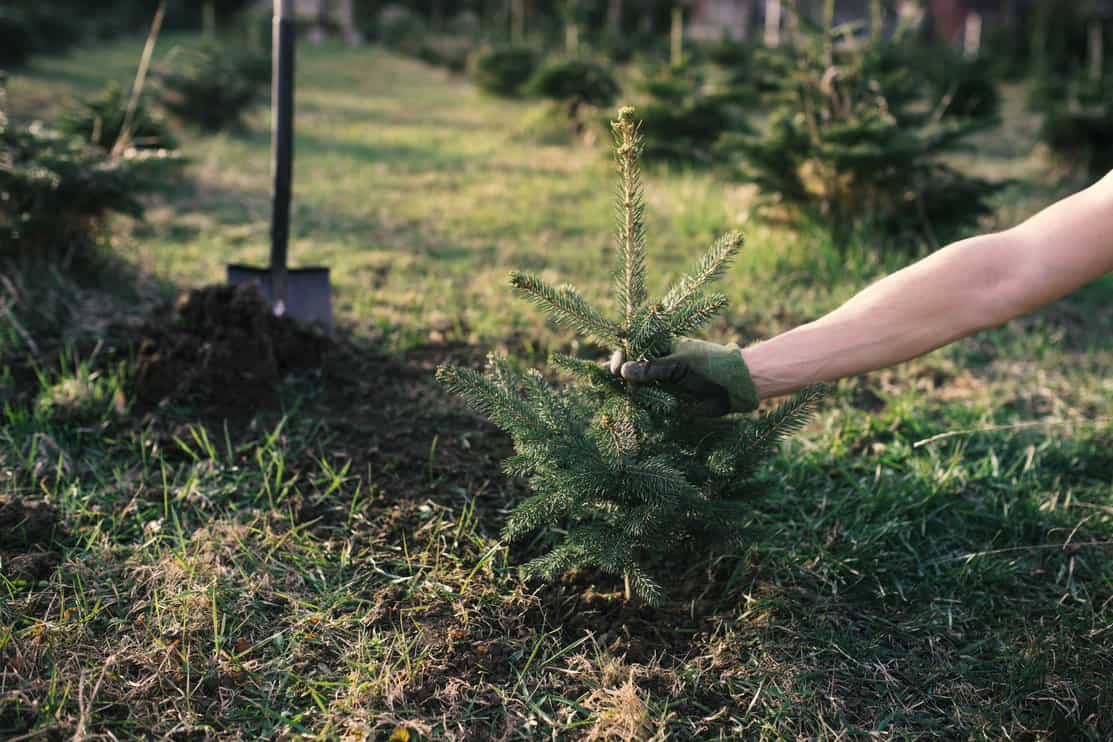
According to the University of Minnesota, you can use the diameter of the tree trunk to determine how much water your spruce tree should need at the time of transplant. At a minimum, for every 1 inch of trunk diameter, the tree will need 1 gallon of water.

After your spruce tree is transplanted, there is going to be a period where the tree is adjusting to its new home and getting all settled in. 

At this time, the roots will begin reaching out into the soil. What you don’t want is to only water the top few inches of soil. This is going to teach the roots that they should not dive deep into the soil for water, but stay close to the surface.

You’ll want to water the transplant deeply to train the roots to establish deep within the soil. This will promote a stronger tree that can better withstand high winds and storms.

If you’re considering planting a new spruce tree, take a peak at our guide on the best spruce trees to plant!

4. Water Spruce Trees Deeply For Better Root Growth

Spruce trees are particularly sensitive to drought conditions. One of the reasons is because of the way their roots respond to water stress.

According to an article in the Journal of Forest Ecology and Management, drought causes an increase in fine root mortality. In other words, the small roots that are reaching out for new resources die off quickly during drought conditions.

Fine roots are responsible for absorbing both nutrients and water in the soil. When these roots die back from drought, they can no longer deliver water and nutrients to the leaves (needles) of the spruce tree.

This is why spruce tree needles turn brown when the tree is water stressed!

One way to prevent drought stress is to water your spruce tree deeply as opposed to just a surface sprinkle. Watering your lawn isn’t enough to keep a spruce tree watered.

It’s recommended to water so that the soil is wet down to at least 9 inches. Providing water deeper into the soil will help train spruce tree roots to establish farther into the soil as opposed to shallower surface roots.

5. Use Mulch To Retain Moisture

Mulch has so many benefits around the yard. Not only does it make your yard look neat and trim, but it also helps keep moisture in the soil longer and protects your tree from the cold in winter.

It’s basically just a big security blanket for your spruce tree!

There are a few things to note when using mulch around your spruce tree:

  • Remove all grass first: Spruce trees compete with grass for surface water, and grass usually wins because the roots are so fibrous. Make sure to remove all grass before you put your mulch down.
  • Choose the right mulch: Make sure you purchase quality mulch so that you’re not running into problems with insect pests that may be hiding in lower-quality mulch.
  • Give the trunk breathing room: Keep the mulch at least a foot away from the tree trunk to ensure the trunk has room to grow and is not smothered.
  • Avoid over-mulching: You can add 2-3 inches of mulch around the tree, but it’s not recommended to go any deeper as this can promote weeds, smother roots, and give mice and rats a nice home to live in while they gnaw on your spruce’s roots!

Depending on what kind of spruce tree you have, you may not be able to use mulch. For example, blue spruce trees often have branches that reach the ground.

It’s not recommended to trim these branches, so you’ll have to employ some of our other tips to keep your spruce tree well-watered.

6. Use A Slow Trickle Of Water

When we think of watering deeply, you may be thinking of using a hose or a pail to pour tons of water at the base of your spruce tree.

This will get the job done, but it’s not as efficient as using a slow trickle of water over a longer period. Instead of giving your spruce tree a ton of water all at once, consider using your hose or an irrigation system to let a slow trickle come out over the course of several hours.

To use a slow trickle of water you can simply set your hose out near your spruce tree and set the nozzle to only drip water instead of a constant stream. 

The best time to use your hose to water your spruce tree is in the evening. Let it trickle throughout the night and turn it off in the morning. This will help completely saturate the soil but the slow trickle means the soil will not be soaking wet.

Alternatively, you can hook up an irrigation system using something like Flantor Garden Irrigation System

This kit comes with tubing, nozzles, and spikes that you can hook up to your water supply, making it easy to drip-feed your spruce as opposed to lugging out the garden hose every week.

Just remember, if there’s rain in the forecast that week, it’s better not to water your spruce tree. Overwatering can create just as many problems as underwatering.

If you have a blue spruce, under-watering could be one of the reasons why your blue spruce isn’t blue.

green spruce branch with water drops on a rainy spring or summer morning on a green natural background

7. Water Beyond Your Spruce Tree’s Dripline

How much water you give your spruce tree is an important aspect of keeping your spruce tree healthy. Where you water may be just as important!

When you bust out the garden hose or your irrigation system, you can’t just spray all willy-nilly around your spruce tree. 

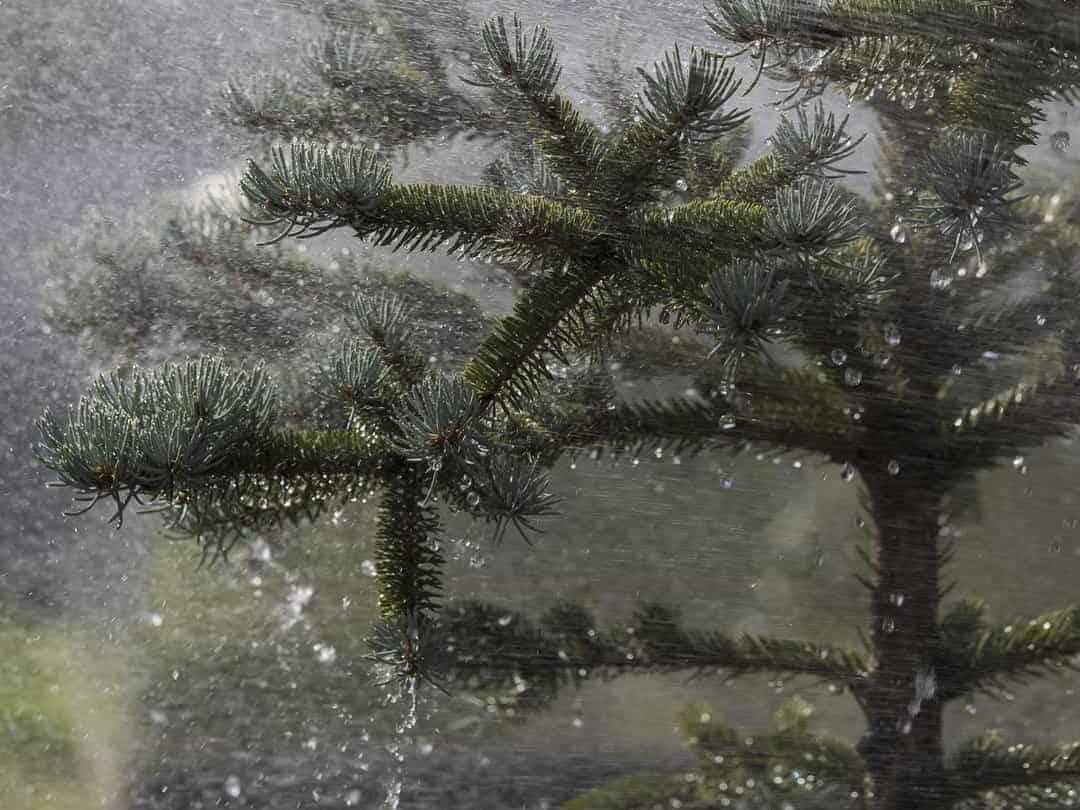
Spraying too close to the trunk of your spruce tree can promote the growth of fungus. Try to avoid too much water in a 12-inch circle around the trunk of the spruce tree.

You can drip feed or use an irrigation system beyond this 12 inches. Most of the time when people water their trees they only water to the drip line. 

The dripline is the outermost region of the spread of the tree. So when it rains, figure out how far out the rain drips from your tree’s leaves and branches. This is the dripline, which goes in a circle around the entire tree.

The problem with only watering up to the dripline is that the tree’s roots can grow far beyond that point. Make sure to water your spruce tree beyond its dripline to give far-reaching roots enough water.

The healthier your spruce tree is, the less chance that it will fall to pests or tree afflictions.

8. Remove Grass Under Your Spruce Tree

We mentioned grass a little bit earlier when we talked about mulching around your spruce tree. It’s certainly a good idea to remove grass before placing down mulch.

It’s also a good idea to remove grass entirely from under your spruce tree, whether you mulch it or not. Grass should be removed under your spruce tree for a few different reasons:

  • Competition: Grass roots are very shallow and will compete with deeper spruce roots for water and nutrients. Unfortunately, because shallow roots get the first shot at rainwater, there may not be enough left for deeper spruce roots.
  • Pests: some pests like rabbits, gophers, squirrels, and mice find haven in tall grass. These animals are also known to damage trees by chewing bark, twigs, and even root systems of spruce trees.
  • Reduce mowing damage: If you have grass under your spruce tree, chances are you have to mow it or use a weed trimmer. Using this type of equipment close to your spruce tree can damage the tree and any shallow roots.

If your spruce is looking a little sad or the needles are turning brown, it may be because the grass is hogging all the water. 

With grass removed and a proper watering schedule, your spruce tree will be on its way to a healthy recovery!
Heavy rain is watering a beautiful spruce. Strong wind and raindrops.

9. Water Your Spruce Tree At The Right Time

Watering is extremely important to the health of your spruce tree. However, if you water at the wrong time, it could cause your spruce tree to expend energy it doesn’t have to process the water.

Here’s when you should water your spruce tree:

  • Directly after planting it
  • When the soil feels dry to the touch (if there’s no rain in the forecast)
  • During a drought
  • If there’s been less than an inch of precipitation over a 7-day period
  • If needles begin turning brown
  • In the fall, just after the leaves start to change and before the ground freezes

Regular maintenance watering can be done once a month with a thorough soaking if none of the conditions above are present. 

Here’s when you shouldn’t water your spruce tree:

  • When the ground is frozen
  • In August (according to Montana State University, this helps your spruce harden off for winter)
  • If it has rained 1 inch or more in the past week
  • If the soil is still moist to the touch

Watering at the right time is just as important as the amount of water. 

10. Spruce Trees Need A Lot Of Water

We talked about how spruce trees are somewhat drought-sensitive. Why do these trees need so much water and why can’t they stand dry conditions?

One of the main reasons has to do with the fact that spruce trees are evergreen. While other trees are lazy and go to sleep in the winter, spruce trees are still hard at work.

Since spruce trees photosynthesize all year long, they require more water than the average deciduous tree that goes dormant. Watering helps keep spruces, like the blue spruce, more blue!

Spruce tree needles have adapted to this need by having a waxy coating over the needles. This helps keep the moisture inside the needles instead of letting it evaporate into the air.

Why Your Spruce Tree Might Still Turn Brown After Watering

If you’re giving your spruce tree enough water but the needles are still turning brown, there may be something else going on.

Here are some of the reasons why your spruce tree is still turning brown even though you’re watering it:

  • Grass: If your spruce tree has grass underneath it, the grass could be absorbing most of the water that’s going into the soil. Try clearing the grass away and see if your spruce improves.
  • Frozen ground: If the ground is frozen, there is no way for the water to reach your spruce tree’s roots. Wait until the ground thaws before watering your spruce tree again.
  • Pests: Spider mites, sawflies, and bagworms can affect a spruce tree’s appearance, making it look water stressed.
  • Tree affliction: Needle cast causes spruce needles to turn brown. However, this is usually kept at bay if trees are not stressed.
  • Lack of nutrients: Your spruce tree may be suffering from a lack of nutrients. This is a good time to use fertilizer to give your spruce trees a good boost. 

Scott’s Evergreen Flowering Tree & Shrub Continuous Release Plant Food is high in nitrogen, which is just what spruce trees need.

You can read more about the best spruce tree fertilizers here.
spruce needles branches

How To Tell If Your Spruce Tree Needs Water

All trees have a way of letting us know that they are lacking certain things such as water or nutrients.

Spruce trees are no different, and they can show us a few obvious signs that they need a little extra care and water:

  • Discolored needles: needles will typically change to a light green and then to brown as they continue to remain stressed. Branch tips are the first to be affected.
  • Brittle branches & needles: As the tree branch begins to die back, the needles will become brittle due to a lack of proper water and nutrition. Eventually, this will spread to the entire branch.
  • Falling needles: Some needle shed is normal, but if there are a ton of needles falling off your spruce tree, it might be water stress.

If you’re seeing any of these signs, it’s definitely time to give your spruce tree a deep watering to get it back to a healthy green.

On a side note, if you’re spruce tree seems damaged beyond repair, check out when the best times to cut down your spruce tree are.

That’s All For Now!

That’s all the tips we have for watering your spruce tree! It’s important to properly water your spruce tree to keep it healthy, strong, and green.

Now for a quick recap.

Here are some tips for how often you should be watering your spruce tree:

  • Check soil dryness
  • Check soil type
  • Water newly transplanted spruce trees
  • Water deeply to promote deep root growth
  • Use mulch
  • Use a hose or irrigation to slow-trickle water
  • Water beyond the dripline
  • Remove grass
  • Water at the right time

If you’re ever in doubt, contact a local arborist to get a professional opinion. They can tell you exactly what kind of state your spruce tree is in and how often you should be watering it!

References

Gaul, D., Hertel, D., Borken, W., Matzner, E., & Leuschner, C. (2008, August 20). Effects of experimental drought on the fine root system of mature Norway spruce. Forest Ecology and Management, 256(5), 1151-1159.

Nadezhdina, N., Cermak, J., Gasparek, J., Nadezhdin, V., & Prax, A. (2006, October 01). Vertical and horizontal water redistribution in Norway spruce (picea abies) roots in the Moravian Upland. Tree Physiology, 26(10), 1277-1288.

Puhe, J. (2003, March 03). Growth and development of the root system of Norway spruce (Picea abies) in forest stands – a review. Forest Ecology and Management, 175(1-3), 253-273.

Pukacki, P. M., & Kaminska-Rozek, E. (2005, March 16). Effect of drought stress on chlorophyll a fluorescence and electrical admittance of shoots in Norway spruce seedlings. Trees, 19, 539-544.

Rasanen, J. V., Yli-Pirila, P., Holopainen, T., Joutsensaari, J., Pasanen, P., & Kivimaenpaa, M. (2012). Soil drought increases atmospheric fine particle capture efficiency of Norway spruce. Boreal Environment Research, 17, 21-30.

Apple trees can make a wonderful addition to any yard or garden. They look great, they provide shade, and, perhaps most importantly, they grow delicious apples! If you have been thinking about planting an apple tree, you might have wondered whether you should plant it in a place with lots of sunlight or with some type of shade from another tree’s canopy or the cover of a building.

Though apple trees can tolerate some shade, they grow fastest and strongest in full sun. Apple trees are healthiest when they get at least eight hours of direct sunlight every day. Abundant sunshine is necessary for the best chance of growing lots of healthy apples on your apple tree each year.

Read on for some tips about how to choose a spot, how to make sure your apple tree continues to receive full sun throughout its life, and whether the climate of your home will have a dramatic impact on the growth and fruit production of your apple tree.

How To Determine If Your Environment Is Right For An Apple Tree

It takes a lot of energy for a tree to grow strong and to produce a lot of fruit, like apples. And the way that trees get their energy is through the process of photosynthesis, which is most simply defined as the way that plants convert sunlight into energy.

In order to have a lot of energy, a plant needs a lot of sunlight, and this is definitely something your apple tree will need if it is going to grow well and produce a large number of apples every fall. 

According to the Clemson’s Home and Garden Information Center, if you want your apple tree to thrive and produce a lot of healthy apples every year, you should make sure it gets a lot of sun for as much of the day as possible.

The first thing to consider when deciding whether or not to plant an apple tree is whether you live in an environment that is going to be conducive to a healthy apple tree and healthy fruit.

If you live in a very cloudy place or a very cold place, this can get a little tricky. But that doesn’t mean you need to abandon the whole idea. It turns out that apples grow really well in many cold climates, so no matter where you live, the temperature may not be an issue.

Read on for the details about how to determine if your climate and environment will be good for a new apple tree!

Growing An Apple Tree In A Cloudy Location

Apple trees love full sun, so you might be wondering if an apple tree is a good option for those who live in very cloudy places with lots of rainfall and not too much regular sunshine.

The sad reality is that, while apple trees can survive in these types of environments, they do not grow as well if there is a lot of consistent rain or cloud cover. 

Apple trees need full sunlight at least some of the time, so if you do not live somewhere with at least a medium number of sunny days, you might want to consider a different type of tree.

You can try growing an apple tree, and it will probably survive, but you should be prepared for its growth to be slower and for it to produce less fruit in the summer and fall than its counterparts that live in sunnier places.

If you want to try growing an apple tree in a cloudy place, try to find the most sunlight possible near your home. This usually means looking for a spot that gets southern light exposure, as that will stay the sunniest the longest.

To find the best spot, go outside during different times of the day on the same day and see where there is shade and where there is sun. Choose a sunny day to do this if you can, as this will optimize the sunlight your tree receives both on rare sunny days and on days that are cloudy, as some sunshine does make its way through those clouds.

Even if you live somewhere with a lot of cloud cover or even a lot of rain, you can still plant an apple tree.

Keep in mind, though, that the fruit production of a tree grown under a lot of cloud cover or without abundant sunshine will produce little to no fruit. So try to expect this so you won’t be too disappointed in the autumn.

Growing An Apple Tree In A Cold Climate

You might think that, because apple trees love sunshine and do not grow as well in cloudy places, they might not grow well in cold places.

But, actually, that is not the case at all! Apple trees can grow very well and even thrive in cold environments as long as they get enough light. 

Apple trees are hardy trees when it is cold out, so don’t think that a need for sunshine is the same as a need for warmth. There are some varieties of apple trees that grow better in cold climates than others, and many of these are famous for the cold climates in which they first originated or are most often grown.

For example, the Wolf River apple gets its name from (as you might guess) the Wolf River, which is in Wisconsin, a notoriously chilly state. Wisconsin, in fact, has a lot of apple orchards and grows a number of varieties despite its cold winter temperatures. 

Surprisingly, the state that produces the most apples is Washington—a state that is known for both cool weather and clouds! According to the United States Department of Agriculture, Washington State, in fact, is responsible for more than half of the apples the United States grows every year!

bunch of juicy red apples

Other states that weigh in on a significant percentage of United States apple production are MIchigan and New York (my hometown state!), another set of states with cool autumns and cold winters.

If you are curious about the temperature of your yard’s soil at any time, though, you can use a thermometer designed for soil temperature, like this one from the Urban Worm Store, to tell you exactly how warm or cold the soil is at any given time.

If you do live somewhere cold, there are some tips that can help you take the best care of your apple tree.

For example, according to Michigan State University, you can plant your apple tree on a hill that isn’t too steep. This method actually helps keep cold air from lingering near your tree, and this in turn means that it is less likely that frost or freezing temperatures will harm your apple tree.

Keep in mind that there are many apple tree varieties that not only survive cold temperatures and even snow, ice, and freezing soil, but they thrive in it and produce a great deal of fruit every child autumn. So don’t let cold weather deter you from planting an apple tree.

Finding The Best Spot For Planting Your Apple Tree

Once you have determined whether your house, garden, or orchard is well suited for an apple tree, it’s time to choose a spot to plant it.

Whether you live in a shade climate, a sunny climate, or something in between the two, you should choose a sunny day to pick the spot for your apple tree. This will give you the best sense of how to locate the optimate sunny spot for planting your apple tree.  

How To Scout For A Sunny Apple Tree Planting Spot

Choose a sunny day. If you scout for a spot on a cloudy day, you might be left guessing about how much sun a certain area of your yard or garden actually gets throughout the day.

If you look at your yard on a day that the sun is out all day or most of the day, you will be able to clearly see the amount of sunlight on any given part of your yard throughout the day.

You will need to start early, as soon as sunlight starts to hit your yard directly. Note which areas of the yard or garden are sunniest early in the morning.

Morning light tends to be better for most plants than afternoon light, but apple trees want so much light that afternoon shade is not necessary or even desirable. So it doesn’t matter whether your yard gets more light in the morning or afternoon. The overall goal when planting an apple tree is just as much light as possible.

But finding morning sunlight is very important. The Utah State University Extension Office notes that morning sunlight is very useful for helping your apple tree dry if it has been rained on overnight or dew has collected outside.

Apple trees do not like to sit in a lot of water, so drainage is very important to keep their roots healthy. Morning sunlight can help with this.

Once you have spotted the morning sunlight, keep notes throughout the day. Maybe some light changes depending on the shadows cast by your house, garage, or outdoor building.

It is possible that other trees are not in the way in the morning, but later in the day they start to cast a shadow over your potential planting spot. These are the things you want to note so you can try to find a spot that adjusts for these potential shady problems.

Pay careful attention to the light at the end of the day. Most apple trees will grow even better if they are still getting some sunlight in the late afternoon, so if you find a spot that is sunny in the morning and still getting light as the sun starts to set, you may have found the perfect spot.

Fortunately, you don’t need to worry about shade underneath the tree. Here are the best plants to plant under an apple tree! (Hint: they tolerate shade!)

Apple trees and fruits n a garden in summer

Some Things To Watch Out For As You Check Sunlight In Your Yard

As you are tracking the sunlight throughout the day, keep in mind the time of year. The sun may set early if you are scouting in the fall or winter, so you will then just have to try to project where the light may fall if the sun were up longer.

Another thing to look for is the age and size of the trees near where you want to plant your apple tree. If you have a young tree, a seedling, or a sapling planted in your yard, you will only be seeing the current shade it casts, not the shade that will change every year as your young tree grows bigger and bigger.

Try to consider the potential size of that tree’s canopy and plan for it as a mature tree, to make sure it will not eventually cast too much shade on your apple tree.

Even a little bit of shade can have a big impact on your apple tree, causing it to grow more slowly and produce fewer apples.

So pay careful attention to this step so you can set your apple tree up for success from the very beginning.

If you want to make sure you are getting an accurate idea of the amount of light any place in your yard or garden is getting throughout the day, you can try a tool that measures sunlight.

This 3-in-1 Soil Tester, Plant Moisture Meter Light and PH Tester, for instance, tells you how much sunshine a plant gets throughout the day.

You can try it on a spot that doesn’t have anything planted in it yet to help you determine how much light an apple tree might get if you planted it there. 

You Need At Least 2 Apple Trees To Grow Apples

This tip doesn’t have anything to do with sunlight, but it can determine whether your apple tree produces a lot of apples or none at all.

Apple trees can only produce full fruit if they are planted within about 100 feet of another apple tree–and, it is very important to note, that second apple tree cannot be the same variety as the one you are planting. This is because apple trees require the pollen from other nearby apple trees in order to grow fruit!

So, for example, if you are planting a Mcintosh apple tree, you have to make sure it is planted fairly close to another apple tree that is not a Mcintosh. It can be anything else, though, including a crabapple.

One of the easiest ways to solve this problem is to scout your neighborhood or even your own yard or garden to see if there are any other apple trees around, including crabapples.

If you find one, you don’t have to worry. But if you do not find one within 100 feet, you will need to plant two apple trees.

This is not necessarily a bad problem to have! If you have the space, you can plant two standard size apple trees of two different varieties at the same time. Now you will have double the fruit in the fall!

If you do not have a lot of space, that does not mean that you have to abandon the whole idea, though. You can simply change the size of the apple tree you plan to plant.

Apple trees are frequently available in dwarf varieties, which are just smaller-sized apple trees. While they might be smaller, they still produce a lot of fruit, and, as a bonus, they tend to mature to fruit growing age faster than standard-sized trees. So you might have apples even earlier if you plant dwarf trees anyway.

If you are very ambitious about growing apples and are planning to start your own small orchard, something to consider is how to enhance the pollination of your apple tree or trees.

According to North Carolina Historic Sites, some orchards make use of actual beehives in the orchard or garden as a way to encourage more pollination by way of bees!

bee on apple blossom

If beekeeping is not in your future, though, planting your apple tree in relatively close proximity to another type of apple tree is a simple way to ensure fruit every year. 

Make Sure To Prune Yearly And Keep Your Apple Tree Irrigated

Now, keep in mind that it’s very important to prune your apple tree each year, as this will help clear out dead branches, making way for new ones to bear fruit in the fall.

The best time to prune an apple tree is in the winter or perhaps early spring, though this is something you don’t need to worry about until the tree has grown enough to be pruned. Just keep it in mind for your future growing tree.

Also, remember to consider the soil in which you plant your apple tree. Apple trees do not do well in standing water, so soil with a lot of clay in it can be problematic. Sandy soil can help, and you can even add some to your planting area if needed.

The key is to keep the soil around your apple tree well watered but also well drained. Too much water can deprive the apple tree’s roots of oxygen.

If your apple tree is diseased or damaged, however, pruning will not be enough. If any of these reasons to cut down your apple tree apply, it might be better to give it the axe.

That’s A Wrap!

You’ve considered your climate, the common temperatures of your region throughout the year, and the amount of cloud cover your yard tends to get throughout the various seasons.

You’ve looked at the sunlight in your yard and considered the potential shade from buildings, structures, and other trees, including those that have not yet grown to maturity.

You’ve checked for another variety of apple tree within 100 feet of your chosen planting spot, or you have planned to plant two different types of apple tree in your yard.

Once this checklist is complete, you are ready to plant your new apple tree! If you need some pointers, check out how to grow apples in your yard (and how long they take).

Happy planting, and enjoy those apples!

References

Barden, J. A. (1977). Apple Tree Growth, Net Photosynthesis, Dark Respiration, and Specific Leaf Weight as Affected by Continuous and Intermittent Shade1. Journal of the American Society for Horticultural Science, 102(4), 391-394.

Lakso, A. N., & Musselman, R. C. (1976). Effects of Cloudiness on Interior Diffuse Light in Apple Trees1. Journal of the American Society for Horticultural Science, 101(6), 642-644.

Rom, C. R. (1991). Light thresholds for apple tree canopy growth and development. HortScience, 26(8), 989-992.

Peach trees are known for producing yummy fruit, being great trees for aesthetic purposes, and growing well. When you decide whether a peach tree is for you, though, you should consider how much sunlight your area receives, as that will ultimately tell you whether you can sustain this type of tree and reap its benefits.

Peach trees grow their best in conditions that boast 6 hours of full sunlight. The sun helps a peach tree produce fruit, bloom flowers, and grow faster. Full sunlight is a necessity to grow a happy, healthy peach tree and will result in the best fruit production.

Stick with us for a while to learn about why and how the sunlight at its fullest can bring peach trees to their best. We’ll go over how indoor peach trees can be maintained, as well as what happens when your tree receives too little sunlight, or too much! Let’s dive in.

How Much Sunlight Does A Peach Tree Need?

Peach trees benefit most from full sunlight conditions. This means that they need at least 6 hours of direct sunlight per day, but 8 hours is really ideal. 

There are over 300 varieties of peach trees, and those are just the ones in the United States! Internationally, about 2,000 species of peach trees exist.  So, keep in mind that you may need to do some research on your specific species before planting so that you have the most accurate sun requirements for your tree.

Wondering how you’ll do it? Get in touch with a local arborist that can help you evaluate and best care for your peach tree. It’s their job after all!

Why Do Peach Trees Grow Best In Full Sunlight?

There are so many different growing requirements when it comes to trees of different types, let alone between the many species of one tree, like the peach tree.

You may find yourself wondering why peach trees even need full sunlight when so many other trees prefer shade or at least partial shade.

This question is a valid one, and it has to do with the fact that each species has individual needs and parameters that they use to best grow and develop – the sun being one of the most elements for peach trees to flourish.

So without further ado – here are the reasons that peach trees need full sunlight!

Sun Is Needed For A Peach Tree To Photosynthesize 

Anyway, it is clear that most trees and plants need partial to full sunlight. Why is this? Well, photosynthesis, the process that helps plants grow by turning carbon dioxide, sunlight, and water into glucose (which becomes the plant’s energy), is crucial to the survival of plants. 

And what is one of the 3 key ingredients for photosynthesis to occur? Sunlight!

The sun, then, is a crucial component of plants’ abilities to grow and develop into mature, strong organisms.

Peach Trees Bloom Better In Full Sun

Let’s start with sunlight’s impact on the production of your tree. Peach trees will always bloom better when they receive full sunlight. 

Some trees actually do better and bloom more when in full shade, but peach trees are certainly not on this list.

Peach Trees Produce More Peaches In Full Sun

peaches in full sun.

Peach trees also need full sunlight to produce the fruit that comes after the bloom, because of photosynthesis!

Photosynthesis allows trees, like your peach tree, to produce energy. This energy not only helps the tree to grow, but allows it to focus on fruit production, fighting disease, and being healthier overall. 

Why Do Peach Trees Produce More Peaches When They Receive More Sunlight?

  • Higher energy levels: Sunlight kickstarts photosynthesis, which allows the peach tree to produce glucose which acts as plant food. The more glucose (sugar) that a tree creates, the more energy it has to direct toward peach production.
  • Fewer structural issues: Full sunlight will help to dry out trees after rain and watering. This will help any tree, including your peach tree, avoid infestation occurring and disease forming. The fruit will be able to be produced in better conditions.

Most fruit trees prefer full sun! If you’re wondering about other types of fruit trees and their sunlight requirements, head on over to our article to learn about another type of fruit tree – cherries!

Sunlight Helps Shape Your Peach Tree

The shape of a tree is not only something that makes the tree look nice – it also impacts the overall health of the tree.Sunlight is a big part of this shaping process. It can be the difference between an even, full tree, or a lopsided, patchy canopy. 

Now, it is only natural to want your peach tree to be aesthetically appealing. However, we also want the tree to be its strongest, and most resilient.

The health of your peach tree actually ties into its appearance, as a healthy peach tree will be fuller, more even, and better at producing flowers and fruit.

Growth Gravitates Towards The Location Of The Sun

New growth gravitates toward the sun, so partially shaded areas may lead to a tree that leans, in order to best access the sunlight it needs to grow.

Let’s take, for example, a basil plant that you have on your windowsill. First of all, congratulations for growing your own herbs. Have you noticed, though, that it leans toward the window?This is because it is trying to soak up all the benefits the sun has to offer!

It’s no different, really, when it comes to a plant like a peach tree. The tree will lean to the sunlight that it requires, and this will help to maintain its growth.

Peach Trees Sustain New Growth In Full Sun

Sunlight triggers photosynthesis, the essential process for a tree to create energy and sustain new growth. The amount of sunlight received directly impacts its energy.

Photosynthesis can only occur when plants are able to take in sunlight, water, and the gases in the air. These ingredients combine to form sugar, known as glucose, which acts like plant food. 

So, the more sunlight that a peach tree gets, the more energy will be produced, and the stronger the tree will be. It will also be able to focus more energy specifically on its development, as opposed to scraping by with the bare minimum amount of energy needed to survive.

The better a tree is, the more it is able to produce fruit, grow taller, and adapt to its conditions.

Sunny Conditions Promote A Happier Peach Tree

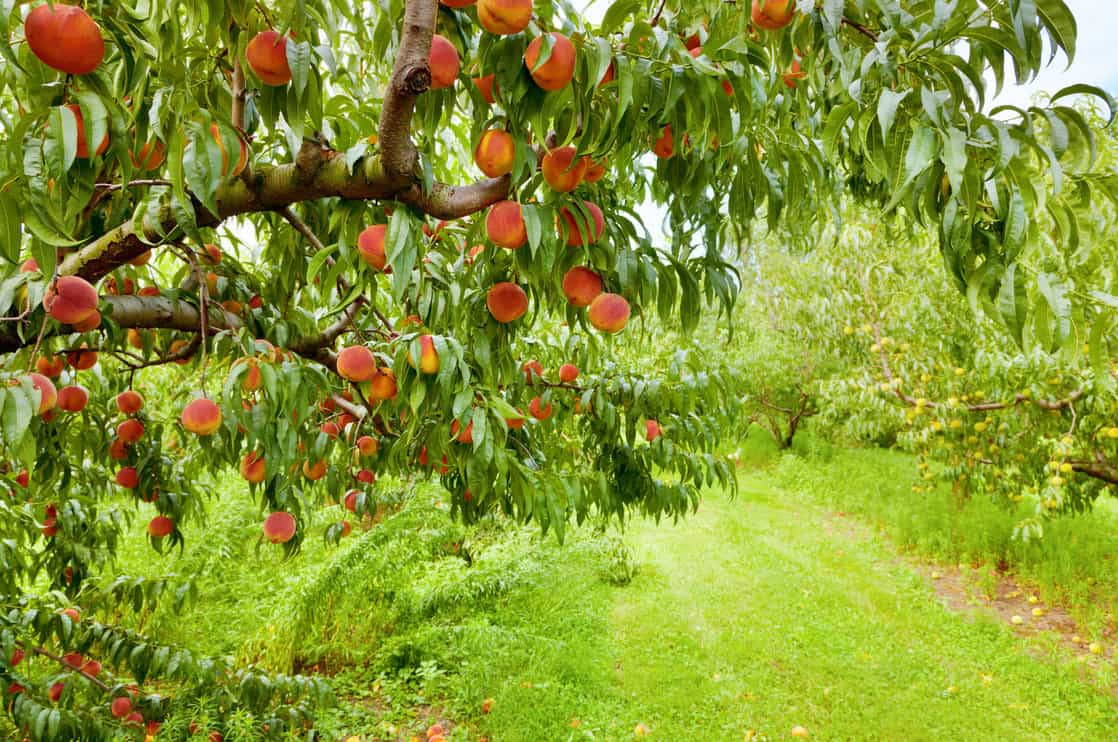
peach tree branch. Ripe peaches on a tree among the leaves. Harvest in the orchard.

The way that a tree is able to use the sun to dry off after watering, or rainy weather, is actually quite vital to the success of a peach tree. 

Let’s talk about a few reasons that leaves and branches being in full sun can help your peach tree stay as healthy as can be:

  • More resistance to fungus and rot: Wetness on your tree promotes the growth of fungus, which turns to rot. It can also allow for fungus to more easily overtake your tree. If your peach tree is meant to be in the sun, keeping it in shaded or dimmer conditions might just lead to its downfall.
  • Avoiding pests: Insects and other pests are drawn toward damp, cool, shaded areas, especially parts of a tree that have begun to rot. Starting to see the snowball effect here? If you leave more water to sit on your tree, which leads to fungus and rot, you can expect an infestation of some sort. This could prove to be a game ender
  • Stronger skin of the peach: Fruit that is left with sitting water can begin to crack on the outside. This can render your peach inedible, if the cracks progress. Unless you wish to feed animals, and not get any peaches to yourself, you’ll want to keep your fruit dry and edible.

The Unwanted Effects Of Peach Tree’s Growing In Partial Shade 

Some unwanted effects may be seen on a peach tree that grows in partial shade:

  • Weak branches: Branches that receive less sunlight than necessary will have to reach further to try to get some sun. So, their attachment to the tree will be weaker, as will the branches themselves.
  • A lopsided tree: If sunlight is available, but in inconsistent patterns, new growth will occur in the spots that receive the most sun. Other spots that sit in the shade for more time will be less prone to grow at the same rate. This will leave you with a patchy, lopsided-looking peach tree.
  • Less canopy space: Gaps in growth mean that the canopy of the tree will be smaller, more uneven, and less productive when it comes to peaches. This means you get less shade, less fruit, and more pruning work in order to maintain an even appearance of your canopy.

When receiving enough unobstructed, full sunlight, your peach tree can grow tall, strong, productive, and with an even appearance that helps the overall structural integrity of the tree. 

What Else Do Peach Trees Need Besides Sunlight?

Along with sunlight, peach trees need appropriate amounts of water, fertilization, and maintenance performed each year. They even need the right kind of plants to share soil with, to make sure that they can absorb nutrients in the right way.

Peach Tree’s Need Water 

Water is important, of course, but, like sunlight, too much water can be just as bad as too little.

The CARPATHEN Drip Irrigation Kit is a great way to avoid over, or under, watering your tree. It comes with ¼ tubing, drip connectors, and drip emitters, to create a full irrigation system that is flexible to your needs and the space you have to work with.

If your peach tree is located in an area with the recommended 6-8 hours daily of full sunlight, you should never have to worry about the tree not getting dry enough.

Pruning Is A Peach Tree Neccessity 

Pruning is another way to help maintain a tree that might have a bit too much water on its surface. 

The Gonicc 8.5” Professional Rotating Bypass Titanium Coated Pruning Shears will be a good tool when it comes to clearing out any branches that might have fallen to disease or infestation. 

Can Peach Trees Receive Too Much Sun?

Peach trees clearly need full sun to do well, but is there such a thing as too much?

Having too many sunny, hot days in a row can also end up harming your tree.

It’s worth mentioning that it is often the combination of heat, dryness, and the sun, that causes issues. The sun alone, heat alone, and even some dryness by itself will not often cause lasting damage.

Your Peach Tree Can Get Sunburn

What is the major sign that your tree is receiving too much sun? Your tree will have sunburn!

Just like people, peach trees can get sunburnt, too. If a tree is left to receive direct sunlight for too long, especially in high heat, with higher UV levels, your tree can get sunburnt.

Properly watering your peach tree and mulching (if its a home tree) will be very helpful in mitigating this!

Water Stress Can Happen If A Peach Tree Has Too Much Sun 

Water stress is another issue that may arise in peach trees that have seen too much sun has to do with the amount of water that the tree has access to.

Water stress will hinder your peach tree from absorbing all the nutrients it needs to grow in a healthy way.The heat and dryness associated with the sun, much like a sunburn, will result in the eventual lack of water for the peach tree to use.

A tree that is under water stress can seem droopier than usual, and it will often have discolored leaves. Not only does this impact the bark of a tree, but the soil of your tree can easily be dried out by too much heat and direct exposure to the sun. 

How (And When) To Protect Your Peach Tree From Too Much Sun

If your area is always sunny, it will be great for your peach tree to prosper. However, how do you ensure that it doesn’t get sunburnt, or end up under water stress, though? Let’s talk about it! 

According to the Realizing Increased Photosynthetic Efficiency, peach trees have their own version of sun protection that has evolved over time. This protection has been compared to the way that people put on sunglasses in bright conditions, to help protect their eyes from the light.

This sun protection process is known as Photoprotection:

  • It is activated in full sunlight conditions, but can be turned off when a leaf is shaded. This shade could be from a cloudy day, from evening shadows, or even from a leaf above it that blocks the sun.
  • Photoprotection keeps leaves from being oxidized and bleached, or what we call ‘sunburnt’, from full, direct sunlight.

Tree Wraps Also Protect Peach Trees From Too Much Sun 

Tree wraps are a great way to help protect your tree from getting the negative effects of direct, full sunlight.

Dalen’s Protective Tree Wrap acts in the way that sunscreen can for humans, and is light-colored in order to reflect the harsh sunlight.

Thankfully, these tree wraps won’t hold in any moisture that the sunlight is working to dry up. So, rest assured that your tree will be protected in more ways than one.

How Do Peach Trees Respond To Cloudy Days?

peach trees on a cloudy day.

We know that sunlight is critical to the survival and production of peach trees. No matter the impacts of too much sun, and what that may look like, we know that too little sun can hinder your tree. So, what happens to trees that experience days that are all too cloudy?

Your peach tree is not going to suddenly lose all of its energy, nor its ability to function, in the face of a cloudy day. In fact, it will still produce some energy.

The sun is still shining through, just not with the same level of intensity. The rays of sunlight will still be enough to trigger some level of photosynthesis, even if it is not occurring at the same rate that high sunlight levels might cause.

Production of fruit, blooming of flowers, even growth of the canopy, and all of the ‘secondary’ processes of your peach tree might be put on pause on these types of days. The lesser amount of energy produced will result in the tree using it all up to stay afloat. 

What If You Live In A Cloudy Area? 

If you live in an area that experiences many cloudy days, you don’t necessarily need to be concerned.

You will first come to see that your peach tree won’t grow as quickly. It may not grow as tall, but its canopy remains smaller than those trees in sunny conditions. The lower energy levels also means that you won’t get as many peaches, and the fruit will be less fulfilling.

LED lights can be a great solution to this problem, like this LED Plant Grow Light with Stand! This is a great way to supplement the light that your plant receives. It adds a greenhouse-like level of light thanks to the 4 adjustable lights.

There is even an option to set them on a timer. Think of your irrigation system, but this gives your tree light.

Making Sure Indoor Peach Trees Get Enough Sun

The same things that happen to a peach tree on a cloudy day, can happen to one indoors! The truth is – many peach tree species grow well, maybe even better, indoors. 

Take our example of herbs, for instance. If you notice herbs on your window syl growing towards the window – it’s because they’re finding the sunlight! This same idea can be for a peach tree that grow indoors but sits in sunlight from a window or door!

Maintaining a peach tree indoors is actually a pretty simple process because so many peach trees are grown inside. Simply ensuring that your peach tree has enough consistent light from a window, or maybe from artificial lighting, along with enough water and fertilizer as needed.

Try a balanced fertilizer like the Southern Ag All Purpose Granular Fertilizer to help best sustain your peach tree.

That’s All For Now!

Peach trees benefit greatly from being planted in an area that receives full sun. If you give your peach tree 6-8 hours of sunlight, you’ll be golden.

Peach trees prefer full sunlight to help them grow for many different reasons.

Let’s go over these reasons one last time!

Here are the 5 reasons why peach trees grow best in full sun:

  • Peach trees bloom better in full sun
  • Peach trees produce more peaches in full sun
  • Sunlight helps shape your peach tree
  • Peach trees grow much faster in full sun
  • Sunny conditions promote a healthier peach tree

Good luck, friends! Until next time.

If you want some more information on fruiting trees, check out our article on some of the best fruit trees that have shallow roots, which makes them easier to plant near your home!

References

Baraldi, R., Rossi, F., Facini, O., Fasolo, F., Rotondi, A., Magli, M., & Nerozzi, F. (1994). Light environment, growth and morphogenesis in a peach tree canopy. Physiologia Plantarum, 91(2), 339-345.

EREZ, A., & KADMAN‐ZAHAVI, A. V. I. S. H. A. G. (1972). Growth of peach plants under different filtered sunlight conditions. Physiologia Plantarum, 26(2), 210-214.

Girona, J., Gelly, M., Mata, M., Arbones, A., Rufat, J., & Marsal, J. (2005). Peach tree response to single and combined deficit irrigation regimes in deep soils. Agricultural Water Management, 72(2), 97-108.

Spruce trees are an all-season favorite, whether you have just one in your yard, or you’re growing a landscape full of spruces. Of course, these trees need the proper conditions to really thrive. And thus, we come to the question of their sunlight requirements.

Simply put, it’s best to give spruce trees full sun. That means at least six hours of unimpeded sunlight. While the specific light requirements may vary with the type of spruce tree, this rule applies to any variety. Make sure to plant new spruce trees in open areas free of significant shade covering.

We all know that it isn’t as simple as just six hours a day, however. There are certainly other factors that can affect how much sun and how much shade your spruce tree needs. In this guide, we’ll go over why spruce trees need a certain amount of light, how to tell when they need shade, and moreover, how to keep your spruce trees growing strong!

Yes, Spruce Trees Prefer Full Sun Instead Of Shade

In general, spruce trees do best when they have full sun. Full sun means that they get at least 6 hours of unimpeded sunlight every day. Sure, they might survive in other conditions, but if you’re looking for optimal placement, make sure you plant them in a bright, sunny area.

Having a tree is an investment. While it entails some amount of financial investment, it really comes down to investing your time and labor. Although time-consuming, the payoff you get is a happy and healthy tree that enhances the look of your landscape.

There are plenty of reasons that spruce trees prefer full sun, and they’re much the same as many other evergreens. Of course, we’ll delve into these reasons as we progress further in this guide.

Spruce Trees Can Sometimes Handle Partial Sun

spruce true. picea. Picea spruce, a genus of coniferous evergreen trees in the pine family Pinaceae. Coniferous forest in Karelia. Spruce branches and needles. The problem of ecology, deforestation and climate change.

Now, we do have to say that if you’ve planted your spruce trees in an area that doesn’t get full sun, don’t panic. Your spruce tree might be okay, even if it’s only receiving partial sun.

Remember, spruce trees prefer full sun. Not only that, a daily dose of full sun helps them thrive and reach their full potential. Some spruces don’t do as well in partial sun as others, although many can at least tolerate it.

If you’re not sure whether your variety of spruce can handle it, make sure you look up the requirements of the tree in question just to be sure.

But What If Your Spruce Tree’s Not Getting Enough Sun?

Unfortunately, uprooting your tree and replanting it elsewhere isn’t usually an option, especially if it’s already established itself.

Once a spruce tree is established, the roots can go much deeper than you might expect. Of course, uprooting the tree could do more damage than good.

If there are certain obstacles you notice that really cut into your tree’s light (such as decorations, a shed, fencing), it may be possible to relocate them. If the issue is other plants blocking the light, assess whether or not you can prune them back to allow better light access for your tree.

Why Do Spruce Trees Need So Much Sun?

Now to the question of exactly why spruce trees need full sun? We’ll go into details for each of the reasons further, but each reason is equally as important as the next.

First, spruce trees are not deciduous. Deciduous trees lose their leaves and regrow them in the spring. They have to have the energy to keep their needles alive and to continue growing.

Certain varieties of spruce, such as blue spruces, use the sun to keep their color vibrant. In addition, proper sunlight can help prevent illness.

They Need Sun To Keep Their Needles All Year

As we mentioned, spruce trees keep their needles all year round – they can’t take a break from supplying energy to their needles.

Spruce trees don’t have the same ‘hibernation’ period as deciduous trees. In order to keep their needles healthy and intact, they have to be able to photosynthesize. Keeping their needles offers them certain advantages, but they can’t do it without enough sunlight to sustain their current growth.

Plants create energy through photosynthesis, which requires sunlight to allow them to convert water and nutrients into usable ‘food.’

Trees that lose their leaves in the winter don’t need much sunlight to maintain themselves, because they’re not supporting leaves.

They Need Sun To Support New Growth

Spruce tree being planted in sun

While you may not notice it, spruce trees do continue their growth throughout the year. Of course, you won’t be seeing major growth spurts in your tree through the winter, like you might in spring and summer.

However, the fact remains that these trees are continuously growing. So, not only do they need plenty of sunlight to keep their existing needles healthy, but they also need to be able to support new growth- no matter what time of year it is.

What To Do If You Notice Stunted Spruce Growth

If you’re noticing stunted growth, take a look at your tree and make sure it’s getting enough sunlight. While spruce trees have different growth rates depending on their variety, it’s still fairly predictable.

Spruce trees should grow at least six inches to eleven inches per year as a minimum, although many can grow as much as one to two feet annually.

If your tree isn’t reaching the minimum growth expected, it could be an issue of not getting enough sunlight. If it is, make sure you check for proper watering and fertilizing before you look at other possible health issues.

For information check out our article on how to water your spruce tree to make sure you’re giving your spruce tree enough water at the proper intervals.

Blue Spruces Need Sun To Retain Their Color

Blue spruces are one of the types of spruce we mentioned earlier. While they also need sunlight to continue growing and maintain their current needles, they also need full sun to maintain their signature color.

Blue spruces are prized for their color, but they need the right ingredients to achieve it.

While there are plenty of things you can do to increase the intensity of your tree’s color, full sun is the one thing that they need most of all. Again, this comes down to their need to photosynthesize.

The more your tree can photosynthesize, the more it can produce pigments that give the tree its famous color. Here’s our piece on how to make your blue spruce more blue if you have a specific blue tinted variety!

Other Things To Do To Keep Your Blue Spruce, Blue!

  • Ensuring your tree is getting proper nutrients
  • Using solutions specifically designed to enhance blue coloring
  • Making sure your soil is nutrient-dense and drains well
  • Ensuring your blue spruce gets enough water

If you’re looking for a good fertilizer that will help your blue spruce achieve its best color, try the Espoma Organic Evergreen Tone fertilizer. It has a 4-3-4 composition, and it’s a reliable formula for all spruce varieties, although it’s especially helpful for blue spruces that need a boost to their color.

Fertilizing will often help a blue spruce that ISN’T blue enough as well. Mostly, this is because some lack of water, nutrients, combination of the both, or an external issue from some fungi.

Sun Can Prevent Mold Or Fungus Growth On Spruce Trees

One thing most people don’t think about when they consider spruce tree light requirements is fungus and mold. Sure, they’re not something we want to think about, but still, it’s a necessary topic.

Spruce trees, like other evergreens, tend to be susceptible to fungus and mold. This is especially true when they’re in wet, warm, or humid climates. These are the ideal conditions for fungus and mold to take hold.

And because spruce trees tend to have densely packed needles that stay on throughout the year, it gives these microbes ideal spaces to build colonies. If left untreated, they can cause major health issues that spread throughout the entire tree.

Sunlight Dries Any Moisture Throughout The Tree

Sunlight serves a couple major functions when it comes to preventing mold and fungus growth. It helps dry wetness throughout the tree, which makes it more difficult for mold and fungus to grow on the tree.

The way sunlight helps with mold or fungus is through its ultraviolet rays. These rays actually kill many types of mold and fungi, which can not only prevent them, it can also eliminate them.

That’s right. Sure, it might sound too easy. Thankfully, this is one tip that is not only tried and true, but is backed by science.

What Else Do Spruce Trees Need Besides Sunlight?

Young blue spruce tree growing outdoors. Planting and gardening

Now you know why full sun is so important for your spruce tree’s health and growth. But what else can you do to ensure that your spruce tree lives a long and healthy life?

There’s good news: we’re also going to review the other things spruce trees need.

Aside from getting at least six full hours of sunlight each day, one of the most important things for your tree’s health is the soil surrounding it.

And believe us, the soil is a little more complex than you might think. You need to look at things like moisture levels, soil composition, and the nutrients within that soil.

If you’re thinking of planting a new spruce tree, take a peak at our list of the top spruce trees to plant!

Spruce Trees Need Moist Soil

Spruce trees need to photosynthesize almost constantly to continue their growth. But, they can’t do this by means of sunlight alone. They need nutrients, and most of all, water to allow this process to take place.

Keeping up with watering your spruce trees can be time-consuming if you do it by hand. That’s why most people prefer to set up an irrigation system around their trees. Whether it’s a simple sprinkler system or a more complex in-ground system, it’ll help you keep your trees healthy.

As seen in a study published by Agricultural and Forest Meteorology, spruce trees have less sap flow when they experience drought-like conditions. Sap flow is important for trees to heal abrasions or damage from pests, and protect themselves from further damage.

Note: if you use a sprinkler type of system, be careful that too much of the water isn’t sprayed onto your tree’s needles. If left unchecked, it can invite mold and fungi.

Spruce Trees Need To Be Fertilized

Photosynthesis requires three main ingredients (besides the plant, of course): sunlight, water, and nutrients. While most soil naturally contains some amount of nutrients, you’ll probably need to add fertilizer to your spruce tree’s soil.

The fertilize you should use for your spruce trees is different to the kind you’ll use for your other garden plants. With that said, even an all purpose fertilizer is better than adding no fertilizer at all.

Spruce Trees Need A Lot Of Nitrogen

Spruce trees have different needs than, say, a daisy or geranium. They especially need more nitrogen. Nitrogen promotes new growth, and really benefits the ‘green’ parts of a plant. And, as spruce trees are evergreens, you can see how they need more of this nutrient. They also need more phosphorus, which also promotes growth.

In an article from Tree Physiology, it states that nitrogen allows spruce trees to properly release excess moisture (which in turn, allows them to take up new moisture, and the nutrients that come with it).

NPK Formula – What Does It Mean?

You can look at a fertilizer’s NPK formula to see the ratio of each of the main nutrients within. On the package of each fertilizer, you’ll see a number in a format like this 10-6-4. The first number is for N (nitrogen). The second number shows P (phosphorus). And last, the third number means K (potassium).

There are special fertilizers designed to meet the needs of spruce trees and other evergreens. You can make sure they contain a good ratio of nitrogen by looking at the NPK listed.

Here’s our list of best spruce tree fertilizers if you’d like to go down the rabbit hole there.

When Should You Fertilize Spruce Trees?

You can plan to fertilize your spruce trees either once or twice a year, depending on the indications listed on your fertilizer. So, you’ll either add fertilizer once in the spring, or, twice, with one application in spring, and the other in early autumn.

According to research published in Tree Physiology, the overall health was much greater in the needles of the Norway spruce trees when they were fertilized, versus the control in the experiments, which were unfertilized Norway Spruces.

Spruce Trees Need Well-Drained Soil

It’s good to keep your spruce trees well hydrated, but it’s not good to keep their roots soaking in excess water. That might be a little confusing. You just read that you need to keep the soil moist, right? Spruce trees like damp soil- not soaked soil.

To achieve this, you need to make sure your soil drains well.

You should be able to give your tree a thorough, deep watering, and come back in minutes without finding water standing on the upper levels of the soil.

Use A Meter To Check Your Soil

Some growers inspect their soil visually, or even feel the soil to assess the level of moisture remaining throughout the day as the water drains away.

If you’re not experienced in this, or you just want to make sure you’re getting it right, buy a meter like this SONKIR Soil 3-in-1 Meter. It can show you the moisture levels in your soil, detect the pH (because spruce trees like slightly acidic soil this is a big bonus), and even assess the light that gets to that area.

If you’ve noticed that the soil doesn’t seem to drain very well, and you haven’t planted a spruce tree yet, you can plant it somewhere that has a natural incline to facilitate drainage.

Make sure as well not to grow certain plants under a spruce tree

Spruce Trees Should Be Mulched

Perhaps you have soil that drains too quickly, or perhaps you don’t want to spend as much time watering. Or, maybe you’d like to add a little extra natural fertilizer to the soil around your tree.

No matter which it is, the solution is the same: mulching spruce trees is beneficial for the tree, and convenient for you.

Mulch Insulates Your Soil

The basic purpose of mulch is to insulate the soil. By that token, it also helps maintain the moisture in the soil.

Being able to count on a steady level of moisture in the soil means you won’t have to worry as much about your tree drying out and becoming dehydrated.

Another reason to use mulch is that it insulates the soil during the winter, and can help keep a more even temperature in the root zone.

Essentially, that also means that even though the ground above may be frozen, the soil beneath will be able to get moisture to roots more easily.

If you’re wondering, yes, it’s still important to water your spruce tree during the winter. Just make sure there isn’t a snow pile or ice on the ground, and that the ambient temperature is at least 40 degrees Fahrenheit.

How Should I Mulch My Spruce Tree?

Mulch about two or three inches deep, using organic material like pine needles or shavings, or medium-coarse wood chips. The good thing about these materials is that they break down over time, and naturally add nutrients to the soil.

Also, you can really get these at any local gardening store!

You can also use compost as mulch for your spruce trees, and as a bonus, it’s also rich in nutrients. The other good thing about using compost as mulch is that it’s easy to make for yourself!

Your Spruce Tree May Need Pruning

Is pruning something that a spruce tree prefers? Maybe not. However, it is something your tree needs.

Pruning serves many purposes, including: maintaining the appearance, preventing damage among branches, reducing the likelihood of pests and disease, and removing damaged branches.

Not only that, annual pruning also allows your tree to make the most of the sunlight available to it. The result is that the remaining branches can get the most out of the sunlight that reaches them.

How To Prune Damaged Spruce Branches

So if you’re not sure if your tree is getting a full six hours of sunlight each day, pruning can be another way to help your tree better use the light it does get.

If you notice obviously damaged limbs or branches, trim them to around ⅓ of their length, unless the damage extends further.

Basically, that means that when you cut the affected branch, you should cut back far enough to just reach the healthy wood of the trunk or leading branch. However, we always recommend contacting a professional if you are unsure how to do this.

Now if your spruce tree is TOO damaged (many branches have damage) then you may need to cut down your spruce tree.

A Quick Recap!

So now, we’ve covered our main question: do spruce trees need sun or shade? The fact is spruce trees do best with full sun. Which means at least six hours of unfiltered sun each day. Some spruce trees can tolerate partial sun, but if it’s possible, it’s much better to give your spruce tree full sun.

So, what does sunlight do for a spruce tree?

  • Adequate sunlight helps spruce trees create enough energy to maintain their needles, and continue new growth throughout the year.
  • Sun helps certain species of spruces maintain a more vibrant color
  • Sun can help prevent problems with fungus and mold.

Good luck on your spruce Tree Journey!

References

Lagergren, F., & Lindroth, A. (2002). Transpiration response to soil moisture in pine and spruce trees in Sweden. Agricultural and forest meteorology, 112(2), 67-85.

Stenberg, P., Linder, S., & Smolander, H. (1995). Variation in the ratio of shoot silhouette area to needle area in fertilized and unfertilized Norway spruce trees. Tree Physiology, 15(11), 705-712.

Stockfors, J. A. N., & Linder, S. (1998). Effect of nitrogen on the seasonal course of growth and maintenance respiration in stems of Norway spruce trees. Tree physiology, 18(3), 155-166.

The mighty oak tree has been a symbol of strength for centuries. If you think about the process an unassuming acorn takes to become a proud, strong, towering oak tree, it’s pretty impressive! You may just want to be planting one for yourself.

Here’s how to grow an oak tree from an acorn:

  1. Gather your acorns
  2. Plant them about an inch deep in soil
  3. Keep the soil moist
  4. Keep the acorns protected
  5. Transfer seedling to a larger area
  6. Prepare and plant in a permanent spot

Most oak trees will live between 100-150 years.

Below are the simple steps to get your acorns growing into big oak trees. Continue reading to see detailed instructions!

Can I Even Grow An Oak Tree From An Acorn?

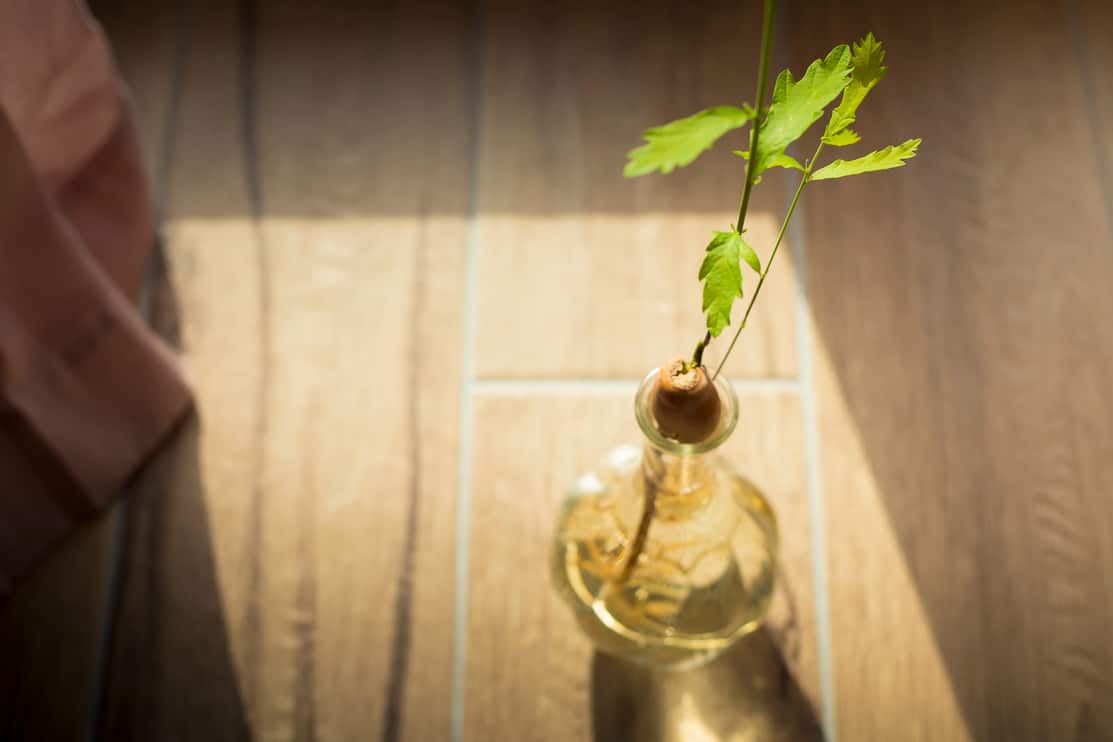
Oak tree (Quercus robur) acorn with tiny green leaves sprouting in a small glass vase filled with water. Home decor idea, natural inspiration. Top view.

Believe it or not, you can grow a tree from an acorn. Getting acorns to grow into oak trees is not very difficult. Get ready, because we are going to explain how you can grow an oak tree from an acorn. 

Have you seen the acorns that have little roots protruding from the shell or noticed a tiny oak seedling in your mulch bed or while on a hike? Ever wonder what it takes to grow a mighty oak tree from that tiny little acorn? 

How To Grow An Oak Tree From An Acorn

Growing an oak tree from an acorn is a lot easier than you might think. If you have ever marveled at towering oak trees and wanted to grow your own, this step-by-step article will guide you on your way. 

If you would rather grow your tree from a sapling, you can learn more about the process here: Oak Tree Sapling: How To Grow Plus Where To Buy.

1. Gather Acorns And Prepare Your Oak Tree

If you have oak trees on your property, gathering acorns will be as simple as going out and picking a handful from the ground underneath your oak tree. If you do not have any nearby, you should be able to find some in a neighboring park or while out hiking. 

Make sure you gather your acorns in the area you will grow them. You want acorns from trees native to your area. It’s not wise to pick them up while on vacation in a far away area and bring them home, because they may not do well in a foreign environment. 

Start looking for acorns in mid-autumn. Most times, you can find acorns on the ground all around the oak tree, but if the critters have been wiping them out before you can gather enough good ones, it’s okay to pick them directly from the tree.

Be sure if you pick them from the tree, they pull free from the caps with relative ease. If you have to struggle, or the cap comes with the acorn, then it is not mature enough to plant yet. 

Do not wait too long to gather your oak acorns though because as autumn winds down and the days get closer to winter, you will compete with deer, squirrels, and other animals that eat acorns. Also, acorns dry out once they drop from the tree, so you will want the plump, fresh ones. 

If you see acorns with tiny holes in them, avoid them because some insects like the acorn weevil drill into them and eat them, or lay eggs inside the acorn. 

After you collect your acorns, check to see if they are viable by dropping them into a bucket of water. Scoop off and dispose of the floaters because they are no good, but the ones settled at the bottom are your viable acorns.  

2. Store Your Acorns And Plan To Grow Your Oak Tree 

You can store them for up to 4 months if kept properly, but you should plant them sooner rather than later. To store them, you need a moist, cool environment away from direct sunlight. If you cannot plant the acorns yet, the best place to keep them is in a container with a slightly damp potting mix, or a sealable storage bag in your refrigerator.

While you are storing the acorns, you will need to check on them every few days, because depending on the species, they could start sprouting in the bag. If this happens, you can plant them. 

During storage, you will also need to remove the acorns and soak them about once a week so they do not get too dry. 

3. Stratify Your Acorns

Stratification is the process of producing an artificial cold season. This means following the above instructions. If you have pin oak, red oak, or bur oak acorns, they will need the process of stratification to grow.

Place these acorns in a plastic container with damp soil, not dripping wet, and then place in the refrigerator for 30 to 60 days. You can also plant them outside and let winter take care of this process for you. Just protect them from hungry animals who make think you have put out a buffet for them. More on this later. 

How Long Does it Take For An Acorn To Sprout?

Now that you are ready to plant the acorns, you want to know how long it will take to see results. It could take up to 4 to 6 weeks to see indications of your sprouting acorns.

4. Begin Growing Your Oak Tree In A Pot Or Soil

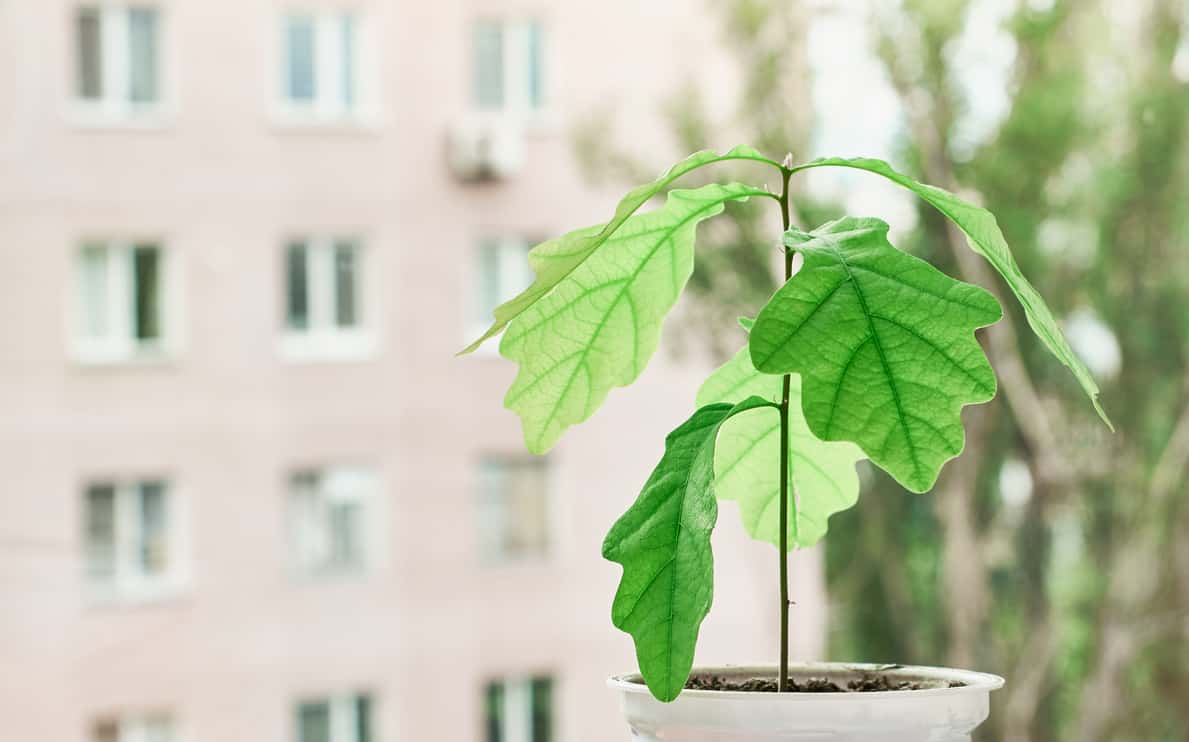
A small oak in a pot on the background of a high-rise building. Green tree in hand. World environment day. Recycling.

You can start your oak tree acorns off in pots or directly in the soil. First, we will start with pots as there are benefits to starting them in containers.

The pots will help protect the oak acorns from critters such as field mice or squirrels who love fresh acorns and other pests like caterpillars who can damage your oak tree. This also will keep the seedling from being accidentally mowed over if you plant them in your yard.

Start with a good quality potting mix or seed starting mix, and set in two oak acorns in a well-draining, pint-sized container in case one is a dud. Be sure to put the acorns on their sides, not up and down, and only set them about an inch deep in the soil. 

Water the soil and do not let it dry out, but do not keep it drowning in water either. The roots need water, but they also need to breathe.

When the top of the soil looks dry, stick your finger in the soil at the edge of the pot about an inch down. If it is dry, then water the soil. 

Move Your Planted Oak Tree Outside If Planted In A Pot

After a few weeks, you will see some seedlings coming up in your pots. If they are not getting any sun, move them to a sunny window or somewhere with plenty of sunlight. Once the threat of frost is over and spring has set in, place your pots outside so the plants can get acclimated to the outdoors.

Moving your oak seedlings outside when the threat of frost is over is beneficial because they get more sun than sitting on a windowsill, and the changes in night and day help to strengthen the plant. 

Again, keep them protected from animals.

What About Planting Oak Acorns Directly Outdoors?

Plant the acorns on their sides about an inch under the soil, water them, and protect them from mice and squirrels by covering the newly planted acorns with chicken wire or hardware cloth.

Newly turned soil often attracts squirrels. Squirrels, deer, and mice will search for all sources of food during the fall months, and especially in the winter months when food becomes scarce. 

To prevent squirrels and other animals from digging up and eating fall-planted acorns, cover your oak tree with chicken wire or hardware cloth fencing after planting. Promptly remove the fencing material in spring when the acorns germinate.

Be patient though, as you may not see anything growing until spring if you sow your acorns outside. During the first few months of being planted outside, oak acorns work on growing a deep taproot in the ground. Do not get discouraged, though.

If you follow all these steps, you should have plenty of oak seedlings in time. With proper steps and care, acorns germinate pretty readily. 

In the spring, when you first see your acorns have germinated, remove the protective mesh or chicken wire. This will keep the metal from becoming entangled in the trunks and leaves of your newly growing oak seedlings.   

5. Repot Your Oak Tree When It’s 6 Inches Tall

When your seedlings reach a height of about six inches, you will need to repot them so they can continue to grow without getting cramped.

You will need some two-quart pots and a good mixture of potting mix and garden soil. A half and half mix of both potting mix and garden soil is a suitable medium for repotting your new oak seedlings.

If the potting mix and garden soil mixture does not have any premixed fertilizer, add one teaspoon of slow-release fertilizer such as the Osmocote Smart-Release Plant Food Plus Outdoor & Indoor fertilizer

For about 3 years, keep your sapling protected while in the pot. Deer will still make a quick meal of the sapling so protect it with a tree mesh cover or screen. Also, make sure you water it when needed, and follow directions for the fertilizer you use.

One example of a protective mesh is this Voglund Nursery Mesh Tree Bark Protector. It comes in sizes ranging from 12 to 48 inches and includes zip ties for installation.

If roots start coming out of the 2-quart pot before the 3 year time is up, it’s time to plant the oak in its permanent home. Plant during a dormant phase of early spring or autumn.  

6. Plant Your Oak Tree In A Permanent Area

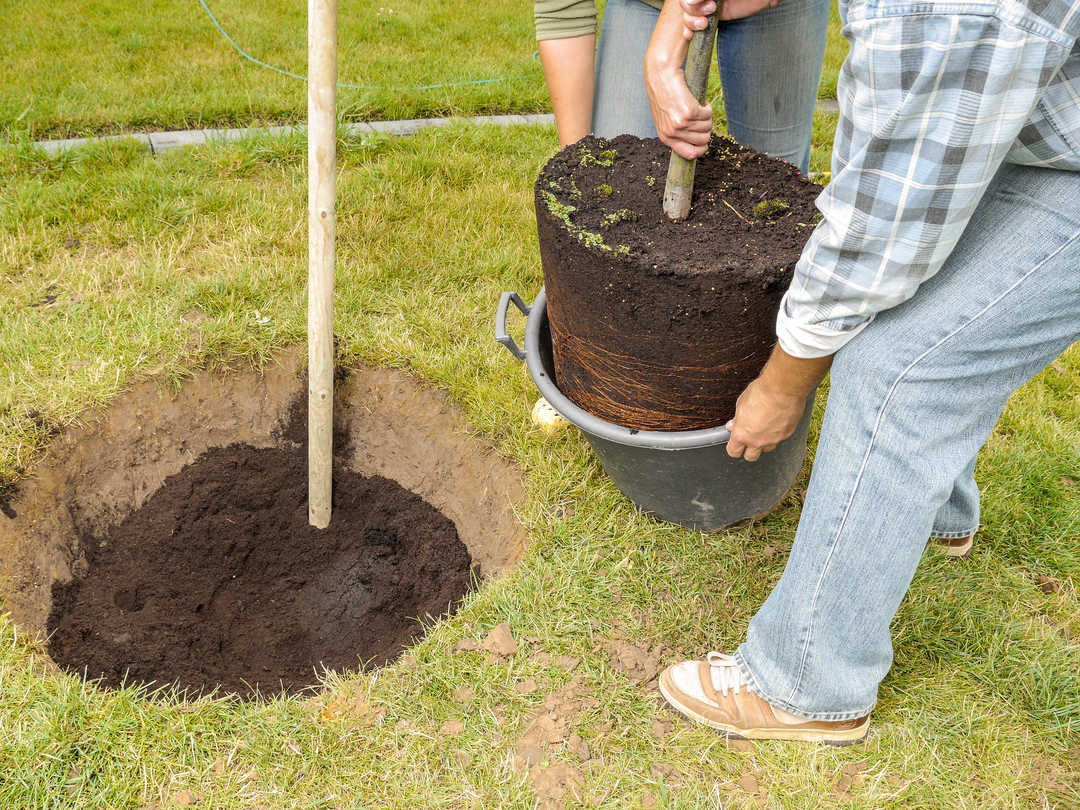
Couple planting oak tree in their backyard garden

Once you have picked the spot your tiny oak sapling will make its permanent home and grow into the big, mighty oak tree, dig a hole 3 times as big as the container.

If the soil is of poor quality or has drainage issues like heavy clay soil, add some organic matter, compost, and/or garden soil. Plant the sapling in the hole keeping the soil from the root ball at the same level as the ground, and water your tree well.

Once you tamp down the soil and water it well, mulch around the tree to help keep the water around the roots. Mulch around the tree about 2 feet wide and 2-3 inches deep, but leave a 2-inch perimeter around the trunk of the sapling. This prevents the trunk from rotting. 

Now your little acorns have grown into saplings and are in their new permanent home, be sure to water them about once a week if you are not getting regular rainfall. Check the soil around the root ball of the tree. It should be damp but not soggy.

During the winter months, watering is unnecessary, as this is a dormant time, and nature will take care of the watering for you during that time.  

After 2 years in its forever home, your oak tree will require less and less watering from you. Start scaling back how much you water the tree, and eventually, you will not have to water it at all. In two years, they will have become acclimated to the weather and will have an established, deep-reaching root system. 

Knowing when and how to water any plant can be daunting. Here are some tips and tricks for oak trees specifically! 10 Simple Tips For Watering Your Oak Tree (How-To Guide)

How Far Away From my House Should I Plant my Oak Tree? 

Oak trees can grow tall and wide, and their roots can cause foundation problems, so do not plant your oak tree sapling close to your house. A good general rule is to plant your oak tree at least 15-20 feet away from your house. This will give the tree plenty of room to stretch out, and prevent falling limbs or creeping roots from growing into your foundation. 

Also, do not plant oak trees near driveways, sidewalks, or walkways. The roots can crack and raise asphalt, concrete, and pavers. 

For more information on oak trees and other species capable of destruction with their roots, read 9 Trees That Can Damage Your Foundation (& How To Fix).

How Long Does It Take An Oak Tree To Grow Acorns?

Here are some interesting and fun facts about oak trees. Did you know there are over 600 different varieties of oak trees and they all produce acorns? Most oak trees take a while to mature and do not start producing acorns until they are 20 to 30 years old, while some take up to 50 years to produce acorns. 

Oak trees are old. They can grow to be over 1000 years old. 

Oak trees are beneficial for animals and humans. Not only are they a food source for squirrels, but deer, blue jays, and mice eat acorns as well. Some uses for oak wood include furniture, tools, flooring, and wine and whiskey barrels.  

You can find more information on squirrels and their love for acorns in this article, 4 Reasons Why Squirrels Eat Acorns (& Their Favorite Type).

That’s A Wrap!

There you have it, how to grow your own oak tree from a simple acorn. With a little patience and a bit of work, you too can enjoy oak trees on your property.

Gather up your acorns, make sure they are viable, and most of all, keep them protected from the little critters out there. Protecting them from little nibblers will be the hardest part of growing oak trees.

Happy growing!

If you’d like, check out our guide: How Long Does It Take to Grow an Oak Tree? Full Timeline

References:

Yard and Garden: Handling, Germinating and Planting Acorns. (n.d.). News. Retrieved January 26, 2022, from https://www.extension.iastate.edu/news/yard-and-garden-handling-germinating-and-planting-acorns

Wittwer, R., Barden, C., & Anderson, S. (n.d.). Retrieved January 26, 2022, from https://forestry.ok.gov/sites/g/files/gmc801/f/documents/2020/growing_oak_trees_from_seed.pdf

Live Oaks From Seed | HortUpdate – Nov/Dec 2010 | Aggie Horticulture. (n.d.). Aggie-Horticulture.tamu.edu. Retrieved January 26, 2022, from https://aggie-horticulture.tamu.edu/newsletters/hortupdate/2010/nov_dec/acorns.html

Woodall, C. W., Morin, R. S., Steinman, J. R., & Perry, C. H. (2008). Status of oak seedlings and saplings in the northern United States: implications for sustainability of oak forests. In In: Jacobs, Douglass F.; Michler, Charles H., eds. 2008. Proceedings, 16th Central Hardwood Forest Conference; 2008 April 8-9; West Lafayette, IN. Gen. Tech. Rep. NRS-P-24. Newtown Square, PA: US Department of Agriculture, Forest Service, Northern Research Station: 535-542. (Vol. 24).

On account of both their longevity and the wide variety of species there are to choose from, pine trees are a popular landscaping choice for many homeowners. They’re useful for not only adding shade and windbreaks, but can also help the local ecosystem by adding food and shelter for wild birds and small mammals. That being said, before adding one or more of these trees to your own space it’s important to understand their care needs.

It’s crucial to know how much sunlight pine trees need to grow and thrive. Most pine trees need six or more hours of direct sunlight a day in order to remain healthy. Make sure to plant new pine trees in an area of your yard that won’t be overcast by shade for the majority of the day.

In this article, we’ll go over the importance of sunlight for pine trees, and also share some tips for watering and fertilizing your pine trees. Let’s get to it!

Why Is Sunlight So Important For Pine Trees?

First things first – pine trees, like all plants, need sunlight in order to thrive. If they don’t receive sufficient sunlight, these trees will not grow as well. 

While there are some species of conifers that can grow in partial shade or become acclimatized to partially shady conditions with careful care, the majority of pine tree species prefer growing in full sun (some exceptions to this include the Eastern White and Mugo species, which have evolved in such a way that they are actually more suited for shady environments).

Because of this, when planting a pine tree you should do your best to place it in a location where it will get plenty of sunlight; pine trees planted in locations that don’t receive enough sunlight will not grow as well or be as healthy as they otherwise could be.

In fact, it’s not unheard of for pine trees to wither and turn brown if they don’t receive enough sunlight, which makes the proper placement of your pine tree incredibly important.

Basic Pine Tree Requirements

The specifics of pine tree care can vary somewhat depending on which conifer species you select, but even so, there are some consistencies across the board that you should be aware of if you’re planning to have pine trees of your own. 

Pine Tree’s Require 6 Hours Of Direct Sunlight

Because pine trees are so reliant on sunlight to reach their full potential, it’s important to ensure that they receive plenty of it during the day.

Generally speaking, a pine tree should be planted in full sun. This means that your pine tree should receive a minimum of six hours of direct unfiltered sunlight a day

As discussed earlier, certain species of pine trees are capable of growing in partially shady conditions with fewer hours of direct sunlight, but, you should definitely do additional research if this is something you might attempt. 

Pine Trees Need A Lot Of Water

Pine trees, like most evergreens, need a fairly substantial amount of water in order to survive.

Pine trees that don’t receive sufficient water will usually experience reduced levels of growth, and while some species of pine trees have adapted over time to be more drought-tolerant, a long period of time without enough water can have long-term detrimental effects on your trees.

Pine trees should even be watered in winter to help them grow their best!

Because while pine trees can survive periods of drought, extended periods without sufficient water will cause physical stress for the tree, which in turn can leave it susceptible to certain plant diseases and pests (something we will discuss further a little later on).

Therefore, it’s definitely better to make sure any pine trees in your care receive enough water. 

The general rule of thumb for watering pine trees is that they typically need to receive ten gallons of water for every inch of diameter in order to achieve healthy growth.

That being said, there is more to keeping a pine tree alive and in optimum condition than simply knowing how much water to give it; it’s also important to know when you should be watering your pine tree. 

Luckily, we have some tips later on in the article that can help you better understand how often to water your pine trees and how to adjust your watering schedule when necessary. 

Pine Trees Grow Fuller With Fertilizer

While pine trees don’t necessarily need as much assistance getting nutrients in comparison to other varieties of trees (most species are fairly adaptable when it comes to the soil they grow in), fertilizing them periodically is definitely still a good idea if you want them to reach optimum growth potential.

The use of fertilizer has not yet been proven to increase the actual photosynthetic rate of pine trees, but it has been observed that pine trees often exhibit better and fuller growth when fertilizer is used

Generally speaking, it’s recommended that when fertilizing pine trees you do so according to their size. Specifically, it is suggested that you use anywhere from one to two pounds of fertilizer for every inch of the tree’s diameter. 

That being said, always follow the instructions and recommendations that come with the fertilizer of your choice, and always consult the product information first so that you don’t run the risk of using too much fertilizer on your trees.

It’s also important to understand when to use fertilizers on your pine trees and when not to, which is something we will discuss more in-depth momentarily. 

Planting Tips For Pine Trees

Pine Trees Planted in a row. Beautiful pine trees on background high mountains

When planting pine trees it’s generally best to place them in fertile soil with good drainage.

That being said, there are many different species of pine trees (some of which are capable of growing in a wide variety of soil types) so make sure to research what variety of pine tree is best suited for the area you live in. 

Of course, there’s more to successfully growing a pine tree than simply planting it in the ground, which is why we’re now going to discuss other important factors to keep in mind when dealing with conifers. 

Plant Your Pine In An Area With Light

As we previously discussed, it’s important to plant your pine trees in areas that get plenty of light in order for them to grow healthy and strong. 

As stated earlier, a pine tree should be planted in full sun (meaning that your tree should receive a minimum of six hours of direct sunlight every day). 

This means that you should also take care to not plant a pine tree too closely to other trees, both mature trees and saplings. 

Keeping your pine trees adequately spaced out from other trees will help prevent competition for both sunlight and nutrients. 

Make Sure You Water And Fertilize Your Pine As Needed

Many people often wonder how much water pine trees need and whether or not they should use fertilizer.

If these are questions that you also have, don’t worry! We have some tips to help you better meet the needs of your pine tree when it comes to watering and using fertilizer. 

Watering New Pine Trees 

When you first plant your new pine tree, you will want to water it frequently in order to help it develop a healthy root system; it’s generally recommended to water every day for the first few weeks. 

After those first few weeks, you can ease up on the watering schedule slightly and water every three or so days instead (it’s generally advisable to keep up this second watering schedule for about three months, to give the tree sufficient time to acclimatized to the new conditions and continue expanding its root system). 

Once your pine tree has had time to settle in, checking to see if it needs water is very straightforward: simply check the soil around it.

The soil should be damp or moist about an inch or two into the ground around the tree; if the soil is dry it’s a sign that your pine tree probably needs to be watered.

Mature Pine Trees Need Less Water

That being said, mature pine trees that are already well established don’t usually need to be as carefully monitored when it comes to watering, so once your tree has developed a healthy root structure and fully settled in you shouldn’t need to worry as much about frequent watering, especially if you live in an area that receives consistent rainfall (do make sure to periodically check the soil, however, and water your pine if it needs it, especially in the hot and dry season.)

Alternatively, you can set up a drip irrigation system to provide your pine trees with a consistent supply of water. Products such as mulch can also be used to help to retain moisture in the soil. 

And a good watering schedule or system can, of course, be supplemented with the use of fertilizer if you’d like to give your pine trees a little extra boost.

Here’s our full pine tree timeline if you’re interested in learning more about what stage your tree is at!

Make Sure To Fertilize Your Pine Trees

As mentioned above, fertilizer can be very beneficial when it comes to encouraging growth in your pine trees

That being said, while fertilization in general can help your trees to develop more robust foliage as they grow, giving them a fuller and healthier appearance, it’s generally not recommended to fertilize during the first year after planting. 

You May Not Need To Fertilize Your Pine Tree After The First Year

Once that first year has passed, it’s advised to fertilize your pine tree once a year as needed, with the recommended time of year being spring, since this is when the tree will naturally be experiencing the most growth. 

Evergreen trees such as pines can benefit from the use of fertilizer at key times of the year, such as spring. 

Products such as TreeHelp Premium Fertilizer for Pine and Down To Earth Tree & Shrub Fertilizer Mix 4-2-4 can be very effective when it comes to successfully fertilizing your pine trees and encouraging above-ground growth.

It’s important to note, however, that fertilizer should not be applied too late in the year, since new growth needs time to acclimatize and harden before colder fall and winter temperatures set in.

Protect Your Pine Tree From Storms

Type of Pine Tree. Is a species of pine that is native to Eurasia, ranging from Western Europe to Eastern Siberia, south to the Caucasus Mountains and Anatolia, and north to well inside the Arctic Circle in Scandinavia.

Once your tree reaches full maturity, it will likely be capable of withstanding most storms without additional assistance, however when you first put a young seedling or sapling into the ground it’s important to take the necessary steps to keep it safe during inclement weather conditions (particularly if strong winds are involved.)

Planting trees when they are young and small can help with this, since getting them in the ground when they’re young gives them a chance to develop a strong root system underneath the soil that will help prevent them from getting blown over.

Planting your pine tree in a location with plenty of space is also key; it allows the root system to spread out further and gives the tree a more secure base. 

Removing tree stakes as soon as possible once the tree is capable of standing on its own can also be beneficial, because allowing the tree to grow on its own and adapt to the flow of the wind without relying on stakes for external support can actually help strengthen the trunk over time.

Protect Your Pine Tree From Pests

It’s also important to protect your pine tree from harmful pests that might damage it.

Generally speaking, one of the the most important (and easiest) ways of protecting your pine tree from pests is to make sure it is receiving optimum care.

Making sure that your tree gets enough sun, water, and nutrients will ensure that the tree is not subjected to undue amounts of stress.

Stress can weaken a tree’s overall condition and leave it more vulnerable to both affilictions and pests, so keeping your tree happy and healthy is of critical importance.

Common Pine Tree Problems (And How To Fix Them)

Like with all plants, sometimes your pine trees will begin to do poorly and you’ll have no idea why. In order to help you prepare for these potential issues, we’ve listed here some common pine tree problems and how to resolve them.

Lack Of Sunlight

As you may have realized by now, it’s very important for pine trees to get plenty of sunlight. A pine tree that does not get enough sunlight can begin to wilt, droop, or even start to turn brown. 

The easiest way to solve this particular problem is to be sure your pine tree will be receiving enough sunlight before you plant it in the ground. Before planting a pine tree sapling, watch the intended location for a few days to be sure it receives at least six hours of direct sunlight every day. 

Alternatively, if you only realize that a lack of sunlight is a problem after planting, you can either remove whatever is obstructing the sunlight (such as other trees or shrubs that are overshadowing your pine tree) or relocate the pine tree sapling itself to a better location that receives more sunlight. 

Pollution

Pine trees can actually be rather sensitive to different types of pollution. In most circumstances the two kinds of pollution you’re going to want to be on the lookout for are air pollution and water pollution

Your pine tree might be exposed to air pollution if you live in an area that experiences a lot of road traffic (for example, if you live near a busy highway or in a city with a lot of smog). 

You should also be aware of the potential for water pollution. This type of pollution is less of a concern in rural areas, but if you live in an urban area that gets a lot of residential or industrial runoff during rainstorms it’s possible that the water your pine tree absorbs during these wet periods could contain chemicals that might be harmful to the tree’s health. 

While there is little you can do about air pollution, any concerns about water pollution can be addressed by ensuring that polluted runoff is redirected away from your pine tree as much as possible. 

Pests

Pine trees typically fall victim to a wide variety of different pests, including (but not limited to) weevils, borers, and aphids. Rodents can also nest in or near pine trees but typically won’t cause significant damage.

As mentioned previously, the easiest way to help prevent pest damage in your pine trees is to make sure your trees are getting enough sun and water to remain healthy; pine trees are usually capable of fighting back against most pests on their own as long as they are in good condition and aren’t suffering from any other detrimental issues.

That being said, it’s still a good idea to periodically inspect your pine trees for discoloration or damage; if you see anything out of the ordinary, it could be a sign that your pine tree needs additional help.

If you aren’t able to diagnose the issue on your own, please don’t hesitate to contact a local expert (such as an arborist or pest consultant.)

If it’s time for your pine tree to go, take a peak at our guide on the reasons to cut down you pine tree – pests are one of the most common issues!

Drought & Overwatering

As we mentioned already, pine trees (especially young or recently planted trees that have not yet developed full root systems) need to get enough water to remain healthy and grow to their full potential. 

Pine trees are particularly vulnerable during periods of drought; in some situations, drought can even cause pine trees to become diseased and in turn susceptible to infestation from harmful insects. So, if you are living in a region that is going through a drought, make sure you check on your pine trees frequently to ensure they are receiving enough water to remain healthy.

At the other end of the watering spectrum, there is also the issue of overwatering. While pine trees do need plenty of water, it’s important that they not receive too much. As mentioned earlier, your pine trees should be planted in well-draining soil; your pine trees should never be sitting in boggy or constantly soaked soil since this could potentially lead to root rot and other problems.  

Quick Recap!

All in all, planting and caring for a pine tree is very straightforward as long as you have an understanding of what these trees need in order to grow and thrive. 

To summarize, key tips to remember are:

  • Pick the right pine tree for your region
  • Most pine trees need full sun and plenty of space to grow
  • Keep your trees well-watered without overwatering
  • Use fertilizer as desired to encourage more robust foliage growth
  • Monitor your trees carefully for any discoloration or damage
  • When in doubt, consult with an expert

Happy pine Tree Journey! If you have some pine tree wood, take a look at what do with fallen pine trees here!

References

Aguadé, D., Poyatos, R., Gómez, M., Oliva, J., & Martínez-Vilalta, J. (2015, February 27). Role of defoliation and root rot pathogen infection in driving the mode of drought-related physiological decline in Scots pine (pinus sylvestris L.). OUP Academic. 

Klutsch, J. G., Shamoun, S. F., & Erbilgin, N. (n.d.). Drought stress leads to systemic induced susceptibility to a nectrotrophic fungus associated with mountain pine beetle in pinus banksiana seedlings. PLOS ONE.

Teskey, R. O., Gholz, H. L., & Cropper, W. P. (1994, November 1). Influence of climate and fertilization on net photosynthesis of mature slash pine. OUP Academic.

Trees and storms. Purdue Extension Forestry & Natural Resources. (2016, June 23). Retrieved September 4, 2022, from https://www.purdue.edu/fnr/extension/trees-and-storms/ 

Typically found in the Northern Hemisphere, birch trees are ornamental tall, slender, and beautiful-looking trees that can add immense beauty to any landscape. One of the biggest reasons Birch trees are chosen as landscape trees you may ask? Well, they’re paper-thin and sometimes used for shredding bark!

Birch trees are a great addition to your yard, but they look even better with plants that accompany them. Birch trees can be grown with various companion plants, including: Plantain Lily, Foamflower, Lilyturf, Bugleweed, Allegheny Spurge, Hellebores, Snowdrops, Daffodils and Bluebells.

Birch trees are a sight to see in the forest! In fact, in open forest areas, you might notice that birch trees are one of the first colonizer trees. They add texture and color to landscapes throughout the year – and today, we’re talking about the best plants to plant under them as an accent to your yard at home! Keep reading to find out more!

Can You Grow Plants Under A Birch Tree?

It’s the prime question of the hour here! And the answer isYES, you can!

Planting under a birch tree isn’t impossible. In fact, due to their fabulous yet elegant winter display, birch trees are a prime landscape feature that will look even better with companion plants.

However, always be careful when considering plants to plant under your birch tree. You should avoid planting trees all together, because each tree will them compete for nutrients and water, making one tree flourish while the other to deteriorate.

If you’re also thinking about planting a birch tree be sure to check out our article – 9 Best Places To Plant A Birch Tree And Where They Grow Best!

How To Pick The Right Plants To Grow Under A Birch Tree

Birch tree , fall colors, in field

When it comes to choosing the right companion plant for your birch tree you must keep several things in mind! Let’s talk about them below.

Firstly, you must make sure that the plant doesn’t take away from the nutrients or water that the birch tree will need to grow and flourish – if a new plant drinks all the water, then you’re not going to have a flourishing birch tree!

Secondly, consider the soil needs and root structure of the birch trees before choosing a plant. Birch trees have shallow root structures that will have to accommodate a plant that doesn’t overshadow the Birch tree root system.

Thirdly, you should consider the amount of light that is available under the birch tree. You will have to find a plant that prefers partial shade.

If a plant needs full sun, planting under a birch tree may not be the best idea, since a birch tree offers so much shade. However, birch trees need a lot of sun to grow, for more information check out our article on the reasons why birch trees cant grow in the shade.

6 Best Plants to Plant Under Your Birch Tree

There are ton of amazing plants to plant under your birch tree – and today, we’re talking about all of them!

Plantain Lily Are Great For Under Your Birch Tree

Plantain Lily in vegetation

Part of the Hosta genus, plantain lilies are perennials that love the shade and provide an attractive sight to any garden. Conveniently they are low-maintenance and although they tolerate the sun, they thrive in shady areas -which makes them perfect for growing under a birch tree!

Plantain Lilies come in many gorgeous colors – emerald, green, greenish, gold, gray and blue, white, lavender, and purple. They can grow 6 inches up to 3 feet tall.

Their foliage grows in early summer. They generally require rich, moist, and well-draining soils.

Foamflower Will Grow Great Under Your Birch Tree

Tiarella cordifolia – Foamflowers are one of the most beautiful wildflowers that are typically found in Eastern United States woodlands and forests.

Foamflowers are known for their beautiful starry white flowers that have a light pink hue. Although Foamflowers stay beautiful throughout the summer, during the fall season the plant can turn gorgeous hues of bronze and red-orange.

These shrubs love nutrient-rich, well-draining, moist soil. According to Clemson Cooperative Extension Home & Garden Information Center, they also prefer a soil pH of 4.5 – 7.0 which will allow the shrubs to grow healthy – which is perfect for growing under a birch tree!

Also, another good thing about Foamflowers is that they are generally left alone by your regular garden pests (deer or rabbits). Except in winter – if your pests have nothing else to eat, they will munch on your Foamflowers.

A quick tip: If you are looking for a good way to measure your soil pH, you can try this iPower soil pH meter. Using a soil meter is important as soil pH can determine the soil’s health and whether any changes need to be made for the plants to grow healthy.

Lilyturf Is Perfect For Underneath Your Birch Tree

Lilyturf near other green vegetation

The Liriope genus have these beautiful ground-covering shrubs which have flowers that may remind you of lavender.

These ever-green shrubs prefer partial sun/shade. And get this – one of the benefits of having Lilyturf in your garden is that they suppress the growth of weeds. They prefer growing in partial sun/shade with well-draining soil consistent with clay and gravel.

These shrubs are easy to take care of and require moderate amounts of water. They wouldn’t be a bad idea to plant around your Birch trees as they WON’T absorb all the water which would leave the Birch tree high-and-dry.

The cool thing about these shrubs is that they can thrive in a variety of conditions such as: heat, cold, dry weather, and humidity. It’s also important to note that once these shrubs are established, they are drought tolerant. You also wouldn’t have to worry about diseases and pests, as these shrubs are resistant to those too!

Bugleweed Is Also Good For Under Your Birch Tree

Purple bugleweed planted in ground

Ajuga Reptans can be an interesting ground-covering species as it can suppress the growth of other weeds. This fast-growing, luscious perennial has shiny, emerald-colored leaves with beautiful blue, purple, and sometimes violet flowers – and will look amazing under your birch tree!

It’s also a natural weed suppressant since it’s such a good, natural ground cover.

Typically, Bugleweed is planted in early summer late spring so you can give it enough time to bloom from May to June. These species do best in USDA zones 4 to 9 and prefer moist, well-draining soil pH of 6.5.

A gentle note to readers: Bugleweed is also known to be an aggressive spreading plant if not contained properly. Be careful not to let Bugleweed spread into turf grass areas as it will try to take over!

You Must Be Wondering, So What Are Bugleweeds Even Good For?

  1. Bugleweeds are good at filling large, shaded areas where lawn turf is difficult to cultivate and grow
  2. Bugleweeds work wonders on slopes, around trees and shrubs (especially around and within rock attractions)
  3. They are great for erosion control! Bugleweeds extensive root system and above-ground system create a dense mat that will displace weeds and prevent soil erosion!

Furthermore, these shrubs can tolerate full sun to partial shade areas in your garden. So they’re versatile!

Bugleweeds Offer Beautiful Colors

Before you decide on the specific species, make sure you explore the general color scheme for your garden and the rest of your garden plants so that it accentuates your birch tree, luckily Bugleweeds offer beautiful colors that you will love!

If you are looking for great colors in their foliage, that grow well in the shade of a birch tree, Bugleweeds will work wonders. With newly planted bugleweed, you need to make sure the soil is moist and well-watered until the plant establishes itself. They love 1-2 inches of water a week (this includes rainfall).

That means, don’t overwater if you have a rainy month after you plant your bugleweed.

Allegheny Spurge Is Great For Under Birch Trees

Pachysandra procumbens is in fact a very popular groundcover plants that are found under trees.

This herbaceous perennial, ground covering shrubs spread across a landscape with rhizomes. They grow up to 12 inches in height, but their width is determined by how much it spreads. It requires adequate water initially when the plant getting established.

Allegheny Spurge are great for growing under birch trees – and once it’s established, it’s a very strong plant that will do well in low maintenance. These plants are drought-tolerant so you don’t have to worry about it after its established itself in your garden.

Although they can tolerate various soil conditions, they prefer acidic soil, that’s well-draining and rich in moisture and organic matter. These shrubs can survive in USDA zones 5 – 9.

Allegheny Spurge prefer partial to full shade in terms of sunlight, and are generally low maintenance shrubs. And a really cool fact about them is that if you want to share a bit of your Allegheny spurge shrub, you can propagate by root division and cuttings, so no worries!

Bulbous Flowering Plants Are Perfect For Under Your Birch Tree

background of birch forest trees green spring

There are a bunch of bulbous plants that would work perfectly under your birch tree – let’s talk about them below!

Hellebores

These evergreen flowering plants are lovingly also called “winter rose”, “Christmas rose” and sometimes “Lenten rose”. While they originated in Europe and Asia, these can now be found in landscape gardens, and are perfect for under your birch tree!

Hellebores can grow in USDA zones 5-8. They are specifically interesting for gardeners due to their late winter and early spring flowering. They also make good flowering plants because their flowers are frost resistant.

These evergreen plants love well-drained and adequately watered soil and partial shade in the garden – perfect for under your birch tree.

Be careful about having pets wander around these plants. Their flowers can be toxic. Luckily, due to their toxicity these plants are resistant to deer and other critters.

Snowdrops

This group of beautiful perennial plants are part of the Galanthus genus. Snowdrops are known to have linear leaves and small white drooping flowers that look like bells and will look amazing under your birch tree.

Surprisingly, these plants flower generally in the winter, early spring, and sometimes late fall. If you look at these plants in a garden, you will notice that they look like a beautiful carpet of white flowers. It almost blends into the snow! Perfect for winter snowfall.

Not surprising based on their name, snowdrop plants prefer colder climates over warmer winters. If you live in any of the warmer areas like Texas, California, or even in Florida, Snowdrop plants may not be the best option for your garden.

Tips For Caring For Snowdrops

Before buying your snowdrops, make sure to assess how you want to develop your garden around the birch tree.

Snowdrop plants don’t reproduce from seeds in gardens, they often grow with offsets from growing from the original planted bulb. Once the bulbs have been planted and you wait for a couple of years, you will notice that the original bulb has a dense cluster of bulbs around it.

Snowdrops prefer well-draining and moist soil around or under your birch tree. If you plan to make a beautiful display around your birch tree, consider planting your snowdrops in a bunch of up to 20 bulbs.

Snowdrops are best when planted in early fall. Snowdrops can remain dormant through late spring and summer. Be careful not to start digging around your birch tree. You might damage the bulbs.

Once bought, the snowdrop bulbs prefer to be immediately planted. Do not buy the snowdrop plant bulbs and wait for a longer time to plant them. If you have pets – you may want to reconsider planting snowdrops and make sure to do your research on pet friendly plants for under your birch tree before planting!

Daffodils Are A Good Flower To Plant Under Your Birch Tree

yellow daffodil in field

When you see these pretty flowers under your birch tree, you will have created a beautiful picture spot. Narcissus spp., generally bloom in early spring and are generally hardy, easy-growing perennial flowers.

Just like snowdrops, these are fall-planted bulbs as they bloom in your winter or early spring climate and prefer full or partial sun.

These hardy plants can generally tolerate many types of soils but grow best in well-draining, moist soil. They grow best in USDA zones 3-8. These are great additions to the area around your birch tree and can be planted by the dozens if you wanted.

Note: Be careful to make sure the soil is well-drained as these plants are susceptible to root rot because of too much water.

You can buy great these Mixed Daffodil Bulbs with yellow, white, and variations!

Bluebells Work Great For Under Your Birch Tree

Purple bluebell flower

Hyacinthoides are these gorgeous-looking, delicate, flowers. Like all the other flowers mentioned above, these are also bulbous plants. They prefer to grow in USDA zones 4-9. These will look amazing under your birch tree!

The Bluebell flowers grow together in clumps. Because of the weight, you will notice that once they have grown, they droop over.

Thus, the dainty-looking flower. Bluebells love moist, well-draining, yet fertilized soil. Once you have gotten a chance to plant your bluebell bulbs, make sure to properly water them.

A Few Tips To Follow When Planting Bulbs Under Your Birch Tree

  1. Try to make sure there are 2-4 inches of organic matter in the soil
  2. Ensure the soil does not have any weeds
  3. Use tools to free the soil and dig holes like this 3 Piece Garden Set!

Tips For Bulbous Flowering Plants

  1. Check it before you click it! Be extra careful about the websites that claim they are selling the best bulbs. Read reviews.

Do some careful research before committing to any seller. Not all sellers are out there with genuine ideas of what they are selling.

  1. Make sure you are checking the depth at which you are planting those bulbs. It’s almost like goldilocks of plants. But too deep or too shallow and you might damage your lovely bulbs.
  1. If you are planting outside, make sure the soil has no history of big pest infestations. If so, make sure you clear the soil first and then add the bulbs.
  1. Make sure you plant in an area with minimal potential of standing water. Bulbs do not like standing water. Be careful during rainy periods & watch out for pools of water!
  1. Depending on the bulb species, make sure you are fertilizing them properly (especially during their spring growth period). It may not be necessary to fertilize them when you plant them but watch your calendars!

Shredded Mulch Is An Alternative To Plants For Under Your Birch Tree

Of course, everyone wants to plant beautiful flowering shrubs and foliage. However, in situations where you are not able to find appropriate shrubs or flowering plants, you can consider a money-saving alternative, mulch, for under your birch tree!

It’s also quite expensive to find the appropriate flowering plant or shrub to plant around your birch tree. If you find yourself in any of these situations, you can buy Pine Bark Mulch.

According to the North Dakota State University, shredded mulch might be better for your birch tree than rock mulch. Shredded mulch can help by moderating temperatures, improving soil structure, and conserving soil moisture (among other things).

Further, mulching can provide stable soil structure for soils that lack organic matter (especially in urban areas). Mulch can also protect your birch tree roots from exposure to extreme heat or cold and provide stable soil moisture.

General Care Tips for Birch Trees

Birch roots sprouted through a stone and split a boulder. Summer landscape in the Altai Mountains, Russia - the concept of survival in adverse conditions, vitality and hope. Birch tree roots
  • Due to their shallow root system, they prefer soil is moist and cool (not too wet). For more information about birch tree roots check out our article on how far birch tree roots spread.
  • According to Lady Bird Johnson Wildflower Center, birch trees typically prefer mostly acidic soil (pH < 6.8).
  • Although they can prefer wide range of soil types, they prefer slightly lower pH levels
  • In terms of fertilizers, your best bet is the low-nitrogen ones (i.e., 11-22-22 formulas)
  • Since birch trees don’t have dense foliage, these are excellent candidates to have additional companion plants below their branches.

Closing Thoughts

Planting birch trees in your garden can provide a beautiful, picturesque view, but companion plants beneath your birches can be an eye-catcher! When it comes to companion plants, make sure that they don’t take away your birch spotlight.

Due to their shallow root system, make sure to take all of this into consideration before you finalize your species!

If for any reason you feel uncomfortable taking care of your birch tree, don’t hesitate to reach out to local horticulturists and arborists! Try your local plant store.

Happy planting!

References:

Clausen, Knud E.; Godman, Richard M. 1967. Selecting superior yellow birch trees; a preliminary guide. Research Paper NC-20. St. Paul, MN: U.S. Dept. of Agriculture, Forest Service, North Central Forest Experiment Station
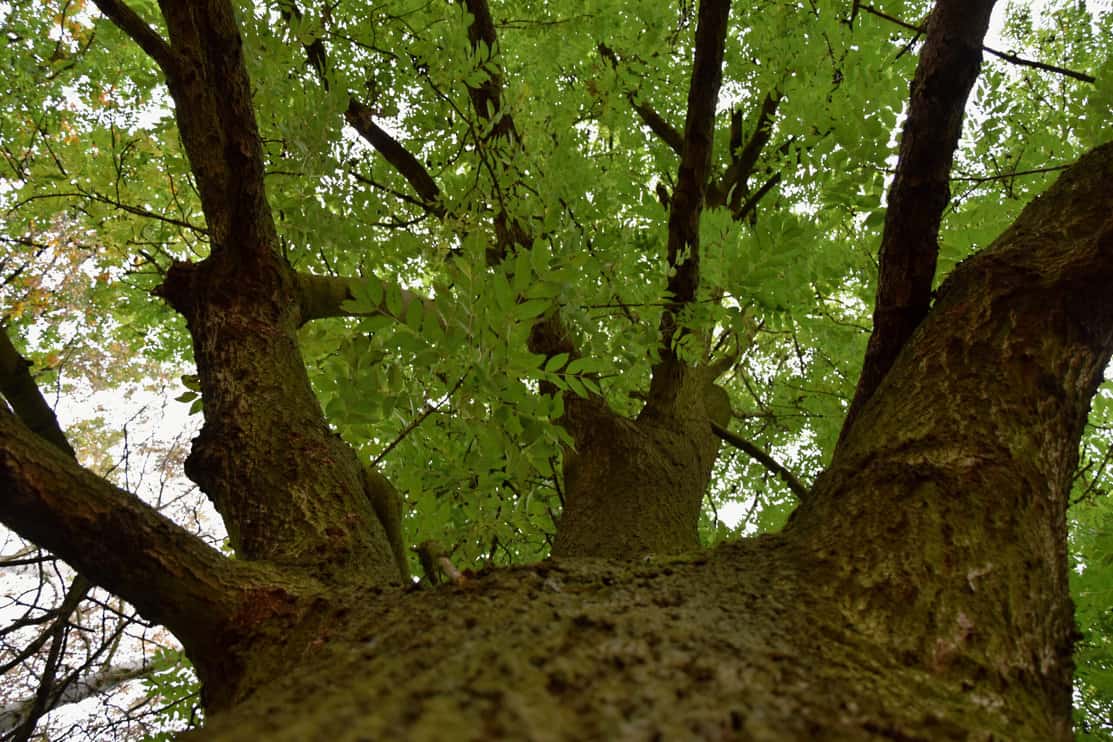
Herbaceous Perennial Plants: A Treatise on their Identification, Culture, and Garden Attributes.3 rd Ed. A. Armitage. 2008. Stipes Publishing, IL

Every year the Christmas holidays seem to sneak upon us. We vow that next year will be different but Thanksgiving occurs and the next thing you know, the race is on. Every year, millions of real trees are purchased by eager shoppers. But, how would you like to have a cashmere Christmas tree that looks just as real as a real one?

Cashmere Christmas trees are artificial Christmas trees that are fluffier than a regular artificial Christmas trees. This is due to the tips of the tree that have been treated with the soft wool from Kashmir goats. You can find these trees at many retailers or even online.

In the United States, you can choose from around 35 different types of Christmas trees. The most popular of all the fresh trees for the holidays is the Balsam Fir for it’s vibrant scent of pine. You can look and look but you will never come across a cashmere Christmas tree at a real tree lot. Keep reading to learn where you can get your own cashmere Christmas tree!

What Exactly Is A Cashmere Christmas Tree?

Closeup of Christmas tree with light, snow flake. Christmas and New Year holiday background. vintage color tone.

Okay, just the sound of it makes the cashmere Christmas tree sound soft and cozy, and luxurious. It does have all those traits, but the one thing it doesn’t do is grow in the ground.

Since the beginning of this festive holiday tradition, there have been two schools of thought: real Christmas trees or artificial ones.

Each side does have its valid points.

Before you decide that a cashmere tree is for you, let’s look at all the facts first so you can get just the right tree for you and your family this Christmas. 

What Made Us Start Putting Live And Artificial Trees In Our Homes Anyway?

Before we start our list of the pros and cons of real versus artificial trees, how about we find out when and why we started putting them in our living rooms in the first place.  

So, the origin of Christmas trees began in Germany in late 1400. While December 25 is celebrated as the birthday of Jesus, Christmas actually was inspired to honor the day of Adam and Eve on December 24.

While the use of evergreen plants was used to commemorate many special occasions in centuries past, how did Christmas trees evolve from this custom?

Original references note that the use of tree branches was called paradise trees and used during several Christian holidays. This practice evolved into what was called “Christbaum”, which translates to Christ tree.

During this time, people would take tree branches and plant them in hopes that they would bloom by Christmas.

Interestingly, this may be when the first artificial trees were developed as well. If people didn’t have enough money for these planted pots they would create a tree-like figure out of wood decorating it to look festive.

While trees were used in outdoor celebrations, a preacher in the 16th century was credited with bringing the tree indoors.

As he was walking through a forest, the preacher became enamored with the beauty of the trees and the way the twinkling stars appeared through the branches. He decided to bring this beauty into his home and this tradition continues to this day.

Many of the decorative items evolved during this time with fabric wrapped around the base of the tree were the first tree skirts.

Trees were adorned with food items at first and tinsel was inspired by the handiwork of glistening spider webs. And Christmas tree lights were created by a friend of Thomas Edison who put around 80 colored bulbs together and wrapped them around his tree. You can read more about that in the Library of Congress’ blog if you’d like!

When Did Bringing Trees Indoors Begin In The United States?

Decorating trees as well as singing Christmas carols quickly became adopted as time went on in the United States.

As people from Germany began migrating to the U.S., they brought their holiday traditions with them.

Now to match that to a specific date, the indoor Christmas trees began in our country in the 1830s according to the University of Florida.

Real Or Fake – Is One Really Christmas Tree Better Than The Other?

Christmas tree with presents at decorated fireplace. Family celebration of winter holidays. Living room interior with open fire place and Xmas tree with gifts for kids.

Many factors go into choosing a Christmas tree. Before you start going over the more than 35 different kinds of trees you can find fresh and their counterparts that you can buy online or at the store, you need to decide if you want a real tree or an artificial tree.

Here are some differences for each version.

Cashmere And Artificial Christmas Trees

Fake Christmas trees will tend to run you in the triple digit cost figure range. The cost of an artificial tree is a little higher than a real tree because you could have full use of the fake tree for about 10 years and MANY come with lights already.

Finding Cashmere Christmas Trees

If you are interested in buying a cashmere Christmas tree you can shop online and look at the different available styles.

The Home Heritage Cascade Cashmere Christmas Tree is a great choice, it’s not overly big or small and comes already lit with white or clear eco-friendly LED lights to save you money and energy. You won’t have to drive around looking for Christmas tree lights.

Additionally, Home Heritage’s tree comes with different sizing options so you can easily measure your space and get the proper fitting tree.

Regardless, if you are interested in getting a cashmere Christmas tree you won’t have any trouble finding one. A simple search online will provide you with more options to purchase from.

Even though they sound high-end and exotic, you can find one at a large retail chain or even online.

Getting The Cashmere Christmas Tree Home & Set Up

Some fake trees come out of the box in numbered pieces making it as easy as 1-2-3 to put together. If you have chosen wisely and bought a tree that already has the Christmas tree lights on it (like the one we mentioned above) you are already ahead of the game.

I remember getting our first apartment Christmas tree at the thrift store – a very expensive tree that we got for cheap and worked beautifully!

Fake Christmas trees are the “set it (up) and forget it” of the holiday decorating category. Once you find exactly where you would like to set it up and get the ornaments and lights on, you can just enjoy it until it’s time to take it down and pack it away until next year.

One of the things you do give up when you choose an artificial tree is the refreshing and comfortable scent of a freshly cut pine tree. You can supplement your atmosphere with these Belle Aroma® Scented Holiday Ornaments that give you that Christmas-y, pine aroma you were missing from your cashmere tree.

Real Christmas Trees

While the cost of buying a real tree could range from under tens of dollars to several hundred. While this price seems lower compared to an artificial tree, you have to figure this rate every year for ten years to compare it to the one-time price of an artificial tree.

Finding Real Christmas Trees

The good news is you should have no trouble finding a Christmas tree lot! You may have to shop around because the cost of trees can be competitive and you will want to find the best tree at the best price. One of the best places is a lot that is selling trees to benefit a school or a local charity.

Once you find your perfect tree you will have to have someone from the lot help you strap it to the top of your car. Getting your tree home you will need additional help getting it off the top of the car and into the spot where you want to set it up.

When you are setting up your real Christmas tree you should make sure that you don’t purchase it too far in advance. A real tree is a perishable item and has a limited shelf life.

Sizing Real Christmas Trees

The other thing that you have to deal with when setting up a real Christmas tree is cutting it to the correct size.

You may have to make adjustments to the height of your real tree as well as make sure that the base fits into your tree holder. It may take a few cuts and shavings here and there to make sure your tree fits properly and it is not off to one side.

You should also measure your ceiling height to match that to your tree as well.

How Long Real Christmas Trees Stay Fresh For

The average time your tree will stay fresh is about 5 weeks. There are no special additives you need to keep your real Christmas tree alive other than freshwater. You should check the water level every day so that your tree doesn’t dry out and you should mist the needles!

Try to place your Christmas tree in a location that is not in front of a sunny window as well as away from any especially warm areas. You will know if your tree is starting to fade when the number of needles it is shedding is growing every day.

Before you shop for your real Christmas tree you should know ahead of time if there are any trees that you or any members of your family are allergic to.

Knowing ahead of time will ensure that there are no unnecessary reactions to deal with over the holidays.

Because of the dried-out needles from a real Christmas tree, they should be removed as they’re basically kindling as they dry out. Keep your tree well-watered and make sure to remove the fallen needles from around the tree as quickly as possible.

What Makes A Cashmere Christmas Tree Different From Regular Fake Trees?

A cashmere Christmas tree is fluffier than a regular artificial Christmas tree because the tips have been treated with the soft wool from Kashmir goats.

When the tips of the tree are covered with this downy type of wool it results in a split-ends effect. This treatment enhances the tree’s branches expanding them and leaving them looking like they are naturally frosted with snow.

Are There Different Kinds Of Cashmere Christmas Trees To Choose From?

Most cashmere Christmas trees are created from a variety of pine trees. They come in green or white and it is easy to find them pre-lit for your convenience.

Sizes range from five feet to 12 feet in height and the width varies based on the number of branches and the fullness that was created with the application of the goat fur.

The price of cashmere Christmas trees ranges from inexpensive for a small tabletop tree to hundreds of dollars for a taller, fuller version.

Besides being decorated with lights, many are also adorned with pinecones and red berries. With hundreds to choose from it’s easy to find just the right one for you!

Can You Turn Your Existing Fake Tree Into A Cashmere Christmas Tree?

Christmas tree background with decoration and light bokeh

While there is no way you would want to tie pieces of soft wool on every branch of your existing artificial tree, there are some simple ways you can enhance it and make it more plush and fuller.

These tips are very easy to do and much less expensive than purchasing a whole new Christmas tree. You can use one or all of these ideas and you will have your own plush cashmere tree before Christmas!

Use Garland To Decorate The Branches

To start, fill in sparse areas with garland that is the same color as your tree. Most trees already do have areas that are not filled in but they are covered up with gold or silver garland. If you use a green garland on the branches of your green tree it will look fuller instantly.

If you are not a fan of garland you can always take a nice thick red plaid ribbon and fill in the areas making it look like it’s gift-wrapped. You could also keep the glitzy feeling going with a wide shiny gold ribbon. 

Another fun idea is picking up some floral picks at a craft store and inserting them into some of the sparse areas to fill them in. Pinecones would look great while adding a natural look.

Use Big And Small Lights To Decorate The Tree

You can also try using a combination of big and small lights on your tree. When you vary it this way you are adding another way to fill in empty spaces. When the lights are on they will match up nicely and reflect on the ornaments and garland in a more even manner.

You will be amazed at how much just the addition of a couple of strings of larger bulbs will brighten your tree making it look so much fuller. This will work with clear bulbs as well as colored lights.

Use Large Ornaments

Another idea that will make your tree look fuller is to use larger ornaments. Even if you already have your ornaments, a quick trip to a dollar store could provide you with a couple of boxes of bigger ornaments for under five dollars.

Pick bold colors or use the colors of Christmas, red and green, or silver and blue, to change the tone a little.

If you would still like to give it a more cashmere look, let it snow! Use a can of flocking on all the branches or just fill in where you think it needs a boost.

Find a large colorful plush blanket to wrap around the base of your tree. This will add to the look of your tree and make it appear heavier than it really is.

That’s A Wrap!

Christmas Tree in the woods at night with snow.

Whether you use any one of the tips listed here or all of them, you will definitely see an improvement in the fullness of your artificial Christmas tree.

With the addition of a pine spray, scented candles, and vibrant shiny ornaments you can create a beautiful yet homey atmosphere for your friends and family members to create new holiday memories.

Thanks for sticking around and learning all about cashmere Christmas trees, what they are and where to get them!

References

Elmore, Rebecca C., and Thomas A. Arcury. “Pesticide exposure beliefs among Latino farmworkers in North Carolina’s Christmas tree industry.” American journal of industrial medicine 40, no. 2 (2001): 153-160.

Hamlett, C. A., Herrmann, R. O., Warland, R. H., & Zhao, F. (1989). Christmas tree consumption behavior: natural vs. artificial. Northeastern Journal of Agricultural and Resource Economics18(2), 135-139.

Hinesley, E., & Chastagner, G. (2004). Christmas trees. The Commercial Storage of Fruits, Vegetables, and Florist and Nursery Stocks, 650.

Talgø, Venche, Arne Stensvand, Martin Pettersson, and Inger Sundheim Fløistad. “Management of diseases in Norwegian Christmas tree plantations.” Scandinavian Journal of Forest Research 35, no. 8 (2020): 433-444.

If you’ve grown any type of tree or plant, you probably know that pruning is one of the best things you can do for your plant. We’re going to dive into the reasons to prune olive trees in pots and just how to do it, so keep reading!

Pruning helps keep your olive tree healthy. Removing unnecessary branches, improves air circulation, prevents overcrowding of branches, and helps prevent pests and diseases. It also promotes the new growth of flowers and fruits, by directing energy to the remaining branches and foliage.

Keep reading to learn why you should prune your olive trees in pots, and how to do it to make your olive trees grow stronger and healthier!

Should You Prune Olive Trees In Pots?

Absolutely yes, you should prune your olive trees!

Pruning your olive trees is a great preventative care tool to use. Additionally, it helps your olive tree grow stronger and healthier through the removal of dead, diseased, and damaged branches (the three D’s).

If you are growing an olive tree in a pot, you may have to begin pruning sooner than if it were planted outdoors in the ground.

When you choose to prune your olive tree is crucial for the health and well-being of your olive tree.

Make sure to prune your olive tree during the dormant period, during winter, this helps to ensure that pruning wounds heal before active growth. However, you can also prune your tree in late spring, which avoids the extreme lows of winter temperatures. 

Let’s dive into the reasons to prune olive trees in pots!

If you don’t know where to start with growing an olive tree in a pot, the Arbequina Olive Tree is a great way to get started. 

This cultivar of olive tree, arbequina, is a self-pollinating olive tree, which means that it yields fruit on its own and you don’t need another tree to pollinate it. Additionally, this olive tree is known to produce an abundance of fruit in hot and dry climates, and can even withstand temperatures of 20 degrees Fahrenheit. 

5 Reasons To Prune Olive Trees In Pots

Blooming olive tree in terracotta pot

1. Improves Air Circulation

Improving air circulation in your olive tree, or any plant is so important. By removing damaged, dead, and diseased branches (the three D’s), air can freely move throughout the entirety of the tree to help reduce the potential for mold, affliction, and rot.

Doing so helps remove any excess moisture that can lead to deeper issues on your olive tree.

This also allows light to get to the center of the tree and to areas that may have been blocked by the canopy and other branches.

2. Prevents Overcrowding

Have you ever seen branches growing over one another, or resting on one another? These are called crossing branches, and these are not healthy for your tree! Pruning these branches can drastically improve the health of your tree more than you would think.

If you have branches that are positioned poorly, and on top of one another, you are asking for trouble! Air and sunlight cannot penetrate these overcrowded areas, thus, leading to disease and rot. 

According to the New York Department of Environmental Conservation, pruning back branches that are damaged can help encourage wounds on your tree to heal faster. Additionally, it reduces the likelihood of more damage and encourages the development of a stronger tree.

3. Increases Fruit Production 

Along with improving the health of your tree, this is probably the main reason to prune your fruiting trees. Pruning can increase fruit production and quality.

By removing deadwood and non-thriving branches, the tree can now focus its energy on growing new olives

Olive trees will also thrive with the correct fertilizer.

They do best with a 16-16-16 nitrogen, phosphorus, potassium ratio fertilizer like Jobe’s Organics 09524 Purpose Granular Fertilizer. This fertilizer helps with disease resistance, improves the soil nutrient content, and contains a microorganism that breaks down fertilizer material for quicker results.

4. Maintains Plant Health

Despite what you might think, pruning your tree regularly keeps it healthy! I know it seems like you’re cutting off perfectly good growth and even may seem like you’re damaging the tree, but you’re not! 

Pruning removes the weak and unhealthy branches of your tree, allowing the stronger branches to proliferate.

The interior branches of the tree can now also receive more sunlight, get more air circulation and put their energy into growing. 

Since your olive tree can receive these benefits immediately, it helps your olive tree grow stronger, protecting it from damage and pathogens.

Pruning can also help eliminate competition with other branches.

Removing certain branches can help the dominant or central trunk flourish, rather than having to compete for resources with lateral branches.

You should of course, make sure to properly water your olive tree as well to supplement your pruning efforts!

5. Helps Control Pest Damage

Pruning your olive tree can also help limit the spread of other affected issues and pests. Pruning can also help remove pests or fungus that are already present. 

Certain fungus can be controlled by removing the affected branches, thus, pruning can help keep infections and pests under control!

According to the University of California Integrated Pest Management Program, one example of this is olive knot, which causes girdling branches and dieback. Although difficult to control, treatment for olive knot includes a preventative bactericide as well as pruning during the dry season.

How To Prune Your Olive Tree

So you have your olive trees in pots and you want to prune them, well just how do you do that? Let’s get into how to prune olive trees in pots, it’s not as scary as it seems!

According to the University of Maine, there is a natural tendency for trees to continuously grow shoots and branches, causing the interior parts of the tree and canopy to be shaded.

Basically, when sunlight can’t penetrate the interior parts of your olive tree, this inhibits the tree from flowering and causes branches to become weaker.

Determine The Age Of Your Olive Tree

Young olive trees in pots on a terrace

Before you begin pruning, you’ll want to determine the age of your tree, the season, why you’re pruning in the first place, and what tools you’re going to use.

Your olive tree should be at least three years old before you begin pruning to allow the tree to acclimate without being disturbed.

Here’s a guide we wrote on the full timeline of an olive tree so you can help gauge the age of your tree, if you’re interested.

Prune During The Dormant Season

Next, you’ll want to prune during the dormant season, for the most part, but you can also prune during the spring and early summer once the buds open to determine your olive yield.

If you decide to prune outside of the dormant season, you’ll want to prune lightly. Over pruning, or heavy pruning during this time can severely weaken the tree. So to avoid this, you’ll want to do the majority of your pruning during the dormant season.

You’ll most likely want to shape your olive tree so it doesn’t get out of hand and grow wild since it’s a container olive tree.

Last, if you’re pruning and not shaping, you’ll want to remove dead, diseased, and damaged limbs, this is the best way to prune, and exactly where to start if you’re unsure.

Choose A Pruning Technique

There are multiple different pruning techniques, these include heading cuts, thinning cuts, and vase pruning.

Heading cuts are used to control the height of the tree, and are sometimes known as topping. When using a heading cut, you are removing the terminal shoots. 

By using heading cuts, you can control the thickness and compactness of the growth near the heading cut. This is helpful to shape your container olive tree and maintain its size. 

Thinning cuts are helpful and used to help promote airflow throughout the tree. Thinning cuts also help to increase sun exposure to the inner portions of the tree resulting in greater health and strength of your tree. 

Vase pruning is similar to thinning cuts in that it focuses on removing branches within the center of the canopy. This type of pruning opens up the center of the tree resulting in a larger yield and a more aesthetic shape. This is the most common type of pruning for olive trees.

Choose Pruning Tools

You can use a variety of tools when pruning your olive tree depending on the height and thickness of the branches. This could include hand pruners, loppers or lopping shears, or a pruning saw in consecutive branch size order.

Hand pruners are the perfect choice for branches less than ½ inch in diameter. The FELCO F-2 068780 Classic Manual Hand Pruner is a great option for hand pruning your olive tree.

Felcos are known in the horticulture industry for being an excellent choice for all your pruning needs!

Loppers would be used for anything between ½ inch to 1.5 inches in diameter. The Fiskars 394801-1003 PowerGear2 Bypass Lopper is another fantastic tool if you’re looking to trim hard to reach branches.

Pruning saws can be used for any larger diameter branches. The Fiskars 15 Inch Pruning Saw with Handle is perfect for any bigger branches on your mature potted olive tree. It makes quick and easy cuts and has a lifetime warranty.

You’ll want to first prune any of the three D’s (dead, damaged, or diseased). If it’s a young tree, you don’t want to remove the dominant trunk unless other dense branches are growing from the trunk that seems to be competing with it. 

You’ll also want to remove any branches that are crossing and resting on top of one another. Make sure to also remove low-lying branches as the tree grows. Because you are growing your olive tree in a pot, you’ll want to make sure you shape it as it grows.

That’s A Wrap!

So there you have it!

Pruning olive trees is super beneficial. Let’s recap why it’s so great for the health of your tree. 

Pruning olive trees promotes the new growth of flowers and fruits by directing energy to the remaining branches and foliage. 

Despite what it may seem like, pruning makes your tree healthier and stronger by removing the weaker branches. Pruning olive trees in pots improve air circulation, prevents overcrowding of branches, and helps prevent pests and diseases. 

There are two types of pruning cuts, thinning and heading, both can be used to prune your olive tree. Heading cuts can help control the thickness and height of your olive tree, and thinning cuts can increase sunlight exposure, airflow, and strength of your tree. 

When pruning you’ll want to make sure you remove the three D’s (dead, diseased, and damaged). As well as any branches that are crossing or lying on top of one another.

Thanks for sticking around and learning the reasons why you should prune olive trees in pots and just how to do it. 

We wish you the best of luck on your Tree Journey! Until next time, friends!

References

Breton, Catherine, Jean-Frédéric Terral, Christian Pinatel, Frédéric Médail, François Bonhomme, and André Bervillé. “The origins of the domestication of the olive tree.” Comptes rendus biologies 332, no. 12 (2009): 1059-1064.

El, S. N., & Karakaya, S. (2009). Olive tree (Olea europaea) leaves: potential beneficial effects on human health. Nutrition reviews, 67(11), 632-638.

Şahin, S., & Bilgin, M. (2018). Olive tree (Olea europaea L.) leaf as a waste by‐product of table olive and olive oil industry: a review. Journal of the Science of Food and Agriculture, 98(4), 1271-1279.

Sofo, Adriano, Salvatore Manfreda, M. Fiorentino, B. Dichio, and Cristos Xiloyannis. “The olive tree: a paradigm for drought tolerance in Mediterranean climates.” Hydrology and Earth System Sciences 12, no. 1 (2008): 293-301.

Spinelli, R., & Picchi, G. (2010). Industrial harvesting of olive tree pruning residue for energy biomass. Bioresource Technology, 101(2), 730-735.

Your tulip tree may be near and dear to your heart, but sometimes that just isn’t enough reason to keep a plant around. Even if you absolutely adore your tulip tree, you might have had to consider cutting it down a time or two.

Your tulip tree may need to be cut down if it’s too messy, housing pests, is in a sensitive area, or is dying and may fall on its own. Tulip trees are extremely messy, shedding sap and leaves shortly after blossoming which can cause issues when planted too close to homes.

Tulip trees (Liriodendron tulipifera) can be a beautiful addition to your yard, but sometimes it’s time to say goodbye, sadly. Let’s talk about the reasons you might need to cut down your tulip tree and the best time of year to do it.

1. Your Tulip Tree is Too Messy

So, you may not expect a tulip tree to be very messy. Right?

Wrong. 

Just after the spring bloom, the ground around your tree will be littered with flower petals that have fallen from your tulip tree

According to the Missouri Department of Conservation, tulip trees flower from May to June, and the mess will be worst during those months.

If this sounds like the worst of it, you may be thinking… well, that isn’t too bad.

Unfortunately, the fallen flower petals are the easy part of the mess that tulip trees create.

When the tree drops its petals, you can rake them up or allow them to naturally decompose back into the soil around them.

The real culprit here is going to be tulip tree sap.

Tulip trees are absolutely notorious for getting their sticky sap everywhere. You will especially want to avoid any vehicles being parked under a tulip tree unless you want a mess that takes forever to clean up.

If your biggest goal is to manage your space and not have a mess, there is not much else to do than remove your tree.

Both fallen petals and sap can be managed, but it’s up to you to decide whether that is worth it for you.

You can even clean your car using a product like Goo Gone Automotive Cleaner, it’ll just take you some time to remove all the mess from the surface.

Here are some things to consider when it comes to deciding if you should work to keep your tree and its space clean, or if removal is the way to go.

Pets

If you have pets that like to run around your yard (and maybe even roll around in something like flower petals) there is quite a good chance that their fur is going to end up caked in sap.

Eventually, this may become more frustrating than it’s worth.

Your Car

Things can get pretty sticky (pun intended) when there is sap that ends up on your vehicle.

Not only is it a potential safety factor if sap is on your windshield and blocks your view, but it is not great for your car to constantly have a sticky mess that needs removed.

If you have to park your car in the same area where the tree lives, this can very well build up sap and frustration over time.

Sidewalks

If your tulip tree hangs over a sidewalk, the neighbors may end up with some qualms as well.

If pets, kids, or bikes have to go through fallen petals and/or sticky sap, you might even get some complaints about your tree. Public opinion is important, whether or not we like to think so.

According to Cornell University, there is a bit of good news when it comes to the messiness of tulip trees.

Flowers and fruits are first produced when a tulip tree is 15-20 years old, so if you have a relatively young tree, you may not have to worry about one aspect of the mess after all.

While messiness might seem like a silly reason to remove an entire tree, it could be the best decision if you are unable to maintain your space in the way that you see fit.

2. Ongoing Drought Conditions Are Damaging It

There are many reasons you may need to cut down a Liriodendron, or tulip tree, named after its flowers’ resemblance to tulip flowers.

One of those reasons could have to do with the amount of water in the soil around your plant.

If your tree is suffering from drought conditions, it is going to be much more susceptible to infestation by insects or possible diseases. 

When there are drought conditions, you can do a few things to sustain your tree before throwing in the towel. 

If you have access to water that you can use to give your tree some extra support, try to utilize that. 

You can turn to a product like the Rain Bird Drip Irrigation Blank Distribution Tubing to help you manage the water that is distributed around your tree. Not only can this help you manage the process, it can help to conserve water and assure that your tree gets what it needs.

This ensures that no water is wasted, especially in a drought. 

You will want to utilize watering times by using a balanced fertilizer like Miracle-Gro Water Soluble All Purpose Plant Food. Fertilizer is such an important component to keeping a tree sustained and healthy, even in conditions that are less than favorable. 

Drought may not be the main concern for you, but there are certainly other reasons that your tree might need to be removed.

One flower of tulip tree Liriodendron on a branch. horizontal.

3. Your Tulip Tree Is Dying

Dying trees are often one of the most prevalent reasons that they have to be removed. It may even be the first thing that came to mind for you.

You can get pretty lucky if you catch the issue early on, but so often that is not the case.

If you do get lucky, utilize the Fiskars Bypass Pruning Shears to help you remove the damaged area without having to cut too much of the tree away. This is a great way to manage your tree, and pruning should be incorporated into your general tree maintenance in one way or another.

Like most things, if you have the right tools and the right timing, you are likely to find success.

If you have a situation where it is too late to trim your tree and solve the issue, it may be time to shift from upkeep to a damage control mindset. This will be seen when disease is in the later stages or if it has spread too far to take care of.

Remember that you can utilize a local arborist that can give you a real-time, in-person view of your options.

If you’re interested in pruning on your own, check out the best time to prune large trees.

4. Some Tulip Trees Can Be Invasive And May Need To Be Cut Down

This is a less common issue, but there are some species of tulip tree that can be invasive. In this case, your tulip tree may be negatively impacting the environment where it is located.

The African tulip tree is invasive in tropical climates. For the United States, this would be places like Hawaii, Florida, and other regions of the southwest and the deep south.

This species of tulip tree will come into an environment and has a knack for out-competing the native species that live there.

According to the U.S. Department of Agriculture’s Forest Service, the African tulip tree is one of the most popular flowering ornamentals, but is also fast growing and is often planted successfully outside of its natural range.

This means that the species can be planted in a wide variety of places where it does not belong and where it can significantly impact the surrounding environment.

The African tulip tree can extend throughout the tropical climate areas of the United States, growing in dense thickets that interrupt and easily overtake native plants.

If you have this type of tulip tree on your property, and especially if it is interacting with your other plants, you should consider removing this species. This will give your other plant life a better chance to survive and thrive.

Most species of tulip tree are just fine, but you can always contact a professional to help you assess your concerns.

5. Your Tulip Tree’s Roots are Too Big

Roots can get tricky, especially when your tree is one that has roots that grow and extend rapidly.

The roots of a tulip tree will often extend when the tree itself is not receiving enough of its basic needs, such as water and nutrients.

You can refer back to the first section on drought for suggestions for an irrigation system and balanced fertilizer that might help nip this problem in the bud. (Pun intended, thank you very much.)

So, back to the root of this section: roots!

Not only are they a pain to mess with, but they can also cause safety issues.

If your tree’s roots have started to overgrow and stick up above the soil, they may create a tripping hazard.

Aside from extending upward in search of nutrients or water, roots may also extend outward. The roots of a tulip tree can go quite far (around 30ft) which means that they may even start to interfere with your home or any other buildings that are close.

If tree roots get too out of control, they might start to damage the structure of a building that they run into. This could cause serious issues with the integrity of your foundation which, in turn, will cause more issues with the structure overall.

If the roots get to be an issue in this way, it is time to remove the tree to prioritize your space. 

Roots can be annoying to mess with, but they can also cause issues that impact other parts of your space.

I might start to sound like a broken record here but you can always…say it with me… check in with a trained professional to help you. This may not only look like an arborist but also someone who specializes in evaluating homes and structural integrity.

6. You Want To Mitigate Potential Storm Damage

Speaking of potential hazards to your home, there is another consideration that may lead you to take down your tulip tree.

If your tree has grown too close to your home, it could cause some serious damage if a bad storm comes through and takes down your tree before you get a chance to.

While it may be hard to make the decision to remove an otherwise healthy, stable tree, you’ll want to consider the danger and cost of damages if it has gotten too close for comfort.

If there are any specific branches that could be removed to buy some time, this might be a good first step.

However, when the tree itself has grown bigger and there is a better chance of it causing damage to your space, you’ll want to consider taking grander action.

Avoiding a branch coming through your window in a lightning storm is more important than keeping your tree around, as sad as it may be.

If you feel that your tree has become unsafe, make the call to do what is best for you and get it removed. Especially if any other factors have weakened the tree. 

This could look like prior storm damage, infestation, disease, or any other external factors that may make your tree (and home, by extension) more susceptible to storm damage.

The last thing you need is a hardwood branch damaging your home. (Yes, tulip trees are hardwood trees, not softwood!)

7. Too Much Tulip Tree Upkeep Is Needed

A lot can go into this one, but what it comes down to is this— if your tulip tree has become too much of a burden in any way, it may be taking more time and work than it is worth. 

Any of the reasons above are enough to make the call to take your tree down, but if you are dealing with a combination of issues you might be way in over your head. 

That’s okay. 

As much as we want to care for our plants and prioritize things like that, it is not always possible. If your tulip tree is costing you more money than you have to put in, or if there just isn’t enough time in the day to keep your tree cared for, removal is an option.

Pink flower of a tulip tree

8. You Have Insect Infestations In Your Tulip Tree

Insect infestations are another common issue that may lead to the tree needing to be taken down, in a similar way to disease in trees.

Here are two insects you might have to deal with:

Tulip Tree Aphids

According to the North Carolina State Extension, tulip tree aphids and scales are the biggest issues when it comes to an infestation in your tulip tree. 

We’ll talk about tulip tree aphids first. 

These are similar to other aphids, but simply opt to infest tulip trees, specifically.

You can recognize them by their dark antennae and cornicles on a yellow body. 

These insects will feed on the underside of leaves and, when infestations are heavy, they can also cause leaves to drop off the tree entirely. This can cause lasting damage that manifests as a thinned-out canopy and reduced tree growth overall.

These tulip tree aphids also produce huge amounts of honeydew, which makes the surrounding area of the tree, and other nearby surfaces, black with mold.

Tulip Tree Scale

The next culprit when it comes to infestation is the tulip tree scale. 

With a brown body, these insects appear to be brown lumps on the branch of a tulip tree. Make no mistake, they are living creatures that are actively harming your tree. 

You can apply certain oils and treatments in the dormant season to help remove these insects. However, since they are both pretty difficult to spot without specifically searching, you may miss this issue until it has weakened your tree beyond repair. 

In cases where damage from other sources has occurred, insect infestations will have a particularly damaging impact.

9. Your Tulip Tree Is Getting Too Close to The Property Line

So, say that your tulip tree is doing well and does not have any major health issues. 

What on earth else could lead you to removing the tree?

One factor to consider is your property line. Your tree may be growing under, or even too far over the top of a fence. If your tree begins to invade your neighbors’ space, you may need to take action.

First of all, this may be mandated by many Homeowner’s Associations, but you could also just want to keep a good relationship with those that live around you. That means making sure that your tree does not overtake their yard.

It’s always worth a conversation first, if your neighbor has not brought up the issue. Maybe they don’t mind, but they certainly might.

10. Your Tulip Tree Just Doesn’t Look Right

If you cannot place your finger on a specific issue, you might still be able to notice that something is just off.

In this case, figuring out the culprit might take you more time or money than you have to put toward the issue.

Unfortunately, as much as we try to have all the answers, some tree decline can be pretty mysterious.

If removal is your best bet due to your circumstances, know that this happens sometimes and you are not alone.

With that, let’s talk about when to cut down your tree if it doesn’t require immediate removal.

When To Cut Down Your Tulip Tree

Regardless of the reasoning, you should know when the optimal time to remove your tree will be.

Part of this question will have to do with the reason. If you are avoiding damages or need removal immediately, that takes priority.

If your purpose is more aesthetic or related to the management of your space, waiting until the dormant season to cut down your tree is ideal.

Early spring, or even late winter, are the best times to take down your tulip tree because there will be less bloom to navigate, as well as less sap to make a mess of things during the removal process.

If you’re tulip tree had healthy wood, you could also season it as use it as some of the best firewood!

Why You SHOULDN’T Cut Down Your Tulip Tree

There are some hindrances that may be leaving you discouraged, but I want to remind you that the choice to keep or remove your tree is always up to you to make.

Ultimately, you have to follow the best interest of not only your space but yourself, and what you have the capacity to do.

If you are still questioning at this point in the article if you should really be removing your tree, the answer might be no.

I’d urge you to consider the value your tree has beyond the work it takes to be kept up. If the value of your tree outweighs the work you put in, it could be worth keeping.

Trees can hold fond memories, especially ones that have been around for quite a while. Maybe your tulip tree was once a fun childhood playset or there are memories of sitting under the tree on a summer day with friends.

Maybe your tree is simply healthier, or less work than you thought upon opening this piece. Comparison can be the thief of joy, but it can also remind you about the good things you’ve got.

Your tree might not seem like such a pain, after seeing other issues that could have occurred.

Sometimes your tree will have more potential than you thought, or the value feels too great to let go of. 

If you feel sorry to see your tree go, don’t let this article be the only resource you rely on!

Call a local arborist to help you officially determine what is best for your situation. I can give you the facts, and even advice, but I can’t see your individual tree to tell you what exactly your situation needs. Most will advocate to keep the tree around rather than take it down if it can be helped.

Now, if your tree is potentially a hazard or causing some more serious issues in any way, sentimentality unfortunately also isn’t enough to save it. So, try to find the balance between your decision-making mind and your attachment to the tree.

Wrapping Up!

Now it might be time to let your tulip tree grow. Even if you love the tree, cutting it down could be the best decision for you. 

Now, lets recap all that good stuff we talked about.

You may need to cut down your tulip tree if:

  • Your tulip tree is too messy
  • Ongoing drought conditions are damaging It
  • Your tulip tree gets an infection
  • Some tulip trees can be invasive (African tulip tree)
  • Your tulip tree’s roots are too big
  • Potential storm damage
  • Too much tulip tree upkeep is needed
  • Insect infestations in your tulip tree
  • The tulip tree is getting too close to the property lines
  • The tulip tree just doesn’t look right

Remember that your situation could vary, and these are all examples of reasons why you might need to cut down your tree.

Taking in all of the factors and evidence is important, and can help keep you assured that your choice is the right one.

When it is time to make that call, the dormant season is going to be the best time to cut down a tree that does not need immediate removal.

Call a professional arborist if you have concerns or if your tree is causing safety issues and needs to come down ASAP.

If this piece helped you decide to remove your tree, I’m sorry that it has come to that.

This is just one step on your tree journey, and I wish you the best!

References

Burns, D. P., & Donley, D. E. (1970). Biology of the tuliptree scale, Toumeyella liriodendri (Homoptera: Coccidae). Annals of the Entomological Society of America, 63(1), 228-235.

Choi, O., Choi, O., Kwak, Y. S., Kim, J., & Kwon, J. H. (2012). Spot anthracnose disease caused by Colletotrichum gloeosporioides on tulip tree in Korea. Mycobiology, 40(1), 82-84.

Labrada, R., & Medina, A. D. (2009). The invasiveness of the African tulip tree, Spathodea campanulata Beauv. Biodiversity, 10(2-3), 79-82.


Ash trees are beautiful, and they are beneficial additions to most yards, streets, parks, and other areas outside their native forests. Ash trees in particular provide a great deal of shade, lovely green foliage, flowers in the spring, and yellow leaves in the fall. But sometimes there are factors that necessitate cutting down an ash tree. 

An ash tree should be cut down if it has died or is certain to fall soon. If your ash tree is infested with destructive pests, located in a place in a sensitive area, or is likely to fall soon, call an arborist to inspect the tree – especially if it is planted within 20-30 feet of your home.

Having to determine whether or not to cut one down can be a very difficult decision. This post can help you determine how dangerous the situation is for your particular ash tree and, if the time is right, help you learn the best methods and times of year for removing it.

So, let’s get right to it – here are 5 Reasons to Cut Down Your Ash Tree (And How To Do It)!

1. Cut Down Your Ash Tree If It’s Dead

If your Ash tree is dead – you should remove it as soon as possible. Although that may seem obvious, many people leave dead ash trees standing in their yards for years.

The reason you may leave ash trees in their yard that are dying is not always your fault! Oftentimes, you may have not recognized that the tree is gone.

Other times, the removal of the tree is too expensive or daunting, or the ash tree has become an integral feature of your yard- even if it is no longer living!

However, for safety reasons – a dead ash tree should be removed ASAP! We recommend calling a professional to do this, right away.

2. Cut Down Your Ash Tree If Its Too Close To Your House

Perhaps an ash tree was planted as a young sapling in your yard and did not seem, at the time, to pose any sort of threat to the surrounding structures.

But fast forward several years, and that now-mature ash tree can produce a massive canopy.

Ash tree branches being close to your house poses a problem for both the ash tree and your home. Tree branches move naturally, especially in windy conditions, and all that movement can cause damage to your home’s exterior walls or roof. Ash trees also have extensive root systems that can span up to 30ft.

It can also cause damage to the tree, and eventually it could even cause the branch to break and fall, which of course is an issue to anything nearby the ash tree.

Now pruning ash trees CAN work to keep the tree after you’ve consulted an arborist – most will advocate to save the tree and they’ll be well advised to let you know if the tree needs to go or can stay near your home.

It might be tempting to leave your ash tree where it is and attempt to correct the spacing problem by pruning the branches that are close to your house.

However, instead of trying to remove the troublesome branches, it might be in your best interest to just remove the ash tree in question and plant a new one. This time with more space between the tree and your home.

Next up we have the root system of an ash tree. This expansive root system can cause issues to basically anything underground near your home. Now, if you have an already well established ash tree in your home, you’re probably in the clear.

That being said, if your ash tree is still growing, the roots could eventually cause a problem to your home as they grow outward. Here’s a full overview of an ash trees timeline if you’d like to learn more.

Just remember, contact an arborist as my overwhelming recommendation. Even just get a quote for work for later reference.

3. Take Down Your Ash Tree If It’s Been Badly Damaged

Ashwood with colorful autumnal foliage against blue sky

This is a problem that can plague any type of tree, and the ash tree is, unfortunately, not immune.

Ash tree damage can occur from a number of different sources, including lighting or something striking your ash tree, like a car or other vehicle. Trees can also be badly damaged when large branches fall, which can split the trunk or just badly injure the tree.

Branches can fall for a number of reasons, including bad weather, heavy snowfall, or just a natural process of dying tree limbs. Whatever the reason is, damage to your ash tree can sometimes get better, but it sometimes necessitates removing your ash tree. 

Once your ash tree has suffered damage, it can be difficult to know whether or not the tree can survive longterm.

A professional arborist can help you assess the damage and determine your next step. Minor tree wounds DO seal themselves with thick callouses (you can read more about why tree bark doesn’t grow back in our article) but any major damage can be detrimental to your ash tree.

4. Ash Trees Should Be Cut Down If They’re Infested With Emerald Ash Borers

Ash trees can live without any maintenance for hundreds of years, and in fact, many did! However, when 2002 came around – so did the Asian beetles called Emerald Ash Borers – and unfortunately, the destructive pests are responsible for the loss of millions and millions of ash trees in the United States in just the past twenty years.

The Emerald Ash Borer is by far the greatest threat to the longevity of Ash trees all over the United States.

Even some intense measures, like the professional injection of insecticide into the trunk of your ash tree, cannot eliminate all Emerald Ash Borers. So, unfortunately, even the most drastic measures are not always enough to save your ash tree.

According to The City Of St. Paul Minnesota, it takes about 3 to 5 years after infestation by Emerald Ash Borers for the Ash tree to die. So, depending on how long your ash tree has been infested – you might have some time.

This is when it will be time to say goodbye to this particular ash tree.

Do Not Delay Cutting Down Your Ash Tree If You Have Emerald Ash Borers

Do not delay the cutting down of your ash tree if there’s a determined infestation. Your ash tree’s infestation has the potential to infest other ash trees and kill those, too.

An Emerald Ash Borer infestation is so intense that, if an ash tree is infected, it is recommended that every ash tree within a half-mile radius also be treated for Emerald Ash Borers.

For the safety and health of other ash trees, it is best to cut down the affected ash tree as soon as it is determined that it will not survive an Emerald Ash Borer infestation.

How To Know If Your Ash Tree Is Infested With Emerald Ash Borers

Big Tree Ash With Pathway In Sunny Day In Park On Spring.

Here are some signs that you can look out for to determine if your ash tree’s health is being affected by Emerald Ash Borers:

  • The bark of your ash tree is split, and there are s-shaped pathways left behind by the emerald ash borers.
  • The canopy of your ash tree is shrinking.
  • Woodpeckers have arrived with a vengeance and are removing a great deal of your ash tree’s bark. They are there to eat emerald ash borers!
  • Bark is spontaneously falling off your ash tree’s trunk.

If you suspect that your ash tree has been infested, it may be able to be saved. At the first sign of Emerald Ash Borer infestation, you can try to treat it, but it will be difficult to know whether you are too late.

The State of Connecticut recommends that, until you are sure your ash tree has been infected, you do not need to cut it down. The ash tree might be totally healthy, so don’t remove it too soon.

How To Know If Your Ash Tree Cannot Be Saved From Emerald Ash Borers

One method to find out whether or not your ash tree can be saved from Emerald Ash Borers is to call in the consultation of a tree or pest professional. These people can examine your ash tree and determine whether measures to eliminate the pests will be effective and then make a recommendation about whether you should try to treat the ash tree or remove it.

Another method you can try is to try to treat the ash tree and see what happens. Because of the potential of the spread of Emerald Ash Borers to other ash trees, this is a potentially riskier method to try.

But you could evaluate your neighborhood, and, if you feel confident there are no other ash trees of any variety in a half-mile radius of your ash tree, you can attempt to save it. 

If the Emerald Ash Borers are still there after treating the ash tree with insecticide, it is probably time to call a professional or just make the tough decision to remove the ash tree. 

What Happens If You Do Not Remove An Ash Tree Infested With Emerald Ash Borers?

Two ash trees on hill on a bright and sunny morning

If you know that your ash tree is soon to die from Emerald Ash Borer infestation and you do not remove it in a timeline manner, there are a number of problems that can arise.

Apart from the potential to spread the infestation to other ash trees, your ash tree will grow brittle and become very dangerous to any people, animals, or structures nearby. 

Primarily, the branches of ash trees are intensely damaged by Emerald Ash Borers, making the dead ash trees very dangerous because they are so brittle and dry.

The Emerald Ash Borers weaken the structure of the ash tree’s branches, making it so dangerous that even the slightest effect on the branch can cause it to fall. This is a dangerous hazard. Purdue University recommends removing the ash tree once more than 30% of its branches have fallen. 

The only time it is recommended that you leave a dead tree alone is if the tree is in a forested area.

You should only make that decision if you are certain that the falling tree –because it is certain to eventually fall– will not land on anyone or any structure, or ideally other trees. You should also make sure the tree will not block pathways or hiking trails or things of that nature. 

In short, it is never a good idea to just leave a dead tree where it is. Take steps to properly remove it. 

5. Your Ash Tree Should Be Cut Down If It It Has Fungi

There is a specific fungus that sets up in many ash trees after the Emerald Ash Borers have moved out.

According to The Ohio State University, there are a number of types of fungi (including a variety named “Turkey Tail Fungi”) that eat dead ash trees after the Emerald Ash Borers have gone. These dead ash trees become increasingly unstable and therefore dangerous because they are so likely to fall. 

If you suspect that your ash tree has been infected with any type of fungi, you should call in an arborist or specialist to examine the ash tree and make a recommendation about its removal.

How To Remove Your Ash Tree

Once you have determined that your ash tree needs to be removed, there are a number of options for how to go about removing it.

In all likelihood, your best bet is to call in a professional tree service, who can safely cut down the ash tree, separate it into moveable pieces, and remove those pieces. 

If you want to keep the wood for woodworking or firewood, a professional can leave it there or perhaps even stack it for you in your desired storage location. The same service may be able to grind up the tree trunk so that nothing remains above ground where your ash tree was planted.

Root removal is more complicated, but a professional service can help with that, too. You do also have the option of leaving the roots in the ground.

As long as they do not interfere with the foundation of your home or any other buildings, and they do not interfere with the planting of a new ash tree or new plants, the roots will not do any harm left underground.

If you have a leftover stump from a previous tree removal – take a peak at our guide on using vinegar to remove tree roots!

The Best Time Of Year To Cut Down Your Ash Tree

Timing is a factor that may be influenced more by the condition of your ash tree and the dangers it poses than by the time of year.

Unlike planting trees, you can cut down a tree at any time of the year, no matter the weather – however, there are certain times of the year that may be better. Let’s talk about that below!

Which Season To Cut Down Your Ash Tree

As we have discussed, it is a good idea to cut down an ash tree quickly if you suspect that other trees in the area are at risk for an Emerald Ash Borer infestation.

You should also quickly remove any ash tree that has been greatly affected from an Emerald Ash Borer infestation because those ash trees will be left damaged by the beetles and therefore, very dry and brittle which puts them at great risk for falling.

Another reason to cut down your ash tree ASAP, is if you are on the verge of wintertime and your ash tree is very fragile and brittle, which is a common problem with dead ash trees.

During the winter, heavy snowfall can weigh down branches and cause major breaks and falls in even the healthiest of trees. Non-active branches are at a much higher risk of this. So if you live in an area that normally receives snowfall, you should remove any dead ash trees before winter.

You should also expedite removal of your ash tree if the tree poses a falling threat to anything around it.

If You Can Wait, The Best Time To Remove Your Ash Tree Is Winter

Ash trees, if they are not currently infested with Emerald Ash Borers and do not pose a threat to their surroundings, are actually best removed at the end of winter or the earliest beginnings of spring. There are a couple of reasons for this!

Ash Trees Are Dormant In The Winter

During winter, the ash tree will go dormant (if it is not already dead), and the leaves will all be gone from the branches.

This eliminates the mess that can occur in your yard, and it also makes it easier for the people removing the ash tree to see all parts of the branches and trunk, making removal easier and safer.

The Animals Who Live In The Ash Tree Will Be Gone For The Winter

Another reason to wait until winter is that animals who might normally nest in your ash tree will probably be gone for the cold winter months, so you will not be disrupting their habitats by cutting down the ash tree at this time.

Also, during winter, any food sources that stemmed from your tree will not be active, so you won’t be affecting any current animals’ food supply.

Cold Grounds Won’t Be Disturbed As Easily In The Winter

Lastly, the ground around your ash tree is almost sure to be disturbed as the tree is removed, especially if you have opted to have the tree trunk ground or dug up and removed.

Cold, frozen ground during the winter is less susceptible to being disturbed and more likely to stay intact and in place than the warm, wet soil of spring or summer. This can result in less disturbance to any grass growing around your ash tree, saving you a lot of time, effort, and money if you have to re-sod the grass after the ash tree’s removal.

Further, if you’re looking for the BEST times to plant an ash tree check out our fancy post on The Best Times To Plant Ash Trees (And How To Do It) 

That’s A Wrap!

Deciding when to remove an ash tree, especially a mature one that is an important part of the landscape of your home and yard, is very difficult.

Many dying trees have languished in the yards of homes for years, where the owners were reluctant to remove them. Unfortunately, many dead trees fall and can create dangerous situations, so removing them as soon as possible is the best thing that you can do.

Likewise, when you take out one tree – you can replace it with a new one! If you’re going this route, take a peak at our guide on how much water ash trees need!

While it might be difficult to cut down a beloved ash tree, you can make the best decision for your yard, your home, and the safety of those around the tree.

References:

Hausman, C. E., Jaeger, J. F., & Rocha, O. J. (2010). Impacts of the emerald ash borer (EAB) eradication and tree mortality: potential for a secondary spread of invasive plant species. Biological invasions, 12(7), 2013-2023.

Mota-Sanchez, D., Cregg, B. M., McCullough, D. G., Poland, T. M., & Hollingworth, R. M. (2009). Distribution of trunk-injected 14C-imidacloprid in ash trees and effects on emerald ash borer (Coleoptera: Buprestidae) adults. Crop Protection, 28(8), 655-661.

Pine trees add color to the landscape all year long and provide yards with shade on hot summer days. These evergreen trees require less pruning than deciduous trees, but there may be a few reasons to break out the pruning shears and get to work on your pine tree.

You need to prune your pine tree if there are dead or damaged branches. Pruning pine treese promotes bushier branches and increases trunk diameter, which can help with long term growth. It’s prudent to have your pine tree pruned if it’s interfering with roads, buildings, or utility lines.

We’ll go over all the reasons to prune your pine tree and when the best time is to do it. We’ll also give you some tips on how to properly prune your pine tree. Let’s get to it!

What Kind Of Pine Trees Need Pruning?

There are so many different types of pine trees out there – white pine, red pine, jack pine, ponderosa pine. Which ones need pruning and which ones can be left alone?

The reality is that any type of pine tree can be pruned if needed. The specific species does not matter. With that being said, some pine trees are easier to prune than others.

According to Clemson University, the height of pine trees can vary from 4 feet to over 150 feet. Pine trees that are already towering over 20 feet are going to be more difficult to prune than smaller pines.

Some pine trees (such as the loblolly pine) will actually lose their lower branches as they grow older, reducing the need for pruning near the bottom. Others have branches that touch the ground, requiring a little more attention when pruning.

A lot of the time pruning will depend on what you are looking to get out of your landscape pines. Do you want them to remain small? Or are the branches getting a little too close to your home? 

Either way, there are a couple of different reasons why you may want to prune your pine trees. Pruning even helps fix some of the reasons why your pine tree isn’t growing!

Why You May Need To Prune Your Pine Trees

Evergreens like pine trees require less pruning than deciduous trees. The reason is that pine trees have terminal buds, not lateral buds. 

Terminal buds mean that pines only grow at the tip of each branch and at the very tip of the tree as opposed to growing bushier or growing extra branches that poke out at odd angles from the trunk.

All pine trees follow the same basic growing structure, so there are no surprises during the growing season.

On a side note, know that pruning your pine tree will not damage it or cause stunted growth. Multiple studies like the one reported in the Journal of Forest Ecology and Management have found that pruning has no effect on long-term growth as long as it is done correctly.

Let’s check out the details around when you need to snip new growth and when to leave your pines alone.

Young fir tree growing in the forest

Dead Or Damaged Pine Branches Should Be Pruned

Pine trees show signs of stress in different ways. The needles may turn brown or the branches may droop.

Dying pine tree branches can be caused by several different things:

  • Poor nutrients
  • Lack of water
  • Too much water
  • Pest insect
  • Tree affliction

The most obvious sign that a pine branch is dead is if there is no new growth in the spring or summer. Usually, the needles will turn brown as well.

Damaged branches can range from obvious to barely noticeable. If a branch is cracked from a windstorm, it’s pretty obvious it needs to be pruned off.

However, branches that are quietly damaged by pests or afflictions may be harder to catch.

Look for some of these signs of damaged pine tree branches:

  • Sticky needles: We expect a little sap to coat pines and their needles, but when there is so much sap that the needles are sticking together, it’s a sign that the branch is damaged.
  • Drippy sap: If you’re noticing sap dripping off the pine tree or coating the trunk, it’s a sign that there’s some kind of damage happening to the branches
  • Lack of growth: If terminals are dead, the pine tree will cease growing on the branch. This is usually due to a pest of some kind feeding on the terminal buds.

Damaged branches may recover over the following couple of years. Keep a close eye on whether or not there is new growth in the spring. If there isn’t, it’s a good bet that the branch is dead and should be pruned. Also, just an FYI, pine trees sometimes still need water in the winter.

Prune Pine Trees To Slow Their Growth

Some landscapes can support giant pine trees like the white, spruce, or slash pine that can reach up to 100 feet. However, many yards are just too small to have these massive sentinels towering over the neighborhood.

You can always go with a smaller species of pine like the Mugo pine or a dwarf variety like the dwarf Japanese Black or Scotch. 

However, if you inherit a yard with a species of pine tree that will grow to massive heights, you can use pruning to slow the growth rate and keep it small as long as possible.

In the spring, check your pine trees for new growth. The new growth will typically be lighter green in color and happen only on the tips of the branches or the top of the tree. This new growth is called a candle.

According to the University of Minnesota, you can remove up to two-thirds of the candle while pruning. 

Just make sure not to prune the entire candle! It’s also not recommended to prune the top of the pine tree as this can cause the tree to lose its pyramidal shape.

You can use something like Fiskar’s Gardening Tools Bypass Pruning Shears to prune new growth, but make sure you do not accidentally clip needles from old growth. This can cause them to turn brown.

Pruning will slow the growth of the pine tree, keeping it at a desirable height for a longer period.

If you have a potted pine tree that you want to keep small, take a look at our guide on the the best soil for pine trees in containers that will give you some more detailed tips!

Prune Pine Trees To Keep Them Neat And Tidy

When deciduous trees become unruly and start sprouting new branches, pruning is a way to control where and when branches sprout from the trunk.

For pine trees, this kind of pruning is done less often but can be incredibly useful when you want the pine tree to obtain a certain shape.

Pruning pine trees can help:

  • Promote bushier branches: If your pine tree is looking a little sparse, you can use pruning to promote a bushier tree with thicker growth. It’s recommended to do this by hand rather than using pruning shears.
  • Increase trunk diameter: According to an article in the Electronic Journal of Polish Agricultural Universities, pruning pine trees can result in an increased trunk diameter over the years.
  • Make room for landscaping beneath pine trees: if your pine tree branches reach the ground but you’d rather have a few ornamental hostas or peonies beneath it, prune the bottom branches to make room.
  • Reduce pine afflictions: Pruning your pine tree can prevent unwanted sicknesses that can cause ugly scars, gulls, and growths on your pine tree.

A study reported in the Journal of California Agriculture found that six years after pruning sugar pine trees, the number of infections on pruned trees was reduced when compared to unpruned trees. 

One thing to note about pruning the bottom branches of your pine tree is that these branches will never grow back. 

Once the branches are cut, the pine tree will only focus on continuing to grow taller and wider. It will not expend energy on regrowing branches. Before you break out the saw, make sure this is what you really want!

If you plan to use the space under your pine tree for landscaping, you can read about the best plants to grow under your pine tree here.

scene of beautiful sunset at summer pine forest with trees and grass, landscape

Pruning Pines Improves The Tree’s Strength

Pine trees have somewhat of a bad reputation for being easily blown over in high winds or after heavy ice storms.

It’s for good reason, too. Pine trees usually have a shallow root system. Even if the root system is extensive, it’s still mostly located within the top 6-12 inches of soil.

In addition to having a shallow root system, pine trees are evergreen. This means that the weight of their needles is a constant burden that does not get shed in the fall like deciduous trees.

All of this comes together to create a perfect storm.

What can be done about a tree that is naturally prone to falling over in a storm? One of the answers is to prune your pine tree. 

Simply put, pruning your pine tree for any reason can help it survive a storm. Pruning prevents pines from toppling over for several reasons:

  • Pruning dead pine branches will reduce dead weight
  • Pruning new growth promotes bushier branches, increasing wind resistance
  • Pruning increases the width of annual growth rings, promoting a thicker, stronger trunk

If you’re worried about yelling “timber!” every time the wind blows, then consider pruning your pine tree to promote better, stronger growth.

Do you need to cut down a tree before the storm gets to it? Don’t be sad! This is one of many valid reasons to cut down your pine tree.

Pruning Your Pine Tree Helps Manage Wildlife

Wildlife can be pleasant and relaxing to watch. Squirrels hopping around on the ground, deer munching on grass, and birds chirping in the trees.

However, when wildlife gets a little, well, WILD and starts damaging our yards, gardens, and buildings, it is not so relaxing.

Pine trees provide plenty of animals with homes and cover:

  • Birds
  • Mice & Rats
  • Moles & Voles
  • Snakes
  • Raccoons
  • Opossums
  • Skunks
  • Squirrels
  • Insects
  • Porcupines

While a few of these animals aren’t bad to have around, others are less desirable. 

The two biggest reasons why animals flock to pine trees is because of cover and food. 

Branches close to the ground provide heavy cover for both predator and prey animals. Pine trees also provide many animals with a source of food in the winter. Porcupines will chew on the bark, deer will eat the twigs, and squirrels will eat the seeds from the pine cones.

Pruning can help manage the wildlife population in your yard, either encouraging or discouraging certain species.

To eliminate cover for wildlife, prune the bottom branches of your pine tree so that it is open. This will minimize the chances of mice, rats, snakes, opossums, and raccoons making a home in your pine tree.

If your goal is to encourage birds to move in, try pruning new growth to promote bushier branches. This will give birds better cover from predators and give them more options for nest locations.

Whether you want more or less wildlife, you can use pruning to get the job done!

Prune Pines That Interfere With Buildings, Roads, Or Wires

Landscape trees are wonderful to watch grow. If you’re around them long enough, you may watch them go from a young sapling to a full-grown tree.

While there’s always a little sentimental value with landscape trees, there are times when they become a little too big for the yard and need to be pruned.

Pine trees that are starting to interfere with buildings, roads, or utility lines should be pruned

Some examples of this are:

  • Branches that are near rooftops or windows
  • Branches that are looming over the house or walkway
  • Pine trees that are approaching telephone, cable, or electric lines
  • Branches that loom over roads or driveways

Depending on where you live, pine trees that are interfering with utility lines or roads will be taken care of by the township or county where you live. Of course, this isn’t always the case.

For the other two instances, it’s mainly left up to the landowner to take care of their own trees. 

The downside to pruning pine trees is that you can only prune two-thirds of the new growth. This might help for a few years, but eventually, the tree branch will continue to grow. 

At this point, you’ll need to decide whether or not you can live with a lop-sided pine tree or if you’d rather cut it down entirely. 

If you’re not sure what to do, you can always seek out a local arborist or ask a professional what their thoughts are.

If you decide to prune the pine tree branches, consider using a pole saw such as Greenworks 40V 8-inch Cordless Pole Saw. It comes with a battery and charger included – no need to worry about getting tangled in an electric cord!

The Greenworks pole saw can reach up to a maximum of 11 feet. If the troublesome branches are above this height, it may be time to seek out professional help.

If you’re interested in the specific lifespan of a pine tree, take a peak at our piece on how long pine trees take to grow here!

Young fir tree growing in the forest

How To Properly Prune Your Pine Tree

We touched on this a little bit earlier, but it warrants going over again in more detail. Pruning your pine tree at the wrong time or using the wrong tools can cause branch die-back.

Pruning New Growth

For simple, yearly pruning, it’s recommended to use your hands to prune pine trees as opposed to tools.

Locate the new growth, called the candle, and break off the new growth using your fingers. Do not prune more than two-thirds of the new growth and do not prune old growth.

If you don’t want to do it by hand, you can use pruning shears. However, be careful not to accidentally cut any needles from the new growth which you are not cutting off. This can damage the new growth, turning the needles brown.

Removing Entire Branches

When you want to remove entire branches from the pine tree, first identify where the branch is located on the tree.

If it’s low enough, use a hand saw or chainsaw to cut the branch. If it’s too high to reach, consider using a pole saw to trim off the branch.

Remember, branches that are trimmed off will not grow back.

When Is The Best Time To Prune Pine Trees?

Pine trees aren’t like most trees when it comes to pruning. Even when compared to other evergreens like spruce and fir, pine tree pruning is different.

Instead of pruning in the late winter, you’ll want to prune pine trees in early to mid-summer, around June and July

This is the time of year when new growth is far enough along that you can see where to prune, but not so far along that pruning will slow or stunt growth.

Now, if your trimming pine tree tree branches that you suspect are dying, try to prune a bit later in the summer or early fall so that pests and any afflictions don’t spread from branch to branch as easily. Ultimately it won’t make a big difference, but it’s something to keep in mind!

When in doubt, contact a local arborist to get a better idea of how much to prune from your pine tree.

Is It Possible To Over Prune Your Pine Tree?

If you prune too much of your pine tree, is it a goner?

While pruning can promote better health for your pine tree, it is possible to prune too much. Pruning too much involves cutting too much new growth or cutting into old growth.

According to the University of Nebraska, pruning beyond new growth and into old growth will delay the formation of new buds for a full year.

The best practice is to cut no more than two-thirds of new growth each year. If you’re hesitant about how much to prune, go with less than you think. It’s better to cut too little than too much.

If you’re wondering what to do with the branches you pruned, here are some ideas of what to do with pine wood!

That’s All For Now!

Pine trees are an oasis in the winter, providing a splash of color when all else is grey and white. While these evergreens don’t require a lot of maintenance, there are a few reasons why you might want to prune them.

Now, for a quick recap!

Some of the reasons to prune your pine tree include:

  • Dead or damaged branches
  • To slow growth rate
  • To keep a desired shape
  • Improve structural strength
  • Manage wildlife
  • When branches are interfering with buildings, roads, or utility lines

Local arborists and tree professionals are a great resource when you’re not sure about whether or not you should prune your pine tree.

All in all, most pine trees do not require pruning. However, yearly pruning can help in certain situations and will, in general, promote a happy and healthy pine tree!

References

Amateis, R. L., & Burkhart, H. E. (2011, December). Growth of young loblolly pine trees following pruning. Forest Ecology and Management, 262(12), 2338-2343.

Giefing, D. F., Jonasz, K., & Wesoly, W. (2004). The Response of Thick-Branched Pine Trees To Pruning. Electronic Journal of Polish Agricultural Universities, 7(2).

Makinen, H., & Colin, F. (1999, September). Predicting the number, death, and self-pruning of branches in Scots pine. Canadian Journal of Forest Research, 29(8), 1225-1236.

Moreno-Fernandez, D., Sanchez-Gonzalez, M., Alvarez-Gonzalez, J. G., Hevia, A., Majada, J. P., Canellas, I., & Gea-Izquierdo, G. (2014, March 14). Response to the interaction of thinning and pruning of pine species in Mediterranean mountains. European Journal of Forest Research, 133, 833-843.

O’Hara, K., Grand, L. A., & Whitcomb, A. A. (2010, January 01). Pruning reduces blister rust in sugar pine with minimal effects on tree growth. California Agriculture, 64(1), 31-36.

Your Competitors Are Already Running Ads. Are You?

This is for service business owners who are ready to SCALE.